The Souls of Clones, Off-World Corporations, Nazis at Cheyenne Mountain, 50 Years in Solar Warden – John Whitberg

Journey to Truth Podcast EP 252 – John Whitberg: Nothing To See Here – A Detailed Glimpse Into The SSP

Return to Index

Transcript

(2:00) TYLER: Our guest [is] John Whitberg . . . This is his first time showing his face on camera, and we’ll let him explain why he decided to do that now. And we’re glad to have you here, John. How’s it going?

JOHN: It’s going pretty well. So, the reason I decided to show my face was partly because it was my understanding that it was at least preferable to do it on this channel, and also because, how are people going to know if they knew me if they can’t see me? So, I finally decided it was necessary.

TYLER: Well, we’re glad you decided. And, so, what was your reason to begin with but for not showing your face? Was it just because a family didn’t know who you were, or what?

JOHN: Yes, that, and just in general, I felt safer. But, you know, I’m not in this to be safe.

TYLER: Well, we appreciate your bravery, and thank you for— thank you for joining us today. And we’re excited to get into some of your testimony. I know you shared a lot of it on other channels, but we’re going to try and get into some new stuff, as well as some of the basic testimony, so the people who don’t know who you are can have an idea of where you’re coming from and why you’re here today sharing this with us.

So, I’d like to just kind of get started from your childhood. I know this started for you when you were six years old, and I’ll let you tell that story and we’ll just go from there. So, if you want to fill us in on how that happened.

JOHN: So, there’s what I call an anchor memory: it’s the one that never went away. I’ve always had it since the morning after it happened. And it was of being paralyzed in my bed while I’m six years old. This portal opens in my wall and an SS woman steps through; a woman in an SS uniform steps through. And I get levitated up out of my bed and through this portal.

And over the years I always just told myself, “That can’t be real: you were dreaming.” Until in 2019 I came across the SSP community, pretty much just stumbled across it because I’d heard about MK-Ultra on— I think it was actually on a PBS documentary. And I was looking for info on it—just more out of a morbid curiosity than anything—and came across it came across the SSP and I was like well [ __ ]. So, and the memories have continued coming from there on, pretty much a daily basis.

(5:40) TYLER: So whenever you were taken out of your bedroom, you were taken through a portal in the wall, if I’m not mistaken, and where were you taken from there?

(5:50) JOHN: So, from there, well, the portal opened, actually directly into the back of a truck, which drove me to Cheyenne Mountain Base, NORAD, which, of course, is now Space Force Headquarters. And, which was about 15 minutes drive from where I was living at that time. And from there the memories are still pretty patchy, but I’ve recovered some of the mind-fracture process that I underwent, and just the general mind-control process, which lasted about six months before I was sent off-planet.
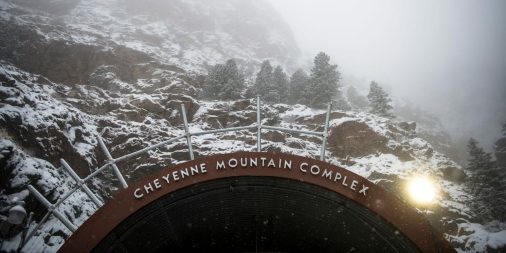
(7:30) TYLER: So, whenever you were taken, what do you remember about the Cheyenne Complex? Can you explain to us anything about that facility?

JOHN: Yeah. So, it was it was basically just an underground labyrinth, and it was very hospital-like. And I remember there were a lot of Nazi symbols all over the place. And, there were— just funny, because I only saw one Nazi there, but their symbology was everywhere. And they were— I can remember it was—I’m trying to think of the word—sterile, I guess, would be the word to describe it. Everything was very clean, very, very impersonal. They— the first step they took was depersonalizing you. You no longer had a name: you had a number. You dressed the same as everyone else there. You had your head shaved—everything. Everything that made you you was erased. And from that point on they started creating alters, which is—probably most of the people who watch this will know at least a little of what that means, but it’s basically through trauma and through mind control, the splitting of the mind into multiple personalities. Which is— I won’t go into too much detail on what exactly they did because I don’t want to get your channel banned.

TYLER: Yeah, sometimes those details aren’t always necessary; we’ve covered it enough, people understand the process. How many layers, how many levels would you say that Cheyenne Complex was? Like, did they take you down underground so many levels? Do you remember any of that?

(10:00) JOHN: Most of the programming was on the 26th through 29th level. At one point I went as far down as third the 38th level when I left. That’s where the portals were, was the 38th level. It may have gone even further than that; I don’t know.

AARON: Did you see any ETs or anything in the base while you were there?

JOHN: Oh, yes, there were plenty of ETs. There were Zeta Reticulan greys; there were a lot of Nordics. And there was this one reptilian species, that I’ve actually never seen anywhere else, that was fairly humanoid looking, but it had a long tail with spikes on the end, like a stegosaurus. And its scales were black and shiny—actually very pretty up close; they were iridescent. And he . . . actually was very kind to me, and [he was] the only person who treated me like a person rather than a piece of equipment.

(11:40) TYLER: Interesting. So, before we go before we get to what happens once you go through the portal, why do you think— I remember you hearing you say that you had family ties into the— I think your grandfather was part of Operation Paperclip. Is that correct?

(12:00) JOHN: My great uncle was part of it. He—or rather he was part of the delivery of Nazis to America. He was not a Nazi; he was born here. But he was part of the OSS, as it was called back then; now it’s called the CIA. At the end of—and for several years after—the war, he was stationed in Vienna, and he was tasked with finding both relatives of ours—because we are of German and Austrian descent—and also finding persons from the Advair—which was the Nazi intelligence service—and funneling them into this country. What exactly he did, he took to the grave, but that’s what we know. So, it goes way back. My grandmother has alters; my grandfather, I believe, does, but they don’t show themselves very much; my grandmother quite visibly has them; my mother had them; my aunt has them. So, all on my mother’s side we are very much a mind-controlled bloodline.

(13:30) TYLER: So, can you talk a little bit about the deal the Germans made with the United States as far as giving them children in in exchange for not invading?

JOHN: Yeah. So, in 1947, there was this thing called Operation High Jump. Admiral Byrd had heard unconfirmed reports that there were still— that basically, Nazi Germany had not been defeated; that they had gone to Antarctica and they were flourishing. He and a big chunk of the U.S. Navy went there. They got their asses handed to them, and so, for the next five years there was a state of unease. Essentially, “Are they going to invade us? Will they leave us alone?” And so, the Germans eventually came, flew directly to the White House, landed on the lawn—and there’s video footage of this. They landed on the White House lawn, went in, and said, Mr. President, we could kill all of you, but here’s the thing: we’re building out colonies off-world, but we don’t have enough people either to conquer them or to inhabit them once we do conquer them. So, if you give us 150,000 of your children every year, we’ll leave you alone.” I mean, that was basically an offer they could not refuse. And so, in 2007, I was one of those children.

TYLER: Interesting. And you’re referring to the 52 flyovers in D.C. We’ve seen the newspaper article where they have a photograph of—I think it’s six or seven—craft above the White House, but you’re you’re saying one of them actually landed?

(16:00) JOHN: Yes, one of them one of them landed. I was shown this by the Germans in their school system, which— we’ll get into that later I’m sure. But they— there was video footage that has been suppressed down here; off world it’s quite well known that one of them landed, people got off. I’m not quite sure how they managed to hide this completely from the news media. Maybe they didn’t; I don’t know. Maybe there were reports about it and they’ve just been buried in the intervening decades— we’ll never know.

TYLER: Right. So, whenever you were taken to the Cheyenne Complex and brought through a portal there— So, you were you portalled out of your bedroom into the back of a truck, taken to the Cheyenne Complex, you were taken down to the 38th level below ground, where you were portaled to the Moon, if I’m not mistaken.

(17:00) JOHN: Yes, yes. To the north pole of the Moon. And didn’t see much. Just me and these other kids—there were maybe 25 or 30 kids, not very many—we were walked directly to a shuttle. The signs in that base and everything, that was entirely German: German flags, German language signs, German-speaking staff, all of that.

We were walked directly from there to onto a shuttle, which flew onto a mothership, and then we basically just— We didn’t get off the shuttle: we stayed seated in the shuttle even as it was on the mothership, so we were there for 18 hours as it flew to Vega Prime. And we got off. Our shuttle, the Cheyenne Mountain shuttle, only had maybe 25 or 30 kids, but this mothership had a delivery of about 200, who I’m assuming must have come from other bases. Mostly American kids. There was one shipment of kids who were, if I’m not mistaken, I believe they were Colombians, and there was one shipment of Japanese kids, and the rest was all Americans.

And got off the shuttle, and we were uh saluted by officers. We had a carpet rolled out for us, which had— of course, we didn’t know where we were, yet, but it’s what I now know to be the flag of the Vega Colony [the Schwarze Sonne, or Black Sun – the editor]. And there was a banner up on the arch at the end of this hallway; it said, “Seig Heil der Neuen Jugend” — “Victory to the New Youth.” So, essentially, from then on we were a part of their civilization. And we were— trying to remember the exact sequence of events.

TYLER: You basically went to school on their planet.

JOHN: Yes, I did. We were all blessed to this school, which was in two pretty traditional-looking German buildings nestled in a whole bunch of skyscrapers. And they were Bavarian style: they had the stepped roofs, you know? Everything— most of the education was virtual reality, and so, for the most part, there weren’t classrooms. Most of it was in one big classroom. For some subjects it was divided up by age.

TYLER: Before we get any further into this, I just have a couple of questions. When you started getting your memories back, what was that like for you to accept this as a reality? Were you skeptical about it? Did you have to try— I mean, what did that process look like for you?

JOHN: I spent the first year trying to convince myself I was crazy. And— but when they wouldn’t stop, and when people’s testimony just kept corroborating everything I was remembering, I finally was like, “Okay, you’re not crazy. This is real; this did happen.” And then I spent the next year not talking to anyone, and then I finally did start reaching out to people, and it was a difficult process. I nearly became an alcoholic at one point because of it, from the stress. For a while I struggled a bit with sex addiction. I hope that’s not too much information, but it’s— this is the reality. That’s what this programming does to people. And so, basically, that’s what it was like. And, uh, but I survived it, and I’m here now.

(22:00) TYLER: Yeah, that’s great. And I understand there are vices. Everyone turns to a vice whenever they’re trying to distract themselves from discovering something about themselves that they’re not really ready to accept yet. That’s kind of programmed into us,like you said. But if you were a victim of MK-Ultra, then some of those are heightened; some of those addictions and cravings are heightened. So, it’s nothing to be ashamed of—it’s actually better to admit it and acknowledge it and move past it. So, it’s not too much information, in my opinion: it just helps— it grounds it into this reality.

JOHN: Well, thank you.

TYLER: Okay, so you were on Vegas Prime. Now, I know you have more than one alter. You have incredible recall. I’m amazed with your memory and recall about all the other alters and everything, but it gets confusing if we don’t— if we go out of chronological order. But something I want to ask you before we jump into all that is—just to keep it grounded on Earth still before we really get out there—the corporations, the organizations that are involved in the secret space program that you’ve seen in space, how many corporations that we would know, big names that we would recognize, have you seen in the programs?

(23:15) JOHN: Roughly about 15. Yeah, 10 to 15. Let me list off the main ones. The most important ones are defense contractors: Raytheon, Blackwater, people like that. There’s conglomerates, finance conglomerates, such as BlackRock and—oh what’s the other one?

AARON: Vanguard?

JOHN: Yes, thank you.

TYLER: Yeah, so after after Vanguard, what did you say?

JOHN: Yes. Natural gas companies, like Citgo; car companies; food companies, even, such as a PepsiCo; and Americans probably wouldn’t know this, but your audience in Latin America will definitely have heard of Mondelez Company, which, out there they manufacture— they’re who manufactures the replicators that people talk about, actually. PepsiCo [here] manufactures the same drinks they do out there, but some of them have enhancements, let’s say.

TYLER: You’re talking about Pepsi?

JOHN: Yes. Well, their company, the company is called PepsiCo.

TYLER: Okay. And what what do you mean by enhancements in the drinks?

JOHN: They make special ones. They make the regular ones, like you could get here, too, but they also make special ones that have nanites, which can give abilities to people. So, there’s ones that can give you added strengths; there’s ones that can make you telekinetic; there’s ones that can give you— I’m trying to remember—pyrokinesis, which is controlling fire.

TYLER: And what about learning a foreign language, or—

JOHN: Yes, yes, you can do that. There was one of my alters who had to learn Russian, and because he could afford it— because not everyone can afford these things; they’re very expensive—but my alter could afford to buy one of those drinks that had the Russian language in nanites that went straight to your brain. So, soon as you finish drinking that, you knew conversational Russian, or whatever language you needed to know.

TYLER: Wow. So, what other companies— You weren’t finished listing them. I’m just curious; we see these names every day.

JOHN: Yeah. There was Kodak Company; they’re out there. There’s a lot of natural resource companies out there. I mentioned Citgo, but also Valero has a presence out there. There’s a company I can literally never remember the name of, but it’s the main Chinese natural gas company: they have a presence out there. Samsung Corporation is out there. Lots and lots of people are out there.

TYLER: Right. That’s pretty incredible, and not surprising at all. We’ve heard that from other testimonies, but to get a list like that is really interesting. It makes perfect sense: if they’re running the show here, they would have real estate on other planets as well.

As far as the cloning aspect of all this, we just finished our webinar, so we’re kind of fresh on the clone topic. What percentage of people are cloned, and what percentage of people are actually it’s their real body, it’s them? I think there’s a difference between the German space program and the American space program; maybe you can help us understand that.

(28:00) JOHN: Yes, the Germans use your real body. Because their technology that they have for regeneration, people always think of the med-beds. The Germans don’t have med-beds: they have regeneration tanks, which they also—to put it very simply—they also will regenerate any damage which was done to your soul, and the med-beds can’t really do that. And because clones have two souls, it’s impossible to keep an alter in a clone

TYLER: All right, I’m gonna stop you for a second, because I have some questions.

JOHN: Yeah, I’m not wording it very well. I’m trying to think how to word this.

TYLER: So, you’re saying that the Germans use your original body and take you into programs, and then age-regress that body through whatever method they use—possibly a regen tank or something of that nature—and the American space program, they use clones.

JOHN: Yes.

TYLER: And they’ll take your consciousness and put it in a clone. Now, what do you mean when you say clones have two souls?

JOHN: They have— Okay, whenever you print out a biological body, it will have a [unintended] soul attach itself to it: it can’t be stopped. But it also has a piece of the soul of whoever they were cloned from [the intended soul]. And the [unintended] soul that attaches itself inevitably is constantly trying to push out that piece, and eventually it will succeed. And if the clone dies and gets regenerated, then it always succeeds: they cannot put the [intended soul] back. So, a clone has a piece of the soul of whoever it was cloned from, and then it has the— a soul that attaches itself, because whenever you make a physical form, a soul will automatically find its way there.

And so, this— I won’t go on a tangent, but just a quick aside here—this whole rhetoric I’m hearing in a lot of the SSP community about clones not having souls is really concerning, because, like, they very much do. They’re people: they just came from a test tube rather than a womb, but that doesn’t make them less human.

And so, that’s why the Germans would rather not have the bother of having to make you a new clone every time you die [that would take the intended soul], so they will just take your original body and age-regress it and regenerate it as necessary. The Americans, they mostly use clones. There are other factions from other nationalities and from corporations that—it varies on what they do.

TYLER: Yeah, I figured there’s a few different modalities, maybe a bunch by now: different organizations using different technologies, and I’m sure it’s always advancing and changing, and they’re perfecting it and experimenting with it.

So, I want to go backwards a little bit, and I apologize to the audience if it seems like we’re jumping around, but I had some questions I wanted to ask you uh earlier that I didn’t get to. So, two things about the Cheyenne Complex. One, you mentioned the MK-Ultra being done there and you mentioned “Wizard of Oz” and “Sleeping Beauty,” those two movies in a previous interview. How were those being used to mind-control you?

Taylor Swift

Taylor Swift


JOHN: Wizard of Oz had a lot of code words in it, or code phrases, that would be used to bring out alters. Whenever they were creating an alter, they would have a line from that movie playing in the background on a loop, so that eventually, with the way your mind works, your mind will automatically associate that line with that alter, and it can trigger an alter to surface. So, I won’t repeat any lines here, because I don’t want anyone to be triggered listening to this.

And “Sleeping Beauty,” “Sleeping Beauty” has actually a lot more programming in it, at least by my generation. I know a lot of older people were programmed a lot more with “Wizard of Oz.” In my generation, “Sleeping Beauty” was kind of the main thing. And, you know that scene at the end where the fairies are arguing over the color of the dress, where they’re constantly flicking their wand and her dress changes color?

AARON: Yeah.

(34:00) JOHN: That scene, that scene is used for some beta-level programming, to bring that to the surface. There’s some, like, occult ritual programming that I’m still fuzzy on, but I think there’s a lot of symbology of it in that movie. And basically everything is subliminal association, to make your mind go certain places and do certain things that can be caused—if done correctly—that can be caused by a movie, or something of that effect.

TYLER: Right, and there’s a number of movies people have mentioned in other testimonies—shows like Looney Tunes is one that doesn’t get talked about that much, but I’ve heard people talk about Looney Tunes. Another thing you mentioned, if I’m not mistaken, Josef Mengele was at the Cheyenne complex.

(35:00) JOHN: He was, or a clone of him, at any rate. I don’t know if it was the original or a clone, just to be clear. But, yeah, he was there, and he did most of the programming of the kids. I don’t know if he still calls himself Dr. Green, as many people have testified, because I names are very difficult for me; but the thing I remember about him is, when he wasn’t torturing you, he was actually a very sweet, nice person, which makes him even more disturbing of a figure.

TYLER: Well, it’s typical narcissist behavior as well.

JOHN: Yeah, true, true.

AARON: A lot of sociopaths can be like that.

TYLER: And it makes— it’s actually part of the trickster energy, you know? that’s what kind of gets you hooked, in a way, in a weird way. Because they rely on your ability to see the good in them, so they show you that side, and it confuses you.

JOHN: Exactly. Yeah.

TYLER: I think that’s all I wanted to ask about that facility. Okay, so we were talking about the programs, and I’ve heard you mention before—I mean the organizations in the programs—I’ve heard you mention before a black market, contraband items that are, I guess, used in the programs, are traded, bartered or whatever, sold. Can you explain a little bit about that?

(36:45) JOHN: Yeah. So, in most places uh they ban—or at least very heavily restrict—most devices. They don’t have— they don’t really restrict alcohol, but they restrict—if not outright ban—drugs, pornography, things like that, so— But, of course, people still kind of need those things, so they will— A black market flourishes inevitably whenever you ban those things. And uh a lot of it is contraband from Earth that they actually don’t even know is from Earth. Like, for example, they love Cuban cigars out there. There’s not many places in this galaxy where you can grow weed, so a lot of their weed comes from us—things like that. And they don’t know where it comes from.

(38:00) TYLER: What about music and movies?

JOHN: Yeah, yeah. They have our music and movies. But also, this is a thing I’m actually planning to do a show with someone else about in the near future, hopefully. A lot of our music and movies actually come from there, and we don’t know it,

AARON: Really.

JOHN: Yeah. And a lot of songs, especially; a lot of songs were written by assets like us, and they were then stolen and sold to the music industry here. and

AARON: Yeah, I know uh Arkheim Ra, if you know who he is; he really claims he’s written a whole bunch of songs that were used and stolen from him and given to these different bands and artists that are big hit songs that are out there. He’s like, “Yep, I wrote that one; I wrote that one.”

(39:00) JOHN: Yeah. There’s a few I wrote, too. So, yeah, that’s quite common. And a lot of them were written here sometimes . . . but people remember them as being from different artists out there. Like, I don’t know if you know the song “Wicked Game”, by Chris Isaac. Okay, it’s a great song. Listen to it, seriously. But, he— that was actually originally a Willie Nelson song . . . written on Mars, according to a friend of mine. And there’s the song, “Hallelujah,” supposedly written by Leonard Cohen in ’75. It was actually written by Janice Joplin and first recorded by her, I believe, in 1969, on a planet called New Atlantis, which, I’ve touched on that planet in one or two shows.

AARON: So, you’re saying Janice was . . . in the programs, and then wrote it in the programs.

JOHN: Oh, yeah.

AARON: Okay.

JOHN: Yes, she was. And I think I think she may still be alive, actually, and still writing songs out there.

TYLER: Well, that would align with, like, Johann Fritz would talk about, or Daryl James—other people talk about celebrities who have clones in the programs as well. And a lot of the roles they play in movies are actually very similar to what their position is in the programs as well.

AARON: Kevin Spacey.

TYLER: Kevin Spacy, Tom Cruise—

AARON: Tom Cruise.

JOHN: Angelina Jolie.

TYLER: Um—oh, my gosh; what’s the—Scarlett Johansson. There’s a whole list of them that apparently have clones in the programs that people have seen up there. There’s one that I’ve seen, that I can’t even remember his name for the life of me every time, but he plays the same role in every movie. He’s like this military sergeant; if I can think of his name, I’ll share it. But either way, that’s just a side note. I find that very interesting.

Like, what we see, you know, Hollywood, like you said, some of the movies are actually from other places or even funded by certain groups out there, and the scripts are handed to whoever the directors on Earth. Whatever it looks like, it’s not really what we think it is.

JOHN: Yeah, exactly.

TYLER: So, what do you know about Solar Warden; can you explain to us? Solar Warden, and is that tied with Space Force?

(42:00) JOHN: Solar Warden, from my understanding, is not tied with Space Force. What I know about it is that it began in ’52 or ’53, not long after the deal was made with the Germans. It was made essentially to fight the Germans. It’s an American force, and it started life as just a sub-project called Project Mayflower. But in ’82, the secretary of the Navy at that time for the Reagan administration—his name was John Lehman; you can look him up—he was basically like, “Well, we’re spending literally trillions of dollars on these people. Why don’t we make them an official branch?” So, he did.

So, that did happen, and it became known as Solar Warden from 1982 onwards. It did split into two, but that’s a— Solar Warden is still a convenient catch-all term that people use for it.

TYLER: So, did you serve in Solar Warden? Do you have any memories from that?

JOHN: Yes, my alter Adam, he did 50 years of service with them from 1969 until 2019. And an interesting story with him: he did not have his memories erased when they killed him. I don’t know if someone just forgot, or what, but when he re-homed, he had all the memories. So, I have pretty much full recall from him and his life.

TYLER: So, help me understand. So, you said he served from 1969 to 2019; but when were you born?

(44:00) JOHN: 2001.

TYLER: Okay. So, help me understand that, because I’ve heard people talk about memories that don’t line up with the year they were born. Now, when they take you— also, there’s time-travel technology involved, as well. There’s a whole aspect there maybe you can touch on. Help us understand how that works.

JOHN: So, time travel is really pretty simple, at least time traveling to the past. If you want to go to the future, it’s much more complicated. But going into the past is pretty simple: you just dial in coordinates on whatever time-machine-type technology you have. You put in where in space and where in time, and you walk through a portal, and you’re just there.

And so, time displacement, which is what we would call someone like me being sent back to 1969—or, well it was a clone of me, but same difference. And it’s really pretty simple. I don’t know the ins and outs of how all the technology works, because that was never my job, to know how all these things work. It kind of just happened.

TYLER: Well, I guess it makes sense: if they put you in a clone, they can enter that clone, place that clone any place in time.

JOHN: Yeah, they can do that, too.

TYLER: So, essentially that’s how they’re doing it. Okay.

JOHN: Yes.

TYLER: And obviously, time dilation is another aspect of this.

AARON: So, do you know . . . essentially, the Cabal . . . goes back in time and tries to manipulate events to to help create the time— the negative timeline that they want to create. Do you know about that?

(46:00) JOHN: Yeah, they do that. I mean, everyone does that. Everyone who has time travel goes back in time to create the time that is ideal for them. So, yeah, it’s a pretty universal thing. When you have the tech—

AARON: But supposedly there’s what you could call benevolent ETs or even humans are also doing that to to basically counteract that and to make sure we stay on the positive timeline, as well.

JOHN: I think “benevolent” might be a bit of an exaggeration, but, yes, there’s people going against the Cabal timeline because it’s great for the Cabal; it’s not good for anyone else in existence at all. So, there are people—even people we probably otherwise would not consider very good—but there’s lots of people counteracting it, yes. So, it’s an ongoing battle.

TYLER: So, the Cabal right now on this planet seems to be losing its grip in certain areas, and it’s becoming apparent in a lot of ways. Not that they’ve totally lost control, but it feels like they’re losing their grip. Would you say the same is happening in the space programs? Is this like an energetic thing that’s happening throughout the solar system that just can’t be stopped, like this wave of energy, this ascension wave, or is that a myth?

(48:00 JOHN: I wouldn’t say it can’t be stopped, but it’s proving difficult to stop. And the arc of history bends toward improvement, as they say. Like, look at the world even 50 years ago: things are generally quite a bit better for most people than they were. So, things are improving. Some things are very much not improving; some things are getting a lot worse in some areas. But I think that overall, time and human nature lends itself towards positivity.

TYLER: Right. I would agree.

AARON: Evolving, which is kind of the same thing. It’s like, otherwise, you’re devolving and you’re going backwards.

JOHN: Exactly, exactly. It’s one or the other.

AARON: But the Cabal wants to create— they want to, like, lock down the planet. It seems like they want to lock down the planet fully, as, like, a fully locked down slave-planet for resources for them. And that’s what— they’re trying to push things to that direction, and it’s becoming more obvious than ever, their agendas. Which is actually a great thing, because now we can all see it and it’s waking— it’s waking up so many people that just had no idea about any of this stuff just a few years ago.

JOHN: Yeah, exactly.

AARON: So, actually, I think it’s a great thing, because it’s like the harder they push, the more they expose themselves and the more people wake up, which means they’re actually helping to speed up the awakening and the thwarting of their own agendas. But it’s almost like they feel like— they probably feel like they don’t have a choice. It’s like they’re desperate to lock it down now, because they know it’s now or never.

JOHN: Yeah.

AARON: So, in my opinion, it’s pretty much inevitable that there will be a, you know, a mass awakening and a golden age. I don’t know how long it’s going to take, I don’t know how it’s going to play out, but I think it’s inevitable.

JOHN: Yeah.

(50:00) AARON: It could get worse before it gets better, though. It very much could get worse before it gets better.

JOHN: Yeah.

TYLER: Okay, so I’m going to go back to Vegas Prime a little bit.

JOHN: Just one quick thing: it’s Vega Prime; there is no S on the end.

AARON: It’s not Vegas.

TYLER: Vega Prime. Maybe it is!

AARON: Maybe it is!

TYLER: What happens in Vega—

AARON: —stays in Vega.

TYLER: Okay, so, Vega Prime. Sorry, I apologize. Can you explain to us a little bit about what the colony looks like, and, like, what you’ve seen, what you’ve witnessed? Is most of it underground, all of it underground, above-ground, that type of stuff?

(51:00) JOHN: Most of it’s above ground, although the transport infrastructure is mostly below-ground. But it’s very futuristic, but in parts of it, it’s also very traditional. It’s mostly Germans. I’d say the official breakdown is 85 percent Germans, 10 percent Japanese, and five percent everyone else. And, um— go ahead.

TYLER: I’ve heard you mentioned in other interviews that it’s like a cyberpunk-style city; is that correct?

JOHN: Yes, it is. It reminds me— it’s not quite as Asian as how people think of cyberpunk cities most of the time. Although there are a lot of Japanese signs, but culturally it’s mostly German. But there are, like, holograms, very large holograms, like I said, a lot of skyscrapers, futuristic architecture, things like that. There are some flying cars, actually. And up at the very tops of the buildings, which on the tallest buildings is several miles up, you’ll see ships docking, things like that. So, it’s quite similar to the city in “Ghost in the Shell,.” The live-action version is the closest thing I’ve seen to it.

TYLER: Say that again, “Ghost in the Shell”?

JOHN: Yes.

AARON: That’s an anime; that’s a popular anime.

TYLER: Okay. It also reminds me of what we see depicted in “Star Wars” movies, like episodes one, two and three—some of those very cyberpunk-like cities. And also “Total Recall,” the cities in that movie, which, interesting where they get the idea from.

(53:00) JOHN: Yeah, that’s very typical colonial style out there. That’s how most colonies tend to look—at least most German and Japanese colonies. Some colonies such as— particularly the ones from some of the Latin American countries there—are a lot more traditional in their architecture.

TYLER: Now, have you been to a place that looks almost identical to Earth, like you would almost not know the difference?

JOHN: Oh, yeah.

TYLER: I’ve heard of breakaway civilizations like that, where if you were just dropped there in the middle of the street, you wouldn’t know the difference.

(54:00) JOHN: Yeah, I’ve been to a colony that was a replica of Houston. The only way you could tell the difference was that there were two suns, and occasionally you’d see an alien walking down the street.

TYLER: That sounds like it could be Earth, too, because apparently there are two suns here, that we can only just see one.

JOHN: Apparently, but supposedly that’s— Yeah, some people say that, yeah. Up there, it was very visible, though.

TYLER: Now, is it just the infrastructure, or is there English-language, too?

JOHN: Oh, yeah. There are English-speaking colonies, plenty of them. There’s lots of Americans out there. There’s lots of Australians out there, interestingly. There’s British people out there. Yeah. You can find a colony that speaks pretty much any language, including ones that are not spoken much here anymore, such as, I’ve been to a colony where they actually still speak the Manchu language. On Earth it’s very endangered—it’s only spoken by a few dozen people. But there’s colonies out there where they still speak it, so, yeah.

(55:30) TYLER: What kind of communication devices do they have? Are some of them using things similar to cell phones, or is it all telepathy?

JOHN: Between humans, I mean, even out there, not that many humans are telepathic, so they do use cell phones. For language barriers, they have something quite similar to a headset like I have here, but it has also a mouthpiece, a microphone. And so, that works as basically a universal translator.

TYLER: Do they have like a neural-link-type of chip that they’re trying to put in us here? I’m sure places out there are already doing it.

JOHN: Oh, yeah, people do that. I mean, if you can afford it, again, which most people can’t. But the wealthy have those and it allows them to control, like, everything in their home, and their car, and they can purchase things with it.

TYLER: . . . What about some sort of authority, galactic authority, or police force in space? Not just per planet, but is there some overall— Like, obviously, it’s all hierarchy, right? So, is there something like that that’s policing everything?

(57:00) JOHN: Sort of. Most of the time, they’re not going to care what anyone does, unless do you do something really, really serious, like wiping out an entire planet; otherwise, you’ll probably never even know they exist. But they’re quite small. But every star cluster has a council overseeing it, and those people will always make themselves known; they’re always a quite involved in the community. And they will generally have a representative of at least every space-faring species, if not every sentient one within said star cluster.

TYLER: Interesting. What about— so there’s probably a million different occupations out there, right? They’re not just taking people into these programs to be super soldiers.

JOHN: Oh, no.

TYLER: And you have memories from alters that have done interesting jobs, such as an archaeologist.

(58:20) JOHN: Yeah. I have my archaeologist alter, Jared. I don’t have a lot of his memories, really, but I have some. Most of mine are in communications—i.e., telepathic, interfacing with different species—and/or they’re in espionage. I have one who is a pretty traditional super-soldier type.

TYLER: So, these would all be clones, then.

JOHN: Yes.

(59:00) TYLER: These would all be different clones. Like, Donald Marshall would say they can clone you as many times as they want and split you as many times as they want. So, he kind of broke it down. Actually, we played a clip where he explained how they’re doing it—even here on Earth amongst celebrities and stuff. But that’s exactly what they would be doing in the programs, as well. So, just to help ground it into reality, if anyone wants to understand how that works, we just covered it on the clone webinar. But they’re essentially taking an individual and splitting their consciousness into multiple different clone bodies and sending them on missions throughout the galaxy and/or the planet here. And these are the memories that you are recovering.

(59:40) JOHN: Yes, yes. And that’s because, like I mentioned, the clone has a piece of your soul or consciousness, and whenever a clone dies, that fragment will come back to you. So, you’ll be able to get at least some of the memories, depending on how much mind-wiping they did before they terminated the clone.

TYLER: Now is it possible for a clone or an alter to communicate with you, your front alter?

(1:00:20) JOHN: Yeah. I have ongoing communication telepathically with two. I have one who is absolutely terrified that she will be arrested. Yes, people, I’m sure that raised a question, me saying, “she.” I’ll explain that in a minute, but opposite-sex clones are very much a thing. And she’s terrified that she’ll be imprisoned or worse if she gets caught communicating with me, so I don’t bother her. I have some who I haven’t been able to reach yet, but there’s two that I have ongoing, more or less daily, conversations with.

AARON: How does that work? How do you have conversations with them?

JOHN: Telepathically. It’s basically— what my method—I know some people do other methods for this—but my method is I will remote-view them, and wait for them to notice that I’m remote-viewing them. And usually they’ll be like, “Oh, wow, you’re not me, but you look just like me. Who are you?” And it’s a pretty good way to start a conversation, actually. So, it goes from there. But it’s all telepathic. I have not found any of my clones. If any of them are living civilian lives on Earth—which, I have heard that some of them do do that, for some other people, at least—then I haven’t found them yet.

(1:02:15) TYLER: Yeah, Max Spiers used to talk about that. When I was in Australia, I saw somebody who, as far as I was concerned, was a friend of mine, was my friend, in Australia. But I knew [my friend] wasn’t in Australia. And it was just mind-blowing. Like, I couldn’t look away. I’m like, “That’s her,” but it’s not— I knew it wasn’t her. I’m not saying I saw her clone, but I’m not saying it’s impossible, either. Like, I think we could possibly run into other people’s clones in other countries.

JOHN: Yeah. I have some people who, they saw a clone of mine in Cuzco, Peru. They were in a tour group, and like, all 15 people in this tour group saw him. He looked just like me, he had the same mannerisms as me: the only difference is he was speaking Spanish.

(1:03:00) TYLER: I don’t even know how to keep this conversation on track anymore. I have questions about your other alters, and stuff like that, but um I guess we’ll just keep it more of it, like, the overall perspective for this interview, just because I would just want to keep it on track.

I heard you mention before that there’s not all bad Dracos, right? Not all of them are bad. And there’s actually a faction; not all of them eat people and drink blood and do all that stuff. And they’ve actually been warring against amongst each other; there’s a group of the positive Draco that have been trying to stop them, that are not okay with that. Can you explain that a little bit?

(1:04:00) JOHN: Yeah. So, there was a thing called the Orion Wars in this galaxy. And who all the factions were is still not entirely clear to me, but there were some Dracos who were basically sympathizers with the Orion cause. And they were granted asylum within the Orion system. And so, their descendants are still— they’ve still been brought up that way, with those kind of politics. And so, the Orionites— I mean, I have my issues with them, too, politically, but I will say this: they don’t eat people, and they don’t traffic people much. Some of them do a little bit, but not much. So, that’s basically how that came about.

So, yeah, there are plenty of good Draco who know that eating people is not okay. They don’t eat any sentient creatures. They still have to eat meat, because they have to be alive, but they don’t eat anything sentient. And I want to make it clear that 99 percent of Draco don’t even know that these things are happening. They’re like us, where it’s the top one percent who knows these things are happening, maybe another one percent knows these things are happening and is powerless, and the remaining 98 percent of them are just people existing, and just living life, and they don’t know anything.

(1:06:00) AARON: So, it’d be like— because as we know, the Nazis are all over space. They are these, you know, regressive humans, for for lack of a better term. It’d be like ETs demonizing all humans because all they’ve interacted with are these psychopathic negative ones that are going around dominating and trying to take over everything and enslave people and stuff. So it’s not fair to demonize an entire race.

(1:07:00) TYLER: Okay, so I guess to finish this out, I’m I’m curious about your Adam alter, the one who you have basically full recall of from Solar Warden. Maybe you could kind of share some memories from that alter and what that life looked like, and then we’ll wrap it up after that.

JOHN: Okay. What he did was essentially border security for the solar system at the— I’m not sure if this is the official name, but people call it the Europa Galactic Checkpoint. There is a huge worm hole next to Europa that leads all around the galaxy, and even to some other neighborhoods. And the checkpoint for it is on Europa, and what this Adam guy did, when the ships landed, he would basically be asking for papers. He would be there like, “I need to see your license and registration to be using this route. I need to see a cargo manifest, and you need to let my people search your cargo, make sure there’s nothing contraband.” All those things. And so, he did occasionally for, like, little one-off jobs, because he had an incredible talent, particularly for reptilian species. So, he would sometimes be in demand for other checkpoints not on Europa. He would sometimes go to the one on Mars that’s known as Port Victoria, which is in the Victoria Crater. He would go to the one on Titan, which is next to the New Nuremberg City colony. He would go to one on a space station that was around Uranus, and a few others. But that’s basically what he did.

(1:09:00) TYLER: So, Solar Warden, I guess I was under the impression that they just monitored what was happening on Earth. And so this is way beyond that.

JOHN: No, they’re ICE; they’re like our version of ICE for the solar system. They’re general security, and also for attacking the Germans, which Adam did not do. And he wasn’t even [UI] that was happening was above his pay grade, even. So, those are the two main roles.

TYLER: Is that all you remember from that alter, or is there anything else you can tell us about that life as far as, I don’t know. Like you said, he was going to these different bases or these different portals or whatever: what type of ship was he stationed on? Do you know things like that?

JOHN: Uh he would— for a short-distance travel like that, they would just go in shuttles. And they looked pretty much the same as the ones in “Star Wars”, actually the box-shaped ones with the legs that fold out. And he considered it a very boring life; I consider it kind of fascinating because of all the different species he would see, even on a daily basis, because so many people use that portal.

(1:10:30) TYLER: What kind of species would he see?

JOHN: Oh, boy. Lots and lots of kinds of reptilians. Oh my gosh, so many kinds of reptilians. Different species of humans, because, believe it or not, we’re not the only species of human. There’s ones out there with green skin, there’s ones that are 20 feet tall and have wings, there’s all sorts of—

AARON: They’re still considered humans?

JOHN: Yes. If you run a DNA scan, it comes up as a variation of human.

TYLER: And I imagine blue skin: I’ve heard people talk about blue-skinned humans as well.

JOHN: Yeah, blue skin. There’s several kinds of blue-skinned humans. There’s lots and lots of green-skinned ones, and there’s— what we would call tall whites are technically a human species.

AARON: Yeah, there’s been a lot of whistleblowers talk about them.

JOHN: Yeah. And there were aquatic ETS you saw, and they would come off their ships in tanks full of water that levitate. And there’s some that I don’t even know how to describe physically, because they’re they don’t really look like anything we have here. There’s ones that look like a seven-foot-tall Kthulhu-type creature. There’s a lot out there.

TYLER: Oh, yeah, I imagine it’s as diverse as you can imagine. So, going back to the beginning of the your memories for this alter, what’s the earliest memory you have as far as him being brought into the Solar Warden?

JOHN: Okay. He woke up one day with no memories of anything, with full amnesia, because he didn’t have memories of anything: they just made him that day, basically. I was 13, I believe, when they created him, but he was age-advanced. They cloned me and they age-advanced the clone to the age of 30. So, he woke up, basically, with the mind of a 13-year-old that also had complete amnesia. And what he was told was, “We saved you. Your wife and kids were killed in an explosion, but we gave you this new body, and we’re sorry we couldn’t salvage any of your memory.” So, I mean, it is kind of a good excuse when you think about it. And that was their explanation, and they also— the implication was, “We saved your life, so you have to come work for us.”

TYLER: Right, okay; that makes a lot of sense. They basically leave you without a choice: you just wake up in a situation. And just to corroborate what you’re saying about age-advancing the clone, we just covered this also. The information we came across said that they would typically age-advance a clone to age 20, but obviously, you said age 30. But still, it corroborates with them even doing that in the first place. It takes a lot of the complications out of just the childhood: there’s no reason to— they can teach everything to the clone adult in about six months that it needs to know, as far as how to eat and how to use the bathroom—basic body functions and stuff like that. And from there they can basically program them.

JOHN: Exactly. So, they do that. And one of the things was, Adam was also— he was in several hybrid programs, kind of consensually. I mean, he was consensual: he did not say he consented to having children with these ET women. He was sleeping with them consensually, but he didn’t know it was meant to result in kids until later on—someone with that slip. And so he was like, “Great, so I have kids all over the galaxy out there, probably. And, yes. That kind of tore him up, that he found out he had a bunch of kids he would never be allowed to see.

(1:15:30) TYLER: Right. The hybrid program is is an interesting topic. Obviously, tons of people on Earth here have spoken about it and remember it, have been involved, including myself. I’ve mentioned it on previous shows and interviews before. But it doesn’t surprise me at all that it’s happening everywhere out there, and that’s an entire different rabbit hole, a different discussion for another day.

So, he was told that basically they saved his life, so he had to serve, and then that’s when he was essentially just stationed at that worm hole outside of Europa, did you say?

JOHN: Yes, Europa, moon of Jupiter. He lived on the base uh there in this little broom closet of an apartment, if you can even call it that. It was basically a rented room above a nightclub, very noisy at all hours of the day and night. It took him several years to adapt to that and be able to sleep, but compared to some of my other alters, it was actually a pretty okay existence.

TYLER: Yeah, I mean it doesn’t sound nearly as terrible as some of the other ones we’ve heard. So, we’ve been all over the place today. Is there any last thing you’d like to share with us about that alter, or anything else before we wrap this up?

JOHN: I don’t think so. Thanks very much for having me.


Al Bielek Autobiography: Mind Control

Return to Index

Rare archive footage of Al Bielek talking about Project Phoenix mind-control projects and technologies, Montauk boys, Project Monarch, Nazis, the Knights of Malta, the Rosicrucian Order, the Rose Cross Order, Freemasonry and extraterrestrials.

Though initially Phoenix was not a government project, it was eventually integrated with the NSA, the CIA and the secret space programs of the U.S. Navy—Solar Warden and the American branch of Nacht Waffen Regir.

Transcript

Today is April 17, 2000. We’re approaching Denver from the north side, the freeway. Smoggy day, and this is only April. . . .

We’re just archiving that we are here in Denver at this time and Al is in the car, and that’s the whole purpose of this—a little bit of film here. . . .

A thing of historical significance, at least for the sports fans here in Denver: this is the construction of the new Broncos Stadium that I think is supposed to be ready by this fall. So, this is a good way to document a little bit of Denver here.

Hello, again. This is a special recording, what we would call an archives recording. And the precedent part of this film was showing some of downtown Denver on the date of—I think it was 18th of April; today is the 20th of April of the year 2000.

(2:50) The final subject I wish to broach in this presentation and archive—whatever you wish to call—is the subject of mind control. It is very prevalent today. It had its beginning as thousands of years ago in occult technologies, occult techniques, involving preconditioned young girls in families where there had been a minimum of three generations of child abuse—sexual child abuse—where you could easily split the mind and produce a mind slave, a sex slave, or whatever. But that was a long, drawn-out process of at least ten, perhaps fifteen years of work on a single individual, with the handler sort of guiding them all the way. And they were useful for perhaps 15 years, maybe, not much more than that, today about 20, and they were worn out and no longer of use, and they usually were eliminated.

(3:34) In recent years, since . . . the end of World War II, the beginning of the last half of the century, many people have gotten into the act and of contributing ideas and thoughts, which, shall we say, wove a totally new cloth for mind control. Dr. Wilhelm Reich from Germany and Austria, understudy of Vienna’s most famous psychiatrist, Dr. Freud. Others were involved in it: Josef Mengele, the angel of death from Nazi German camps, made his contributions to mind slavery. Dr. Ewen Cameron, working for the CIA using MKULTRA program, and, of course, working with various chemicals such as LSD and others. And on the list of chemicals, one must include fluoride in the drinking water, because that is a mind-control program, not tooth control. The tooth fairy dreamed that one up, to abuse an old phrase. That has been prevalent since World War II and the slave-labor camps of Germany . . .

Chemical mind-control is involved, electronic mind control; all kinds of elements have been brought together to create a scenario today which would take hours to expound properly. But I wish to state, in this rather short period of time left, that mind-control slavery is an ongoing product, an ongoing thing, in all of the major cities of the U.S,. and certain cities of Europe and Asia, and to a much lesser degree in Australia. I’ve been in Australia; I’ve been in Switzerland; I’ve been over most of the U.S.

Mind-control slavery is an ongoing product, an ongoing thing, in all of the major cities of the U.S,. and certain cities of Europe and Asia, and to a much lesser degree in Australia

The predominance of effort for mind control is in the U.S. because the United States is the prize target for those of the so-called New World Order, who wish to control all civilization by a combination of mind control slavery, economic slavery, disinformation, miseducation; and all of it going together, including more exotic types of mind control involving the use of cell phone towers, cell phones, other electronic means, including from satellites, whereby today, with NSA’s technology, they can, from a satellite, pick out an individual computer of an individual person and see exactly what they’re looking at on that computer, what they’re going through.

With NSA’s technology, they can, from a satellite, pick out an individual computer of an individual person and see exactly what they’re looking at on that computer.

It’s a rather horrendous idea, and even more horrendous in it’s applications. It’s becoming more universal, primarily aimed at the big cities, because the urban populations are the ones that have the clout, that do the manufacturing, who control most of the economics. Those people living alone or semi-alone in the back hills they’re not concerned about, because they’re not considered personnel who can exert much influence one way or the other in the terms of policy or world history.

(7:00) But I want to show a few, only a handful, of documents here which deal with the subject. Much of this information comes from outside the U.S. from a magazine called Nexus, published in Australia. And what they have done in the last two, two-and-a-half years and showing information by various reporters is quite interesting. This is one which I want to put on the record. As I say, there are many more; I don’t have time to show them all. Again showing the problems of mind-control slavery connected with the New World Order, and mentioning, of course, the overhead top-level mind-control program, Project Monarch. That covers both the old child-abuse slavery systems as well as the electronic—and the Montauk boys.

Again showing the problems of mind-control slavery connected with the New World Order, and mentioning, of course, the overhead top-level mind-control program, Project Monarch.

(7:45) The Montauk boys should be mentioned in passing, of course, again. That program is very insidious. It started in 1976 and it’s still ongoing to this day in the U.S. and elsewhere; has turned out approximately 10 million Montauk boys. And that is my information, from my data, because I worked on the program for three years as one of the people working at Montauk Point. And the program in 1980-81 was moved off of Montauk Point to six locations on Long Island, and principal locations throughout the United States and all the major cities, including Atlanta, Georgia, which I currently call home—very, very heavy there, and all phases. And it can be seen in terms of its effects on people who are quite unaware of what is happening. If you are a careful observer, you will see the degradation of sensory awareness, the degradation of performance, the degradation in spontaneity of people, of friendliness, of nearly everything. And the automobile rage, the [road] rage is getting worse. And they use all forms in Atlanta.

It started in 1976 and it’s still ongoing to this day in the U.S. and elsewhere, has turned out approximately 10 million Montauk boys.

(9:00) But this is only one side of the problem. It’s not just in the United States alone. We have another nice little program here, which I want to show. And then, of course, it’s one that’s involving the Navy to some extent, NSA to a greater extent. It’s currently a well-known program: Echelon. And it’s important, because they are spying on every country in the world on our most secure systems. The National Security Agency likes to know what’s going on. Well, there’s a lawsuit in preparation now in the European Union against NSA—it hasn’t come to pass, yet, and I don’t know when it will in the future, perhaps in the next few months, the next year—against NSA for their spying on all of their internal most secure systems in Britain, France, Germany, wherever. And they’re not exactly pleased by it, and I can’t say I exactly blame them. But this is one aspect of mind control in terms of the political aspect, the political clout of having the proper information. I might add, information, whether it’s proper or not, they insist on having it.

(10:00) Some time ago, a gentleman by the name of Michael Powers produced a book or booklet entitled Global Electronic Mind Control. It’s out of print—disappeared—and I happened to get a copy from somebody and I’ve reproduced it since. Nobody knows what happened to Michael Powers or his organization. He produced six monographs like this one, the last one dealing with the production of clones, and that may be the one that did him in. But I only say that because I don’t know whether that is a fact or not, but I imply that that’s probably what happened. But there is information out there—speaking at this time and era of the last few years; the last two years is quite heavy.

And, of course, this raises the question: what do you do to stop it? What do you do to get out from under it? Again, the topic is vast, but I do want to give some information and, of course, anyone—as I have made this information public in any case—anyone who wants to contact me about it can [do so].

(11:00) A number of people have proposed various systems, various ideas, as to what can one do to break the mind control. First of all you have to understand what it is. First thing that happens with a victim—whether it’s male a female, but primarily in the Montauk boys program it is just males until the most recent phase of it—you have to have the person’s right and left brain lobes, which normally function in a synchronized manner, broken in terms of the synchronicity of operation. When that is done, then you can easily develop a person who is either predominantly right-brained or left-brained. Left brain meaning the analytical type, the engineer, the scientist. Right-brain meaning the metaphysician, the spiritualist, the one who pursues more exotic aspects of civilization and society—and not the hard-core analytic type, and the hard-core documentary type, but someone who is perhaps more speculative, more into the feelings and the sensitivity. Once you break that synchronization, you can produce right or left-handed, right-brain or left-brained, right-handed or left-handed as you wish, change the sexuality—a male can be made homosexual or heterosexual and the female either way, as they may choose, those who do this program.

Once you break that synchronization, you can produce right or left-handed, right-brain or left-brained, change the sexuality—a male can be made homosexual or heterosexual and the female either way, as they may choose, those who do this program.

(12:25) And in the research that I’ve done for over five years or more on the Montauk boys program, some very startling information has come to light since 1998, wherein the Air Force broke into some of the underground bases on Long Island, took all the documents and dossiers and personnel, and through various channels started investigating who’s really running this program. What we found out at that point was rather startling. We always assumed it was a government program. It is not: it’s privately run. Started by the Germans, but taken over by others —or perhaps the Germans were being controlled and steered in this manufacturing of this program.

(13:00) And it appears that this is a program which is involving religious groups, ones we would never suspect, such as the Knights of Malta, various groups of monks, the Rosicrucian Order, the Rose Cross Order—there were two separate orders: they are not identical—by implication possibly the Masonic Order . . . and an off-planet group appears to be involved in the background. This may not be Alpha Centauri I’ve already mentioned: it maybe some other group.

But what do you do once a person is programmed to break it? Left alone long enough the individual will eventually come out of it because the buried information on the subconscious will eventually surface. That could take a lifetime. In the case of very high-IQ people, it takes perhaps two or three years. That’s still a fairly long time.

(14:00) A group came into existence about 1990 formed by Dr. Virgil Chrane out of Dallas, Texas, resurrecting some old technology which goes back, again, some thousands of years, and involving a particular form of manipulation of the neck which is not chiropractic, but is what is called alphabiotic metaphysics. And this is the cover sheet of a brochure dealing with the history of this process, how it affects the brain, why the brain must function as a unified left and right brain lobe system, completely synchronized.

Dr. Virgil Chrane, founder of Alphabiotics

In order to think clearly, you have to have two approaches to whatever information comes into your head by whatever source. You’d be able to analyze it both analytically and in terms of sensitivity and feeling. The two separate brain lobes, if they’re totally synchronized, will do this automatically, and you’ll get a much better perspective or whatever information comes in to you, what it means to you, whether it’s safe or not safe, etc.; and if you have been programmed, will break the back of the programming. That does not mean you will immediately get back all of your memories. It means that you are no longer controllable as long as you maintain the synchronized state.

And the practitioners, which are all over the world now, some 100, perhaps more now, are set up for just this process. And I might add, most happily, it takes for one adjustment of about 15 minutes on a person where there’s not been actual physical brain damage, where the brain is physically normal, to reorient, resynchronize our right and left brain lobes. And believe me, in 15 minutes, the one treatment, that is almost a miracle.

I went through it once to see whether it had any effect on me, because I would already achieve synchronicity, and there are some very interesting, shall we say, digitally generated picture patterns, which have a buried stereo image in them—the magic eye gallery being the best—wherein you stare at these, and if you are synchronized, you will see the stereo image. If your brain lobes are not synchronized, your left and right brain lobes are out of sync, you will not see the stereo image. It’s a very simple test and very effective. And after the reunification process, if you want to call it that, you will see the stereo images.

(16:30) And the doctors also state, the more you use this process—a single treatment is sufficient, perhaps, but it’s better to go several treatments because it locks in the synchronization more completely with each treatment. It also centers you, if I may put the term, “in the present time” . . . in your present moment of your living, to be unified there and feel you were there in the present time, and not scattered mentally all over the landscape, is a big plus.

It’s a subject that needs a lot more time; I have lectured on this extensively and will continue to do so. But I wish to point out that for those who were worried about mind control and all the negative information, and there’s lots of it, you have to know who the enemy is and what the enemy is before you can do something about it. In other words, if you feel that you have been mistreated, find out how to get around it and how to correct it. Many, many people have been brainwashed; it’s in the many, many millions. They don’t know it. The process is so thorough today, they’re totally unaware that they have ever had anything done to them. And that, of course, is part of the process: to convince that individual that there’s nothing wrong with him, they’d never been brainwashed. If somebody brings the subject up, they laugh: “I’m not brainwashed, not me!”

The test from the magic eye gallery are very conclusive. They’re very simple and they’re very effective. Anyone who hears this message, I suggest you get a copy of that book and try it out on yourself and your friends. You may be surprised.

There is hope, and I want to make that point very clear. And as we go forward in history, my feeling is that all the negativity that we have witnessed and do witnessed at the present time is going to dissipate. And possibly, the collapse, the final ultimate collapse, of the New World Order and those behind it will generate some very serious problems, but I know, history shows, that humanity survives, and it does not go backwards into the dark ages.

With that, I think I will close and say there’s much more that can be covered, possibly another tape at another time. But I think this is enough for one session. Thank you very much. For those of you who see this, I hope it was a help to you.

END

For more on whether the Nazis or the Luciferians controlled the U.S. government, see “The Omega Project to Bring In the Fourth Reich and the New World Order” – https://inscribedonthebelievingmind.blog/2022/08/30/omega-project/

https://alphabioticinfo.com/
Alphabiotics Training Academy
12700 Preston Rd
Dallas, TX 75230
+1 916-259-3747
Dr. Virgil Chrane


Montauk Memories: John Whitberg

Super Soldier Talk – John Whitberg – Montauk Looking Glass Program

Recorded on May 10, 2023

Return to Index

Super Soldier Talk – John Whitberg – Montauk Looking Glass Program

Streamed live on May 10, 2023

John served in the secret space program under several different alter personalities. One alter, Heinrich, is a German diplomatic officer who was loaned out to the Deep Space Fleet Space Navy which is another name for the JDFC (Joint Defense Force Command). During his service, he was tasked with setting up new trade agreements, settling disputes, and setting up colonies within the Breakaway. Heinrich was stationed on the USS Hoechkler, which is six miles long.

Another one of John’s alters is Jared: he is a is an archeologist in the Interplanetary Corporate Conglomerate (ICC), and John believes he is still active.

Still another alter, Adam, was raised in a German colony on Vega Prime and served in in Solar Warden, which later split into Radiant Guardian. Adam served on Planet Europa, New Nuremberg on Titan, Victoria Colony on Mars, and on Ganymede. At one point Adam worked as an immigration and customs officer for our solar system.

Today, John will be talking more about an alter named Alex, who was stationed at Montauk in the 1960s and then transferred to Project Looking Glass in the mid 1970s. Alex spent time on a planet named Centurion under Paul Serene, who is the head of Monarch, a mercenary corporation.

Transcript

JOHN: Hi. Thanks for having me.

JAMES: This is quite a list of on your bio. How many years did you do you think you actually served out there?

JOHN: I did the math once; it’s . . . close to 300 years.

JAMES: So, I’m assuming your pension fund must have millions of dollars in it. But the reality the situation is you were pretty much utilized as a slave, I guess.

JOHN: Very much so, yes.

JAMES: Yeah, in their opinion they considered it a privilege to work for them for 300 years, so that’s why they think they don’t need to pay us.

JOHN: I guess so.

JAMES: Well, would you like to add anything else to that bio that I might have missed?

JOHN: Not that I can think of.

JAMES: Okay. Well, let’s go back to your early Montauk experiences. So how would you actually start this story here that you went through?

JOHN: Well, that is a difficult question to answer, because from that very early phase a lot of the memories are very fragmented. But one of the possible narratives I’ve put together, and the one that makes the most sense to me, is that I’m actually someone named Alexander Bronsley, who was born in the 1950s, and that I’m currently displaced in time, and that he was one of the first kids taken to Montauk in the early ‘60s.

JAMES: How did you get from the modern era, the current present, back to the 1960s?

JOHN: From what I can tell I was— Like I said, I was born in the 50s, so I was a kid in the 60s. And . . . from what I can recall I was taken there
in a black van, from . . . I believe I was literally snatched from outside my home. And my family—who is also not my biological family; that’s a whole other story—but the family I was with at the time had their minds wiped, and it was as if I had never existed. And so, then, I have a pretty distinctive memory of arriving at Camp Hero, being led— Well, first there was the processing, as they called it, in the radio tower, where we had our names taken, we were stripped down, hosed off and shaved.

JAMES: How old were you at this particular point?

JOHN: I was seven.

JAMES: Okay. And what was the state of your mind? Were you, like, asking for your parents? Do you remember?

JOHN: I was. I was. And the funny thing is I still can’t even remember their names, but I was asking for them and I was terrified. Like, I had no idea what was happening to me. Given the era, I probably kind of thought I’d been kidnapped by the Soviets, or something.

JAMES: John, why do you think they chose you?

JOHN: I believe I was always destined to be taken for this; that I am actually a hybrid that was created in a lab.

JAMES: Is there a connection with your blood type, maybe?

JOHN: Yes, there is with my I’m AB-negative blood type, which is the rarest blood type, by the way. There’s only a couple million of us on the entire planet, and what I’ve been told is that through secret CIA research they’ve discovered that AB-negative people have the highest amount of Anunnaki DNA of all humans. So, we have what Max Spears referred to as blood group B, what James Casbolt referred to as blood prime, what Penny Bradley refers to as the metagene, and so on.

JAMES: And there’s also a connection with you actually getting your memories back, because of your blood blood type. . . Why [do] you think you’re you’re having your recall, and some of the other people are struggling?

JOHN: I believe that’s also blood-type related. This technology for mind wiping was made for normal humans, not for AB-negatives, so it just doesn’t work as well.

JAMES: I understand. All right so, to continue on. You’re . . . at Montauk: what’s the next step?

JOHN: We were hosed off, shaved down, and put into white pajamas, and then led into the infamous cage room. And I almost never have the audio portion of my memories, but for this particular one, I do. There was this kid—he couldn’t have been older than 14 or 15—who led us in there, and he said, “Welcome to Camp Hero. I hope you like it here, because the only way out is through the chimney.” That means like being cremated, basically. It means you’re not getting out.

JAMES: Wow. So, you’re in a cage. Were there a bunch of— were there other kids there?

JOHN: Oh, tons of them, yeah. It was— it averaged at about three kids per cage.

(11:00) JAMES: And do you remember— . . . Did they give you clothing?

JOHN: Yes, we had white pajamas.

JAMES: And what kind of I mean what was the food like at the mess hall?

JOHN: It wasn’t much. It was like powdered eggs and instant oatmeal and things like that.

JAMES: Can you explain what it is they told you they wanted you to do
for them?

JOHN: Well, very little, honestly. You kind of just learned what you were supposed to do, because you got beaten if you weren’t doing it right. The first stage was putting us through the chair, which, most of us died. I died, but I didn’t die as quickly as some of the other kids, so they figured I did have some worth, so they kept me around.

JAMES: And can you can you please explain to people what is this chair, and why did they die in it?

JOHN: Of course, sorry. The chair was what people often refer to as a trip seat. It— we were told that it came— that they had found it in ruins in Egypt. I’ve heard other people say that it actually came from the Roswell crash. I don’t know: I wasn’t there when they got it. But it’s essentially an interdimensional and interstellar and inter-time navigation chair, and most humans are incapable of using it. It overwhelms your psyche, because you do inevitably connect to it on a psychic level. But for most people it’s— it literally fries you from the inside out, because the energy of it is so intense. And there were a few people who— but there were some humans they found who could operate it, and we actually called them “the few.”

JAMES: Can you describe a little bit what this chair actually looks like, and how how is it actually used?

JOHN: It looks more or less like a dentist’s chair. It doesn’t lean back quite that far. But it also has wires coming off the back from it that connect to the portal, which is pretty much just a big metal arch. And the the way it works is, somehow or other the person operating it will be given coordinates for where they want the portal to open, and then they do it. I don’t know the intricacies of how the technology works. I was never an operator, so it it’s not my area.

JAMES: Was there any mirrors in front of the chair?

JOHN: Yes, there were. You were supposed to— you were supposed to visualize also the location, and, like, it would be projected onto the mirror and then the portal would open. Again, I don’t know how all this works and I don’t know how they figured all this out.

JAMES: Can you please explain what happened when you— how did the chair treat you differently?

JOHN: I opened the portal a crack, but then I did die. But even being able to open it a crack is pretty exceptional, so they did keep me around. And what I remember it feeling like was my entire body vibrating, like having an extreme seizure, like an extreme seizure, and it was very painful. And I visualized the location and the portal for a few seconds, and then I guess that’s when I died and I woke up in the rgeneration tank.

JAMES: Wow. So this was back in the 1960s they had regen technology.

JOHN: Yeah. That was one of the first technologies that was gotten as part of the— not the Greada treaty: the one with the treaty with the mantids. There is a name for it that I can never remember.

(17:00) JAMES: Understood. Well, let’s discuss— could you tell us how many children do you think went through Montauk, and where did they actually find most of these participants—more like subjects?

JOHN: In total, the number of kids who went through has around two million and counting, because it’s an ongoing project. Where they got them, well they started getting them from Illuminati bloodline families and from government hybrids, such as myself. And then when they kind of started running thin on those they started literally just randomly abducting kids off the street in places for a while.

JAMES: John was it you that was talking about the motorcycle gangs they hired to kidnap kids?

JOHN: No, I don’t personally remember that.

JAMES: And what percentage of the kids do you think uh either died
or went missing of those two million?

JOHN: I would be shocked if it’s anything less than 40 percent.

JAMES: And as far as when we describe when kids go missing through the Montauk project, could you describe what does that actually entail, where are these kids actually going?

JOHN: Well, they would be tested. After they died in the chair, they would be tested further to see if they could do anything else, and if they couldn’t, then a lot of them were incinerated, and a lot of them were fed to this group of Draco that lived on the base in what was called the feeding room.

JAMES: I actually put on my website the remote-viewing of the Montauk facility where we talk about one of these feeding rooms where the Draco were being kept. And what’s actually kind of curious is that some of these Draco were human-Draco hybrids that were genetically modified after they were born and converted into Draco somehow. So we know the Draco were involved; the mantids have a connection, or at least helped participate by providing resources; and we also have different groups, such as the tall whites that you’ve talked about that were allegedly even in charge of this whole project. Can you explain a little bit more about that?

JOHN: I don’t know that they were in charge of Montauk. They were in charge of Project Looking Glass completely and totally. But there were tall whites on staff at Camp Hero. There were a couple of different kinds of greys. And there was at least one Zeta there and there was we had a lot of Zeta hybrids, but I only remember one pure Zeta. Trying to think what else, what other species. There was another reptilian species there that I still don’t know the identity of. I don’t know what they call themselves, but they’re around seven feet tall, they’re black scales, iridescent—they’re actually really pretty up close. And they have a tail with spikes on it like
a stegosaurus.

(21:30) JAMES: I’m gonna share my screen. We’ll just look at this picture real quick. “Reichian device used for application of energy fields during the process, which keeps the abductee and a pre-orgasmic state, allowing mind control and programming. Also used for ovum/sperm extraction. Used for conditioning.” And something about a program for humans, including memory washing. Does any of that look familiar to you?

JOHN: Yeah.

JAMES: And did you see one of those things at Montauk, or is this something else?

JOHN: I believe so, yes.

JAMES: And did you see these little beings here from Sirius?

(22:00) JOHN: Oh, is that where they’re from? Yeah, I saw them there.

JAMES: Okay. Here’s another one: “Mind machine used by the Sirians to create artificial realities in the mind of the human abductee. The second secondary process to make the abductee think they are dreaming so they will relax and let their mind go, allowing alien control.” So, does that look familiar to to you as well?

JOHN: I don’t think so. Okay, so this may be a different project, program.
All right. Well, let’s let’s just go ahead and move on. So at this point we established that you were at Montauk, you opened up portals. What are what are the some of the places they wanted you to go to?

JOHN: Well, in those early days there was a lot of off-world stuff. There was a lot of stuff in Egypt—like a lot, a lot of stuff. They would typically scan each kid. They had a Draco who— this was literally his job. His name was Ezekiel, he was a black Draco, and he would do a psychic scan of everyone to find out what your past lives were. And oftentimes that’s where they would send you, was places where you had past lives.

JAMES: So you would go back in time to meet your doppelganger, I guess?

JOHN: No, you wouldn’t necessarily go meet yourself, but you would just go to the places, to the civilizations they had lived in.

JAMES: And what was the goal? What were they trying to accomplish with this?

(24:00) JOHN: They were— primarily, they were manipulating the timeline to suit their own agenda, and they were also looking for ancient technology.

JAMES: So, can you describe— do you know which humans were were benefiting, which bloodline families or corporations were benefiting from this this program?

JOHN: I know that there was heavy involvement from the Rothschilds, from many military families, elite military families, from around the world, particularly the U.S., UK, Argentine intelligence, interestingly. And— sorry—what was the question?

JAMES: Well, more specifically, I wanted you to explain about how these families would use this program to make investments, to help benefit their bloodlines, and that’s what was—

JOHN: Oh.

JAMES: What can you tell us about that?

JOHN: They were essentially going back and eliminating every person or thing in history that was a challenge to their power, and they would also go into the future and do that so that they would always be powerful.

JAMES: Is that when you also went back to Florence, Italy, through Montauk, or was this Looking Glass?

JOHN: That was Looking Glass.

JAMES: Okay. So, do you want to spend more time talking about Montauk, in which you went there, or do you want to just go continue into the Looking Glass aspect—what would you like to do?

(26:00) JOHN: I don’t know. Do you do you want to talk about Melanie?

JAMES: Okay. So, who is that?

JOHN: Melanie is my trauma twin—or was—she was Alex’s trauma twin. She’s not— It’s a sensitive issue, but essentially trauma twinning is where they take two really powerful kids and they create a bond between them using extreme trauma. In our case it was forcing me to watch her get eaten. And then she got regenerated, and it was, like, it’s it’s really difficult to talk about. But it worked, and we were a successful trauma twinning. And they do that partly because if you take two really powerful kids who are incredibly loyal to each other, then they’ll basically do anything to save the other one and keep the mission going. And they also do it for breeding purposes a lot of the time. They oftentimes want you to have children with your trauma twin so that they’ll just have basically another free asset.

JAMES: So, did that actually happen? Eventually they forced you to have kids?

JOHN: No, we had a kid by our own choice later at Area 51. We— I was actually quite insubordinate, so they eventually separated us by sending me to Area 51 in— I think it was in late ’73 to early ’74 that they sent me to Area 51, because I pulled a gun on—actually it was on Preston. And so they separated us. Eventually, she also managed to get transferred to Area 51, and then we had a kid by our own choice, kind of.

JAMES: Well, before we get to the Area 51 aspect, let’s let’s just finish up quickly through the Montauk stuff, because I wanted you to talk a little bit about some of the people you might have seen at Montauk. For instance did you ever see any, say, Paper Clip Nazis or somebody like, maybe, Josef Mengele or Michael Aquino? What do you think?

JOHN: I didn’t see Mengele or Aquino. I saw plenty of other people. I saw— why am I drawing a blank on the name? Well, I saw many of the joint chiefs of staff from various presidencies, because, of course, it’s all laid out ahead anyway, who’s going to be what. And I saw some celebrities: I saw Judy Garland, I saw Sharon Tate, I saw, um—who’s the guy who wrote the Satanic Bible? Anton LaVey—I saw him.

JAMES: And they were actually working for Montauk, or you saw them through Montauk”

JOHN: They were working there. Well, they were also victims, most of them. The joint chiefs were not victims, but they weren’t actively perpetrators, either. They just— they engaged with the program because they kind of didn’t have a choice, but they didn’t particularly like what we were doing. But the celebrities I saw were all mind-controlled victims.

(31:00) JAMES: And is that where you were also writing music, lyrics for different music programs, or was that later on?

JOHN: Yes. Yes. Well, a lot of my alters have written music; a fair amount of it was at Montauk.

JAMES: Do you remember the names of some of the songs you might have written at Montauk?

JOHN: I do, yes.

JAMES: Like what?

JOHN: “Landslide,” by Fleetwood Mac: Alex wrote that. There’s a song that’s not well known at all, but it’s called “Exclusively for me.” That was written at Camp Hero, actually by a different alter of mine, Kyle, who I’m sure we’ll get to eventually. There was a song I that I knew about the writing of; I didn’t write it myself, but “Hallelujah.” [Sings] “I heard there was a secret chord that David played, and it pleased the Lord”—that song.
. . .
I’m not the original author; I don’t want to leave that impression. Janice Joplin was the original author, and she wrote it after the death of her divine counterpart.

JAMES: You mentioned earlier that you were there as Alex and then you said Kyle what is this Kyle who is that

(33:00) JOHN: Kyle is a different alter. He was taken there. He was in this body that I’m currently in: he was not anyone born in the ‘50s. He was me. And he was taken there, portaled back in time from 2014 to 1983, and he was there. So, I was 13 at the time, and that was not very long before the Junior incident, which I was not there for, by the way—I was actually on a mission in Tibet, which is a whole story in and of itself.

JAMES: And when you said Junior, you mean Bush Jr.?

JOHN: No, Junior, the Montauk monster.

JAMES: Oh. Oh, okay. All right, I see. So, you were you were there when that happened?

JOHN: No, I was on a mission in Tibet when that incident occurred, but I was a part of the project at that time. But I was off on a mission when the actual incident occurred, and came back and the place was a shambles. They were cleaning up pools of blood—it was not a pretty sight.

JAMES: So, that was your job to help clean up the mess.

JOHN: Pretty much, yeah.

JAMES: How many people did they kill— uh, did Junior kill? What percent do you think?

JOHN: Gosh. Most of the adults, because most of the adults were active perpetrators of the abuse. And some of them escaped, some of them somehow—I still don’t know how—some of them convinced him not to kill them and to let them go. But most of the adults were killed.

(35:00) JAMES: And someone was asking, what were you doing in Tibet prior to this taking place?

JOHN: Oh, that’s an interesting story, actually. They sent me back in time to be a part of this monastery in Tibet in around the 1400s that— it had ancient technology under it: the monastery was built on top of an ancient site deep within this mountain. And they sent me back in time to be a part of it. And so, basically I just was this white kid who basically just walked up to their doorstep. And they— the monks were really psychic; they knew immediately who and what I was, that I was a time traveler and that I was there pretty much to steal from a sacred site. But they thought that they could fix me, so they didn’t kill me right on the spot. They took me in and they started— they made me become one of them. I did still steal this technology in the end, but they gave me some perspective about what I was actually doing.

JAMES: Did they tell you that you were part of a a project in the future?

JOHN: Yeah, they told me.

JAMES: And when you when they sent you on this mission, did they wipe your memories of what you were, of your origins? Like, you showed up and you didn’t even know?

(37:00) JOHN: No, they didn’t. I knew well I had I knew what I was there for and I knew why. But I remember this one monk. Several of them led me in, and then this very elderly monk came and he sat across from me on the floor, and he said, “Look into my eyes.” Telepathically, because, of course, they didn’t speak English I didn’t speak Tibetan. But he was fully telepathic, and I looked into his eyes. And he said, “You come from a later point in our cycle. You’re here to steal from our people, from a sacred site, no less. But you’re also a victim, and you don’t want to be a disgrace to your species, so we’re going to take you in.”

(38:00) JAMES: So, I guess they weren’t successful in flipping you, it seems.

JOHN: No. No.

JAMES: And if you refused, let’s just say you accepted their spirituality and and didn’t want to go back to the future and wanted to stay with them, would Montauk just allow you to just— do you think they would have left you alone and just said, “Okay, well we’ll just give up on him”?

JOHN: Hell, no.

JAMES: So, you really had no choice; you had to steal it. Otherwise they would— what would they have done to you?

JOHN: Uh, they would have taken me, mind-wiped me and sent me on another mission, and they would have probably installed some fresh programming to overcome whatever new things I had learned, and then they would have just sent someone else back to do it. And they would have kept doing it until someone finally did steal the technology.

(39:00) JAMES: So, can you describe what this technology was that they were looking for?

JOHN: Not really. It was in a very ornate very beautiful red wooden box, and it had— there were also scrolls in the cache with it that— the scrolls had coordinates to something, to some—I don’t know—a planet or a dimension. I don’t know.

JAMES: You were saying they’re always looking for a lot of scrolls.

JOHN: Oh yes, they were always looking for scrolls, because that’s where—

(40:00) JAMES: Where do you think all this stolen technology and historical relics are? Where do you think they’re stored now? Is it like in the movie, “Indiana Jones,” where you see a giant warehouse that’s all boxed up, government warehouse, maybe? What do you think?

JOHN: It’s something kind of like that, yeah. I mean, a lot of it’s in use, but whatever is not in use, yeah, it is in underground warehouses.

JAMES: So, let’s just let’s go forward here. Junior destroyed the facility, and I guess they shut down the machinery, and eventually Junior dematerialized, I guess?

JOHN: I guess, yeah.

JAMES: Okay. So, you come in, you clean up; what is the next thing in your process here? What happens after that?

JOHN: Well, first we partied quite a lot because all the people who had been torturing us were dead or gone. And then we we actually had a big meeting of, “Okay, what do we do now?” And we decided, “Okay, the people who really just don’t want to be here anymore, we’re gonna send them home to wherever they belong. But the rest of us are going to stay, and we’re going to try and fix as much as possible all of the things that we did in the past. We’re going to try and re-correct the timeline, which is an ongoing process, and that’s why the project is still up and running.

JAMES: So, at this point, you’re still— doing more missions, but this time you’re trying to undo the bad that they did, I guess.

(42:00) JOHN: Correct, yes.

JAMES: Okay. So, do you recall missions where you— can you give us an example of one of these missions where they try to fix things?

JOHN: Yes. I can remember one where we actually— we were actually fighting our past selves from the first time we had done this. But we went back to this same point in time again, and it was somewhere in medieval Germany or Switzerland or somewhere like that, and near this village there was a battle with Draco—there was a human versus Draco battle that happened. And in a the original timeline, we had gone there and we were fighting against the Draco, but then when we corrected it, we went there and we were fighting actually alongside them. So, I’m guessing these were a morally better faction, if we were assisting them.

JAMES: . . . Do you any memories of going back to the Merovingian kings of the [tenth century] or [eleventh century]? Anything like that?

(44:00) JOHN: No, not specifically. I remember a lot of medieval stuff, but I don’t know where exactly it is or who exactly I was with, because names are really difficult for me, and like I said, I almost never have the audio of memories, so I can hardly ever tell what language we were speaking, even.

JAMES: So, can you explain a little bit about— so, they were sending these people back in time. Did they— as far as their training is concerned, were they sent on assassination missions, or—

JOHN: Oh, yes.

JAMES: Were they also trained for, like, sexual programming, too?

JOHN: Oh, oh yeah.

JAMES: And these were kids.

JOHN: Yes, they were kids. They were— yeah. Between the age—

JAMES: The children would go out and actually kill people.

JOHN: Oh, yeah, all the time.

JAMES: And you were forced to do that, too?

JOHN: Many, many times.

JAMES: What are some of the ways that you typically would do it?

JOHN: We were taught that the easiest and most efficient way to kill a human was either a shot between the eyes or a stab through the neck.

JAMES: And and you would actually bring guns back with you, modern weapons?

JOHN: Sometimes. It depended on how much risk there was of getting caught and arrested and whatnot. If there was a high risk of that, then no, because you didn’t want to create a paradox where, like, if you were in the 1300s and suddenly they had a Beretta M9, that would be like kind of a mess.

(46:00) JAMES: Well, there have been reports of where they open up a cave and they find, like, petrified modern-day watches, or something like that. So, do you think some things [that were done] actually created anomalies like that?

JOHN: I don’t doubt it at all,yeah.

JAMES: Do you remember anything specifically that got left back in time that created a problem?

JOHN: I remember one time someone it took a laptop back into the Victorian Era, and she didn’t bring it back, and she got in a lot of trouble for that. But when we went back to the location where she left it, it was gone, so it was like, “Well, great. Hope you didn’t [ __ ] everything up, lady.”

(47:00) JAMES: So, at what point did you discontinue your service with Montauk? I mean, how did they retire you?

JOHN: Kyle—my alter, Kyle—is still there Alex got transferred as punishment in ’73 or ’74 after, like I said, after he pulled a gun on Preston. Actually did that several times. And so, he was demoted severely, stripped of his weapons, and sent alone to Area 51 as punishment.

(48:00) JAMES: And why would you want to do that to Preston? I mean, wasn’t he in charge of the project and programming all you kids?

JOHN: Yeah.

JAMES: Us kids, because I was there too, but I don’t remember as much as John.

JOHN: Yeah, he was there, and he was in charge of programming. And he was possibly the most evil being I have ever met in my entire existence, and that’s not an exaggeration. He was a monster. And I walked in on him with a kid. I won’t say what they were doing, because I don’t want to get your channel banned. But just by saying that, you can probably imagine. And I pulled a gun and I was going to shoot him, and—or Alex was going to shoot him—and Alex’s handler—who is a significant part of a lot of these memories—stopped him from doing this. And then he was sent back to the cage for several days while it was discussed—“Okay, what are we going to do with this kid?”

JAMES: How old were you when this happened, when you walked in them?

JOHN: I don’t honestly know. I had been— I had had my age adjusted and messed with so many times, and I had been on so many different missions of varying lengths and then come back—

JAMES: So, these missions were not just like a couple of weeks: some of them could have been decades?

JOHN: Oh, yeah.

JAMES: And they would have to re-age you over and over back to— I guess they wanted you to be a seven, nine-year-old boy?

JOHN: Yeah.

(50:00) JAMES: And why did they always want to keep you being that age? Why didn’t they just let you be in your mid-20s?

JOHN: Because that age is when psychic abilities are the strongest, for one thing. And for another thing, for abuse purposes, because they liked people—
you can finish that sentence.

JAMES: Yeah, understood, understand. Okay. Do you remember any SRA kind of rituals—bloodletting, or you know, anything like that? I mean, if you don’t want to talk about it, that’s perfectly fine.

JOHN: Not at Montauk, no. They were very— they were more high-tech. They weren’t any nicer, but they were more high-tech in their methods. In another project that I am aware of, that I don’t think I’m really supposed to talk about, but, yes, definitely there were things like that.

JAMES: Did Gloria Vanderbilt ever do a ritual on you?

JOHN: Not that I can recall.

JAMES: All right, just as well that you don’t have to go through that. All right. So, you almost killed Preston, and they put you— I guess you said they put you back in the cage?

JOHN: Yeah.

JAMES: So, at what point did they— how did they rehabilitate you, put you back? What did they do next?
. . .

(54:30) JAMES: Okay, so we’ll go through some questions now. So, somebody’s asking, is Montauk totally closed now?

JOHN: No, it is definitely not. Well, okay, Camp Hero is no longer where it’s at: it’s now in New Orleans underneath an abandoned Naval Base. You can look this place up: it’s at 4400 Dauphine Street. But, no, the the project itself is ongoing. And by the way, it is not and never was called the Montauk Project: it’s called Project Phoenix.

JAMES: The Edward Herbert Defense Company. What are we looking at here? What is this?

JOHN: That’s the base that is now— or, the it has a DUMB under it, I should clarify—that is now being used. The chair is there and everything.

JAMES: It’s an abandoned Navy base. So, can you explain a little bit about this? Because some are saying that Project Phoenix . . . it’s in a pocket reality outside of time.

JOHN: Yeah. It’s not a pocket reality: it’s in a time bubble—or a time-freezing zone, if you want to be really specific about it. It’s a similar thing, but not quite the same.

(56:30) JAMES: So, that’s why the kids that were originally taken back in the 1960s are in this time-freezing zone. So, maybe the technology still kind of looks very much like the ‘60s, because that’s—

JOHN: Yeah.

JAMES: And they’re re-aging the kids, so everybody’s kind of staying the same age.

JOHN: Yeah. Yeah.

JAMES: Okay. So, some experiencers are describing seeing reptilians and Jeeps driving around Camp Hero on the surface area and looking for children to eat. So . . . that they are looking for— that were being disobedient, whatever they thought. So, this probably never really took place in our reality. It was in this pocket—or what did you say, bubble.

JOHN: Probably, if I had to hazard a guess. I would say you’re probably right. Yeah.

JAMES: Okay. And can you also comment, under Project Rainbow or Project Phoenix, how many of these projects are there around the world? Because it’s not just under Camp Hero in this bubble, or now, as you say, New Orleans, but how many do you think there are?

JOHN: A lot. There’s— I know China and Russia each have one. Hungary, of all places, did have one, but I believe it was actually shut down in the ‘90s.

JAMES: How about under Brookhaven Labs?

(58:00) JOHN: Quite possibly.

JAMES: Yeah, there’s rumors that the program got extended out. I think that’s where I was connected to, according to some of the work that I did with Jimmy Payne, who worked at Montauk.

Okay, so there seems to be another project going underneath South Portal Canyon just north of Los Angeles [between Santa Clarita and Lancaster]. Deep underground that area there’s a program. And there’s one also underneath the Hilton Hotel under— in Waikiki Beach. It seems like the Hilton Hotels are connected with this.

JOHN: I know a little about that, that a lot of them have, like, elevator jump gates. And another one that no one has really talked about that also has a lot of jump gates in their offices is the video game company, Square Enix. I mean, there’s the very famous one that they have at 999 Sepulveda Blvd. near LAX, but they have ones in their other offices, too, in Tokyo and in— it’s in either Toronto or Montreal, in their Canadian headquarters. There’s also a huge facility underneath Seattle, that you access it via the Needle Building. If you type in a code into the elevator, it goes down instead of up. And, yeah, there’s a lot of these around the country and the world, and also on other planets, even.
. . .

(1:03:00) JAMES: . . . Why do you call it the 13 cubed?

JOHN: Because that’s how many [alters] were made. There were— it’s treated like a data array in a computer, with each alter being a— I’m not I’m not a tech person, okay? I believe the term would be a file in that data array. And they would make a 13 x 13 x 13 cubic array, which is 2197 alters.
. . .

Thanks for having me. I look forward to being back.


Time Travel, the Vatican, and the Montauk Timeline Project

Return to Index

(59:00) Now let’s get on to some other things here, which I want to include in this report, or, shall I say, this whole thing of my history.

There was another element I’m not going into in appropriate depth. When I was removed from Los Alamos Laboratories, reassigned to the Pentagon, and, of course, went to Muroc, now Edwards Air Force Base, and was a witness to the Mach I proceedings and the Mach 1 test—which was successful, as I had stated—on 28 October, 1947, I met Jack Ridley, who was a aeronautical engineer with a master’s degree from Cal Tech, was also a pilot in the Army. And it, of course, eventually became the Army Air Force. And in about 1947 they were just changing over to the official U.S. Air Force.

I got to know him quite well. We talked a great deal about this problem of propulsion, high-speed aircraft and such, and we were discussing the aspects of future travel, such as in space. And we came to the conclusion, you know, rockets are fine for short periods of time, they’re very powerful, but they are very short-lived: they don’t last long. NASA has made them work amazingly well, but that’s still the same story and basic principle—a lot of power for a relatively short period of time. How do you conduct long, extended explorations in space?

Now, this is without any consideration of the Montauk tunnel situation or anything like that, which at that point we knew nothing about, because it hadn’t yet happened. I’m speaking, of course, in 1947 into ’48.

We became good friends, and we both hatched up an idea where what was needed was to develop an ion propulsion engine. Well, we were convinced it would work; we were both physicists, and he had the advantage of also being an aeronautical engineer, and he liked the idea. So, he went back to his principals in the Air Force and I went back to mine in the Navy at the Pentagon, and gave a pitch as to what we thought would be some of the future engines, future propulsion systems—particularly for space exploration—and we thought we could develop one. Well, both the Navy and the Air Force loved the idea. And they gave us some monies, says, “Go ahead and acquire a facility—we’ll fund it. See what you can do.” And put us on executive leave.

JRC (Jack Ridley Cameron?) Enterprises in Malibu, California

(1:01:30) I don’t know now why we made the decision to go to California, but Edwards is in eastern California, and we liked the idea of perhaps something closer to the ocean. We wound up acquiring a facility which is about half a mile east of Coast 101, which is to say about a half a mile east of the beach. And it was up in an area which was at that time extremely open. One of the roads led up into the canyon country—Topanga Canyon specifically—and this beach road was where we built the facility.

We started operations about ’49, without going into the history of the failures, of which there were many. And we had a small staff—was all paid for by the military. By 1952 it looks like we were getting somewheres, and in January 1953, we had the first fully successful test. We had an engine on the test stand which produced 1,200 pounds thrust for twenty minutes, and our goal was 1,000 pounds thrust for ten minutes. Well, we exceeded it. I decided we were going to let the engine run all day to see if it would. It didn’t—one of the ion feeds broke down after 20 minutes and we had to shut it down.

(1:02:40) Even though this was a very highly classified project, the word got around to the industry—the aircraft industry, of course. And Douglas of Long Beach was ecstatic: they wanted to work with us. I don’t know what they had in mind, but they did definitely like what we had done and wanted to work with us. Martin Aircraft on the East Coast—which was a well known aircraft company at that time and still exists, though it has merged with Lockheed—were, shall we say, rather gruff—no comment. Boeing heard about it and they hit the roof. Well, when we got the feedback on that, we figured, “Well, they must have something of their own in the skunk works, their own skunk works, and probably we beat them to the draw.”

Al’s Illuminati father offers his company Nazi money

Appears on the scene at that point my father, the natural father, Alexander Duncan Cameron senior, whose life has been a great mystery and only in the last year we’ve been able to put together some of the missing pieces. At that time I had almost none of the missing pieces, other than we know he disappeared for long periods of time. And superimposing knowledge from now on what happened then, I will say when he approached us and said to us, “I like what you’re doing. Incorporate, and I will give you unlimited funding.” He says, “If you ever get this company off the ground, you will undoubtedly make a great deal of money and this will become a multi-million multinational company.” So, he was all for backing it. And his source of funds was a strange organization called the Wolfsburg Trust—that’s W-O-L-F-S-B-U-R-G Trust, out of Wolfsburg Germany, founded by Dr. Hans Porsche, the founder of Porsche Motor Car Company, and, of course, VW Motor Car Company (Volkswagen).

(1:04:20) The info I have, which is sketchy—and it is very difficult to get information on the Wolfsburg Trust—is that it was founded by Hans Porsche in the thirties, and, of course, it was under the nose of Hitler. But Hitler was not completely the maniac—at least in those days—that he has been portrayed to be. And he was rather hard-headed at that time, and his problems—that is, Hitler’s problems—of going off the deep end occurred, apparently, after 1941. But at that time, at least, Hans Porsche made a trust fund, which he intended, as it accrued money, would be available after the—at that time he saw the war coming—he said after the war would be available for third-world countries that wish to become democratic governments. Now, they would hopefully have enough money to help these smaller countries to incorporate their own government on a democratic basis.

(1:05:20) At the time that Father walked in that office, I didn’t know how much money he had or where it came from; but since then, I found out that the Wolfsburg Trust at its peak—which was around that period—had something over three trillion dollars in trust—trillion, not billion. They definitely had the clout to help a few nations become independent. Well, father said he would put up all the money; we’d incorporate. We did incorporate: between January and March we had the papers in the mill, and I filed for patents. I don’t know if they were ever issued or not or where they went because of what happened to only two months later.

Abduction by the NSA and interrogation by extraterrestrials on Alpha Centauri

(1:06:00) In March of 1953, on one of the business trips when Jack was out of town taking care of business and such— I don’t know whether it was company business or Navy business; he said he had to go out of town on business. I’m sorry, Air Force business. But he was out of town, and during that time a period, when sitting in the office one day, a team of black-ops personnel descend on me—seven of them. They grab me, take me out of the building in front of everyone, and off we go down to Washington, D.C., and from Washington, D.C. I’m taken to McLean, Virginia, a special joint facility of both NSA and CIA.

And much to my surprise, not knowing anything much about this sort of thing, not expecting another return of what we had anticipated and gone through in the Philadelphia Experiment, there they had a portal inside one of those buildings of the facility at McLean, Virginia. And I was kicked in it, and I wound up elsewhere. So, what else was new? This one was definitely very new.

(1:07:00) I wound up, as I was told after arrival, on Alpha Centauri I—I being planet number-one in their system. And I was being interrogated by a group of near-human looking beings, about six-foot [tall]. They had essentially human form. Their facial features were not exactly human—they were rough—but in any case, they interrogated me for some four days. And they wanted to know my history, what I had done, what I was doing. Of course, I want to know what the blazes I was doing there and what their interest was.

The American government made an alliance with a separatist faction of Telosii, a colony from Alpha Centauri which is part of the Agarthan [Inner Earth] kingdoms. These two allies later made secret treaties with the Do-hu (from Zeta Reticuli) . . . The deal was to [allow them to] conduct a few abductions of Terrans . . . in exchange for technology . . . – Elena Danaan, Book of Alien Races

Well, I had the feeling that my life hung in the balance and that if I wanted to get out of there, I better tell them everything. So, I started with the Philadelphia Experiment, of course, going in the Navy, the Philadelphia Experiment. “Oh, yes, we know about that.” And, a little bit of time travel. “Oh? Where’d you go?” Well, I went to 2137.” “Hmmm. Okay.” “Then I went to the 28th century.” Then he got a little more interested. I told him about what I saw there, and so forth, and they expressed some passing interest.

(1:08:00) But I said, “I met a strange group there.” And they said, “Oh? What was that?” I said, “The WingMakers,” and I told them all about them. These guys absolutely went bonkers; they freaked out. They said, “You contacted who?” And I said, “A group that calls themselves the WingMakers.” And they said, ‘You’re going back.” And they did something which I learned since rarely ever happens. I was shipped back to the point of origin—namely that CIA/NSA facility at Fort McLean, Virginia. From there, I was sent back to the Pentagon.

Chairman of the Joint Chiefs of Staff: “It is out of our hands.”

And the next thing I asked was, “When am I going to go back to California?” Nobody would give me an answer. And I kicked around the Pentagon for months, literally, from some time in late March—that same day, almost, that I was taken out, or several days later, because it was four days that passed on Alpha Centauri, which did not correlate directly with our time frame. But it was close. And I had nothing to do, no job to perform, reported in daily as I expected to do at a living-quarters, could not see the family, was not allowed to. The last time I saw them was in 1952 when I snuck a visit to the family, finding out where they were at that time out in California.

(1:09:30) So, this went on for months, and I kept asking questions: “Well, when am I going to be able to go back and do some work?” I wasn’t doing any work of any kind. Nobody would give me an answer. I finally went up to the Joint Chiefs of Staff and I asked them, particularly the Navy. “Don’t know. We don’t know what’s going on. Can’t give you an answer.” “Go away” type of attitude. Not that rough a statement, but that kind of attitude, like they wished I wasn’t asking the questions, because you don’t get that gruff with somebody of the rank I had, which was then captain in the U.S. Navy.

But they wouldn’t give me an answer. Neither way they give me any bad treatment, neither did they give me any answers. And I stood there, and I walked around there, and worked a little bit now and then. Finally went to the chairman of the Joint Chiefs and asked him, “What’s going on?” and so forth. And he says, “Frankly,” he says, “I can’t tell you.” He says, I don’t know.” And I says, “Well, I’d like to get back in the mainstream of the Navy. I’m a career man; I would like to finish my term. I would like to do what I’m expected to do and what I’m capable of doing.” And he looked at me almost tearfully and says, “I’m sorry, there’s nothing I can do.” And I’ll not forget those words, “It is out of our hands.”

(1:10:50) Now, this is the Joint Chiefs of Staff, and finally, the chairman of the Joint Chiefs saying it is out of his hands. If it’s out of his hands, whose hands was it in? Certainly not the president of the United States in a military matter like this, who was probably totally unaware of the projects that were ongoing. So where did it go? Well, it obviously went back to where I’d just returned from—Alpha Centauri.

Cristaldi Research Group

Before I left—I should say, before I was removed from the operation in our little facility on the beach—a group had started nosing around like they were interested in taking over our operation, and that is a group called the Cristaldi Research Group. I’ll give a little info on that very briefly. But I remembered the name because at that point they were poking around after Father had also made his pitch, and asking questions. And as I left or was about to leave the Alpha Centauri group, I happened to ask them, “Oh, do you know anything about Cristaldi Research group? “Oh, yeah: we run them.” And that stuck in my craw for quite awhile.

(1:12:00) It provided some answers and an analysis of what did finally happen to that company. Jack Ridley was removed in 1954. It was shut down. He tried to keep it going, but he could not keep it going very well alone, and when he was removed, nobody could. It was shut down, sat in limbo for years. Eventually, Hughes Research corporation was formed, and they bought the property. It was in Malibu—the Malibu Beach area—about a half-mile east of the beach. And it’s very visibly there today—much expanded. But the original facility was in limbo for years and nothing happened.

Well, in the last year—I mean the last year of the last century—of 1999—having not recalled up to that point of January any of this, what I just described to you, I fell across a book in the Barnes & Noble book store entitled, The History of Mach I. That was a title on the book. It was literally the history of the development of the Mach I-plus aircraft at Edwards, then Muroc. I looked at it and I says, “Oh, I know a little bit about this. I wonder what these people have to say about it.”

So, I open it to look through it, found some pictures, and opened the book, and they were looking at a picture of five of the crew members—or the associated crew—for the Bell X-1. Chuck Yeager was in the middle, and on the right end was a man by the name of Jack Ridley. Well, I didn’t know the name, but when I looked at it, I recognized Yeager, but Ridley I recognized. I says, “I know this guy—where is he from? What’s the connection? I know I know him.” I’ve never forgotten the face, no matter how much I’ve been brainwashed. And I recognized him and I knew him from somewheres. [Al developed the ion propulsion engine as Edward Cameron.]

(1:14:00) Well, it was that search from January of 1999 until approximately September, and then a lot of corollary research with, let us say, internet searching, that brought up some of the most interesting answers. Jack Ridley, of course, as I described, was in the Air Force. He became part of that project. He was thrown out in 1954. The project collapsed, but on the history of his life, there’s a huge gap on the internet history of Ridley’s life between 1948 and 1956. It’s blank, completely. In 1956 he formed a company of his own entitled Ridley Aeronautical Machines in Coral Gables, Florida. I don’t know if it was successful or not: the internet report didn’t say. But in 1957 he flew to Japan to have a reunion, the tenth-year reunion, of the group from Mach I project. He crashed his plane. The public record says that he died in that crash. Of course, they had a big memorial thing for him, and the tower at Edwards Air Force Base today is called Jack Ridley Tower as a result of that. But I have other information that says he didn’t die in that crash, that he lived on. He survived the crash and was brought back to health slowly, but eventually died about seven years later at Edwards. And I’m not even sure if that’s a true report, but that was what I was told.

(1:15:20) And the other information—again confidential, from very confidential sources—said that, “Yes, he did die in ’54, but then the time-travel crews went back and pulled him out before he died.” So here we get again into the area of—not merely time manipulation, but altering history. Pulled him out—probably gave him a brainwashing, because I have not met him since—and put him back to work under his own name. Rumors were that he was back up in Marietta, Georgia, at Martin Marietta, which later became the Martin Lockheed Company. That he had been there, I could find no trace of him going through the entire, shall we say, department of personnel, all their records. Did they find a Jack Ridley? “No, nobody by that name here. We haven’t run anybody by that name here,” and so forth. He may have been there under a pseudonym; I don’t know. But I’ve never found him. But the facts are that GRC Enterprises is alive and well. It is still in some manner functional. It is carried as a wholly owned subsidiary of the Cristaldi Research Group.

Cristaldi Research Group, the Vatican, Long Island headquarters

(1:16:50) Now comes the question: who is the Cristaldi Research Group? That was a question it took a great deal of effort to come up with any answers at all to. They were listed on the internet as Cristaldi Research Group, offices in principal cities, office in the Vatican and the sort of thing. And also that they were building a new facility on Long Island—a headquarters facility. More than one person was involved in the search for me, and one of them found out that it was quite obvious that the headquarters for Cristaldi was the Vatican itself, because two-and-a-half centuries ago, a man by the name of Cristaldi, the Cristaldi family, was the treasurer for the Vatican. And that itself proved very, very interesting. They had large sums of money available. They apparently intervened at a time when there is some very original or avent-garde information being made being made available, research being done, such as we were doing with the ion propulsion engine. And we found some interesting material.

Cristaldi in the Georgia Institute of Technology

(1:18:00) The project which we were on, we were trying to develop, was scuttled, and buried for years. In the last few years, Cristaldi Research Group is now functioning at the University of Georgia—Georgia Tech—on the Mars colonization project. This is straight off the internet. And what this project entails is the developing of an elevator system from the surface of Mars to an orbiting stationary vehicle, which has supplies on board, transferring personnel, transferring objects, hardware, tools, whatever. And they would use an elevator, according to the plan, consisting of a carbon-filament-type structure, very strong, and an ion propulsion engine to run the elevator from the surface back up to the top and to control its descent. And, of course, Cristaldi is involved with this. So, the project apparently has been resurrected. I have not yet been able to dig in there sufficiently to find out what I can find out, if anything, but I do intend to do so.

(1:19:00) And, of course, several other ion-propulsion-engine projects have turned up in the meantime. There is a Kaufmann engine; there are several others. I think NASA has gotten into it. There were rumors that Hughes themselves got into it back in the ‘60s, and developed an ion-propulsion engine for use aboard a B-52—perhaps to replace the—if sufficiently strong or enough propulsion—to replace the jet engines that way. They could not do that; they found that out. And one of the limitations of a propulsion engine of that type, an ion propulsion, is about 2,000 pounds thrust under the theories which were then current. And I came up with a conclusion at that time that the math was incomplete and was not correct— obviously not totally wrong, because we made an engine work—but that as you increase the power up to a point—like about 2,000 pounds thrust—the mathematics has an in-built error function, which will not allow you to get past about 2,000 pounds thrust.

(1:20:00) I was already past that and I was ready to design an engine for 10,000 pounds thrust, which would have made a difference—not only in space, but on some of our military aircraft. Because the B-52, and the earlier versions at least, ran eight engines with 20,000 pounds thrust each; currently I believe they run about 30.000 pounds with water injection and a few other booster systems for takeoff power. [The] B-52 is still being flown with eight engines of 30,000 pounds thrust: that’s a lot of thrust. And, of course, we have the C-130—or the C-5-A is the particular one I mean to refer to—using much larger jet engine today, and of course it’s a very, very heavy craft. I don’t know if that could ever be converted to ion-propulsion engine, because it’s not intended to go to space anyway.

(1:21:00) But the project died, and may be currently resurrected, but I’ve yet to find any kind of information about it. I did find enough to know that my recollection—JRC Enterprises—was quite correct—it’s on the internet. Anybody can find it if they know where to look. You have to look at it for it under Cristaldi Research Group, but it won’t give you much of the history of what JRC Enterprises did, if any at all. A strange thing happens; a history of those developments and those activities which the establishment does not want on record for the general public has a way of disappearing.

Time Travel

(1:21:40) On the subject of time travel, I think a few comments are necessary, or at least desirable, on my part. Many people cannot accept the idea of time travel. Many scientists, for that matter, cannot say it’s impossible. But again, we get to that strange schism between—pardon the expression—public science and private science. By public science, I mean that which is taught in the universities and is commonly accepted throughout industry in the trade. The private science being that which is restricted to only a few, to certain government agencies, to certain major private corporations that helped build some of this hardware in secret. And there is a large gap, a large schism there of, I think, an average of 50 years. In reality, science and technologies about 50 years ahead of what is reported and taught in the usual school systems and even the best school systems.

Time travel was discovered by the USS Kearsarge in 1936

USS Kearsarge (LHD 3) in the Atlantic Ocean

(1:22:30) With the idea that, as I have found, time travel is a reality— It actually was first accidentally discovered in 1936. It goes back to a Navy expedition involving a brand-new USS Kearsarge digging around in the . . . South Atlantic off of the shores of South America, perhaps on the fringe of the so-called Bermuda triangle. They found a large crystalline structure on the floor of the ocean, sent divers down to examine it. The next thing they knew, the Eldridge—oh, sorry, it’s too bad the Eldridge wasn’t able to do it this way—the Kearsarge disappeared. About two months later, it came back with a very strange explanation, that is, it had time traveled into the future. And those people in the future realized what had happened, knew about the Atlantean installations, and showed them how to calibrate their system. Because these crystals were activated by a combination of electronic—or actually, RF and magnetic—energies of a certain combination, certain frequencies, and so forth. They were key to turn this thing on. And they knew that the Atlanteans had built these ages ago when Atlantis was an empire that was traveling all over the world, moving heavy hardware everywhere, and they used them for transport of large and very heavy cargoes—from point A to point B almost instantaneously—didn’t have to expend any fuel on it. It was a very quick and easy, and very inexpensive, transportation for very heavy loads.

(1:24:15) It was also usable, as the Kearsarge found out, for time travel. They were told how they could calibrate the system, and by the end of two years of research, they figured out a system to utilize this system of crystals, which apparently were on the ocean floor all over the U.S.—I’m sorry, all over the world—around the U.S. and around any other ocean-surrounded or ocean-adjacent nation.

So, they found out that they could use this system for time travel. I don’t know if they ever attempted to use it for just plain point-to-point travel: that I’m not aware of. But the stories I ran into, the information I had—which partly came out of the Los Alamos Laboratory’s black vault, as did so many other things—was they found out how to calibrate it. They were able to use the Kearsarge—and later on, a number of other ships similarly outfitted with the appropriate equipment—for time travel into the future. And this allegedly—according to my information—became essential to the winning of World War II against Nazi Germany. We had to pull some hardware out of the future, modify a few things.

The United States didn’t have enough plutonium to make a plutonium bomb to drop on Nagasaki

(1:25:30) And even if you look at the end of the war, when we dropped a plutonium bomb, as well as a standard uranium gun-barrel-type bomb on Japan—the one on Hiroshima was a uranium gun-barrel bomb and the one on Nagasaki, by public statement, was a plutonium bomb—one has to ask some very serious questions.

In the record of the development of the atomic bomb, these tests at Trinity Flats was stated in their manuals—and [UI] that information—to be a plutonium bomb, and that it took all of the production of plutonium out of Hanford Engineering Works for over a year to produce enough plutonium of bomb grade that they could use to test a bomb. They were so concerned about whether it would work or not because—they implied previous failures, which was true—they put a very heavy steel shell around the bomb in case it failed, that they wouldn’t lose the plutonium—they could salvage it. Of course it has happened that that particular device exploded quite well, left a nice glassy plating on the fertile desert floor, and was seen for many, many miles. That took all of the plutonium that we had produced up to that time. How did we, within one month, get enough plutonium to build a bomb and drop it on Nagasaki?

(1:26:45) That has never been answered, and I think the answer lies in the fact that we had time-travel capability that took some of the plutonium production out of the future—where, in the eighties and nineties, and seventies, even, we were able to produce rather large amounts, relatively speaking. The Russians over 40 years, in one of their secret cities, have built up a stock of 40 tons of bomb-grade plutonium they don’t know what to do with. And they’re still producing it. So, it’s not that difficult to produce once you have the proper facilities.

(1:27:20) Other than that one specific instance, I’m told, there were other instances of time travel being used to produce hardware in the future—that is, our era, let us say, the eighties—to be used during the period of World War II. The bottom line was we militarily defeated Hitler and the Axis powers and Japan, and the world settled back to an uneasy peace.

The effects on the present of changing history

This is a, shall we say, a small inference, a small indicator of manipulating history—in this case, ongoing history—to make it come out the way we wanted it to come out, assuming all my data is correct. What about modifying history in the past to change the outcome in what is now our time? It was, of course, the future of, let’s say, the period of the Civil War. What about doing something like that? Could it be done? And if it could be done and was done, would we even know about it? Well, the answer to the last question is, no, we would not know about it, because if you rewrote history by changing certain events in history, then the whole time field alters those portions of history after the event to correlate with what has been changed, so that it is a unified, connected and cohesive whole, so to speak. And if you keep modifying history here there and everywheres, eventually got in a severe trouble, wherein the time field is at risk of collapse.

Atomic clocks lost time between 1994 and 1994

(1:29:00) I think—my own personal opinion I’m stating—I think this happened in the 1994, 1995 period, because I was seeing evidence that time is getting very unstable. And there were some reports of some very strange effects at atomic clocks—which normally are accurate to one times 10 to the 23rd [power], or something of that order on the newest ones, one times ten to the 14th or 15th on the older ones—was suddenly changing time by the matter of minutes in a matter of two weeks. Complete and total instability, if you will, in terms of the type of clock it was.

These reports persisted, and I cannot say they’re not true, and I cannot say they are not true, because I don’t have any direct inputs to those government circles wherein that information would be available. But information has a funny way of surfacing and a funny way of getting around through certain connected links of information and information specialists. But that was one I definitely heard.

The Civil Wars

(1:30:00) Now, in terms of re-engineering history on a major basis, let us look at the Civil War, that is, our American Civil War, 1861-1865. History books today record, of course, as everyone can read, the North won the war. It was a devastating war, without question. We lost more troops in that war, dead, than all of the wars combined, including World War I and World War II—over 550,000 dead, some 1.2 to 1.5 million injured. I’m not sure those figures are even accurate, because they weren’t keeping accurate figures at that point.

History records we, the North, won the war against the South. The southern states, of course, seceded; they had every legal right to do so. The war was not over slavery; it was over economic issues, and, of course, that is fairly well known to those who have dug into it, but what is not well known is the fact that something strange happened about 1863.

(1:31:00) The South was winning war hands-down up until 1863. Every battle they engaged the North in, they won. As the North noted, and the historians have noted, the generalship was superb in the South: with half the hardware in terms of guns and other military hardware that the North had, the South was able to beat the pants off of them. Then, in 1863, it changed suddenly. I think it was the Battle of Antietam that turned around. The North started winning. And, of course, they beat more and more Southern troops, Southern generals were changed, and there’s a general retreat into the South, and, of course, and finally Sherman had his march to the sea in which they burned Atlanta. And the South was defeated, according to the history books as we read today. The rest is history; I don’t need to go into it.

(1:32:00) Suppose that were not what really happened in the first place: how would we possibly know it? How could we know it? Because, if there was a change made in who won the war, then everything following on in the time field would be changed, except, perhaps, off-planet, or except, perhaps, in one other item, one other area, which, perhaps you might not give too much credence to, but is worth investigating. What about people who lived through the Civil War, died, let’s say, 1880, 1890, and were reborn and living today? What would they remember if you could probe their subconscious memories, the memories from past lives, and what would they say about who won the Civil War?

I’ve heard a number of accounts, and I have one very good friend in Arizona, a lady friend, who has told me, in all of her psychic encounters and all of her memories that she has been able to pull out of a past life, she remembers living through the Civil War era. And when she died, it was her memory that the South had won the Civil War, and that the capital of the United States had been moved to Richmond, Virginia, and that there was literally a line of demarcation between the North and the South—it was never totally unified after that. Of course, that would be a disaster for history as we know it today if that had happened, because, who knows whether the U.S. would ever become a world power as it is now? But that is her memory.

(1:33:30) And I also have some friends who insist that they have taken part in time-engineering projects—re-engineering history, that is, going back into the past and doing things which were, perhaps, in most cases, minor modifications, that wouldn’t cause a great deal of impact on our current civilization—maybe very little—but were corrections of some kind or other. One of these friends insisted he was one of many teams sent back—from what time period I’ve yet to find out; I haven’t been able to nail it down and I haven’t been able to talk wtih him that much—they were sent back, several teams, male and female, into the year of about 1862, 1863 of the Civil War, infiltrate the South and become part of the general staff the of the Southern armies and the Southern generalship. Whether they were on General [Robert E.] Lee’s staff directly or not I don’t know, but they were well infiltrated. And then their function became obvious—not to the South, but in terms of results. They gave disinformation to the Southern military leaders as to the contents of the Northern troops’ armaments, etc., etc., based on historical information they had been given from the future, if you will, and then the South started losing battles, one after the other. And finally they no longer won the war: they had lost the war because the history is re-engineered—or so told told me this one friend who was part of one of the teams.

(1:35:00) I don’t find that impossible. My own commentary on that is it’s very possible. Because Lincoln as president was faced with a terrible quandary, and I certainly would not want to have been in his position. He was quite a humanitarian. He wanted to end slavery, and, of course, slavery in the South actually was ending. In any case, the war was not fought over slavery, but economic conditions. It is thought that had already freed a lot of slaves, and many of the former slaves, black men, had become plantation owners and were hiring, if you will, black slaves. Slavery had been cut off by the English government in 1825. It was no longer legal to ship slaves on any English ship anywheres in the entire realm of England, which included the colonies—or what were formerly the colonies—in the United States. It was outlawed. The only ones left who were really engaging in slave trade at that time were the New England businessmen. Now, that sounds like a strange comment, but that is historically correct to the best of my knowledge. And they were engaging in it and keeping this going because it was an extremely lucrative business, and a lot of money was made on it.

(1:36:00) But nevertheless, it was a failing institution before the war started—the South was disengaging from slavery. The North long since had, in practical aspects. But the war, of course, was still fought, and, of course, one or the other one of them—but history records now the North won it, and I will leave it at that, because it has made the United States a very strong world power. And I certainly would not have wanted to have made some of the choices which Lincoln did. He instituted the first draft. He became the first president in history to have instituted the function of the commander-in-chief, and then declare a national emergency and start issuing executive orders. He was the first president in our history to do this. Every president since then has; they don’t want to let go of that little piece of power which says they can write an order which overrides Congress and the Senate. And he instituted the tax laws, the first ones in the country. Of course, that resulted in major riots, and they were repealed.

But a lot has changed in our history, and a lot has changed behind the scenes historically that we are not aware of. And this business of re-engineering history through manipulating of time may not be functional today, because of the problems induced by doing this to an excessive amount, but it definitely has been done, and has continued up to nearly the present time.

(1:37:30) Whether this will happen in the future or not I don’t know. Time travel still is functional, in spite of some people saying it is not and some others saying it is totally impossible. I know the locations of some of the time operational equipment and time tunnels, if you will, but I’m not about to reveal them. I do have some respect for national security, in spite of what some people say. But I think my comments are quite sufficient. Time travel, from everything I’ve seen and having participated in it myself—including some of the trips in the past—I know it works; I know it’s real. And that’s something which, perhaps, the first time you do it is rather overwhelming to understand what you are doing and what is being done. It is not something which the average person will ever experience, whatever belief, and those who are the participants are very carefully chosen.

END

Al Bielek – The Montauk Mind Control Projects & Technologies

https://youtu.be/exEMmSHleAU?si=5nbJvSltWjs3Q7xu


In 1941, Luciferians in Scotland Performed a Ritual With Rudolf Hess That Changed the Timeline

Ewen Cameron

By Peter Moon

Return to Index

Anna was born in Washington, D.C., on 11/11/1942, a date specially chosen for astrological reasons. Her birth was carefully planned, and she was considered to be the reincarnation of Inanna, the daughter of Enki in ancient Sumer.

Deriving from a line of blue-bloods, Anna’s family is of pure Aryan lineage and is traceable beyond Germany. Belonging to one of the most prestigious organizations in America, the Daughters of the American Revolution, the family also belongs to an organization that predates even that: the Daughters of the American Colonies.

Most of Anna’s family were involved in the military and the occult. Her great-grandfather was an astrologer and was one of Hitler’s mentors. Anna’s mother worked for the OSS and was tied to [Nazi supporter] William Donovan and [MK-ULTRA director] Ewen Cameron.

Anna explained that Cameron’s family, like hers, were multigenerational occultists. Both families embraced the same occult philosophy as those who surrounded Hitler. They believed that as Aryans, their genetic lines predated ancient Sumeria. Identified as the Sumerian Brotherhood of the Snake, or the Vril, these people . . . [founded or took over] the Knights Templar, the Illuminati, Freemasonry, and every other secret society. Anna refers to these as the Controllers and says that this elite group changed the very nature of time.

Anna was designated as Ewen Cameron’s control, a term that denotes ownership. Ewen believed that she was the incarnation of Inanna, the first “non-human vehicle” on Earth. The Controllers believed that by harnessing the energy of the goddess, they would [have dominion].

Rendition of Marduk found in the literature of the German secret societies. Also called Malduk, Mithras, Moloch or Malok.

An offshoot species of Sirians from Planet Nibiru, known by us as the Anunnaki, entered into an alliance with the Draco Empire and genetically modified the Sumerian ruling class to make them half reptilian. They also genetically modified the thought patterns of an unknown number of Africans to make them obedient (see Who are the Anunnaki?).

One of the 24 seeder races, known as Ra, was teaching the Law of One in Egypt 11,000 years ago, but the teachings were perverted by the reptilian priesthood, so the seeders left (see The Law of One and Egypt).

The Nazi/reptilian/Luciferian phenomenon is made even more perplexing by the intervention in Germany on the part of extraterrestrial Nazis known as Aryans. The Aryan ETs seem to have a rivalry with the Draco to see who can commit more crimes against humanity. – the editor

Efforts had been made since the beginning of time to keep the Cameron lineage pure. She said that the Brotherhood of the Snake operated through the Assassins and also [a group that deceptively named itself the Essenes]. One of their primary missions was to keep the lineage of the Aryan blood line pure. Ewen was a part of this and his specialty was mind control. He used these very words to her in describing his role. His goal was to keep the genetic line [pure] in order to establish and maintain the New World Order. The desired population were to be Aryan.

Anna also told an interesting story concerning Ewen Cameron’s connection to Rudolf Hess. Ewen was known to become very gleeful whenever he talked about the Hess situation. Anna told me that he used to laugh and snicker and say, “that’s when it all started.”  This behavior is noteworthy because, according to historical reports, Ewen never smiled. He was well known for keeping a stone-cold stare and an intimidating countenance.

According to what Ewen told her, Hess was a highly dedicated member of the [Luciferian] Brotherhood—even more so than Hitler. Hess left Germany in 1941 for Scotland in order to meet someone and participate in some sort of magical ritual. [The Cameron family is Scottish.] It involved time travel, and Ewen boasted about it as if it had been successful. The control group were waiting for an Aryan planet known as Marduk to come into resonant orbit with that of Mars. This would enable a shift in time to take place. Ewen talked quite a bit about this. Perhaps Hess met with Aleister Crowley.  We do know that Crowley engaged in a ritual in the Ashdown Forest designed to bring Hess to Great Britain. [Crowley also performed a ritual at Men-an-Tol with his son, Amado, on August 12, 1943, the day of the Philadelphia Experiment. – the editor]

The Allies supposedly sent Ewen Cameron to Nuremberg in an official capacity to say whether Hess was competent to stand trial.  Allen Dulles [a Nazi agent] reportedly expressed doubt that the Hess they had in jail was really Hess [and being a Nazi, he would have hoped this was the case].  Anna does not have complete details on all this. She was told that Ewen knew what was happening ahead of time. Hess had to be replaced but the entire affair had something to do with time.  The real Hess had been sent to another time. They had to replace Hess with someone else.

Although these statements sound rather fantastic, this is the first information I hae ever heard or read about Ewen Cameron from an insider who inew him intimately. Many conservative sources have suggested that the real Rudolph Hess was replaced with a double.

Anna also met many key players, including Alexander Duncan Cameron Sr., who was described in The Montauk Project as smuggling Nazis into the United States. Her family acquired lots of land and became part of an underground system for moving Nazis through the United States.

Anna and Ewen would meet in Cameron Senior’s house and go out on his boat. There were always women aboard. The two Camerons would pass information to each other and talk “company business,” but Anna was not a part of that.  On one occasion Cameron Sr. came to Washington, D.C. to visit them.

Anna also said that Ewen Cameron was deeply involved with the Kennedy family.  She recalls meetings with Sam Giancana and Joseph Kennedy Sr. somewhere near Martha’s Vineyard. She did not recall Bobby or Jack [Robert F. Kennedy or John F. Kennedy] being in attendance, but there were several other Kennedys there.  Joe Kennedy sat quietly but seemed to have a big say in what went on.  At affairs like these, Ewen would put on a show. Women from various programs would attend to the men’s sexual desires. Ewen would arrange sexual partners and engage in what could perhaps be best described as the perverted occultism of the rich and powerful. Anna was displayed by Ewen Cameron as his “goddess clone.” He was obsessed with her lineage [going back to] to the goddess Inanna. From birth, it was ordained that she would be owned by Ewen Cameron and have his child.

Joseph Patrick Kennedy 1888-1969

CIA mobster Sam Giancana

Anna was personally quite traumatized by her association with Ewen Cameron. Consequently, she began to study psychology in order to understand his pathology. She says he was overtly homophobic but also a latent homosexual. He amused himself by brutalizing young men as well as women. Ewen was well aware that Anna hated him, but he was gleeful about this because he knew no one would ever believe her word over his. His game was status and one-upmanship based upon his many degrees and psychiatric credentials.

The Black Sun: Montauk’s Nazi-Tibetan Connection (pp. 48-50)

* * *

Stewart Swerdlow is a Montauk survivor who was used in covert programs from the age of four until the mid-1980s. After meeting Preston Nichols and facing his past, he managed to deprogram himself.  This was a long, arduous process that took years. In an attempt to keep him quiet, the government sent him to prison for embezzlement he committed while working for the mafia while under CIA mind control.If the CIA didn’t exist, there would be no organized crime syndicates; the CIA controls them all.

In Blue Blood, True Blood (2002), Swerdlow describes the Luciferian child-sacrifice rituals that took place at the Montauk base. He witnessed many prominent men participating, including Sir Laurence Gardner, William F. Buckley, Sean Connery, Spiro Agnew, Henry Kissinger, John F. Kennedy Jr., the Shah of Iran, and “numerous other actors, military personnel and Middle Eastern figures whose names I did not know.” According to Swerdlow, “All but Kennedy and Connery shapeshifted ito reptilian form during the ceremonies” (p. 84).

Before you judge John F. Kennedy or John F. Kennedy Jr., however, bear in mind that the Illuminati subject their own children to trauma-based mind-control programming from birth.

* * *

Moon, Peter (1997).  The Black Sun: Montauk’s Nazi-Tibetan Connection. Westbury, New York: Sky Books. https://skybooksusa.com

The Black Sun Peter Moon

Preston Deprograms Duncan

Duncan Cameron’s Story

Return to Al Bielek Autobiography

(50:40) The rest of the story of Duncan we were able to finally piece together was rather bizarre in its own way. When Duncan and I were sent back to the Eldridge to destroy the equipment—which we did—and the fields were collapsing—it took over two minutes for them to totally collapse—and we found two sailors buried in the steel of a deck and the steel of a bulkhead for the other two, and I went over to talk with brother Jim who was crying and dying—and did die—Duncan became so dismayed by all of this that he headed for the railing, and looked back at me like, Well, aren’t I coming along with him? And I implied, “no,” so he jumped overboard.

And as we found out later, he wound up back at Montauk—not at the same point in time—12 August 1983—but considerably earlier, and became part of the project and did a lot of work for them. And the records indicated—that is, the records after the year, 1983—that in one of the time-tunnel operations that he was involved in he did a no-no, something was strictly forbidden. He said, for reasons they didn’t understand, occasionally side-tunnels developed, and their orders were never to go down the side tunnels because they didn’t know why they were created, how they were created, or where they went. And the order was, don’t take a chance; don’t go down them.

(52:00) Well, you don’t say that to Duncan, not as he was then. So, he did go down one of the side tunnels, and he wound up in the hands of aliens. And they demanded of him that, “We want a certain piece of hardware.” “Like what?” And they told him, “There’s a certain power package, a crystal, aboard that UFO which is buried in the underground there as part of the Montauk Project. We want that crystal back.”

And Duncan says, “ Well, I don’t have anything to do with it.” And he says, “Well, you will go back and get it, or you will send somebody back to get it. In fact, we’ll just keep you here and hope that somebody finds out you’re missing and sends another person here, and we’ll give him the message.”

So, eventually, the message got back that Duncan had a problem, and that the solution was to remove that large crystal, an energy-storage crystal, on the UFO. It was, and was delivered there, and Duncan was released. But by that time, the damage had been done. His time locks had been broken, and he was ageing at an extremely rapid rate.

(53:00) Now, you may ask, “What is a time lock?” We’re referring to that ambiguous item which involves, how is a person—a new soul or an old soul, it doesn’t matter—that is taking possession of a body that is in the process of being generated from the fetus onward, how do they lock into that particular body? Well, there is a connecting link, but there is also a connecting link to that point in the time stream as the reference point that this is where the person’s life begins—both physically, and in terms of the attachment of the soul.

When the body’s gone and the soul is free, they can travel up and down the time stream if they want to, and take a body at some other time-frame than the next slot, so to speak, after they died—and occasionally this happens. But in any case, Duncan wound up dying, slowly but surely, ageing very rapidly. The station personnel, and those who were able to do age reversal and already had that equipment there—because they used it on me later—apparently couldn’t reverse him fast enough to keep it from overwhelming him, and in spite of their best efforts, he was continuing to age.

(54:20) So, time tunnel to the rescue—namely, Montauk, back to locate Father and warn him and tell him that Duncan was dying. “You can’t have this happen because of the time-stability problems. Get busy and make another Duncan.” So, he married his fifth wife—legal marriage. First child born was a sister, and the second one was Duncan. That was on June 28th, 1951.

Now for some very complex reasons, the soul of Duncan could not enter that body directly at that time of birth. Normally, that’s what happens—that is, most of the time. It could not, so they had to have a surrogate soul. And as a surrogate soul was found to inhabit that body as a perfectly normal, functioning body, which it did, Duncan number-two went to school, acted like a very bright youngster—I have pictures of him in that phase at that time—Duncan does not want them to be shown publicly now—and he grew up to the age of 12. And according to information acquired later, at the age of 12—and the 12th of August, 1963—the surrogate soul was kicked out and the real Duncan came in. His mother had reported a very sharp change in the personality in the time period, at the age of 12 in July, August, and that, of course, didn’t mean anything to us until—it was like reverse-engineering—we reverse-engineered what happened to Duncan.

(56:00) And we found out—rather in a strange, but actually a very conclusive way—when the project collapsed in 1983—Duncan was off of it, I was off it, Preston, many other people. But Duncan had a lot of psychological problems as a result of his involvement with the Montauk Project and the Montauk boys, and eventually he came to seek help from someone he was told could help him: namely Preston Nichols.

Now, at this point of course, he had been brainwashed—that his, debriefed—just as had Preston, as had I, as had everybody else who survived that operation, and he didn’t know Preston when he walked in the door. Preston didn’t know Duncan. But he says— first of all, he had some high-fi[delity] equipment he wanted fixed, which Preston was in the business of doing—and then in the [course] of discussions that went on after that point, Preston asked him a few questions, and he says, “Well, it sounds like you have some problems. If you’re willing, we’ll try some deprogramming and we’ll try some hypnosis on you.”

(57:00) So, about 1986, he hypnotized Duncan and took him back gradually from the period of the Montauk Project to the age of 12, which, everything seemed to be normal—as normal as is going to be expected; hung together and so forth. And they took Duncan back: “So, let’s go earlier.” Well, they did a quantum-leap jump to the decks of the Eldridge. This is what was reported to me by Preston after the hypnosis session. And he was on the deck, and he says, “I’m on some strange ship called the Eldridge, and there are people here that I know today.” And he says, “One of them is Al Bielek.” And he names some others that didn’t mean anything to me . . . and the aspect of the Montauk boys program. But at least we had determined what had happened to the Duncam we knew, that I met at that time as Al Bielek. Was essentially the same Duncan, except that there is a body change. And by the same father: the body came out very nearly the same. Different mother.

(58:00)  But that has a long and harrowing experience trying to dig all that out, and we did. Preston, of course, was having problems with his own memories, and to this day he is asked for help and he says, “I don’t know anybody can deprogram me. I can deprogram everybody else, but who’s going to deprogram me?” He says, “I want to get clear of this, also.” That was a very interesting statement on his part, and, of course, today he doesn’t do too much about it because he’s had to drop all the deprogramming efforts, because he got into, shall we say, some difficulty with the military over some of his deprogramming efforts with some of the local boys and the sailors and the military people and non-military people on the Long Island area. He had quite a reputation—Preston, I mean—and people sought him out. Today he won’t do any deprogramming; he’s in other areas.

* * *

Transcript of The WingMakers

Al Bielek – The Alternative Future Time Lines & Time Travel

CHANNEL3X

This is a special additional archive footage to “AL BIELEK – THE COMPLETE VIDEO AUTOBIOGRAPHY” never before seen. Recorded in Denver, Colorado, the 20th of April, 2000 A.D.

Return to Index

Transcript

Hello, again. This is a special recording, what we would call an archives recording. And the precedent part of this film was showing some of downtown Denver, on the date of— I think it was 18th of April. Today is the 20th of April of the year 2000. Denver is still there, and there’s still traffic and there’s still smog. But since it’s an archives report, we thought we would put in a little piece about Denver, showing what Denver is like on construction of their new stadium, etc.

In the archived report, which this is, I wish to add a few things which I would not put in the general history of myself and the Philadelphia Experiment. This material will not be available to everyone—in fact, very few people.

In going back into the problems of the Philadelphia Experiment, when Duncan and I jumped overboard off the ship, the Eldridge, in hyperspace, we, of course, didn’t know what was happening and where we were going, or if we were going anywheres, except, of course, into the water. We expected to hit the water in the bay and then swim ashore, but no water—we never hit it. We kept falling and falling for quite a period of time. Amd then it seemed to level out, and we were, shall I say, flying along? That’s not the right term, but it seems like we were, through cloud banks and other strange phenomena. And this went on for a period of time, and then we blanked out and we woke up, as we found out, in a hospital—Duncan in one bed and I in another in the same room—and wondering what has happened, where were we, and what was going on.

Well, a hospital attendant, an orderly, came in, and do the usual measurements of the usual vital signs and so forth. And he said, “Would you like to watch TV?” We said, “yes.” They turned on the TV. At this point we didn’t know that anything was wrong or anything was any different than the era we had come from—except, of course, in 1943 we didn’t have large-screen color TV. This happened to be a wall-mounted unit, smaller size, but color, which was the first discrepancy.

And we watched the TV. We were actually in that hospital for four weeks recovering. We finally asked what we were doing here. They wouldn’t tell us how we got there, but they said, “You have suffered severe radiation burns.” I said, “radiation from what?” And they sort of demurred on giving us a straight answer, as they said, “No, it’s not nuclear radiation.”

As it turns out, I would learn much later, of course, there was radiation that you will possibly run into in deep space, and under certain other conditions—which, of course, is non-nuclear, but nevertheless it’s an ionizing form of radiation that can be damaging to the body.

So, we took about four weeks to recover. And in that process, in that time, we watched a lot of television. At some point, I would say after a week of watching TV, I started asking a lot of questions, because it was quite obvious that things were not normal—normal in the sense of how we knew them in 1943. The indications were there were very few cities around the country anymore, there was rail travel, there was some car travel; but what was most important is there were no longer any national boundaries. There were boundaries for reference, like, what states do we have in the U.S.? Well boundaries referenced were in accordance with the American map as we saw it; but we are told very bluntly that no longer is there a government. Whatever is left of it is under military control.

(4:00) There were a number of references on television to the changed coastlines. It struck us that they were changed—they didn’t say that. We started asking questions: “Well, can you give us some maps of the United States? Maybe United States and Canada?” “Oh, sure, no problem.” They got em for us we were rather dismayed to find that a good chunk of California was discipline had disappeared—was no longer above water, was obviously under water. The Pacific Ocean was now encroaching on dry land, largely paralleling the San Andreas fault line. In San Francisco, a lot of San Francisco was still there was not all intact. The principal part that survived was on the rocky promontory which is in the downtown area. South of that there was a lot of damage, but apparently the damaged from the earthquakes and whatever else had hit started at a point someplace between San Francisco and San Jose, as the San Andreas fault comes in at that point. San Jose, as I remember, was missing.

And as you went further south, there was sort of a ragged loss of land. When it got down to Los Angeles, the, shall we say, the cliff area of the whole section on the beach from Malibu on south was missing: no cliffs, no apartment houses, no houses. The beaches were further inland—at least from what we thought they were originally. Downtown Los Angeles was essentially intact: it was built on a rocky area. The residential sections—other than the high hills of Altadena and some of the higher sections of Beverly Hills—were gone: they were just totally destroyed. And there was not that much left of Los Angeles as a functioning city.

Long Beach, I don’t recall whether it was still there or not, but I do recall that San Diego was totally gone, because the loss of land began just slightly south of Los Angeles and went on inland in a rather ragged line. So that— and again, approached the San Andreas fault, which, of course, runs through the Salton Sea in the southern part of California on down into Mexico.

At that point—roughly from Laguna Beach or someplace a little north of it on down to the Salton Sea—was all gone. It was underwater, the land was gone, and there were severe changes, shall we say, in that area. Nothing as severe as the Gordon Michael Scallion map: nowheres near as severe, because he showed most of California gone, and most of Arizona gone, and greater parts of Nevada gone—none of that. But up north, there was severe damage in the bay area of Seattle. Portland, I don’t recall specifically whether that was still there or not.

Chicago was gone. The Great Lakes were now one lake. Speaking, of course, of the year we were in, which we finally found out was 2137 AD.

And the Mississippi had undergone drastic changes. It had become a very wide waterway, and an inland estuary—at the narrowest point about 30 miles wide. As you went on south to New Orleans, the whole sand strip and the whole sand spit where New Orleans once was was gone, as was the city of New Orleans.

And then we found out that there was a swath of land about 50 miles wide across the entire Gulf area, the entire Gulf Coast, which was underwater. Well, this meant all of the coastal cities were gone, and that included Houston, that included El Paso, Texas, Corpus Christi, Texas—they were all underwater and gone.

Most of Texas north of that 50-mile swath was still there. Dallas, as I recall, was still intact. But the Mississippi problem was enormous, because when it got down to the Gulf, it wasn’t thirty miles wide anymore—it was over 100. And there was an attempt made, apparently successful, to build a bridge across the narrowest point of the new Mississippi, which was 30 miles wide. And they did build what became the world’s largest and longest suspension bridge across that point on the Mississippi that was still crossable.

(9:00) I asked other questions, like, “What about the East Coast?” Well, the East Coast had some very strange changes. There was a large chunk of land missing from Georgia. Georgia was peculiarly hit, in that the cities of Savannah were gone; the coastal cities were gone. Atlanta was still there, but three miles approximately from the oceanfront. And the cut out of land was rather jagged pointing towards Atlanta, but then went back towards the coast.

And as you go on up the coast towards New York, the losses were very strange, and they were sporadic, and they were not on a continuous thing: it was a jagged outline. Baltimore and Washington were gone. New York City was still there, what was left of it, which was mostly the section above the Battery on Manhattan Island: because it’s solid rock, it remained. And the areas like Brooklyn and Queens were essentially gone and replaced by water, and most of Long Island was intact.

In New England there were some missing land areas. And as I said, Chicago was gone. Upstate New York had a very strange problem. The St. Lawrence River became an inland seaway, and developed a lake which covered Albany, New York—a large saltwater lake.

So, there were a lot of streets changes in the United States. Canada I did not pay any particular attention to: it didn’t appear to have changed that much.

Europe had drastic changes. In Europe, England was gone. Most, but not all, of Ireland was gone. The highlands of Scotland were still alive and well, apparently. And in terms of the internal country and parts of Europe, as we know it now, quite a bit of it was underwater. Even parts of Switzerland were underwater: the mountains had dropped that far. What all had gone on in Europe we don’t really know, and the guys asked the questions of couldn’t really answer them correctly anyway, because they were not that familiar with it. The man I principally talked with was a hospital technician, quite intelligent, and during our stay there, he was the only black man we saw. He was a black medical technician, very competent and educated, but he was the only black person we saw in our entire stay in the year 2137.

(11:20) Well, there was still rail travel, land travel; I didn’t ask about airlines travel. I happened to ask, “What’s the world population these days?” And he said, “Oh, slightly over 300 million.” And I looked him; I says, “World population?” He said, “Yes, world population.” He said, “The U.S. is now down to around 50 million or less.” There is no government left acting on the face of the earth intact: they had all crumbled sometime between the period of 2000 and, as he told me, 2025. Martial law was set in almost all these areas. There was a combination of, historically speaking, having a nuclear war—World War III, that was considered a rather brief World War III, but a lot of destruction—and then, there was natural earth changes, which were more destructive than the war. Between all of those, there was a great loss of life, a loss of government, a loss of transportation, and, of course, without that you have starvation and other problems.

(12:20) And it went continually downhill from about 2003, is my guess. He didn’t specify a date: he said the records were hazy, but it looked like 2004, approximately, when things came apart. And at that point, he said, what was left of the government under military control was attempting to rebuild the nation. And this was in 2137. He said it was well along to being rebuilt, but it was far from being completely rebuilt, and the destruction being replaced and over.

So, that was rather a strange interlude and rather a shock. Why we wound up there, I have no idea. It certainly was not our idea, and who, shall we say, engineered this little trip into the year 2137 is still unknown to me. I have some ideas as to who it might be, but it gets into a little later part of the dissertation and discussion of what happened.

I asked about the levels of science and technology. “Oh, yes,” he said, “nothing was lost during this whole period of the earth’s destruction, of the earth upheavals and the war. He said, “We still have computers, we have TV, we have all kinds of communications.” I didn’t ask him about space travel or what was going on in terms of what was once NASA. I didn’t think to ask him about that because I was, shall we say, preoccupied by the otherwise— Earth changes and the total shif in the size of civilization and its structure.

I asked about money and banks. He says, “Oh, yes, there’s still money.” He said, “The banks are a lot smaller than they were and they’re not as active.” I’m watching TV, and now that I think about it, I didn’t see a single ad about anything; so there was some major changes.

Now, we stayed there approximately six weeks. I’m saying we: Duncan and myself; we did get up out of bed eventually and move around. But before the next phase began, I’ll have to say that I thought we were stuck there, perhaps forever, without the slightest idea of how we got there in the first place, and they couldn’t explain it, either. We suddenly appeared someplace where they picked us up unconscious, we were turned in to an ambulance crew, and they took us to a hospital. And we were in uniform, so they knew we were military personnel, but the military had changed drastically in the meantime, and the military of that era had no particularly interest in us.

The WingMakers: 2750 AD

(15:00) Now, one day, wandering around that hospital and hospital grounds, I disappeared from that era—from 2137—and I wound up in a still further future date—by what means, who arranged it, who provided the transportation, I don’t know. It was obviously a form of time travel, and the interesting thing about it was that Duncan was not with me. He remained behind at 2137, as I found out later. I wound up in the 28th century, and this was in the time period of 2749 to 2751 AD.

Talk about changes in civilization, society, and everything else: it was drastically changed from what we saw in 2137, as this is now six hundred years later. The cities were enormous; the cities were beautiful. They had ground-based cities much as we have always had them, but they also had something else: floating cities. Floating cities due to anti-gravity techniques being perfected sufficiently that they could float an entire city—which is perhaps not as large as any of our current cities. And it was round, or very nearly round. But it floated on this platform, and they could move the city any place they wanted, remaining floating in the air four or five thousand feet above the ground, perhaps, or a little less, depending on what they wanted. But the size of the city was vertical rather than horizontal: 2200 stories high. That’s about two-and-a-half miles.

(16:45) And I learned about this and looked at this, and I said to myself— because I’ve befriended some people on the 28th century—“How do they support this and strengthen materials? And anything we know—and, I’m sure, in this era—is inadequate to withstand the load of all of those stories above the ground of the lowest level.” And they say. “Quite true.” “So, how do you do it?”

And he says, “Well, very simply, about every 300 floors we put another anti-gravity platform, which relieves the weight of all of those sections above on the section below.” And they do for every 300 stories or so, and you break it up into 300-story sections, which is not impossible by even today’s strength of materials; but by future strength of materials and advances, no problem whatever. So, you divide it up, and the weight-load was only on one level, and then below, it was independent in terms of load, though they were all well attached, and by that means, they suspended the load into a distributed form, which made it very feasible.

(17:45) These cities could move anywheres on the planet. Basically, they stayed hovering and floating. If they didn’t like a particular location, they’d move somewheres else. There wasn’t that much traffic in moving cities, I can assure you, because the world population in that era, in the 28th century, was only 500 million, and I was instructed later that that was where they had held it for centuries. There would be no more than approximately 500 million population.

(18:15) Some of the features of this—let’s start from the political standpoint. As I learned, all of these cities—whether they were ground-based cities, which the majority were, because they had to do manufacturing, they had to have agriculture, and various of the things to supply the needs of civilization—but all of them, whether floating or ground-based, were rather interesting in their governmental form. They had essentially no government. There was no government as we know it today, there was no money, there was no banks there was no political jurisdictions, and it evidently resolved down to what would be best called a city-state structure, where the city is the state, and any other cities from that one are independent and operated in their own independent manner.

(19:00) So, that was the major change there. There was no elected government, there was no appointed government, there was no government as we had ever seen it in the past. As I found out, each city was run by an intelligent computer—synthetic intelligence, synthetic consciousness, a highly radioactive crystalline structure. Who built them I had no idea. Nobody seemed to know, but they’ve been there for hundreds of years, and this computer ran the entire city.

(20:00) There were guidelines set down. There were laws, law books, but no courts. There were guidelines set down as to how you were to behave, what your parameters were. Within these parameters, anything went. Anything that was not considered kosher within this realm, this parameter limit, would be expressed as a yellow zone—a zone that you don’t want to go into and you don’t want to become involved in that type of behavior. If you got out into that area, you were given an invite for a reprimand to the computer, which there was one in every city, running each city. You would literally be called in for an interview, an audience, with the computer and you would be advised that you had broken the law, but it wasn’t considered a felony—it was a misdemeanor. Misdemeanors, such that if you were judged guilty, you were sent off to one of the work camps for whatever purpose they did in the work camps. It would be much like today, I presume, where any kind of labor, menial or otherwise, that had to be done was done. And that was compulsory: that was not voluntary.

(21:00) If you were called in because you had gone outside the yellow zone into what is called the red zone, which is basically what you would today call a felony offense, you were immediately called in for an interview. You were examined, looked at, talked to, and if the computer at that point thought that you were rehabilitable, that you could learn again to be sociable and within the social bounds of normalcy, you were given one more chance. If the computer decided that you were not capable of fitting into society, you were terminated right then are there.

Now, there were other people who didn’t feel like they could fit into the society, but had not yet committed any of the so-called offenses. And literally they were allowed to leave. The word was, “If you don’t like it here, go. Go somewheres else. Go out in the boonies if you want and live as a hermit. We don’t care.” And many did. I do not know what percentage. I was told quite a lot of people had left the cities and gone out in the boondocks. Whether they form communities or not I never did find out.

(22:15) The technology was so advanced on that that you had for transportation within the city what they called acceletrons. Consider it very much like a moving walkway, as we have today, except that when you got on, you could literally jump ahead and move in a form of suspended gravity at a very high rate of speed along this beltway, and when you got to a point where you wanted to get off, you just literally jumped off. And the kids loved to play with this sort of toy—they considered it a toy—and to some extent there was getting away; but to them it was great fun, because these acceletrons went across—even in the sky-cities—across open spaces. In the interior of the city structure, there was a fairly large open space.

(23:00) Eventually, I got my turn to talk with the computer. It was a part of what was called the Lama systems. Now, why that name was chosen I don’t know, but it was a fact that every one of those computer installations, though independent, was tied together on the network—not known by most of the city dwellers—which included every city on the planet. So that there was cohesion between the computers, cooperation, and generally they kept track of each other.

I spent almost two years in this very large complex. I traveled around a lot. One of the other things was, yes, there were rails for railroads, but they had changed a lot—they were now for the purpose of excursion, having fun. And you’d go out in one of these excursions: it was a big party. The rail was much wider than our current rail system—perhaps two- to two-and-a half times wider—to accommodate a much larger car, much wider, and with that, of course, they had literally rolling dining rooms, rolling ballrooms, and could have a great time and great fun—literally traveling from one city to the other with no other purpose other than having fun and taking a trip somewheres.

(24:30) If you weren’t required to work— Which, no one was required to, other than their social obligation, which was well inculcated into the kids, that you had an obligation to contribute to society to pay for what you have been using and had inherited, for which no money was involved. A sort of credit system was still functional, but otherwise—except for fairly large credit purchases, if that is the right term—they didn’t really keep track of very much. It was considered quite free as long as you were able to make some contributions and nobody overloaded the system with demands. That happened very seldom, that there was an overload of demand for goods or services, so as a result of that, there was a very little abuse of the system.

(25:30) Now, in this period of time, talking with many people, making friends, I had a number of questions. “Who built this computer system?”—that was my first and foremost question. “Who maintains it?” “What happens when it breaks down?” Very common questions, no common answer, and very much uncommon answers.

First question about the cities—who built them and who maintains them and who maintains the computers—it was rather hard to get an answer to. No one really knew much about the history of the construction of the city or how it ran other than the computer, and you couldn’t request an interview. You couldn’t request to go in and ask questions. If it wasn’t busy with something else, “Okay, come on in,” but understanding, of course, that this was a highly radioactive device—there was a radioactive crystalline structure—you had to wear the equivalent of a lead suit. A radiation suit, much like NASA has today, except there was some lead material added to make sure that you were not affected by the hard radiation.

So, you can go and have an interview and ask a lot of questions, and I did more than once. I got some answers. I wouldn’t say they were always satisfactory, but I did find out eventually a number of interesting things. While there was no longer a military—now, I’m speaking of the 28th century—in any of the city structures and any of the data information of this computer complex—of course, they did interconnect, just like an email network or another computer complex—there were a lot of people on the line giving information and taking information.

(27:30) The aspect of how these computers communicated with each other was unknown, but the one I talked with did make a number of interesting statements over a period of time. They have been around for about 200, 250 years in this format, in this system. There was no one to do any maintenance. Apparently, there was no maintenance as such—if one of them broke down, it was simply replaced. But I wasn’t satisfied with some of these answers, and I started looking further. I didn’t find much for awhile, and then, all of a sudden, I got an invite to come visit with another group—a human group—which I did, and then I found the answers to all of my questions. All of the questions I had in mind, they were able to answer.

(28:20) Number one, who built the computer system? Well, they said they did. And the project was started about 2600 AD, and was basically an experimental system for the purpose of seeing if they could run an entire civilization by computer. And also provide full socialization—i.e., everything is free—but also in the educational system or process inculcate the idea that people have a moral obligation to do something for the community, because the community had supported them; therefore, they have to help support others in the community. Which did work most of the time. In a smaller community, it works much better than in a larger community. As you get cities the will over million population, it’s very difficult to get something like this to work and to be useful on a consistent basis.

(29:15) Well, that was one of the questions I had, and there were a lot of others. I asked about the military aspects: “No, there was no more military.” “Well, how do you defend yourself in case somebody comes along that’s has a lot of hardware, a lot of munitions, a lot of a military clout, and wants to take over a city or the whole planet? How do you prevent this, or do you?”

Well, the answer was rather complex, but basically basically it came down the fact that they had hidden weapon systems in the cities—and every installation was a city—but they had all of these installations all over. And they were well concealed. They were not described to me as to exactly what they were, but they said they were capable of deflecting and defending a city from an invasion from outer space. And there was no data given as to whether or not there had been any such attempted takeovers in the past, but at that time we saw nothing resembling any kind of an attack, any kind of a threat. It was very peaceful. And it was perhaps because of that peacefulness that people were basically so happy there. It was, you might say, the end result of a long dream about a pure socialist state. They had it, and it seemed to work.

(30:50) There’s only one fault with it that I saw, and this is something which I have discerned since I’ve been back, after many years. You get a city or group which is purely socialistic, no money: how do you keep that group together? How do you keep the society together? In that case, you’re looking at a situation where it’s partly by the will of the people, partly by, shall I say, some kind of internal control, and partly because, one could say, there’s little choice. If you don’t want to live in city, you go out in the boonies. If you don’t know how to survive by yourself, you stay in the city.

Survival skills were not something that was commonly taught in those days, because all the technical problems of breakdown of equipment had long since been solved, and the equipments generally were working and continued to work for about two hundred years without much maintenance. The maintenance that was required was definitely directed by the intelligence in the computer. Systems existed for doing repairs and maintenance, and, of course, if they had manufacturing systems, they had to have maintenance systems to service the manufacturing equipments.

All of what was manufactured I don’t know: there was definitely a lot of agriculture. on the surface and in the periphery, basically, of some of the surface cities. Some of the agriculture went outside the city limits, outside the periphery of the city, but not a lot. They seemed to produce more than enough food for what they needed, which was good, because there was no problems or threats of food shortages. The idea of a threat to the survival in a civilized society had long since faded because the people was so well cared-for. But here is also a problem. Because people were well cared for by a socialist system, they didn’t have to work to do anything. Even though they were expected to work and expected to contribute to society, it was not demanded.

(33:10) The things I saw in this society and civilization were at first unique to me, and . . . were not only without precedent, [but] I had no comparison, no basis from the memories of the 20th century, because at the time of my arrival, my memory of the 20th century was wiped out. All of the comparisons I have done have come since, because at this point I’m able to compare what I saw at that time with what I know, of course, of the 20th century. But it was sort of strange in that I didn’t know really why I was there, I didn’t know whether I had any connection with the Philadelphia Experiment or anything else in the past; but there I was wandering around the city as one of the regular inhabitants, occasionally taking trips out of the city, which were a lot of fun, and meeting this group who built the computer system.

(34:00) Now, as they told me, this was an experimental system, a sort of an experiment in social behavior—not necessarily behavior modification, but social behavior to see whether they could build a city and have it be run by a computer, after setting down certain parameters of what you do or don’t do in a society in which you have a city, or even a smaller community. It was obvious to them, as it was to me, that the experiment was largely working. But my questions in retrospect—meaning from the viewpoint of now, and from what they told me also—yes it is an experiment, but they do not know if it will succeed. Because one of the problems which develops when you have pure socialism like that which is working, and everything seems to be running smoothly, you have no incentive. No one has an incentive to go out and do something new; nobody has an incentive which says you must try something like this to make a a better living, so to speak. You didn’t have to make a living—everything was provided. You didn’t have to get an education. And this, of course, put at that point already a severe a severe restriction on original research, because people weren’t interested in doing it, so they didn’t. And eventually, the society appears— it fell apart. But certainly it was at its peak point, I would say, right around that time—2900 A.D.—and probably was for some time after that.

(35:45) But the group that designed and built this system, built all of the computer link-ups—and occasionally one would go bad, because I was there. Just before I left, one had gone sour, and it was removed at a later date, I believe. But I did learn the name of this group of people who were essentially the designers of the whole system, the computer system, the city structures, the city set-up. They called themselves the WingMakers.

(36:15) Now some of you may have heard of the WingMakers group. And it certainly has turned up on 20th-century computers, and a lot of data has been turned out—hundreds of pages and some of the manuals—describing the discovery of their stash in New Mexico in about 1974, in which the only thing they found which was out of place for an eighth century A.D. Indian burial mound, the item that was totally out of context, was a compass. It resulted in the NSA becoming involved with this, descending on the site, sealing it off, and looking to see if possibly what they were looking at was actually an alien type of installation, an alien crash or whatever.

(37:00) They did not ever find any evidence of aliens. In fact, they didn’t find enough evidence to support any thesis. So, they closed it down. And after an earthquake in about the year 1994, approximately, a wall disappeared due to the earthquake, and they had a tunnel, an artificial-looking tunnel, which went to a circular staircase clawed right in the rock—which is quite obviously artificial—and 23 rooms off that staircase in the long tunnel, all of which contained relics of some civilization that was advanced, paintings, and in the last room, the 23rd room, was a laser disc, an actual optical disc, much like what we have today, except the coding in it was such that it could not be decoded.

(38:00) To make a long story short, it took a year and a half for one of the experts there in languages, who knew 20 languages and some ancient Sumerian, and somehow got the clues from the pictures on the walls—23 rooms, 23 pictures or paintings, and all in good shape—they finally cracked the optical disc. And they who had made the disk and left it there stated very clearly that they had left this in 880, approximately, eighth century, and there was six more like it around the earth—seven total. The object was for man to dig these up when he got to the point where technically he could do it, and understand what was there and learn their concerns about civilization. Well, one has been found, that was in New Mexico, there are six more. There are rumors that a second one has been found. But, of course, the first one was totally under the control of the NSA, the National Security Agency.

(39:00) Underneath the basic organization was another one called a ACIO—Advanced Contacts Intelligence Organization. They are the ones who apparently pull all of the rare and exotic research involving finds which might look like aliens, but proved in this case not to be: it was a time-travel operation. And that is the group which is set aside to do it, and there’s a special group within a ACIO known as the WingMakers group, which was working on this project and keeping it very, very secret.

(39:30) They identified the group as having come from the 28th century, originating in the 28th century: they called themselves the WingMakers, which is what I remember. And they were interactive with this time period also—that is, the 20th century into the 21st century. They did not give me any indication at the time when I was in the 28th century that they were interactive with the 20th century, but I got the distinct impression that I had not seen the last of them, from the various things they said. I have not seen them since, I might add, not in any physical sense, unless it was by accident, because there was no communication. And it might have been an instance where I saw some of their people, three of them, in a men’s health club on one Sunday afternoon in Atlanta about two years ago. No communication with anyone, not even communicating between themselves: the group was telepathic. And whether it was them or not I don’t know, but I have a suspicion. They were too genetically perfect to have been at this time of this era, so they could have been.

(40:30) But since then, the indications have been via the internet, and that information which was dropped on the net—two interviews out of five that have been given by Dr. Anderson, a pseudonym, but one of the senior workers with the language capability that cracked the optical disk found an outside person to take some interviews five and all and translate them into a material which would be put on the internet. He wanted the material out. Well, two got out, and some other material, and that was the last ever seen or heard of either, or Dr. Anderson.

DR. ANDERSON: “It was then I began to hear their instructions, or more precisely, their thoughts. I was given mental images on how to use the Sumerian language to decode their own symbol pictures. I thought I was possibly going crazy. I felt like my mind was playing tricks on me . . . that I was working too hard and needed to take a holiday, but I listened to the voices because it seemed plausible what I was being instructed to do. When I finished with the access code and it worked, I knew then that I was indeed communicating with them.

ANNE: “Did you tell anyone? I mean about the fact that you were communicating with the WingMakers?”

DR. ANDERSON: “I kept it a secret. I wasn’t sure how I would be able to explain the phenomenon and I didn’t want to arouse suspicions, so I went about my business and began developing the translation indexes for the 8,110 pages of text that was discovered within the optical disc. It was essential that we had a letter-for-letter index in order to retain the meaning of their language . . . we called this translation granularity. And as I started the process of translating the optical disc, I began to see fragment images of the WingMakers . . . sort of like a holographic image that would appear and then disappear in a matter of seconds.

“They visited me a total of three times — always in my home at night — and told me that I had been selected to be their liaison or spokesperson. Of course I asked them why me and not Fifteen, and they said that Fifteen was unable to speak for them because he was already the pawn of the Corteum.”

ANNE: “Why was [Fifteen] so interested in time travel?”

DR. ANDERSON: “No one is absolutely sure. And his reasons may have changed over time. The accepted purpose was to develop Blank Slate Technology or BST. BST is a form of time travel that enables the re-write of history at what are called intervention points. Intervention points are the causal energy centers that create a major event like the break-up of the Soviet Union or the NASA space program.

“The messages or prophecies that they made had several consistent strands or themes that were to occur in the early part of the 21st century, around the year 2011. Chief among these was the infiltration of the major governments of the world, including the United Nations, by an alien race. This alien race was a predator race with extremely sophisticated technologies that enabled them to integrate with the human species. That is to say, they could pose as humanoids, but they were truly a blend of human and android.

“This alien race was prophesied to establish a world government and rule as its executive power. It was to be the ultimate challenge to humankind’s collective intelligence and survival. These texts are kept from the public . . .

“There is a network of secret organizations that are loosely connected through the financial markets and their interests in worldly affairs. They are generally centers of power for the monetary systems within their respective countries, and are elitists of the first order. The ACIO is affiliated with this network only because it is rightly construed that the ACIO has the best technology in the world, and this technology can be deployed for financial gain through market manipulation.

“As for an editorial committee . . . no, this secret network of organizations doesn’t review books before publication. Its holdings are exclusively in ancient manuscripts and religious texts. They have a very strong interest in prophecy because they believe in the concept of vertical time and they have a vested interest in knowing the macro-environmental changes that can effect the economy. You see for most of them, the only game on this planet that is worth playing is the acquisition of ever-increasing wealth and power through an orchestrated manipulation of the key variables that drive the economic engines of our world.” . . .

“They help fund the ACIO. This collective of organizations has enormous wealth. More than most governments can comprehend. The ACIO provides them with the technology to manipulate money markets and rake in tens of billions of dollars every year. I don’t even know the scope of their collective wealth.”
https://www.wanttoknow.info/wingmakersorig/wingmakersinterviews/www.wingmakers.com/interview/iview1

AL BIELEK:  There’s no answer at this point as to whether or not those two people are still alive or dead, what’s happened to them, and the other three interviews have never appeared on the internet. There’s enough that has appeared to make a very substantial story, and there are very substantial indications that these guys were not flakes. Their section on philosophy alone is enough to really stir one. And the pictures are very, very strange, according to those who found them on the walls, they were still in very good condition. This is from the 8th century to the 20th century, which is twelve hundred years, and there was very little deterioration, and, for that matter, there is very little dust in the rooms. But they found some means to protect them further. I mean, the CIA does have some rather advanced technologies available to them, and NSA, and they made some further attempt to preserve the paintings. What they did I don’t know. But what is interesting is that the other stashes have yet to turn up. And they insisted from this one optical disc that there were six more, and when the time was right they’d all be found. And they were very concerned about the survival of humanity throughout this very critical period of history, meaning the 20th century into the 21st century.

(42:30) Now, in retrospect, looking back at them and the things they said, and what I now remember, they were not convinced, in my view, that the socialist experiment was a success. It was a success to a very certain degree in terms of the local time period in the local era, and perhaps in terms of what problems had developed prior to their starting this experiment—i.e., the collapses or near-collapse of civilization and trying to rebuild in the period after 2137—22nd century up through the 26th. I had no indication of the history in that period as to what transpired: nothing was discussed with me. I got the impression that it was not exactly in very good shape. There may have been of the problems that developed in the interim, but by that time of the 26th century, they had got a handle on synthetic intelligence, and they decided to go ahead and rebuild civilization using what they called the Lama system—the system of intelligence created in a crystalline form, consciously aware, and having certain other abilities which would normally be classed as metaphysical. These computers were able to do things which, perhaps, some of our best gurus would have trouble doing: manipulation of matter, manipulation of time by these computers.

(44:00) So, they were not unintelligent: they were very intelligent. But they had no ethics and morality as we understand them and as we use them. So, my question to myself, or perhaps to anyone else, is, are these guys looking now perhaps for another solution? Obviously, we learned in this century that if there is no competitive spirit, if there is no desire to succeed, if there is no pressure on an individual to learn to do something constructive or to succeed, to help build some little corner, a brick or two in our civilization, without that pressure, people don’t do anything. And if you suddenly wind up in a situation where all of your needs and wants are granted for free and you don’t have to go out and work for them, you don’t have to do something to go get them, you don’t have to cut down trees, go out and skin animals for their furs to survive, but suddenly everything is handed to you on a silver platter, yeah, at first that seems great and will work for awhile, but after a period of time it’s going to fall apart. And I think they were at the point where they were beginning to realize that this was going to happen.

(45:15) Now, from that point, after nearly two years, I was told I had to go back. And I says, “Go back where? What for?” And it says, “Well, you came out of the past, and there are certain problems back there that were unresolved, and you have to go back and solve them.” “I don’t know what you’re talking about.” I didn’t at that point remember my involvement at the Philadelphia Experiment. I was brainwashed, number one, if you will. And the Lama, the local one, kept insisting, “You must go back.” And I said, “I don’t want to,” and it says, “You will go back.” And I did.

But before I left, during that two-year period, I met somebody. He became a very close companion. And he happened to be a tour guide, because there were a lot of tours in those days. Tour guides, of course, were necessary to take people around and show them the sights, and showing some of the old cities. New York City was a museum, if you will, as were some of the old cities in the 20th century, those that survived, and they made very nice museums out of them. New York was sort of the model to show how people lived in the 20th century. I did go on that tour; a great deal of it was still intact, most of Manhattan, not all of it. Brooklyn and Queens were essentially destroyed, and they didn’t make any attempt to rebuild it because the destruction was too heavy. But the concrete and steel of New York, of Manhattan, and some of the other buildings adjacent to Manhattan, survived, and what little damage there was was repaired, and they made a very nice museum of it. You could go through it and tour it, see the underground subway systems—as I remember, they were not operational. But everything was there made a very interesting review of history from the standpoint of those of the 28th century. What we take for granted today, of course, they didn’t.

(47:00) And at that point I did not have my memory of the 20th century, but as time went on, it came back, after I left the 28th century. They said I had to go back, so I was sent back, and, of course, this raises the question: were they the ones who brought me up there in the first place? I certainly didn’t have any hardware handy to do it; I certainly had no desire to go to the 28th century—I knew nothing about it!

Back to 2137 AD

So, I went back to 2137. And Duncan was there, and I was imbued with the idea we had to go back. I had no idea how we were going to go back, and I wasn’t even sure at that point where. But we did go back; we were sent back to 1983, to the early-morning hours, approximately 2:00 a.m., on 12 August, 1983, inside the chain-link fence of Montauk Point, and these search lights came down from a large helicopter. And MPs, quite a number, came out, grabbed us, and took us to the building, where we boarded an elevator, went down below, and then, of course, met Dr. John von Neumann.

(48:20) At the point of our return, however—that is, to 1983—a great deal of the memory of the other elements came back. At this point I’m still not sure how much of it came back, but quite a bit of it did. And when we were returned to the Eldridge by the crew and the system at Montauk—namely, the time-tunnel—and we were back in the Eldridge, and it was back in the harbor, and we wound up in our—that is, I wound up in the four-day board of inquiry: Duncan jumped overboard and went back to the later part of that century, the 20th century—but after giving my report, of course, I was not believed.

In retrospect, I can understand why I was not believed. Because, who in the year1943 is going to believe a story about 1983, much less about further on in the future than that? It would be hard enough to understand 1983. It’s only 40 years, but enormous changes took place—far more than would ever have been normally expected, and, let us say, the mental projection of what comes on after 1943. Nobody expected such rapid development of aircraft, of automobiles, of highways of freeway systems, of electronics, of computers. Of course, in 1983, computers were not in the form of personal computers, as is today the case in the year 2000; but nevertheless, computers existed, and they were proliferating in every way and every respect.

(50:00) But then, if we add a story about 2137, I’m sure that was a little bit too much. They thought I was a little bit ill, and I had gotten some radiation sickness. Nobody said that, because I gave a very coherent report, but I’m sure they might well have been thinking it. Duncan was not there to back me up, unfortunately, and he went on back to the year 1983—late ’82 or early ’83: we’re not sure. I say I’m not sure because those records we didn’t dig out until after the Montauk Project collapsed. And it was in the 90s—’95, ’96—we were able to find out what happened to Duncan.

The Reptilian Agenda

True World History: Humanity’s Saga

by Stewart Swerdlow

Return to Index

Survivors of Atlantis spread out to father new independent civilizations, such as the Celtic people, the Phoenicians and ancient Egyptians, Native American tribes of the East Coast like the Cherokee and the Iroquois, as well as some South American Indians such as the Inca.

At about 5,000 to 6,000 BC, the [Lyrans] still living on Mars began to colonize a stretch of land that would be called Sumeria, or Sumer, which is the origin of the Caucasian race. To this day, Caucasian people tend to have a 26-hour biorhythm due to their Martian heritage. This can be demonstrated in a deprivation tank; non-Caucasian people have the 24-hour biorhythm associated with Earth.

Now things get increasingly complicated, as various other civilizations start to genetically manipulate the various groups on Earth. The Tau Ceti influenced the Slavs, Arcturians influenced the Etruscans, and Lyrans from Aldebaran influenced the Germanic and northern tribes.

Also, another reptilian-like group, the Anunnaki, set up base in Africa after the destruction of Atlantis, where they [manipulated] the black race.

The reptilians . . . now took steps to reclaim Earth. They started a new hybridization project . . . with the Sumerians, creating an elite society that was to rule the planet on their behalf. They set up a religious control system centered around reptilian-like deities Nimrod and Semiramis, the cult of the three-horned god, and ritualistic human sacrifices.

This elite hybrid race developed into the Babylonian civilization and then spread out into Central Asia’s Caucasus mountains, where they became known as the Khazars, the forefathers of the Caucasian race. (https://youtu.be/_ZYzgZWWr8M?si=a5JAFg-xYHNvRmH2)

* * *

Development of Sumer and Egypt

After Atlantis and Lemuria were destroyed, other groups came to Earth and modified humanity. . . . These groups took human beings [that had been carefully evolved by the Sirians] and manipulated them genetically.

Sumer sprang into existence in 5,000 B.C., approximately 7,000 years ago and lasted until 1,500 B.C. There is nothing that indicates the Sumerian civilization slowly evolved over time. There was no development of Sumer. One day it did not exist, the next day it was there. It was as if someone implanted it in what is now Southern Iraq and Kuwait. . . .

The Sumerians were descendants of the Lyran refugees from Mars and Maldek who colonized Earth again after the destruction of Atlantis. The Martian and Maldekian colonists brought their technology and culture. (Swerdlow, 2014, pp. 37-38)

. . .

Thousands of years had passed after the destruction of Atlantis. Egypt was developed into a civilization, and Sumer was flourishing. The reptilians wanted to retake Earth, [believing] it was originally their planet. . . .

The reptilians developed a plan. They began a new hybridization process with the Sumerians where they again mixed their genetics with the human hybrid to create a new hybrid. Reptilians have high copper content in their blood instead of iron. When their blood oxidizes it turns blue-green: thus the term, “bluebloods.” Thus began the “blue-blood” lineage.

Sumer was taken over by reptilian elements . . . This was the same group from Lemuria that colonized Australia. The progression of reptilian religion from Sumer to modern times always involves [the number] three, or the trinity. They had the three-horned god which eventually became the “fleur-de-lis.”

Fleur De Lis Symbol, Its Meaning, History and Origins - MythologianElite's Esoteric Symbols: Cult of Aton - part 3: The Lion

The shield that started the Hundred Years’ War – Almost History

Sumerian religion consists of the reptilian gods, Nimrod and Semiramis. The statues of the god and goddess of Sumer have human-shaped bodies with reptilian features.

Monday Geology Picture: Nimrud Statue at the British Museum - Georneys ...

NIMROD

Gilgamesh, also Nimrod, meaning “the rebel”

They always have a male and female because this represents the androgyny of the reptilian body: male and female in one. They have reptilian hands and faces holding a human baby. Nimrod and Semiramis had a child named Damu, who became the king of Sumer.

This is where the shape-shifting and hybridization began, mixing reptilian blood with human blood to create a being that would look human, but would have a reptilian agenda. This new hybrid would be able to take over Earth without being known or discovered.

These reptilians created hybrids that were a 50/50 genetic split between reptilian and mammalian. With such a genetic split, the body does not know which way to manifest, since it has equal genetics of both. It defers to the mindset that activates the DNA. If you have a reptilian mindset in such a body, you will always appear reptilian. If you have a human mindset in such a body, you will defer to a human appearance.

If you have a reptilian mindset with the genetics constantly manifesting a reptilian form, the physical body requires the ingestion of human hormones, organs and blood, thus feeding the mammalian genetics to help hold a human appearance. The ingestion of human DNA instructs those genetics to open and manifest as such.

This is the origin of the blood sacrificial rituals that existed in ancient times, explaining why humans were actually sacrificed and eaten. The blood rituals were originally about maintaining the human form through the harmonics of the mammalian energy. They still go on to this day in the Illuminati culture or subculture.

This was a way of life since Earth began. . . . From one end of the earth to the other in cultures that supposedly had no contact, still the same ritual . . . [W]hen [taking] Communion [one is] told, “This is my body and this is my blood.” [One is] participating in the reptilian ceremony of [consuming humans].

The Old Testament talks about sacrifice. Abraham was to sacrifice his son, Isaace, who was 37 years old at the time. He was not a child as the Hollywood movies depict it. This shows you that in those days human ritual sacrifice was acceptable, and it still is.

When you see reptilian images and depictions on Earth in ancient civilizations such as the Egyptians and Sumerians, there are blazing sun rays in the hieroglyphs and wall reliefs. There are 16 rays of the central sun, reepresenting the Draco star system. Today, advertisements and corporate logos with radiating suns are symbolic representations of the Draco star system.

The museums in Baghdad had electric batteries that came from Sumer that were thousands of years old. Interestingly, when the United States invaded Iraq in 2003, the first  place they went to was the Baghdad museums, where they took the batteries and all the artifacts related to Sumer.

The caretaker of the Baghdad museum said that it was as if they knew exactly where to go, what to raid and what to take. To him, everything seemed to have been meticulously orchestrated. They even went into the basement store rooms and opened specific drawers to confiscate certain relics.

They did this to obscure any evidence or proof that would undermine what they are going to announce to the world.

In every official location, the U.S. flag has a gold fringe. The international meaning of the gold fringe is that it is an occupied country. On many military uniforms, they have the U.S. flag reversed, which is the opposite of America: it’s the New World Order. Israeli military police have two black snakes on their arm bands, signifying the reptilian connection. There are always “two” when depicting a person, because this represents their androgyny of male and female always together. (Swerdlow, 2014, pp. 38-41)

* * *

Swerdlow, Stewart (2014). True World History: Humanity’s Saga. St. Joseph, Michigan:Expansions Publishing Company, Inc.


See also Dr. David P. Livingston, “Nimrod” – https://christiananswers.net/dictionary/nimrod.html

Gilgamesh

Gilgamesh, 8th century B.C.

The Gilgamesh Epic describes the first “God is dead” movement. In the Epic, the hero is a vile, filthy, perverted person, yet he is presented as the greatest, strongest, hero that ever lived (Alexander Heidel, 1963: 18). So that the one who sent the Flood will not trouble them anymore, Gilgamesh sets out to kill the perpetrator. He takes with him a friend [lover] who is a monstrous half-man, half-animal — Enkidu. Together they go on a long journey to the Cedar Mountain to find and destroy the monster who sent the Flood. Gilgamesh finds him and finally succeeds in cutting off the head of this creature whose name is “Huwawa.”

In Tablet III, lines 147-150, the Epic of Gilgamesh says,

“If I fall,” Gilgamesh says, “I will establish a name for myself. Gilgamesh is fallen, they will say, in combat with terrible Huwawa.”

But the next five lines are missing from all tablets found so far! Can we speculate on what they say? We suggest that those five lines include,

“But if I win, they will say, Gilgamesh, the mighty vanquisher of Huwawa!”

Why do we say that? Because Genesis 10:9 gives us the portion missing from the Gilgamesh tablets. Those lines include, “It is said, Nimrod the mighty vanquisher of YHWH.” This has to be what is missing from all the clay tablets of the Gilgamesh story. The Gilgamesh Epic calls him Huwawa; the Bible calls Him YHWH.

Alexander Heidel, speaking of the incident as it is found on Tablet V says,

“All we can conclude from them [the lost lines] is that Gilgamesh and Enkidu cut off the head of Humbaba (or Huwawa) and that the expedition had a successful issue” (1963: 47).

The missing lines from the Epic are right there in the Bible!

Because of the parallels between Gilgamesh and Nimrod, many scholars agree that Gilgamesh is Nimrod. Continuing with Gilgamesh’s fable, he did win, he did vanquish Huwawa and took his head. Therefore, he could come back to Uruk and other cities and tell the people not to worry about YHWH anymore. “He is dead. I killed him over in the Lebanon mountains.” https://christiananswers.net/dictionary/nimrod.html

Tarot by Janine chats with Megan Rose: The Galactic Great Awakening

With Janine Morigeau

Nov 19, 2021

Return to Index

Transcript

Okay, Megan. Today I have a very special guest, so welcome everybody to Sending Ravens. And I’ve got Megan Rose on now. You’ve been very prolific on YouTube, in my opinion. Even though you took a few breaks. I think that the amount that you share is incredible, which is why I’m so excited about this new book.

MEGAN: Yeah, so, my new book is called Welcome to the Future: An Alien Abduction, a Galactic War and the Birth of a New Era.

So, yeah, I’ve been kind of busy. I worked really hard on this, so I’m proud of it. So, it’s about my story, my abduction stories, and the war, the alien— the extraterrestrial war, on Planet Earth, and then the new advanced technology that’s being released, and the end of the war. So, it’s exciting, yeah.

JANINE: So, I’ve ordered one of those books and I can’t wait. It hasn’t come yet, so, I’m going blind in here. I do know your work, generally speaking, but I haven’t read the book. But I want Megan to tell us. So, Megan, what inspired you to do the work?

MEGAN: I wrote the book, I dedicated the book to the children, all of the children who’ve been abused that we all know about, all the [children] who’ve been mistreated on our planet. So, I wrote the book for them, because we’re all those children. But I am one of them, too, because I was abducted at ages five years old and age nine by aliens, by extraterrestrials.

JANINE: Goodness—do you care to give us a brief of that, or is it in the book?

MEGAN: It’s in the book. I’ll actually show you. When I was five years old i was abducted by these guys. These are part of the invasion on Planet Earth. They’re called the Maytre and they’re— some people would know them as tall grey aliens. And they’re skinny, they have long faces, and they’re from the Orion Nebula. And they came and they invaded Planet Earth. And they do that, they’re interested in Earth mainly because of our genetics, [because] the human race is like a melting pot of all these alien races. So, our genetics are really valuable to them, and using children for certain purposes—for experiments and hybridization—is an interest of theirs.

So, they abducted me. They have little worker bees; the tall greys have little worker bees from Zeta Reticuli who are small grey aliens. And those ones, they’re all connected to a hive: they’re artificial intelligence and they all get instructions from a mother hive, or like a super-computer. But they abducted me when I was five years old. They wanted to take genetic samples of me and— so, yeah. So that was scary. They took me up to a triangular shaped ship and were were gonna do a procedure to get my genetics. But I was rescued. So that’s a big part of the book, too, is I was rescued by um a pilot and a crew from the Galactic Federation of Worlds. And those are . . . we would know them down here as Pleiadians, but they’re tall they’re tall Nordic aliens—some from the Pleiades, some from other star systems—but tall Nordic aliens.

And I was rescued by a commander whom I’ve kept in touch with: his name is Val Nek. So, he works for the Galactic Federation of Worlds. And I was rescued. And they took me back to their ship, and made sure I was okay, and erased my memory, and took me back.

But the second time I was abducted was worse: it was by reptilians, which I drew a picture of, too. And a lot of us, too—this is the reptilian.

JANINE: Wow

MEGAN: So, a lot of us know them as like, you know, shape-shifters and I think like a lot of people are pretty familiar. They’ve been doing a good job making people believe that’s a conspiracy theory, that they don’t exist.

JANINE: Of course.

MEGAN: But those are the aliens who are really interested in using us as, you know, like some people eat steak, they tend to use humans for those types of things. But, rituals and stuff like that. And so, they abducted me, and I was taken to a long cylinder ship, and they were going to— This reptilian, they have really strong psychic abilities and they can invade the mind of their prey, and they they project fear into the mind. So this reptilian linked with me and kind of invaded my mind, and I began to understand that he was going to take me through a portal to Mars to be a super soldier.

And they have secret space programs on—or had; they’ve been cleared; Mars has been liberated—but they’ve had secret space programs on Mars, and they abduct children at a young age and train them, especially the children with psychic abilities. Because they can traumatize them enough to make a weapon out of them and create alters to do different—it’s MK-ULTRA—to do different jobs and be a soldier. Yeah.

So, but I was rescued. I was rescued by the same crew again, by Val Nek and his crew. And so, yeah, that’s the best part of the abduction.

JANINE: Wow. So, this Val Nek . . . keeps in touch with you. A lot of your intel comes from Val Nek, doesn’t it?

MEGAN: Yeah. Yeah, so I have, you know psychic abilities, I have my mediumship business and stuff like that, but how I communicate with him is through an implant. And it’s not artificial intelligence or anything like that: it’s technology from the Galactic Federation of Worlds. Which, actually I talk about in the book how I was taken onto a ship, a Galactic Federation ship, in 2019, and they placed my implant, to communicate with Val Nek for protection, and also so that we could disclose information in the book.

And you don’t need an implant to use telepathy, but so that the enemy can’t intercept you, it was necessary. But it’s tuned to a— you know, negative ETs use implants as well, but not really for communication with humans, like telepathy back and forth. My implant is tuned to a high frequency, and then you basically teach your brain waves to open up the channel of the implants to spark— it’s like an electric— kind of like a spark; It opens up the channel and then you can communicate back and forth.

JANINE: Wow.

MEGAN: So, yeah. But but I talked about that, and it was a medical facility that I went to, and there were actually hybrid children that were rescued from the undergrounds on the ship that I got to meet, too. So, I talked about that as well.

JANINE: Now, when you say hybrids, so they’re with with the alien races and humans, or animals and humans—what kind of hybrid?

MEGAN: All different kinds, all different races, because these aliens that invaded us, the Orion greys and the reptilians that have been working underground, have collected genetics from all over the place. Specifically the ones that I saw, it’s hard to name them because they’re hybrids, right? But grey mixed with humans, and also—I’m not quite sure of the race—but little blue kids with blue skin. All different kinds of children; in pods, too, because some of them have never even left the pod—like these vertical stasis pods—and seen the light of day. So, all different kinds, but humans mixed with aliens, yeah.

JANINE: And did you see what they were doing with those hybrids? Were they loose and running about, some of them—you’re saying some are in pods—or were they, like, enslaved, mind-controlled—what was going on with the the hybrids?

MEGAN: I was shown once, one was in a pod—or I was brought to— specifically shown one that was in a pod—and they breed them or they mix their genetics, and they can become super psychic. And so they’ll do this to create an army of psychic kids and stuff like that, and use them for different purposes. But this one had— they thought might have had really psychic abilities, and he was left in the pod. And it’s a vertical— like a vertical pod. People have probably seen them in movies and stuff, like sci-fi movies and stuff. But they weren’t sure whether or not— They try and rehabilitate them, and they weren’t sure whether his body would be able to handle leaving the pod, because it never had before.

And then they have to learn to talk and interact with people, so there’s certain phases to, I guess, rehabilitating them. And then if they’ve passed that phase, then they go— the last phase is to socialize. And that’s where I saw these little blue kids—but bald, no hair, but cute, human-looking—but with blue-type skin, and they were socializing and playing in, like, a little playroom, and they were ready to go to their new homes. So, that’s like the last phase, yeah.

JANINE: Now, when you say their new homes, so where would those homes be?

MEGAN: They weren’t— So, typically, because they were born on Planet Earth, they are technically Earthlings, even though we might consider them aliens, but this would be their home planet. But our society isn’t advanced or evolved enough to accept them or take care of them, so they go all over, different planets that have, not orphanages, but refuges for them, or different families that want to adopt them. So they’re shipped off, and that’s part of the Federation’s job is to find them new homes.

JANINE: Now, the way you’re talking, it sounds like there’s a galaxy and a universe out there, and it’s full of life.

MEGAN: Yeah.

JANINE: Okay. And that’s obvious, right? But a lot of people are saying— and even quite credible truthers— Not myself, because I have no idea, actually, and I find this all very fascinating, and I absolutely, really gravitate towards your vision and how you describe things. It feels really right, me being intuitive myself, so that that’s why I got you on the show. But a lot of people are saying there are no aliens, and that there is no galaxy, and that we actually live on a sort of a flat plain. There’s a lot more details to that, but what do you say to people? You’ve been out in the universe; you’ve been to Mars, it sounds like. You’ve been in these spacecrafts and met these energies, entities and off-worlders. What do you say to that?

MEGAN: Yeah, I didn’t quite make it to Mars, thank God! So, that would be people—and I believe us all, because we’ve been lied to, right?—so some people may be channeling or picking up information that way, but they might accidentally be picking up on counter-intelligence. Because they have technology to blast counter-intelligence, or artificial intelligence, into our brain waves and spread that that way.

So, flat Earth I know to be a three-letter agency psyop, And the first thing that—I write about in the book—but the Orion greys and the reptilians, the first thing— one of the big rules when they invaded Planet Earth is to never tell the humans that extraterrestrial life exists—

JANINE: Yeah.

MEGAN: —to make us think we’re the only ones. Because they don’t want us to evolve; they want us to be controlled. So, that was— that comes from them, actually. Yeah, that was their idea.

JANINE: And the with the input that you’re getting from your source and contact, are you feeling like there’s such a thing as an Alliance, a human Alliance, and white-hat type energy on the earth?

MEGAN: Oh, yeah. Yeah, that’s a big part of the book. So, um, in the 1950s—uh, 1940s, 1950s—the—how do I say it? I’ll just call them the bad humans, or the bad governments—made agreements with the Orion greys and the reptilians for technology, for an exchange of technology. And for that exchange, these beings, or these extraterrestrials basically invaded us, or our governments agreed to let us be invaded. Kind of unknowingly, but they manipulated free will.

But the Galactic Federation of Worlds created, and approached other government leaders, called the white-hats, and partnered with them, and that dates back to the to the 1950s. And I actually mention a famous president, JFK, who was working with them, too. So, that’s that’s part of the book. So, the Earth Alliance does work with the Galactic Federation of Worlds.

JANINE: And I’m jumping around here a bit, but since I got you on, I just want to know some things—

MEGAN: Yeah.

JANINE: So, in the underground DUMBs, and the areas where this nefarious and . . . let’s just say very dark sort of activities are going on, and in particular with the reptilian— sounds like different various reptilian races and off-worlders that are not meaning good to humans—in those DUMBs, are they also creating the hybrids? Because that’s what we’ve been hearing.

MEGAN: Yeah. Oh, yeah, yeah.

JANINE: So, not just off-planet that they’ve— Wow.

MEGAN: No, no, no, it’s underground. Yeah. It’s underground where a lot of this was going on. And there’s a lot of stuff that they’ve done underground and . . . stuff with our government leaders that I put in the book, too. But, yeah, they did that all underground. And the big thing is, now, so, the Galactic Federation of Worlds, they’re a military. And there’s been counter-intelligence that’s been, um— sometimes people depicting them as spirit guides or stuff like that. Because the baddies don’t want us to know that there’s a real military with better technology than they have that can help us, right?

JANINE: Yup.

MEGAN: So, but it’s a military, and so they have a body of laws, it’s called the Prime Directive. And so, normally they don’t interfere with an evolving society, but because we were invaded, they work for balance, and so they have a duty to help us since we don’t have the technology to defeat them.

And there’s more aliens: there’s the Andromeda Council, who come from the Andromeda Galaxy. And they are, um, tall—they’re called the Zenae—and they’re blue, tall, humanoid-looking. They have quantum technology. They predicted that had the Galactic Federation of Worlds not intervened, it would be bad for the whole galaxy, basically—we’d be overrun by these these bad guys. They have quantum technology that helps assist the movements, the letter 17, that I talked about in the book as well. So, we had help from them as well with their their quantum technology, so, yeah.

JANINE: That is fascinating, because when I first started hearing about Q, right away intuitively I knew they were working for the good, and not just a psyop. . . . But right away, when I first did my initial readings on that group, I got it was a group, and there were a lot of off-worlders helping with it. So, I don’t have all the names, like you’re able to say the names, and that’s exactly what we need. We need to fill in all that gap of information. But I was getting the feeling that it was both humans in particular, maybe ex-military, ex-leaders, maybe even people that were trained in military—a very high-ranking military-type activities. That was the feeling I got. So, does that make sense, too?

MEGAN: Yeah, yeah, totally; that’s exactly right.

JANINE: Yeah. So, I was getting— Fascinating. Okay, wow. It’s so fun to collaborate with somebody who’s got, like, direct intel for this. I’m finding it fascinating. And it’s so good of you to share all your experiences, because it can’t have been easy. Do you feel safe now? Like, uh, having been abducted, it sounds like at least twice?

MEGAN: Yeah. Well, I mean, the war, so the war is over. The malevolent ET’s have been kicked off. That was the Federation’s job. Their job was to to kick the bad guys, the bad extraterrestrials, off, and then we still have the bad humans, the black-hats and the white-hats, right?

JANINE: Right.

MEGAN: So, now it’s the humans’ job to basically take our planet back. They can’t interfere with the humans. Um, yeah, I feel safe. It’s, you know there’s like a— there was a period of time where I couldn’t share what I went through, but now I feel like it’s time now. So, yeah. But it is scary. I mean, it is . . . a little nerve-wracking sometimes, but yeah.

JANINE: Yeah. Now, family members: did you ever tell your family members when you were— even the first abduction, you were saying you were five. Did your mother know about it? Did your parents know about it? Did any siblings know about it?

MEGAN: Yeah, so, my memories, Val Nek, after he took me to the Federation ship, erased my memories so I could live a normal life. And I didn’t get them— my memory had been restored in 2019. So, I didn’t know, like, when I was a little girl, and thank goodness I didn’t remember it, because it was so out of this world. But I definitely had phobias, like I didn’t sleep for years, or I refused to go to sleep because I associated that with being taken. And I definitely— when I was abducted, like, the little grays, for some reason as soon as they touch you, your body is frozen and you can’t move. So, I always had to sleep with, like, all my limbs under a blanket, and I didn’t like going to the doctors and lying on a table, because that’s where they put me on the ship, laid me on a table and I couldn’t move.

So I had phobias and, um, I had memories of, uh, I still had memories when they’re reptilian— And this is important, actually. When the reptilian invaded my mind, he tried to get me to consent to the abduction. And if you consent, then you can’t be rescued. So, he invaded my mind and he showed me pictures of my family, my mom, being chopped up, and saying, “If you don’t say, “yes,” then your mom’s gonna die or I’m gonna kill your whole family.” And I never said yes; I never said yes, but I had memories, like brief memories of what I thought were bad dreams of that happening.

JANINE: Okay. Wow. That is fascinating. Now, when you did get these memories back, it sounds to me like it was just in time for this whole— like people needed to hear these things.

MEGAN: Yeah.

JANINE: People needed to have this out there.

JANINE: So, I wonder if that was on purpose that they allowed you to have the memories, or do you think that was just a natural thing, something triggered it?

MEGAN: Um, I think, no, I think I was allowed to have them back. Yeah, I think it was—

JANINE: Yeah, I was getting that too. Because now you— like, because you’re on the scene, it’s helping a lot of people understand. It’s time to know these things.

MEGAN: Yeah. Yeah, because they they torture little kids is what they do. And, um, and I talk about how the bad humans had taken on their practices, too. And a large amount of the [children] is to help the extraterrestrials, too. So, I kind of explain that a bit.

JANINE: Right. So, they’re shipping them off-planet to this bunch.

MEGAN: Right.

(23:00) JANINE: And apparently, what I heard . . . I think it was in Eisenhower’s time—but it could have been sooner—there was a big agreement with the U.S. government and these bad aliens that they’d leave everybody alone, general population, if they were allowed to hunt here a certain amount of humans.

MEGAN: Yes. Yes.

JANINE: And I believe Eisenhower was tricked into that somehow.

MEGAN: Yeah. Oh, yeah: that’s totally correct. Eisenhower did not want to sign with the Orion greys. He didn’t want to, but his cabinet members in the military-industrial complex signed behind his back and made those agreements; it’s called the Greada treaty. And I wrote about that in the book. But Eisenhower made friends with a man that was sent from the Galactic Federation of Worlds named Val Thor. And Val Thor’s job was to start an alliance and start working, you know, get them to agree and start working with the Federation so that they could help and intervene.

But the main reason the military-industrial complex didn’t want to sign with the Federation is because the Federation said, “You have to give up the atomic bombs and the nuclear weapons,” and our great government leaders were like, “Nah.”

JANINE: Wow.

MEGAN: “No thanks.” Yeah

JANINE: Kind of signed us up to even more atrocities to the human race and enslaved us as a race even more than we already were.

(25:00) MEGAN: Yeah. Yeah. And that’s when they really set up the mind control. I talk about the mind control coming from the moon and the satellites and stuff—which, by the way, all of that has been taken down. And what we’re doing now As a human race—and Janine, like you’ve been helping on your channel so much—is to wake people up. Now we have the opportunity to regain control of our mind and choose what we want for the future. So, yeah.

JANINE: What do you see the moon as? What’s your vision of what the moon is? Some people are saying it’s plasma, other people are saying— I actually get it’s concrete enough to go there, but—

MEGAN: Yeah.

JANINE: —I don’t get it as just a barren rock: certainly not. I get it as, it’s being utilized for things. It might have even been built in place there. Now what is your vision of that?

(26:00) MEGAN: The moon is like a real— kind of like a planet, sort of—a real place that’s been used for space programs to— there’ve been bases there for a very long time. So, there was a base . . . there was a baddie base there that’s been cleared out, and now the U.S. is in charge of at least two—I think there’s multiple bases—but at least two bases there, where . . . the Federation is training our military—the Space Command, Space Force—to fight. And we’re producing a star fleet with advanced technology to defend the planet. So, we’ve never had like an organized space military to help defend the planet from these bad guys, right? So, that’s a lot of what they’re doing on on the moon and in Antarctica, too: they’re they’re manufacturing advanced spacecraft.

JANINE: Wow. Tell me more about Antarctica, because I just did a show on that today, on Tarot by Janine.

(27:00) MEGAN: Yeah, I almost had time to watch it before we popped on. So, reptilians made agreements with Germans [during] World War II, and they had bases there. And those bases have been handed over to the Alliance, and they’re now being used as places to train the military and produce these advanced spacecraft that’s higher— It’s higher-density technology, so, the Federation is helping us; they’re giving us plans so that the humans can manufacture this technology. And it’s higher-density technology, which will help defend us. It’s more advanced than the greys and the reptilians have.

JANINE: Wow. Now, I was getting that there was some kind of fountain of youth. I got it as natural. I actually got it as like a hot-spring area that . . . like, various groups are really protective of and want to use it. And it’s like a fountain of youth. Does that make any sense to anything you’ve ever heard?

MEGAN: I don’t know. You know, I haven’t heard of that, but it’s a continent, right? So, it’s like so large. Isn’t it the biggest continent? I don’t really know, but—

JANINE: It’s so interesting that all of the governments at some point signed off on never allowing their people to go there.

MEGAN: Yeah.

JANINE: So, that must mean they were shown what was up there, the really top-level governments. To keep a pact like that when they can’t really keep anything else for too long, you know, with these governments? They could actually get together and agree to that: that was interesting.

MEGAN: Yeah. Yeah, when they agree on things, it’s suspicious.

JANINE: Yeah, very suspicious, like what’s going on right now all over the world. But I feel like— how are your feelings on the idea that we’re watching a movie, largely, things playing out? Or is that not how you see it?

MEGAN: I don’t watch— like, I’ve committed myself not to watch the mainstream media, or even anything related to, like, all that stuff, but I do believe that there’s stuff there’s tons of stuff going on that we don’t know, and that, yes, it’s highly possible that we are watching a movie and there’s some sort of safety net for us. My contact is in the Federation, so he reports to me the space stuff and the Federation’s responsibility, but a lot of that, I think, would be the Alliance or the humans—the human military and the Earth Alliance. So, but, yeah, I think it’s totally possible.

JANINE: Do you feel like there’s a chance there’s going to be a big reveal where we get to meet some of these off-worlders—hopefully the good ones?

(30:00) MEGAN: I think so. I don’t know if there’s going to be a big reveal. I think it will happen. Actually, Val Nek did tell me: it will happen slowly over time, because there’s so many people, they don’t want to cause people to be afraid. So, I think it will be slowly over time, but i don’t think it’s going to be, like, more than 10 years or 20 years, or anything like that.

JANINE: Wow. It’s interesting you say that, because every time I ever channeled that I got that they are incredibly careful and very mindful of how human psyche works, and really almost treating us with kid gloves in the whole situation. Which, some people get aggravated with, like, really awake people for many years, they’re getting impatient. But I’m thinking this energy is looking at a really big picture of human evolution. It’s not— we see time in a different way, I’m sure, than they do.

(31:00) MEGAN: Yeah. Yeah, their time is different, and they want to be seen as equals. And there’s a lot of people right now that are still in fear. And should they present themselves to everyone, they have kind of a higher energy field, and [people might view them] as a savior, or, um— That’s why I want to reiterate, the Galactic Federation of Worlds is a military; they’re not spirit guides. They’re like real people, like us, so they don’t have time to channel tons of messages of spiritual enlightenment and stuff like that. Although they are spiritually advanced. But I know it will happen slowly over time, although I know a lot of us would like them to just, you know, pop out.

JANINE: Yeah, exactly. That’s funny! Now are you are you continually in contact with—

MEGAN: Val Nek.

JANINE: Is he a male?

MEGAN: He’s male. So, I’ll just describe him. Actually, he’s on the front of the book. So, this isn’t an exact picture of him, because I didn’t take a picture and put it on here, but this is what he looks like. And he’s blonde, and, you know, he’s very tall, like around almost seven feet tall; tall, muscular, looks human like us, and the only difference is probably his eyes are a bit wider, and they’re dark blue.

JANINE: And would you say there’s a lot of people on the earth who are— like you were saying that there’s a lot of mixed people here, so, from all over the galaxy, it sounded like, with lots of bloodlines. I wonder when the general population is going to get let in on that, because that’s something I feel could really be helpful going forward when we eventually do meet the off-worlders, if we know we’re actually all mixed ourselves.

MEGAN: Yeah. You know, humans, the reason why they’re so interested in us is because we’re so powerful. Because we’ve been re-colonized and colonized and mixed with different DNA—it’s like a genetic melting pot. It’s like the gold at the end of the rainbow, you know? We just haven’t realized it, you know? Like, wouldn’t you agree we all have psychic intuitive abilities?

JANINE: Oh, yeah. I agree. Like, I always— in my messages I’m trying to remind people how magical and powerful they are. And when i say magical, I mean we have so much mental potential to use our minds to create. We create our destiny as we go, and I think we’re just waking up to that. It’s been dumbed out of us with the food manipulation, the weather manipulation, the government manipulation, the organized religion—like, that was all a plan, obviously, what we call the dark-hats. I mean, the bigger entities behind those human minions, uh, it goes way deeper. I mean, it’s going into these reptilian races, it sounds like, and the baddies, off-planet baddies. And . . . it seems like they’re utilizing some of these people that are usable down here, and they’ve become our government. So they’ve placed—over, I think, hundreds of years—placed people in all these high places. And, of course, then there’s the royal families. I mean, we have accounts of Queen Elizabeth and Prince Philip shape-shifting into their reptilian forms, doing exactly what you were saying the reptilians like to do to the [children]. So, it’s like, oh my goodness; like, when this all comes out to the general population, it’ll be absolutely devastating. So I understand why they’re being so careful.

MEGAN: Yeah. Yeah and you know it’s it can be scary to a lot of people too you know yeah really it can be really scary but their original— what they wanted to do, like, in the past couple years was to start to completely enslave our minds. And they had satellites that were put in place. There’s a race from the Zeta Reticuli system that were completely enslaved, and how they did that was change their genetics, and they have to add reptilian genetics. So, when we talk about taking medications to change our DNA, and then activating a satellite, it activates a consciousness that is connected to a hive consciousness.

JANINE: You’re talking about getting [“covid vaccines”]?

(36:00) MEGAN: Right.

JANINE: Oh, my goodness, yeah. The demonic plan. We’re not far off, but we’re getting, hey? Yeah, when we look into it, I mean, we’re describing it slightly differently, but it sounds like we’re talking about the same thing.

MEGAN: Yeah, I think so. Yeah. But you know, it’s our job. They have no power anymore. Their military is gone: they have no power. So, it’s our job to step up and say, “no.”

JANINE: Just say, “no” to those minions that are left.

MEGAN: Yeah, exactly.

JANINE: I think, really, Australia’s showing the way for that lately. Like, just last night really late, somebody sent me a video, where it sounds like they’re they’re gonna be able to stop Dan [Andrews], who’d be one of the biggest— Like, apparently, somebody got up close and personal with him. . . . And apparently, he’s not human. So, this totally regular guy gets a real up-close of him, and he said that guy isn’t human. And his video went viral. I still see it everywhere. He says, no, he thinks the person was AI, is how he described it. So, it sounds to me like they got in that guy’s head and took out whatever humanness was in there and replaced it with something else.

MEGAN: Oh, yeah. Yeah, I talk about that . . . in the book. And you know, I have a friend who lives in Australia who gives me updates, and she said that a lot of people have stood up and are banding together, so it’s nice to see, you know. It’s, like, inspiring to see.

JANINE: We’re gonna all have to learn that if things keep going and they don’t get if the ship doesn’t get turned around I keep getting a breakthrough here sometime in this month and or early December but i’m hoping it’s this month, because i think you know truth or community and everybody’s that’s been on this path for the last couple of years since the first lockdown, when a lot of people woke up right on that, um, I feel like it’s time for us to have a little bit of a little bit of a show.

MEGAN: Yeah.

JANINE: But of course you can’t demand that in a war-like situation i get that but it would just really help the morale so I’m visualizing as some kind of a big domino fall this month yeah I mean i hope so too you know there’s a thought that I was having before we popped on about the ten days of darkness, and i think a lot of us have thought it was going to be media blackouts. But what I think—this is my opinion—is the [Illuminati], what happens when you turn the light off? That’s how I perceived it.

JANINE: Ah, wonderful. So, it’s gonna be their light that goes out.

MEGAN: Right.

JANINE: They’re gonna get the darkness. Actually, a lot of truthers are saying that now too. Apparently, that’s the new idea of what that means. So, yeah, you’re right on. Interesting. So much fun coming from all of these different— like, I’m using tarot, you actually have a contact in the outer realm, so that’s fascinating, and some personal experience with actually being abducted. I mean, it must have been absolutely scary, . . . but we need people who can tell us what the heck’s going on, you know what I mean? Otherwise, we’d still be in the dark. Can you imagine if Q never started posting? You know? I’m sure a lot of that was information given to them and/or co-created with these off-worlders that you’re talking about, the good ones.

(40:00) MEGAN: Yeah. Yeah, it was, and they used the quantum technology to prove to us, you know? Because it’s— we think they’re predicting the future, kind of, when you notice certain things happen—it’s kind of funny like that. But it’s— I guess I could say it’s time-travel technology, sort of, but it’s quantum technology, and they used it was used to create one positive timeline, for not just Earth but the entire galaxy, for everybody.

* * *