The Unconscious in Zen Buddhism

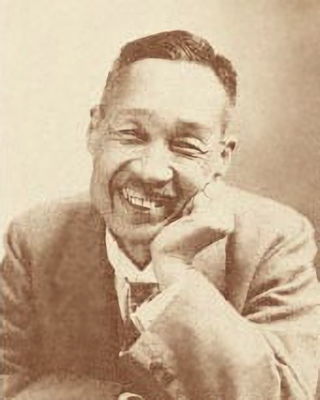
Suzuki 1950s

II. THE UNCONSCIOUS IN ZEN BUDDHISM, by D. T. Suzuki

(Suzuki-The-Unconscious-in-Zen-Buddhism)

What I mean by “the unconscious” and what psychoanalysts mean by it may be different, and I have to explain my position. First, how do I approach the question of the unconscious? If such a term could be used, I would say that my “unconscious” is “metascientific” or “antescientific.” You are all scientists and I am a Zen-man and my approach is “antescientific”—or even “antiscientific” sometimes, I am afraid. “Antescientific” may not be an appropriate term, but it seems to express what I wish it to mean. “Metascientific” may not be bad, either, for the Zen position develops after science or intellectualization has occupied for some time the whole field of human study. And Zen demands that before we give ourselves up unconditionally to the scientific sway over the whole field of human activities, we stop and reflect within ourselves and see if things are all right as they are.

The scientific method in the study of reality is to view an object from the so-called objective point of view. For instance, suppose a flower here on the table is the object of scientific study. Scientists will subject it to all kinds of analyses, botanical, chemical, physical, etc., and tell us all that they have found out about the flower from their respective angles of study, and say that the study of the flower is exhausted and that there is nothing more to state about it, unless something new is discovered accidentally in the course of other studies.

The chief characteristic, therefore, which distinguishes the scientific approach to reality is to describe an object, to talk about it, to go around it, to catch anything that attracts our sense-intellect and abstract it away from the object itself. And when all is supposedly finished, to synthesize these analytically formulated abstractions and take the outcome for the object itself.

But the question still remains: “Has the complete object been really caught in the net?” I would say, “Decidedly not!” Because the object we think we have caught is nothing but the sum of abstractions and not the object itself. For practical and utilitarian purposes, all these so-called scientific formulas seem to be more than enough. But the object, so-called, is not all there. After the net is drawn up, we find that something has escaped its finer meshes.

There is, however, another way, which precedes the sciences or comes after them, to approach reality. I call it the Zen approach.

1.

The Zen approach is to enter right into the object itself and see it, as it were, from the inside. To know the flower is to become the flower, to be the flower, to bloom as the flower, and to enjoy the sunlight as well as the rainfall. When this is done, the flower speaks to me and I know all its secrets, all its joys, all its sufferings—that is, all its life vibrating within itself. Not only that. Along with my “knowledge” of the flower, I know all the secrets of the universe, which includes all the secrets of my own Self, which has been eluding my pursuit all my life so far because I divided myself into a duality, the pursuer and the pursued, the object and the shadow. No wonder that I never succeeded in catching my Self, and how exhausting this game was!

Now, however, by knowing the flower, I know my Self. That is, by losing myself in the flower I know my Self as well as the flower.

I call this kind of approach to reality the Zen way, the antescientific, or metascientific, or even the antiscientific way.

This way of knowing or seeing reality may also be called conative or creative. While the scientific way kills, murders the object, and by dissecting the corpse and putting the parts together again tries to reproduce the original living body, which is really a deed of impossibility, the Zen way takes life as it is lived, instead of chopping it to pieces and trying to restore its life by intellection, or in abstraction gluing the broken pieces together. The Zen way preserves life as life; no surgical knife touches it. The Zen poet sings:

All is left to her natural beauty,
Her skin is intact,
Her bones are as they are:
There is no need for the paints, powders of any tint.
She is as she is, no more, no less.
How marvelous!

The sciences deal with abstractions and there is no activity in them. Zen plunges itself into the source of creativity and drinks from it all the life there is in it. This source is Zen’s Unconscious. The flower, however, is unconscious of itself. It is I who awaken it from the Unconscious. Tennyson misses it when he plucks it from the crannied wall. Basho has it when he looks at the shyly blooming nazuna by the wild hedge. I cannot tell just where the unconscious is. Is it in me? Or is it in the flower? Perhaps when I ask, “Where?” it is nowhere. If so, let me be in it and say nothing.

While the scientist murders, the artist attempts to recreate. The latter knows reality cannot be reached by dissection. He therefore uses canvas and brush and paints and tries to create out of his unconscious. When this unconscious sincerely and genuinely identifies itself with the Cosmic Unconscious, the artist’s creations are genuine. He has really created something. His work is not a copy of anything—it exists in its own right. He paints a flower which, if it is blooming from his unconscious, is a new flower and not an imitation of nature.

The abbot of a certain Zen monastery wished to have the ceiling of the Dharma Hall decorated with a dragon. A noted painter was asked to do the work. He accepted, but complained that he had never seen a real dragon, if such really existed. The abbot said, “Don’t mind your not having seen the creature. Become one. Be transformed into a living dragon, and paint it. Don’t try to follow the conventional pattern.”

The artist asked, “How can I become a dragon?” Replied the abbot, “You retire to your private room and concentrate your mind on it. The time will come when you feel that you must paint one. That is the moment when you have become the dragon, and the dragon urges you to give it form.”

The artist followed the abbot’s advice, and after several months’ strenuous strivings, he became confident of himself because of his seeing himself in the dragon out of his unconscious. The result is the dragon we see now on the ceiling of the Dharma Hall at the Myoshinji, Kyoto.

Incidentally, I want to mention another story of a dragon’s encounter with a Chinese painter. This painter wished to paint a dragon but, not having seen a live one yet, he longed for a good opportunity. One day a real one looked in from the window and said, “Here I am! Paint me!” The painter was so overtaken by this unexpected visitor that instead of looking carefully at it, he fainted. No picture of a live dragon came out of him.

The seeing is not enough. The artist must get into the thing and feel it inwardly and live its life himself. Thoreau is said to have been a far better naturalist than professional ones. So was Goethe. They knew nature just because of their being able to live it. The scientists treat it objectively, that is, superficially. “I and thou” may be all right, but we cannot in truth say that; for as soon as we say it, then “I” am “thou” and “thou” art “I.” Dualism can hold itself only when it is backed by something that is not dualistic.

Science thrives on dualism; therefore, scientists try to reduce everything into quantitative measurements. For this purpose they invent all kinds of mechanical devices. Technology is the keynote of modern culture. Anything that cannot be reduced to quantification they reject as not scientific, or as antescientific. They set up a certain set of rules, and things that elude them are naturally set aside as not belonging to their field of study. However fine the meshes, as long as they are meshes some things are sure to escape them and these things, therefore, cannot be measured in any way. Quantities are destined to be infinite, and the sciences are one day to confess their inability to inveigle Reality. The unconscious is outside the field of scientific study. Therefore, all that the scientists can do is point to the existence of such a field. And that is enough for science to do. (inveigle: literally to blind; figuratively to obtain something by ingenuity or flattery)

The unconscious is something to feel, not in its ordinary sense, but in what I would call the most primary or fundamental sense. This may need an explanation. When we say, “I feel the hard table,” or “I feel chilly,” this sort of feeling belongs in the domain of the senses, distinguishable from such senses as hearing or seeing. When we say, “I feel lonely,” or “I feel exalted,” this is more general, more totalistic, more innerly, but it still belongs in the field of relative consciousness. But the feeling of the unconscious is much more basic, primary, and points to the age of “Innocence,” when the awakening of consciousness out of the so-called chaotic Nature has not yet taken place. Nature, however, is not chaotic, because anything chaotic cannot exist all by itself. It is simply a concept given to the realm which refuses to be measured by the ordinary rules of ratiocination. Nature is chaotic in the sense that it is the reservoir of infinite possibilities. The consciousness evolved out of this chaos is something superficial, touching only the fringe of reality. Our consciousness is nothing but an insignificant floating piece of island in the oceans encircling the Earth. But it is through this little fragment of land that we can look out to the immense expanse of the unconscious itself. The feeling of it is all that we can have, but this feeling is not a small thing, because it is by means of this feeling that we can realize that our fragmentary existence gains its full significance, and thus that we can rest assured that we are not living in vain. Science, by definition, can never give us the sense of complete security and fearlessness which is the outgrowth of our feeling of the unconscious.

We cannot all be expected to be scientists, but we are so constituted by nature that we can all be artists—not, indeed, artists of special kinds, such as painters, sculptors, musicians, poets, etc., but artists of life. This profession, “artist of life,” may sound new and quite odd, but in point of fact we are all born artists of life and, not knowing it, most of us fail to be so, and the result is that we make a mess of our lives, asking, “What is the meaning of life?” “Are we not facing blank nothingness?” “After living seventy-eight, or even ninety years, where do we go? Nobody knows,” etc., etc. I am told that most modern men and women are neurotic on this account. But the Zen-man can tell them that they all have forgotten that they are born artists, creative artists of life, and that as soon as they realize this fact and truth they will all be cured of neurosis or psychosis or whatever name they have for their trouble.

2.

What then is meant by being an artist of life?

Artists of any kind, as far as we know, have to use one instrument or another to express themselves, to demonstrate their creativity in one form or another. The sculptor has to have stone or wood or clay and the chisel or some other tools to impress his ideas on the material. But an artist of life has no need of going out of himself. All the material, all the implements, all the technical skill that are ordinarily required are with him from the time of his birth, perhaps even before his parents gave him birth. This is unusual, extraordinary, you may exclaim. But when you think about this for a while you will, I am sure, realize what I mean. If you do not, I will be more explicit and tell you this: the body, the physical body we all have, is the material, corresponding to the painter’s canvas, the sculptor’s wood or stone or clay, the musician’s violin or flute, the singer’s vocal cords. And everything that is attached to the body, such as the hands, the feet, the trunk of the body, the head, the viscera, the nerves, the cells, thoughts, feelings, senses—everything, indeed, that goes to make up the whole personality—is both the material on which and the instruments with which the person molds his creative genius into conduct, into behavior, into all forms of action, indeed into life itself. To such a person his life reflects every image he creates out of his inexhaustive source of the unconscious. To such, his every deed expresses originality, creativity, his living personality. There is in it no conventionality, no conformity, no inhibitory motivation. He moves just as he pleases. His behavior is like the wind which bloweth as it listeth. He has no self encased in his fragmentary, limited, restrained, egocentric existence. He is gone out of this prison. One of the great Zen masters of the T’ang says: “With a man who is master of himself wherever he may be found he behaves truly to himself.” This man I call the true artist of life.

His Self has touched the unconscious, the source of infinite possibilities. His is “no-mind.” Says Bunan, the Zen master of the seventeenth century:

While alive
Be a dead man,
Thoroughly dead;
And act as you will,
And all is good.

To love God is to have no self, to be of no-mind, to become “a dead man,” to be free from the constrictive motivations of consciousness. This man’s “Good morning” has no human element of any kind of vested interest. He is addressed and he responds. He feels hungry and eats. Superficially, he is a natural man, coming right out of nature with no complicated ideologies of modern civilized man. But how rich his inward life is! Because it is in direct communion with the great unconscious.

I do not know if it is correct to call this kind of unconscious the Cosmic Unconscious. The reason I like to call it so is that what we generally call the relative field of consciousness vanishes away somewhere into the unknown, and this unknown, once recognized, enters into ordinary consciousness and puts in good order all the complexities there which have been tormenting us to greater or lesser degrees. The unknown thus gets related to our mind, and, to that extent, unknown and mind must be somehow of the same nature and cherish a mutual communication. We can thus state that our limited consciousness, inasmuch as we know its limitation, leads us to all sorts of worry, fear, unsteadiness. But as soon as it is realized that our consciousness comes out of something which, though not known in the way relative things are known, is intimately related to us, we are relieved of every form of tension and are thoroughly at rest and at peace with ourselves and with the world generally. May we not call this unknown the Cosmic Unconscious, or the source of infinite creativity whereby not only artists of every description nourish their inspirations, but even we ordinary beings are enabled, each according to his natural endowments, to turn his life into something of genuine art?

The following story may illustrate to a certain extent what I mean by transforming our everyday life into something of an art. Dogo of the eighth century was a great Zen master of the T’ang dynasty. He had a young disciple who wished to be taught Zen. He stayed with the master for some time but there was no specific teaching. One day he approached the master and said, “I have been with you for quite a while, but I have had no instruction. Why so? Please be good enough to advise me.” The master said, “Why! I have been instructing you in Zen ever since you came to me.” Protested the disciple, Pray tell me what instruction it was.” “When you see me in the morning you salute me, and I return it. When the morning meal is brought, I accept it gratefully. Where do I not point out the essence of the mind?” Hearing this, the disciple hung his head and seemed to be absorbed in deciphering the meaning of the master’s words. The master then told him, “As soon as you begin thinking about it, it is no more there. You must see it immediately, with no reasoning, with no hesitation.” This is said to have awakened the disciple to the truth of Zen.

The truth of Zen, just a little bit of it, is what turns one’s humdrum life, a life of monotonous, uninspiring commonplaceness, into one of art, full of genuine inner creativity.

There is in all this something which antedates the scientific study of reality, something which cannot be scooped up in the meshes of the scientifically constructed apparatus.

The unconscious in its Zen sense is, no doubt, the mysterious, the unknown, and for that reason unscientific or antescientific. But this does not mean that it is beyond the reach of our consciousness and something we have nothing to do with. In fact it is, on the contrary, the most intimate thing to us, and it is just because of this intimacy that it is difficult to take hold of, in the same way as the eye cannot see itself. To become, therefore, conscious of the unconscious requires a special training on the part of consciousness.

Etiologically speaking, consciousness was awakened from the unconscious sometime in the course of evolution. Nature works its way unconscious of itself, and the conscious man comes out of it. Consciousness is a leap, but the leap cannot mean a disconnection in its physical sense. For consciousness is in constant, uninterrupted communion with the unconscious. Indeed, without the latter the former could not function; it would lose its basis of operation. This is the reason why Zen declares that the Tao is “one’s everyday mind.” By Tao, Zen of course means the unconscious, which works all the time in our consciousness. The following mondo (question-and-answer) may help us to understand something of the Zen unconscious: When a monk asked a master what was meant by “one’s everyday mind,” he answered, “When hungry, I eat; when tired, I sleep.”

I am sure you would ask: “If this is the unconscious you Zen-men talk about as something highly mysterious and of the greatest value in human life as the transforming agent we cannot help doubting it. All those ‘unconscious’ deeds have long been relegated to our instinctive reflexive domain of consciousness in accordance with the principle of mental economy. We should like to see the unconscious connected with a much higher function of the mind, especially when, as in the case of a swordsman, this is attained only after long years of strenuous training. As to these reflexive acts, such as eating, drinking, sleeping, etc., they are shared by the lower animals as well as by infants. Zen certainly cannot value them as something the fully matured man has to strive to find meaning in.”

Let us see whether or not there is any essential difference between the “instinctive” unconscious and the highly “trained” unconscious.

Bankei, one of the great modern Japanese Zen masters, used to teach the doctrine of the Unborn. To demonstrate his idea he pointed to facts of our daily experience such as hearing a bird chirp, seeing a flower in bloom, etc., and said that these are all due to the presence in us of the Unborn. Whatever satori there is, it must be based on this experience and no others, he concluded.

This seems to point superficially to the identification of our sense-domain and the highly metaphysical Unborn. In one sense the identification is not wrong, but in another sense it is. For Bankei’s Unborn is the root of all things and includes not only the sense-domain of our daily experience but the totality of all realities past, present, and future and filling the cosmos to the ends of the ten quarters. Our “everyday mind,” or our daily experience, or our instinctive acts, as far as they are considered in themselves, have no special value and significance. They acquire these only when they are referred to the Unborn or what I have called the “Cosmic Unconscious.” For the Unborn is the fountainhead of all creative possibilities. It then so happens that when we eat it is not we who eat but the Unborn; when we sleep, tired, it is not we who sleep but the Unborn.

As long as the unconscious is an instinctive one, it does not go beyond that of animals or of infants. It cannot be that of the mature man. What belongs to the latter is the trained unconscious in which all the conscious experiences he has gone through since infancy are incorporated as constituting his whole being. For this reason, in the case of the swordsman, as soon as he takes up the sword his technical proficiency, together with his consciousness of the entire situation, recede into the background and his trained unconscious begins to play its part to the fullest extent. The sword is wielded as if it had a soul in itself.

Perhaps we can say this: the unconscious as far as it is related to the sense-domain is the outcome of a long process of evolution in the cosmical history of life, and it is shared alike by animals and infants. But as intellectual development takes place, as we grow up, the sense-domain is invaded by intellect and the naivete of sense-experience is lost. When we smile, it is not just smiling: something more is added. We do not eat as we did in our infancy; eating is mixed with intellection. And as we all realize this invasion by the intellect or the mixing with intellect, simple biological deeds are contaminated by egocentric interest. This means that there is now an intruder into the unconscious, which can no longer directly or immediately move into the field of consciousness, and all deeds that have been relegated to biologically instinctive functions now assume the role of consciously and intellectually directed acts.

This transformation is known as the loss of “innocence” or the acquirement of “knowledge” in the usage of the Biblical myth. In Zen and Buddhism generally it is called “the affective contamination (klesha)” or “the interference of the conscious mind predominated by intellection (manovijnana).”

The mature man is now asked by Zen to cleanse himself of this affective contamination and also to free himself of the intellectual conscious interference if he sincerely wishes to realize a life of freedom and spontaneity where such disturbing feelings as fear, anxiety, or insecurity have no room to assail him. When this liberation takes place, we have the “trained” unconscious operating in the field of consciousness. And we know what Bankei’s “Unborn” or the Chinese Zen master’s “everyday mind” is.

3.

We are now ready to hear Takuan’s advice to his swordsman disciple Yagyu Tajima-no-kami.

Takuan’s advice is chiefly concerned with keeping the mind always in the state of “flowing,” for he says when it stops anywhere that means the flow is interrupted and it is this interruption that is injurious to the well-being of the mind. In the case of a swordsman, it means death. The affective taint (klesha) darkens the mirror of man’s primary prajna, and the intellectual deliberation obstructs its native activity. Prajna, which Takuan calls “immovable prajna,” is the directing agency of all our movements, inner as well as outer, and when it is obstructed the conscious mind is clogged and the sword, disregarding the native, free, spontaneous directive activity of the “immovable prajna,” which corresponds to our unconscious, begins to obey the consciously acquired technical skill of the art. Prajna is the immovable mover which unconsciously operates in the field of consciousness.

When the swordsman stands against his opponent, he is not to think of the opponent, nor of himself, nor of his enemy’s sword-movements. He just stands there with his sword which, forgetful of all technique, is really only to follow the dictates of the unconscious. The man has effaced himself as the wielder of the sword. When he strikes, it is not the man but the sword in the hands of the unconscious that strikes. There are stories in which the man himself has not been aware of the fact that he has struck down the opponent—all unconsciously. The working of the unconscious is in many cases simply miraculous.

Let me give one instance: the Magnificent Seven.

There is a Japanese film, recently introduced to American audiences, with a scene where the unemployed samurais are given a trial of their swordsmanship. This is fictitious, but there is no doubt that it is all based on facts of history. The leader of the whole enterprise contrived a certain way whereby each swordplayer was to be tested. He placed a village youth behind the entrance which must be passed by every comer to the building. As soon as a samurai tried to step over this threshold, the young man was to strike him suddenly with a stick and see how the newcomer behaved.

The first one was caught and received the stick coming down on him with its full force. He failed to pass the test. The second one dodged the blow and in return struck the young man. He was not thought good enough to pass. The third one stopped at the entrance and told the one behind the door not to try such a mean trick on a fully seasoned warrior. For this one sensed the presence of a secret enemy inside even before he actually detected him who was securely hidden. This was due to the long experience this samurai had had to go through in those turbulent days. He thus proved to be a successful candidate for the work that was to be carried out in the village.

This sensing of an unseen enemy seems to have developed among the swordsmen to a most remarkable degree of efficiency in those feudal days when the samurai had to be on the alert in every possible situation that might arise in his daily life. Even while asleep he was ready to meet an untoward event.

I do not know if this sense could be called a sixth sense or a sort of telepathy and therefore a subject for parapsychology, so-called. One thing at least I wish to mention is that philosophers of swordplay ascribe this sense acquired by the swordsman to the working of the unconscious, which is awakened when he attains a state of selflessness, of no-mind. They would say that when the man is trained to the highest degree of the art he has no more of the ordinary relative consciousness in which he realizes that he is engaged in the struggle for life and death, and that when this training takes effect his mind is like a mirror on which every thought that would be moving in the opponent’s mind is reflected and he knows at once where and how to strike the opponent. (To be exact, this is not knowledge but an intuition taking place in the unconscious.) His sword moves, mechanically as it were, all by itself, over an opponent who finds defense impossible because the sword falls on the spot where the opponent is not at all on guard. The swordsman’s unconscious is thus said to be the outcome of selflessness which, being in accord with the “Reason of Heaven and Earth,” strikes down everything that is against this Reason. The race or the battle of swordsmanship is not to the swiftest or to the strongest or to the most skillful, but to the one whose mind is pure and selfless.

Whether or not we accept this interpretation is another question; the fact is that the master swordsman possesses what we may designate the unconscious and this state of mind is attained when he is no more conscious of his acts and leaves everything to something which is not of his relative consciousness. We call this something or somebody; because of it being outside the ordinary field of consciousness we have no word for it except to give it a negative name, X, or the unconscious. The unknown, or X, is too vague, and as it comes in connection with consciousness in such a way that X avails itself of all the technical skill acquired consciously, it may be not inappropriately designated as the unconscious.

4.

What is the nature of this unconscious? Is it still in the field of psychology, though in its widest sense of the term? Is it somehow related to the source of all things, such as the “Reason of Heaven and Earth,” or something else which comes up in the ontology of Eastern thinkers? Or shall we call it “the great perfect mirror-knowledge (adarsanajnana),” as it is sometimes called by Zen masters?

The following incident told of Yagyu Tajima-no-kami Munenori, a disciple of Takuan, the Zen master, may not be directly related to the unconscious described in the preceding part of this lecture. One reason is that he is not actually facing the enemy. But it may not be a matter of indifference to the psychologist to find that a faculty which may almost be called parapsychic can be developed by going through a certain form of discipline. I may perhaps add that the case of Yagyu Tajima-no-kami has, of course, not been tested in a scientific way. But there are a number of such cases recorded in the annals of Japanese swordsmanship, and even in our modern experiences there is reason to believe in the probability of such “telepathic” intuition, while I must repeat that this kind of psychological phenomenon has probably nothing to do with the unconscious of which I have been talking.

Yagyu Takima-no-kami was one spring day in his garden admiring the cherry trees in full bloom. He was, to all appearances, deeply absorbed in contemplation. He suddenly felt a sakki (air of murder) threatening him from behind. Yagyu turned around, but did not see any human being approaching except the young boy attendant who generally follows his lord carrying his sword. Yagyu could not determine the source from which emanated the sakki. This fact puzzled him exceedingly, tor he had acquired after long training in swordplay a kind of sixth sense whereby he could detect at once the presence of sakki.

He soon retired into his room and tried to solve the problem, which annoyed him very much. For he had never made a mistake before in detecting and locating definitely the origin of sakki whenever he sensed its presence. He looked so annoyed with himself that all his attendants were afraid of approaching him to ask what was the matter.

Finally, one of the older servants came up to him to inquire if he were not feeling ill and in need of their help in one way or another. Said the lord, “No, I am not ill. But I have experienced something strange while out in the garden, which goes beyond my understanding. I am contemplating the matter.” So saying, he told him the whole incident.

When the matter became known among the attendants, the young one who was following the lord came forward tremblingly and made this confession: “When I saw your lordship so absorbed in admiring the cherry blossoms, the thought came upon me: However skillful our lord may be in his use of the sword, he could not in all probability defend himself if I at this moment suddenly struck him from behind. It is likely that this secret thought of mine was felt by the lord.” So confessing, the young one was ready to be punished by the lord for his unseemly thought.

This cleared up the whole mystery that had been troubling Yagyu so very much and the lord was not in the mood to do anything to the innocent young offender. He was satisfied by seeing that his feeling did not err.

Erich Fromm, D. T. Suzuki, et al. (1960). Zen Buddhism and Psychoanalysis. New York: Harper Colophon Books (pp. 10-24).
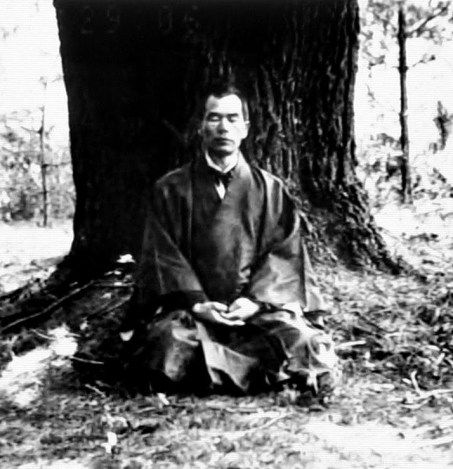
Zen meditation instruction

Instructions given by an eighth century Zen master:

The Bodhisattva who disciplines himself in Prajna should first of all awaken a great compassionate heart, make great universal vows, and be thoroughly versed in all Samadhis; this is in order to deliver all beings, for the Bodhisattva does not seek emancipation for his own benefit. Let him renounce all external relationships and put a stop to all worldly doings, so that his mind and body becoming one, they can be kept, moving or sitting, in perfect harmony with each other. His food should be regulated, neither too much nor too little, and his sleep also should be moderate, neither too long nor too short.

When he wishes to practise meditation, let him retire into a quiet room, where he prepares a thick well-wadded cushion for his seat, with his dress and belt loosely adjusted about his body. He then assumes his proper formal posture. He will sit with his legs fully crossed, that is, place the right foot over the left thigh and the left foot over the right thigh. Sometimes the half-cross-legged posture is permitted, in which case he simply lets the left leg rest over the right thigh. Next, he will place the right hand over the left leg with the palm up, and over this have the left hand, while the thumbs press against each other over the palm.

He now raises the whole body slowly and quietly, moves it repeatedly to the left and to the right, backward and forward, until the proper seat and straight posture are obtained. He will take care not to lean too much to one side, either left or right, forward or backward; his spinal column stands erect with the head, shoulders, back, and loins each properly supporting one another like a chaitya. But he is cautious not to sit too upright or rigidly, for he will then feel uneasy before long. The main thing is to have the ears and shoulders, nose and navel stand to each other in one vertical plane, while the tongue rests against the upper palate and the lips and teeth are firmly closed.

Let the eyes be slightly opened in order to avoid falling asleep. When meditation advances, the wisdom of this practice will grow apparent. Great masters of meditation from days of old have kept their eyes open. Yuan-t’ung, the Zen master of Fa-yun, has also had a strong opinion against the habit of closing the eyes, and called such practitioners “dwellers of the skeleton cave in the dark valley”. There is a deep sense in this, which is well understood by those who know.

When the position is steadied and the breathing regular, the practitioner will now assume a somewhat relaxed attitude. Let him not be concerned with ideas of good or bad. When a thought arises let him bring it into awareness; brought into awareness, the thought will vanish. When the exercise is kept up steadily and for a sufficient length of time, disturbing thoughts will naturally cease to arise [having been released] and there will prevail a state of oneness. This is the technique of practising meditation.

Meditation is the road leading to peace and happiness. The reason why there are so many people who grow ill is because they do not know how to prepare themselves properly for the exercise. If they well understand the directions as given above, they will, without straining themselves too much, acquire not only the lightness of the body but the briskness of spirit which finally brings about the clarification of the consciousness. The understanding of the Dharma will nourish the spirit and make the practitioner enjoy the pure bliss of tranquillity.

If he has already a realization within himself, his practice of meditation will be like a dragon getting into water, or a tiger crouching against a hillside. In case he has yet nothing of self-realization, the practice will be like fanning a flame; there should not be too much effort [lest one extinguish it]. Only let him not too easily be deceived as to what he may regard as self-realization.

When there is an enhanced spiritual quality, there is much susceptibility to the Evil One’s temptation, which comes in every possible form, both agreeable and disagreeable. Therefore the practiser must have his consciousness rightly adjusted and well in balance; then nothing will prevent his advancement in meditation. Concerning various mental aberrations worked out by the Evil One, a detailed treatment is given in The Leng-yen Sutra (Surangama, fas. VIII), the T’ien-tai Chih Kwan, and Keui-feng’s Book on Practice and Realisation. Those who wish to prepare themselves against untoward events should be well informed of the matter.

When the practitioner wants to rise from meditation, let him slowly and gently shake his body and quietly rise from the seat; never let him attempt to rise suddenly. After the rising let him always contrive to retain whatever mental power he has gained by meditation, as if he were watching over a baby; for this will help him in maturing the power of concentration.

Originally in Regulations of the Meditation Hall, compiled by Pai-chang (720-814) the founder of the Zen monastery in China (from a 1265 text).

Suzuki, D. T. (1953). Essays in Zen Buddhism (Second Series). London: Rider and Company (pp. 327-328).

D. T. Suzuki: Zen

Preface to The Training of the Zen Buddhist Monk (January, 1934)

For those who have not read my previous works on Zen Buddhism1 it may be necessary to say a few words about what Zen is. Zen (ch’an in Chinese) is the Japanese word for the Sanskrit Dhyana, which is usually translated in English by such terms as meditation, contemplation, ‘tranquillisation,’ concentration of mind, etc. Buddhism offers for its followers a triple form of discipline: Sila (morality), Dhyana (meditation), and Prajña (intuitive knowledge). Of these, the Dhyana achieved a special development in China when Buddhism passed through the crucible of Chinese psychology. As the result, we can say that Zen has become practically the Chinese modus operandi of Buddhism, especially for the intelligentsia. The philosophy of Zen is, of course, that of Buddhism, especially of the Prajñaparamita,2 highly coloured with the mysticism of the Avatamsaka.3 As Zen is a discipline and not a philosophy, it directly deals with life; and this is where Zen has developed its most characteristic features. It may be described as a form of mysticism, but the way it handles its experience is altogether unique. Hence the special designation, Zen Buddhism.

The beginning of Zen in China is traditionally ascribed to the coming of Bodhidharma (Bodai Daruma) from Southern India in the year 520. It took, however, about one hundred and fifty years before Zen was acclimatised as the product of the Chinese genius; for it was about the time of Hui-nêng (Yeno) and his followers that what is now known as Zen took definite shape to be distinguished from the Indian type of Buddhist mysticism. What are then the specific features of Zen which have gradually emerged in the history of Buddhist thought in China?

1 Essays in Zen Buddhism, First Series, published 1927; Second Series, 1933; Third Series, 1934. Luzac and Company, London.
2 See my Zen Essays, Third Series, p. 207 ff.
3 Ibid., p. 1 ff. and p. 55 ff.

Zen means, as I have said, Dhyana, but in the course of its development in China it has come to identify itself more with Prajña than with Dhyana. Prajña is intuitive knowledge as well as intuitive power itself. The power grows out of Dhyana, but Dhyana in itself does not constitute Prajña, and what Zen aims to realise is Prajña and not Dhyana. Zen tells us to grasp the truth of Sunyata, Absolute Emptiness, and this without the mediation of the intellect or logic. It is to be done by intuition or immediate perception. Hui-nêng and Shên-hui (one of Hui-nêng’s principal disciples) emphasised this aspect of Zen, calling it the abrupt teaching, in contrast to the gradual teaching, which emphasises Dhyana rather than Prajña. Zen, therefore, practically means the living of the Prajñaparamita.

The teaching of the Prajñaparamita is no other than the doctrine of Sunyata, and this is to be briefly explained. Sunyata, which is here translated emptiness, does not mean nothingness or vacuity or [a lack of content]. It has an absolute sense and refuses to be expressed in terms of relativity and of formal logic. It is expressible only in terms of contradiction. It cannot be grasped by means of concepts. The only way to understand it is to experience it in oneself. In this respect, therefore, the term sunyata belongs more to psychology than to anything else, especially as it is treated in Zen Buddhism. When the masters declare: Turn south and look at the polar star; The bridge flows but the water does not; The willow leaves are not green, the flowers are not red; etc., they are speaking in terms of their inner experience, and by this inner experience is meant the one which comes to us when mind and body dissolve, and by which all our ordinary ways of looking at the so-called world undergo some fundamental transformation. Naturally, statements issuing out of this sort of experience are full of contradictions and even appear altogether nonsensical. This is inevitable, but Zen finds its peculiar mission here.

What Indian Mahayana sutras state in abstract terms Zen does in concrete terms. Therefore, concrete individual images abound in Zen; in other words, Zen makes use, to a great extent, of poetical expressions; Zen is wedded to poetry.

In the beginning of Zen history there was no specified method of studying Zen. Those who wished to understand it came to the master, but the latter had no systematised instruction to give, for this was impossible in the nature of things. He simply expressed in his own way, either by gestures or in words his disapproval of whatever view his disciples might present to him, until he was fully satisfied with them. His dealing with his disciples was quite unique in the annals of spiritual exercises. He struck them with a stick, slapped them in the face, kicked them down to the ground; he gave an incoherent ejaculation, he laughed at them, made sometimes scornful, sometimes satirical, sometimes even abusive remarks, which will surely stagger those who are not used to the ways of a Zen master. This was not due to the irascible character of particular masters; it rather came out of the peculiar nature of the Zen experience, which, with all the means verbal and gesticulatory at his command, the master endeavours to communicate to his truth-seeking disciples. It was no easy task for them to understand this sort of communication. The point was, however, not to understand what came to them from the outside, but to awaken what lies within themselves. The master could not do anything further than indicate the way to it. In consequence of all this, there were not many who could readily grasp the teaching of Zen.

This difficulty, though inherent in the nature of Zen, was relieved a great deal by the development of the koan exercise in the eleventh century. This exercise has now become the special feature of Zen in Japan. Koan, literally meaning official document, is a kind of problem given to Zen students for solution, which leads to the realisation of the truth of Zen. The koans are principally taken from the old masters’ utterances. Now with a koan before the mind, the student knows whereto fix his attention and to find the way to a realisation. Before this, he had to grope altogether in the dark, not knowing where to lay his hand in his search of a light.

The koan exercise is no doubt a great help to the understanding of Zen, but at the same time it is liable to lower the spiritual quality of the students who come to study Zen. Systematisation in one sense means popularisation, for things become easier to comprehend by being put in order. But this democratic diffusion tends to kill the chance for originality and creativeness, and these are the characteristics of the religious genius. System does not permit irregularities; they are generally excluded from it. But in Zen these irregular leapings are the thing most needed, although the koan exercise is a very flexible system and by the judicious use of it the master is able to educate his students in full accordance with the real spirit of Zen.

Zen came to Japan in the thirteenth century when the Kamakura government under the Hojo family was having its heyday. It was at once embraced by the military class. Being direct and not requiring much learning, it was the very thing for the Hojo warriors. Japanese culture under the Hojo regime is noted for its austere simplicity, and for its vigorous creativeness, especially in religious thought: great Buddhist leaders were produced who founded new schools of Buddhism; most Zen monasteries of the first importance were established; and the rise of Bushido, the Warrior’s Way, is co-incident with the spread of Zen among the warrior class. The art of fencing, too, owes a great deal to the teaching of Zen, for it is deeply imbued with its mystic spirit. That the Japanese sword is to be used with both hands and that the Japanese warrior never carries a shield, always bending on attack, show how well the samurai appreciates the practice of Zen, in which the idea of going-straight-ahead-ness (mo chih ch’u) is strongly emphasized.

Zen has had far more in Japan than in China to do with the moulding of the character of her people and the development of her culture. That is perhaps one of the reasons why Zen is still a living spiritual force in Japan, while in China it has almost ceased to be so. The Zendo (Meditation Hall) in Japan is visited by youths of character and intelligence, and that Zen tradition is very much a living fact is shown by the sale of books on Zen. Many devoted followers of Zen can be found among businessmen, statesmen, and other people of social importance. The Zendo is thus by no means an institution exclusively meant for the monks.

There are at present over twenty such institutions in Japan which belong to the Rinzai branch of Zen. In the Soto branch, too, there must be many, of which, however, I am not so well informed, and what is described in the following pages is principally applicable to the Rinzai. While both the Rinzai and the Soto belong to Zen, they have been differentiated from each other in the course of their history in China, but much more emphatically in Japan. It is impossible, as I maintain, in the study of the Orient, especially in the study of Japanese character and culture, to neglect, much less to ignore, the influence of Zen. Zen ought to be studied not only in its theoretical aspect as a unique product of the Oriental mind, but in its practical aspect as is to be seen in the Zendo life.

This is the chief motive for my writing this book, which is fully illustrated by Reverend Zenchu Sato of Tokeiji, Kamakura. He is not a professional painter, but being one of those who have gone through all the disciplinary measures pertaining to the Zendo life, he is thoroughly imbued with its spirit, and what he has depicted here is the record of his own experience.

I have added many Zen interviews or dialogues or stories of the ancient masters culled somewhat at random from a work entitled Zen-rin Rui-shu in twenty fascicules. It is quite a handy book, giving Zen stories under classified headings; unfortunately, it is now a rare book.

DAISETZ TEITARO SUZUKI

KAMAKURA, JANUARY, 1934

D. T. Suzuki: Early Memories

Suzukiyoungman

Daisetz Teitaro Suzuki (1870-1966)

Ignorance is departure from home and enlightenment is returning. While wandering, we lead a life full of pain and suffering, and the world wherein we find ourselves is not a very desirable habitat. This is, however, put a stop to by enlightenment, as thus we are enabled once more to get settled at home where reign freedom and peace.

Prepared from interviews with Dr. Suzuki in 1964, when he was 94 years old, and published in the November 1964 issue of The Middle Way. Copied from The Training of the Zen Buddhist Monk (1965).


My family had been physicians for several generations in the town of Kanazawa. My father, grandfather and great-grandfather were all physicians and strangely enough they all died young. Of course, it was no very unusual thing to in those days to die young, but in the case of a physician under the old feudal regime it was doubly unfortunate, since the stipend his family received from his feudal lord was cut down. So my family, although of samurai rank, was already poverty stricken by my father’s time, and after his death, when I was only six years old, we became even poorer owing to all the economic troubles which befell the samurai class after the abolition of the feudal system.

To lose one’s father in those days was perhaps an even greater loss than it is now, for so much depended on him as head of the family – all the important steps in life such as education and finding a position in life afterwards. All this I lost, and by the time I was about seventeen or eighteen these misfortunes made me start thinking about my karma. Why should I have these disadvantages at the very start of life?

My thoughts then started to turn to philosophy and religion, and as my family belonged to the Rinzai sect of Zen it was natural that I should look to Zen for some of the answers to my problems. I remember going to the Rinzai temple where my family was registered – it was the smallest Rinzai temple in Kanazawa – and asking the priest there about Zen. Like many Zen priests in country temples in those days he did not know very much. In fact he had never even read the Hekiganroku, so that my interview with him did not last very long.

. . .

About that time a new teacher came to my school. He taught mathematics, and taught it so well that I began to take an interest in the subject under his guidance. But he was also very interested in Zen, and had been a pupil of Kosen Roshi, one of the great Zen masters of that time. He did his best to make his students interested in Zen, too, and distributed printed copies of Hakuin Zenshi’s Orategama 1 among them. I could not understand much of it, but somehow it interested me so much that in order to find out more about it I decided to visit a Zen master, Setsumon Roshi, who lived in a temple called Kokutaiji, near Takaoka in the province of Etchu. I set off from home not really knowing how to get to the temple at all, except that it was somewhere near Takaoka. I remember travelling in an old horse-drawn omnibus, only big enough to hold five or six people, over the Kurikara Pass through the mountains. Both the road and the carriage were terrible, and my head was always bumping against the ceiling. From Takaoka I suppose I must have walked the rest of the way to the temple.

I arrived without any introduction, but the monks were quite willing to take me in. They told me the Roshi was away, but that I could do zazen in a room in the temple if I liked. They told me how to sit and how to breathe and then left me alone in a little room telling me to go on like that. After a day or two of this the Roshi came back and I was taken to see him. Of course at that time I really knew nothing of Zen and had no idea of the correct etiquette in sanzen. I was just told to come and see the Roshi, so I went, holding my copy of the Orategama.

Most of the Orategama is written in fairly easy language, but there are some difficult Zen terms in it which I could not understand, so I asked the Roshi the meaning of these words. He turned on me angrily and said, “Why do you ask me a stupid question like that?” I was sent back to my room without any instruction and told simply to go on sitting cross-legged. I was left quite alone. No one told me anything. Even the monks who brought me my meals never spoke to me. It was the first time I had ever been away from home and soon I grew very lonely and homesick, and missed my mother very much. So after four or five days I left the temple and went back to my mother again. I remember nothing about my leave-taking with the Roshi, but I do remember how glad I was to be home again. A most ignoble retreat.

Then I started teaching English in a little village called Takojima on the Noto peninsula – that peninsula protruding into the Japan Sea. There was a Shin temple there with a learned priest who showed me a text book of the Yuishiki school called Hyappo Mondo, “Questions and Answers about the Hundred Dharmas.” But it was so remote and abstruse that, though I was eager to learn, I could not understand it at all well.

Then I got another position, teaching in Mikawa, a town about five ri  (15 miles) from our home in Kanazawa. Again I missed my mother very much and every weekend I used to walk all the way back to see her. It took about five hours and it meant my leaving the house at about one o’clock on Monday morning in order to be at the school on time. But I always stayed at home until the last minute as I wanted to see my mother as much as possible.

I might add, by the way, that the English I taught in those days was very strange – so strange that later when I first went to America nobody understood anything I said. We always translated everything absolutely literally, and I remember being very puzzled by the way one says in English “a dog has four legs,” “a cat has a tail.” In Japanese the verb ‘to have’ is not used this way. If you said “I have two hands” it would sound as though you were holding two extra hand in your own. Some time afterwards I developed the idea that this stress in Western thought on possession means a stress on power, dualism, rivalry [opposition?], which is lacking in Eastern thought.

During the six months I spent in Mikawa my Zen study stopped. But then I moved to Kobe, where my brother was working as a lawyer, and soon afterwards he sent me to Tokyo to study, with an allowance of six yen a month. In those days a student’s board and lodging for a month cost about three yen fifty sen. The university I chose to study at was Waseda, but one of the first things I did on arriving in Tokyo was to walk down to Kamakura to study Zen under Kosen Roshi, who was Abbott of Engakuji at that time. I remember that I walked all the way from Tokyo to Kamakura, leaving Tokyo in the evening and arriving in Kamakura early the next morning [thirty miles].

The shika monk, the guestmaster, took me to have my first introduction to the Roshi with ten sen “incense money” wrapped in paper and offered to him on a tray. The guestmaster impressed me very much. He looked just like the pictures of Daruma (Bodhidharma) I had seen, and had very much a Zen air. The Roshi was 76 years old when I first met him. He was a very big man, both in stature and personality, but owing to a recent stroke he had difficulty in walking. He asked me where I came from, and when I told him that I was born in Kanazawa he was pleased and encouraged me to go on with my Zen practice. This was probably because people from the Hokuriku district round Kanazawa were supposed to be particularly patient and steady.

The second time I met him, in a special interview, he gave me the koan Sekishu, “the sound of one hand.” I was not at all prepared to receive a koan at that time. In fact as regards Zen my mind was like a piece of blank paper. Anything could be written on it. Each time I went to sanzen he just put out his left hand towards me without speaking, which puzzled me very much. I remember trying to find reasonable answers to the koan of the sound of one hand, but all these Kosen Roshi naturally rejected, and after going to sanzen a few times I got into a kind of blind alley.

One interview with him impressed me particularly. He was having breakfast on a veranda overlooking a pond, sitting at a table on a rather rough little chair and eating rice gruel which he kept ladling out of an earthenware pot into his bowl. After I had made my three bows to him he told me to sit opposite him on another chair. I remember nothing that was said at that time, but every movement he made—the way he motioned me to sit on the chair, and the way he helped himself to the rice gruel from the pot—struck me with great force. Yes, that is exactly the way a Zen monk must behave, I thought. Everything about him had a directness and simplicity and sincerity and, of course, something more which cannot be specifically described.

The first time I attended his teisho lecture was also unforgettable. It was a solemn business, starting with the monks reciting the Heart Sutra and Muso Kokushi’s last words—“I have three kinds of disciples” and so on—while the Roshi prostrated himself in front of the statue of the Buddha, and then got up on his chair facing the alter, as though he were addressing the Buddha himself rather than the audience. His attendant brought him the reading stand, and by the time the chanting was finished he was about ready to start his lecture.

It was on the 42nd chapter of the Hekiganroku, the one where Layman P’ang Yun visits Yueh-shan, and after the interview Yueh-shan tells ten monks to see him off down the mountain to the temple gate. On the way the following conversation takes place:

“Fine snow falling, flake by flake. Each flake falls in its own proper place.” (See The Recorded Sayings of Layman P’ang)

This struck me as a strange subject for Zen monks to talk about, but the Roshi just read the passage without a word of explanation, reading as though he were entranced and absorbed by the words of the text. I was so impressed by this reading, even though I did not understand a word, that I can still see him sitting in his chair with the text in front of him reading “Fine snow falling flake by flake.”

All this happened in 1891, when he was 76 and I was 21.

I remember that year, too, attending the ceremony of Toji at the winter solstice, when the monks all pound rice to make rice cakes and have a general carousal, which goes on all night. The first of these rice cakes was always offered to the Buddha, and the second to the Roshi. Kosen Roshi was very fond of rice cakes dipped in grated daikon sauce, and in fact he would eat any amount of them. On that occasion he demanded a second helping, which his attendant monk refused to give him, saying that it was not good for him to eat so much. The Roshi replied, “I shall be quite all right if I take some digestive medicine.”

On 16th January of the following year, 1892, the Roshi suddenly died, and as it happened I was present at his death. I was in the anteroom next door to his room with his attendant monk, when suddenly we heard the sound of something heavy falling in the Roshi’s room. The attendant monk rushed in and found him lying unconscious on the floor. Apparently just as he was coming out of the washroom he had a stroke, fell and hit his head on the chest of drawers. That large body falling on the floor made a big noise. A physician was immediately summoned, but when he arrived and felt the Roshi’s pulse he said it was too late. The Roshi was already dead.

Kosen Roshi’s successor as Abbot of Engakuji was Shaku Soen. At the time when Kosen Roshi died, Soen had just come back from a visit to Ceylon to study Theravada Buddhism and was already a rising personality. He was not only very brilliant intellectually but had also received his inka-shomei, or certificate to become a Roshi, while he was still quite young—an unusual thing in those days when it took about fifteen years to reach so advanced a stage. After receiving his inka he went to Keio University to study Western subjects, which was again an unusual thing for a Zen priest to do. Many people criticized him for this step, including Kosen Roshi, who told him that Western studies would be of no use to him at all. But Shaku Soen never took any notice of other people’s criticisms, and just went quietly on in his own way. So altogether he was a remarkable person, with rather unconventional tendencies.

At Kosen Roshi’s funeral he was the chief mourner and performed all the ceremonies, and in the spring of 1892 he was installed as the new Abbot and I started to go to sanzen with him.

He changed my koan to Mu, as I was not getting on very well with the sound of one hand, and he thought I might have my kensho 2 quicker and earlier with Mu. He gave me no help at all with the koan, and after a few sanzen with him I had nothing to say.

There followed for me four years of struggle, a struggle mental, physical, moral and intellectual. I felt it must be ultimately quite simple to understand Mu, but how was I to take hold of this simple thing? It might be in a book, so I read all the books on Zen that I could lay my hands on. The temple where I was living at the time, Butsunichi, had a shrine attached to it dedicated to Hojo Tokimune, and in a room in that shrine all the books and documents belonging to the temple were kept. During the summer I spent nearly all my time in that room reading all the books I could find. My knowledge of Chinese was still limited, so many of the texts I could not understand, but I did my best to find out everything I could about Mu intellectually.

One of the books which interested me particularly was the Zenkan Sakushin, “Whips to drive you through the Zen Barrier,”3 compiled by a Chinese master of the Ming dynasty called Shuko. It was a collection of writings on Zen discipline and of advice given by various masters on how to deal with the koan. One of the examples I found in this book I thought I must try to follow. It said,

When you have enough faith, then you have enough doubt (tai-i). And when you have enough doubt, then you have enough satori. All the knowledge and experience and wonderful phrases and feelings of pride that you accumulated before your study of Zen — all these things you must throw out. Pour all your mental force into solving the koan. Sit up straight regardless of day and night, concentrating your mind on the koan. When you have been doing this for some time you will find yourself in timelessness and spacelessness like a dead man. When you reach that state something starts up within yourself and suddenly it is as though your skull were broken in pieces. The experience that you gain then has not come from outside, but from within yourself.

Then in the way of moral effort I used to spend many nights in a cave at the back of the Shariden building, where the Buddha’s tooth is enshrined. But there was always a weakness of willpower in me, so that often I failed to sit up all night in the cave, finding some excuse to leave, such as the mosquitoes.

Suzukimeditation

I was busy during these four years with various writings, including translating Dr. Carus’s Gospel of Buddha into Japanese, but all the time the koan was worrying at the back of my mind. It was, without any doubt, my chief preoccupation and I remember sitting in a field leaning against a rice stack and thinking that if I could not understand Mu, life had no meaning for me. Nishida Kitaro wrote somewhere in his diary that I often talked about committing suicide at this period, though I have no recollection of doing so myself. After finding that I had nothing more to say about Mu I stopped going to sanzen with Shaku Soen, except for the sosan or compulsory sanzen during a sesshin. And then all that usually happened was that the Roshi hit me.

It often happens that some kind of crisis is necessary in one’s life to make one put forth all one’s strength in solving the koan. This is well illustrated by a story in the book Keikyoku Soden, “Stories of Brambles and Thistles,” compiled by one of Hakuin Zenshi’s disciples, telling of various prickly experiences in practising Zen.

A monk came from Okinawa to study Zen under Suio, one of Hakuin’s great disciples and a rough and strong-minded fellow. It was he who taught Hakuin how to paint. The monk stayed with Suio for three years working on the koan of the sound of one hand. Eventually, when the time for him to go back to Okinawa was fast approaching and he had still not solved his koan, he got very distressed and came to Suio in tears. The Master consoled him, saying, “Don’t worry. Postpone your departure for another week and go on sitting with all your might.” Seven days passed, but still the koan remained unsolved. Again the monk came to Suio, who counselled him to postpone his departure for yet another week. When that week was up and he still had not solved the koan, the Master said, “There are many ancient examples of people who have attained satori after three weeks, so try a third week.” But the third week passed and still the koan was not solved, so the Master said, “Now try five more days.” But the five days passed, and the monk was no nearer solving the koan, so finally the Master said, “This time try three more days and if after three days you have still not solved the koan, then you must die.”

Then, for the first time, the monk decided to devote the whole of whatever life was left to him to solving the koan, and after three days he solved it.

The moral of this story is that one must decide to throw absolutely everything one has into the effort. “Man’s extremity is God’s opportunity.” It often happens that just as one reaches the depths of despair and decides to take one’s life then and there that satori comes. I imagine that with many people satori may have come when it was just too late. They were already on their way to death.

Ordinarily there are so many choices one can make, or excuses one can make to oneself. To solve a koan one must be standing at an extremity, with no possibility of choice confronting one. There is just one thing that one must do.

This crisis of extremity came for me when it was finally settled that I should go to America to help Dr. Carus with his translation of the Tao Te Ching. I realized that the Rohatsu sesshin that winter [1896] might be my last chance to go to sesshin and that if I did not solve my koan then I might never be able to do so. I must have put all my spiritual strength into that sesshin.

Up till then I had always been conscious that Mu was in my mind. But so long as I was conscious of Mu it meant that I was somehow separate from Mu, and that is not a true samadhi. But towards the end of that sesshin, about the fifth day, I ceased to be conscious of Mu. I was one with Mu, identified with Mu, so that there was no longer the separateness implied by being conscious of Mu. This is the real state of samadhi.

But this samadhi alone is not enough. You must come out of that state, be awakened from it, and that awakening is Prajna. That moment of coming out of the samadhi and seeing it for what it is – that is satori. When I came out of that state of samadhi during that sesshin I said, “I see. This is it.”

I have no idea how long I was in that state of samadhi, but I was awakened from it by the sound of the bell. I went to sanzen with the Roshi, and he asked me some of the test questions about Mu. I answered all of them except one, which I hesitated over, and at once he sent me out. But the next morning early I went to sanzen again and this time I could answer it. I remember that night as I walked back from the monastery to my quarters in the Kigenin Temple, seeing the trees in the moonlight. They looked transparent and I was transparent too.

I would like to stress the importance of becoming conscious of what it is that one has experienced. After kensho I was still not fully conscious of my experience. I was still in a kind of dream. The greater depth of realization came later while I was in America, when suddenly the Zen phrase hiji soto ni magarazu, “the elbow does not bend outwards,” became clear to me. “The elbow does not bend outwards” might seem to express a kind of necessity, but suddenly I saw that this restriction was really freedom, and I felt that the whole question of free will had been solved for me.

After that I did not find passing koans at all difficult. Of course other koans are needed to clarify kensho, the first experience, but it is the first experience that is the most important. The others simply serve to make it more complete and to enable one to understand it more deeply and clearly.

  1. Orategama: Yampolsky, Philip B. (1971). The Zen Master Hakuin: Selected Writings. New York: Columbia University Press. https://terebess.hu/zen/Orategama.pdf
  2. Kensho: “Seeing into the Self-nature.” Can be described as the first glimpse of satori or enlightenment.
  3. Broughton, Jeffrey L. (2015). The Chan Whip Anthology. New York: Oxford University Press.
IMG_1459

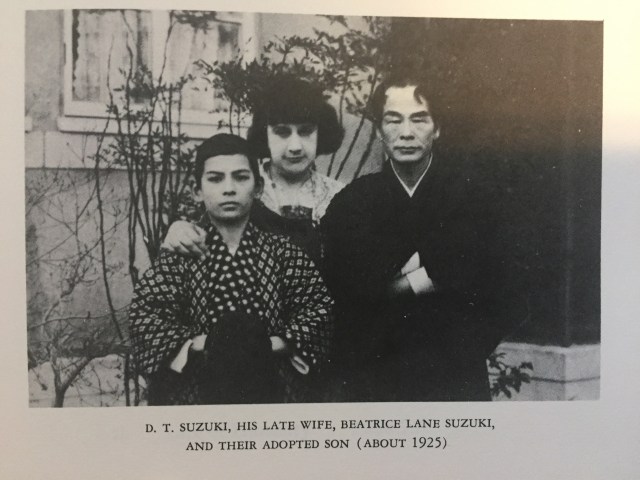
With his wife and son, Alan Masaru Suzuki

Suzuki, Daisetz Teitaro (1965). The Training of the Zen Buddhist Monk. New York: University Books.

For a summary of the biographical facts of Suzuki’s life, see https://biography.yourdictionary.com/daisetz-teitaro-suzuki


The Capala Sutra

There are three types of person in the world. The first has no eyes, the second has one eye, and the third has two eyes. The person with no eyes never listens to the doctrine. The person with one eye listens to the doctrine for a time, but his mind is not pacified. The person with two eyes listens with an exclusive mind and acts in strict accordance with what he has heard. Of hearing we know that there are three such kinds. For this reason, giving ear to the doctrine brings one close to Mahaparinirvana. – Nirvana Sutra (Page)

The Capala “Nodding” Sutra

Translated by Thanissaro Bhikkhu

All things are unworthy of attachment

Once the Blessed One was living among the Bhaggas in the Deer Park at Bhesakala Forest, near Crocodile Haunt. At that time Venerable Maha Moggallana sat nodding near the village of Kallavalamutta, in Magadha. The Blessed One, with his purified divine eye, surpassing the human, saw Venerable Maha Moggallana as he sat nodding near the village of Kallavalamutta in Magadha. As soon as he saw this, as easily as a strong man might flex or extend his arm he disappeared from among the monks in the Deer Park at Bhesakala Forest and re-appeared near the village of Kallavalamutta in Magadha, right in front of Venerable Maha Moggallana. There the Blessed One sat down on a prepared seat and said to Venerab;e Maha Moggallana: Are you nodding, Moggallana? Are you nodding?

Yes, Lord.

Well then, Moggallana, whatever thought you have in mind when drowsiness descends on you, don’t attend to that thought, don’t pursue it. It’s possible that by doing this you will shake off your drowsiness.

But if by doing this you don’t shake off your drowsiness, then recall to your awareness the doctrine as you have heard and memorized it: re-examine it, and ponder it over in your mind. It’s possible that by doing this you will shake off your drowsiness.

But if by doing this you don’t shake off your drowsiness, then repeat aloud in detail the doctrine as you have heard and memorized it. It’s possible that by doing this you will shake off your drowsiness.

But if by doing this you don’t shake off your drowsiness, then pull both your earlobes and rub your limbs with your hands. It’s possible that by doing this you will shake off your drowsiness.

But if by doing this you don’t shake off your drowsiness, then get up from your seat and, after splashing water in your eyes, look around in all directions and upward to the major stars and constellations. It’s possible that by doing this you will shake off your drowsiness.

But if by doing this you don’t shake off your drowsiness, then attend to the perception of light: imagine it is daytime, by night as by day, and by day as by night. By means of an awareness thus open and unhindered, develop an illuminated mind. It’s possible that by doing this you will shake off your drowsiness.

But if by doing this you don’t shake off your drowsiness, then, aware of what lies before and behind you, set a distance to meditate walking back and forth, your senses inwardly immersed, your mind not straying outwards. It’s possible that by doing this you will shake off your drowsiness.

But if by doing this you don’t shake off your drowsiness, then reclining on your right side take up the lion’s posture, one foot placed on top of the other, mindful, alert, with your mind set on getting up. As soon as you wake up, get up quickly, with the thought: I won’t stay indulging in the pleasure of lying down, the pleasure of reclining, the pleasure of drowsiness. Thus you should train yourself.

Moreover, Moggallana, you should train yourself thus: I will not visit families with my pride [lit. elephant-trunk] raised high. That is how you should train yourself. Among families there are many chores that must be done, so that people don’t pay attention to a visiting monk. If a monk visits them with his trunk raised high, the thought will occur to him: Now who, I wonder, has caused a split between me and this family? The people seem to have no liking for me. Getting nothing, he becomes abashed. Abashed, he becomes restless. Restless, he becomes unrestrained. Unrestrained, his mind is far from concentration.

Moreover, Moggallana, you should train yourself thus: I will utter no confrontational speech. That is how you should train yourself. When there is confrontational speech, a lot of argument can be expected. When there is a lot of argument, there is restlessness. One who is restless becomes unrestrained. Unrestrained, his mind is far from concentration.

It is not the case, Moggallana, that I approve of association of every sort; nor is it the case that I view association of every sort with disapproval. I don’t approve of association with householders and renunciates; but as for dwelling places that are free from hurry, free from noise, their surroundings devoid of people, appropriately secluded that one may rest undisturbed by human beings, I approve of association with dwelling places of this sort.

When this was said, Venerable Moggallana said to the Blessed One: Briefly, Lord, how is a monk liberated through the cessation of craving, so that he is utterly complete, utterly freed from limitations, a follower of the utterly holy life, utterly consummate, foremost among devas and human beings?

There is the case, Moggallana, where a monk has heard: All phenomena are unworthy of attachment. Having heard that all phenomena are unworthy of attachment, he has direct knowledge of every phenomenon. Directly knowing every phenomenon, he comprehends every phenomenon. Comprehending every phenomenon, whatever feeling he experiences—pleasurable, painful, neither pleasurable nor painful—he remains focused on its impermanence, focused on dispassion, focused on the cessation of craving, focused on letting go of that feeling. As he remains focused on impermanence, focused on dispassion, focused on the cessation of craving, focused on letting go of that feeling, he is not dependent on anything in the world. Independent, he is unperturbed. Unperturbed, he is completely liberated right within. He discerns: Birth is ended, the holy life fulfilled, the task done. There is nothing further for this world.

It is in this way, Moggallana, that a monk is liberated through the cessation of craving, utterly complete, utterly free from limitations, a follower of the utterly holy life, utterly consummate, foremost among devas and human beings.

The Perfection of Faith

“Star Trek” (2009). On his third attempt, Cadet James T. Kirk defeats a simulation programmed so that the ship is always destroyed no matter what the captain does. Before the test, he asks his friend, Leonard McCoy, to attend. McCoy tells him, “Jim, it’s the Kobayashi Maru: no one passes the test! And no one goes back for seconds, let alone thirds.” But McCoy is wrong on both counts. First, we come back to the no-win scenario over and over and over again—it’s called existence. Second, it is possible to pass the test: all we have to do is refuse to accept the simulation as real.

Adhitthana (Pali): Decision; resolution; determination; purpose.

Virya (Sanskrit): Energy or zeal. It comes from an ancient Indian-Iranian word that means ‘hero’. The virya paramita is about making a heroic effort to realize enlightenment.

Peitho (Greek): Faith. The verb πειθω (peitho) and its derived noun πιστις (pistis) are possibly the most signature words of the Greek New Testament. The verb means to persuade, and the noun means faith, trust or certainty. From the noun pistis comes the verb πιστευω (pisteuo), meaning to have faith; that is, to behave as someone who has persuaded himself into certainty. (Abarim Publications)

“The unworthiness distortion blocks the free flow of intelligent energy.”  (The Law of One, Session 12)

And faith is of things hoped for a confidence, of matters not seen a conviction. (Hebrews 11 : 1)

“The man must be so much that he must make all circumstances indifferent.” – Ralph Waldo Emerson, “Self-Reliance

“Maha means great.” – Hui-neng

Faith is the belief that you are something infinitely greater than a mind and body.

TO BELIEVE in spiritual truths is a simple matter of choice; however, to have the confidence that you will attain self-realization is more difficult.

Lester Levenson was a man born with a great degree of courage and self-confidence.  To him the biggest hindrance was what he called apathy.  Apathy may not be the right word for what he meant: it comes from the Greek apatheia, which is from apathes—‘without feeling, without suffering’.  What Lester meant by apathy was giving up, not fighting.  But one who has given up is not free of suffering.

Curiously enough, Lester lived in the same time and place as Norman Vincent Peale, the author of The Power of Positive Thinking.  Peale is famous for fusing psychology, Christian faith, and “modern metaphysical spirituality”—a movement which followed William James and Ralph Waldo Emerson.  Peale’s Marble Collegiate Church was in Manhattan, which was where Lester lived.  And one of the families that attended this church was that of Mr. and Mrs. Fred Trump, who took their son Donald and his sisters to listen to Peale’s sermons.  Completing the chain of coincidences, a condominium named Trump Parc is two doors down from Lester’s former penthouse on Central Park South, where he attained complete self-realization.

According to biographer Carol George, Peale was plagued by an inferiority complex his whole life.  One of his professors at Ohio Wesleyan University identified the source of his problem as egotism.

The modified curriculum brought in the expected new offerings in the social sciences while keeping in place the traditional class format of lecture and student recitation.  Whatever feelings of social liberation Peale felt in the fraternity house failed to sustain him in the classroom, where he continued to be haunted by his old fears when called on to recite.  On those painful occasions, his shyness would overwhelm him, and his face flushed with embarrassment, he would stumble over answers he knew.  His economics instructor, a Professor Arneson, detained him after one of his classes to talk about the problem.  Arneson observed that an inferiority complex was actually rooted in egotism and self-centeredness.  Aware of his student’s background [as the son of a Methodist minister], Arneson sent him on his way with two potent suggestions: to ask Jesus to help him deal with his problem, and to check the writings of William James in the library. (p. 36)

What we learn from this story is that self-doubt comes from identification with the ego.  The ego craves approval and is terrified of disapproval.  Why?  Because over many lifetimes it has been conditioned to believe that it must be accepted by others in order to survive.  In order to be self-confident, therefore, we must let go of this ridiculous idea of surviving, and instead put our faith God.  As Meister Eckhart put it,

The sign of perfect love is if one has great hope and trust in God; for there is no better sign of perfect love than trust. . . . Of all things a man can do, none is so seemly as putting full trust in God. There was none who ever had full confidence in Him but He wrought great things with him. And He has proved to all men that this confidence comes from love, for love has not only confidence, it has true knowledge and indubitable security. (The Talks of Instruction, “Of True Confidence and Hope”)

Don’t push self-doubt away: release it

You might think that ignoring your self-doubt will make it go away, but it doesn’t.  Furthermore, you can’t cancel out negative thoughts by repeating positive thoughts.  Hale Dwoskin  (a student of Lester Levenson) observed that if an affirmation doesn’t feel true, repeating it only reminds you of the doubt you are trying to get rid of.

When I was in my early 20s, I was extremely shy.  I couldn’t approach women.  I had no idea how to properly introduce myself to strangers, let alone make small talk.  I’d heard that positive affirmations and “happy thoughts” could bury my fears and help me build the confidence I needed.  I was certain that if I told myself I was great in a crowd, I would be great in a crowd.  So for months on end I walked around all day long repeating over and over in my head, “I am highly pleasing to myself in the presence of other people.”

Instead of trying to overpower self-doubt with positive thoughts, we need to ask ourselves why we are afraid of failure. We may be terrified that people won’t like us.  Contrary to what you might think, bringing up this fear and observing it doesn’t give it more power, but releases it for good.

In order to bring up the fear of failure, Lester challenged his students to try to achieve goals they wanted in life.  Sounding like Bodhdharma, he said:

The aversions to the world are difficult to see.  Your attachments are obvious, and you’re chasing them all the time, but the aversions you push out of the way.  So when you go for a goal, up come the anti’s—“Oh, I’m afraid,” “I can’t,” and all that stuff.  So, it’s a gimmick for getting up the aversions to the world, getting them up into sight so you can let them go.  If you don’t get a thing into consciousness, you cannot see it or handle it. (The most effective way of releasing)

Setting a goal can be effective as long as you don’t forget that the goal isn’t to succeed, but to let go of fear—to change “I can’t” to “I can.”  If you are building a wall at bricklaying school, you aren’t going to take the wall home with you, only the skill.  Forget about the wall and focus on the skill.

The following is the greatest story in history of someone who let go of self-doubt:

With all his memory and learning, Ananda could not sound the bottom of the Buddha’s wisdom while the latter was still alive. According to tradition, Ananda’s attainment to Arhatship took place at the time of the First Convocation, in which he was not allowed to take part in spite of his twenty-five years’ attendance upon the Buddha. Grieving over the fact, he spent the whole night perambulating in an open square, and when he was about to lay himself down on a couch all exhausted, he all of a sudden came to realize the truth of Buddhism, which with all his knowledge and understanding had escaped him all those years. (Suzuki, 1953, p. 67)

What happened to Ananda that he finally attained enlightenment? Instead of pushing away his fear that he would never become an Arhat, he allowed his despair to come up and embraced it, and by so doing, released it.

Wear the mantle of greatness that is your nature

In his essay, “Self-Reliance,” Emerson tells us to disdain the opinion of others and recognize our worth within.  Our worth does not need the testimony of any deeds we may accomplish, because what we are is the infinite Self.

Emerson sees in the respect that ordinary people show for men of power and wealth an obscure recognition of their own innate royalty:

The world has been instructed by its kings, who have so magnetized the eyes of nations. It has been taught by this colossal symbol the mutual reverence that is due from man to man. The joyful loyalty with which men have everywhere suffered the king, the noble, or the great proprietor to walk among them by a law of his own, make his own scale of men and things, and reverse theirs, pay for benefits not with money but with honor, and represent the law in his person, was the hieroglyphic by which they [common men] obscurely signified their consciousness of their own right and comeliness, the right of every man.

The description of Self as royal is found in several Buddhist texts, from Hakuin’s Orategama to the Tao Te Ching of Lao-Tzu:

25. Envisioning the Mysterious

5. The saying goes: “The Tao is great, heaven is great, earth is great, and royalty also is great.

6. Man follows the laws of the earth. The earth follows the laws of heaven. Heaven follows the laws of the Tao. The Tao follows its own self-nature. (https://www.sacred-texts.com/tao/crv/crv031.htm)

The source of this greatness, Lao-tzu, tells us, is the Tao:

16. Returning to the Source

1. By attaining the height of abstraction we gain fulness of rest.

2. All the ten thousand things arise, and I see them return. Now they bloom in bloom but each one homeward returneth to its source.

3. Returning to the source means rest. It signifies the return according to destiny. Return according to destiny means the eternal. Knowing the eternal means enlightenment. Not knowing the eternal causes passions to rise; and that is evil.

4. Knowing the eternal renders one comprehensive [all-encompassing]. Comprehensiveness renders one broad. Breadth renders one royal. Royalty renders one heavenly. Heaven renders one Tao-like. The Tao renders one lasting. Thus the decay of the body implies no danger. (Suzuki and Carus, The Canon of Reason and Virtue)

All things are are too small to hold me, I am so vast. – Hadewijch

Meister Eckhart employs terms like “sovereignty” and “nobility” to describe the magnificence of the highest state:

For the Now in which God made the first man and the Now in which the last man shall cease to be, and the Now I speak in, all are the same in God and there is but one Now. Observe, this man dwells in one light with God, having no suffering and no sequence of time, but one equal eternity. This man is bereft of wonderment and all things are in him in their essence. Therefore nothing new comes to him from future things nor any accident, for he dwells in the Now, ever new and without intermission. Such is the divine sovereignty dwelling in this power. (Sermon Eight)

Emerson, like Lao Tzu, tells us that self-confidence comes from our dawning realization that we are one with the source of all things:

The magnetism which all original action exerts is explained when we inquire the reason of self-trust.

Who is the Trustee?  What is the aboriginal Self, on which a universal reliance may be grounded?  What is the nature and power of that science-baffling star, without parallax, without calculable elements, which shoots a ray of beauty even into trivial and impure actions, if the least mark of independence appear?  The inquiry leads us to that source, at once the essence of genius, of virtue, and of life, which we call Spontaneity or Instinct.  We denote this primary wisdom as Intuition, whilst all later teachings are tuitions.  In that deep force, the last fact behind which analysis cannot go, all things find their common origin.  For, the sense of being which in calm hours rises, we know not how, in the soul, is not diverse from things, from space, from light, from time, from man, but one with them, and proceeds obviously from the same source whence their life and being also proceed.  We first share the life by which things exist, and afterwards see them as appearances in nature, and forget that we have shared their cause.  Here is the fountain of action and of thought.  Here are the lungs of that inspiration which giveth man wisdom, and which cannot be denied without impiety and atheism. We lie in the lap of immense intelligence, which makes us receivers of its truth and organs of its activity.  When we discern justice, when we discern truth, we do nothing of ourselves, but allow a passage to its beams.

“Do or die”

In days of old, generals would order bridges to be burned after they had crossed them so that their soldiers wouldn’t attempt to go back to their farms.  The temptation to go back is sometimes expressed by the thought, “at least”—“I may not succeed, but at least I have this consolation.”  To seek consolation in anything except success will only bring failure.  Or, as Meister Eckhart put it, to seek comfort in anything but God will bring you neither comfort nor God.

So, if you would seek and find perfect joy and comfort in God, see to it that you are free of all creatures and of all comfort from creatures; for assuredly, as long as you are or can be comforted by creatures, you will never find true comfort. But when nothing can comfort you but God, then God will comfort you, and with Him and in Him all that is bliss. While what is not God comforts you, you will have no comfort here or hereafter, but when creatures give you no comfort and you have no taste for them, then you will find comfort both here and hereafter. (The Book of Divine Comfort, Complete Works, p. 535)

You can achieve Self-realization in this lifetime if you decide that you are going to do it, no matter what it takes.

To have faith means to dare, to think the unthinkable. This hope is not passive and it is not patient; on the contrary, it is impatient and active, looking for every possibility of action within the realm of real possibilities. Least of all it is passive as far as the growth and liberation of one’s own person are concerned. – Erich Fromm

* * *

Lin-chi:

The Master instructed the group, saying: “Those who study the Way need to have faith in themselves and not go looking for something outside. Whatever confronts you, don’t let it get the better of you. If you entertain even a moment of doubt, the devil will enter your mind. Even a bodhisattva, when he starts doubting, is prey to the devil of birth and death. Learn to put a stop to thoughts; whenever anything  appears, shine your light on it. Just have faith in this thing that is operating in you right now. Outside of it, nothing else exists.” (Lin-chi)

Master Zhichang of Guizong Temple of Mt. Lu:

The virtuous of former times were not lacking in knowledge and understanding.  Those great adepts were not of the common stream.  People these days are unable to be self-empowered, nor can they stand alone; they just idly pass the time.  All of you here, don’t make the mistake of employing your mind.  No one can do this for you.  Moreover, there is no place where the mind can be used.  Don’t go seeking anything outside of yourselves.  Up to now you have been acting in accordance with someone else’s understanding. (https://terebess.hu/zen/mesterek/GuizongZhichang.html)

Yeshua:

And seeing a fig tree afar off having leaves, he came, if perhaps he might find anything thereon: and when he came to it, he found nothing but leaves; for the season of figs was not yet.  And Jesus said to it: No man eat fruit of you hereafter forever; And his disciples heard it.

And in the morning, as they passed by, they saw the fig tree dried up from the roots.  And Peter calling to remembrance said to him: Teacher, behold, the fig tree which you cursed is withered away.

And Jesus answering said to them: Have faith in God.  For verily I say to you, that whosoever shall say unto this mountain, Be removed, and be cast into the sea, and shall not doubt in his heart but shall believe that those things which he said shall come to pass, he shall have whatsoever he said.  Therefore I say to you, whatever things you desire, when you pray, believe that you will receive them and you shall have them. (Mark 11:13-23, New King James)

Jacob, brother of Yeshua:

My brethren, count it all joy when you fall into various trials, knowing that the testing of your faith produces patience.  But let patience have its perfect work, that you may be perfect and complete, lacking nothing.  If any of you lacks wisdom, let him ask of God, who gives to all liberally and without reproach, and it will be given to him.  But let him ask in faith, with no doubting, for he who doubts is like a wave of the sea driven and tossed by the wind.  For let not that man suppose that he will receive anything from the Lord; he is a double-minded man, unstable in all his ways. (James 1:2, New King James)

Ralph Waldo Emerson:

Let a man then know his worth, and keep things under his feet.  Let him not peep or steal, or skulk up and down with the air of a charity-boy, a bastard, or an interloper, in the world which exists for him.  But the man in the street, finding no worth in himself which corresponds to the force which built a tower or sculptured a marble god, feels poor when he looks on these.  To him a palace, a statue, or a costly book have an alien and forbidding air, much like a gay equipage, and seem to say like that, ‘Who are you, Sir?’  Yet they all are his, suitors for his notice, petitioners to his faculties that they will come out and take possession.  The picture waits for my verdict: it is not to command me, but I am to settle its claims to praise.  That popular fable of the sot who was picked up dead drunk in the street, carried to the duke’s house, washed and dressed and laid in the duke’s bed, and, on his waking, treated with all obsequious ceremony like the duke, and assured that he had been insane, owes its popularity to the fact that it symbolizes so well the state of man, who is in the world a sort of sot, but now and then wakes up, exercises his reason, and finds himself a true prince. (https://emersoncentral.com/texts/essays-first-series/self-reliance/#fl-main-content)

Thiago Braz 2

Thiago Braz 3

Thiago Braz

Thiago Braz da Silva sets Olympic record in 2016, clearing 6.03 metres

Lester Levenson on Conviction

The moment we decide to be the Self—really decide—it is so!

We should expect to go all the way. Every one of us is born with the ability to do it in this lifetime.

Whatever your expectations are, raise them higher. Expect no less than infinity.

You will move as quickly as you expect to. To move more rapidly, expect it.

Every impossible, no matter how impossible, becomes immediately possible when we are completely released on it. And you know you are completely released when you just don’t give a damn.

* * *

Emerson, Ralph Waldo (1840). “Self-Reliance.” https://emersoncentral.com/texts/

Erich Fromm, D. T. Suzuki, et al. (1960). Zen Buddhism and Psychoanalysis. New York: Harper Colophon Books.

George, Carol V. R. (1993). God’s Salesman: Norman Vincent Peale and the Power of Positive Thinking. New York, Oxford: Oxford University Press.

Levenson, Lester (1993). Keys to the Ultimate Freedom: Thoughts and Talks on Personal Transformation. Phoenix, Arizona: Sedona Institute. ISBN 0-915721-03-1

Sedona Training Associates (2005). The Insider’s Guide to the Sedona Method. http://www.sedona.com (The-Sedona-Method)

Seretan, Stephen (2008). Lester and Me. (download)

Suzuki, D. T. (1953). Essays in Zen Buddhism (Second Series). London: Rider and Company.

The Law of One. https://www.lawofone.info/s/12#23

Walshe, Maurice O’C. (2009). The Complete Mystical Works of Meister Eckhart. New York: The Crossroad Publishing Company. (download)

The Perfection of Renunciation

Meister Eckhart: Sermon Forty

Now listen to a true saying! If a man gave a thousand marks of gold for building churches and convents, that would be a great thing. Yet that man would give far more who could regard a thousand marks as nothing; he would have done far more than the other.

When God created all creatures, they were so poor and narrow that He could not move in them. But the soul He made like Himself and in His own image so that He could give himself to her, for she had no care for whatever else God gave her. God must give Himself to me to have as my own just as He is His own, or I shall get nothing and nothing will [satisfy me]. Whoever shall thus receive Him completely must have wholly renounced himself and gone out of himself. He gets directly from God all that God has as His own, just as much as it is God’s . . . Those who have gone out of themselves and renounced themselves in equal measure will receive equally, and no less. (Walshe, Vol I, p. 281)

As long as the least of creatures absorbs your attention, you will see nothing of God, however small that creature may be. If there were nothing between God and the soul, the soul would see God at once, for God uses no media nor will He suffer any intervention. If all the shells were removed from the soul . . . He could give Himself directly to the soul without reserve. But as long as the soul’s shells are intact—be they ever so slight—the soul cannot see God. If anything, even to the extent of a hairbreadth, came between the body and the soul, there could be no true union of the two. If that is the case with physical things, how much more true it is with spiritual! Thus Boethius says: “If you want to know the straight truth, put away joy and fear, expectation, hope and disappointment.’’ Joy, fear, expectation, hope, and disappointment are all intervening media, all shells. As long as you stick to them and they to you, you shall not see God. (Sermon Forty Two, MODICUM ET I AM NON VIDEBITIS ME.)

Jeanne Guyon:

I beg of you, whoever you may be, who are desirous of giving yourselves to God, not to take yourselves back when once you are given to Him, and to remember that a thing once given away is no longer at your disposal. Abandonment is the key to the inner life: he who is thoroughly abandoned will soon be perfect.

You must, then, hold firmly to your abandonment, without listening to reason or to reflection. A great faith makes a great abandonment; you must trust wholly in God. Abandonment is the casting off of all care of ourselves, to leave ourselves to be guided entirely by God.

All Christians are exhorted to abandonment, for it is said to all, “Take no thought for the morrow; for your Heavenly Father knows that you have need of all these things” (Matt. vi. 32, 34). “In all your ways acknowledge Him, and He shall direct your paths” (Prov. iii. 6). “Commit your works unto the Lord, and your thoughts shall be established” (Prov. xvi. 3). “Commit your way unto the Lord; trust also in Him; and He shall bring it to pass” (Ps. xxxvii. 5).

Abandonment, then, ought to be an utter leaving of ourselves, both outwardly and inwardly, in the hands of God, forgetting ourselves, and thinking only of God. By this means the heart is kept always free and contented.

Practically it should be a continual loss of our own will in the will of God, a renunciation of all natural inclinations, however good they may appear, in order that we may be left free to choose only as God chooses: we should be indifferent to all things, whether temporal or spiritual, for the body or the soul; leaving the past in forgetfulness, the future to providence, and giving the present to God; contented with the present moment, which brings with it God’s eternal will for us; attributing nothing which happens to us to the creature, but seeing all things in God, and regarding them as coming infallibly from His hand, with the exception only of our own sin.

Leave yourselves, then, to be guided by God as He will, whether as regards the inner or the outward life. (A Short Method of Prayer)

Guru Bhaduri:

“Master, you are wonderful!” A student, taking his leave, gazed at the sage. “You have renounced riches and comforts to seek God and teach us wisdom!” It was well known that Bhaduri Mahasaya had forsaken great family wealth in his early childhood, when single-mindedly he entered the yogic path.

“You are reversing the case!” the saint replied. “I have left a few paltry rupees, a few petty pleasures, for a cosmic realm of endless bliss. How then have I denied myself anything? I know the joy of sharing the treasure. Is that a sacrifice? The shortsighted worldly folk are verily the real renunciates! They give up an unparalleled divine possession for a poor handful of earthly toys!”

“The world is full of uneasy believers in an outward security. Their bitter thoughts are like scars on their foreheads. The One who gave us air and milk from our first breath knows how to provide day by day for His devotees.” (Yogananda)

Meister Eckhart: The Book of Divine Comfort

So, if you would seek and find perfect joy and comfort in God, see to it that you are free of all creatures and of all comfort from creatures; for assuredly, as long as you are or can be comforted by creatures, you will never find true comfort. But when nothing can comfort you but God, then God will comfort you, and with Him and in Him all that is bliss. While what is not God comforts you, you will have no comfort here or hereafter, but when creatures give you no comfort and you have no taste for them, then you will find comfort both here and hereafter. (Complete Works, p. 535)

Chuang Tzu:

YAO WANTED TO CEDE THE EMPIRE to Hsu Yu, but Hsu Yu refused to accept it. Then he tried to give it to Tzu-chou Chih-fu. Tzu-chou Chih-fu said, “Make me the Son of Heaven? – that would be all right, I suppose. But I happen to have a deep-seated and worrisome illness which I am just now trying to put in order. So I have no time to put the empire in order.” The empire is a thing of supreme importance, yet he would not allow it to harm his life. How much less, then, any other thing! Only he who has no use for the empire is fit to be entrusted with it.

Shun wanted to cede the empire to Tzu-chou Chih-po, but Tzu-chou Chih-po said, “I happen to have a deep-seated and worrisome illness which I am just now trying to put in order. So I have no time to put the empire in order.” The empire is a great vessel, yet he would not exchange his life for it. This is how the possessor of the Way differs from the vulgar man.

Shun tried to cede the empire to Shan Ch’uan, but Shan Ch’uan said, “I stand in the midst of space and time. Winter days I dress in skins and furs, summer days, in vine-cloth and hemp. In spring I plow and plant – this gives my body the labor and exercise it needs; in fall I harvest and store away – this gives my form the leisure and sustenance it needs. When the sun comes up, I work; when the sun goes down, I rest. I wander free and easy between heaven and earth, and my mind has found all that it could wish for. What use would I have for the empire? What a pity that you don’t understand me!” In the end he would not accept, but went away, entering deep into the mountains, and no one ever knew where he had gone.

Shun wanted to cede the empire to his friend, the farmer of Stone Door. The farmer of Stone Door said, “Such vigor and vitality you have, My Lord! You are a gentleman of perseverance and strength!” Then, surmising that Shun’s virtue would hardly amount to very much [for his rebirth], he lifted his wife upon his back, took his son by the hand, and disappeared among the islands of the sea, never to return to the end of his days.

Meister Eckhart: Sermon Fifty-Five

He who gives up all things gets back a hundredfold. But whoever expects a hundredfold will get nothing, for he is not giving up all things but wanting his hundredfold back. But our Lord promises a hundredfold to those who leave all things: then he will get a hundredfold back and eternal life as well. It might be that a man, in the course of giving up things, got back the very thing he had given up; but if any should give up anything for this very reason, then, not giving all, he would get nothing. Anyone who seeks anything in God—knowledge, understanding, devotion, or whatever it might be—though he may find it he will not have found God. Even though he may indeed find knowledge, understanding, or inwardness, which I heartily commend, it will not stay with him. But if he seeks nothing, he will find God and all things in Him, and they will remain with him. (Walshe, 2009, p. 289)

Yeshua:

Then he called the crowd to him along with his disciples. He told them: If anyone wants to come after me, he must renounce himself (απαρνησασθω). For whoever would save his soul (ψυχη psuche) shall lose it; but whoever loses his soul (ψυχη) shall save it. What does it profit a man to gain the whole world yet harm (ζημιωθη) his soul? Or what will a man give in exchange for his soul?** Mark 8 : 34-36 (Abarim Publications)

**This is the most difficult passage of the synoptic gospels. The Greek psyche may be the equivalent of the Chinese hsin or the German, Geist—the ego, or false self. To paraphrase the passage in this sense: “Whoever would save his false self will lose it to death; but whoever loses his false self will be saved from death.”

Meister Eckhart: The Talks of Instruction

As Christ says, “He who abandons anything for my sake will receive again a hundredfold” (Matt. 1 9:29). Truly, whatever a man gives up or renounces for God’s sake, even if that man greatly yearns for the consolation of such feelings and such inwardness and does all he can to get it, and God denies it to him, if he renounces and does without it for God’s sake, then in truth he will find it just as if he had possessed everything and had willingly abandoned, renounced and given it up for God. He will be rewarded a hundredfold. For whatever a man would have, whether it is physical or spiritual, if he renounces and does without it for God’s sake, he will find it all in God just as if he had had it and had willingly given it up; for a man must suffer himself to be deprived of all things for God’s sake. (Walshe, 2009, p. 496)

Layman P’ang:

THE LAYMAN, whose personal name was Yun and whose nickname was Tao-hsuan, was a native of Hsiang-yang. His father held the office of Prefect of Heng-yang. The Layman lived in the southern part of the city. There he built a hermitage, carrying on his religious practices to the west of the house, and after several years his entire household attained the Way. This was what is now Wu-k’ung Hermitage. Later he gave his former dwelling near the hermitage to be made into a temple. This was what is now Neng-jen Temple.

During the Chen-yuan era [785-804] of T’ang he loaded the treasure of his household—several tens of thousands of strings of coins—onto a boat in Tung-t’ing Lake to the right of the river Shao, and sank it in the middle of the stream. After that he lived like a single leaf.

The Layman had a wife, a son, and a daughter. They sold bamboo utensils in order to obtain their morning and evening meals. The Layman often used to say:

I’ve a boy who has no bride
I’ve a girl who has no groom
Forming a happy family circle
We speak about the Birthless

Meister Eckhart: “The Talks of Instruction”

It is written: “They have become rich in all virtues” (Cor. 1:5). Truly that can never happen unless we become poor in all things. He who would receive all things must first give up all things. This is fair dealing and an even exchange, as I said at one time.

Therefore, when God wishes to give us himself and all things in free possession, he wishes to take from us, once and for all, all possessiveness. Indeed, God would not that we should possess even so much as a speck of dust in the eye; for of all his gifts, gifts of nature and of grace, he never gave any but that we might possess nothing of our own; for such possession he has not granted in any way, not to his mother, to any man or any creature. And in order to teach us this or to prepare us for this he frequently takes away from us both physical and spiritual things. Not even honor shall be ours but shall belong to him alone. We are to have what we have as if it were loaned to us and not given, without possession, whether it be body or soul, senses, powers, outward goods or honours, friends, relations, houses, castles, or anything at all.

What is God’s purpose that he insists so much on this? He wishes himself to be our sole and perfect possession. His chief delight and enjoyment consist of this, and the more exclusively he can be our own the greater his joy. Thus the more things we keep for ourselves the less we have his love; the less things we own the more we shall own him and his. When our Lord went to speak of things that are blessed he crowned them all with poverty of spirit, and that shows that all blessings and perfection begin with being poor in spirit. Indeed that is the only foundation on which any good may rest; otherwise it is neither this nor that.

When we get rid of outward things, in return God shall give us all that heaven contains—indeed, heaven and all its powers, and all that flows out of God. Whatever the saints and angels have shall be ours as much as theirs, far more than any thing is mine. In return for my going out of myself for his sake, God will be mine entirely with all that he is and can do, as much mine as his, no more and no less.

Do you want to know what a really poor person is like? To be poor in spirit is to do without all unnecessary things. That person who sat naked in his tub said to the mighty Alexander, who had all the world under his feet: “I am a greater Lord than you are, for I have despised more than you have possessed. What you have felt so proud to own I consider too little even to despise.”1 He is far more blessed who does without things because he does not need them, than he who owns everything because he needs it all; but that man is best who can do without because he has no need. Therefore, he who can do without the most and has the most disregard for things has given up the most. It seems a great deed if a man gives up a thousand marks of gold for God’s sake and builds hermitages and monasteries and feeds all the poor; that would be a great deed. But he would be far more blessed who should despise all of that for God’s sake. That man would possesses the kingdom of heaven who could give up all things, even those which God had not given him. (Blakney pp. 39-40) (Walshe, Vol. III, pp. 53-54)

1 Diogenes (411-313 b.c.e.). Student of Antisthenes and a renunciate, who made an abandoned tub in the marketplace his home. Alexander, who had a great admiration for sages, asked Diogenes if there was anything that he could do for him, and Diogenes asked him to stop blocking his sunlight.

Eckhart seems to have confused this exchange with an encounter between an Indian yogi named Dandamis and a messenger from Alexander. The following account is told by Yogananda:

Shortly after Alexander had arrived in Taxila in northern India, he sent a messenger, Onesikritos, to summon Dandamis.
“Hail to thee, O teacher of Brahmins!” he said to the sage. “The son of the mighty God Zeus, being Alexander who is the Sovereign Lord of all men, asks you to go to him. If you comply, he will reward you with great gifts, but if you refuse, he will cut off your head!”

The yogi answered Onesikritos,

“Know this, that the gifts Alexander promises are to me things of no value. Should Alexander cut off my head, he cannot destroy my soul. Let Alexander terrify with threats those who crave wealth and who fear death, for the Brahmins neither love gold nor fear death. Go, then, and tell Alexander this: Dandamis has no need of anything that you have, and therefore will not go to you; and if you want anything from Dandamis, come you to him.” (Yogananda)

Guyon, J. M. B. de la Mot (1875). A Short Method of Prayer. London: Sampson Low, Marston, Low & Searle. https://faculty.gordon.edu/hu/bi/ted_hildebrandt/spiritualformation/texts/guyon_shortmethodofprayer.pdf

Ruth Fuller Sasaki, Yoshitaka Iriya and Dana Fraser (1971). The Recorded Sayings of Layman P’ang: A Ninth-Century Zen Classic. New York: Weatherhill, Inc. (download)

M. O’C. Walshe (1987). Meister Eckhart: Sermons & Treatises (Vol. I & III). UK: Element Books Limited.

Walshe, Maurice O’C. (2009). The Complete Mystical Works of Meister Eckhart. New York: The Crossroad Publishing Company. (download)

Yogananda, Paramhansa (1946). Autobiography of a Yogi. New York: The Philosophical Library.
https://www.holybooks.com/wp-content/uploads/Autobiography-of-a-Yogi-by-Paramahansa-Yogananda.pdf

Watson, Burton (1968). The Complete Works of Chuang Tzu. https://terebess.hu/english/chuangtzu3.html

Song of Angya

Angya (行脚) is the traditional pilgrimage a monk makes from monastery to monastery, literally translated as “to go on foot.” (Suzuki, p. 5)


Cat Stevens: “On the Road to Find Out” (Tea for the Tillerman)


SONG OF ANGYA

“Determined to leave his parents, what does he want to accomplish?
He is a Buddhist, a homeless monk now, and no more a man of the world;
His mind is ever intent on the mastery of the Dharma.

“His conduct is to be as transparent as ice or a crystal,
His is not to seek fame or wealth,
He is to rid himself of defilements of all sorts.

“He has no other way open to him but to go about and inquire;
Let him be trained in mind and body by walking over the mountains and fording the rivers;
Let him befriend sages in the Dharma and pay them respect wherever he may encounter them;
Let him brave the snow, tread on the frosty roads, not minding the severity of the weather;
Let him cross the waves and penetrate the clouds, chasing away dragons and evil spirits.

“His iron staff accompanies him wherever he travels and his copper pitcher is full.
Let him not then be bothered with the longs and shorts of worldly affairs,
His friends are those in the monastery with whom he may ponder the Dharma,
Cutting off once and for all the four propositions and one hundred negations.

“Beware of being led astray by others to no purpose whatever;
Now that you are in the monastery your business is to walk the Great Path,
And not to get attached to the world, but to be empty of all trivialities;
Holding fast to the ultimate truth, do not refuse hard work in any form;
Cutting yourself off from noise and crowds, stop all your striving and craving.

“Thinking of the one who threw himself down the precipice, and the one who stood all night in the snow, gather up all your fortitude,
So that you may keep the glory of your Dharma-king manifested all the time;
Be ever studious in the pursuit of the truth, be ever reverential towards the elders;
You are asked to withstand the cold and the heat and privations,
Because you have not yet come to the abode of peace;
Cherish no envious thoughts for worldly prosperity, be not downhearted just because you are rebuked;
But endeavor to see directly into your own nature, not depending on others.

“Over the five lakes and the four seas you pilgrim from monastery to monastery;
To walk thousands of miles over hundreds of mountains is indeed no easy task;
May you finally intimately interview the master in the Dharma and be led to see into your own nature,
When you will no longer take weeds for medicinal plants.”

Hsuan Hua (1974). The Diamond Sutra: A General Explanation of the Vajra Prajna Paramita Sutra. San Francisco, Calif.: Sino-American Buddhist Association, Inc. (Diamond-Sutra-BTTS)

Suzuki, Daisetz Teitaro (1965). The Training of the Zen Buddhist Monk. New York: University Books.

There are no problems to solve

aדיה לצרה בשעתה
“The suffering of the hour is enough for it” (“Sufficient unto the day is the evil thereof”)
 – Rabbinic saying meaning, You have enough trouble today without worrying about the future.

Focus your attention on the NOW and tell me what problem you have at this moment.  I am not getting any answer because it is impossible to have a problem when your attention is fully in the Now.  A situation needs to be either dealt with or accepted: why make it into a problem?  The mind unconsciously loves problems because they give you an identity of sorts.  This is normal, and it is insane.  When you create a problem, you create pain.  All it takes is a simple choice, a simple decision: No matter what happens, I will create no more pain for myself.  I will create no more problems. – Eckhart Tolle (1999)

Stop looking for problems

Lester Levenson noticed that whenever he was thinking, he worried, and that whenever he worried, he was thinking: the two went hand-in-hand.  It is the ego that constantly creates problems for us, and this produces a state of constant anxiety.

There’s no end to problems in the world.  You go on and on forever and ever solving problems in the world and you’ll have more and more.  As long as you are conscious of problems, they exist.  Only when you discover the real you are there no problems. (1993, Session 2)

The thought summons

Most of us think that if we anticipate everything that can go wrong, we can somehow prevent it.  Sometimes we anticipate trouble in order to psychologically brace ourselves for it.  Then again, some people console themselves when things go wrong by saying, “I knew this was going to happen.”

Strange as it may seem, however, it is the negative thoughts themselves that create our problems.  Expectations are like commands that we issue to the universe.  We don’t know when our expectations will become reality, and they don’t always become reality, but they are the sole cause of all events.

Before “science” became the dominant religion in the world, people believed that “the thought summons.”  The thought still summons, and quantum physics has proven that reality is completely dependent on our consciousness.  In spite of this scientific fact, however, scientists still cling to the outdated belief that events have an objective existence.  The reality is, however, that you are the sole creator of every obstacle in your life.  For instructions on how to stop creating obstacles, see The Perfection of Faith.

You are the sole creator of every obstacle in your life.

Become an optimist

Because expectations create all events in the world, optimistic people lead happy lives and pessimistic people lead unhappy lives.  It is also a fact that people who believe in God are much more optimistic.  Therefore, if you want to change from a pessimist to an optimist, the first thing to do is to put all of your faith and trust and hope in God.  Trust in God is all or nothing.  Either you trust in God, or you trust authorities and experts and doctors and buy insurance.

Another thing you should do if you want to be an optimist is to immediately release your fear whenever it arises.  Any time you feel anxious, stop what you are doing and acknowledge your anxiety: “This makes me feel anxious.”  See Letting Go of the Ego for instructions on releasing fear.

The third thing you should do to become an optimist is to practice seeing the good in everyone and everything.  As Saint Mariam of Jesus Crucified said: “Be very charitable; when one of your eyes sees what is not right, shut it and then open the other one!  Change everything into good.”

Practice acceptance

Besides “the thought summons,” there is another old belief that one should never say out loud what one desires.  If you want to win a competition, it is best to say, “I will win, God willing.”  If you want your loved one to recover from an illness, say, “It’s up to God.”  Cultivate the attitude that, I am content with whatever God wills to happen.

“Moonshadow”, by Cat Stevens

Don’t fear death

The moment you die, all of your troubles are over.  What a relief!  Rebirth is your only real problem, but as soon as you stop viewing that as a problem, there is no more rebirth.  And how is this accomplished?  By fearing neither death nor life.

What is meant by not rejecting the conditioned?  It means looking upon the (heavenly) form and formless realms as if they were two of the hells and looking upon the realm of birth and death as though contemplating a garden. (Vimalakirti Sutra)

Samudaya (‘origin’): Now this, monks, is the Noble Truth of the origin of suffering: it is this craving (tanha, thirst) which leads to re-becoming, accompanied by delight and covetousness, seeking delight here and there; that is, craving for sensual pleasures, craving for becoming, craving for not becoming.* – Dhammacakkappavattana Sutta

(* The craving for not-becoming, or not being reborn, is a fear of living on Earth.)

Lester Levenson: Problems and How they Resolve

To the world everything seems hopeless; they feel helpless.  We know the way out.  No matter how much the world hurts, we know there’s a way out.  We have hope and a direction.  And what is the way out?  Not looking to the world for happiness, but looking to the place where happiness is, right within us, within our own consciousness.  Unlimited joy and freedom is our natural, inherent state, which we have, through ignorance, undone by imposing concepts of limitations—I need this, I need him, I need her, and if I don’t get what I want I am hurt, I have trouble.  Growth, on the other hand, is letting go of these concepts of lack and limitation; or, on the positive side, going within and seeing this unlimited Being that we are and choosing to remain as such.

Any time we have trouble, any time we have a problem, we’re being the limited ego.  We’re trying to express the Self through the limited ego and it’s too small.  We get squeezed and it hurts.  So, if there is a problem, the thing to do is to ask yourself, “What am I doing?  Wherein am I desiring, seeking something with ego motivation?”  If the answer comes, if you see how, ego-wise, you’re causing this so-called problem, you’ll automatically pull the cause up from the subconscious into the conscious.  And once it’s conscious you’ll naturally let go of it.  The reason why we don’t let go is because the cause, the thought that initiated the difficulty, is subconscious.  So, either we make the thought conscious and let go of it, or—and this is the higher and better way—we know strongly enough that we are the Self, that we are not this body, this mind, this world.  And when you feel the Self, the feel of the Self is nothing but unlimited joy and all problems immediately resolve.

I sound quite indicting when I say any problem, any trouble, is ego-motivated, but that, you’ll find, is true. When you will be your Self there is no problem. There is nothing that will not fall into line perfectly, harmoniously, with no effort. The more ego-motivated we are, the more difficult it is to accomplish something, the less harmony there is, and the greater the misery we have. And it is really as simple as I’m putting it. What’s not easy is to let go of these wrong habits of insisting upon being an ego. . . . However, the moment we choose to let go of them, we can. If we say we can’t let go it’s because we really don’t want to. The desire to let go isn’t strong enough.

Man’s extremity is God’s opportunity.

Q: I have a friend who has problems. She’s Catholic and very pious. When things get blackest and she has no more hope and is at the bottom, at that very moment something happens so that everything turns out right.

Lester: Do you know why she must reach bottom?

Q: Well, she has faith and she knows that—

Lester: No, she doesn’t have faith and she is not pious: this is her trouble. You see, faith would cause her to let go and let God. Pious would cause a similar thing, surrendering and being humble. Outwardly she’s the way you say but inwardly she’s the way I’m saying. You see, she tries to control everything herself and that’s not letting God. She tries and she tries and she tries.

Q: She prays.

Lester: Yes, she prays, but she wants it the way she wants it, not the way God would want it. She’s found out that her praying for it doesn’t help her. You don’t have to pray if you surrender. You’ve got to let go and let God. When does she let go and let God? When there is nothing more she can do, then she lets go. In the extreme she lets go. And the moment one lets go, everything resolves itself. Can you see it? In the extreme, she feels, “Oh, there’s nothing more I can do,” and that’s when she lets go and lets God. If you can show her this point she’ll see it, most likely, and then she’ll be more consciously able to use it.

Q: I keep trying to tell her that she must be confident.

Lester: Conviction, stronger than faith, absolute conviction of God—that will do it! Let go and let God and then everything straightens out. But when we try to do it ourselves we have trouble.

If there’s effort, there’s ego.

Q: When you say, “Let go and let God,” does that mean that you should work strictly on inspiration, or just sit back and let things happen?

Lester: Have the feeling of letting things happen. To accomplish this we have to let the ego-sense go. The ego is “I am an individual, Lester, and I have a body and I do things.” That’s wrong. If I am the Self, there is no Lester. I have to get Lester out of the way and let Self or God operate. When achieved, you’ll move in life, you’ll sort of float through things, but there will be no effort. If there’s effort, there’s ego.

Now, of course, you’re going to have to use some effort because you’re not starting off as the realized Self. You see, when this girl is at an extremity, she lets go and things happen effortlessly. That’s letting go and letting God! Professing faith, professing all these things doesn’t do it. Actually having them does it. The fact that she has troubles is proof that she doesn’t have the conviction of God because God is all, God is perfect, and if God is all and God is perfect, everything must be perfect, and that leaves no place for imperfection or troubles. Take the attitude, “Whatever happens, so be it!” So, it’s the feeling that I am not the doer and that I let go and let it happen.

Then Yeshua said to his disciples, “Whoever wants to come after me, let him deny himself and take up his cross and let him come after me.” (Matthew 16 : 24)

Q: I can’t tell when I’m ego.

Lester: When there’s no effort, there’s no ego. The more the effort, the more the ego.

Q: When the effort is extreme you have to more or less go the other way anyway.

Lester: Yes. I’m trying to give you a method of knowing whether it’s ego or not. The more the effort, the greater the ego. However, you’re going to use effort until you’re fully realized. Now, there will be times when you’ll use no effort and everything will fall perfectly into line for you, so at times you’ll be your Self.

Q: But doesn’t this type of thing make you indolent, that you don’t do any action? Is it that you shouldn’t try to do anything? That’s what I don’t understand.

Lester: Indolence is an action, a negative action. It is the act of holding yourself back from moving. Right now it is impossible for you to be actionless. To achieve the actionless state you should try to let go of your ego more and more, because now you can’t do it totally. If you could, you’d be fully realized. But if you keep letting go of the ego, you will eventually drop it and be the witness and be not the doer. Does that make sense or have any meaning? Be not the doer. Let it happen. Have the feeling that it’s God’s world, whatever’s happening, so let Him.

Q: How do we get rid of problems?

Lester: The moment you say, “I have a problem,” you’re stuck. You are making it real. You can’t get rid of a problem because you are making it real. You’ve got it.

Q: So, if we say, “There is no problem at all,” will they vanish then?

Lester: No. If you say, “There’s no problem,” they won’t vanish because you’re saying, “problem”. You’re mentally holding the problem in mind and therefore sustaining it. Erase “problem” from your mind. Know that everything is perfect and then the problem is necessarily nonexistent.

Q: Well, I think that way, that everything is really perfect.

Lester: If you really do then everything must be. You see, naturally, life is totally effortless. There is no effort in life whatsoever if we are our natural Self. But we’re trying to be a limited ego, and that takes effort. It takes effort to be limited when your natural state is unlimited, and the more you try to be limited, the more effort it takes. But to be your unlimited Self takes no effort. Just like your friend, when she got to the extreme she would let go and everything would straighten out with no effort. [As long as] she was trying and trying, things were getting worse and worse, but when she gave up and let go, things resolved.

Q: Well, she had to go out and look for a job; she had to go to an agent. She couldn’t just sit down and wait.

Lester: I say all she had to do was to let go and be her Self. Then even if she locked herself in a chamber somewhere the things would have come to her. You don’t sit down and wait, you don’t do anything. Just let go of the sense of agency. You just know that everything is perfect and then the slightest thought you have will quickly come into being. There’s no limitation on God, the Self. Whatever you thought would have to come into being if you let go because you’re invoking your infinite power, your Self. Nothing can stop it!

Q: But at the same time you have to struggle to get some action.

Lester: No, I said just the opposite. I say lock yourself in a chamber and padlock the outside of it, and if you do what I’m saying you’ll find that it will be effected. It has to be. Nothing can stop it! Omnipotence is invoked!

Q: What is prayer for? What does praying mean?

Lester: Praying is for those who need praying. When you know what you know, to whom are you praying? If you are That, why do you have to pray to It? See, praying admits duality—I pray to God. Maintain your Oneness. However, when one prays it is best to pray for one thing only, more wisdom, so that you eliminate all need for any prayer, for any asking. It all depends on one’s state of understanding. Most people in the world today need to pray, but prayer admits duality—God is out there. And we should know that God is within. Even though Jesus said, “The kingdom of God is within,” we still look for God without and He’s not out there. He’s only within. He turns out to be our very own Beingness. The word “I” with nothing added to it is the God we seek. When you say “I am something,” that isn’t God; or “I and something,” that, too, isn’t God. But just pure “I” and only “I”, that is God. That is why it is said that God is closer than flesh. It’s “I”, and how close is “I”? It’s closer than the flesh is. And that is God—your very own Self!

Q: That’s a very good feeling.

Lester: Yes, because it’s reminding you of what you know subconsciously, that you are that Self. Just hold onto the word “I” only, “I, I, I, I”, and you’ll become more exhilarated! Just try it when you’re alone. Just “I, I, I” and not “I am a body, I am a mind,” but “I, I, I”, that feeling of Being.

I think the word that describes God more than any other single word is Beingness. God is all Beingness. We are, when we look within, all Beingness pretending we’re a tiny part of It, a limited body-mind. But when you look within you’ll see that you are all Beingness. Beingness is God. Beingness is also Awareness, Consciousness. They are the same thing. Later on, you’ll see them as identical: Beingness, Awareness, and Consciousness. So be your Self and there never will be a problem. Seeing a problem in the world is trying to be a limited ego body-mind. If you think you have a problem, you do. If you’ll just accept that God is all, God is perfect, that’s all there is, and look at perfection, that’s all you’ll ever meet with.

Q: Then we have to wipe out the word, problem.

Lester: Yes. You have to wipe out the words, problem, can’t, don’t, won’t—all negative words. In the future, when man is in a state of harmony, all these words will disappear. (pp. 11-18)

A kind of waking trance — this for lack of a better word — I have frequently had, quite up from boyhood, when I have been all alone. This has come upon me through repeating my own name to myself silently, till all at once, as it were out of the intensity of the consciousness of individuality, individuality itself seemed to dissolve and fade away into boundless being; and this not a confused state but the clearest, the surest of the surest, utterly beyond words — where death was an almost laughable impossibility — the loss of personality (if so it were) seeming no extinction, but the only true life. It is no nebulous ecstasy, but a state of transcendent wonder, associated with absolute clearness of mind. – Lord Alfred Tennyson

* * *

Levenson, Lester (1993). Keys to the Ultimate Freedom: Thoughts and Talks on Personal Transformation. Phoenix, Arizona: Sedona Institute. (http://www.freespiritualebooks.com/keys-to-the-ultimate-freedom.html) (download)

Tolle, Eckhart (1999). Practicing the Power of Now: Essential Teachings, Meditations, and Exercises From The Power of Now. Novato, California: New World Library.

Meister Eckhart on Love

This identity, out of the one and into the one and with the one, is the source and fountainhead and breaking forth of glowing love. – Meister Eckhart

To love as God loves, one must be dead to self and all created things, and have as little regard for self as for one who is a thousand miles away. His life is an identity and a unity and there is no distinction in him. This person must have denied himself and the whole world. If anyone owned the whole world and gave it up as freely as he received it, God would give it back to him and eternal life to boot. (Blakney, p. 106)

Sermon Forty

The nobler things are, the greater and the more universal. Love is noble because it is universal. It seems hard to do as our Lord commands and love our fellow Christians as ourselves. The common run of men generally say we should love them for the good [in them] for which we love ourselves. Not so. We should love them exactly the same as ourselves, and that is not difficult. Properly considered, love is more a reward than a commandment. The commandment seems hard, but the reward is desirable. Whoever loves God as he ought and must (whether or would or not), and as all creatures love Him, he must love his fellow man as himself, rejoicing in his joys as his own joys, and desiring his honour as much as his own honour, and loving a stranger as one of his own. This way a man is always joyful, honoured and advantaged, just as if he were in heaven, and so he has more joy than if he rejoiced only in his own good. And you should know in truth that if you take more pleasure in your own honour than in that of another, that is wrong.

Sermon Forty Three

Note the words, God loves. This is a great reward for me, and indeed too great if, as I have said before, I should wish for God to love me. What does God love? God loves nothing but Himself and what is like Himself, and He finds it in me and me in Him. In the Book of Wisdom* it says: God loves none but him that dwells in wisdom (Sap. 7:28). There is another text in scripture which is better still: God loves those who pursue justice in wisdom (Prov. 15:9). The text says: who pursue justice and wisdom, and therefore He loves those who pursue Him, for He loves us only because he finds us in Him.

* Also known as the Wisdom of Solomon, one of the seven Sapiential Books. Neither Judaism nor Christianity include Wisdom and Sirach in their biblical canon; nevertheless, the authorities make them available.

There is a big difference between God’s love and our love. We only love because we find God in what we love. Even if I had sworn it, I could not love anything but goodness. But God loves because He is good (not that He could find anything in man to love but His own goodness), and because we are in Him and His love. That is His gift, that is the gift of His love, that we are in Him and dwell in wisdom.

What is God’s love? His nature and His being: that is His love. If God were deprived of loving us, that would deprive Him of His being and His Godhead, for His being depends on His loving me.

Again, God loves for its own sake, acts for its own sake: that means that he loves for the sake of love and acts for the sake of action. . . . Thus God created the world so that he might keep on creating. The past and future are both far from God and alien to his way. (Blakney p. 62)

Sermon Seventy Seven

In this country we read in the epistle for today that St John says: God is love, and he who dwells in love dwells in God, and God in him. Now I say: God is love, and he who dwells in love is in God, and He in him. And when I say God is love, I do so in order that we may remain with the One. Now observe: when we say God is love, the question might arise as to which kind of love it is, for there are more kinds of love than one—and in those other kinds we should be departing from the One. Therefore, so that we may remain with the One, I say God is love, and this for four reasons.

The first reason is that God pursues all creatures with His love, that they may desire to love God. If I were asked what God is, I would now answer: God is a good that pursues all creatures with love so that they may pursue Him in turn—so great is the joy God feels in being pursued by creatures.

Secondly, all creatures pursue God with their love, for no man is so evil as to commit sin for the sake of evil: he does so rather out of a desire for something he loves. If a man slays another, he does so not in order to do evil; rather he thinks that as long as the other lives he will not be at peace with himself. Accordingly he will seek his desire for peace, for peace is something we love. So, all creatures pursue God with love, for God is love and all creatures desire love. If a stone had reason, it would have to pursue God with love. If you were to ask a tree why it bore fruit, if it had reason, it would say: I renew myself in the fruit in order to approach my origin in the renewal, for it is lovely to be near the origin. God is the origin and is love. Therefore the soul can never be satisfied but with love, for love is God. St Augustine says: Lord, if thou wert to give me all thou canst, I would not be satisfied unless thou gavest me thyself. St Augustine also says: O man, love what you can obtain with love, and hold to what satisfies your soul.

Thirdly, I say God is love for God has scattered His love among all creatures and yet is One in Himself. Since there is something lovable in all creatures, in every one, therefore every creature, as far as it is endowed with reason, loves something in another that is like itself. Accordingly, women sometimes desire something red because they seek satisfaction of their desire, and if that does not satisfy them, then another time they demand something green, and still their desire cannot be satisfied. And the reason is this: they do not take the simple desire, but they take the cloth as well, which bears the colour that appears desirable. Now since something desirable appears in every creature, therefore people love now this and now that. Now put aside this and that, and what remains is nothing but God.

If a man paints an image on the wall, the wall is the support of the image; so, if anybody loves the image on the wall, he loves the wall as well. If you took the wall away, the image would be removed as well. But if you can remove the wall in such a way that the image remains, then the image is its own support. If anyone should then love the image, he would love pure image. So, you should love all that is lovable and not that thing on which it appears lovable, and then you will love nothing but God: that is an undoubted truth.

St. Dionysius says: “God has become as nothing to the soul”; that means He is unknown to her. Because we do not know God, we therefore love in creatures what is good, and since we confuse things with goodness, that is a cause of sin.

The angels are innumerable; no one can imagine their number, and for each one there is a heaven, one above the other. If the lowest angel dropped a splinter—as if one were to cut a splinter off a piece of wood—and if that were to fall down in time on to this earth complete with the nobility it has of its true nature, all things on earth would blossom and become fruitful. You can imagine, then, now noble the highest angel is. Now if we were to combine the nobility of all the angels which they possess by nature, and the nobility of all creatures which they have by nature, together with the nobility of the whole world, and if we wanted to bring all this into comparison with God, we would not find God that way, for before God it is worthless. It is all worthless, utterly worthless and less than worthless, for it is pure nothing. God is not to be found that way, but only in the One.

In the fourth place I say God is Love because He must needs love all creatures with His love, whether they know it or not. Accordingly I will say something I last said on Friday: I will never pray to God for His gifts, nor will I ever ask Him for His gifts, for if I were worthy to receive His gifts He would have to give them to me whether He would or not. Therefore I will not pray to Him for His gifts, since He must give: but I will surely pray to Him to make me worthy to receive His gifts, and I will thank Him for being such that He has to give. Therefore I say God is Love for He loves me with the love with which He loves Himself, and if anyone deprived Him of that, they would deprive Him of His entire Godhead. Though it is true that He loves me with His love, yet I cannot become blessed through that: but I would be blessed by loving Him and be blessed in His love.

Now I say: He who dwells in love is in God, and He is in him. If I were asked where God is, I should reply: He is everywhere. If I were asked where the soul is that dwells in love, I should reply: She is everywhere. For God loves, and the soul that dwells in love is in God and God is in her. And since God is everywhere and she is in God, she is not half in and half out of God. And since God is in her, the soul must needs be everywhere, for He who is everywhere is in her. God is everywhere in the soul, and she is everywhere in Him. Thus God is one All without all things, and she is with Him one All without all things. This is a sermon for All Saints. Now it is over. Now everyone remain seated: I want to keep you longer. I am going to preach you another sermon. God preserve us from peril!

Sermon Seventy Eight

The soul is one with God and not united. Here is a simile: if we fill a wooden tub with water, the water in the tub is united but not one with it, for where there is water there is no wood, and where there is wood there is no water. Now take the tub and throw it into a lake: still the wood is only united with the water and not one. It is different with the soul: she becomes one with God and not united to God, for where God is, there the soul is and where the soul is, there God is.

Scripture says: Moses saw God face to face (Ex. 33:11). The masters deny this, saying that where two faces appear God is not seen, for God is one and not two; for whoever sees God sees nothing but one.

Now I will take the text I used in my first sermon: God is Love, and he who dwells in love is in God, and He in him (1 John 4:16). To him who is thus in love I address the words of St Matthew: Enter, true and faithful servant, into the joy of your Lord (25:21), and I will add the words of our Lord: Enter, faithful servant, I will place you over all my goods (Matt. 25:27). This is to be understood in three ways. First: I will set you over all my goods. As my goods are scattered among creatures, over this dividedness, I will set you above them, in one. Secondly, inasmuch as they are all summed up in one, I will set you over this summation, in unity, as all good is a unity. Thirdly, I will set you into the source of unity, where the very word, unite, disappears. There God is to the soul as if the reason for His being God were that He might be the soul’s. For if it were possible for God to withhold from the soul so much as a hair’s-breadth of His being or His essence, whereby He belongs to Himself, then He would not be God—so absolutely one does the soul become with God. I take a saying of our Lord from the Gospel: I pray thee Father, as I and thou are one, that they may thus become one with us (John 17:21). And I take another text from the Gospel, where our Lord said: Where I am, there too my servant shall be (John 12:26). So truly will the soul become one being, which is God and no less, and that is as true as that God is God.

Dear children, I beg you to note one thing: I ask you for God’s sake, I beg you to do this for my sake and carefully mark my words. Regarding those who are thus in the unity as I have described it, you must not suppose that because a master is free from forms, that it would be better for his students if he departed from the unity and remained among them [i.e., among forms]. For him to depart from the unity for the sake of his students would be wrong and might even be called heresy; for you should know that there, in the unity, there is neither Conrad nor Henry. I will tell you how I think of people: I try to forget myself and everyone and merge myself, for their sake, in the unity. May we abide in unity, so help us God. Amen.

From The Talks of Instruction

When one takes God as he is divine, having the reality of God within him, God sheds light on everything. Everything will taste like God and reflect him. God will shine in him all the time. He will have the [equanimity], renunciation, and spiritual vision of his beloved, ever-present Lord. He will be like one thirsty with a real thirst; he cannot help drinking even though he thinks of other things. Wherever he is, with whomsoever he may be, whatever his purpose or thoughts or occupation—the idea of the Drink will not depart as long as the thirst endures; and the greater the thirst the more lively, deep-seated, present, and steady the idea of the Drink will be. Or suppose one loves something with all that is in him, so that nothing else can move him or give pleasure, and he cares for that alone, looking for nothing more; then, wherever he is or with whomsoever he may be, whatever he tries or does, that Something he loves will not be extinguished from his mind. He will see it everywhere, and the stronger his love grows for it the more vivid it will be. A person like this never thinks of resting because he is never tired.

The more he regards everything as divine—more divine than it is of itself—the more God will be pleased with him. To be sure, this requires effort and love, a careful cultivation of the spiritual life, and a watchful, honest, active oversight of all one’s mental attitudes toward things and people. It is not to be learned by fleeing from the world, running away from things, turning solitary and going apart from the world. Rather, one must learn an inner solitude, wherever or with whomever he may be. He must learn to penetrate things and find God there, to get a strong impression of God firmly fixed in his mind.

Blakney, Raymond B. (1941). Meister Eckhart: A Modern Translation. New York: Harper & Row. (https://archive.org/stream/MeisterEckhartEckhartMeister1260Ca.1329/Meister%20Eckhart%20-%20Eckhart%2C%20Meister%2C%201260-ca.%201329_djvu.txt)

M. O’C. Walshe (1987). Meister Eckhart: Sermons and Treatises Vol. I & II. UK: Element Books Limited.