Now, one of the other things I think I need to cover here is why, when I was converted from Ed Cameron to Al Bielek, why was the Bielek family chosen? That took many, many years to understand, even after I was aware of the fact that I was not originally a Bielek, but was Ed Cameron.
Many years ago, having an interest in astrology, I went to a friend of mine—this was before I became aware of my real history. He was a geologist, but an amateur astrologer, but very good, and I asked him if he would chart for me. And he did, as Al Bielek. And he said it was a very complex chart; he didn’t really understand it all. There were five fire-signs in one house, and it was obvious that I had a lot of problems. And he went through the list of them, and needless to say, there was quite a number of problems, which, he was quite correct in his analysis. And he simply didn’t understand it.
Quite some years later, after my recovery of the memory of Ed Cameron, and the fact that I was born on 4 August, 1916, I went back to him. And I asked him, “Would you mind doing another chart for me?” And I said “I have some new information that my original name was other than that, and I was born on 4 August, 1916.” And he said, “Okay.” So, he did up the chart, and looked at it, and he said, “I don’t believe it.” I says, “Well, what is it you don’t believe?” And he said, “This is exactly the opposite of the one as Al Bielek.” And I said, “What do you mean, exactly the opposite?” He says, “Well, it shows here you had good social standing, good social position, you had no problems with money, you had every opportunity open to you,” and it was sort of like a wide-open book of somebody who would be highly successful. Well, it was quite true that that was the case, and the family had a lot of money, good social position, and I did, through the period that I was Ed Cameron.
The only thing I can see, there’s two things involved. Number one, when they decided they had to get rid of me as Ed Cameron, because of my traveling through time and the time loops involved, they could not kill me, because [of] the Norman Levinson time equations. One of the people involved in the background of the experiments, Norman Levinson, was a professor at MIT. He wrote a whole series of books in the open literature, five of them, on mathematics, and some of that work is still classified to this day—The Time Equations and The Time Matrix. He indicated from his work—the classified portions—that if a rift developed in space-time, in the time field, it would be unstable for a certain period of time and then would start to settle down, and then it would take another twenty years before it actually became fully stable of itself. In that interim period, there had to be dampening applied to it, or it might become highly unstable again.
For reasons I do not understand, nor does Duncan nor anyone else involved with this, which includes John von Neumann, we are the dampers,* if you will, providing the stability for the time-field to settle down to its normal flow. How this works I have not any idea whatsoever. Apparently no electronic equipment could handle it—at least what we know of at this time.
*Damper n. (1) something that deadens, restrains, or depresses, (2) an adjustable plate for controlling a draft, and (3) one that deadens vibrations. Damper‘s corresponding verb is dampen, which means to deaden, restrain, or depress.
The instability resulted because of the rupture of the space-time field between 12 August, 1943, and 12 August, 1983. One of the other things we didn’t know was why this date, 12 August, was so significant, which I have mentioned earlier in this presentation. We had the drop-dead date, which was given to John von Neumann, to complete the test by 12 August—this, of course, was 1943—or forget it. And, the other end of it, 12 August, 1983, the Montauk Project was operating and we wound up there—after we jumped off the ship. The ship was yanked out into hyperspace. John von Neumann explained to us that because the two systems were operating on that same date of 12th of August, forty years apart, that they locked up. There were certain reasons why, and the primary reasons why we did not know at that time, nor did John von Neumann.
In approximately 1986, 1987, after recovering my memories of the Montauk Project and talking extensively and visiting extensively with Preston Nichols, I came up with something which I’m not even sure where the information came from. But I was aware of the fact that other people, having done research, were quite certain that Earth, like the human body, has its own biorhythms. The human body has three, and they are easily charted, and they play a role of some significance in our psychological makeup and behavior.
Earth’s four biorhythms peak together every twenty years
Earth has four biorhythms. And strangely enough, all four only peak out once every twenty years. Preston Nichols did a lot of research with his battery of radio receivers: he has an antique receiver museum, if you will. And he cranked them all up, put them between stations at various frequencies, and took a measurement of the noise background. He found it fluctuated on a periodic basis. He talked to the people at his office and his boss. He said, “There may be some significant information here,” and his boss agreed, and gave him a little bit of money to continue the work at home and bring it in to the office, and eventually all of his information was crunched in their main computer, and it came up with the four biorhythms. Lo and behold, all four peaked out on one day every twenty years. I don’t think I have to say what day that was—it was the 12th of August, plus or minus half a day—1943, 1963, 1983, 2003—forward and backwards in time every twenty years.
Well, we finally figured out that this had something to do with the fact that the lockup occured on the 12th of August, 1943, with the program at Montauk on 12 August, 1983. Because on 22 July, there was no such lockup. There was no evidence of any kind of instability of this type. And the fact that the records at Montauk show that they turned the station on on 1 August, or approximately 1 August, 1983, 24 hours a day, seven days a week, with no letup, was very significant in itself, because it had never happened before in the history of the Montauk operation. And it was definitely on that night of 12 August, 1983.
Because of the synchronization, I think would be the proper term, due to the biorhythms of Planet Earth, they provided the link—the cross-link, if you will—between 12 August, 1983 and 12 August, 1943. The 1963 point, in that particular instance, didn’t matter, even though it was possible to lock up there, because you were forty years apart for these two programs. They both used similar math, similar technology, and similar field generators: not exactly the same, but some of them. And they were both playing games with time.
So, with that additional synchronization, they locked up to where the Eldridge left the harbor, disappeared into hyperspace—which was possible to create. The math shows that it can exist, but normally it doesn’t, except there’s a mathematical creation. But it became a physical creation because of the energies in the Eldridge, and they took the generators and the power systems with them. So, the Eldridge was there in hyperspace generating the field, which became a hyperspace field around the fields of the Eldridge, and held it in that area.
We didn’t understand why this could happen. I don’t know whether John von Neumann even understood why. But it did happen. And, of course, we had to go back to the Eldridge and smash the equipment so the ship would return to 1943, which it did. The primary reason for this to happen was not anything that we knew about, was not anything which the civilian and government personnel at the station knew anything about, as to what was going to happen or why this was allowed to happen.
I received a letter several months later that would close the case as regards whether or not the Wilson brothers had existed. It was from a man named Amado Crowley, who claimed to be an illegitimate son of Aleister Crowley. Amado not only stated that his father had talked about the Wilson brothers, but he gave a spectacular account of his father’s whereabouts on August 12, 1943, the day of the Philadelphia Experiment.
On that day, Aleister Crowley had directed a magical ceremony at Men-an-Tol in Cornwall, England. where a large doughnut-shaped rock stands upright. According to Amado, Aleister put him through the hole in the rock, whereupon a line of rough water ran west toward Long Island, New York. – Peter Moon, Pyramids of Montauk
Queen Elizabeth at Druidic initiation 1946
Men-an-tol in Cornwall
A seven-foot-tall Draco at Montauk
One has to take another look at the agenda of the alien groups, and the person who was the leader, shall we say, that represented all of the alien operations and the alien interests in Montauk, was a very tall seven-foot Draco. He was quite haughty, but I did get to talk with him after awhile, and he finally came off his high horse and became sort of friendly. An exceedingly intelligent individual—we found out from interviews with him that he had twelve degrees equivalent to the doctor’s degree, a doctorate here on Earth and a doctor of science. As he said, “We have sixteen disciplines we can get a doctorate in—what you call a doctorate degree.” “How many do you have?” “Twelve.” “What are you going to do when you get your other four?” And he looked at me strangely and he says, “I don’t know. I haven’t gone back to get the other four.”
In any case, he represented all of the alien agendas. The alien agenda was approved in advance by the government interests as the price for getting the technology to build this station. So they set it up so it would operate on the 12th of August, 1983, and produce a rift in space-time 40 years wide, for purposes which we didn’t understand then either, or we didn’t understand for some years after that, even when we were looking at this in the face and asking, What does this really mean?
Emblem of the Ciakahrr, aka Draco Empire (Elena Danaan)
Standing-waves in the flow of time
We finally figured out in the 1990s that the alien agenda was deliberately designed to produce this rift in space-time, which caused a lot of problems. And [they] had to have a solution for preventing a major cataclysmic reaction. During the period of time around 12 August, 1963, we built equipment; or, I should say, Dr. John von Neumann and certain other scientists built equipment in May of 1963 to prevent the backlash from the time-field. Because it, in a certain sense, is like an electromagnetic transmission line. In an electromagnetic transmission line, it’s perfectly standard electrical theory: you transmit RF energy down the line from a certain source-impedence. The transmission-line cable has the same impedence, and you bump it into a load which is of the same characteristic impedence. You have maximum transfer of power and it’s very smooth. If you don’t have a matching impedence at the final end, it’s off, then you start to get standing waves: there’s energy reflected back to the source. And if these are really out of balance, you get very heavy reflections. A standing-wave ratio is a common thing referred to in RF transmission and RF transmission lines. You want a standing ratio of one, which means it’s totally damped and stable, and the maximum transmission of power with no reflections. Anything other than one, you lose power, and it reflects down the line—becomes quite a mess.
The same thing is true of the time field. If something disrupts the normal function and the flow of time through this field, you can get standing-waves in time. And this is what happened because of this disruption in 1943. Of course, after we were past that point, there wasn’t much you could do about the 1943 end, but the 1983 end and the 1963 point had to be damped. We [Duncan and Al] were the dampers, and according to Levinson’s equations, it takes another 20 years–and that is to the year 2003–before it is fully stable of itself. I suppose at that point the government could get rid of us if ithey wanted to, unless there are other factors involved.
I suppose at that point (after 2003) the government could get rid of us if ithey wanted to, unless there are other factors involved.
There are a lot of loose ends on this whole project—I should say, projects. I’m trying to wrap them up and trying to show what happened. And we’re trying to understand it still ourselves, all of the aspects of it.
Montauk was shut down on 12 August, 1983. It was rebuilt, re-opened in 1987, and as I’ve stated earlier, of course it became involved in Navy projects—Air Force and then Navy, and is still operational to this day (2000). There was other work that has been done on time-travel at locations other than Montauk. I’m not privy to that information other than I do know they exist.
Re-engineering history
There have also been attempts at what could probably best be called re-engineering of history. Science-fiction, of course, is replete with these stories and with ideas of how to re-engineer history and change the future. All I can state is, my information is that this has been done, and we would not, of course, be aware if it was successful. The only way you would possibly be aware of it is if some of us, a group, were off-planet, far enough away to watch and record the change in history from a distant point, and suddenly everything changed. Because if you re-engineer history by changing the past, the present, so to speak, and the future will be altered. And since it has been changed completely, no one is going to remember that it ever happened. This is one of the strange facts about it. And, of course, the textbooks change; everything changes physically.
This raises a question: how real is this reality? We write books, we make monuments, we carve in the stone and this sort of thing. If we can re-engineer history by going back into the past and changing some major element, does all of this change? And if it does, then how real is our reality?
Lost children
It’s an interesting point, and I think I will leave it at that, except for one other item: not the Bielek family of my parents, but the Bielek family of mine. When I married in 1943, of course there was a son due; we didn’t know at that point if it was going to be a son or daughter, but in February of 1944, a son was born—Jeff Cameron. And as time went on, there were other kids. I’ll have to say honestly that Jeff Cameron was a legitimate son, number-one, and the rest of the kiddies that came along were not exactly legitimate. Being in the Navy, and as the Navy had me traveling in the period when I was at Los Alamos, and that’s all over the state and all over other locations, and I had a problem like my father: that girls wouldn’t leave me alone and I couldn’t say no. So, like my father, there were a few additional children around. And I’ve only been able to track down number-two and number-three. Number-two I’ve seen personally, a man by the name of Morgan. Number three, at this point I’m quite sure, David. Number four I do not know where he is, first name of John. Number-five may be a daughter, but I have no data whatever on that.
This is an ongoing pursuit at this point to find out where they all went, what’s happened to them. And even though there have been many attempts on my part to meet with Jeff, they have all been thwarted. And I do have a picture of him and I’m going to put this up and show it, because I want this as part of the document. And this picture was taken at the time when he was age twenty, as part of a New Mexico State Fair contest—probably 4-H. This is a blow-up from the original photo. The last time I saw him was actually about 1952 with the family, and of course, at that point he was eight years old. In this picture he is about twenty. Today he’s fifty-four, fifty-five. I have not seen him since that time in 1952. In spite of the ten years of attempts, they’ve all been deliberately thwarted by powers unknown. And today, to the best of my knowledge he’s under the protection of the military because a contract was put out on his life in excess of $10 million. Somebody wanted him dead. That occurred in 1998.
From that point on, I guess there’s not much more I can say about my family; I’m still trying to find them. It’s a little late, but better late than never.
I will close here, except that I will do an epilogue, and a few other points will be raised in that.
Other aspects of the Montauk Project which were interesting was, of course, there was some genetic experimentation—not very much of it, but it was there and it was elsewhere. This is a side of the issue I don’t care to get into because I’m no expert in genetic manipulation and the attempts to cross-breed races. But there was some of it at Montauk. Much more of it was engaged in at Dulce, New Mexico, and other locations sponsored by the government.
One of the other things they were doing, and, of course, this was the primary thrust of Montauk, other than the boys program, was the exploration of time and space, traveling forward and backwards in time, and, of course, across the galaxy. There was one program I became involved in . . . but I will not go into any more details on this one: the deviance of going back and altering history. But in this case, in the program I’m referring to, it was not a matter of altering history: it was a matter of [exploring] history.
Unbeknownst to the general public—but at least one person in the last few months has come forward to verify it—Mars has been colonized by humans for quite a few years. It goes back to the period after the initial landing in 1962, an unmanned lander sponsored by the U.S. and Russian governments jointly. And the history of that is available in a video entitled “Alternative Three,” which shows a program broadcast in England on Anglia TV on April 1, 1977, detailing what they investigated as the brain-drain in England, where they got into another subject matter and eventually became involved with the whole operation of Alternative Three, namely, get off the planet in case the global warming goes totally out of control and establish colonies elsewhere, Mars being one of them.
According to my understanding and the information I have—and now at least one man has gone public on it—Mars is colonized with human colonies. A lot of the people who have disappeared from Earth are going to Mars. In the process of colonizing and building these domed cities—if they were all domed—they found evidence of underground installations totally sealed off, like an obvious cavern entrance, but a concrete plug in it or some other type of structure which blocked it. And they didn’t have earth-moving equipment up there heavy enough to break in. So they radioed back to NASA—or whatever means they used—and said, “We have these strange things here; it looks like entrances to underground installations. We cannot get in. What are we going to do about it, or can you do something about it?”
According to my understanding and the information I have—and now at least one man has gone public on it—Mars is colonized with human colonies.
So the word went to Montauk, and this was about 1981: “There’s something here we would like you to look into.” So the management says, “Okay, give us the coordinates of at least one, maybe several of these locations, in terms of latitude and longitude of Mars, and we’ll look into it.” So, they got the coordinates and, of course, the celestial mechanics and all of the celestial perturbations and everything else of the solar system were already plugged into this monster computer. I mean, all of the basic scientific knowledge they needed was in it.
So, they figured, “Well, we don’t know whether there’s a cavern system there, or whether it’s solid rock and this is just a bum lead. We’ll send a camera up there, and if it winds up in solid rock, nothing’s lost”—except the camera. So they got the coordinates, put it through the computers, and decided, “Go,” and you put the camera in the tunnel, send it out. And, of course, the way the tunnel works is, it’s a one-way type of thing. You start at this end, put in an object—whether it be a truck, a car, a camera, or a person or a group of people—at the entrance-point, move them up to it, and they’re sucked through it like a vacuum cleaner was pulling them through. They’re unharmed and uninjured; they go through this thing to the output end, wherever it has been determined it shall focus.
So, they sent the camera up to Mars, and it was on, and they got pictures. Of course, they brought it back—if they were able to bring it back. And what they do is they reverse the polarity of this tunnel after some period of time, and whatever object is up there is brought back. Or if it’s a person or a group there, they’re told, “Be at the entrance point and reverse polarity if you want to come back,” which, of course, everybody did, essentially.
Back comes the camera; they get pictures of an underground facility. “Okay, we’ll send a team up there.” They did. Duncan and I went on this team more than once, and we were in the underground of Mars. We found huge remnants of an underground civilization. No one was there. There was no evidence of life or anyone being alive there, quite contrary to some of the metaphysical reports we get from people on whose veracity I shall not comment, other than to say we found nothing whatever to support the idea that there was anyone left alive on Mars from the old civilization. We found all kinds of equipment; everything was off. The tunnels went for miles.
The explorations continued for quite some time, I think probably until the end of the time when Montauk was shut down (1983). But after a number of these explorations, Duncan and I decided we were going to go on our own. Now, the computer system is set up with all of the celestial data, as well as the data from Mars; and as Mars moves in its orbit around the solar system, they could correct for this on an automatic basis. All we had to do then was punch in the proper code number for the “trip to Mars,” and it would make automatic corrections for the date. Now, when the green light went on, it says it was safe to go and the tunnel was operational, we went on our own, twice, to explore the underground. And we found a lot of interesting things. In fact, as I remember, Duncan even found one of the power systems for lighting was still operational. Don’t ask me how—we never tracked that down as to where it came from.
We saw a lot of things; a few things we brought back. Of course, these teams brought a lot of evidence back. It’s all buried somewheres. Even some of the religious artifacts: there was religious artifacts. We didn’t learn much about the people, that is, Duncan and I; maybe somebody else did. But on the return from our second trip, they were waiting for us. And we were slapped on the wrist and told very bluntly, “You’re not to do this anymore”; and they broke Duncan and me up as a team, so to speak, and we were put in different sections on different operations. They continued after that, but we never heard any more about what they found.
But in terms of the fact, that is not publicly admitted today, that there are colonies on Mars that are quite successful, I would suggest that you go find one of the books about to be published, if it hasn’t been already, by Dr. George Merkl, of Texas, who announced this book at the last meeting of the Global Sciences Congress, which was in Houston, Texas, last month. I was not there, but he showed photos of life on Mars that totally upset, but at the same time probably titillated the senses of people who were absolutedly amazed at what he had to show. I cannot vouch for the accuracy of his information, not having seen it. And I do know George Merkl personally, and I know that he is a scientist of great repute who has done a great number of things. He originally came from Russia, but he worked for the CIA for many years as a scientist. He holds four PhDs; he is not a dummy. He knows what he is talking about, so far as I have seen in every case.
George Merkl was a nuclear physicist and molecular biologist. Born in Budapest, Hungary, on 29 April 1930, Merkl studied chemical and electrical engineering in Hungary. In 1956 the State Department gave him a visa to the U.S. and invented a fake story about him fighting against the Soviet occupation of Hungary and being in a concentration camp.
In the U.S., Merkl worked for the Rand Corporation as a microbiologist. There he was approached by the WHO and asked to develop a deadly virus. He refused, and later, when AIDs was “discovered” in Africa, he resigned from Rand and told them, “I am going to find the solution to your intentions to eliminate a large percent of the population.”
Merkl also worked for the Naval Weapons Laboratory, where he did nuclear weapons research and developed nuclear reactors for submarines. He successfully produced cold fusion in 1967 (https://youtu.be/hzjuMWeZRS4), as well as cures for many diseases, including AIDS. His patents were all classified by the NSA. Merkly died in 2002 and his books about Mars never saw the light of day. (https://www.life-enthusiast.com/articles/dr-george-merkl-life-crystals/)
Dr. George Merkl
In going through the history of the Philadelphia Experiment and the Montauk Project, I have yet to explain how my memories of my involvement with those came back. The first one that came back actually was the Montauk Project. In 1985 I was at a national USPA conference in Dayton, Ohio. Preston Nichols was there, and he brought a new assistant with him—Duncan Cameron. I did not know at that point who Duncan was and I really didn’t pay too much attention to it until he was involved in a lecture with Preston, a presentation on the stage. I sensed he was a very sensitive person, so I cornered him in the cafeteria the next day, and we sat and talked for about two and a half hours. And about half-way through this conversation, I got a gut-feeling quite strongly that I knew him from somewheres. And I asked him: “Duncan, do you feel like maybe you know me from somewhere?” He said, “Yes.” I said, “Do you have any idea from where?” He said, “No.” And I said the same thing: I knew him from somewheres, I was quite sure of it, but I didn’t know where from either.
As the conference broke up I had an invitiation from Preston to come out and see him some time on Long Island: possibly I might want to work for him, because he was looking for some good engineers. He was not only working at a full-time job, but he was also working in his laboratory on various research projects.
So, this was July of 1985. In August of 1985 I went to see Preston and Duncan, intending to spend a weekend; I wound up staying two weeks. And in that particular period of time, Preston invited both of us to take a trip with him out to Montauk Point. It was at that time of that visit—and on a subsequent visit in 1986, May of 1986, when a group from Phoenix came in headed by Lenny Perlstein, as I previously mentioned—that my memories really came back—not on the base itself, but after that second visit, sitting alone in Preston’s laboratory one afternoon. I insisted during all of this period of time that I had not been part of the Montauk Project. Duncan and Preston insisted I had been, and rather an important part of it. All I could say was, I didn’t remember, which was true at that point.
Sat down and started meditating on the subject, so to speak. “All right, what if I was actually a member of the project and have been part of it? What then?” Well, for the next hour and a half I started to shake like a leaf and I knew that this was the body telling me that something was coming up, and I was sort of fighting it and resisting it, but memory did come back. A memory came back of the trip to the director’s office, and being recruited, and the whole nine yards of my involvement with the project. And, of course, more came back later.
“All right, what if I was actually a member of the project and have been part of it? What then?” Well, for the next hour and a half I started to shake like a leaf and I knew that this was the body telling me that something was coming up, and I was sort of fighting it and resisting it, but memory did come back.
But that was the opening of the door to the beginning of the return of my memories. Strangely enough, the Montauk Project came back first, and that was the most recent. The, shall we say, the debriefing from that project was not nearly as thorough as it was for the Philadelphia Experiment. Long since, Duncan and Preston had recovered their memories, and it was because of that—many visits during the period from August 1985 to May 1986, many visits on their part to the Montauk Point operation—and they were both quite sure at that point of their involvement.
So, the memories of that became more interesting, with more visits to find out just what was going on. I moved to Long Island in August of 1986 and obtained employment there, which didn’t last very long. Eventually I went back to Phoenix in 1987, and remained there until 1993, when I moved to Atlanta, Georgia. In the interim period in Phoenix, I kept working. And it was in January of 1988, late one night on a Saturday night—I don’t know which weekend of January; it’s not that important—I was watching late-night TV on a wide-screen projection TV. At 4:00 AM in the morning, HBO announced that the next feature of the evening would be “The Philadelphia Experiment.”
Now the movie had gone by me. I had never seen it. I didn’t go out of my way particularly to see it, and there wasn’t much time to go out of my way to see it, because when it first showed up on the circuits in August of 1984, I was at that point living in a little out-of-the way place in Arizona, and there was a theater showed it for about two weeks and it disappeared. And I thought it had gone down to Phoenix, but I found out much later that it was pulled after two weeks. In 1986, Ian I. Thorne acquired the rights for television and for video, and produced literally a complete video of the movie, “The Philadelphia Experiment.” And apparently he added some footage which was not in the original movie, according to those who saw it—strips off the cutting-room floor that he managed to salvage and add in.
What I saw that night starting at 4:00 AM, the first 15 minutes, was almost dead-on what actually happened, in the original renditon of the true facts in 1943. There were two or three minor errors. One was, they showed the complete complement of the crew of 150 boarding the Eldridge. It was not 150; it was nowheres near that. It was a test-run and they didn’t need the full complement. Number two, they showed [the test being in] October of 1943, out of the Philadelphia Navy Yard: it was actually August for the second disastrous test. The other part that was erroneous was the base that was connected with the operation. They did show the operation and the connection with Montauk Project Base, except that in the movie they moved it from Montauk to Wendover Air Force Base in Wendover, Utah, and changed the date from 1983 to 1984.
Other than that, the fact that we went underground and all of this was partly correct, and most of it from that point on was correct. Going back to the Eldridge, smashing the equipment—all of that was portrayed in the movie. Needless to say, it had a rather strong effect on me and I knew that I was involved. It took some time after that to sort the pieces out and to get more of the memories to come back. The initial part that came back very quickly was that, A, I was part of the experiment; B, I had a brother who was part of it. And the interesting point was that at first I thought I was the good-looking guy in the movie portrayed by Mr. Pare. It turned out that that was a [character] that fit my brother quite well. The runt there who was the friend actually was me, but I was a brother—that part was not correct. But I did have a pregnant girlfriend, which was correct. (https://www.imdb.com/title/tt0087910/?ref_=vp_close)
John von Neumann calls Bielek
But what came back immediately afterwards was that I did have a family, John von Neumann was the director, and that he had made me a promise: that if I ever remembered my involvement in the Philadelphia Experiment, he would try to call me on the phone within 72 hours. It took him 48; at least he tried. At that time I was still working in Scottsdale, Arizona on a project. And that particular day, he tried to call me from Preston’s office in Long Island—that is, the company he was working for. He didn’t know where I was. Preston did have my phone number. He tried all afternoon to reach me, and the operator connected to the secretary in the office for the section, and she never bothered to make a note of the calls or to call me and say that somebody had tried to call me. That night, Preston calls me and says, “Well, where were you?” I says, “I was in the lab all afternoon.” “Didn’t you get a message?” “Nope, the secretary never bothered to give me a message. Why?” And he told me why. He said, “You’ll never guess who it was that was trying to call you.” I said, “No, I have not the foggiest idea.” He said, “It’s John von Neumann.”
Well, I got very upset at that point because that was a first attempt, and it had been thoroughly thwarted by a very incompetent secretary. Now [I don’t know] whether or not it was her incompetence, or whether there was outside mind-control involved with this, because from that point on, things became very strange and very erratic in my life.
Visit with “Howard Decker”–aka John von Neumann
Dr. John von Neumann (Dec. 28, 1903 – Feb. 8, 1957)
I did eventually visit John von Neumann in upstate New York, and I have extensive slides of the [multiple] visits. On the first visit, rather an elderly man with a beard, and he did not appear to be in the best of shape. The house was a wreck; the whole area within was a shambles of old electronic equipment, [abandoned] cars, what have you. He owned a piece of property there; living in a trailer that was relatively new.
We talked about two, two-and-a-half hours on the first visit. And like a phonograph record, he repeated his history in New York during the war years and afterward as an electronics surplus dealer by the name of Howard Decker. Well, the records show there was a Howard Decker, and there was a man who did all this electronics salvage, bought and sold a lot of stuff, made money at it—that was a fact. But the fact that von Neumann was saying that he was Howard Decker was rather curious. How did this come to pass?
John von Neumann’s home had a memory-blocking system
It took awhile for us to figure it out, but obviously he had been worked over at some time after his usefulness for the government was over. Which was not 1983, at the end of the Montauk Project, but later on, about 1986 or 1987, was his involvement with JPL, designing a piece of equipment for them for the Voyager satellite and the Voyager trip. But he did not anymore remember that he was John von Neumann when he was on location of his property. Occasionally, he would take a wild whim, and get in his car and drive to Long Island. Because he at one time had a home on Long Island, and perhaps he remembered this, or for whatever reason decided to take the drive. When he got out of the area of his home, let’s say about 20 miles out, whatever electronic system was being used to hold him in that altered state of awareness, of that altered reality, wherein he felt—he knew—he was Howard Decker, when he got far enough away he was again John von Neumann; he went straight to see Preston Nichols.
And he was looking for me, but that first event was by phone. There were subsequent trips when we managed to not connect, but eventually I did [connect] with him in upstate.
In the interview, in the discussion back and forth, I finally asked him: “Howard, do you remember the Philadelphia Experiment?” “No. I don’t know anything about it.” “Well, do you remember me?” “Yes, but I have no idea where from.” They erased everything else, but not the memory of me, though he did not put in his mind where he knew me from. Eventually it did come back, but only when he was out of that area.
I have not seen him now in almost two years. The last time I saw him he was deteriorating physically. But usually when he got too far downstream in terms of his health, he would take a trip to Europe and get himself put back together and get—perhaps the word is refurbished—and come back in much better physical shape and be okay for another year or two. I know he’s still alive, but I do not know in what health or what condition. But at least we did connect, and that was after, of course, my recollections.
The recollection of the Philadelphia Experiment and all of the involvements, and, of course, all of the other side-projects, has taken many years, and there’s been an ongoing process that is still not over. One of the other things, which I wish to go into a little bit more later, are some of other the side-projects I was involved in.
Roommate murdered
There was not only the Philadelphia Experiment, there was not only the Montauk Project, but in the time-period between 1986 and 1988—and the Montauk Project being re-opened in 1987—I was involved in other projects in upstate New York, involving the government and the person who became my roommate. Or, I could more correctly say I became his roommate in Atlanta, Georgia, from 1993 until he died in 1996 in June, from strange and mysterious causes, at the age of 44.
The only thing I can say in addition right at this point is that my life has been a hotchpotch. It’s been a very strange mixture of things. Having been an engineer for thirty years— My engineering career ended, by the way, in June 1988, just before I went public on a lecture in New York state, in New York City, before a private group, about “Project Rainbow”—which was the official name of the Philadelphia Experiment.
The U.S. Navy recovers the USS Eldridge from Greece
Project Rainbow, by the way, was the name for the original phase of this experiment, or series of experiments, which involved, of course, two other ships—the DE-076 and the DE-013—the DE-076 operating out of Norfolk Virginia Navy Yard. All of them were outfitted in the Philadelphia Navy Yard with all the special equipment. DE-076 is still alive and well today; it’s still in service. The DE-013, during the test sank in the Atlantic out in the Azores. And the Eldridge, I might add, even though it was sold to the Greeks, or allegedly sold to the Greeks in 1951, along with the sister-ship, under Harry Truman’s Lend-Lease Act of the 1950s. The Greeks acquired the Eldridge, kept it for many years, and then, strangely enough, in 1995, the U.S. Navy goes back to the Greeks and says, “We want this ship back.” “Oh, but you gave it to us.” “No, we didn’t; we loaned it to you.” They did acquire it back after extensive refurbishing in order to even bring it across the Atlantic, because at that point it was a rust-bucket. And all of the photos taken at that time, some of which were published in the Playboy Magazine—Greek edition, in Greek, of course—showed the condition of the Eldridge, and certain things about the cabling and the wiring which were still there I recognized as part of the wiring of the coils on the deck.
It came back to Norfolk, Virginia. It’s been towed across the Atlantic. It was totally refurbished and rebuilt with a new hull under it—the hull was rotten—and is today, strangely enough, still in service, tied at the dockside of the Office of Naval Research at the Washington, D.C. Navy Yard. According to computer runs on the Internet, it does make occasional trips up to Long Island Sound for purposes not stated. Why the Navy wanted to keep that and the Fogg alive, so to speak, and viable ships, doesn’t to me make much sense, but they must have their reasons. They are still very much afloat and very much alive and well.
Memories eventually come back if you live long enough
The history of this is very strange because not only of my involvement, but there were others who were involved, some of whom remembered their involvement after many, many years. One of the aspects of the suppressed memories and the brain-washing is, if you wait long enough and live long enough, and have no further instructions as to what to forget, it will eventually come up and you will remember it. In my case it was a movie and a visit to Montauk. In the cases of other people, it may be some other thing. Many of the elements which have come back to me over the years have involved a re-visit, whether accidental or deliberate—and if it was deliberate it was by design of my subconscious—to the site of some part of some missing piece of my life, some project I was involved in, to go back there to the area to re-live the atmosphere. You touch certain things in the area, and suddenly the memories involved with that area all come back. It is a rather strange phenomenon, but it’s well known psychologically that this does take place. (5:08:16)
Part 9: Industrial programming of youth; Operation Sky Pedals (Sky Pebbles)
(4:20:22)
The Montauk Project collapsed on the night of 12 August 1983, as I previously outlined, due to the arrival of Duncan and myself in our original form from the Eldridge. And when we left, of course, then Duncan number-two, the reborn Duncan, was triggered in order to set loose this monster that shut down the station.
The station was shut down on the night of 12 August 1983, at least on the surface. I understand from one of the people who remained on there for over a year after that that some operations below decks, so to speak, continued. But then it was closed completely, rebuilt, another two levels added underground from what we were told, and reopened in 1987.
Particle-energy weapon used to track, divert and destroy the Hale-Bopp comet (1991-1998)
The Montauk Project continued with the same basic personnel from 1987 to 1991, doing mind-control types of things like traveling across the galaxy with the time-tunnels, doing whatever they wanted to do. And in 1991, the Air Force moved in and took over because they had a very special project in mind. I was not part of this. I only knew about it through Preston Nichols, who was part of it—he was pulled back in. Operation Sky Pedals (Sky Pebbles). While this is not part of my history, it is interesting to note that Operation Sky Pedals (Pebbles) was the Air Force’s official title of the program to divert the comet known as Hale-Bopp, which arrived in 1997, 1998. They knew about Hale-Bopp ten years before it arrived in orbit inside of the solar system, and, of course, swept around past Earth. The reason it swept around past Earth was because Montauk Point, using extremely powerful particle-beam weapon systems which was part of the later research—and that, of course, goes back to some of Tesla’s original work—were used to divert it.
Now, the two people, of course, who were given credit for it, Dr. Hale and Dr. Bopp, discovered it before it arrived in the vicinity of Earth. But NASA and the Air Force knew about it ten years prior to the arrival and they were tracking it, because it was the largest comet known in history to approach Earth. As it got closer, they were concerned with the fact that the gaseous envelope, over 25 miles in diameter, was filled with chlorine and methane, and if it should contact Earth’s atmosphere, it could quite literally poison the atmosphere and kill everything on Earth. Or, if the cometary body itself were to crash into even the ocean, the tidal waves and the disturbance would kill approximately, by estimate, over half of the world’s population. Therefore, there was a great deal of effort in diverting this thing when they knew it was going to approach Earth; they had to wait and learn what the trajectory was.
Well, the trajectory didn’t remain the normal trajectory. There were 23 course-corrections; somebody was steering it straight into Earth. And, of course, it was eventually diverted. Preston was part of it, and he could tell his own story on this, as how it happened. But it was diverted by a very wide distance slightly ahead of the original mathematically plotted and computer-generated trajectory, and left a safe distance. After it was past it was hit again and broken into six pieces, which went on out into space.
Well, the trajectory didn’t remain the normal trajectory. There were 23 course-corrections; somebody was steering the comet straight into Earth.
With the successful termination of that program, the Air Force moved out of Montauk in June of 1998 and abandoned the base. It wasn’t abandoned for long. Again, I was not part of this, nor was Preston at this time. The Navy moved in and took over the base for their own operations from that point to this day (2000). Exactly what they’re doing we don’t know, other than the underwater and underground particle-beam generating systems, which are very compex and require an enormous amount of power, are still used.
But my involvement at Montauk ended on the night of August 12, 1983, and I was told—actually three days before that date, about 9 August—to go take a hike, take a vacation, get off the base.
Duncan was diverted into another area of the base for the project so that there was no possibility that either I as Al Bielek or Duncan number-two could possibly meet Duncan number-one or Ed Cameron, myself, and, of course, [cause] a possible time paradox. So we were kept well apart. They were aware of this possibility and avoided the problem.
After the station collapsed, of course, it was no longer used until such time as I indicated. But I was never again part of the Montauk Project.
Aside from the Montauk boys program–which expanded to every city in the U.S., major city, and, as the Air Force later determined, some time in 1997, 1998, that it was a worldwide problem that was certainly of much less intensity and usage than in the U.S.– Because I went to Europe on my lecture series and I also went to Australia. There were Montauk boys there, but their numbers were very low.
Phil Schneider investigates abductions of boys in America
Before getting into some of the other aspects of Montauk, to close off on the subject of the Montauk boys, in 1993 I met a gentleman by the name of Phil Schneider, who was a retired—by his own choice—government geologist. He was at one of my lectures up in Seattle, but it was almost in the Portland, Oregon, area. I told him about the Montauk boys thing, and he became rather incensed, and said, “This to me smells of pedophilia.” And I said, “Yes, perhaps you could say that in a manner of speaking.” He says, “I want to look into it.”
[Phil] went to the Portland police department, asked them about it, and they said, “Yes, we’ve heard of the program, and we would advise you it would be best for you not to poke your nose into business that doesn’t concern you.” They were telling him: Go get lost and don’t come back. He became quite upset about that and he went to the FBI. And the FBI, he went to the office and he met one of the people there who had been in the service over twenty years, a senior FBI man, and discussed it with him. And he said, “Yes, we know about the program.”
“Oh, you know about it?”
“Yes.”
“What are you doing about it?”
“Nothing.”
“Well, why aren’t you?”
“We can’t.”
“And why not?”
“Because our hands are tied.” He says, “Let me give you a few statistics.”
And this is where I became very interested, when he came back to me with the statistics. And this is common knowledge if you know where to look; it’s not suppressed. He said, “Every year in the United States, approximately two million kids disappear; and this has been ongoing for at least 20 years [by 1993]. They said, “We investigate, of course, where we can, and eventually we find out what happened to at least one million of those within that one-year period. Some of them are found and returned to their parents, but the other million we never find anything out about whatever. It’s just like a blank slate. We don’t know where they went or what happened to them. This has been ongoing for some 20 years, essentially.”
Well, it doesn’t take too much mathematics to figure 20 years’ times one million is 20 million kids disappeared in 20 years, approximately. Suppose half of them were picked up in the Montauk boys program: that’s a very large, shall we say, secret army under somebody’s control. Well, I told that to Phil and Phil said, in the process of discussing it, he saw that possibility.
The Air Force raids the Sag Harbor base
But I went back to Preston, and then the first Montauk boys programming site under Sag Harbor in Long Island was broken into by the Air Force some time in 1997 because of what Preston told them and those things they were doing there at that time. The Air Force got into it, and they closed the base. They got all the files and the records. Preston was allowed to see them. They had 30,000 dossiers from that one location alone, with photos and a complete history of the Montauk boy that had been processed—and one came from as far away as Australia—to be run through Sag Harbor.
They had 30,000 dossiers from that one location alone, with photos and a complete history of the Montauk boy that had been processed . . . to be run through Sag Harbor.
Clinton, who recently turned 75, was seen chatting and boarding a yacht with child-traffickers Alfonso and Pepe Fanjul in Sag Harbor, New York (the bag with the whale is from Sag Harbor Books)
The Freemasons
The personnel were all low-level personnel in strange gray uniforms with no rank, no bars indicating name, but strange red epaulets or whatever it was on their shoulders. But the desk hardware was the most interesting. The desk and the pencil sets all had a red rose on top of a golden cross, which could be the Rose Cross, it could be the Rosicrucian Order— they’re not sure exactly what because there are both. And further digging on the part of Preston and myself indicated, as far as Preston was concerned, the Paulatine Monks were involved in this thing. And other groups, the Knights of Malta—not the Knights Templar—and by implication, of course, the possibility of the Masonic Order. Somebody at a high level was running this thing. The religious orders were being used as a front.
Schools shooters are all Montauk boys
And, as we finally learned, the government and the military had nothing to do with the operation of this program. And [though] it was set up by the Germans, it was not being run by the German people as it went on in time. We have still to get all the answers as to who’s running it, what the ultimate purpose is. Again, at that time I got no answers as to what the purpose was and what it was to be used for, but it’s fairly obvious today, because all you have to [do is] look around you, as I’ve already said. You can see the mayhem that has been created, and particularly in terms of the school shootings, where these kids act, in some cases, absolutely blankly, a blank mind, and then are snapped out of it later.
Particularly the Conyers of Georgia incident, exactly one month after the Columbine operation, where the kid was shooting quite randomly in a yard, hit no one, The assistant principal came out and talked him into dropping the gun and putting it down, which he did, and came up and put his arms around him, and the kid snapped, like that—he jolted. “Where am I? What’s going on?” He had absolutely no recollection of what he did. This is what has been going on in all of these cases of these school shootings.
One has to look a little further to understand what the program is. And it’s becoming quite obvious what the program is to those who look at it at all, particularly in the Columbine operation. This resulted in passing legislation on gun control, which had been stymied for a long period of time. And that operation was massive—I won’t go into it because that’s a totally different story; but it’s one of many. This is only one aspect: somebody is running a program to control the thrust of legislation: this is one possibility, and it’s actually one reality.
The Montauk boys can be used for a lot of other things. One can look around and one can see it. You might note that in the whole operation of these school shootings, whether it be Conyers, Columbine or whatever, no one ever suggests that these kids have been under some form of mind-control; this is a totally prohibited subject. They will not approach it, they will not admit to it, they will not even consider it. This is one aspect of what I would like to get public. This Montauk boys program is very subversive, it is very invasive; it intrudes in many areas of our society in a very obvious and unobvious manner, but it’s very real. Those who are manipulating it, you cannot really point out and say, “You, you or you: you’re running this program or you’re doing this.” There are many levels involved, in terms of this mind-manipulation, as to who is responsible and what the ultimate agenda is. I could go on on this for a very long period of time, because one can surmise where some of it is coming from, and I might add, from my experience, I don’t think all of it is directed from our legislative bodies or the secret governments on the face of the earth. I do feel that some of it comes—in the agenda and the ultimate agenda—comes from off-planet. But that is my feeling and my stated feeling; I cannot prove it.
From my experience, I don’t think all of it is directed from our legislative bodies or the secret governments on the face of the earth. I do feel that some of it comes—in the agenda and the ultimate agenda—comes from off-planet.
Before I close out totally on the subject of the Montauk boys, I might add that much of the information I have garnered is, of course, my recall of what I was involved in after I became aware of my connection with the Montauk Project and the many phases of it. Further research since that point, in terms of what’s going on with the Montauk boys, I think you will find interesting. What they went through at that time, 1976 to 1983, and for quite some years after, because while Montauk Point was closed down, the programs were not—the Montauk boys program continued to this day at various locations.
While Montauk Point was closed down, the programs were not—the Montauk boys program continued to this day at various locations.
Phase 1
If you have psychic sensitivity and can see auras, or if you are good at reading body language, a Montauk boy in Phase 1—because we called the initial phase, not the physical: that was perhaps 1-A, whatever—Phase 1 in terms of the electronic processing, the one-on-one pad business, continued for many years. And this produced a product, if I may use that term, which was rather obvious. Anyone, even without body-language [sensitivity] or phychic sensitivity could detect that these victims in many cases didn’t act entirely normal. They lacked spontaneity and sometimes were a little jerky in their motions and so forth, depending on how severely they had been hit. Anyone who could read auras could see immediately that this person had been processed through the Montauk boys project, if they knew what it was about. But they would see in the outer aura a jagged black outline. It’s just like you [took] a fairly wide pen or a narrow paintbrush [and] drew a jagged line around the entire aura. A person who could read body language would see, because of what the body language says, that, “I have been programmed; I am not normal.” This is very obvious to a person who can read body language.
Phase 2
This system, this approach, went on for quite a number of years, and about—I would estimate about 1995, they went into Phase 2. It was refined in terms of the electronics. They were much less obvious in normal daily life. The outline of the aura was much smoother and less obvious, and the body-language was not as easy to read.
About December of 1997, while I was in Denver—I was in Denver in 1997 from August to December—I started to note an influx in a new type of Montauk boy. And I also noted something else: it was approaching saturation of young people. It became a case not of trying to find the Montauk boy among the boys running around the town, but trying to find somebody who was not a Montauk boy. This is what the situation is now: virtually all young people are run through the program. It’s at least 90 percent. There are those who are unfit, of course, physically or mentally, and they’ve dropped out, but those who are run through the new program, there’s no longer one-on-one pads, there’s no EEG machines or anything similar. But the new program is now on a totally new approach. Speaking in terms of electronics and electronic manipulation of the mind, they now have a technique using RF microwave energy with the proper modulations. They produce a scalar wave, wherein if they pick a group of candidates who fit the same general categories of what they want, and they have the same general physical characteristic, mental characteristics, traits, whatever, and they want to put out, let’s say, thirty people into one particular program, they put them in this room and now batch-process them. The RF energies will impinge on everyone’s brain simultaneously. No longer are you concerned about the chakras and approaching it through the chakra system. But you impinge on them through the brain, into the conscious and the subconscious, and in a fairly short period of time—I’ve never witnessed this program but I would make an estimate of about 30 minutes maximum—they have been fully programmed; It’s all in the subconscious. And they’ve gotten twenty or thirty people all at once; they go out the door and they’re Montauk boys. But very undetectable. The new system is very smooth. It leaves almost no mark on the aura, and its body-language is very difficult to read. And in terms of an ordinary person observing somebody else, there’s hardly an evidence of a lack of spontaneity or any evidence of a change in that person’s normal characteristics or behavior.
This is what the situation is now: virtually all young people are run through the program. It’s at least 90 percent.
This is the ongoing program as it is now (2000) and this is where the numbers come in of at least 10 million Montauk boys in the U.S. Nothing like this around the world, but having been in Switzerland and in Australia, I’ve seen them there, but they are very limited numbers—I would say not over 10 percent, not over 5 percent, if that much. In the U.S. today it’s approaching 90 percent.
Montauk girls
The programming now includes girls, because no longer are you concerned about the chakra polarities, and no longer are you concerned about approaching them with the pads or the electronic machine. Because you do it with the RF system, you impinge directly on the brain, and it doesn’t matter whether they’re male or female. You can impinge the same program through a male or a female, and now, Montauk girls are showing up in larger numbers. And I might add, one of their primary functions is to keep a Montauk boy happy—in the very physical sense. Sex between the male and the female will lock in the program that that boy has received, or the girl has, even deeper.
That was the major problem with the homosexual approach, is they would deprogram themselves—this was not wanted. But with the male-female relationship, it locks in the program, so if somebody is particularly important— And I know of at least one friend of mine who is in this category, who has been programmed. He had a girlfriend who was a Montauk girl. It was to keep him in line and see if he would do certain things. She is no longer with him; he married her, that broke up and he’s remarried to someone much better, I’m happy to say.
Columbine shooting and the trenchcoat mafia
But this is a new wrinkle in the program. There’s an even more additional wrinkle, shall we say, to this program now: they’ve branched out. In the matter of the Columbine operation, and before that, of course, one of the things which showed up was a group called the trenchcoat mafia. Now, this term actually came out of Eric’s mouth and Dylan’s mouth: they considered themselves members of the trenchcoat mafia. Others showed up at the site, which is not publicly reported, and, I might add, my number-two son considered himself a member of the trenchcoat mafia, and he had personally admitted that he was in the government employ as an assassin. This is one of the things they use the Montauk boys for. I’m not happy to say it’s my number-two son; I won’t go into how I found out he was, but I did. And this whole operation of the trenchcoat mafia can be traced to an Air Force base, now closed, in upstate New York; the same air base where Eric Harris’s father, in the Air Force, came from, and was stationed with his family for many years.
Now what about the trenchcoat mafia? I’m going to explore this slightly. They are considered an offshoot of the whole Montauk boys program which is specifically, shall we say, guardedly, religiously oriented. They’re Satanists. The whole nine yards of the trenchcoat mafia are Satanists and Satan-worshippers, as was Eric and Dylan, and which was never made public, and they’ve taken great care not to make that public. This whole group is considered of Satanic relationship and origin. If you remember in the public discourse, the videos and everything that was shown on TV, and a little bit they showed about the diaries, one of the things that happened in the shooting in the library—and this was noted in the public press—when Eric or Dylan, it doesn’t matter which one it was, went up to one of the girls, grabbed her around the neck essentially, and pointed at her head, and says, “Do you believe in God?” This one particular girl said, “Yes.” Bang: shot dead. If she had said, “No,” she would have lived. This was, among other things, a Satanic operation in terms of the orientation of the boys being used. This is not good news, and as I’m sure will not sit pleasantly with a lot of people, but I wish to implore you to examine the facts and do it for yourself.
Every set of shared beliefs that bring people together will be turned into a weapon
There’s another side to the new Montauk boys program, and that is now what they call the Jesus freaks—pardon the expression. But they’re the ones who have gone off the deep end of religion in the sense of the Christian orientation. Of course the two are opposed, but they’re both used, and they have their place. I do not know what the place is. And there’s still a group in the middle, shall we say, midline America, the middle cross-section of society, totally not out of line, fitting the norm, and, of course, they’re still Montauk boys in that group, and now, Montauk girls. They are very un-obvious because of the fact they fit into the main stream of society.
So much for the Montauk boys and the Montauk girls. It’s an ongoing program. It’s not fun. Nobody knows when, where or how they’re going to strike next or whether there may be some major operation in store for the future. To this date I have not seen a massive operation. There was only one other I could report that was, to my mind, indicative of a massive Montauk-boys operation, and that back some years ago—I believe around 1988, 1989 [the 1992 riots that followed the acquittal of police in the beating of Rodney King]. Where on one night, large cities across the U.S. sprung up with fires simultaneously, from Los Angeles—not to New York City, but to many other cities, all on the same night: riots and burning the city. And the police were hands-off in Los Angeles. I do not know if that implied the same action in the other cities. They let it go for a period of time and then they were told to close it down. It was an orchestrated demonstration of something; don’t ask me what, other than it was obviously, to my understanding, Montauk boys. (4:43:30)
Valdamar Valerian (Matrix III) – Later investigations of Montauk Air Force Station/Camp Hero, with Preston Nichols, Brookhaven National Laboratories and Operation Sky Pebbles http://www.zamandayolculuk.com/html-3/montauk_delta-t.htm
In reference to the Montauk Project I want to show you at least one picture. There are many that were taken at Montauk—all have, of course, been taken after the project was down and collapsed. There’s one particular one, though, that I think is perhaps the symbol of Montauk, and that’s the radar tower. This picture is significant because the radar tower was built in the late 1940s, early 1950s, as part of the early SAGE radar warning system, which was perfected, engineering-wise, at Montauk and then at [UI]. But that was part of the SAGE system, and it has become a symbol of Montauk. Some people say Montauk doesn’t exist; they don’t know what they’re talking about, because the whole physical structure is still there. The underground has been sealed off since.
What are we talking about when we say a Montauk boy? That is an appelation, a term we coined, meaning a young boy—and I do not mean a young adult: it’s actually around the age of puberty, though, of course, this has been ongoing since 1976—who has been run through the program to be literally programmed. The selection is, of course, around the age of puberty, and it’s a nickname we’ve put on them because they’ve been programmed and went through Montauk. Today (2000) it doesn’t mean they all went through Montauk, because there are many other facilities which now are operational to produce the “Montauk boy.”
Let us go back a little bit briefly in terms of history in this century—I’m not talking about ancient history—as to what mind-control is about, and who got involved with the project, and what various little rivulets, if you will, all came together to produce the main stream called mind-control and the Montauk boy.
There were, of course, various psychologists, psychiatrists in the past that have been involved on the periphery of this, and came from Europe, basically, and one of the original people that have been involved with this directly was Dr. Wilhelm Reich. He was a student of Sigmund Freud of Vienna; came to the United States in about 1943 [1939]—I’m referring, of course, to Dr. Wilhelm Reich. He took up residence on Long Island, and then in 1946, 1947, he moved up to Rangeley, Maine, and put his main laboratory facility up there.
In 1947 he was offered, and accepted, a contract with the CIA, newly formed, which basically was related to finding a function as to how can a person be de-programmed—this was the way the contract read—how can a person be de-programmed, and also how can you increase the psychic abilities of young people who already exhibit such abilities? Reich signed the contract—it was a five-year-long contract—and about half-way through it he realized that this wasn’t all that the CIA wanted, and they had misrepresented to him, because what they really wanted was a means for programming as well as deprogramming. One is the opposite side of the coin of the other. And yes, they definitely did want to find ways to make psychics more psychic. That, perhaps, was part of the same program; actually, it became separate.
Reich went through about two and a half years of this at Rangeley, and then he decided he wasn’t going to give the CIA the notes which he was generating. So he falsified the records during the last two and a half years, but this was not known to the CIA at that time. In 1952, he says, “I’m not renewing the contract. I’ve done my work, and this is it, and I’m going to do other things on my own after that.” So at that point, the CIA didn’t know—and, of course, the NSA was directly involved in this also—that perhaps the records had been falsified.
To go ahead a bit in time, to the period some time in the 1960s. Preston Nichols, who was a surplus-electronics dealer and was working for a corporation on Long Island, and had a great deal of interest in Wilhelm Reich; and, of course, Reich being dead since 1957, they were slowly breaking up his estate, and breaking up and selling various pieces of his estate, and all of his orgone accumulators and a lot of other hardware. He showed up at various surplus places. Preston had interest in it and used to go see what was available, and occasionally bought something. At one of these meets, after looking this over, he asked the person who was exhibiting and trying to sell the Reich equipment, “Is this all you have?”
He says, “Well, no.” He says, “Really, you need to get in touch with one of the curators and the people who are holding the rest of Reich’s estate.” He said, “He has a home in another location in Vermont that very few people know about. It’s not just Rangeley, Maine.” He said, “He had another home. Call so-and-so and contact him. Go up and see: he may have something you’d be more interested in.” Preston did this, was invited up there and went up. L ooked around and saw much of the same thing, and then asked, “Well, what else do you have?” And this man says, “Well, I’ve got some notebooks.” He says, “Notebooks? I’d like to see them.” So Preston looked at them, and they were all hand-written in Reich’s handwriting—he recognized it from some other documents he’d seen—and realized these might be very important notebooks. So he asked the man, “How much do you want for them?” and he says, “Make an offer.” So Preston did, he bought them, and took them home.
About two months later he gets a call from somebody in the NSA. He says, “I understand that you bought some notebooks of Wilhelm Reich’s.” And he said, “Yes, I bought them: they’re mine.” “Well, we need them.” “Well, they’re legally mine. You can’t have them.” Well, the NSA said, “We need them. We have reason to believe that a good part of the material which was given to us by Reich was in error deliberately—has been falsified. You may have the originals, which we need.” So Preston made a deal with them, which basically said the NSA would give Preston the missing notes that he didn’t have if Preston would give the NSA and CIA copies of what he had. And part of the agreement was that he would never show the complete notebooks to anyone as long as he lived, which he agreed to. So he wound up with the complete notes, and so did the CIA and the NSA, which was what they wanted. That, of course, went on to be used later on as part of the Montauk boy program.
What Reich had basically discovered, and this is an extremely important point, was that there is a point in which you can gain access to the subconscious mind. And as later research showed, there’s more than one subconscious mind: there’s about twelve levels. But you can access it with the conscious mind under one condition, and that is the point of orgasm. I won’t go into any of the details, of course, of what Reich had to do up there to find this out, whether it was [UI] or experimentation. But at that point the two minds join, and you can remove information from the subconscious through the conscious or put information in, and then you can give instructions to the subconscious: “This memory will be held separate from the conscious mind and cannot be accessed without such-and-such code-number, or code-words, or however they wanted to work it.
He found that that was a key element. In other words, Mr.Sigmund Freud was not exactly wrong when he said sex was almost the most important thing in life. Freud became known as something of a sex maniac; he wasn’t. He was trying to point out that it plays a more important part in our life than most people realize. Not particularly or necessarily the sex act, but because of the relationships through the subconscious and conscious minds.
This became an important point, and, of course, there was other work being done in that same time period. I’m sure you’ve heard, or some people have heard, of MK-ULTRA and that whole project involving LSD and other mind-bending chemicals, conducted initially by Dr. Ewen Cameron for the CIA, in which he conducted this program in Canada. The CIA felt it was too hot to handle in the U.S., so they sent him to Canada, and eventually the Canadian government and people found out about it and he was almost thrown out of Canada. But Ewen uncovered the fact that these mind-bending chemicals can be used as part of a programming technique.
Donald Ewen Cameron (b. 24 December 1901) Scottish-born psychiatrist who became the president of the American Psychiatric Assn., the Canadian Psychiatric Assn. and the World Psychiatric Assn. He was the head of the CIA’s MK-ULTRA program. He had a father named Duncan, so he was probably Al’s half-brother.
There were many ends; many loose pieces had to come together so that all these rivulets provided a main stream whereby there was a base of knowledge which could be used for programming someone. In the process they also found—and this was somewhat later—that the human mind—and Tesla did a lot of the early research on this, I might add—that the human mind can be accessed by electronic means, RF carriers at the proper high frequencies, when they are essentially converted into a scalar wave-form. Scalar, mathematically, is second-order; electromagnetic propagation is first-order; and if you do it in the scalar form, the human mind, the brain, is very receptive to scalar energies. In fact, you can act like a direction-finder to locate the source of the energy. But it will pick this information up, if it’s transmitted in scalar form, as a direct input to the mind—as if you can hear it spoken. Now, this became very important as part of the project for the Montauk boys in the final stages of the programming.
All of these ideas came together, and they tried in the earliest phases, around 1975, 1976, to program these boys in a very physical way. I don’t want to go into gross details, but basically you had make a physical connection between two males. The programmer was a male, and the primary programmer in the early days was my brother, Duncan. He got pulled into this project, as did Preston Nichols. Preston Nichols set up the programming, and he will admit it today openly, so I’m not afraid to say it. But he set up the programming for the Montauk boys program, and the techniques involved in the programming. And Preston had to use Duncan and some others in the earlier phases of the programming.
Now, there are some peculiarities of the human nervous system. I don’t know how many people have seen Gray’s Anatomy, or books like that, which show the whole setup of the nervous system, which does not show, include, of course, the setup of the chakras in the human body—the energy chakras, which are semi-physical. There are eight chakras. Yogis teach seven: they’re in error. There’s eight, the eighth one is the crown chakra over the head. But they’re in opposing pairs of polarity. Number-one chakra, the base, if you call it arbitrarily positive, the second one is negative: positive, negative, positive, negative, and so forth, until you get to the top of the eighth chakra, which will be “negative,” whatever that means. I’m just doing this for the purpose of showing that there’s an opposition of polarity.
Because the first chakra in the male is the sex chakra, it becomes easily manipulable. In the female the whole polarity is reversed. Females could not be used in the techniques used for the Montauk boys—not until very much later. The programming being quite physical, and they pick these victims—and I do have to use the word, victims—around the age of puberty, because at that point males are most amenable to mind manipulation. After the age of about seventeen, people, particularly males, start to get a mindset, and this becomes much more difficult to modify their mind and put in this mindset that they want—rather than one which develops naturally—and bury all kinds of things in the subconscious. So typically they’re all chosen around puberty, because you mainly [UI] up to the age of sixteen, depending on when the person becomes sexually active. Puberty in the South is much earlier than in the North, and, of course, there are all kinds of personal variations.
And a candidate was sought out. Of course, this is one of the things they have to look at: they have to make sure he’s going through the puberty period, and that pubescence has already occurred. They select also on the basis of IQ—at least 100—they wanted somebody of at least a normal IQ. If they’re up in the 200 region, that’s fine: they were useful for other projects, other than the normal ones.
And they all had to go, basically, through the same process, but they also looked at them in terms of genetics. When the program originally started at Montauk, they were all Caucasians: white-skinned, fair-haired, typically blonde-haired, blue-eyed. And in the process of recovering my memories after this was all over in 1983, Phase-1 in 1983, and I started reviewing this and coming up with the information, I said, “Well, this to me smacks like one of the old Nazi projects, the super-race projects.” And in some respects, that was true. But the candidates were chosen on that basis, originally, at least at Montauk.
As I found out some years later, there was a parallel project being run by the NSA directly, in their own way, in a nursing home in Jamaica, Long Island, between 1976 and 1979, when, for some reason, it was terminated. The man who ran this was an NSA man. And many years after this was over I happened to run into him in one of my lecture series in the South, in North Carolina, at a dinner party thrown by the people who had sponsored me for a lecture. And this man was a drinker. Eventually he got drunk enough that night, and says, “Al, there are some things I’ve got to tell you.” And he told me about his involvement with the mind-control programs, the Montauk boys, via the NSA, at this facility in Jamaica. So I asked him some of the same questions I asked those who were over me at that time: “Did they every tell you what they were going to use these kids for?” And he says, “No. They would never gave me any indication.” “Did they ever tell you when they were going to use them?” And he said, “Yes, more or less.” And we agreed that the stated goal at that time, in terms of dates, was to be around 1995,1997, when there would be the primary use of these boys. But he said, “Other than that, I couldn’t get any information out of them.”
And that program was folded. But I said, “Well, were they all Caucasian?” and he says, “No, there were very few Caucasians in my project.” And I said, “What were there in there?” And he said, “We had Jewish kids, we had Orientals, we had all kinds of others—very few whites.” Apparently he was in a program used to find out whether or not you could program other than Caucasian for the same end, which did prove to be true. So that the race was not important. This was apparently a chosen fact by those around the program at Montauk; it was not essential that they be white. That was a very interesting side-piece of information.
Well, this program, as originally set up with very physical programming, caused a lot of problems. One of the other problems that occurred, which was very obvious in a matter of a few years, was that approximately 70 percent of the boys programmed there in the Montauk boys program were programmed as homosexuals. Because it is easy to shift the sexual orientation under those type of programming conditions. Why they wanted 70 percent or so of homosexuals I don’t know. It backfired on them for the simple reason that [when] homosexuals get together, they create enough kundalini energy, usually, that it breaks the program. So they were deprogramming themselves, and that’s not what the government wanted—or those who ran the program.
When I say, government, understand that we all assumed at this point in time that this program was government-sponsored and government-run. We eventually found out it was not. Various elements of the government or departments of the government used the program in terms of the output. They did not run it. They had their overseers of it, and, of course, the intelligence community was in on it.
Along about 1978, 1979, various electronic techniques were developed which would do the same thing. So they dropped this whole physical business, because it had a very low output, and many of them had to be beaten into submission because they didn’t want to go through with the program, and they quite literally beat some of them to death. And let’s say the yield was not what they wanted. So, along came the electronic techniques, using essentially EEG-type equipment. Or, reading the brainwaves, of course, you put pads on the head in various locations to pick up the sensitive energies—very low-level energies, but easily picked up by the amplifiers and the pads. And this was turned around so that it became a machine like an EEG machine, but the pads were put on sensitive points of the body, including the genitalia, and energies were put in instead of taking energy out. The purpose being, by the use of this special program developed and put on floppy disks, it usually took two, they would created the orgastic state by means of this machine, and they could hold it as long as they wanted.
And with that, of course, they could then program either verbally, or by means of Pat Flannigan’s machine, which I showed in a recent lecture. This patent goes back quite a distance. From about 1968 the government seized it because there was a means whereby somebody could talk into a microphone through an amplifier, with oscillators and certain other equipment, fairly simple; put two pads on the body in any location, essentially—you could put it on the wrist, you could put it on the chest or the back; and the person would hear the sound as spoken into the microphone even though he was not getting it through his ears—it was going through the nervous system and winding up in the auditory centers. Flannigan got patents on this; it was one of the first patents of its type. And it didn’t take long for the government to recognize the potentialities, and they seized it under the interest of national security and it took them an eleven-year court fight to get it back. They gave it back and let it be released into the normal stream when they found something better, is what it really comes down to.
But by means of a machine like Flannigan’s, or verbal instruction directly, these kids were programmed as to whatever they wanted while in this state; then, of course, code-words were put in, or numbers, or whatever the keying-technique was they wanted; and this was all closed off: they were told they won’t remember anything, which likened them to hypnosis—you don’t, because the state was similar to hypnosis, but it was not identical. And they would be released and sent back to wherever they came from.
All right: what kind of boys did they use, where did they come from, and what was the implications of all of this in terms of the reservoir of personnel required? Initially the boys were taken almost off the streets of Long Island. Some of them came from rather prominent families. And quite literally were picked up physically, taken to the station, processed and brought back. Well, I pointed out to them before I even became involved with the program—early on they wanted me and I refused to become part of it after witnessing one of the failed programming attempts. They would pick them up off the street, and I told them, I said, “You better be careful about this: some of these kids come from prominent families on Long Island who have a lot of clout, and it wouldn’t be doing the program any good for it to turn up in the Long Island press or the New York Times.
So they started picking them up at greater distances, and finally focused in on homeless kids, street kids, if you will, who had no home, broken from their homes for whatever reason, broken all association, and many of them were down and penniless, broke, didn’t even know where the next meal was going to come from—a serious problem in New York and a lot of other cities. So they started picking these kids up because they were quite literally homeless. When they were done programming them, they would send them back to where they had come from, waiting to be used.
About 1979, with the electronic system fully operational, I went to Jack Pruett, the station master, and said, “Look: we’ve got to change this program. You’re beating these kids to death, they’re being treated very badly, they refuse to become part of it—let’s change this whole thing around. First of all, it can be done electronically now, so that cleans up that part of it. And secondly, instead of beating them into submission, offer them a carrot. Give them something. And he says, “That sounds good, but it’s out of my reach; it’s definitely out of my jurisdiction. You’ll have to go higher up. I went up the line, to the technical director, Dr. Herman C. Untermann [a paperclip Nazi] and others, finally wound up someplace near the top with a man that I recognize today, so I will not use his name, and told them what I proposed. And he says, “I haven’t got time for this; I don’t want to hear about it.” And I says, “Well, maybe the Long Island press or The New York Times would like to hear about it.”
Well, he froze at that point, and says, “Wait in my outer office; I’ve got to make some phone calls.” So I waited. About half an hour, forty minutes later he calls me back in. He says, “You can guarantee that this program will work the way you outline it?” I said, “Yes.” He says, “Go ahead and do it.” I says, “I want it in writing that you have given me permission to do this.” And he wrote up a letter and signed it.
So I went back and they threw out the man that was doing the beatings, and offered essentially this kind of program. They would pick the guys up, they were run through a pre-screening process, and then we’d say to them: “We know most of you are homeless and have no money and can’t even go back to school. If you will join this program voluntarily and become part of it, after it’s over, you will not remember that you have been here and a part of it. But we will do this for you. We will give you a bank account. We will give you money to live on. It will be expected that you will go back to school and finish your schooling”—because most of them hadn’t finished high school, and some of them weren’t even up to high school. “Go back and finish your schooling,” he said. “If you want to go on to college, go right ahead—the money will be there. And if you want to go get a PhD, if you can do it, fine. But when you have finished your education, at whatever level you decide to go to, and get into the main stream of society and working, we will no longer feed your bank account. And you will, of course, not remember any part of this until such time as we decided we need to use you for whatever purpose it may be.” Nothing was explained as to what the purposes were at this point.
This brought 90 percent acceptance, which was a lot better than something like 40 percent. And they went along with it voluntarily. And I told them, I said, “If you don’t want to be part of the program, you’re free to leave. And of course, you won’t remember having been here. A few left; most stayed.
So the program output went up and the numbers went up. At one point, that is, in my early recovery of the Montauk memories, which was 1986, I put two and two together and came up with a number about— “Well, maybe we processed about 10,000 Montauk boys.” That proved to be a gross underestimate, as I found out much later. But one of the questions will be, and is, of course: How did they continue to pull these people in? And in view of the fact that later the numbers went into the millions, how did they get these recruits? Where did they get them from? They took them from all over the U.S. Well, did they pick them up with a car and drive them there, or put them on a plane, or just capture them physically? What did they do? No, they didn’t. Eventually it came down very simply to using the Montauk tunnel. They would go into an area, scan it—perhaps agents would go into an area and scan it to see if there was appropriate material there for the Montauk boys program—they would pick them up by means of a time-tunnel, instantaneously transport them into Montauk, pre-screen them to see if they were part of the program, process them, and ship them back to where they’d come from. And with the capability of not only transportation physically in space, but also of time manipulation, they could pick them up, let’s say, at 12:01 AM some day, they might run them through Montauk and take a week at it, and ship them back at 12:01 plus half a second. They would never remember it ever happened, there would be no indications they had ever been anywheres, none of their friends would ever see that they had been missing, and they did this on a very regular basis for a long period of time.
The program was removed from Montauk itself in about 1980. I was involved in it from 1979 until about 1981, because not all phases were removed from Montauk. And it spread from there to six locations on Long Island, and every major city in the U.S. had a Montauk boys program some time after 1983. (4:20:22)
Part 7: The Montauk Project: Underground trains, time travel, mind control
(3:37:00)
Now, how did I get involved with the Montauk Project? And the second question, which I will answer later, is: How could I possibly be working in Los Angeles and on Long Island at the same time, or what appeared to be the same time?
In 1955 and ’56 I was in Hawaii working for the Navy Department, as I already stated. There was one night when I was sitting on the sea wall outside of the Royal Hawaiian Hotel in Waikiki—as I Iived in Waikiki in an apartment there during this period—I was sitting there quite late at night and relaxing, with Hawaiian music around me and the people that were going by. It was a very relaxing atmosphere there—at least it was in those days. And I quite literally fell asleep on the sea wall sitting up, something I was known to do occasionally, and woke up perhaps an hour and a half later feeling like something very strange had happened. I had not the slightest idea of what it was; I didn’t know what it was until many years later.
That was the point—as I determined after I recovered my memories of Montauk, which started in 1986—that was the point at which I was inducted into the Montauk Project. The man who was the station master—and I’m referring to the Montauk Air Force Station operations, which became what we call the Montauk Project—started in approximately 1968 with the advent of the German scientists moving out there, and then later incorporating the services of various extraterrestrial groups, all of which I had to work with. But I did not become involved with the project myself until 1976. And that was when it became more or less official and went on-line. On-line then meant, of course, a lot of breaks in the process, a lot of further engineering to make the time-tunnel system work properly.
But my first recollection of my involvement in the project—and this took place from 1956 up to 1976—was being in the office of the station master, a man by the name of Jack Pruett. Pruett is known somewhat through the industry: more, perhaps, the banking industry than anything else, because, knowing his son (Glen), and having met and talked with him several times—he still lives in the New York-Long Island area—he didn’t know that his father was a station master of the project; but we’ve later proved it. (See Glenn Pruett interview)
He had me in his office questioning me. And a series of events preceded that involving certain bars on the Island of Waikiki, and meeting people whom I didn’t know who they were, who would disappear. And later on I worked for that same individual, because he was dogging me to find out if I was the person that Jack was looking for.
Jack Pruett convinces Al to join the Montauk Project
So I found myself in [Jack’s] office, and, of course, he’s asking me about my history, what I’ve done, what I was doing as an engineer: “I have an understanding that you have an interest in UFOs.” “Oh, yes, I do.” I wasn’t, perhaps, that overtly direct about it at that point. He says, “Well, if you have an interest in it, how would you like to see one?” Well, I became quite interested at that point, so he took me into one of the underground facilities at Montauk. And I might add at this point that you not only have the surface facility—with buildings and the tower and all of this which can be seen readlily—but now sealed off, but then open, was a complete underground labyrinth with six levels, and adjacent to and a part of the six levels underground, which were built by the U.S. Army Corps of Engineers between the beginning of the century, and the major construction began in 1928 and 1933, as I’ve seen the blueprints.
You not only have the surface facility—with buildings and the tower and all of this which can be seen readlily—but now sealed off, but then open, was a complete underground labyrinth with six levels, and adjacent to and a part of the six levels underground, which were built by the U.S. Army Corps of Engineers between the beginning of the century, and the major construction began in 1928 and 1933, as I’ve seen the blueprints.
They built a huge underground facility which overlapped into an underground cavern system. There are very extensive underground caverns under Long Island. And they are since [that time] part of the Montauk Project. And the Montauk Project can be accessed through the underground tunnels if you know where to enter.
But he [Jack Pruett] took me into one of the underground chambers, one of the underground rooms—this one was a natural one—and there was sitting a very large gold-colored UFO, approximately 60 feet in diameter, sitting on its tripod, literally barely fitting in this room. The question was, how did it get there? Well, he didn’t answer that question for me at that time. But it was there and it was trapped, and it was obvious it would never get out. So, he asked me a question: “Well, how would you like to work on this?” Well, the bait had been thrown and I had been hooked, and of course I said yes, I would like to work on this. So I became a part of the Montauk Project.
But he took me into one of the underground chambers, one of the underground rooms—this one was a natural one—and there was sitting a very large gold-colored UFO, approximately 60 feet in diameter.
I might point out that every one of the people that worked at Montauk were, in essence, volunteers. And there were no salaries paid to any of these people who volunteered, and those military personnel who were still involved with the project were TDY—temporary duty assignment—paid out of whatever their normal billet was, so that no government money was ever recorded that could be directly connected to Montauk. And they obtained a high degree of secrecy and were very successful at it.
I spent literally most of my time from 1976 to 1983 in the underground of Montauk. Now, how could I do this when at the same time I was an engineer working on the outside? There are two aspects of this. One is more readily explainable than the other. Aspect number-one was, as I found out in later research, I knew then, and I didn’t at that time in 1976 know about it, I only knew that I went on an underground railroad system which connected Los Angeles to Newark, New Jersey, and then the interchange system at Newark went on out under New York to Long Island with two stops. One was at the AIL Corporation complex in Farmingdale, Long Island, and the last stop was at Montauk Point.
Preston Nichols worked for Eaton Corporation and at the same time was the assistant director of the Montauk Project. He said Eaton was a defense contractor that mainly worked on radar systems, although he was also involved in the reverse-engineering of space ships.
AIL’s only registered trademark was: It’s Only a Frontier If You Haven’t Been There Before.
Preston Nichols (1945-2018)
Magnetic levitation train system
This underground rail system, which has been testified to by Phil Schneider before he died—as he said, he personally worked on constructing it—is a very strange, basically alien technology design: a rail system which does not have any rails. We called it a rail system for convenience: it’s actually a magnetic levitation. It operates at extremely high speed—and the tunnel is bored 14 feet in diameter—between New York and Los Angeles. You can make that trip in two hours. That’s faster than any existing aircraft, other than supersonic, which do not fly over the U.S. by law.
We called it a rail system for convenience: it’s actually a magnetic levitation. It operates at extremely high speed—and the tunnel is bored 14 feet in diameter—between New York and Los Angeles. You can make that trip in two hours. That’s faster than any existing aircraft, other than supersonic, which do not fly over the U.S. by law.
And I did ride that thing fairly regularly. Their points of entrance, I remember some of them but not most of them. And this network is all over the U.S., it’s into Canada, probably into Mexico at this time; it definitely goes into Puerto Rico. And so far as I know, no underwater connections to Europe, but there’s a system all over Europe and through Russia. This is a vast underground network interconnecting underground, as well as surface bases and locations.
And this network is all over the U.S., it’s into Canada, probably into Mexico at this time; it definitely goes into Puerto Rico. And so far as I know, no underwater connections to Europe, but there’s a system all over Europe and through Russia. This is a vast underground network interconnecting underground, as well as surface bases and locations.
I used to ride that rather regularly, and that I can understand—the making of a high-speed trip out to Montauk, and then coming back in two hours, and resuming my normal life and duties, after having that part which I worked on at Montauk erased. That part is understandable. The other aspect, which is not so understandable, is how I could spend so many years out there working on these projects, overlapping the time when I was also an engineer working on the outside in normal civilian or semi-government operations.
Rand Corporation design for mag-lev train
Montauk time-tunnel
To explain this more fully—and I am sure it will not sit too well with some of the people listening to this, but I have to tell it the way I know it—what the German scientists were working on at Montauk, and with alien help finally were able to perfect, was a time-tunnel. They call it a tunnel for a reason. Because in the later aspects, not the earliest research, it was underground, involved a series of special antennas, which produced, with some very complex electronics, a portal. An artificial portal in the rock wall which, when it was fully operational, looked like an open tunnel. It was illuminated for reasons I do not understand, and the electronics, the computers, and the persons working this would set it up to be able to go to any physical location on this planet from Montauk Point. It would literally transport you from point A to point B instantaneously—or almost instantaneously; not absolute instantaneity but within a second or two—and maintain, if they wanted, the same tiime-frame as we were working in at that time, or shift the time-reference—past or future.
What the German scientists were working on at Montauk, and with alien help finally were able to perfect, was a time-tunnel—an artificial portal in the rock wall which, when it was fully operational, looked like an open tunnel. It was illuminated for reasons I do not understand, and the electronics, the computers, and the persons working this would set it up to be able to go to any physical location on this planet from Montauk Point.
When they finally got these tunnels working, and working satisfactorily, of course, they could pick a person up, move them where they want, pull them across the country, pull them from another country, put them in another project, and then return them; and since they could shift time, they could use you for weeks or months and then put you back in the time point where you left—within a few milliseconds, if you will. This automatically erases the memories without any effort on their part, because the subconscious mind will reject, and the conscious mind working with it will reject, the idea that you may have worked once on a project where only a fraction of a second has expired in your alleged real-time reality.
At this point, one must wonder, how can this happen, and one also has to look at a larger picture. Albert Einstein, going back for a moment to the Philadelphia Experiment era, had created in 1929 the Unified Field Theory. As public record, he offered it, Lord Russel of England read it, and he said, “There are some things in here which literally are too far advanced for humanity at this time.” He said, speaking to Einstein, “I suggest that you withdraw this and say it has errors or whatever you want to do, but just withdraw it,” and Einstein did. It’s not well known that it was offered and then withdrawn, but the public record says that it was never completed. He kept saying he found errors, and so forth; the facts are that in 1938 the unified field theory was completed, but it was classified and is still classified to this day. It became part of the theoretical background for the Philadelphia Experiment.
The facts are that in 1938 the unified field theory was completed, but it was classified and is still classified to this day. It became part of the theoretical background for the Philadelphia Experiment.
But it also, in the process of looking at this and other things as I did, one has to understand that there are multiple realities. Physically we only know this one, and we work in it, we live in it and so forth. But a some of the mathematics of various people show— Not only [David] Hilbert, but also a well known mathematician and scientist from Stanford SRI, Dr. [William] Tiller, has pointed out that there are multiple parallel realities, and we can be part of any one of them, and that it is possible to shift. And, of course, what he pointed out was that we are in what—let us say for reference we are in number-one. Whether or not we are in number-one is another matter. We are in a reality, which we accept and we know, and we do not know of or sense these parallel realities. Part of the work at Montauk was to access these parallel realities, and also to manipulate time in such a manner that it becomes virtually impossible to know what your reality is that you’re in when you’re working at Montauk or on a Montauk-type project; and it may be totally skewed from the reality which I, speaking to you through this camera, and other people watching this, know, and as Al Bielek the engineer knew.
You get to the point, finally, [where you ask] “What is reality? What do we really know about it?” The function of Montauk was to explore— their official charter said their function was to explore all aspects of reality, physics, and whatever else they could find, and time. And, of course, reports were made on a regular basis; where they all went we don’t know. But I spent many years there on that project. I got off the UFO project after awhile. I was involved in several other projects, including some of the time-tunnel project, which involved travel to other locations, and I will fill you in on a little of this.
The Montauk boys: An army of soldiers programmed to disrupt society
One of the other projects involved, of course, what I will report on openly, is the Montauk boys. Now, what was the Montauk boys project? It started officially about 1976. There was a lot of precursor work, of which I will have to go into a great deal of history. Of course, this all involves mind-manipulation and mind-control. The project formally started at Montauk. And I’m talking about that aspect dealing with the boys, males, who were in the mind-control manipulation.
The overall project heading, which covered both this aspect and the occult techniques for females, was Project Monarch. Project Monarch, briefly, was a name given to the whole area involving mind manipulation and mind control. The occult techniques going back thousands of years were used on females, taking them basically from families who had known at least three generations of sexual child abuse, and these females would be preconditioned, if you will, for the training they would receive to split the mind further and set them up to be sex slaves or whatever else they wanted them for. These were mind-controlled female slaves and they would last a certain number of years. Cathy O’Brien and her book, The Trance Formation of America, gives an outstanding [description] of this type of thing using the older techniques.
Former CIA scientist Mark Phillips rescued Cathy O’Brien from her handlers, driving her to freedom in a Delorean.
The newer techniques were physical at first, then electronic, but involved primarily the use of boys because of the chakras set up in the human body of the male. It is not identical to that of the female: the polarities are reversed. Therefore, it became easier to work on males. The object was to see if they could produce a complete set of mind-controlled (people), subconsciously implanted and externally triggered on demand at the time that they wanted—a person who was totally programmed to do something. But this person obviously would know nothing about it and he would live a normal life, or what appeared to be a normal life, and could be at a later time utilized for some project. Whether it was government-sponsored or not didn’t matter: whoever had the controls had the reins on these individuals. The handlers, if you will, working for whomever they worked for, would be able to trigger these programmed people to do whatever they wanted them to do at some future time.
Whoever had the controls had the reins on these individuals—the handlers, if you will, working for whomever they worked for, would be able to trigger these programmed people to do whatever they wanted them to do at some future time.
Being in this project for a number of years, I asked questions. I never got many answers. What did they want them for? I never got an answer. But, of course, looking at current history, as well as recent, let’s say, ten years, it became fairly obvious. There’s a lot of assassinations, there’s a lot of killings in the school yard, which are basically all Montauk boys, Montauk-boy projects. But they were controlled to create the killing and the situation, which has, of course forced the desire for further gun control.
This is one aspect of the whole situation. Other things they can be used for, of course are assassins, agitators, create fires, create riots. If you use your imagination, literally anything possible in the gamut of riots, subversion of normal society, spies. In your imagination, you would probably be able to name virtually anything that these boys could be set up for.
When Operation Paperclip had been completed and all of the German scientists came into the U.S., they went to work at Brookhaven National Laboratories to continue projects they had been working on in Germany—namely time-travel, and also mind-control.
The mind-control becomes a very interesting and very strong issue today, but I will go into it because it wasn’t the strong issue at that time, but was one of the research programs. They were kicked out of Brookhaven in 1969 because somebody started reading their monthly reports, which are required for a tax-supported scientific institution. They looked for a new home. They found it at Montauk, Montauk Point, and the military people, they moved in, and the military people shortly after that moved out for the most part. And they continued their operations, funded privately, without any government money. Therefore there was no need for an oversight on the place. But, of course, you had your intelligence people—CIA and NSA, ONI, Office of Naval Intelligence, DIA, all of them—knew everything that was going on. And, of course, they were working with the people who were there because there was another aspect to this, which the public has never learned except in a few cases and instances, and very few people know about the Montauk research program out there at Montauk Point unless they reported it. And there are quite a few people around today who were part of it.
Working in league with The Majestic Twelve, greys land at Edwards in order to manipulate Eisenhower
That program went into high gear after 1968. It’s a very long and drawn-out story, but basically the continuation of German research took place there, and because of certain UFO activities, and what happened in 1954— This is part of the public record, which is still sealed, but it is public because I have read records—not the records but private letters communication from somebody was witness to this at Edwards Air Force Base. Believe it or not, a UFO landed in the middle of the base, the aliens got out, said to the scientists who were there, including the CIA, who had some very good scientists, and they do have some excellent technical people—there’s no question about it.
They said, “Okay, you guys think you’re so smart and know what it’s all about: see if you can get into our ships. We’ll just stand by and watch you and see what you can do. In two weeks time they found out they couldn’t get into the ships: they didn’t know how to enter them. They tried cutting torches, diamond cutters, everything else on the hull; they couldn’t cut it, they couldn’t scratch it, couldn’t do anything. Now, this became exceedingly frustrating to the scientists there, and, of course, the word went back through the community of intelligence groups, and the miltary, and to the president of the United States, Dwight Eisenhower. “Get out here and take a look at what’s going on.”
Eisenhower agrees to the Greada Accords (1954)
So, he took a vacation trip to go to one of the golf courses which were nearby. Eisenhower was known as the golfing president: he spent a lot of time on the golf course. So, he took a little trip to California, and he disappeared one night or one weekend to Edwards. And he witnessed the ship, and they wouldn’t let him get up right next to it, they wouldn’t let him talk to the aliens, but the record is that the military told him, “This is technology we have no idea what it is, and we’ve got to buy time. Make a treaty. We don’t care what kind of treaty you make. Make one—we’ve got to buy time.” So, one was hammered out, which in essence, the name of the treaty for the record was the Greada Treaty; I’m not going to say how I found that out. And it said in essence that neither us nor the aliens will interfere with either’s civilization—we will sort of keep our hands off of each other; we’ll each go our own way—but there will be cooperation. There will be technical information and expertise given to us that we don’t have. They wanted us to provide underground bases and medical expertise to help them with a problem they had, which, they said, was that “We have serious problems; our race is degenerating, and we need to create a new line of bodies. That was the story. Many people have reported this since and have discussed it.
And many underground bases were built over a period of time, starting in 1959. Because of this treaty, and this is the aspect that’s important, when the Montauk operation took place, that is, the secret part of it after the military was removed, and the German scientists and others that were not German moved in, there was government oversight in the sense of the direction of the projects and the cooperation that was ongoing and was to continue. And this was what they told these technical directors; he says, “You have to learn to work with aliens. They will be part of this project, and they will be cooperating with you to help develop certain technical aspects.” And that, of course, is what did happen.
And this was what they told these technical directors. He says, “You have to learn to work with aliens. They will be part of this project, and they will be cooperating with you to help develop certain technical aspects.” And that, of course, is what did happen.
I worked at Montauk as Al Bielek, but before I get into that, I want to go into the rest of the story as to what happened to me as I grew up.
In the life of Al Bielek, in the process of growing up, many things that I’ve not covered perhaps would be of interest, more in the sense of my personal life. I lived with my— what were truly my foster parents, but did not know at that time. We moved around to various locations and my father was seeking work. And quite aside from the fact that I started my life in Brooklyn, New York, and then went to New Jersey via Long Island, via Patterson, and then eventually settled in New Jersey, first Tennent, New Jersey and then Nutley, New Jersey, before I left and went to California.
I went through the usual schools and schooling, and had some strange interests. Perhaps not so strange, but for what was considered the norm at that time, for a kid in junior high to be avidly interested in science fiction was not considered that normal. I was not athletically inclined; I didn’t engage in any of the sports, and didn’t really have much in the way of girlfriends. I was academic; I even earned the dubious title of being a walking dictionary when I was in junior high, which, perhaps, proved to be true later. And I had the usual amount of scuffs and scrapes from people who wanted to beat on me and this sort of thing, all the process of growing up.
After I went to California, and that was in 1954. I left my job with Curtis Wright Corporation in New Jersey because I wanted to go to California. And, of course, one can always look back in retrospect and say, “Gee, maybe I should have done that.” But I didn’t. I didn’t go to Germany; I went to California.
I was first there, I loved the beaches, and I found work. I worked as a technician, and then I continued my schooling, and eventually became a consulting electronic engineer. The first company I worked for as an engineer was, one was later called Aerospace, but at that time it was called Space Technology Laboratories. I met a lot of interesting people there and throughout my history in California, which was 1954 to 1960, minus a year out in Hawaii for Hoffman Corporation. I met many interesting people, pursued a lot of interests, and I really liked very much the Southern California climate, the whole attitude of people who were living there—a rather loose-knit— not nearly as rigid as the East Coast. Because of that I largely stayed in the West ever since.
Many strange things happened during that period. I’m going to cover them very lightly. In 1954, in my driving all over Southern California, up in the desert everyplace, out of Los Angeles, San Diego, trips to San Francisco, I used to drive up in the area around Malibu Beach. And on one of the canyon trips, up Topanga Canyon, coming back down I happened to notice a group of buildings with a name on the side behind a chain-link fence, a heavy metal steel fence. And I always got a peculiar feeling about that place, something which I could never explain at that time. I even got to the point where I would park and look at the buildings. Why I wanted to park and look at the buildings I could not explain then—the answer has long since come back to me. I would sometimes pass out in the middle of the afternoon, or late afternoon, and awaken later and then go driving on to my determined [destination]—where I was going at that time. And it left me in a state of, not of anxiety, but a feeling of, What was it about this place that intrigued me? I did not find out about that until last year.
From California I went on to Hawaii. I worked for a company called Hoffman Electronics, Hoffman Laboratories, as a field engineer for the Navy. A field engineer, actually, for Hoffman, assigned to the Navy at Pearl Harbor. When I arrived there in July of 1955, I eventually found a place to live, but I was assigned to the Pearl Harbor Naval Office, a particular section. And my job as a field engineer for Hoffman Labs was, of course, to inspect their equipment that they had built and supplied to the Navy as it came in to Pearl Harbor—the ships came in for, not necessarily overhaul, but general reconditioning—check out all equipments and so forth. And they need field engineers from different companies to go aboard ship and check out the various pieces of equipment they were connected to through their corporate affiliations.
All of the time that I spent in Pearl Harbor, it had a strange effect on me. It felt like I was back home. I couldn’t understand what that was all about, because as Al Bielek, all of my memories as El Cameron had been erased. In a sense I was back home, because I had been there in 1941. Perhaps some of the leakage from ’41 and my life as Ed Cameron came through to me in 1955, 1956, because I felt quite at home. And I liked walking down the piers and all of this whole area devoted to the ships during my assignments, which were to inspect Hoffman’s equipment aboard ship, make reports and all of that.
I remained there a little over a year, and in that time, one other strange incident occurred which perplexed me for quite awhile, then eventually was resolved when, at a later time, my memories of who I really was came back. Through the office connections, I was invited to a party one weekend involving some Naval officers, some of the civilian people from that office. It was out in a more remote area of Honolulu, out in the boonies more or less. And it was on a Saturday afternoon. This party was run by two naval officers who had a connection with the yard. And everybody was having a great time, but as I imbibed more drinks— I did drink a little in those days. I was not an alcoholic, but it was customary, shall we say, in a few of the company I get, and particularly in these Navy parties, that we had a few drinks. Nothing unusual about that.
What was unusual, and I thought about it many times after that until the meaning of it finally erupted and fell in on me consciously, was that the two guys who threw the party, both lieutenants in the Navy, in the tan fatigue uniform, to me had a funny feeling, like these two guys sort of belonged together, and I couldn’t quite understand what it meant. And then as they became more inebriated, if you will, I got the feeling in a certain sense I identified with one of them. And it didn’t mean I had any connection with this person—I didn’t know him from Adam other than from the Navy yard. I had a feeing in some way that I fit into this picture. And then I was looking mentally at this other officer: he fit into the picture. Now, who fit in there? And I could never answer that question at that time as to what the other person portrayed, what the other person meant to me.
It wasn’t for many years, decades afterwards, literally, that I finally figured it out that to me, on a conscious level connecting with the subconscious, the two officers represented Duncan and myself from our time in Pearl Harbor, when we were much younger. It was a type of thing where the subconscious was starting to break through, at least a little bit, and starting to identify on a conscious level the certain events then taking place—namely, that party with the two officers. It was a case, looking at it later, where I realized I almost broke through as to identifying a missing part of my past, but I never quite made it.
Well, that operation ended in 1956. I returned to the mainland, went through a series of jobs—I’ll not go into it. I wound up in Los Angeles working for Space Technology Laboratories off and on from 1957 to 1960. And then I moved to Houston, Texas, and then I remained out of the California area until 1984—’83 and ’84. At that time, having traveled around the U.S., I met many engineers in many walks of life. And the interesting part of it was, as a consultant, I’d talk with many of these people in strange projects who had strange histories to relate, and quite a few of them had quite a bit of knowledge about things like UFOs. I might add, of course, during this period of time, I had a great interest in the whole subject of UFOs—was it real or was it not; was there suppression of information and reports. I was sort of neutral, except I had an avid interest at that time, perhaps just as much as I had in the Philadelphia Experiment.
Friendship with author Ivan T. Sanderson
In 1951, before I left for the West Coast, through connections of a society I then belonged to, which was the NSS—National Spelunking Society—I met Ivan T. Sanderson. He was in the New York Grotto and I was in the Jersey Grotto. And I got an invite to come over and visit with him. So I did, and I met him one day and one night; he had an apartment in New York City at that time on 45th Street off of Broadway. And I visited him, and we went out for dinner and we talked about many things. And, a very interesting man. I didn’t know his whole history then; I learned more later. He was ex-British intelligence who stayed in the United States at the tail end of the war because they were going to ship him back to England on one of the B-26 bombers, and he said the survivability of people on those bombers going across the Atlantic was not very good. So he jumped ship, so to speak, and stayed in New York; went undercover and then when the war was over, he surfaced.
He was well known for many years on the Gary Moore Show on TV in New York, which I did see a few. When in 1953 I went traveling, and then wound up in Los Angeles, I lost connection with him from 1953 until 1963. In 1963 I was in Pennsylvania on assignment, re-connected with him, and, of course, we discussed many other things at that time. Some years later, of course, he was trying to determine the history of the Philadelphia Experiment, because he kept hearing rumors of it himself. He became very interested, as I did, but this was in the late 1960s, early 1970s, before he died in 1973. He could never, including with his connections with British intelligence and with the Pentagon, could never get any straight information out of anyone about the Philadelphia Experiment. It was totally denied to him, other than the fact, yes, there was a USS Eldridge, it was a real ship by that name, and that was all the Navy would tell him.
That is about all I would learn in that time, and, of course, the series of books were written later—Thin Air in 1978, and then The Philadelphia Experiment: Project Invisibility in 1979—Berlitz and Moore. And all it did, with those reports, is stir the pot, and quite literally brought the subject alive again in the popular press, and it never died from that point on. And I still, at that point, did not know that I had a connection with the project. This did not come for quite awhile later. Ivan tried to get to the bottom of it and he never could. I was on a staff at that time working in a group on a subject-matter called mind-control, which was very interesting because there wasn’t much information available at that time, but I had a great deal of interest. And, of course, this expanded much later into a full-blown interest, but that came in the 1980s and the 1990s.
Thin Air 1977
Philadelphia Experiment 1978
Not to get ahead of my story here. Ivan died. I continued what little research I was then doing myself, and I continued to work at various locations around the country. In retrospect, dealing with Ivan Sanderson, I did make it into one of his books. It was a reference to myself in one of his books. He wrote many, both on natural phenomena and natural life, and The Abominable Snowman was, I think, the first one he ever did and there was worldwide acclaim for it. He did a series on the various things and there was one about underseas civilizations. He did one on UFOs that caught the attention of the CIA, the NSA, and other intelligence agencies. They didn’t want him to write it, so he wrote it anyway. He took a number of literary risks but he always came out on top. It was unfortunate that he and his abilities were lost, but that’s the way it goes. His wife had died thirteen months to the day prior.
The group was broken up, the files remained, and the organization he founded, which I also was a part of, finally went into limbo, and his magazine which had been published for many years, entitled Pursuit, was no longer published and hasn’t been now for almost ten years.
The line of travel followed by any chain of physical events in Real Space, moving from the past to the future, is determined by the harmonic structure of the events relating harmonically with the field of universal energy. At certain junctures, the balance of harmonics makes it possible for two courses to be followed through space/time, each with equal probability. In this circumstance, a given event divides itself spontaneously into two replicas, and both structures continue into different futures.
We see this happen when a bacterium reproduces by cell division, and it happens again when a zygote twins. In these cases, both replicas remain tuned to what we call Real Space, so we do not notice that each twin is living a different life as alternative futures of the same parent. In other cases, however, each twin disappears into the Virtual State as perceived by the other, and this conforms to the common conception of divergent time streams.
This phenomenon has never been recognized in the physics lab, of course, because the alternative development in the Virtual State is undetectable; there is no excuse, however, ofr failing to calculate it. Between divergent time streams there may be considerable harmonic crosstalk and this phenomenon is manifest as the doppelganger. Alternative realities may run parallel, dierge, or rejoin at another harmonic junction. – T.B. Pawlicki, Pursuit Newsletter, Spring 1979 (VOL 12 No. 2) PURSUIT-Spring-1979-Sanderson
In 1983 I was back to Los Angeles, working for a company known as Advanced Semiconductor Products, president Ray Nguyen. I mention his name for a very good reason. He in his own way was highly frustrated. He was a genius in many respects and he developed a thin-film technology, which is today used in the entire semiconductor industry. At that time there were others making similar films, but he finally mastered the process, took out patents, and eventually collected royalties from everybody. And his product demand was enormous: the entire industry in the U.S. came to him because what he did in the processing of major larger-sized semiconductor chips. The yield was quite low. You had to go in ultra-clean rooms to produce these things. Layer after layer was put on these things to make a very complex chip, but if you do not protect it properly from dust, one little mote of dust can ruin a chip, or can actually ruin an entire bowl—or bool, as it was called—in which there were many chips to be manufactured on this wafer. When they were finished, they were very good; they were cut off, and, of course, went through further processing. But he found a way to develop a thin film which was totally transparent to light of whatever range they were using, which in some cases included UV light, and the yield jumped remarkably. In some cases it was as low as 20 percent—he was able to get yields up to 80 percent and better. Of course they sought after him. He got patents; he was making all kinds of money, and that was the principal thing he had worked on, and then started the company Advanced Semiconductor Products related to his chemical thin-film technology, in which I designed some electronic equipment for him.
Ray was well known in the industry. He eventually wound up being a multimillionaire, and retired from Santa Barbara to Santa Fe, New Mexico. And as far as I know he disappeared several years ago. He did have some problems with his heart and he may have passed on—I have never yet heard fully.
Working in Los Angeles and Long Island at the same time
Rand Corporation design for mag-lev train
But what is important is that in that period of time, 1983-1984, the Montauk Project ended. I was still not aware of my involvement in it, and the thing becomes rather difficult to portray, and even more difficult to understand how I could be working two jobs in two locations at the same time. I was working as an engineer in Los Angeles, 1983-1984, and prior to that, from 1976 on, the whole period during which I was involved with the Montauk Project.
The beginning phases of the Montauk Project I want to get into, but I want to state that on a Sunday afternoon in August of 1983, when I was sunning myself on a beach on one of the lakes north of Los Angeles up in the hills one afternoon, I suddenly had the feeling I was free of something. I just felt a relief and a freedom. That was probably the day the project went down, but I have yet to correlate and find old calendars to see if that was the exact day.
Now, how did I get involved with the Montauk Project? And the second question, which I will answer later, is: how could I possibly be working in Los Angeles and on Long Island at the same time, or what appeared to be the same time?
PART 5: The Majestic Twelve, Age regression, Memory-blocking technology
(2:38:30) I gave my report about being in the future in 1983, seeing Dr. John von Neumann, and [according to] the public record, he died of cancer in 1957. He did not die of cancer: he was very much alive in 1983 and was very much alive for many years after that. As far as I know, he’s still alive to this moment (2000), because I visited with him about two years ago upstate New York, where his current home is.
But there we had a situation. The Navy couldn’t understand what happened; nobody really understood fully what happened. Dr. John von Neumann had a good grasp of it. Going over the reports, and I went down there, a file was generated. They decided, of course, the Eldridge should be re-outfitted. As to what happened to myself and Duncan, Duncan was never seen again in the Navy yard; he was never seen again in that time-frame. As we found out much later—
Duncan loses his time-lock, and in 1963 ‘walks into’ the body of a child born to his father in 1951
Research by myself as Al Bielek in the late 1980s turned up the fact that Duncan, after he jumped off the ship, had returned to the Montauk Project some time in the 1980s—that is, the early 1980s, and was a part of the project there. And after an accident, of which very little is known precisely what happened, he started to— it was recorded he lost his time-lock and he started to age at a very rapid rate—about one year per hour. This led to another phenomenon; they didn’t know how to stop it. And there are some things in biology and body functions which even today, a few years after that, they’re still not fully understood. They couldn’t reverse his ageing and stop it.
So, again, Montauk to the rescue, if I may put it that way. They sent back someone to Father in the 1950s, actually the late 1940s, and said, “Get busy and make another son; Duncan’s dying and we can’t allow this.” Why they can’t allow it I will get into in a little bit; it has to do with this whole time-loop problem. So, father remarried—it was his fifth wife—and first his sister was born—Duncan’s current sister—and later on, Duncan was born, June 28, 1951. That is the Duncan we know today. And he has a slight resemblance to the old Duncan, but his characteristics are essentially the same.
And he grew up, went through school, and he went to college, joined the Air Force, and he was in Vietnam. And eventually he was injured and was mustered out of the Air Force and wound up as part of the Montauk Project again as the current Duncan—Duncan number-two, if I may call him that. And that’s another part of the history, which we’ll get into later: namely, the entire Montauk Project that’s recorded and what that means.
Working with John von Neumann on the Manhattan Project
But going back to the time-frame I was referring to, which is the aftermath of the Philadelphia Experiment, when Duncan disappeared; I, of course, was with the Navy in all of that period of 1943, and the Navy decided to shut down the project completely. They scrapped it, as I had already mentioned. But I was there, footloose. They didn’t know what to do with me, because they knew I knew too much about what had happened, and they didn’t want me talking to everybody, so they kept me somewhat isolated. But then Dr. John von Neumann [came] to my rescue. He had been assigned to the atomic bomb project at Los Alamos, New Mexico, which was in the process of being built, between July of 1943 and October 1943—an ongoing thing after that, of course. In October 1943, John von Neumann first showed up at Los Alamos for the purpose of helping in the development of the atomic bomb. [A member of the] staff, of course, as the head of the project was Dr. Oppenheimer. Others on staff were Dr. Edward Teller, and quite a large number of people: Hans Bethe, etc., etc., John von Neumann as a consultant, who was in and out.
Along in the spring of 1944, John decided that he would like to have me up there to help him and assist in the project; so, he suggested to the Navy that maybe they would like to send me up to Los Alamos. And the Navy was delighted with the idea, because it would put me into the most secret facility in the United States at that time, and get me out of the mainstream of the Navy and out of the mainstream of everything.* So, I was sent up there in July of 1944, with my family. I might add, of course, that in October of 1943 I married my fiancee, and a son came along in February of 1944—let us say that I was a bit busy prior to the marriage. And a son was born, and all of us moved up to Los Alamos. We were there from 1944 to 1947—that is, until July 4th, 1947. I worked on the project in terms of writing reports, assisting John in any way I could. And I was sort of a loose wheel, but at the same time, I was making contributions. The Navy was most interested in having me write reports—classified, of course—of the history of the development of the atomic bomb.
[*Al Bielek doesn’t come out and say it, but there were two of him on Earth at the same time, and the Navy wanted to keep them separated. Nothing happens if you meet yourself from another time or meet your alter inhabiting a clone of yourself, but the NSA would want to control the timeline completely by keeping everyone in the dark.]
When the bomb was developed and they had dropped it on Japan, and, of course, the war was over, and at that point they didn’t know whether the Los Alamos Laboratories would be kept going or whether they would be closed down. There was discussion in both directions. Oppenheimer stayed on; he didn’t know what would happen. Of course, history records that it was kept alive and, of course, has been long since greatly expanded.
Of course, history records that the Manhattan Project was kept alive and, of course, has been long since greatly expanded.
Edward Teller and the Majestic Twelve have Edward Cameron arrested for espionage
But in that time period, while I was there from 1944 to 1947, I got into quite a few discussions with Ed Teller, who had rather an acid attitude at times. And he was, of course, snuck out of Europe to become part of the bomb project by whatever group: [UI] or whoever. This was no longer my father’s domain. And he became part of the bomb project, and, of course, the bomb was developed, and when it was over, he, as a physicist, wanted to go ahead and develop what he called the next phase—the hydrogen bomb. Instead of an explosion bomb, he wanted an equivalent of an implosion bomb—fusion, of course, was the key word. Oppenheimer was against it, I was against it, and, of course, I had many arguments with Dr. Teller. I told Teller his math was not complete, it wasn’t right—not fully correct, that is. I didn’t accuse him of being outright wrong—it wasn’t. But he became very upset with my comments and said, “We’ve got to build the bomb now; we don’t know what new enemies we’re going to have; we must have it in reserve,” and so forth.
He got nowhere with anyone. And he remained at the laboratory. Eventually he got so upset with me that, without any clout on his own—he had a few friends and contacted a few—and next thing I know, I’m being considered for removal from the labs. On July 3rd [1947], a meeting was held with three people. I will not go into all of who they were, but Dr. Teller, of course, was number-one, and he wanted me removed. And there were two others, one of whom is now deceased, Dr. Vannevar Bush, but he was not one who voted against me. He voted to drop the issue and not to remove me. The third party I shall not name publicly—not at this time—was the one who cast the deciding vote for my removal.
On July 4th—this vote was cast on July 3rd of 1947—on July 4th, a holiday, the family and I, we were at a picnic. MPs (military police), or I should say appropriately SPs—shore patrol, they used to call them—drove up in a bus, identified me formally, arrested me, charging me with espionage, and took me away from the picnic, never to see the family again until in the 1950s. And on a bus to a train to Washington D.C., and I expected a full court martial. We got down there; they said, “No, the charges are dropped.” And thinking about it since then, it was a ploy just to get me out of there. The Navy didn’t want me really court martialed because I hadn’t done anything wrong, but the political pressure was such that they had to get me out and they had to have an excuse. So they charged me with espionage and then dropped the charges.
This vote was cast on July 3rd of 1947. On July 4th, a holiday, the family and I, we were at a picnic. MPs (military police)—or I should say appropriately SPs, shore patrol, they used to call them—drove up in a bus, identified me formally, arrested me charging me with espionage, and took me away from the picnic, never to see the family again.
So, I was stationed at the Pentagon at that point, and they told me, “We have a new assignment for you.” “Okay, fine. But where’s my family?” “Well, you can’t see the family.” So I was sent to Muroc Dry Lake Base, is what it was called then, now called Edwards Air Force Base, in July of 1947 to be an official observer for the Mach-1 Project.
The Mach-1 Project, for those that may not know what it is, because it did happen quite a few years ago, was the attempt to break the sound barrier. Bell Aircraft Company built a rocket-plane called the X-1, and there were follow-on models XS-1, etc. And this project took place at Edwards—now Edwards, then Muroc Dry Lake Base. And the whole purpose was to see if you could get a plane to fly faster than sound. The military took the view that, “Let’s try it.” The mathematicians and the scientists—pardon the expression—didn’t think it was possible; they were really convinced it was impossible. You can’t fly faster than the speed of sound. Well, needless to say, we’ve been doing it for decades. But that was the first attempt and it was successful.
Jack Ridley
Among the people who were there on staff there as part of the actual test-group was, of course Chuck Yeager, who was the principal pilot—he was not in NASA; there was no NASA yet—and his principal aeronautical engineer consultant, Jack Ridley. I was there as observer along with eleven others. There were ten from the U.S., two from foreign sources—one was Italian, the other was German. I do not know why they were there. I know why the American ones were there, of course. The Navy was very interested in the outcome because if it was successful, they wanted to go into a project of their own. [Edwards was an Air Force base]
There were ten from the U.S., two from foreign sources—one was Italian, the other was German. I do not know why they were there.
The tests were successful on 28 October 1947, and with that, of course, the Navy decided they wanted to build a project of their own. The project was not terminated: we went into a new phase and continued on the research. But in the process of being there I met, of course, Jack Ridley. Yeager I knew casually. But Ridley and I had something in common: we both had physics degrees. He had a bachellor’s degree from the University of Oklahoma, after which he joined the Army. He was transferred to the Army Air Corps, and at some point after that, for whatever reasons, the Army transferred him to Cal-Tech so he could get a master’s degree in aeronautical engineering, and then eventually he was assigned to the Edwards operation.
Edward Cameron and Jack Ridley invent the ion-propulsion jet engine (1949-1953)
I met him, I talked with him at length, and we both discussed this. “Well, rocket-planes are fine, they put out plenty of power, but it doesn’t last very long.” But if you get to space exploration at a later date, which we both were quite sure would happen, what’ll we use for propulsion power? Well, we kicked this around between us for quite awhile. And we were quite close about this, and we used to have a lot of meetings over beer, and a lot of meetings otherwise. Neither of us— well, I was married, but I never did get to see the family. He was not married at that point. And he came up with an idea, a new one, and [UI] had an ion-propulsion engine. We both knew physics and we felt it could be done.
So, we went back to our principals—I to the Navy and he to the Air Force, which had come into being in the meantime—and they liked the idea. And they both said, “If you want to get together, we’ll finance a facility. Go find a place and build a facility where you can do your work and perhaps build an ion-propulsion engine.” They were very interested in this. So, we found a location; it was in Malibu Beach, California. And we had a small facility built there. And we moved in, along with the staff, about 1949. A very small staff, small operation.
And we did a lot of research, and a lot of testing, and this went on until 1953, when in January of 1953, we had our first successful test. There were a lot of failures, make no mistake about it. It was a difficult project to get an engine to do what we wanted it to do. The test goal was 1,000 pounds thrust for at least ten minutes. We exceeded that—we put out 1,200 pounds thrust for 20 minutes, at which point an ion feed failed and we shut it down. I was ready to let it run all day if the system would work.
It was a completely classified project, but I can tell you the word got out like wildfire through the aircraft industry. Douglas Air Craft in Long Beach was ecstatic; they wanted to work with us; they had something in mind. Martin Air Craft in Baltimore, Maryland, was quite gruff about it with no comment. Boeing hit the roof, and they were very upset about it, which to me said at the time that they had a system of their own in the works and we beat them to the draw.
Shortly after this test, my natural father, Alexander Duncan Cameron Sr., shows up, and he says, “I’ve heard about your work. I am ready to fund you in unlimited funds so we can get this thing off the ground.” And he says, “You can get it rolling.” And he says. “It will be a major industry.” That was his statement.
And I said, “Fine.” So we filed corporate papers, incorporated. We started to file patents, and then in March of 1953, Jack went out on a business trip for a week, and during that period of time I was there essentially alone, holding down the fort along with a small staff. What happened from that point on was very interesting. One day during the middle of that week, a team of black-ops personnel, very similar to Delta Force and some of the other special groups, but those who know the military know there is a black-ops operation. A team of black-ops people, seven of them, came in, grabbed me out from under the nose of everybody else, took me out, and we went on a plane to Washington D.C. And then we went to McLean, Virginia, where there’s a joint NSA-CIA facility, and from that point on, things got very interesting.
Interrogation by the NSA and CIA, which suspect Bielek of being another Val Thor
Once in this facility, I was interrogated by a very strange and interesting group of people, who, believe it or not, interrogated me for over three days. And I could not understand what it was all about or why at first. They wanted to know practically my life-history, and I thought that was strange, because after all it was essentially an open book with the Navy. The Navy personnel knew what I had done, where I’d been. Nevertheless, I had all these questions thrown at me—what I had done in the Navy, done under the Philadelphia Experiment and all of this, in some detail—they were very interested in that. But then, “How did you get involved in this project?” I said, “I met Jack Ridley, and we decided that the thing to do was build an ion propulsion engine.” And he says, “Yes, we know about that, that you had a successful test. But where does it go from here?” I said, “Well, that’s what I want to know. We expect to go into production with this thing after we iron out some wrinkles. We’ve already been promised all kinds of money and we’ve incorporated. Now, what’s the problem?”
The Majestic Twelve steal Bielek and Ridley’s company and give it to Cristaldi Research Group
Well, I was told at that point that there was a group, which I’d heard rumors about already, called the Cristaldi Research Group, who were very interested in this project, and quite interested, probably, in taking it over. Now, we were running, by the way, under the name of JRC Enterprises, which, JR stood for Jack Ridley, C for Cameron, and E for Edward. JRC Enterprises, if one wants to check and has the capability of finding the right location on the Internet, still exists as a wholly owned subsidiary of Cristaldi Research Group. At that point I didn’t ask very much about Cristaldi. I knew they were interested, and it was made apparent to me that Cristaldi was going to take over the operation. They did not say that in so many words in this meeting, but they made that quite apparent. It was obvious that I was to be frozen out, and I was. They told me I would not be returning to the facility.
I was returned to the Pentagon, at which point I was rather upset, and rather hopping-mad, and wanted to know from my superiors what was going on here. Why can’t I go back? They wouldn’t give me an answer at first; they wouldn’t give me any answers. And I remained stationed there on payroll, and weeks went by, and months went by, and I kept asking questions. I wasn’t doing anything useful; I was a bump on a log, sitting in an office, passing the time of day, trying to find out what the history was going to be. In the meantime, Jack Ridley came back from his business trip and found I was missing, and he couldn’t understand what it was all about, and the people there could not give him an adequate explanation, and so he tried to carry on on his own. I don’t know at this point whether he thought I walked out, or whether I was kidnapped, or what. But the report should have been that I was literally kidnapped.
I remained at the Pentagon; I was not even able to call him. And as time went by and I kept asking questions, went further and further up the line, finally to the Joint Chiefs. “What is going on here?” I said. “I want to get back and do some work in the Navy,” and, “I’m basically a career man. I’d like to see my family,” and so forth. They all demurred. I finally went to the chairman of the Joint Chiefs, and I asked him. I said, “What is going on?” gave my same story, and so forth. And he looked at me rather strangely, and he says, “There is nothing I can do. It is out of my hands.” I knew then there was something very, very strange going on. And with him saying it was out of their hands, meaning out of the hands of the military, I had no idea what was really afoot.
I finally went to the chairman of the Joint Chiefs, and I asked him. I said, “What is going on?” gave my same story, and so forth. And he looked at me rather strangely, and he says, “There is nothing I can do. It is out of my hands.”
Back to the future (1983)
Late July (1953), I got word that a decision had been made, and that in August I was going to be sent back to Montauk. And I said, “Montauk?” “Montauk Point.” Well, there was such a place; I didn’t know much about it. There was a Fort Hero and a military base there, which at that point was Montauk Air Force Station. They were doing radar research—that I knew about. It was the beginning phases of it. So, I was sent there and told to stand in a certain location in the traffic circle; and next thing I know, I’m back at Montauk underground in 1983. What specific date in 1983 I don’t know—I wasn’t there very long. But I was met by a number of people at this location underground, Dr. John von Neumann being the principal.
Edward Cameron is age-regressed from 37 years old to nine months old
And here we were, in the middle of Montauk underground in New York State—actually on the very eastern tip of Long Island—and John tells me, he said, “I don’t like what they’re going to do to you.” He said, “I have no control over this anymore.” He said, “I’m now only a consultant on the base.” [UI] this was some time in 1983, and I don’t know exactly when. He says, “What they’re going to do is strip you completely of your memories with the special equipment we have here.” He made some passing comment that it was something they captured after the war from the Germans. “So, they’re going to age-regress you down to a young kid, and they’re going to put you in another family in the past and hope you never remember anything.” I says, “They’re going to do what?” And he says, “This is what they’re going to do.”
“So, they’re going to age-regress you down to a young kid, and they’re going to put you in another family in the past and hope you never remember anything.”
Well, they physically grabbed me, put me on a gurney, gave me a shot of some kind, and then put me in a very strange machine, if you will. I was on a standard-sized medical gurney, typically about that wide, but I was shoved in the tube, which was like glass. It’s transparent, approximately this wide with the inner wall, and then there was an outer wall like this. And in-between, there were four coils, flat-ribbon coils of wire—truly ribbon, not wire—with connections to each end of them, to all four coils. I observed the fact that the connecting cables went over to some piece of equipment lined up on the wall, which covered all of one wall. I looked at it; it was black panels that had very strange ancient-looking markings on it, with little marking tabs above it in English saying what these controls were for. And the glowing behind the panel, which, the side panel was removed so I could see it, was some modern-type transmitting tubes—basically of the type that are on the Apollo or something very similar to that, 10 or 20 kW each, of that genre.
Well, I had that shot, then I had another one and I passed out, slowly fading out in a reverie, if you will, and the next thing I remembered, I was at my current legal mother’s [home], the Bielek family, having a Christmas party at Christmas, 1927.
And there I was—that I very clearly remember, and It’s the only serious memory I have. It’s the only one I have of that particular period. I have no memory of being in a baby carriage; I have no memory of doing this sort of thing like this current— I mean, I did have a crib. But at this Christmas party, there was a small Christmas tree on the top of Mother’s grand piano, a mahogany thing, about this high, and I was a little shorter than this, as would be expected of a nine-month-old baby. So, I was watching all of this and listening to what was going on with all of the people, whom I later identified as the regular relatives associated with the Bielek family, understanding virtually everything they said.
Understand what I’m saying. I understood the English and everything they were saying, and I was less than one year old. What one-year-old baby understands the English language, particularly of adults talking a normal conversation? I did. Major discrepancy number-one, which, of course, I could not resolve for many years. And a few phrases dropped out where I did not understand what was being said, but virtually everything, 80 percent or better, was understandable.
Childhood as Al Bielek
Well, from that point on, I grew up as Al Bielek, not knowing any different, not knowing any better. I went through my childhood years. I went to grade-school. My parents moved. They were at that point living in Jamaica, Long Island. They moved from there to Patterson, New Jersey. From Patterson, New Jersey, they moved to Long Island. They ran a business on Long Island for a period of time, which failed, and from there they moved in with my grandparents—that is, my legal mother’s father and his wife, on Foster Avenue in Brooklyn. I was there from 1933 to 1938, when we moved to New Jersey.
So, I grew up, not knowing anything else. All of the usual childhood things. Another discrepancy: at the age of twelve I was six-foot-one, and totally out of proportion—I was all legs. At that point my shoulders, shoulder-width, was no wider than my hips, which is more than a little bit unusual. But that was the case. Since I left the Bielek family and was out on my own, many of the physical discrepancies have changed. My eyesight was bad from the age of about six-and-a-half on; I had to wear glasses, rather heavy, to go through school.
A year in the Navy
I finished my high school. I was drafted into the Navy: that was in July 1945. I wound up as an electronic technician; I thought that was rather strange and ironic in looking at it later. I went through the Navy for a year, and then the war was over, and they sort of twisted our arm into standing on in the Navy for at least another year. I refused to do it. We were not under compulsion to do it and we were not under compulsion to join the reserves at that time. Approximately a year-and-a-half later it was mandatory to become a reservist, which, of course, pulled a few friends of mine back in in the time period of the Korean War.
I kept growing up. I went through school and I went to try a business of my own for a number of years, between the period of early 1947 and 1951. That didn’t go well. This was in New Jersey. I went to college and then [UI] electrical engineering in Newark, New Jersey, and then in 1953 I got the notion: I’m fed up with this, living in New Jersey with my folks; I’m going to California. That was after I had a job for a year and a half with a rather interesting company on the East Coast. There I was a field engineer for an electronics firm that supplied flight simulators for the Air Force and other organizations, both commercial and military.
Move to California
I went to California, continued there, continued my schooling. Eventually I wound up as a consulting electronic engineer at the start of 1958, and went on for thirty years, until 1988, when I retired from the engineering profession. Not absolute and total, but that was the way it worked. So it wasn’t that I wanted to, but that was the way it happened.
Ivan T. Sanderson and Pentagon’s acceptance of extraterrestrials on Earth
In that period of time, of course, I met a number of interesting people, like Ivan T. Sanderson, and I picked up a few magazines dealing with the Philadelphia Experiment and Einstein’s connection with it. And I had an absolute fascination with the subject during this period. And the fascination became— had become virtually a compulsion before long to find any information I could whatsoever about the subject.
I became acquainted with Ivan T. Sanderson, who was a British naturalist who moved to New York just prior to the end of World War II. I met him in 1951. And I dropped association in 1953 because of my travels with the company as a flight simuator specialist. And in 1963 I re-contacted him while I was in Pennsylvania, and we became re-acquainted, and then I was on the staff. He also had a great interest in the Philadelphia Experiment. And since he had been in intelligence—British intelligence—he was sort of a special guest, if you will, in the Pentagon almost any time he wanted to go down there and talk with the intelligence people and other officers in the Navy. And he tossed around a lot of subjects. UFOs was common gossip at that time, well recognized and accepted by the military, but not for the outside public’s consumption—totally internal. And he couldn’t find anything out about the Philadelphia Experiment. He was certain that something had happened. The only thing the Navy would admit to him was the DE-173 and others; they wouldn’t say more than that. Of course it was in the records that there was a DE-173, commissioned on 27 August 1943, served in the war, and everything else that I’ve said about it since. When it went to the Greeks, but, of course, at that point, nothing about it coming back. He couldn’t find out a thing. I couldn’t find anything out. But my interest remained.
Two books on the Philadelphia Experiment (1978-1979)
A series of books were written after that, starting in 1978. The first one was entitlted Thin Air, by two authors whom I do not know [Simpson and Burger]. It was a fiction story, basically, but the background information they gave regarding the Philadelphia Experiment was quite accurate, speaking in retrospect. They mentioned the man, who was a scientist, who gave them all the information to write the book, a man they called Dr. Reno, R-e-n-o. No connection with Janet Reno. And described the house, and the fact that he had cats, and the place was a total dismayed wreck, all of which was absolutely correct, fact. And then, of course, came the next book, the next year, 1979—The Philadelphia Experiment: Project Invisibility, by Berlitz and Moore.
And Moore never got his facts straight, but there’s one or two things there which did hang together and, again, the mention of Dr. Reno, describing the same location, that this is the source of much of their information. Except, obviously, he didn’t get enough correct information from Dr. Reno, who turns out to be Dr. John von Neumann. That, of course, took quite a bit of detective work and quite some time to find out.
Dr. John von Neumann, one of the greatest mathematicians and engineers of the 20th century
Bielek encounters Preston Nichols and his half-brother, Duncan, through the United States Psychotronics Association (1983)
Well, I went on my merry way. I was a member, since this is of importance, of the USPA, United States Psychotronics Association. Originally, in its founding year, in 1975, called the U.S. Radionics Association, but they changed it the next year because of the connotation of radionics, and the somewhat bad taste it had in the mouth of scientists and some other people. They renamed it the Psychotronics Association; I was a founding member. And, of course, the thing is not defunct—it’s in limbo today. It’s not what it was, but they still have meetings. Through that organization and its annual meetings, I met Preston Nichols. And Preston Nichols at that time—this was 1981—was involved in the Montauk Project, of which I had no recall at the point in time that I’m referring to. And some time later—it was actually 1983 I met him, not ’81.
And in 1985, he was at another conference and meeting for the USPA, to which he brought an assistant called Duncan Cameron. I knew nothing about Duncan at that point, because I was still, shall I say, heavily under the weather, or a very heavy brainwashing—both for the Philadelphia Experiment and my involvement in the Montauk Project. And, I might add, for many other projects.
Well I saw Preston there; he gave a paper in 1985, and Duncan was part of that presentation, and I saw a person I consider a sensitive, a psychic sensitive, and I had a strong feeling of kinship to him, and I cornered him one day in the cafeteria at this facility where they were holding the meeting, which was in Dayton, Ohio. And we talked for about two-and-a-half hours. About half-way through this, I got this strange feeling in the pit of my stomach I knew this guy from someplace. So, finally I asked him. I says, “Duncan, do you have any feeling, any idea that possibly you know me from somewhere?” He said, “Yes. I do.” I says, “From where?” He says, “I have no idea.” I said, “I have the same feeling. I also have no idea where it’s from.”
“Duncan, do you have any feeling, any idea that possibly you know me from somewhere?” He said, “Yes. I do.” I says, “From where?” He says, “I have no idea.” I said, “I have the same feeling. I also have no idea where it’s from.”
Before the meeting broke up and we left, Preston had invited me to come visit him some time at his lab facility on Long Island. Now, this meeting was held in July of 1985, and I availed myself of his invitation in August of 1985, Duncan Cameron saying he would put me up at his house on Long Island, which is fairly close to where Preston lives. I still didn’t figure out where I knew him from, but I had the feeling, “Well, it’s possible it’s from a past life.” Well, that was part of the answer, but it was not the real answer I was interested in. I won’t go into all of the ideas about reincarnation; that’s not part of this story, not part of this presentation of the facts which I’m trying to deal with.
Bielek visits Montauk “for the first time” (1985)
In August of 1985, I went there, I stayed at Duncan’s place, intending to stay a weekend—I wound up staying two weeks. And on one of the visits with Preston, he says, “I want to take you two out to a place on the eastern tip of Long Island. I’m not going to tell you what it’s all about, but I know you two are sensitives, and I’ve been out there many times because I’m a surplus electronics dealer, but I know you guys haven’t been there before. Well, of course, that turned out to be the biggest joke of the century, but at that point we didn’t know it was any different.
And he took us up in his van. He took us to the base, parked in the parking lot outside of the base. The fences were down, it was totally deserted, and we wandered all over the place. I could feel, as Duncan did, some horrendous project had taken place there in recent years, and it was obviously completely shut down; totally abandoned, with wrecked equipment everywheres; unwrecked, completely intact electronic equipment in the buildings; the doors were unlocked. There was nobody to patrol the place, nobody looking after it. It was like somebody packed up, walked out, and left this huge base with all this equipment in many, many military buildings behind. Huge power plant, this giant radar tower, and we couldn’t figure it out. But we had the feeling that something terrible had happened there, and this was the key to what happened later.
Terminated the visit, of course, and then I went back to where I was living at that time, which was Phoenix, Arizona. I continued my employment work and eventually, in 1986, in the second visit, which was in May of 1986, after having talked with some friends in Phoenix, one of whom was an engineering minor at that point at ASU (Arizona State University), but he contacted me because of my interest in Tesla and some of Tesla’s work. And he had a group of friends, there were three of them. Together we talked, and I told him about my visit to Montauk Point, and this huge installation. I says, “Totally abandoned. We were walking around it.” I said my guess was that somebody spent an enormous sum of money on this operation. My guess at that time was $50 billion, which wasn’t too far off the mark.
My guess was that somebody spent an enormous sum of money on this operation. My guess at that time was $50 billion, which wasn’t too far off the mark.
Senator Barry Goldwater investigates Montauk
Little did I know at that time that this guy, Lenny, full name Lenny Perlstein, was the nephew of Senator Barry Goldwater. Thereafter the story, of course, went to Goldwater. Goldwater was still a senator at that time, and he was also chairman of the Armed Services Oversight Committee. Well, he started looking through the records of the Congress (House) and the Senate to see if any money was spent on a project out there. He couldn’t find anything; he got very frustrated. Of course, there is a military base: it had been closed. It was closed in 1968 officially, and the State of New York was supposed to take the place over as a park. But little is known about the underground operations, and some of them above-ground, but as our research proved later, this was all run on private money, a private group, and this was going back to 1947. And this is, of course, in the period I’m speaking of, overlapping my life as Al Bielek and Ed Cameron. When Operation Paperclip had been completed and all of the German scientists came into the U.S., they went to work at Brookhaven National Laboratories to continue projects they had been working on in Germany—namely time travel, and also mind control.
When Operation Paperclip had been completed and all of the German scientists came into the U.S., they went to work at Brookhaven National Laboratories to continue projects they had been working on in Germany—namely time travel, and also mind control. (3:14:26)
(1:57:09) Now, the crew of the Eldridge was in limbo, shall we say, for four hours. I want to interject a few pictures which I think are appropriate to put in at this point. . . .
Briefing on board the Eldridge 9 Aug. 1943; “Donn Thor” and Capt. Oscar Schneider in foreground.
This picture was taken on board the Eldridge on the ninth of August, 1943, three days before the fatal test. And was a final briefing for interested parties, scientists, and a few Navy people. Almost all of them in this picture were civilian. The man giving the lecture I do not currently have the name of, but he was a specialist in subatomic particle physics. He was from India, and this was his lecture; all of the people there were listening to him. The man in the foreground on this side, in the Navy uniform, was Dr. Oscar O. Schneider, the medical doctor who was officially in charge of the medical aspects of the experiment.
“Donn Thor”
And next to him, slightly over towards the middle, is a man that looks like he has green hair. And of course, it’s a black-and-white [photo]—it’s not grey [hair]. It’s a very strange individual by the name of Donn Thor. He was holding a sheaf of papers in his hand, as you may note. He was a civilian, and we do not know all of his history, except it is alleged that he, as his brother, Val, were from Venus. And why he had an interest in this experiment, we do not know to this day, nor why he was there. We do not know to this day.
Dr. Vannevar Bush (1890-1974), head of military research and development and one of The Majestic Twelve
Vannevar Bush (L) and Harry Truman (R)
Dr. Vannevar Bush
Many other people. A scientist we cannot identify in this picture is Dr. Vannevar Bush, advisor to the president, and he’s lost in the crowd in the the background. The man I’m referring to is Vannevar Bush, the one right above my finger. [Head of the U.S. Office of Scientific Research and Development (OSRD), through which almost all wartime military R&D was carried out, including important developments in radar and the Manhattan Project.]
And again here is Dr. Oscar Schneider in his captain’s uniform of the United States Navy. He had a very strange history. The official Navy version says that Dr. Schneider was born in 1905 in Chico, California, went through U.C. Berkeley, got his pre-med, went to Harvard for his medical school, took his internship, and then after he had completed his work and became an MD, he joined the Navy, and went up through the ranks in the Navy, and became eventually a captain in the United States Navy as a medical officer.
The story which he told to his son, Phil Schneider, approximately two weeks before he died of cancer, was a bit different. Schneider’s story, unofficial story, is that he was born in Germany before the days of the Nazis. Went through school, was a master machinist at the age of 14, eventually enlisted in the German Navy, and worked his way up in the ranks, became a captain of the Navy of a submarine. And in the early stages of WWII, according to Mr. Schneider, or Captain Schneider, had 68 kills to his credit—that is ships sunk. The Wolf Pack fleets were very busy in those days. He was captured by the French, approximately 1940—’39 or ’40; I’m not sure when now from when it was told to me. Was held by the French for a time, and after the United States was involved with it, the Third Army was in France and he was turned over to them. Some negotiations took place, and he wound up in the United States Navy with the same rank of captain as a medical officer. I do not know how this came about, nor does Phil Schneider. He says, suddenly he was an MD, and there was no indication from his father Oscar’s statement that he ever went to medical school. [Phil Schneider was murdered by the NSA in early 1996, under Bill Clinton, who was selected for the presidency by George H.W. Bush. – the editor]
It’s also peculiarly of interest that of the notebooks of Oscar Schneider that I’ve read, he had a very good grasp of mathematics, including time equations. I find that somewhat strange for a person who was alleged to be an MD. I’ve never known an MD that knew math, and he certainly did. This may have been the real reason why he was brought into the United States: to work on this project, because he was brought straight into it. And as a medical officer, of course, it was a good cover. Of course, there were other medical people around that probably could cover him if he got into difficulty. I never met the man after this whole sequence was over. I had the opportunity, but unfortunately I did not get to see him before he died.
I have some other things I want to show, but I’ll wait until after the story that I’m in the middle of has been completed, namely, what happened to the Eldridge and the crew.
The ship came back. It came back to the same spot from which it had left. And it was quite obvious from the observers that were on the deck of the carrier that something was very much wrong. First, they could not raise anyone on the radio. Secondly, through binoculars, they could see the special antenna on the top of the main mast—that is, the one that was used for Project Invisibility—was broken. There was some other superficial damage visible on the ship; but the most important thing was that they saw sailors milling around on the deck, and they could get no response on the radio.
A boarding party was told to board the Eldridge, which it did, and that is when they found the real extent of the damage. They found two sailors buried in the steel deck, dying. Their bodies were intermingled with the steel, and of course nobody could understand how that had happened—not at that point. Two more were found upright, but they were in the steel bulkhead. One of them was our younger brother, Jim. We had a younger brother by the name of Jim, six years younger than Duncan, enlisted in the Navy in 1941 after Pearl Harbor. And one could say he drew the short straw and became part of that second fateful crew—and he was dying. This was what was observed. And one of the men, a fifth man, had a hand up to his wrist buried in the steel bulkhead. And he lived; they cut his hand off and gave him an artificial one later.
There were also found some very strange activities. A number of sailors were running around on the deck. I should say milling around rather crazily on the deck, totally disoriented, totally out of it, and to all intents and purposes could be considered as quite insane. They certainly were oblivious to their location, their whereabouts, and what was going on. And, with all of this, of course, the radio communication from the boarding party, they put a second boarding party in to take the ship back up the harbor and back into that section of the yard. And then, of course, after that was accomplished, then the sick ones and the dead were removed. The dead were removed complete with steel plates and buried complete with steel plates in this unmarked cementary south of Wellington.
The Navy, of course, during this period, four days following, had a board of inquiry. [UI] of those boards of inquiry; and then, of course, they pulled up everybody possible: “What happened?” They wanted to find out, quite obviously. Several officers gave their testimony, and I gave mine. They didn’t believe me after I gave my testimony. John von Neumann gave some testimony, but he didn’t really see what happened. And after all of this, von Neumann took me aside. I might add, Duncan, my brother, was missing. He was not there among those available to give some enlightenment as to what had happened.
Last Test on the Eldridge (October 1943)
After all of this there was a decision made by the board some days later. They decided they wanted to do another test with the Eldridge, a third test. There was a lot of destroyed equipment on board the Eldridge at that time when it was returned to the harbor and went into the back section of the Navy yard. And they replaced it. Over a period of time, they removed it all. They had spare systems in storage because they expected everything to be fully operational and to be fully a success. About ten sets of spare equipments, complete, were available. So they ripped out the damaged equipment, replaced it with some good working equipment, did some system and sub-system tests. And on some day late in October of 1943, they took the ship back down—much further below where they had been in the wider part of the harbor, at night, put it on station, removed all of the personnel, and ran over the equipment remote-controlled through very long cables—something between 1,500 and 2,000 feet—to an adjacent ship, where controls were set up. And this took quite awhile to set this whole setup, to design it, build it, and get it in place.
With the return of the Eldridge from this late-night test down the harbor, in the very broad part of the bay, the ship returned, and they found again burned-out equipment on board the ship, that is, the equipment related to the invisibility test. And at that point the Navy threw up their hands, decided to scrap the entire series of tests, return the ship to the Navy yard with orders to remove the heavy equipment and re-outfit it as a standard vessel of war. Because they were very short of Navy ships at that time in the middle of the war in 1943, and they couldn’t afford to leave one laid up someplace. So, the ship was re-outfitted; the second gun turret was replaced—the wooden dummy with a real turret—and about 1 January of 1944, it went out to sea. And it saw war service through the period of 1944, 1945, and 1946. In 1947 it was put in mothballs—not decommissioned—it was put in storage along with many other Navy ships. And in 1951 the Eldridge was taken out of mothballs along with her sister-ship and given to the Greeks for whatever purposes.
USS Eldridge loaned to Greece
At the time it was stated that they were giving these ships under the lend-lease program established by Harry Truman, then president, and it wasn’t stated that they were under loan: it was merely stated they were given to them under lend-lease. The Greeks kept the ship for many, many years. And one of the peculiarities of this whole thing that turned up was that the ship’s log, required by maritime law to be started on the day of commissioning, and be kept with the ship until it is decommissioned, must be complete. And when the ship is decommissioned, of course, the log can be given to somebody else, to whomever might be an archivist, or whatever the case may be. The Greeks inherited the ship, and they found that every page in the log prior to January 1, 1944, had been ripped out—a total violation of maritime law, but nevertheless that was the way it was. So, the Greeks could not establish anything as to what had happened to the Eldridge prior.
The Eldridge remained with the Greeks for rather a long period of time, up until about 1995. And at that time, I’m not really sure what they used it for, but it was used primarily as a training ship; it was left at dockside most of the time at a port in Greece. And the Navy then approaches the Greeks and says, “We want the Eldridge back.” “But you gave it to us.” “Oh, no, we just loaned it to you. We want it back.” So, the Greeks had to clean it up, scrape the decks, do whatever preparations that were required by the Navy. There are photos of this preparation; they appeared, strangely enough, in the Greek Playboy Magazine, of which I have a copy and the photos.
Now before it was turned over back to the Navy, the United States Navy, an individual who had been involved with the Eldridge back in the days when it was being outfitted for the Project Invisibility, and knew the interior [UI] and wiring and such, decided to go over and see if this Eldridge was the same one which he had known, which was part of the Philadelphia Experiment. I’ve forgotten the name of the man who made this trip, but he did tell me, and he went over there, looked at the Eldridge, went through it, and found out it was the same ship. He recognized the bundles of cabling, which had never been removed by the Navy even though they were totally unnecessary for the normal functions of the ship and were literally an accessory. The Greeks didn’t know what they were there for. They saw them and they wondered about it, but they, of course, did nothing about it.
The Eldridge was towed across the Atlantic; it was not seaworthy at that point and the hull was in terrible shape. But they towed it across the Atlantic to the Norfolk, Virginia, Naval Yard, overhauled it, gave it a new hull, cleaned it up, made a few changes, of course took all of the strange old wiring out, and today, looking like a brand-spanking-new ship with the same number, DE-173, and the same name, USS Eldridge, it is now parked in the Washington, DC, Navy Yard at the dockside of the Office of Naval Research, their special facility. And it makes periodic trips up and down the Long Island Sound for unknown purposes.
The USS Fogg: DE-076
They would not scrap the ship: they rebuilt it completely. Rather strange. No reasons have ever been given by the Navy, and of course, the Navy denies that the Eldridge ever took part in experiments like we’ve described. They say that never happened. They never denied the existence of the Eldridge. T hey, apparently, have never denied the existence of the USS Fogg, DE-076. It took place as part of the Philadelphia Experiment series, not in Philadelphia Harbor, but in the Norfolk, Virginia Navy Yard, in the same time-frame. Whether it was the same day or not I don’t know. But the reports I get from the son of one of the sailors who was on board the Fogg in that period of time, his father insisted, and his son said directly to me and I had it in writing in a letter from him, that the Fogg, when it was now put under test and had all the equipment turned on, disappeared from the harbor of the Norfolk, Virginia, Navy Yard, appeared in the yard known as the Philadelphia Navy Yard for a period of time, and then returned to the yard in Norfolk, Virginia. And he swears up and down—that is, his father did—that this actually happened; he was on board when it happened and he saw it.
Now, testimony like that, I’m not inclined to doubt it. But in terms of the Eldridge, the same claims have been made over a period of years: that it disappeared from the Philadelphia Navy Yard, appeared at Norfolk, Virginia Navy Yard, and then reappeared in Philadelphia. Now, this would be on the second test, and prior to its total disappearance. I have no proof of the statements about the Eldridge. I’ve never been able to find anyone who was actually a witness to this happening, or who was on board the ship and saw it reappear in the Norfolk, Virginia, Navy Yard. I’m not discrediting it, saying it could not have happened, but I have no proof whatever that it did happen.
But what did happen that is of record to the Eldridge is something else. I might add, there was a third ship involved in these tests: the DE-013, name unknown to me right now. And it was tested out in the Azores—they were truly at sea—and it sank with all hands. That’s as far as I know. The Navy never attempted to salvage the ship. Now why the ship in the Azores sank I have no idea. There have been some strange stories and rumors, and, of course, the only one that is really well known is the one of the Eldridge.
Now, to go back to the Eldridge and the aftermath, that is, immediately after the tests were over and it was for some time sitting at dockside, and then, of course, disappeared out to sea in the normal sea-service, Mr. Schneider, that is, Captain Schneider, wrote a series of letters to various people in and out of the Navy regarding the whole event of the Eldridge. Now, I’m going to show you these letters on the screen here. But understand that this is of a ship which allegedly never took part in anything like the Philadelphia Experiment; but here’s the chief medical officer describing the problems. The fourth and last letter is the most interesting of all.
How I acquired these is very interesting: they came from Phil Schneider, his son. And I’m showing the first one here. I will not attempt to read it through the back of the book, but he makes one error: he refers to DE-173 as the USS Feurseth. He did not do it after that. The Feurseth was the commercial merchant ship. And it shows that there was a great problem regarding security, and that this was of great concern to him and a number of other people for a number of years. And that was letter number-one, written on 12 December, 1944. And, as you may have noted, U.S. Naval Air Station, Pensacola, Florida—official Navy stationery, for the nonexistent test.
Letter number-two, 17 April, 1953, is written again by Dr. Schneider, MD, to Lieutenant General Nathan F. Twining, regarding the lack of precision in the search for artifacts aboard the Eldridge in trying to determine exactly what happened during the period of the test and its aftermath.
You will probably have noted in reading this that on 21 April of 1953, J. Edgar Hoover got into the act, requiring maximum security in personnel evaluation at psychological unit at the Quantico, Virginia—Quantico, of course, being a Navy and Marine base.
Letter number-three, 23 April, 1953, just a few days after the third one, to a Dr. E.U. Condon, regarding, again, the whole problem with the Eldridge, and Hoover’s involvement, and so forth. And this is another rather interesting letter.
Autopsy of sailor finds alien implant in his brain and three more in his body
The fourth and final letter is the most interesting one of all. This one was written to a superior in the Navy’s medical department, a man by the name of Tharenborough, MD, and a violet section-coding. And the date on this is 6 March, 1955. When one of the sailors died, a crew member number-nine, they did an autopsy. And in the process of this autopsy, they found a strange object buried in the guy’s brain, which he shows an illustration of: approximately an inch and a quarter long, a quarter-inch in diameter, metal tip, with some very strange coded markings on it, which were not normal in English or normal Earth language, apparently. He had no idea what it was. He said, “It appears to be an implant.” And it was in his brain. I emphasize that because even today we cannot implant an object like this in a human brain and have the person survive. But there it was: it had been there for quite some period of time, along with three others, and notes the fact that there were four implants in this one person’s body. “What is it? Do you have any idea?” he asks the superior in the service.
This last letter was, I think, the most important of them all because it answers a question which I had had in my mind for many years. And at the time, right after the experiments . . . were completed, there were rumors among the sailors, while the ship was in hyperspace, that something very strange happened, and there were extraterrestrials running around on board the ship and on the deck. Apparently those below deck, no one ever reported any such incidents, but those who survived on deck did report strange incidents. I dismissed them; I didn’t believe them. But after reading these letters, as Al Bielek, as I never saw them until a few years ago, it now answers that question: Were there extraterrestrials on board the Eldridge in hyperspace? And the answer appears to be, yes, because those objects were not something we had any technology whatever to replicate in 1943. Implants at that time were unknown.
Now, what actually happened? I told you what happened on the outside, and in that period of time, as noted by people watching the Eldridge disappear and reappear, and then I gave my testimony. Now, what was my testimony? At this point it gets perhaps a little bizarre to the ears of some people, but it needs to go into the record.
On the inside of the ship, where Duncan and I were running the equipment for this test on 12 August, 1943, on command we turned everything on. Everything seemed to be working, functioning, in a totally normal manner, and we didn’t notice anything unusual for about thirty seconds. Then things started to happen. At that point a very strange phenomenon appeared in the control room, which appeared like high-voltage arc-overs from the equipment. And there was no high-voltage equipment in that compartment. Therefore, it was all the more strange to us, because while it resembled high-voltage arc-overs, there was no high-voltage equipment. It was in multiple colors, too, by the way, which would follow some types of high-voltage discharge.
And we tried to get someone on the radio. The radio had nothing but static on it, so, we didn’t know at that point what to do. We had no one on the outside to give us instructions, so we were on our own. And, of course, we had been instructed: if you are on your own, it something goes wrong, it’s up to you to make the judgments as to what to do. If you have to, shut the equipment down. So that’s what we attempted to do.
We found that the main control handles for the AC power coming out of the very large 8-megawatt alternator, diesel electric. We could not budge them. They were frozen in place. As conditions started to get worse, and other conditions started to show, namely that the 3,000 6L6 tubes which drove the field coils of the two alternators, the standard old-fashioned glass-bulb types—stand about this high; smaller ones have been built since, but they were about that high. I’m sure anyone that knows the electronics around the beginning years, the ’30s, 40s and the beginning years after the war, knows what a glass 6L6 looks like. They get rather hot. And they have a very pleasant glow to them from the heat of the filament inside of the cathode.
Well, with 3,000 of them you generate quite a bit of light and quite a lot of heat. That was one of the problems with keeping that compartment cool. But they started to glow in a very strange manner, and they started to waver. Instead of it being a constant level of illumination, which could be expected, they got brighter and then they got weaker, and they were doing a fluctuation-type of thing in terms of the illumination level.
We considered this as very abnormal, because we had never seen a phenomenon like this before, and the amount of power involved, with 3,000 of these, in terms of [UI] the power was quite sizeable. And with the [UI] and the inability to shut the equipment off, we decided it was time to get out of there. We ran out, and I opened the bulkhead door, ran out on deck, saw sailors milling around. Nothing then—did not see anything abnormal. We went for the railing. We both had the same idea at the same time: let’s jump overboard and swim ashore; there’s nothing we can do.
Edward and Duncan jump overboard
Everything appeared normal to the railing and slightly beyond. It was— a short distance beyond the railing, there was nothing but a solid gray fog. And we didn’t think anything about that. And we said, “Let’s jump overboard,” and we did. And we didn’t say this verbally—this was, shall we say, simultaneous mental thinking.
We jumped overboard, and we never hit the water. We were good swimmers; we weren’t worried about the height. Never hit the water. We started to fall. The sensation was like falling down an elevator shaft with no bottom. And down we went, and down we went, and suddenly we were, shall we say, perhaps panic-stricken. We didn’t have enough time to worry about being panic-stricken, but we were totally dismayed. We had not the foggiest idea what was going on. We were more or less side-by-side. And this went on until what we estimate was about two minutes later. We arrived at a very strange location, at night, standing upright, next to a chain-link fence. And it was dark; we didn’t know where we were, but we knew it was a military base in all likelihood because the chain-link fence was of a military design. (This was on 12 August, 1943, at approximately 0200 hours.)
We jumped overboard, and we never hit the water. We started to fall. The sensation was like falling down an elevator shaft with no bottom.
At that point, very suddenly, a very bright spotlight came in and beamed down on us, illuminated us very brightly, and we wondered what that was, Well, we knew what search-lights were, but it was on a helicopter and helicopters were unknown to us because in 1943 there were very few—they were experimental. But as it turns out, this was a production-type helicopter, as we learned later. But military police came out of someplace and grabbed us and took us to a building. Into the building, onto an elevator, down the elevator shaft. The door opens. We see a lot of military personnel, and a very elderly civilian in a gray business suit, white hair—what was left of it—on the side of his head, walking toward us. And he looks at us and says, “Gentlemen, I have been expecting you; I’m Dr. John von Neumann.”
So, we look at him and Duncan says, “You’re who?” And he said, “I’m Dr. John von Neumann.”
“You couldn’t be: we left him approximately an hour or so ago, and he’s a much younger man. He couldn’t be you.”
And he looked at us rather sternly and he says, “Gentlemen, this is not 1943: this is 1983. I am the same Dr. von Neumann you knew in 1943 except I’m forty years older. Welcome to the Montauk Air Force Station.” Or words to that effect.
Now, we didn’t know whether to believe him or not; we didn’t know what was going on. And he took us for a quick tour. But, this tour included IBM 360 and 370 computers, tape recorders, all the paraphernalia of the 360 and 370—disk-drives— digital displays which were special for the facility, and many other pieces of electronic equipment unknown to us. And then, of course, after this little tour, we happened to go past the room where there was a large-screen color television set on display—operational. We came back to that later, but he took us all over, and as it became dawn, he took us upstairs and let us look around the base, and then we were taken off-base. He let us sit down and relax a bit and says, “Why don’t you watch TV for awhile?” So we did.
And he looked at us rather sternly and he says, “Gentlemen, this is not 1943: this is 1983. I am the same Dr. von Neumann you knew in 1943, except I’m forty years older. Welcome to the Montauk Air Force Station.”
Now, from the standpoint of 1943, we had only ten-inch black-and-white television sets, the most standard chassis being the RCA 630-TS, which any of the older aficcionados will know. I worked on many of them afterwards. That was all there was then in ’43. If you were looking at a large-screen color TV, a 27-inch type or something like that, good sound, color; and, of course, we watched some of the news shows and other things. And they showed traffic jams on the freeways. What was a freeway? There weren’t any in ’43, except the Pennsylvania Turnpike, which was the first in the country. And advertising which made no sense to us. But what really and finally got to us, and convinced us that maybe the old man was right, was an ad by American Airlines saying, “On your next vacation trip to Hawaii, why not fly with us in our 747 jet?”
Now, if you think we might have been confused at this point, you’re absolutely right. To take it back a little bit, all through the period when we were working on the equipment for the test, we didn’t know whether it was going to work properly or not before the first test for the Eldridge. Though the prior equipment in 1940 worked very well, but it was a different design and at much lower power. In the first test everything went well, and we didn’t fully believe that it would work, but it did. In the second test, we had a fairly good idea it was probably going to work; but we had just prior to this test, for three days, that is, starting approximately 9 August, this terrible queasy feeling in our stomach, which I previously mentioned. And we simply didn’t know what was coming down; we felt something was wrong. But up to the point where we emerged at what we were told was Montauk Air Force Station in Montauk, Long Island, we didn’t really know that there was something wrong. We didn’t have time to think about it as we went falling through this tunnel, if you will. Then we arrive at the point where we were completely surprised, we were completely overwhelmed, and then we were taken to the underground facility. We were completely dumbfounded and totally disoriented. Disoriented and completely flabbergasted, because nothing fit anything that we knew. And then we sat down in front of a color TV, and from a ten-inch black-and-white to some 27-inch color TV there’s a bit of a jump for what was to us perhaps ten minutes—ten minutes in terms of the time-reference.
We were very, very confused at this point. Emotions were going through our heads, and everything else, and we simply didn’t know how to handle it, if you want to put it bluntly. We didn’t know what to do about it; there wasn’t anything we could do about it. But at this point while we were discussing it between ourselves, and quite thoroughly concerned, dismayed, whatever, John von Neumann comes in again. Dr. von Neumann says to us, he says, “Gentlemen, we have a problem.” We said, “Oh, okay.” “Your ship, the Eldridge, locked up with experiments we’re doing here at Montauk. And so, the equipment is very similar—though it’s more high-powered here—and the concepts under which we were operating are very similar to what the Eldridge did. They’re both involving use of time and time equations, and this sort of thing,” which we understood.
But he said, “The problem is that the Eldridge locked up with the station, and it was on the 12th of August in 1943 when the Eldridge was yanked out of the harbor and into hyperspace. We know it’s there. The hyperspace bubble, which is considered artificial, actually, is being fed by the generators aboard the Eldridge, and is growing. We’ve got to shut it down, but there’s no way we can do it. We can shut down our equipment here, but that bubble is being fed by the equipment aboard the Eldridge. And unless the fuel runs out before, we estimated, about 30 days, or equipent breaks down, this thing can keep running for 30 days, and that bubble will grow, and we don’t know big it may get.” He said, “Theoretically it could engulf the Earth. We can’t have this happen. You have to go back there and shut the equipment down.”
The hyperspace bubble, which is considered artificial, actually, is being fed by the generators aboard the Eldridge and is growing. We’ve got to shut it down, but there’s no way we can do it.
And I looked at John, and I says, “Are you trying to tell us that we’re going to go back to the Eldridge, and we don’t even know how we got here in the first place?” And he says, “There is no problem, gentlemen.” He says, “Here at Montauk we have complete control over space and time; we can send you anywheres we want at any time we want.” That, of course, is referring to the functions of the Montauk Project, which I’ll get into later.
But true to their word, they sent us back to the decks of the Eldridge. And they put us in radiation suits—something similar to what you see on the various shows today in the sci-fi shows, and, of course, what the astronauts have worn out in space—and sent us back to the decks of the Eldridge. Now, what they did we didn’t understand, except we stood by an opening in a wall, and we were sucked into it and we wound up on the decks of the Eldridge. This is, of course the Montauk time-tunnel, which I will go into at length later.
We arrived on the decks of the Eldridge, take off our helmets. The instructions were “Smash the equipment, destroy it, whatever you have to do to shut it down”—it didn’t matter. We arrived back on the decks, we see sailors milling all over the place, obviously quite distraught. We went in the control room, we found axes, and started smashing everything in sight with axes. Insulated gloves on our hands, of course—that was part of the suit. So if glass flew or high voltage arced out at us, at least we were protected. After we smashed enough equipment, of course, particularly that equipment which was driving the field-coils of the two big alternators, and all of the control functions for the alternator, they started to wind down. But they were very massive, and of course we knew it would take two or three minutes before they wound down totally, and they might be putting out field energy in the meantime—that is, energy to the field of the toroid coils on the deck.
The instructions were “Smash the equipment, destroy it, whatever you have to do to shut it down”—it didn’t matter.
So, when this was done, we went out on the deck. We figured it’s over. At that point we saw two sailors buried in the steel deck, two more buried upright—standing upright—in the bulkheads, one of them my younger brother, Jim, who was in the process, as were the other three, of dying. The fifth man had his hand in a steel bulkhead; he wasn’t dying and he lived, and they cut his hand off at the wrist and gave him an artificial hand. As to the others, that was a very, very sad and tragic thing to see them. They could do nothing whatever about them, what was happening to them. Because what do you do if a body—as the later examination showed—what do you do if a body is completely embedded in the steel, and the steel molecules are embedded in the physical body? In other words, the molecules of flesh are mixed and intermingled with the molecules of steel, something which we had never seen before, we had never heard of before, and hopefully nobody’s ever seen since.
But that was what happened on the Eldridge, and, of course, at a later date those bodies were removed. But at that particular point, one of them, Jim, was still quite conscious. I walked over to him and put my arms around him. And Duncan in the meantime took one look at this scenario, in which there were other sailors running around totally crazy. Some were fading in and out of reality, or that’s what appeared to be happening. Duncan heads to the rail, looks at me, and [as if to say] “Aren’t you coming along?” And I wasn’t about to because I was trying to comfort Jim. And he jumped over the rail and disappeared. He was no longer in the reality of 1943. Of course, at that exact point, he wasn’t in 1943, either. And of course, the ship was not yet fully returned to that point in the harbor from which it had left—12 August 1943.
Shortly after that, the fog cleared, and we saw the harbor and everything like it had been, and then, of course, the other observer ships, primarily the carrier, and then the boarding party came. They were rather dismayed themselves to see what had happened, and the rest is more or less history, as what I have said. The Eldridge with the boarding party was returned from the harbor to the Navy yard, and then, of course, the board of inquiry.
But Tesla, as he went on, became more involved with this project: he had a great insight. And his approaches—or, I should say, his approach—to the idea, the object of invisibility, is most interesting. Now his ideas were not only mathematical but electronic. But in addition to the work that he did and his approaches, there were other people who theoretically fit into the whole background of this project.
Remember, [the invisibility project] started in 1931 in Chicago, at the University of Chicago, and it was moved in 1933 to the Institute for Advanced Study at Princeton. There are a number of things, background, which are very important. One of the people who was very important to this project was a mathematician known as Dr. David Hilbert, in Germany. He dates to before the turn of the 20th century, lived until some time in the 1950s; so far as I know he never left Germany. But he developed many systems of mathematics—five in actual count—of which the last one was the most important. It became nicknamed Hilbert’s Space, because his mathematics described multiple realities, and means for, shall we say, connecting to them—at least theoretically—to the alternate realities.
John von Neumann
Among the people who were in Germany at that period of time, of course, was Dr. John von Neumann, who I’ll give a little history of at this point. He took a degree in chemistry in 1925 and a PhD in mathematics in 1926, and taught in the German university systems for approximately four years before he came to the United States in 1930. During this period of time, of course, he met David Hilbert, learned a great deal of his mathematics, and von Neumann, in his most inimitable way, went on and developed some more of his own mathematics—things known as operators, polar operators, and what became known as the von Neumann algebra, eventually, to make it perhaps more palatable to a student.
These are some of the people who figured in the background. Hilbert made his contributions in terms of mathematics, which was brought over to the United States by Dr. John von Neumann. He was on staff full-time there, working perhaps most of the time on the project itself.
The approach which Tesla used was basically the same approach which was used in the later experiments. In the earlier phase, involving, of course, the test in the Brooklyn Navy Yard, a very small ship, some rather scaled-down equipment was used, but the basic idea remained the same.
One has to understand the four basic energetic systems of our physical universe. A little bit of theory here. I’m not going to get into math and highly involved because this is not intended to be a scientific dissertation, but a more popular presentation of the ideas of what was going on.
Everybody, I am sure, has heard about magnetic fields—but I’m quite sure there are very few people who ever heard about a gravity field.
I’m sure everybody has heard about electric fields, both static and, of course, current flow—that’s the AC system we use today and has been used since before the turn of the 20th century. There are electric fields, and, of course, there are magnetic fields—everybody, I am sure, has heard about magnetic fields—but I’m quite sure there are very few people who ever heard about a gravity field. Because Sir Isaac Newton’s idea—as per the stories of yore that when the apple hit him on the head he propounded the theory of gravity, in which all matter had an attraction for all other matter and the mass of the planet determined the strength of the gravitic field—this happens to be incorrect. But there is not much in the way of outside literature published in the open domain which indicates, other than the speculative ideas, that gravity is a field—an external field around a body like Earth or any other object. And it’s extremely important that one know the idea of a gravity field, because this is what we were using to create a means of access to the time field.
Now, that, again, is another new idea, because not many people outside of the, let’s say, the hardcore scientific field, the hardcore scientific community, really understand that time is not an illusion but is an actual fact in the form of a field. Without a blackboard and such, I cannot give you much of an idea of what I’m talking about, but I will attempt to do this, shall we say, off the cuff, without actual physical representation.
Not many people outside of the hardcore scientific field, the hardcore scientific community, really understand that time is not an illusion but is an actual fact in the form of a field.
The gravity field, the electric field and the magnetic field are all interlocked. If you consider, or mentally look at a triangle, an equilateral triangle of some size, point-up, you can assign it in any way you wish. But at the three points, the three apexes of this equilateral triangle, one will be ‘e’ for electric field, one will be ‘h’ for the magnetic field, and one will be ‘g’ for gravitic field. If you interconnect these fields by electronics and electronic means—and that takes a great deal of math and it took many years to understand how to do it, but this is what Tesla came up with, and, of course, the rest of the people at the Institute—if you set up electronics and electronic means to properly interact with these three fields, you then access automatically the time field. And when you access the time field—and this, of course, is in a small localized area, depending on how much power you put into this—you access it and you can manipulate the time field within a small—or perhaps not quite so small—area for effects which are local.
And when you access the time field—and this, of course, is in a small localized area, depending on how much power you put into this—you access it and you can manipulate the time field within a small area for effects which are local.
If you visualize a doughnut—this should be the easiest way to do it. A toroid, but let’s say a doughnut, which everybody I think has seen. But a toroidal structure resembling a doughnut. This thing is a closed circuit. Time is a closed loop—this is very advanced math, very vast concepts—in which there is quite literally no beginning and no ending. There is a point which one can say is plus and minus infinity: this is a mathematical concept, which perhaps doesn’t have any direct feeling in reality; but this is a concept. There is a point you might say is the beginning and the ending, the alpha and the omega, and you can go through that point. But we’re not there. We’re at some point in the time field, and in the terms of this torus or doughnut, if one describes a line around the edge, such as a full circumferential line enclosing that torus, enclosing this doughnut, this is the reality line of time as we understand it. Time being three vectors, but the first vector, t-1, the so-called fourth dimension, is time as we know it, time as we measure it with a clock, as we can measure it astronomically by the movement and the position of the stars. This is fairly easy to grasp.
Time also has another aspect, another vector called t-2, which is at right-angles with the first. And if the time that we understand and measure is along the edges of this torus or this doughnut, if you look at the doughnut as a three-dimensional object, you can describe a certain amount of circumferential rotation around it. You can literally trace around the doughnut, fully around one edge, and as you go, if it’s the helix, you go around the whole doughnut describing it. This is t-2. It is at right-angles to this linear flow. And this right-angle coil, if you will, is the second vector of time. We don’t measure that, but it is the one which controls t-1.
Now, what we were doing, and we’re speaking now theoretically, is accessing the time field. And in order to access time itself, if I use that term, you have to go one order higher, in order to affect everything that’s below it. Going one order higher is when you go to t-2, and you affect t-2. And therefore you can control–within that limited area that you’re working with, because the force of the electronics and the artificial field you create doesn’t go through the whole rest of the whole universe: it’s very much restricted—depending on how much power you have, you affect the immediate area. This is one reason why they went to such high power in the early experiments—not the very first one Tesla did in 1940, but the subsequent ones. And that is the problem which developed: extremely high power, which became very destructive to the nervous system to the sailors.
But by doing this, you access time with the other three forces; and because of that, you can create a localized time field, and you can then play games with it. When I say, games, again I’m speaking mathematically and on theory. And what you can do, if you can create a field large enough to surround an object—whether it be this table or, say, a larger object like a ship, which of course is what we’re concerned with—what you are doing is creating a field, literally a doughnut or torus field around that ship. The ship is in the hole, so to speak, but the fields are around it, and that affects time around that ship.
Therefore, you can rotate the time field slightly as you go away from the line of reference, which we call time, or t-1—t-zero, if you want to call it that. As you go away from that by creating a field which starts a rotation around the edge of this doughnut, you’ll get to a point at approximately 60 degrees rotation where light passes through the object. It is then invisible. The only reason it is invisible—it’s still there—the only reason it’s invisible is because there is no longer a reflection of energy. If you reflect light, the radar energy, you will get energy fed back to you. You will see it, a camera will record it, while the radar system, of course, will record a return of energy and create an image. No return, no image—i.e., it’s invisible. That sounds very simple; it’s really not. (See Chapter XII of The Montauk Project: Experiments in Time, by Preston Nichols–“Time Warping”)
There are other means for, let’s say, portraying or actually creating an idea of invisibility. There were other systems proposed. One of the magicians went to the Navy many, many years ago and says, “I can create an illusion, which can be effective to make a whole ship invisible.” The Navy listened to this man, and they classified the whole project and everything he said. So nobody knows what it is he really said. Apparently the Navy thought enough of it that they thought they had better classify it.
There are other ideas which have been proposed, but there’s one other aspect of this I want to make clear. There are certain chemical solutions (at the moment I forget what they are); if you put them in a glass and set the glass on the table, the chemical solution that has the same index of refraction as the glass becomes totally invisible: you can’t see it in the glass. This is essentially what I’m trying to say. If you make the index of refraction, and the area where the ship is, one, there’s nothing there to see. It’s there, but you can’t see it, just like the chemical solution inside the glass: you can’t see it. Water you can see. And it’s close to the same index of refraction as glass, but it’s not the same. It’s different than air; it bends light. Because it bends light, you see the water. Light will bounce off of an object or go through it, and depending on whether it goes through without obstruction, such as very good window glass, essentially all the light goes through it and you don’t see it. A glass, of course, is a combination of basically oxygen, silicon, and a few other chemicals, and is almost pure oxygen, which perhaps most people don’t know.
But there are many ideas, and the basic one we were working with was very complex. It required enormous amounts of power. But in an initial test that Tesla did, as he conducted this in 1940, didn’t require the power that was used later, and he did take the precaution: all personnel were removed from the ship when he had the power turned on. And the ship was completely invisible to sight or to a camera. Radar is nothing but electromagnetic energy at a lower frequency than light. So, if you can make it invisible to light, theoretically it’s invisible to radar, which did prove to be the case at a later point.
Tesla was involved in this all the way up to March of 1942. With that successful test, what happened was, of course, was that Roosevelt got the news and he said, “Well, Mr. Tesla, I’m going to give you a real ship now. I’m going to give you a battleship. If you can make that invisible, you can make anything invisible.” So a battleship was moved into the back yards of the Philadelphia Navy Yard, in the area which at that time was for classified efforts.
T. Townsend Brown, inventor of degaussing German magnetic mines
Tesla went to work, of course, prepared the equipment for that. And, of course, he was backed up by the people at the Institute. I mean, he was not working alone. He had John von Neumann working, he had Einstein there as a consultant, and other people who became involved, including a man by the name of T. Townsend Brown. He was a Navy man in the Reserves; he had a bachelor’s degree in electrical engineering. I’m not going to go into his whole history, but in 1938 he was pulled out of the Navy Reserves into a full-time commission, and then assigned to a number of projects. But one of them he was involved with was the Philadelphia Experiment. He contributed a lot of work in terms of the RF systems, particularly the antenna system, which was used to create the electric field, and that was one of his contributions to the experiment.
He perhaps is better known for the fact that he worked on the degaussing systems, and he developed the degaussing systems for the German magnetic mines. In the early stages of that he used to wrap cables around the entire ship: create a pulsed magnetic field strong enough so that if a magnetic mine was near the ship, they would, at a safe distance, be exploded. Not too near the ship, obviously. The magnetic mine worked not by contact, but by the proximity of a large mass of iron or steel, which, of course, all the ships were then. (Today it’s a lot of aluminum, the hulls of the smaller ships.) It would detect the mass of metal, it would change the magnetic flux of the magnetic system inside the mine, trip it, and of course it would explode. Theoretically, it would blow the ship apart without having any physical contact with the ship. That system, of course, the Germans developed about 1938, and T. Townsend Brown found the remedy for it. And that was one of the things he did that did bear some relationship to what came later in the Philadelphia Experiment. Some people, such as John J. O’Neill, thought it was nothing but an extension of T. Townsend Brown’s work on the magnetic mines: it was not. There was similar technology, but only a small part of it.
Edward and Duncan Cameron assigned to USS Pennsylvania
When this battleship arrived in the harbor and then up into the Philadelphia Navy Yard in January of 1941, approximately, Duncan and myself were tapped on the shoulder by the brass in the Navy and told, “You’re in the Navy as officers; it’s time you found out what the Navy is really all about.” Because up to that point we had had very little contact with the Navy; it was almost entirely working at the Institute. Aside from that fact, of course, we had a social life. It was quite easy, and around Princeton and that whole area, of course, there were a lot of social activities. We were part of them; we took part when we could. Because at that point before the war started there was no dawn-to-dusk and that type of operations: it was on an eight-to-five basis. So we would go out and do various things, and we’d have a social life, and we’d do some dating, and eventually, a little bit later, I became engaged to a woman to marry, but that became the case in 1943.
In that period we had some social life. We went around. We learned a lot about Philadelphia because it’s not that far from Philadelphia—they had a lot of social life going. There were a number of people I remember dating. And, of course, being that we came from the Cameron family, and there was a certain degree of prestige to that. And, of course, you wear a white Navy officer’s uniform and the women were falling all over you. In this case they were falling all over me and Duncan—Duncan was still the better looking of us. We never had any problem, shall we say, socially. The problem was how to fit the social life into the work life. It was an interesting competition.
Japan attacks Pearl Harbor
When we went to the sea in the Navy, of course, that ended, and we were all over the Pacific until October of 1941. The Pennsylvania came into dry dock at Pearl Harbor. It was due for an overhaul. It, of course, had been launched in 1916, commissioned in 1916, and it was quite an old battleship, actually, but still very seaworthy. It was the favorite of Roosevelt at that point and the flagship of the fleet.
“Gentlemen, your orders have been cancelled. We have reason to believe the Japanese are going to attack Pearl Harbor within 48 to 72 hours, and we don’t want you there.”
It went into Pearl Harbor into dry dock. We took leave first in Hawaii and then we went to San Francisco. And on December 5, 1941, we were about to board a Navy plane at the Alameda Naval Air Station when we were intercepted by a Navy captain who says, “Gentlemen, your orders are cancelled; come with me.” And we followed him into an upstairs room at the Naval Air Station and met Harold Bowen Sr. This was the first time we’d met him. He was the director of the Office of Naval Engineering, as they called it in those days. It’s been since renamed of the Office of Naval Research. And he said, “Gentlemen, your orders have been cancelled. We have reason to believe the Japanese are going to attack Pearl Harbor within 48 to 72 hours, and we don’t want you there. Stay here in San Francisco; it’s the home port of the Pennsylvania. Show the Navy some paperwork and things you can do, but take all the time you want off. Have a good time. In January you’ll go back to the Institute and there will be nothing but hard work, I can assure you.”
So, we did exactly that: we continued our leave, if you will, in San Francisco—had an absolute ball. San Francisco was always wide-open for sailors and we didn’t have any problems. And, of course, history records that on December 7th the Japanese attacked Pearl Harbor. It was known in advance by certain people in the Navy and in the military and the brass. And it was known in advance, as I found out many, many years later as Al Bielek, by a woman whose husband at that time was stationed in Pearl Harbor in 1941. It was interesting to note that the people expected an attack for two months prior to December 7th, but nobody knew whether it would come or when. All of the male population on the island of Oahu, which is where Pearl Harbor was, were armed. The military gave sidearms to every male who was 18 and over on the island, expecting an invasion. Now, if the population expected it there two months before it actually happened, what about all of the hoopla afterwards that it was a surprise sneak attack? Oh, yes, we were surprised all right, because it was set up in order to get us into the war. That is, of course, a part of history that I do not wish to deal with at this point; it’s not necessary. But we were not there when it happened.
Back to the Institute for Advanced Study (January 1942)
In January we returned, of course, to the Institute for Advanced Studies—January 1942—and preparations were underway, well advanced, for the test of the battleship. Now, they didn’t want to cut into the deck of the battleship in order to, shall we say, bury machinery and equipment below decks. If the ship were being built—and there was no one who wanted to put this stack of equipment on board a ship—then they would have made preparations for a space to store the equipment. But this was, of course, the first stage of a series of experiments, so everything was lashed to the decks, and the heavy equipment was on the dockside.
Tesla, when I got back and was talking with him, was very concerned about the fact that his calculations showed you had to go up to many, many times the power—almost 100 times the power—he used for the initial test. And we’re talking about megawatts of RF energy, and many kilowatts of electrical energy through the coils. He designed four coils to go on the deck of the ship—whatever ship it might be—which were conical. He loved, I might add, conical coils. Instead of the flat ribbon-wound, or the typical type that you wind on the core of a transformer, which is flat, layer by layer, these coils were spirally wound—small at one end, and they get bigger and bigger and bigger. He considered them more efficient. He even made flat coils which were spirally wound: he said they were more efficient than the standard techniques then being used, and being used to this day.
But these coils stood something over six feet high, about six-and-a-half feet high. They were copper tubing, approximately 1-3/4 inches in diameter, hollow, because they had to pump coolants, water, through them in the final stages, in the final design. And they had one cable connecting at the top and one at the bottom. They would sit four of these on the deck of the ship, whichever one it was, whether it was the battleship or whether it was the later work on the Eldridge. And they would be pumped with AC power from special orphenators [phonetic] which were designed for this job. They provided the magnetic field. The electric field was internal to this. And it was a special antenna, which was designed in the stages for the battleship and on as a quadriphage antenna, which means there were four segments, 90 degrees apart, around the periphery of a mounting tube. And these things were sort of embedded. Because it was high-frequency, they could embed it as a rod, insulated, 90 degrees displaced from each other. So you had them in the four-quadrants, so to speak, of the circle—90 degrees apart. And each one of those was fit separately with an RF system, where the energy that was pumped to them was 90-degrees out of phase with the next one, and so forth, around the whole circle.
By proper use of much, much electronics, separate from the antenna and separate from the coils, you would produce a rotating field—a rotating electric field and a rotating magnetic field. The electric field rotated counter-clockwise inside the magnetic field, and the magnetic field also rotated counter-clockwise. The interaction of those two fields, in relationship to much other unmentioned mathematics— and still-classified, for that matter. Even though the Philadelphia Experiment today has been essentially declassified because of the 50-year limit on classification of anything, unless it’s special dispensation to keep it going longer, it will not, I’m certain, show the mathematics. I have not had access to those records, even though I’ve tried to get them. There are ways of keeping people from getting them even though it’s declassified—I’m speaking of the current time.
Going back to that time, the power was quite excessive, and Tesla knew it. But I might add that in terms of the knowledge of the effects of electric and magnetic fields on the human body and the human nervous system, there was little or nothing known at that time of those effects. We’re dealing at a time when the only high-power transmissions were radio. There was no television except in its earliest phases, not as we know it today. And they had no medical knowledge to indicate at what point the human nervous system will break down, fry, or break down or break apart completely due to exposure to electromagnetic energy. The magnetic field component is, in terms of a DC field, not damaging; in terms of an AC field it can be extremely damaging. Tesla was the only one who had a real feeling for the dangers involved. And he kept saying to everyone, to Duncan and to myself and other people, “We’re going to have a problem.” He says, “I’m not sure whether we can run this equipment safely without affecting the safety or the welfare or perhaps even the lives of the sailors who may be near it.”
“Mr. Tesla, do what you have to do, but there’s a war on. The date is firm. You will have to meet that test date.”
So, he went back to the Navy. They already had signed the test date in March of 1942. And he said, “I need more time to look at this and to find a solution to the problem which I know is going to develop.” He says, “We may wind up with dead sailors, and I certainly don’t want that to happen, and I have to redesign this equipment and do other things.” And the Navy came back to him and says, “Mr. Tesla, do what you have to do, but there’s a war on. The date is firm. You will have to meet that test date.”
Nikola Tesla leaves Invisibility Project, is replaced by John von Neumann
So, the date rolls around; the equipment is turned on. The night before, Tesla went around and apparently sabotaged a few pieces of equipment so they wouldn’t work. And that result was that what did turn on produced a few sparks, and no invisibility field, no heavy radiated field of either RF or magnetic fields. No one was hurt. No test results, of course. But Tesla bowed out and said, “Gentlemen, this test is a failure. I have other things to do. There’s a very good man who can take over.” And that was Dr. John von Neumann. He recommended Dr. John von Neumann, who was assigned the task of being the director.
The night before, Tesla went around and apparently sabotaged a few pieces of equipment so they wouldn’t work.
So, what does Dr. von Neumann do? He says to the Navy, “Well, I have to find out what went wrong.” A very obvious question, a very obvious answer, and a very obvious statement. It didn’t take him long to find out what went wrong, the fact that the equipment had been sabotaged. But he decided he wanted to redesign the whole system. Now, that does not mean that he wanted to take a totally different mathematical approach, because the mathematical approach was correct, as we were using it in those days. But he decided that he wanted to scrap the analog system which Tesla was using.
By analog, I mean, very much like current radio, you have an RF carrier that’s modulated with the voice or music, and it’s a continuous modulation—it’s not digital. It’s a continuous modulation at varying amplitudes. In the case of frequency modulation, the amplitude is constant. You cause a variation in frequency in accordance with the modulation that you want to impress on it. But it is continuous.
Now, the idea which von Neumann had, which he wished to do and he did do, was that instead of it being continuous radiation, it would be pulsed, at about a ten-percent duty cycle. In this manner he was going to pulse not only the magnetic fields, but he was going to pulse the RF fields. More efficient, in his view.
Von Neumann was a strange man, I might add. And he was not only a very good theoretician mathematically, he was one of those very rare breed who could convert it to engineering hardware. He designed the hardware himself. Very few people have that capability. You think of mathematicians like Hilbert and many others in history, Einstein, and Einstein probably couldn’t tell you which end of a wrench to hold, but when it came to mathematical equations, he had little or no peer. Von Neumann was probably equally as capable in some areas of mathematics, but he had the additional expertise of being a good engineer.
Von Neumann is given the USS Eldridge
He decided it had to be a pulse system, and he needed much time to redesign. He also decided that, [instead of] trying to lash equipment on the decks of a battleship, he wanted a ship from the ground-up, designed for the project. So, he went to the Newark shipbuilding yards, not too far away, and took a number off the drawing board—DE-173—and decided that, “This is what I want done.” The Navy concurred; told the builders, “You’re going to change the design slightly here. We want number-2 gun turret left unfinished. We want a quite large area in the hold of the ship which is left open—it’s not going to have all the usual compartments.” Of course, the main machinery had to be functional: the ship had to be able to go to sea. “And you will build the ship this way, run it down the ways, with the unfinished section in the interior and the unfinished gun turret number-2. But you can provide a dummy gun turret, if you wish, to cover up the hole.” In fact, if it’s going to go to sea, you’ll have to.
The Navy does not and never has denied the existence of DE-173—it has only denied the much earlier date of launch, and its use in the Philadelphia Experiment. To this day they insist there never was a Philadelphia Experiment. Well, I’ve got news for them: there was, and I was there.
Well, that ship was on the ways in the summer of 1942—and I’m talking about DE-173. The official Navy record shows, if you care to look it up, that it was commissioned on August 27th, 1943, and it went down the ways about two months before that. And it was under construction in 1943, not 1942—and I’m speaking, of course, about the official record. The Navy does not and never has denied the existence of DE-173—it has only denied the much earlier date of launch, and its use in the Philadelphia Experiment. To this day they insist there never was a Philadelphia Experiment. Well, I’ve got news for them: there was, and I was there.
Let me give you a picture of, shall we say, what our daily work was like. We reported in every day. We didn’t live on the base, Duncan and I. We reported in every day, typically around seven in the morning, through the main gate. It’s interesting to note, and anybody can check the old maps on this, there’s an old trolly line, and may to this day be running, on Broad Street, which went right through downtown Philadelphia, and straight and directly to the Navy base. In fact, at one point it ran on the base, but they cut it off eventually, right at the entrance, at the entrance gate, and you walked from there. Direct trolly line, no problems getting back and forth. And we lived off-base. And, of course, actually, we shuttled back and forth between the Institute and the Philadelphia Navy Yard.
We’d come in in the morning, we’d go to work, and our job there in the yard was really more supervisory than anything. We were not involved in design; we were not actually part of building equipment or moving the equipment on board—we were supervisory. But we had to know everything that was happening; we had to know everything that was being done, and watch literally the equipment that was installed.
After the Eldridge was actually launched in September of 1942, I was transferred to the Philadelphia Navy Yard, and the finishing work was done on the ship there in the Navy yard. And this, of course, included, as time went on, the installation of some very heavy equipment on board the ship. The ship’s power was totally inadequate for supplying the power necessary for these tests because you were using megawatts of power as the equipment was designed, and we had an 8-megawatt diesel electric generator, which was the biggest piece of equipment that we moved in the hold: that took a lot of work. Then there was a pair of alternators, 75 kVAh, with a huge motor drive system and gear boxes: they had to be rolled and bolted into place very securely. And then some additional work was done by another man I talked with since as Al Bielek, as he is still alive the last I heard, and he designed the synchronizing equipment. Which became a real problem, because von Neumann knew—and without going into the specifics of the theory—the two alternators had to be electronically synchronized in an exact phase relationship. And that could not be done mechanically. It was tried, but it was a totally hopeless task, because you’re dealing with huge gear boxes, a 75-horsepower motor, and all of the adjacent gear boxes and other systems, and there was always mechanical slop. Finally, it had to be done as electrical synchronization directly between the two alternators. That was accomplished; it took a lot of work.
The Blue Lagoon
Like so many other pieces of equipment on board that ship, you put them in, you test a particular system, that particular piece of equipment, there are all kinds of failures, all kinds of frustrations, and everybody took out their frustrations, typically that night in one of the downtown bars in Philadelphia. At the Blue Lagoon, to be specific. That bar was mentioned in the movie, the commerical movie of the Philadelphia Experiment, titled “The Philadelphia Experiment,” produced in 1984, but they never mentioned the name of the bar. The scenario that they showed in there was essentially correct. That bar, in fact, existed far beyond the period of 1943. It was finally shut down, I understand, in about 1993, which is quite a few years. But I remember it, and Duncan remembers it, because we usually went together, unless we were on dates or something. We’d go down there and have a beer or two or three with the boys, that is, the sailors, or noncommissioned, or had no rating, or whatever It was—rather an interesting group because we stuck rather closely together. We had to for a reason. We were all under orders not to talk about the experiment. Now, people would ask us in those days, “What are you doing? You’re here in the yard?” “Yes.” “What are you doing?” “Well, we’re working on a project.” “Well, what are you working on?” Well, we couldn’t talk about it. And we’d beat around the bush, and occasionally there was a little leakage, and reprimands, but basically people kept their mouths shut and just said we were working on a war project. That was the password at those times—nobody asked much more.
So, time went on. We became very familiar with the bar. Of course, the night before the final test there was a sort of farewell party. And I say, the final test of the Eldridge, actually I’m talking about test number-two. Even before test number-one to the Eldridge, there was a sort-of going-away party. But the whole process of getting the equipment ready took months and months and months. It went on from December—when they took the Eldridge out of drydock, finally—when they put on the very heavy equipment and did the finishing work on the ship, which was December of 1942. They put it in the back section of the Navy yard, where all of the other equipment was put on, and there were subsection tests and various pieces of equipment were tested; the radio communications system was tested, and they made their final assignments of personnel. And the crew, I might add, was a specially selected volunteer crew. Now that gets into another interesting part of the history.
First test of von Neumann’s engineering designs (July 22, 1943)
Before I go into that, I just want to say that with all of the frustration of all of these tests, we finally decided the ship was ready for testing. And von Neumann conceded it was ready for testing some time in early July of 1943. And this test, the first one, was conducted on 22 July of 1943, about six miles down-river from the yard itself, in the river. Not where it became already the bay, the Delaware Bay; it was up near— actually part of the city, in an island called Tinicum Island.
We did not drop anchor. This, of course, was not to be done because nobody knew what would happen with these fields if you dropped anchor—it might short them out. So, no anchor was dropped; it was put on station—it became stationary—and equipment was turned on. The results I will describe shortly.
But that only came on 22 July, 1943. There was a lot of grief and work to be done [before that happened]. When we were all satisfied it would work, and Tesla said, long since, “You’re going to have problems with the high power.” Von Neumann agreed, eventually, with a lot of argumentation between Duncan, myself and von Neumann. Tesla said so, and he [von Neumann] didn’t want to hear this; but eventually he agreed there was a possibility. Of course, we were dealing with some rather high powers. What kind of power were we dealing with? Von Neumann decided to [increase] the power output of the RF transmitters from the original half-megawatt the original design to each antenna, to a two-megawatt design. And this is operating at 160 megahertz. Now, some people may feel that frequency was impossible in those days with the kind of power we were using. Never forget the fact that military electronics and government electronics systems are always years—decades, typically—ahead of the civilian sector.
Now, in the period of time I was in, let’s say, a more reasonable statement would be that it was 30 years ahead. Today the secrets of electronics and other systems which our government has are probably anywhere from some 50 to 100 years ahead of what the civilian population knows, and the commercial population and the commercial uses knows. But we were ahead. We had the capability of producing that kind of power—obviously for military usage and for the government—the various manufacturing companies would produce equipment on special order which is not for commercial usage. The theory is there; it’s just a matter of “Can you build it?” Well, if they say, “We offer you this amount of money; get it built,” they do it. And there was no limit, because the war was already on. There was no limit on the money that was expended: just get the job done.
Never forget the fact that military electronics and government electronics systems are always years—decades, typically—ahead of the civilian sector.
And why were they so anxious to get the job done? Well, historically, for those who are not aware of it today, in this era, when the war started, the Germans had huge fleets of submarines. They were very effective at sinking shipping. In fact, they were so effectiven they almost cut England off from food. They sank every other piece of shipping coming across the Atlantic, or from wherever, heading for England. Up until December 7, 1941, of course, the U.S. was not involved, and U.S. shipping was theoretically immune from being sunk. Comes December 7th, with the attack on Pearl Harbor we were part of the war, and, of course, we were just as vulnerable as anyone else. But fifty percent of the shipping going down in the Atlantic, it was quite a problem. They wanted, of course, to reduce this as much as possible, and get shipping, munitions, food, whatever through to England; and the idea, the whole basic concept of invisibility, was that if you could make the ship invisible to radar—the Germans had good radar—they won’t be able to find the convoys and the ships and the fleet, except by day, and if the submarines were seen by day, there were means of taking care of them if they were on the surface, or even if they had a periscope up. You could spot them, and torpedos or whatever will take care of them.
If the convoy is invisible to radar, they’re not even going to be able to find the general location by radar, and they’ll probably miss most of the convoys. That was their hope, and that was the idea, and why so much time and money was spent on Project Invisibility.
Edward Cameron worked on the Manhattan Project
In the background, but just a little bit after this, not concurrent, there was another major war effort, of course: the atomic bomb. That work started about 1942. The theory, of course, was laid down much earlier. But the work on that was totally separate and began in Los Alamos Laboratories in 1943. I will go into that a little later, because I was part of that.
The concern was, how do you stop these wolf packs from being so effective? Invisibility seemed to be the answer, if it worked properly. So, all of the work and the effort, and having our little farewell party on the night of July 21, the test crew was on the Eldridge, was taken down-river, and on the orders from the observer ship and the man who was in charge of this whole test for the Navy—you might say the official coordinator running all these tests was a man by the name of Captain Harrison. Harrison was a very interesting man in his own way. He was the first native American to achieve the rank of captain in the U.S. Navy, and it was sort of an honor for him to do this. I know this because I know his son, who is currently alive today. And he was in charge of the test.
Well, of course, on this carrier, which was used for the observing of the tests, they wanted it to be high enough above the water so that it was very easy to see what was going on—through binoculars. And also see the other very important aspect of this test is, it wasn’t just the ship that became invisible. This doughnut field was surrounding the ship, but did not impinge on the hull of the ship—it was a little bit outside of it. As a result of this, water also became invisible. There was a waterline around the ship, which showed essentially the outline of where the ship would be, except the waterline was a little larger than the ship.
So, from the observing ship high enough up, you could see what this waterline was, and tell where the ship was—hopefully it was really there: it was, in fact—and observe this. Well, Harrison looked at this, and after about twenty minutes of the test, he could see that something did not appear to be quite correct. Something in his mind [bothered] him—namely, if the ship is sitting there invisible, and we can’t see the water under the ship and so forth, is the ship really in water or is it in air? This is what bothered him. So he says, “Terminate the tests after twenty minutes.” And they were terminated; the ship became visible. It was totally invisible to sight and up to radar, which they could test it for, because in 1943 we already had good radar systems.
They were told to return to the yard, which it did, in the back section, and then we knew there was a problem, because all those sailors were deliberately stationed on deck to be observers of what they could see from inside, i.e., could you see anything outside the ship. No, nothing. Gray field, gray fog. Thick, gray impenetrable fog. But everything on board the ship appeared to be normal within the purview—up to the rail. But those who were on the deck became very sick, very nauseous, totally out of it mentally. They weren’t injured physically, but they were totally, shall we say, incapacitated mentally.
So, von Neumann sees this when they get back, and says to the Navy, “We got a problem. I’ve got to find some solution to this. The Navy says, “Not to worry: we’ve got another test crew for you.” About half of the volunteer crew was used on the first test, and the second half was used on the second test.
Von Neumann sees this when they get back, and says to the Navy, “We got a problem. I’ve got to find some solution to this. The Navy says, “Not to worry: we’ve got another test crew for you.”
To get into that aspect of the volunteer crew, where did that come from and how did this occur? So, I mentioned previously that my father left the Navy in December of 1929. Unbeknownst to us at that time, he was not only building racing sloops in Long Island and putting them in the racing regattas, but he was also, as I have already mentioned, bringing some German scientists out of Germany. Why was he doing this? What were his connections? What else was going on?
It took many, many years—long after I was no longer Ed Cameron; I was Al Bielek—to find the answers to what Father was really doing and what he was involved in. But that I’ll get into later, other than to say at this point that he was doing many things we weren’t quite aware of. Now, what is of record in that period was that when the war started, the Coast Guard tapped him on the shoulder and asked him if he would give volunteer service to the Coast Guard. He did. And there are pictures of him in his Coast Guard uniform at the age of 50—he was still a very good-looking man—and he became, literally the man who was the schoolmaster for the special volunteer crew. Von Neumann wanted not only a special ship—he wanted a volunteer crew, which the Navy agreed was a very good idea, because nobody knew what might really happen. And Tesla let it be known that some things might happen.
They went throughout the whole Navy, and they asked for volunteers for a very special project. These were the requirements: you had to have at least a normal intelligence quotient, you had to be in good health and so forth, and if you volunteered you would be taken out of your present billet and be put on some other special project, you’d go through a special school, and all of this. They got a number of volunteers, and eventually selected and settled on on some 33. They went through a special training class between September and December of 1942 at one of the Coast Guard facilities in Connecticut, and Father was the one who briefed them. And I have in my collection a picture of this test crew, and its very interesting because they were in the gymnasium when they took the picture. In the middle, and seated in the first row, was my father.
Crew of the Philadelphia Experiment; Alexander Duncan Cameron Sr. center
This became the backbone—of course, when they finished this schooling in December of 1942—they became the backbone of a crew, the enlisted crew, for the tests. There were, of course, some officers in addition. These people stood by, quite literally, in the Philadelphia Navy Yard in the period from January of 1943 until they were required on the Eldridge—with some training on board ship, of course. And then, of course, we had the first test on July 22, 1943.
To the radar systems, the ship was invisible. To those optically viewing it, the ship was invisible. It just faded out, if you will. According to what I was told, not being on the outside but inside with Duncan running the equipment, it just sort of faded out from view like some of the modern fade-out montages that they do on television and in the movies, which they’re expert at creating these effects now. But this was a real effect, not an illusion. It was illusion in the sense that you couldn’t see the ship anymore, but it was very much there.
“You have a drop-dead date. You complete these tests by 12 August, 1943, or forget it.”
But it had a price, and the price was what happened to the crew on deck. Those below deck were shielded by the steel and not affected. So, von Neumann looks at this and says, “We’ve got to solve this problem.” And he went to the Navy and says, “I need time to solve it.” The Navy didn’t give him an answer at first. Finally they came back to him about August 1 and said, “You have a drop-dead date. You complete these tests by 12 August, 1943, or forget it.”
Now, this was very unusual, because von Neumann didn’t understand this, Duncan and I didn’t understand it. I went to Harold Bowen Sr., who was still available, director of the Office of Naval Engineering—we had some friendship with him—and asked him, “What is this all about?” And he says, “Well, I got the order; it comes from upstairs.” And he says, “I’ll look into it.” And he came back in a rather short time and he says, “This order originated with Admiral King,” who at that point was chief of Naval operations worldwide. Now what is a man, as I asked—and Hal Bowen couldn’t understand it—why is a Navy admiral running all of the Navy’s affairs in the war out of Washington, concerned about a date on an engineering test and having it end on 12 August, or be completed by 12 August, or, “forget it”?
We didn’t understand this, and frankly, we never got the answer to what this was all about until, quite literally, the late 1980s. No longer was I Ed Cameron—physically I am, but I have my identity today as Al Bielek. And through a lot of research, we did find the answer, but I will not get into that at this point. That is quite a bit of explaining as to what that was really all about.
Von Neumann didn’t understand it—nobody did—but we had the date and we had to live with it, so it was around-the-clock [work]. And the Navy did say, “Yes, one other little point: we’re not concerned about optical invisibility, only radar invisibility, but if this helps, fine.” The reasoning at that time was, at night in a convoy, you better be able to see the ship in some manner or other, optically, by eyesight, because you had no satellites at this point, no LORAN, no SHORAN, no long-range navigation: all we had was “by the seat of your pants” and by sight and by radar; and if the radar invisibility was in effect, of course you’re not going to see anyone else in the fleet by radar. And, of course, hopefully the Germans would never find the fleet or the entire convoy, either.
So, that was a slight relaxation. It didn’t really make any difference in the equipment: just a matter of how much power was involved and how finely tuned it was. So, we went along with this, and by 9 August of 1943, just about everybody involved with the test in terms of being on shipboard was getting this funny, queasy feeling in the pit of their stomach, like we all knew something was wrong. That funny feeling that you get something isn’t right—we got it, strong. Nobody knew why. Nobody knew what was wrong, nobody had any concept that there was anything wrong. Duncan had it, I had it, and most of the crew members had it.
And one very interesting young man, who was a sailor, who came from Bozeman, Montana, Bill Cody—he was an enlisted man who was in . . . the picture of the graduating class—was particularly ill. And that night, on the ninth of August, he was quite sensitive and quite ill to the effects of feeling that something was terribly wrong. He was totally beside himself; he was agitated. And I said, “Let’s go out and have some coffee.” We went out the back-door of the Navy yard, and about a quarter of a mile down the line was a diner. And we went there and we stayed half the night and we came back, and he felt a little better. A lot of sailors went there because it was a 24-hour diner. We’ll get into this later because it’s historically very important.
Comes the 12th of August, of course. We all get on the ship. We have our, shall we say, our final party the night before, going into the wee morning hours, at the good old Blue Lagoon. And we arrive, and we get on board and take our positions. The ship goes down the harbor to the point of test. And now we have three observer ships. We have the carrier, we have a Navy Coast Guard ship, and we have a commercial merchant ship known as the U.S.S. Feurseth, on which was stationed a man who was at a later date called Carlos Miguel Allende. That was not his true name. His real name, well known then, was Carl Allen. He was an officer in the Navy, and also had a PhD in physics.
But that was the lineup. We were [ready] for the test, and, of course, at the appropriate hour, everything was turned on by radio link. We turned on the equipment, and of course, the ship became radar-invisible, but it was not optically invisible. You could still see the outline of the ship through what was a green haze, a green fog. This green fog, actually, in technical terms is highly agitated ionized oxygen, or ozone, generated by the various pieces of electrical equipment operating—particularly the RF generators. The RF field generated by the antenna and certain other equipments were producing this greenish fog. That identified where the ship was, and you could see it, and the same large water outline. But then there was a blue flash after about 70 seconds. A blue flash of light, and the ship disappeared, the waterline disappeared, and there was no Eldridge. No communication. And this condition, that everybody on board the Eldridge, knowing nothing about what has happened—I will get into that very briefly—but everyone on the carrier and the observer ships had no idea what was wrong and had no concept of what was going on or happened until the Eldridge returned four hours later in the same point in the harbor.
But then there was a blue flash after about 70 seconds. A blue flash of light, and the ship disappeared, the waterline disappeared, and there was no Eldridge.
(1:57:09)
Nichols, Preston (1992). The Montauk Project: Experiments in Time. Westbury, New York: Sky Books (ISBN 0-9631889-0-9) https://www.skybooksusa.com/
(22:17) Project Invisibility actually began in 1931. The technical director of the project at a later date was Nikola Tesla. But it began in 1931. Tesla got together, as he had done with other people in the past on many, many projects—I will give you a history of him briefly.
Tesla was working at that time at the University of Chicago with Dr. John Hutchinson, who was the dean at the university’s School of Engineering, and a staff physicist by the name of Dr. Emil Kirtenauer. These people, including Tesla, got together for a theoretical discussion of: Can you make an object invisible, and if so, how do you do it? Now this was literally a paper study; nothing came up with this in terms of building any hardware during this period of time.
In 1933, Franklin Delano Roosevelt became president of the United States; and he knew Tesla from World War I. Roosevelt, of course, was at that time undersecretary of the Navy during the period of World War I, and Tesla was invited and asked if he’d work for the government in lieu of other things during the period of World War I, which he did. This, of course, established a friendship between Roosevelt and Tesla, and when Roosevelt became president, Tesla was invited to Washington, kind of a get-together of old friends.
“Ah, Nikola, what are you doing these days?” and so forth. Nikola talked about his theoretical studies and the things he had been doing, and what most particularly was important, that he was looking at the study of a program for invisibility. And at that time it was purely theoretical. But Roosevelt, not being an uneducated man, thought this was a very interesting project, and he says, “I think this would be of interest to the military.” And he said, “I’ll see that you get some money to fund this project. And, “Oh, yes, I would like you to be the director. And it will be moved from Chicago to New Jersey to the Institute for Advanced Study,” which he had just started up, and it opened its doors, so to speak, for business in 1933.
And there were four original scientists, mathematicians, who were assigned there. They were invited, and, of course, they were paid a salary. Dr. John von Neumann: he accepted a salary there at what was an almost unheard-of amount—$10,000 per year—to join the staff at the Institute. A man by the name of Dr. Alexander joined: he was not part of this project. A man by the name of Dr. Osvald Veblen joined the staff: he was not part of this project, but he was one of the first four people brought on board. And, of course, Dr. Albert Einstein. These were the four original scientists, engineers, assigned to the Institute. And of course, the projects undertaken by the Institute, being a premier think-tank for the United States at that time, caused the expansion of the staff over the following years, but these were the four originals. And of those, only two were heavily involved as time went on with the [UI] Project and with the Philadelphia Experiment.
Einstein was a very, shall we say, strange person in the sense that he was there as a consultant. He was into mathematics and pure physics. And I don’t need to go much into his history because it’s well established, except for one point. Many of his biographers say that he left Germany in 1933, because that was when Hitler took over and he fled for his life—or what he feared for his life if he stayed. He actually left in 1930 at the insistence of friends, who saw where the political scenario in Germany was going, and said, “We recommend that you leave Germany now while it’s easy to leave.” The National Socialist Party, which became the party of Hitler, did not want him to leave because he was considered a national asset. He was virtually kidnapped and taken out of Germany to the United States, and he was at Cal Tech (California Institute of Technology) for three years, from 1930-1933, which is not well known. A friend of mine, now deceased, who was an English mathematician and scientist, had seen and met Einstein at Cal Tech during that period of 1930 and 1933, and verified he saw Einstein many times and even was in Einstein’s home in California at that time.
In 1933, he accepted the appointment from Cal Tech to the Institute for Advanced Study, and, of course, joined the staff, and remained there until he died in 1955. But Einstein was a brilliant man, and, of course, he was in many different projects, and he was the consultant, if you will, internally.
The project was moved there, as I said, in 1933, and, of course, it continued then with Navy funding, but was an open project, not classified, and was quite basically a research study. This went on until 1936 and on beyond that. But in 1936 they had their first test of some hardware to see whether they could actually make an object invisible, and it didn’t really work; but it gave them encouragement that they were working in the right direction.
Now, this continued on until 1940. And in the period after I was brought on board with Duncan in January of 1940, in September of 1940 a very successful test was conducted at the Brooklyn Navy Yard using a small Navy ship, a tender if you will—about 350 tons—which was dockside but in deep water. And some of the equipment was on board the ship—mostly the coils and antenna system—and all of the heavy hardware was not on board that ship. It was on the dock, and it ran cables to the various elements involved on the ship. It was all turned on, and the ship became invisible optically. Nobody was on board the ship: everybody was removed for safety. And they were concerned that something could go wrong with this test. They wanted it on long cables, so that if they had to, they could cut the cables, and if it was important enough, they’d sink the ship. No such precaution was actually required, though they took those precautions, and, of course, there was no problem. Everything worked according to plan; the ship was invisible. Nobody was on board, which was very important because of later results with further tests at a later date.
So, we were at this point. Roosevelt was elated, the Navy was elated; he was funding this project. It was immediately classified. With this completed test— it was only actually the first phase of continuing work. At that point the Navy classified it. And, of course, everybody else had to get clearances that was working with this project, and our offices were opened in a special building on the Philadelphia Navy Yard. The project was moved there, as I stated, and, of course, we had to move back and forth. The theoretical work continued on at the Institute; and it was sort of a case of, the theory was at the Institute, and the work in terms of the hardware was at the Philadelphia Navy Yard.
The next thing that happened was that Roosevelt, being elated over this, says to Nikola Tesla, who was the director: “If you can make a larger ship invisible, you can make anything invisible. I’m going to give you a real ship now—a battleship.” Now, here we were going from a ship of some 350 tons, with relatively low power to produce a field of invisibility, to a battleship of some 30,000 tons. Now, it was moved into the back section of the Navy yard at Philadelphia, and the work proceded from that point on for quite a period of time—actually from 1941, which is when it occurred that it was moved in there, until some time in 1942.
I need to fill in some other things from the background here in terms of myself and Duncan. While we were there at the Institute, of course, we were living off the grounds of the Institute itself: we had our own little residence. And, of course, being young men in the Navy, we were running around town, and we were dating, and doing those sort of things, and then certain things turned up at a later date regarding, let’s say, our social life. There’s a strange series of events I want to get into, but this will be just a little bit further down the line.
In the period in which all of this work was done—we were not, of course, privy to the earliest work, but we were brought up to speed; we were told what had happened—and Tesla, of course, became rather friendly. He was a very quiet, and, shall we say, withdrawn man.
Nikola Tesla’s childhood
The history of Nikola Tesla is very interesting, and one has to understand something of his past and what he went through to understand how he wound up where he did, and why he had the personality and character which was known through him at that time, to his friends, which were rather few. He was born in [1856] in Smiljan, Croatia, and he was the younger son of a priest. The priest had a wife, and there was an older son, a brother. Tesla was born in [1856]; the other son, the first-born, was three years older. He grew up in this family in rather poor circumstances, but they did learn how to ride because that was the transportation at that time. But his brother, at the age of ten, had a horse accident, in which he fell off the horse, broke his neck, and died. This, apparently, broke up Tesla very badly because he was very close to his brother—for whatever reason, they had that very close feeling, the relationship. Quite possibly, he never got over it.
As time went on, the father was trying to groom Nikola for the priesthood. And Nikola couldn’t have cared less: he wanted to go to engineering school. Of course, he went through the normal schools at the time, and at the age appropriate to joining the schools, the more advanced schools, he went through the secondary schools. But then he finally, after long arguments with his father, who said, “Absolutely no, you will not go to engineering school; you are going to become a priest,” Tesla became very ill. Whether it was a feigned illness or whether it was a genuine illness, psychologically induced, history does not record. He became very ill, and his father thought might be dying like the older son, and he finally relented and says, “All right, Nikola, you can go to engineering school.” Nikola miraculously recovered. And, of course, when the time was appropriate, he went to engineering school.
He went for one year. And in 1879, his father died. And, of course, therein, the funds were cut off; he could not continue on in school formally. So, he went to work, first in the telephone system works in Budapest (1881), I believe; tried to continue his schooling on the side—as the saying goes, monitoring the classes without being a matriculated student paying the normal tuition. Considered very brilliant by his parents—not only his parents, but most particularly by his professors.
At Edison Works in Paris (1882)
And then in 1882, he went to Paris, went to work for the Edison Works in Paris; was there until 1884. During this entire period of time, he had argument after argument with his professors because he was, at that point, even, so brilliant that he envisioned new forms of electricity. DC, of course, was the common thing at that time, developed by Thomas Alva Edison. And, of course, Edison’s works were all over the world at that time, and they had a major installation in Paris, which he went to work with. And the head of the engineering works in Paris considered Tesla very brilliant.
Tesla emigrates to the United States (1884)
Tesla decided he wanted to come to the United States in 1884 for greener pastures, if you will, and he got a letter of introduction from the works manager in Paris to Thomas Alva Edison at Menlo Park, New Jersey. So he bid his farewells, and got on, went to England, and, of course, got on one of the regular steam-boat trips. And he didn’t have much money. Someplace along the way, he lost his suitcase of clothes. The only thing he managed to keep, and to survive on his trip, was a book of poetry he liked, the letter of introduction to Edison, and literally four cents in his pocket. This was, of course, the way he arrived in New York. So what does he do? He tries to get temporary work in order to survive, and eventually meets Thomas Edison in New Jersey and gives him the letter of introduction.
Edison was impressed by this—Tesla was perhaps not quite so impressed with Edison as Edison was with Tesla because of the letter—and he says, “Tell me, Mr. Tesla, what are some of the things that you have done and what are you interested in?” So he told Edison about his ideas, in which he envisioned a new form of electricity, alternating current. Edison, of course, had been the principal proprietor in terms of building hardware—all DC: DC motors, DC generators, a lighting system, which, of course, didn’t care whether it was AC or DC; but having invented the lightbulb and a few other things—that is, the incandescent lamp—he saw in Tesla a man who was, to his idea, argumentative, but nonetheless brilliant. Tesla felt that he had no chance to be with Edison and was about to walk out, and Edison said, “No. We may not agree on some things, but I need all of the engineers, and good engineers, that I can get. Report at 7:00 AM in the morning for work. So he did.
Edison refuses to pay Tesla for his work
The first project that Tesla worked on, and the only one, apparently, that he worked on during this period of time, is one that Edison gave him: how to stop the locking of the process in DC motors. It was quite a problem at that time, and we’re talking of the period around 1884. Obviously, there’s been a great deal of change and progress since, but this was the beginning of progress, if you will. And he also promised Tesla that if he completed this project in time, he would give him a $50,000 bonus. Well, of course Tesla went to work; he wanted to establish his own laboratory, and, of course, he couldn’t do it without money. So he completed the work in proper time: everything was according to what Edison wanted, so he asked Edison for the bonus. Edison sort of laughed, and says, “Bonus?” He says, “You don’t understand the American sense of humor.” And Tesla looked at him and says, “No, I don’t,” and walked out the door. And went back to work digging ditches quite literally. He had to survive, and, of course, he had no resources at that point.
While he was digging ditches, of course the word got around New York that here was a brilliant man digging ditches who had great deal of capability in the electrical field. The first person that contacted him was the then head of an owner of the telegraph company in New York. And he approached Tesla and says, “Mr. Tesla, I’d like to have you to go to work for me. I’ve heard about your ideas for AC motors and generators. How much money would it take to establish a laboratory?” And Tesla thought for a moment and says, “Well, I think I could establish a working laboratory and go to work for about $35,000.” This man, being the president of the telegraph company at the time, wrote him a check on the spot for $35,000—or so goes the history that is recorded—and says, “Go to work.” So, he got himself a building and started building his laboratory. He built some of the earliest motors and generators.
Westinghouse meets Tesla
At that time when he arrived in the year 1884 was the year that the Institute of Electrical Engineers was founded in New York City. Of course, it persists to this day, and is now known as the Electrical and Electronic Engineering today, but at that time was the Institute of Electrical Engineers. Tesla became a fixture there, in that he gave many lectures. And at one of them, he demonstrated his AC system of AC power generators, the lighting, and so forth—a very impressive demonstration. And in the audience, unknown to him at the time, was a man known as George Westinghouse, of Westinghouse Air Brake Company, Westinghouse Rail Car Company, a man who already had a lot of money and was very successful in business. Westinghouse liked what he heard. He says to Tesla after the lecture was over, “Would you join me for dinner at the Waldorf?” And he said, “Of course.”
He discussed the history; he discussed the possible future for Tesla. Tesla at this point already had 20 patents assigned for AC power, AC theory, and the whole nine yards of AC equipment. Issued patents. And he says, “How much do you want for all 20 patents if you assign them to me? What kind of money is involved?” Well, I’m sure they negotiated for a period of time, but they finally worked out a deal, which history says Westinghouse gave him a check outright for assignment of all of his patents to the Westinghouse Company for one million dollars cash. This was in approximately 1887—a lot of money in those days. “Oh, yes, and we’ll give you a royalty: one dollar per horsepower for every AC motor and generator that will be built.” Well, Tesla was very much in business over that, and of course, his laboratory expanded and he continued his work.
First hydroelectric power plant Niagara Falls
Well, in 1888-89, there was a commission appointed out of England to see who would build the first hydroelectric power station in the United States. And all during this period of time there was a great deal of animosity between Tesla and Edison. Edison never lost a chance to attempt to prove that Tesla’s AC system was really very dangerous. Of course, Edison wanted to continue using DC power and generating DC’s equipment, hardware, and keep the whole DC system going. Tesla won the contest to build the first hydroelectric power system at Niagara Falls, which was completed about 1891—AC power, of course. And because of the nature of AC, you can use transformers; you cannot with DC, obviously to those who understand electricity, transformers and the whole nine yards of this. You can use a transformer, step up the voltage, and transfer the power via high-voltage and lower current over very great distances. The first city in the country that got power from the new Niagara power plant was, of course, the city of Buffalo, 35 miles away. Well, that was a great accomplishment in those days. We don’t think anything of that today, but this was the beginning of progress.
Columbian Exposition powered by Westinghouse-Tesla system
Tesla was busy doing many other things, and in his history he actually had 400 patents issued to him. And this information is available out of the Belgrade Museum today. He was also involved in other things besides the AC power. He became involved with the Columbian Exposition in Chicago (1893). He supplied the power, generating all the power for the exposition, and photos were taken of the Westinghouse-Tesla system, which I have, believe it or not—slides taken in 1892. A little bit foggy, but they are of interest to show the history of that exposition. In fact, they had a great exhibit there of Tesla and Westinghouse. And General Electric, which, of course, was backing a certain man by the name of Edison, also had an exhibit.
Radio-controlled boat (first unmanned vehicle)
In 1893, Tesla exhibited and tested and shared publicly a radio-controlled model boat. Now, this is the use of a radio system before the turn of the 20th century. In 1898 he again demonstrated it at one of the big stadiums in New York, which did get flooded with water, and he put a boat basin in there, and he demonstrated he could control the boat by radio in this boat basin in New York City, in one of the large stadiums, which has since been torn down.
Wireless electrical transmission in Colorado Springs (1899)
1899 he goes to Colorado Springs to do his research—just general, pure research. He wanted an area totally away from the city, in the boonies, if you will, and it was very much in the boonies. And he took power, of course, from the local power generating system, which was in Colorado Springs. He built this huge Tesla coil, and he wanted to demonstrate and prove conclusively that power could be transmitted a great distance without wires, without any visible means of transmission. History says, and he proved, that he could do this and light lightbulbs 26 miles away from ground-zero. But in the process of his tests, and building this gigantic Tesla coil and associated apparatus, he quite literally burned out the power station in Colorado Springs. He apologized over this, and he went down and personally helped rebuild it.
Communication with extraterrestrials
He also claimed that he had communications with somebody from off-planet. Well, this, of course, made great press. Whether or not anybody believed him at the time—which is hard to [imagine] that anybody would believe him in those days because of the very materialistic views then prevalent. But nonetheless, it made press.
He closed up the operations at Colorado Springs, came back to Long Island, and of course, one of the people backing him at that time was J.P. Morgan. Morgan became, at an early time, quite interested in Tesla. And Tesla said, “I can demonstrate radio for you. We could do something commercial with it.” Of course, J.P. Morgan, being a financier, was very interested in the prospects of making vast amounts of money over this, and he authorized the building of the Warden Cliff Tower on Long Island in 1901.
Marconi is the first to transmit a radio signal across Atlantic
At that point, there was a race on to see who could first transmit a radio signal across the Atlantic, from the United States or [Newfoundland]. Actually, [Newfoundland] was the point that was chosen for the receiving end, and the transmitting end was to be in England—or either way, whichever went first. The man who won the contest at that point was a man by the name of Marconi—Guglielmo Marconi, and Italian, who was a friend of Tesla’s and had visited Tesla in his laboratories in New York. And at that time Tesla was very open with his files and any of his technical information—“Oh, it’s in such-and-such file; let’s go take a look.”
Marconi did, and whether he made notes or took some of the files history does not record. But he went back to Italy and then later to England, became involved in this contest, and transmitted some Morse code signals across the Atlantic received in [Newfoundland] and he won the international prize. Tesla was intending to win it but did not. And, of course, Mr. Tesla’s backer, Mr. J.P. Morgan, was perhaps a little disappointed.
J.P. Morgan suppresses free electrical energy
Then Mr. Tesla goes to Mr. Morgan and says, “Mr. Morgan, what I really want to do with the Warden Cliff Tower is demonstrate the feasibility not only of radio and television transmission,” which was why it was built in the first place (or as he called it at the time, transmitting sound and pictures through space, what we now call television and radio); “what I really want to do with this tower is to prove that you can transmit power through space and people can receive this power for free.” Tesla was a visionary and he really wanted to do something for the people of Earth, if you will, and he didn’t care about the finances of what would be a vast power network at a later date. But J.P. Morgan looked at him and says, “Mr. Tesla, do you mean to tell me that somebody could put a rod of wire up in the air, and another one in the ground, and pick up all the power they want, and I can’t put a meter on it? I will let you know when I’m ready, Mr. Tesla.” He was very polite, but he obviously let Tesla know that he wasn’t backing that idea.
Well, the Warden Cliff Tower was abandoned, and eventually was transferred to, I believe, the Waldorf Astoria Hotel system, and the backers for the hotel, in payment of some debts, because at that point on, Tesla was in dire need of funds because J.P. Morgan, in his operations, attempted to take over the Westinghouse Air Brake Company and all of Westinghouse’s holdings by backing him into a corner financially. J.P. Morgan was an expert at this sort of thing.
Tesla helps save Westinghouse from J.P. Morgan
The way it was saved, and Westinghouse retained control, was because of the fact that he went to Tesla and says to Tesla, “What am I going to do?” Westinghouse and Tesla were great friends. I do not know exactly what year this occurred. But he said to him, he said, “I owe you all this money; I haven’t been able to pay it because of the financial problems I’m in.” [He was] trying to keep the rail company going, and trying to keep the dining car company going and all of this, and the whole air brake company, which, of course, Westinghouse air brakes were well known on trains and still are to this day. “What am I going to do?” Tesla looks at him and he says, “Mr. Westinghouse, would you give me those agreements we signed? I would like to look at them.” And he said, “What do you want to look at them for?” And he says, “Please just get them out of the file. Let me look at them.” So, he hands them to Tesla. Tesla looks at them and reads them; tears them in half. Westinghouse says, “Mr. Tesla, what are you doing?” And he says, “You don’t owe me anything. He says, “But I owe you all this money? What are you going to do?” He says, “Mr. Westinghouse, George, you held out your hand when everybody else turned his back. You do not owe me anything.” That saved his company. He was able to pay off his debts and keep J.P. Morgan from taking over.
Tesla meets Roosevelt and works for the Navy during WWI
During this period prior to World War I, of course, Tesla kept working as best as he could. He had a business manager who tried to get his patents sold, if you will, to make some profits. He managed to hang on during this period of time. [UI] World War I, he had, of course, gone to work—which not many people know—for the Marconi Company, the one that was established in the United States. In 1917, Marconi Company West, U.S. West, [was] dissolved by the U.S. government because they felt that it was going to be a hotbed of spies and saboteurs, having this Italian connection. Of course, Italy was at that time on the side of Germany and we were fighting both of them. Tesla, of course, was without employment at the time, and that was when the undersecretary of the Navy (Franklin Roosevelt) approached Tesla and says, “I would like to have you do some government work for the war.” And he said, “Of course.”
Radio Corporation of America (1919)
So he worked for a period of time, about two years, and when the war was over, there was a commission that met, and decided that we needed a new electronics [UI]. They wanted to combine the efforts of all of these companies, including Marconi, and establish a new organization, and all of the patents that had been issued to the various companies would be put in a pool and given to this new company. It became—well known today, of course—it became the Radio Corporation of America, which was established in 1919. And Tesla and most of the people that worked for Marconi were taken on board that company. Very few people know that Tesla worked for RCA from 1919 until 1939. This was one of the little things he did in the background. He was the engineer, then the chief engineer, and later on, in the period between 1935 and 1939, when he was allegedly such a recluse living in the little room in the Hotel New Yorker, it was actually the busiest period of his life in 1931 to 1939, and on into 1941. He was not only the chief engineer, but eventually the director of engineering and research worldwide for RCA. And they held a big retirement party for him in 1939 at Cherry Hill, New Jersey. I’ve never been able to locate any of the monthly bulletins which RCA put out for many, many years, but I understand there was one showing pictures of him at the retirement party.
People since have tried to trace the history of Tesla in RCA and they can’t find it. The paychecks that were issued to him were not issued to him under the name of Nikola Tesla. They were issued to him under the name of Nikola Turbo, because Turbo was a nephew, and he decided to use that, for whatever reasons, as his official name on the records at RCA. And at some later date, all of the records were destroyed—whether this was accidental or deliberate nobody is quite sure.
The first electric car ran on free energy (1931)
But during this period he was working on many projects. He decided to go back into, shall we say, the free energy business. In 1931, he took a Pierce Arrow automobile, ripped out the standard engine, put in a 75 horsepower electric motor. And they had a little black box—this free-energy device, if you will, derived from the work he had done in the period around the turn of the century, and of which Mr. J.P. Morgan wanted no part. [He] built this black box, converted the car to an electric motor, and had this place in the car on the dashboard, according to those who saw it, where he put in this black box and plugged it in and then turned it on, and it provided the power for this 75-horse electric motor. And he drove the Pierce Arrow all over New York City, and eventually all over New York State, without any gasoline, without any visible source of power except what he picked up. This part was documented much later by some Japanese, in a video which was done many, many years later, and they said, “Tesla did it better than any of us and nobody knows how he did it.” And that, apparently, was a secret that died with him.
Tesla sells particle-beam weapon to Russia (1935)
He also developed a particle-beam weapon system, which he attempted to sell to the U.S. government. At first they were interested, then turned it down; this was in the 1935-36 period, while he was working on Project Invisibility. They turned it down, the Canadians turned it down, the British government turned it down, but believe it or not, the Russian government bought it, and snapped it up for $25,000 cash. Can you imagine, in view of what the financial structure is today, him selling a working model on a year’s consultancy for a particle-beam weapon system to the Russians or anybody for $25,000 cash? He was very hard-up for money at that time. And eventually, his own government gave him a stipend, which kept him alive, so to speak, during that period of time after his paycheck was no longer available from RCA.
Many different projects
But in fact, he was not a recluse. Of course, he knew Franklin Delano Roosevelt from some years prior, that is, World War I, and when he was meeting with Roosevelt in 1933, he told Roosevelt some of the things he had done and what he was working on. And because of this, and the fact that he had a perfect track record and already had many patents to his name, Roosevelt appointed him the director of Project Invisibility. Now, he was working here at this period of time on Project Invisibility, developing the particle-beam weapon system, free energy for a car, and who knows what else? Because he had a laboratory—actually two laboratories—in New York City in the twin towers of the Waldorf Astoria Hotel. Not well known to most people. This was found out, shall we say, after he was dead, and many, many years later, doing historical research of his life and so forth. Preston Nichols got into this, and part of the information came from Preston, due to the Waldorf Astoria Hotel Association saying, “We got all this equipment here: we don’t know what it is or what to do with it.” They knew Preston was heavily involved in surplus equipment, and they went over to look at it and saw it and he realized whose equipment it was, and he acquired it for a song.
He also allegedly had a secret laboratory in New Jersey. I have papers in my file which allude to this. And, of course, he also was working at this time for the Institute for Advanced Study. At a later date, when I was doing historical research (as Al Bielek) into the life of Tesla and the fact that he worked at the Institute, the curator there, I asked him, “Do you have a file on Tesla?” And he says, “Well, not really.” And he says, “No one who didn’t work here and [didn’t] receive a paycheck from the Institute did we have a file on.” But he went and dug in his files, and he said, “We do have a folder on him,” on Nikola Tesla, and he showed it to me. It was a telegram sent to the Institute from New York saying that Nikola Tesla had died on the seventh of January, 1943, and announcing the plans for his funeral. This was the only thing they had in the file, and it’s interesting that they had that. They made it quite clear to me: “Many people come and go in the Institute, or are involved in various projects that the Institute is funding, and are there as consultants. If they’re not on staff, we don’t keep a file.”
Friendship with Robert Underwood Johnson and Katherine Johnson
But back to the period of time when Tesla was involved with this project. It was because of these things [that] he had an incredible and impeccible reputation. And all during this time, of course, in fact, through his entire life, he never married. We get to the more personal side of Tesla. In the early period when he was in the United States, a period around 1884 to 1890, one of the people he met was the publisher of The Century Magazine (Robert Underwood Johnson), very well known at that time. And the man was married and had a wife (Katherine McMahon Johnson). And Tesla was introduced to his wife and so forth and immediately, shall we say, the sparks flew. And there was this attraction. This kind of thing, of course, you cannot explain appropriately, except that it’s a feeling which exists between two people which is like a magnetic pull and nobody understands why it’s there. And there’s this attraction, mutually between the two of them. Well, Tesla was an absolute gentleman. He refused to make any kind of a pass or overture to his wife, the man who published Century Magazine, and she, of course, and as women in those days were far more demure, she just didn’t do anything except be totally polite to Mr. Tesla. They met many times because there was a lot of correspondence and a lot of reporting being done by the head of Century Magazine on some of Tesla’s work. But he never married. That was the only woman he was ever known to have been interested in in his entire life, and eventually she faded out of his life. So, the rest of his life, it’s not known that he ever had any female relationships; he was totally devoted to his work.
In speaking of Tesla and his lifetime, there is a lot of research that’s been done about his life after he died. There were, perhaps, not that many people during his lifetime who were concerned with what he was doing other than those who were directly connected. This particular book, written, of course, after he had passed on, by Margaret Cheney—Tesla: Man Out Of Time—is most interesting. Many books have been written about Tesla, but at least on the cover it has a picture of Tesla as he appeared in his later years. There are many pictures extant of Tesla from the time he was a young man until he was in the U.S., and, of course, after he was in the U.S. he changed his appearance quite a bit. He wanted to give the scientific or professorial look so he grew a moustache. His hair darkened, and the usual pictures of Tesla, though perhaps younger than this one, show him in a very similar way, in a very similar outline. The group that had the best collection of pictures was a now-defunct Tesla Society at Colorado Springs, Colorado. They went belly-up a few years ago. They had a great collection of pictures of Tesla; I never did get all of them. And one of them showed him as a very young man in which he was an extremely good-looking person. It’s surprising, in many ways, that he never married and that he never had any close relationships. Many tales have been told about him, and he was totally devoted to his work; apparently he bypassed everything else.
And I’ll go back now to the later part of the life of Tesla. One of the people whom I met when he was still alive, namely Mr. Ralph Bergstresser; he was the principal technician for many years for Mr. Tesla. And he told me many interesting anecdotes, many interesting stories. Tesla, of course, was known to use, to have a room he lived in, if that’s the proper term, at the Hotel New Yorker. It was not a very large room, not very large quarters. But he also had for many years an original laboratory in New York City, back around the turn of the century and later, which was burned out with the fire—he lost most of his equipment. But later on he had two laboratories in the towers of the Waldorf Astoria Hotel. And he had some facilities there, which he used for many years. And he also had a facility in New Jersey, and, of course, during the period of the time which we’re discussing, the Philadelphia Experiment, he had a secret lab someplace in New Jersey, as well as his occasional and not regular visits to the Institute for Advanced Study. While he was not only the consultant but the director of the project, he had other things going on, so he was getting around quite a bit. Tesla was a very energetic man, very much devoted to his research, all during the period right up to the time of his death.
Bergstresser knew a great deal about Tesla, and he told me some stories about the electronic equipment he had. Tesla, of course, who did work for RCA Corporation, from 1919, at the time of its inception, until just before, a few years before Tesla’s death. From 1935 to 1939, he was, of course, the director of engineering and research worldwide for RCA, and he had a retirement party at Cherry Hill, New Jersey in 1939. So, that was one of the reasons why he didn’t show up at the Institute that often. After 1939 he had a lot more free time, because I’m sure his duties at the RCA Corporation in Cherry Hill, New Jersey, where I believe he worked most of the time, were very demanding.




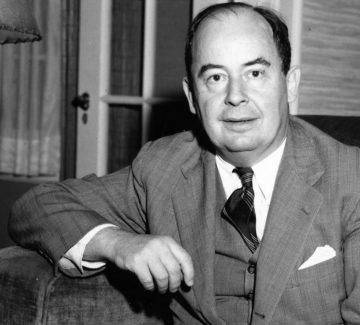
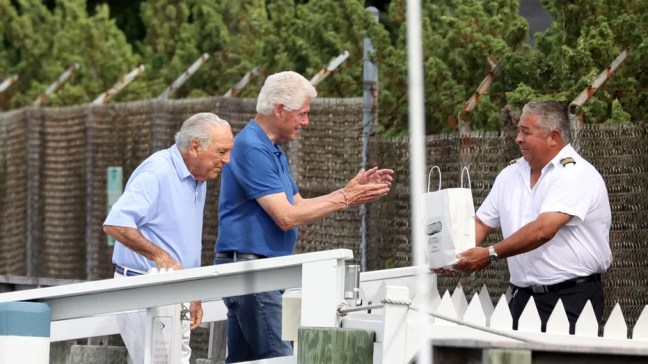

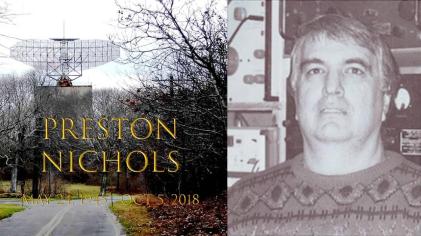


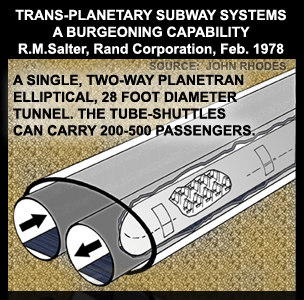

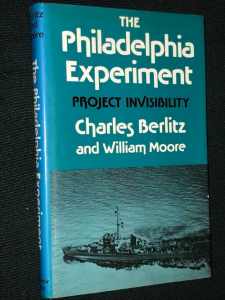
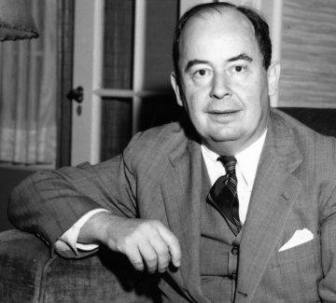

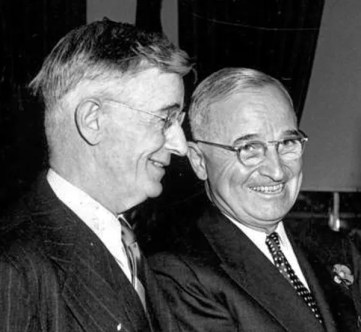

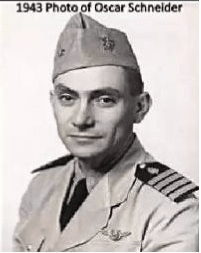






 inscribedonthebelievingmind.blog