
Journey to Truth Podcast EP 252 – John Whitberg: Nothing To See Here – A Detailed Glimpse Into The SSP
Return to Index
Transcript
(2:00) TYLER: Our guest [is] John Whitberg . . . This is his first time showing his face on camera, and we’ll let him explain why he decided to do that now. And we’re glad to have you here, John. How’s it going?
JOHN: It’s going pretty well. So, the reason I decided to show my face was partly because it was my understanding that it was at least preferable to do it on this channel, and also because, how are people going to know if they knew me if they can’t see me? So, I finally decided it was necessary.
TYLER: Well, we’re glad you decided. And, so, what was your reason to begin with but for not showing your face? Was it just because a family didn’t know who you were, or what?
JOHN: Yes, that, and just in general, I felt safer. But, you know, I’m not in this to be safe.
TYLER: Well, we appreciate your bravery, and thank you for— thank you for joining us today. And we’re excited to get into some of your testimony. I know you shared a lot of it on other channels, but we’re going to try and get into some new stuff, as well as some of the basic testimony, so the people who don’t know who you are can have an idea of where you’re coming from and why you’re here today sharing this with us.
So, I’d like to just kind of get started from your childhood. I know this started for you when you were six years old, and I’ll let you tell that story and we’ll just go from there. So, if you want to fill us in on how that happened.
JOHN: So, there’s what I call an anchor memory: it’s the one that never went away. I’ve always had it since the morning after it happened. And it was of being paralyzed in my bed while I’m six years old. This portal opens in my wall and an SS woman steps through; a woman in an SS uniform steps through. And I get levitated up out of my bed and through this portal.
And over the years I always just told myself, “That can’t be real: you were dreaming.” Until in 2019 I came across the SSP community, pretty much just stumbled across it because I’d heard about MK-Ultra on— I think it was actually on a PBS documentary. And I was looking for info on it—just more out of a morbid curiosity than anything—and came across it came across the SSP and I was like well [ __ ]. So, and the memories have continued coming from there on, pretty much a daily basis.
(5:40) TYLER: So whenever you were taken out of your bedroom, you were taken through a portal in the wall, if I’m not mistaken, and where were you taken from there?
(5:50) JOHN: So, from there, well, the portal opened, actually directly into the back of a truck, which drove me to Cheyenne Mountain Base, NORAD, which, of course, is now Space Force Headquarters. And, which was about 15 minutes drive from where I was living at that time. And from there the memories are still pretty patchy, but I’ve recovered some of the mind-fracture process that I underwent, and just the general mind-control process, which lasted about six months before I was sent off-planet.
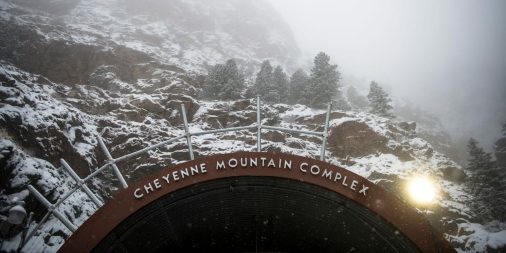
(7:30) TYLER: So, whenever you were taken, what do you remember about the Cheyenne Complex? Can you explain to us anything about that facility?
JOHN: Yeah. So, it was it was basically just an underground labyrinth, and it was very hospital-like. And I remember there were a lot of Nazi symbols all over the place. And, there were— just funny, because I only saw one Nazi there, but their symbology was everywhere. And they were— I can remember it was—I’m trying to think of the word—sterile, I guess, would be the word to describe it. Everything was very clean, very, very impersonal. They— the first step they took was depersonalizing you. You no longer had a name: you had a number. You dressed the same as everyone else there. You had your head shaved—everything. Everything that made you you was erased. And from that point on they started creating alters, which is—probably most of the people who watch this will know at least a little of what that means, but it’s basically through trauma and through mind control, the splitting of the mind into multiple personalities. Which is— I won’t go into too much detail on what exactly they did because I don’t want to get your channel banned.
TYLER: Yeah, sometimes those details aren’t always necessary; we’ve covered it enough, people understand the process. How many layers, how many levels would you say that Cheyenne Complex was? Like, did they take you down underground so many levels? Do you remember any of that?
(10:00) JOHN: Most of the programming was on the 26th through 29th level. At one point I went as far down as third the 38th level when I left. That’s where the portals were, was the 38th level. It may have gone even further than that; I don’t know.
AARON: Did you see any ETs or anything in the base while you were there?
JOHN: Oh, yes, there were plenty of ETs. There were Zeta Reticulan greys; there were a lot of Nordics. And there was this one reptilian species, that I’ve actually never seen anywhere else, that was fairly humanoid looking, but it had a long tail with spikes on the end, like a stegosaurus. And its scales were black and shiny—actually very pretty up close; they were iridescent. And he . . . actually was very kind to me, and [he was] the only person who treated me like a person rather than a piece of equipment.
(11:40) TYLER: Interesting. So, before we go before we get to what happens once you go through the portal, why do you think— I remember you hearing you say that you had family ties into the— I think your grandfather was part of Operation Paperclip. Is that correct?
(12:00) JOHN: My great uncle was part of it. He—or rather he was part of the delivery of Nazis to America. He was not a Nazi; he was born here. But he was part of the OSS, as it was called back then; now it’s called the CIA. At the end of—and for several years after—the war, he was stationed in Vienna, and he was tasked with finding both relatives of ours—because we are of German and Austrian descent—and also finding persons from the Advair—which was the Nazi intelligence service—and funneling them into this country. What exactly he did, he took to the grave, but that’s what we know. So, it goes way back. My grandmother has alters; my grandfather, I believe, does, but they don’t show themselves very much; my grandmother quite visibly has them; my mother had them; my aunt has them. So, all on my mother’s side we are very much a mind-controlled bloodline.
(13:30) TYLER: So, can you talk a little bit about the deal the Germans made with the United States as far as giving them children in in exchange for not invading?
JOHN: Yeah. So, in 1947, there was this thing called Operation High Jump. Admiral Byrd had heard unconfirmed reports that there were still— that basically, Nazi Germany had not been defeated; that they had gone to Antarctica and they were flourishing. He and a big chunk of the U.S. Navy went there. They got their asses handed to them, and so, for the next five years there was a state of unease. Essentially, “Are they going to invade us? Will they leave us alone?” And so, the Germans eventually came, flew directly to the White House, landed on the lawn—and there’s video footage of this. They landed on the White House lawn, went in, and said, Mr. President, we could kill all of you, but here’s the thing: we’re building out colonies off-world, but we don’t have enough people either to conquer them or to inhabit them once we do conquer them. So, if you give us 150,000 of your children every year, we’ll leave you alone.” I mean, that was basically an offer they could not refuse. And so, in 2007, I was one of those children.
TYLER: Interesting. And you’re referring to the 52 flyovers in D.C. We’ve seen the newspaper article where they have a photograph of—I think it’s six or seven—craft above the White House, but you’re you’re saying one of them actually landed?
(16:00) JOHN: Yes, one of them one of them landed. I was shown this by the Germans in their school system, which— we’ll get into that later I’m sure. But they— there was video footage that has been suppressed down here; off world it’s quite well known that one of them landed, people got off. I’m not quite sure how they managed to hide this completely from the news media. Maybe they didn’t; I don’t know. Maybe there were reports about it and they’ve just been buried in the intervening decades— we’ll never know.
TYLER: Right. So, whenever you were taken to the Cheyenne Complex and brought through a portal there— So, you were you portalled out of your bedroom into the back of a truck, taken to the Cheyenne Complex, you were taken down to the 38th level below ground, where you were portaled to the Moon, if I’m not mistaken.
(17:00) JOHN: Yes, yes. To the north pole of the Moon. And didn’t see much. Just me and these other kids—there were maybe 25 or 30 kids, not very many—we were walked directly to a shuttle. The signs in that base and everything, that was entirely German: German flags, German language signs, German-speaking staff, all of that.
We were walked directly from there to onto a shuttle, which flew onto a mothership, and then we basically just— We didn’t get off the shuttle: we stayed seated in the shuttle even as it was on the mothership, so we were there for 18 hours as it flew to Vega Prime. And we got off. Our shuttle, the Cheyenne Mountain shuttle, only had maybe 25 or 30 kids, but this mothership had a delivery of about 200, who I’m assuming must have come from other bases. Mostly American kids. There was one shipment of kids who were, if I’m not mistaken, I believe they were Colombians, and there was one shipment of Japanese kids, and the rest was all Americans.
And got off the shuttle, and we were uh saluted by officers. We had a carpet rolled out for us, which had— of course, we didn’t know where we were, yet, but it’s what I now know to be the flag of the Vega Colony [the Schwarze Sonne, or Black Sun – the editor]. And there was a banner up on the arch at the end of this hallway; it said, “Seig Heil der Neuen Jugend” — “Victory to the New Youth.” So, essentially, from then on we were a part of their civilization. And we were— trying to remember the exact sequence of events.
TYLER: You basically went to school on their planet.
JOHN: Yes, I did. We were all blessed to this school, which was in two pretty traditional-looking German buildings nestled in a whole bunch of skyscrapers. And they were Bavarian style: they had the stepped roofs, you know? Everything— most of the education was virtual reality, and so, for the most part, there weren’t classrooms. Most of it was in one big classroom. For some subjects it was divided up by age.
TYLER: Before we get any further into this, I just have a couple of questions. When you started getting your memories back, what was that like for you to accept this as a reality? Were you skeptical about it? Did you have to try— I mean, what did that process look like for you?
JOHN: I spent the first year trying to convince myself I was crazy. And— but when they wouldn’t stop, and when people’s testimony just kept corroborating everything I was remembering, I finally was like, “Okay, you’re not crazy. This is real; this did happen.” And then I spent the next year not talking to anyone, and then I finally did start reaching out to people, and it was a difficult process. I nearly became an alcoholic at one point because of it, from the stress. For a while I struggled a bit with sex addiction. I hope that’s not too much information, but it’s— this is the reality. That’s what this programming does to people. And so, basically, that’s what it was like. And, uh, but I survived it, and I’m here now.
(22:00) TYLER: Yeah, that’s great. And I understand there are vices. Everyone turns to a vice whenever they’re trying to distract themselves from discovering something about themselves that they’re not really ready to accept yet. That’s kind of programmed into us,like you said. But if you were a victim of MK-Ultra, then some of those are heightened; some of those addictions and cravings are heightened. So, it’s nothing to be ashamed of—it’s actually better to admit it and acknowledge it and move past it. So, it’s not too much information, in my opinion: it just helps— it grounds it into this reality.
JOHN: Well, thank you.
TYLER: Okay, so you were on Vegas Prime. Now, I know you have more than one alter. You have incredible recall. I’m amazed with your memory and recall about all the other alters and everything, but it gets confusing if we don’t— if we go out of chronological order. But something I want to ask you before we jump into all that is—just to keep it grounded on Earth still before we really get out there—the corporations, the organizations that are involved in the secret space program that you’ve seen in space, how many corporations that we would know, big names that we would recognize, have you seen in the programs?
(23:15) JOHN: Roughly about 15. Yeah, 10 to 15. Let me list off the main ones. The most important ones are defense contractors: Raytheon, Blackwater, people like that. There’s conglomerates, finance conglomerates, such as BlackRock and—oh what’s the other one?
AARON: Vanguard?
JOHN: Yes, thank you.
TYLER: Yeah, so after after Vanguard, what did you say?
JOHN: Yes. Natural gas companies, like Citgo; car companies; food companies, even, such as a PepsiCo; and Americans probably wouldn’t know this, but your audience in Latin America will definitely have heard of Mondelez Company, which, out there they manufacture— they’re who manufactures the replicators that people talk about, actually. PepsiCo [here] manufactures the same drinks they do out there, but some of them have enhancements, let’s say.
TYLER: You’re talking about Pepsi?
JOHN: Yes. Well, their company, the company is called PepsiCo.
TYLER: Okay. And what what do you mean by enhancements in the drinks?
JOHN: They make special ones. They make the regular ones, like you could get here, too, but they also make special ones that have nanites, which can give abilities to people. So, there’s ones that can give you added strengths; there’s ones that can make you telekinetic; there’s ones that can give you— I’m trying to remember—pyrokinesis, which is controlling fire.
TYLER: And what about learning a foreign language, or—
JOHN: Yes, yes, you can do that. There was one of my alters who had to learn Russian, and because he could afford it— because not everyone can afford these things; they’re very expensive—but my alter could afford to buy one of those drinks that had the Russian language in nanites that went straight to your brain. So, soon as you finish drinking that, you knew conversational Russian, or whatever language you needed to know.
TYLER: Wow. So, what other companies— You weren’t finished listing them. I’m just curious; we see these names every day.
JOHN: Yeah. There was Kodak Company; they’re out there. There’s a lot of natural resource companies out there. I mentioned Citgo, but also Valero has a presence out there. There’s a company I can literally never remember the name of, but it’s the main Chinese natural gas company: they have a presence out there. Samsung Corporation is out there. Lots and lots of people are out there.
TYLER: Right. That’s pretty incredible, and not surprising at all. We’ve heard that from other testimonies, but to get a list like that is really interesting. It makes perfect sense: if they’re running the show here, they would have real estate on other planets as well.
As far as the cloning aspect of all this, we just finished our webinar, so we’re kind of fresh on the clone topic. What percentage of people are cloned, and what percentage of people are actually it’s their real body, it’s them? I think there’s a difference between the German space program and the American space program; maybe you can help us understand that.
(28:00) JOHN: Yes, the Germans use your real body. Because their technology that they have for regeneration, people always think of the med-beds. The Germans don’t have med-beds: they have regeneration tanks, which they also—to put it very simply—they also will regenerate any damage which was done to your soul, and the med-beds can’t really do that. And because clones have two souls, it’s impossible to keep an alter in a clone
TYLER: All right, I’m gonna stop you for a second, because I have some questions.
JOHN: Yeah, I’m not wording it very well. I’m trying to think how to word this.
TYLER: So, you’re saying that the Germans use your original body and take you into programs, and then age-regress that body through whatever method they use—possibly a regen tank or something of that nature—and the American space program, they use clones.
JOHN: Yes.
TYLER: And they’ll take your consciousness and put it in a clone. Now, what do you mean when you say clones have two souls?
JOHN: They have— Okay, whenever you print out a biological body, it will have a [unintended] soul attach itself to it: it can’t be stopped. But it also has a piece of the soul of whoever they were cloned from [the intended soul]. And the [unintended] soul that attaches itself inevitably is constantly trying to push out that piece, and eventually it will succeed. And if the clone dies and gets regenerated, then it always succeeds: they cannot put the [intended soul] back. So, a clone has a piece of the soul of whoever it was cloned from, and then it has the— a soul that attaches itself, because whenever you make a physical form, a soul will automatically find its way there.
And so, this— I won’t go on a tangent, but just a quick aside here—this whole rhetoric I’m hearing in a lot of the SSP community about clones not having souls is really concerning, because, like, they very much do. They’re people: they just came from a test tube rather than a womb, but that doesn’t make them less human.
And so, that’s why the Germans would rather not have the bother of having to make you a new clone every time you die [that would take the intended soul], so they will just take your original body and age-regress it and regenerate it as necessary. The Americans, they mostly use clones. There are other factions from other nationalities and from corporations that—it varies on what they do.
TYLER: Yeah, I figured there’s a few different modalities, maybe a bunch by now: different organizations using different technologies, and I’m sure it’s always advancing and changing, and they’re perfecting it and experimenting with it.
So, I want to go backwards a little bit, and I apologize to the audience if it seems like we’re jumping around, but I had some questions I wanted to ask you uh earlier that I didn’t get to. So, two things about the Cheyenne Complex. One, you mentioned the MK-Ultra being done there and you mentioned “Wizard of Oz” and “Sleeping Beauty,” those two movies in a previous interview. How were those being used to mind-control you?

Taylor Swift

Taylor Swift
JOHN: Wizard of Oz had a lot of code words in it, or code phrases, that would be used to bring out alters. Whenever they were creating an alter, they would have a line from that movie playing in the background on a loop, so that eventually, with the way your mind works, your mind will automatically associate that line with that alter, and it can trigger an alter to surface. So, I won’t repeat any lines here, because I don’t want anyone to be triggered listening to this.
And “Sleeping Beauty,” “Sleeping Beauty” has actually a lot more programming in it, at least by my generation. I know a lot of older people were programmed a lot more with “Wizard of Oz.” In my generation, “Sleeping Beauty” was kind of the main thing. And, you know that scene at the end where the fairies are arguing over the color of the dress, where they’re constantly flicking their wand and her dress changes color?
AARON: Yeah.
(34:00) JOHN: That scene, that scene is used for some beta-level programming, to bring that to the surface. There’s some, like, occult ritual programming that I’m still fuzzy on, but I think there’s a lot of symbology of it in that movie. And basically everything is subliminal association, to make your mind go certain places and do certain things that can be caused—if done correctly—that can be caused by a movie, or something of that effect.

TYLER: Right, and there’s a number of movies people have mentioned in other testimonies—shows like Looney Tunes is one that doesn’t get talked about that much, but I’ve heard people talk about Looney Tunes. Another thing you mentioned, if I’m not mistaken, Josef Mengele was at the Cheyenne complex.
(35:00) JOHN: He was, or a clone of him, at any rate. I don’t know if it was the original or a clone, just to be clear. But, yeah, he was there, and he did most of the programming of the kids. I don’t know if he still calls himself Dr. Green, as many people have testified, because I names are very difficult for me; but the thing I remember about him is, when he wasn’t torturing you, he was actually a very sweet, nice person, which makes him even more disturbing of a figure.
TYLER: Well, it’s typical narcissist behavior as well.
JOHN: Yeah, true, true.
AARON: A lot of sociopaths can be like that.
TYLER: And it makes— it’s actually part of the trickster energy, you know? that’s what kind of gets you hooked, in a way, in a weird way. Because they rely on your ability to see the good in them, so they show you that side, and it confuses you.
JOHN: Exactly. Yeah.
TYLER: I think that’s all I wanted to ask about that facility. Okay, so we were talking about the programs, and I’ve heard you mention before—I mean the organizations in the programs—I’ve heard you mention before a black market, contraband items that are, I guess, used in the programs, are traded, bartered or whatever, sold. Can you explain a little bit about that?
(36:45) JOHN: Yeah. So, in most places uh they ban—or at least very heavily restrict—most devices. They don’t have— they don’t really restrict alcohol, but they restrict—if not outright ban—drugs, pornography, things like that, so— But, of course, people still kind of need those things, so they will— A black market flourishes inevitably whenever you ban those things. And uh a lot of it is contraband from Earth that they actually don’t even know is from Earth. Like, for example, they love Cuban cigars out there. There’s not many places in this galaxy where you can grow weed, so a lot of their weed comes from us—things like that. And they don’t know where it comes from.
(38:00) TYLER: What about music and movies?
JOHN: Yeah, yeah. They have our music and movies. But also, this is a thing I’m actually planning to do a show with someone else about in the near future, hopefully. A lot of our music and movies actually come from there, and we don’t know it,
AARON: Really.
JOHN: Yeah. And a lot of songs, especially; a lot of songs were written by assets like us, and they were then stolen and sold to the music industry here. and
AARON: Yeah, I know uh Arkheim Ra, if you know who he is; he really claims he’s written a whole bunch of songs that were used and stolen from him and given to these different bands and artists that are big hit songs that are out there. He’s like, “Yep, I wrote that one; I wrote that one.”
(39:00) JOHN: Yeah. There’s a few I wrote, too. So, yeah, that’s quite common. And a lot of them were written here sometimes . . . but people remember them as being from different artists out there. Like, I don’t know if you know the song “Wicked Game”, by Chris Isaac. Okay, it’s a great song. Listen to it, seriously. But, he— that was actually originally a Willie Nelson song . . . written on Mars, according to a friend of mine. And there’s the song, “Hallelujah,” supposedly written by Leonard Cohen in ’75. It was actually written by Janice Joplin and first recorded by her, I believe, in 1969, on a planet called New Atlantis, which, I’ve touched on that planet in one or two shows.
AARON: So, you’re saying Janice was . . . in the programs, and then wrote it in the programs.
JOHN: Oh, yeah.
AARON: Okay.
JOHN: Yes, she was. And I think I think she may still be alive, actually, and still writing songs out there.
TYLER: Well, that would align with, like, Johann Fritz would talk about, or Daryl James—other people talk about celebrities who have clones in the programs as well. And a lot of the roles they play in movies are actually very similar to what their position is in the programs as well.
AARON: Kevin Spacey.
TYLER: Kevin Spacy, Tom Cruise—
AARON: Tom Cruise.
JOHN: Angelina Jolie.
TYLER: Um—oh, my gosh; what’s the—Scarlett Johansson. There’s a whole list of them that apparently have clones in the programs that people have seen up there. There’s one that I’ve seen, that I can’t even remember his name for the life of me every time, but he plays the same role in every movie. He’s like this military sergeant; if I can think of his name, I’ll share it. But either way, that’s just a side note. I find that very interesting.
Like, what we see, you know, Hollywood, like you said, some of the movies are actually from other places or even funded by certain groups out there, and the scripts are handed to whoever the directors on Earth. Whatever it looks like, it’s not really what we think it is.
JOHN: Yeah, exactly.
TYLER: So, what do you know about Solar Warden; can you explain to us? Solar Warden, and is that tied with Space Force?
(42:00) JOHN: Solar Warden, from my understanding, is not tied with Space Force. What I know about it is that it began in ’52 or ’53, not long after the deal was made with the Germans. It was made essentially to fight the Germans. It’s an American force, and it started life as just a sub-project called Project Mayflower. But in ’82, the secretary of the Navy at that time for the Reagan administration—his name was John Lehman; you can look him up—he was basically like, “Well, we’re spending literally trillions of dollars on these people. Why don’t we make them an official branch?” So, he did.
So, that did happen, and it became known as Solar Warden from 1982 onwards. It did split into two, but that’s a— Solar Warden is still a convenient catch-all term that people use for it.
TYLER: So, did you serve in Solar Warden? Do you have any memories from that?
JOHN: Yes, my alter Adam, he did 50 years of service with them from 1969 until 2019. And an interesting story with him: he did not have his memories erased when they killed him. I don’t know if someone just forgot, or what, but when he re-homed, he had all the memories. So, I have pretty much full recall from him and his life.
TYLER: So, help me understand. So, you said he served from 1969 to 2019; but when were you born?
(44:00) JOHN: 2001.
TYLER: Okay. So, help me understand that, because I’ve heard people talk about memories that don’t line up with the year they were born. Now, when they take you— also, there’s time-travel technology involved, as well. There’s a whole aspect there maybe you can touch on. Help us understand how that works.
JOHN: So, time travel is really pretty simple, at least time traveling to the past. If you want to go to the future, it’s much more complicated. But going into the past is pretty simple: you just dial in coordinates on whatever time-machine-type technology you have. You put in where in space and where in time, and you walk through a portal, and you’re just there.
And so, time displacement, which is what we would call someone like me being sent back to 1969—or, well it was a clone of me, but same difference. And it’s really pretty simple. I don’t know the ins and outs of how all the technology works, because that was never my job, to know how all these things work. It kind of just happened.
TYLER: Well, I guess it makes sense: if they put you in a clone, they can enter that clone, place that clone any place in time.
JOHN: Yeah, they can do that, too.
TYLER: So, essentially that’s how they’re doing it. Okay.
JOHN: Yes.
TYLER: And obviously, time dilation is another aspect of this.
AARON: So, do you know . . . essentially, the Cabal . . . goes back in time and tries to manipulate events to to help create the time— the negative timeline that they want to create. Do you know about that?
(46:00) JOHN: Yeah, they do that. I mean, everyone does that. Everyone who has time travel goes back in time to create the time that is ideal for them. So, yeah, it’s a pretty universal thing. When you have the tech—
AARON: But supposedly there’s what you could call benevolent ETs or even humans are also doing that to to basically counteract that and to make sure we stay on the positive timeline, as well.
JOHN: I think “benevolent” might be a bit of an exaggeration, but, yes, there’s people going against the Cabal timeline because it’s great for the Cabal; it’s not good for anyone else in existence at all. So, there are people—even people we probably otherwise would not consider very good—but there’s lots of people counteracting it, yes. So, it’s an ongoing battle.
TYLER: So, the Cabal right now on this planet seems to be losing its grip in certain areas, and it’s becoming apparent in a lot of ways. Not that they’ve totally lost control, but it feels like they’re losing their grip. Would you say the same is happening in the space programs? Is this like an energetic thing that’s happening throughout the solar system that just can’t be stopped, like this wave of energy, this ascension wave, or is that a myth?
(48:00 JOHN: I wouldn’t say it can’t be stopped, but it’s proving difficult to stop. And the arc of history bends toward improvement, as they say. Like, look at the world even 50 years ago: things are generally quite a bit better for most people than they were. So, things are improving. Some things are very much not improving; some things are getting a lot worse in some areas. But I think that overall, time and human nature lends itself towards positivity.
TYLER: Right. I would agree.
AARON: Evolving, which is kind of the same thing. It’s like, otherwise, you’re devolving and you’re going backwards.
JOHN: Exactly, exactly. It’s one or the other.
AARON: But the Cabal wants to create— they want to, like, lock down the planet. It seems like they want to lock down the planet fully, as, like, a fully locked down slave-planet for resources for them. And that’s what— they’re trying to push things to that direction, and it’s becoming more obvious than ever, their agendas. Which is actually a great thing, because now we can all see it and it’s waking— it’s waking up so many people that just had no idea about any of this stuff just a few years ago.
JOHN: Yeah, exactly.
AARON: So, actually, I think it’s a great thing, because it’s like the harder they push, the more they expose themselves and the more people wake up, which means they’re actually helping to speed up the awakening and the thwarting of their own agendas. But it’s almost like they feel like— they probably feel like they don’t have a choice. It’s like they’re desperate to lock it down now, because they know it’s now or never.
JOHN: Yeah.
AARON: So, in my opinion, it’s pretty much inevitable that there will be a, you know, a mass awakening and a golden age. I don’t know how long it’s going to take, I don’t know how it’s going to play out, but I think it’s inevitable.
JOHN: Yeah.
(50:00) AARON: It could get worse before it gets better, though. It very much could get worse before it gets better.
JOHN: Yeah.
TYLER: Okay, so I’m going to go back to Vegas Prime a little bit.
JOHN: Just one quick thing: it’s Vega Prime; there is no S on the end.
AARON: It’s not Vegas.
TYLER: Vega Prime. Maybe it is!
AARON: Maybe it is!
TYLER: What happens in Vega—
AARON: —stays in Vega.
TYLER: Okay, so, Vega Prime. Sorry, I apologize. Can you explain to us a little bit about what the colony looks like, and, like, what you’ve seen, what you’ve witnessed? Is most of it underground, all of it underground, above-ground, that type of stuff?
(51:00) JOHN: Most of it’s above ground, although the transport infrastructure is mostly below-ground. But it’s very futuristic, but in parts of it, it’s also very traditional. It’s mostly Germans. I’d say the official breakdown is 85 percent Germans, 10 percent Japanese, and five percent everyone else. And, um— go ahead.
TYLER: I’ve heard you mentioned in other interviews that it’s like a cyberpunk-style city; is that correct?
JOHN: Yes, it is. It reminds me— it’s not quite as Asian as how people think of cyberpunk cities most of the time. Although there are a lot of Japanese signs, but culturally it’s mostly German. But there are, like, holograms, very large holograms, like I said, a lot of skyscrapers, futuristic architecture, things like that. There are some flying cars, actually. And up at the very tops of the buildings, which on the tallest buildings is several miles up, you’ll see ships docking, things like that. So, it’s quite similar to the city in “Ghost in the Shell,.” The live-action version is the closest thing I’ve seen to it.
TYLER: Say that again, “Ghost in the Shell”?
JOHN: Yes.
AARON: That’s an anime; that’s a popular anime.
TYLER: Okay. It also reminds me of what we see depicted in “Star Wars” movies, like episodes one, two and three—some of those very cyberpunk-like cities. And also “Total Recall,” the cities in that movie, which, interesting where they get the idea from.
(53:00) JOHN: Yeah, that’s very typical colonial style out there. That’s how most colonies tend to look—at least most German and Japanese colonies. Some colonies such as— particularly the ones from some of the Latin American countries there—are a lot more traditional in their architecture.
TYLER: Now, have you been to a place that looks almost identical to Earth, like you would almost not know the difference?
JOHN: Oh, yeah.
TYLER: I’ve heard of breakaway civilizations like that, where if you were just dropped there in the middle of the street, you wouldn’t know the difference.
(54:00) JOHN: Yeah, I’ve been to a colony that was a replica of Houston. The only way you could tell the difference was that there were two suns, and occasionally you’d see an alien walking down the street.
TYLER: That sounds like it could be Earth, too, because apparently there are two suns here, that we can only just see one.
JOHN: Apparently, but supposedly that’s— Yeah, some people say that, yeah. Up there, it was very visible, though.
TYLER: Now, is it just the infrastructure, or is there English-language, too?
JOHN: Oh, yeah. There are English-speaking colonies, plenty of them. There’s lots of Americans out there. There’s lots of Australians out there, interestingly. There’s British people out there. Yeah. You can find a colony that speaks pretty much any language, including ones that are not spoken much here anymore, such as, I’ve been to a colony where they actually still speak the Manchu language. On Earth it’s very endangered—it’s only spoken by a few dozen people. But there’s colonies out there where they still speak it, so, yeah.
(55:30) TYLER: What kind of communication devices do they have? Are some of them using things similar to cell phones, or is it all telepathy?
JOHN: Between humans, I mean, even out there, not that many humans are telepathic, so they do use cell phones. For language barriers, they have something quite similar to a headset like I have here, but it has also a mouthpiece, a microphone. And so, that works as basically a universal translator.
TYLER: Do they have like a neural-link-type of chip that they’re trying to put in us here? I’m sure places out there are already doing it.
JOHN: Oh, yeah, people do that. I mean, if you can afford it, again, which most people can’t. But the wealthy have those and it allows them to control, like, everything in their home, and their car, and they can purchase things with it.
TYLER: . . . What about some sort of authority, galactic authority, or police force in space? Not just per planet, but is there some overall— Like, obviously, it’s all hierarchy, right? So, is there something like that that’s policing everything?
(57:00) JOHN: Sort of. Most of the time, they’re not going to care what anyone does, unless do you do something really, really serious, like wiping out an entire planet; otherwise, you’ll probably never even know they exist. But they’re quite small. But every star cluster has a council overseeing it, and those people will always make themselves known; they’re always a quite involved in the community. And they will generally have a representative of at least every space-faring species, if not every sentient one within said star cluster.
TYLER: Interesting. What about— so there’s probably a million different occupations out there, right? They’re not just taking people into these programs to be super soldiers.
JOHN: Oh, no.
TYLER: And you have memories from alters that have done interesting jobs, such as an archaeologist.
(58:20) JOHN: Yeah. I have my archaeologist alter, Jared. I don’t have a lot of his memories, really, but I have some. Most of mine are in communications—i.e., telepathic, interfacing with different species—and/or they’re in espionage. I have one who is a pretty traditional super-soldier type.
TYLER: So, these would all be clones, then.
JOHN: Yes.
(59:00) TYLER: These would all be different clones. Like, Donald Marshall would say they can clone you as many times as they want and split you as many times as they want. So, he kind of broke it down. Actually, we played a clip where he explained how they’re doing it—even here on Earth amongst celebrities and stuff. But that’s exactly what they would be doing in the programs, as well. So, just to help ground it into reality, if anyone wants to understand how that works, we just covered it on the clone webinar. But they’re essentially taking an individual and splitting their consciousness into multiple different clone bodies and sending them on missions throughout the galaxy and/or the planet here. And these are the memories that you are recovering.
(59:40) JOHN: Yes, yes. And that’s because, like I mentioned, the clone has a piece of your soul or consciousness, and whenever a clone dies, that fragment will come back to you. So, you’ll be able to get at least some of the memories, depending on how much mind-wiping they did before they terminated the clone.
TYLER: Now is it possible for a clone or an alter to communicate with you, your front alter?
(1:00:20) JOHN: Yeah. I have ongoing communication telepathically with two. I have one who is absolutely terrified that she will be arrested. Yes, people, I’m sure that raised a question, me saying, “she.” I’ll explain that in a minute, but opposite-sex clones are very much a thing. And she’s terrified that she’ll be imprisoned or worse if she gets caught communicating with me, so I don’t bother her. I have some who I haven’t been able to reach yet, but there’s two that I have ongoing, more or less daily, conversations with.
AARON: How does that work? How do you have conversations with them?
JOHN: Telepathically. It’s basically— what my method—I know some people do other methods for this—but my method is I will remote-view them, and wait for them to notice that I’m remote-viewing them. And usually they’ll be like, “Oh, wow, you’re not me, but you look just like me. Who are you?” And it’s a pretty good way to start a conversation, actually. So, it goes from there. But it’s all telepathic. I have not found any of my clones. If any of them are living civilian lives on Earth—which, I have heard that some of them do do that, for some other people, at least—then I haven’t found them yet.
(1:02:15) TYLER: Yeah, Max Spiers used to talk about that. When I was in Australia, I saw somebody who, as far as I was concerned, was a friend of mine, was my friend, in Australia. But I knew [my friend] wasn’t in Australia. And it was just mind-blowing. Like, I couldn’t look away. I’m like, “That’s her,” but it’s not— I knew it wasn’t her. I’m not saying I saw her clone, but I’m not saying it’s impossible, either. Like, I think we could possibly run into other people’s clones in other countries.
JOHN: Yeah. I have some people who, they saw a clone of mine in Cuzco, Peru. They were in a tour group, and like, all 15 people in this tour group saw him. He looked just like me, he had the same mannerisms as me: the only difference is he was speaking Spanish.
(1:03:00) TYLER: I don’t even know how to keep this conversation on track anymore. I have questions about your other alters, and stuff like that, but um I guess we’ll just keep it more of it, like, the overall perspective for this interview, just because I would just want to keep it on track.
I heard you mention before that there’s not all bad Dracos, right? Not all of them are bad. And there’s actually a faction; not all of them eat people and drink blood and do all that stuff. And they’ve actually been warring against amongst each other; there’s a group of the positive Draco that have been trying to stop them, that are not okay with that. Can you explain that a little bit?
(1:04:00) JOHN: Yeah. So, there was a thing called the Orion Wars in this galaxy. And who all the factions were is still not entirely clear to me, but there were some Dracos who were basically sympathizers with the Orion cause. And they were granted asylum within the Orion system. And so, their descendants are still— they’ve still been brought up that way, with those kind of politics. And so, the Orionites— I mean, I have my issues with them, too, politically, but I will say this: they don’t eat people, and they don’t traffic people much. Some of them do a little bit, but not much. So, that’s basically how that came about.
So, yeah, there are plenty of good Draco who know that eating people is not okay. They don’t eat any sentient creatures. They still have to eat meat, because they have to be alive, but they don’t eat anything sentient. And I want to make it clear that 99 percent of Draco don’t even know that these things are happening. They’re like us, where it’s the top one percent who knows these things are happening, maybe another one percent knows these things are happening and is powerless, and the remaining 98 percent of them are just people existing, and just living life, and they don’t know anything.
(1:06:00) AARON: So, it’d be like— because as we know, the Nazis are all over space. They are these, you know, regressive humans, for for lack of a better term. It’d be like ETs demonizing all humans because all they’ve interacted with are these psychopathic negative ones that are going around dominating and trying to take over everything and enslave people and stuff. So it’s not fair to demonize an entire race.
(1:07:00) TYLER: Okay, so I guess to finish this out, I’m I’m curious about your Adam alter, the one who you have basically full recall of from Solar Warden. Maybe you could kind of share some memories from that alter and what that life looked like, and then we’ll wrap it up after that.
JOHN: Okay. What he did was essentially border security for the solar system at the— I’m not sure if this is the official name, but people call it the Europa Galactic Checkpoint. There is a huge worm hole next to Europa that leads all around the galaxy, and even to some other neighborhoods. And the checkpoint for it is on Europa, and what this Adam guy did, when the ships landed, he would basically be asking for papers. He would be there like, “I need to see your license and registration to be using this route. I need to see a cargo manifest, and you need to let my people search your cargo, make sure there’s nothing contraband.” All those things. And so, he did occasionally for, like, little one-off jobs, because he had an incredible talent, particularly for reptilian species. So, he would sometimes be in demand for other checkpoints not on Europa. He would sometimes go to the one on Mars that’s known as Port Victoria, which is in the Victoria Crater. He would go to the one on Titan, which is next to the New Nuremberg City colony. He would go to one on a space station that was around Uranus, and a few others. But that’s basically what he did.
(1:09:00) TYLER: So, Solar Warden, I guess I was under the impression that they just monitored what was happening on Earth. And so this is way beyond that.
JOHN: No, they’re ICE; they’re like our version of ICE for the solar system. They’re general security, and also for attacking the Germans, which Adam did not do. And he wasn’t even [UI] that was happening was above his pay grade, even. So, those are the two main roles.
TYLER: Is that all you remember from that alter, or is there anything else you can tell us about that life as far as, I don’t know. Like you said, he was going to these different bases or these different portals or whatever: what type of ship was he stationed on? Do you know things like that?
JOHN: Uh he would— for a short-distance travel like that, they would just go in shuttles. And they looked pretty much the same as the ones in “Star Wars”, actually the box-shaped ones with the legs that fold out. And he considered it a very boring life; I consider it kind of fascinating because of all the different species he would see, even on a daily basis, because so many people use that portal.
(1:10:30) TYLER: What kind of species would he see?
JOHN: Oh, boy. Lots and lots of kinds of reptilians. Oh my gosh, so many kinds of reptilians. Different species of humans, because, believe it or not, we’re not the only species of human. There’s ones out there with green skin, there’s ones that are 20 feet tall and have wings, there’s all sorts of—
AARON: They’re still considered humans?
JOHN: Yes. If you run a DNA scan, it comes up as a variation of human.
TYLER: And I imagine blue skin: I’ve heard people talk about blue-skinned humans as well.
JOHN: Yeah, blue skin. There’s several kinds of blue-skinned humans. There’s lots and lots of green-skinned ones, and there’s— what we would call tall whites are technically a human species.
AARON: Yeah, there’s been a lot of whistleblowers talk about them.
JOHN: Yeah. And there were aquatic ETS you saw, and they would come off their ships in tanks full of water that levitate. And there’s some that I don’t even know how to describe physically, because they’re they don’t really look like anything we have here. There’s ones that look like a seven-foot-tall Kthulhu-type creature. There’s a lot out there.
TYLER: Oh, yeah, I imagine it’s as diverse as you can imagine. So, going back to the beginning of the your memories for this alter, what’s the earliest memory you have as far as him being brought into the Solar Warden?
JOHN: Okay. He woke up one day with no memories of anything, with full amnesia, because he didn’t have memories of anything: they just made him that day, basically. I was 13, I believe, when they created him, but he was age-advanced. They cloned me and they age-advanced the clone to the age of 30. So, he woke up, basically, with the mind of a 13-year-old that also had complete amnesia. And what he was told was, “We saved you. Your wife and kids were killed in an explosion, but we gave you this new body, and we’re sorry we couldn’t salvage any of your memory.” So, I mean, it is kind of a good excuse when you think about it. And that was their explanation, and they also— the implication was, “We saved your life, so you have to come work for us.”
TYLER: Right, okay; that makes a lot of sense. They basically leave you without a choice: you just wake up in a situation. And just to corroborate what you’re saying about age-advancing the clone, we just covered this also. The information we came across said that they would typically age-advance a clone to age 20, but obviously, you said age 30. But still, it corroborates with them even doing that in the first place. It takes a lot of the complications out of just the childhood: there’s no reason to— they can teach everything to the clone adult in about six months that it needs to know, as far as how to eat and how to use the bathroom—basic body functions and stuff like that. And from there they can basically program them.
JOHN: Exactly. So, they do that. And one of the things was, Adam was also— he was in several hybrid programs, kind of consensually. I mean, he was consensual: he did not say he consented to having children with these ET women. He was sleeping with them consensually, but he didn’t know it was meant to result in kids until later on—someone with that slip. And so he was like, “Great, so I have kids all over the galaxy out there, probably. And, yes. That kind of tore him up, that he found out he had a bunch of kids he would never be allowed to see.
(1:15:30) TYLER: Right. The hybrid program is is an interesting topic. Obviously, tons of people on Earth here have spoken about it and remember it, have been involved, including myself. I’ve mentioned it on previous shows and interviews before. But it doesn’t surprise me at all that it’s happening everywhere out there, and that’s an entire different rabbit hole, a different discussion for another day.
So, he was told that basically they saved his life, so he had to serve, and then that’s when he was essentially just stationed at that worm hole outside of Europa, did you say?
JOHN: Yes, Europa, moon of Jupiter. He lived on the base uh there in this little broom closet of an apartment, if you can even call it that. It was basically a rented room above a nightclub, very noisy at all hours of the day and night. It took him several years to adapt to that and be able to sleep, but compared to some of my other alters, it was actually a pretty okay existence.
TYLER: Yeah, I mean it doesn’t sound nearly as terrible as some of the other ones we’ve heard. So, we’ve been all over the place today. Is there any last thing you’d like to share with us about that alter, or anything else before we wrap this up?
JOHN: I don’t think so. Thanks very much for having me.
 inscribedonthebelievingmind.blog