
Return to Index
I’ve seen all good people turn their heads each day
so satisfied I’m on my way.
I’ve seen all good people turn their heads each day
so satisfied I’m on my way
Take a straight and stronger course to the corner of your life
Make the white queen run so fast she hasn’t got time to make you a wife
‘Cause it’s time, it’s time in time with your time and its news is captured
For the queen to use
Move me on to any black square,
Use me any time you want,
Just remember that the goal
Is for us to capture all we want, anywhere
Don’t surround yourself with yourself
Move on back two squares
Send an Instant Karma to me
Initial it with loving care
Hello, this is Arkheim Ra. I’m currently talking with John Whitberg. Originally, we were hoping to have Joseph Powell meet with us, but he’s busy, which is fine.
We’re going to try to put together some pretty big puzzle pieces today. But I want to reiterate the fact that the picture isn’t crystal-clear yet. But John and I are going to talk about some things and go into some territory regarding Project Phoenix that maybe hasn’t been delved into yet. And the conversation should also be unique because, instead of interviewing someone from an outsider perspective, it’s kind of going to be more of a conversation between two veterans who served in the same program. So, with that being said, thank you for coming aboard, John, and it’s a pleasure to have you on the show and to be able to delve into this information with you.
JOHN: Thanks, Arkheim. It’s a pleasure to be here.
ARKHEIM: Unfortunately, some of the topics—basically the entire subject at hand—isn’t exactly the most rosy of subjects, but I do feel vindicated in the fact that we’re going to be able to talk about some of Earth’s true history that hasn’t— I don’t think I’ve ever seen these things being talked about before. And I think that’s one of the interesting things about what pop culture refers to as the Montauk Project—which is Project Phoenix—is there’s a lot of stuff that really just gets glossed over with how fanciful the idea of time travel is, and super soldiers, and all these things. I think that people sometimes miss the point. Because, I mean, we weren’t just creating a new timeline: we were erasing history. And that’s what I want to get into here.
JOHN: Yeah. Okay.
(2:00) ARKHEIM: So, I guess the first question that I have for you is, how do you remember first being brought to Camp Hero?
JOHN: I remember being abducted from the men’s room at a Walmart in Austin, Texas. No one else was in there, but, like, this portal opened in the wall and something told me to step through it. And so I did, and instantly I regretted it, but I was restrained, I was put into a chair, and they put headphones on me, I think, and they released tones. They put tones into these headphones that turned on my alter. And then at some point they put me into, like, a uniform. I don’t remember that exactly, but then I was taken to a room and I met some of the people who were in charge.
(3:00) Oh, this is a funny story. Well, I saw Preston [Nichols] and Al [Bielek], of course, and there was that doctor woman I told you about. And, uh, I remember Al was there, and for some reason that’s still a complete mystery to me, he was terrified of me. I remember he walked up to my handler and his handler and he said to both of them, “Keep that one kid the hell away from me.” So, yeah. Still don’t know what that’s about, but, uh— And this is— I remember Preston’s face absolutely just lit up when he saw me, which is a really gross feeling knowing now what I know about him.
(4:20) ARKHEIM: Yeah. From what I recall, you were taken for your knowledge of space, because you’re an archaeologist, and there was so much that we didn’t know, and you were this very easy shortcut that was found to be able to interact with other species, know what they find respectful, like, the protocol to approach them—everything else. They were very clueless about all those things, and deep down inside you, you had that information because of who you’d been in past lives.
And, um, I think that’s very similar to the reason that I was taken. They knew that I had a connection to Atlantis, and they knew that I had the ability to open portals. And when I was originally taken to Montauk, it wasn’t in this human life that I’m living in now. And I was taken there to open a portal to Atlantis. And I was forced to do that. And that is when the raid of Atlantis occurred, or at least the beginning phases of it. And that had to do with going to Atlantis and taking some sort of technology that they had.
(5:30) And, um, I think that one of the main points that I want to make during this interview is, when you look all around the world and you see how underneath, basically, the Crown and the Church, so many different cultures have been genocided—completely wiped out of existence. That’s obviously by no accident: it was completely intentional. It wasn’t just to take their land: they were wiping out history. And we created— this entire idea of creating the new timeline was about erasing the old timeline as well. That’s why it’s called Project Phoenix, is because it’s a a timeline rising from the ashes of another one. And, um, some of what we did at project Phoenix would be going back in time to take ancient technologies that were organic technologies.
(6:30) And I’ve got the Swiss-cheese effect still, which is not a term that I coined—I think it was Larry James and Al Beilek who coined it. . . . It is an accurate description of how you’re looking at the memory, but you can’t see the whole thing. And so, I can’t see the whole entire picture clearly to where I can tell you step-by-step how it was done, but what I can tell you is that the Church was involved, the Crown was involved. And the colonization that occurred of Earth with the Church was connected to Montauk, to Project Phoenix, and it was all about mind control. It was all about controlling the people, and setting up this world that we’re living in now, that you can very much see that people are in a mind-controlled stupor. It’s been that way for quite a long time.
JOHN: Yeah.
ARKHEIM: Do you have anything to add to that?
(7:30) JOHN: Not really, although, like, I do actually remember— You saying the Church was involved makes a lot of sense. I do remember, uh, at one point we got a visit from one of the past popes. I believe it was John Paul II. He wasn’t the pope yet, but, of course, all that was planned out, probably, like, before he was even born. So, yeah.
(8:00) ARKHEIM: That’s one of the things that people need to understand here is, people understand that we have some sort of adversary that’s working against us beneath the shadows. It’s very clear now, and I would say most people, or at least half of normal people, understand that—at least in here in the United States. I don’t know how it is abroad.
But I would say that it’s a good sign of what would occur is the fact that we have, uh, people talking about a great reset. All this evidence that something occurred where, I mean, you know, 200 years ago, all these different— Or right around the same time— I wish I could be totally historically accurate with this, but you know there’s this weird coincidence—and this isn’t from my own memories, but it’s kind of lining up—but it’s the fact that there are all these cities that were destroyed all at the same time. And they had this amazing architecture that very much stood out of place for how advanced humanity was supposed to be at the time. Yeah, they were just all over the world. Within such a small period of time, all these cities got destroyed. And I can’t help but have this feeling and memories connected to it. Like, it’s all emotions and, like, for me, um, I would say I’m an emotional rememberer when it comes to my secret space program/Montauk kind of memories, and I can remember some of the emotions behind portaling into cities and just going in there and killing everyone—men women and children.
JOHN: Yeah.
(10:00) ARKHEIM: So, that’s one of the things that I don’t think people understand occurred is, a lot of these genocides were orchestrated, and they’re orchestrated through time travel. And you have people who are creating the reality that we live in through time travel. And that’s why it’s so important that the people who are in these programs, who are waking up, start integrating their alters for even— It’s not the same thing, but being in communication with them telepathically, starting to talk to them in the here-and-now in real time. We have the power to operate outside of time through that. It’s like, we have these people who are using time-travel tech to create and build this reality, and sometimes it seems hopeless and—
I don’t know if you remember this, John. And I’m gonna try to ask you some questions and let you talk more here; I’m sorry if I’m talking a lot.
JOHN: It’s okay.
ARKHEIM: Do you remember how we would call going on missions “runs,” and also “making handshakes”?
(11:00) JOHN: Yeah I do, and I also remember, like, when we would go and abduct new kids, we called it “supply runs”—which is really messed up when you think about it. But, yeah, I remember that.
ARKHEIM: Yeah that’s messed up. Because, um, I kind of remember that— So, we would go on missions, and this is something that’s not talked about, either, that we’re going to talk about. I know that we went on missions where— See, I didn’t just live one lifetime at Montauk/Camp Hero; it wasn’t a 20-and-back or something like that. I remember I was there for probably at least a thousand years. I would say much longer. And I don’t know to what capacity, because for me, at Montauk I might have only been there in the period of 100 years or 200 years, but I lived— they would send me back in time to live whole entire lives sometimes, or at the very least, missions that took years or even decades.
JOHN: Mm-hm.
(12:00) ARKHEIM: And that’s not being talked about. And one of the other things that’s not being talked about is the fact that they can— Sleeper agents—people know about that. They know about people who have MK-ULTRA programming, and it doesn’t come out until a certain specific point, a specific place in time. Well, there are people that we transplanted throughout history that had that, where I remember it being done to me.
And I remember going through portals, John. And I don’t know if you remember this, if you’ve ever done this, but I remember going through portals and, you know, I would go to someone’s house, I’d portal into their home, and I’d be like, “All right, soldier, it’s time to go back to base. You did good. Job well done. You’ve completed your mission.”
And they’d be like, “I don’t want to go. I’ve fallen in love. I have a few children now. Like, can’t you just let me live my life and then come and take me once I’m, like, going to naturally die? You guys have time travel.” And I’d be like, “That’s not how this works, soldier. Are you gonna come with me willingly, or I’m gonna have to force you to come with me.”
And sometimes they would just understand what time it was and they would come with me willingly, but other times they’d be like, “No! You’re not taking me!” They would try to run away, they would be screaming. And I remember times where I’d literally just shoot them. They’d fall to the ground and I’d grab them and throw them over my shoulder. I’d get back to the base and I’d throw them in a re-gen tank. And when they’d wake up they’d just be sobbing, because their whole life was gone—everything they knew, everything they loved. And they knew that they were never going to get it back. And imagine having that happen to you over and over and over again.
(14:00) You know like that song that I wrote for Sandra? [“You Belong to Me” 1952 https://youtu.be/mJvwzZZkb4M?si=vbgEU2955m9-yMsC%5D That’s because I was put into a situation where I wasn’t going to be able to see her anymore. And that was the kind of stuff that would happen to you all the time, whether it be with people in the programs that you would become close to because you served with them for entire lifetimes or whatever it was, or if it was just random people that you met throughout history that you fell in love with, or whether it was in a romantic way, or as friends, or whatever. You miss those people. And I don’t think people could understand how traumatic that is.
I remember times where I went back and it’d be, like, four or five guys, or there’d be women, too. And I’d tell the whole squad, “It’s time to come back.” And they’d all freak out and they’d try to kill me. And I’d have to, like, stop them and kill them all and bring them back to base with me. Or if, you know, there are times where they actually did kill me, and they’d have to send a team in to rescue me and them.
It was, like, I just— people don’t understand. Like, the psychological terror, the horror that happened there. Like, it had so many levels, you know?
JOHN: Yeah, it did. Yeah, it did.
(15:15) ARKHEIM: Like, I don’t think people can understand what it’s like to get ripped away from your family like that.
JOHN: No.
ARKHEIM: And the saddest part is, if it was long enough ago in history, we didn’t really— there didn’t have to be an explanation and these people would just disappear. And there’d be people who loved them and cared about them. I mean, sometimes we bothered to make some sort of cover story for them, but not always. We were lazy. We did the work we had to, you know? Like, if we didn’t have to do something, we weren’t going to do it.
So, basically I wanted to ask you if you have any memories that vividly connect Project Phoenix to what people would refer to, or have been referring to, as The Great Reset.
(16:00) JOHN: All sorts. Like, I remember— the ones that I most clearly remember are stuff in ancient Egypt. Like, because they— the Egyptians were very good at keeping records. I mean, and we would go back and, like— And they had this remarkable architecture that, yes, they did build with the help of aliens; like, the idea is true. But, like, we would go back and we would erase their records of how they built this stuff and all that, and we would kill the people who, uh, had taken part in it. Or sometimes we would abduct them and bring them back to Montauk for their knowledge.
(17:00) ARKHEIM: One of the things that we would do is— one of the first things that we did when we were young, you know, in our time-frame, as far as our lifetime there, um, one of the first missions that they took us on as kids—I wouldn’t say one of the first, but I mean it’s early in the grand scheme of things, very early, we were children, literally—was going to ancient Egypt and using our abilities to sense where technologies were and where certain things were to recover them and bring them back to Montauk, not only just to use them, but just to get rid of them.
JOHN: Mm-hm.
ARKHEIM: Wipe them out of history. And, um, from what I can understand— This is the pieces of the puzzle that I put together, okay? I got the Swiss-cheese effect still, so I’m working with what I got. I’m not going to state it as fact, but this is what it seems like to me. Um, we’ve established that Montauk was run by an AI—an artificial intelligence, okay?
JOHN: Mm-hm.
(18:00) ARKHEIM: And an AI was the one who essentially was calling all the shots of Project Phoenix and altering the timeline—telling us what probability we had of succeeding in our missions, what we might have to sacrifice in order to succeed, um, all these different things. It was a computer behind it. And from what I remember, all these technologies that we we got were organic technology. I mean, telepathic in nature, you connected to it with your mind—stuff like that.
And now we have this very disconnecting technological age that we’re living in where we’re using technology to be connected to each other but we’ve never felt more isolated. And I think that has something to do with this AI at Montauk. I think the phones that we’re talking on, the computers that we’re using right now to communicate with, have a lot to do with Montauk and this AI takeover. And I think that’s what we’re heading towards, or what they want, is basically humanity to move towards being like how the Draco are, where we worship an AI supercomputer.
JOHN: [UI]
ARKHEIM: Um, would you say that’s accurate?
(19:20) JOHN: Yeah, I agree with that. Yeah, and I do remember the AI, by the way; like, I was one of the people who could interface with it.
ARKHEIM: What do you remember about the AI? I’m interested in that, because I don’t remember ever actually interfacing with the AI.
JOHN: I remember it had— The vessel it used was a black cube, a lot like this Saturn cube that you hear people talking about, which is kind of interesting. It didn’t really need a physical form, but it took one on anyway so that we would have something to relate to. And I remember you would lay your hand on it, and you could then just have a telepathic conversation, just like between two people.
(20:20) ARKHEIM: Do you remember what its intentions seem to be, and how it viewed human beings?
JOHN: I think we kind of scared it, although it—it thought that by doing an AI takeover and making us a hive mind, it was going to save us from ourselves. Which, like, on the one hand, I can kind of see its point of view, but otherwise, you know—
ARKHEIM: It basically thought that we were better off connected to an AI that can baby and parent and rein in this, um, child-race, right?
JOHN: Yeah, basically.
ARKHEIM: . . . For those of you out there who are watching who wonder how the rest of the universe [sees us], imagine a rat infestation in the city. That’s how we’re looked at in space. We’re seen as a problem. And that’s why we’re not respected. That’s why we’re kidnapped and put into these programs like cattle; because we are cattle to them. . . .
People don’t understand it. “Wait, why do they let you live normal lives? That makes no sense at all.” Uh, because they can access our file at any time! It’s like a saved folder that you can just pull, a super-soldier saved folder. And not all these people that are getting kidnapped are super soldiers. Does Tony Rodrigues’s story sound like a super-soldier story to you? . . . That’s not a super-soldier story.
(22:30) JOHN: No.
ARKHEIM: We talked about this recently. I remember being a janitor in one of these programs. I was like totally knocked out, and all I did was clean some weird deep underground military base that was, like, really white, and they’re doing weird experiments, and I don’t even know where I was.
JOHN: Yeah.
ARKHEIM: I mean, it’s slave labor. People really don’t get it. There’s nothing fun about being a janitor in a DUMB, you guys. There’s nothing fantastic about it.
JOHN: No.
(23:00) ARKHEIM: But, yeah, with the The Great Reset, one of the things that I remember that’s really interesting— And this could be a cover memory, so I’m going to be perfectly clear about that, but something tells me that it’s true. And that’s why I wish Joseph was on the show because I feel he could be able to reiterate really well . . . But I remember being knighted by Queen Elizabeth when she was maybe in her late 30s, or 40s, maybe. I remember being knighted by her. And there being this grand celebration after we did something that changed the timeline. It was like they were thrilled, because they had basically gotten control and gotten what they wanted. And it was like a celebration, and since I was one of the people who was, like, a big part of it, I got knighted.
JOHN: Yeah.
(24:00) ARKHEIM: So, I don’t know if that’s an accurate memory or not. Do you remember that at all?
JOHN: Not that. I do remember the royal family’s involvement. And I remember, like, weird stuff in, like, a Tudor castle. Of course, that was way before Queen Elizabeth. Well, it might have been Queen Elizabeth I. But, uh, there was some weird stuff with the royal family, so, like, I don’t doubt that it is entirely possible. And I do remember, like, prominent people rewarding us when we would change things. Like, we would sometimes change things so that some specific person would become president, or things like that. There was all sorts of stuff that we did, and yeah, it was crazy.
(25:00) ARKHEIM: Do you have any memory of erasing the giants from history?
JOHN: Yeah.
ARKHEIM: Can you please elaborate on those memories?
JOHN: Oh, boy. Uh, okay. There— This entire galaxy, and several of the nearby ones, used to be inhabited by giants. There are some enclaves of them that are clinging to life here and there—not on this planet, but just here and there. And, um, we— They were technologically advanced beyond imagination. Like, they— I remember they could make entire constellations appear and disappear in within a matter of seconds. Like, it was insane. And I remember going back in time—way, way, way back in time—and, like, attacking them. Uh, we would go back even to before they were technologically advanced, because, like, with their technology, we didn’t have a chance in hell against them. So, we would go back to whenever they were primitive a lot of times, and we would just kill them by the thousands with nukes and all sorts of stuff, which is why there’s evidence on this planet and on the moon and on Mars of a nuclear war millions of years ago.
(26:50) ARKHEIM: There’s a big piece of the puzzle, people. That’s a huge part of the picture here that was just, um, put out there for everyone. This wasn’t just the Smithsonian Institute going around, you guys: it was much bigger than that. Yes, they— I’m sure they were a more rudimentary, simple extended arm of what we were doing, but, um, it was a very complicated process. And, uh, I know that there have been plenty of skeletons of giants that have been found where it’s gotten covered up, but we did a really good job of of getting rid of the evidence of them ever even existing. And, uh, I guess another question for you on that would be, are they connected? Are the Zha-a-mi the same as these giants?
JOHN: No.
ARKHEIM: They’re separate?
JOHN: Yeah.
ARKHEIM: Okay, what’s the difference: can you elaborate on that?
(28:00) JOHN: The Zha-a-mi, or Anunnaki, as most people know them, are an alien species, and they’re in decline at the moment, by the way. Like, I recently remote-viewed their planet, and they’re not doing well, but that’s a whole other story. These giants were much bigger. They were— Zha-a-mi are around 12 to 15 feet tall; these giants were, like, 30 to 40 feet tall. Uh, and they weren’t all, like, blonde and blue-eyed. Most of them were white, but most of them also had either red or dark hair, uh, and dark eyes. Some of them had gold eyes, which were actually really pretty, but, yeah.
ARKHEIM: What was their culture like?
(29:00) JOHN: The thing I could describe it is closest to, it was very much kind of— it had a lot of— Egypt took a lot of influences from them, but it wasn’t the same. Like, they didn’t have gods, for one thing, but, like, their architecture was very similar. They built pyramids everywhere, which— Pyramids, by the way, are basically like teleportation docks, which is why you find them all over the universe. And they were generally quite a peaceful people, actually.
(30:00) ARKHEIM: Did they eat people, though? They ate humans, didn’t they?
JOHN: Some of them did; the elite of them did, yeah.
ARKHEIM: Because, I mean, you’ve got all these legends of giants—fee-fi-fo-fum—eating people.
JOHN: Yeah.
ARKHEIM: That seems like it would have come from somewhere.
JOHN: Yeah.
ARKHEIM: Do you remember there being elves and orks and, uh, dragons, griffins, phoenix? Do you remember that?
(30:30) JOHN: Yeah, that was— I think that was actually in what we would call Inner Earth, or Agartha. And that was— I described this to another person and they said they remembered the same thing, and that that was during Atlantean times, so I’m not going to dispute that. But, yeah, I remember a place where there were orks, and wood elves, and these, like, 12-foot-tall dark elves [Shakrelli – editor]—they were actually really beautiful—and dragons, and they were all living together as an integrated community. And they had a lot of sacred objects that were actually ancient technology, so we killed a lot of them to get ahold of that stuff. And we would, like, pillage their cities, and we wreaked absolute havoc on that civilization.

Shakrell

Shakrell

ARKHEIM: Do you have any memories of my people, the Ra, the bird people?
JOHN: I don’t think so, I’m sorry to say. Well, there’s multiple avian species out there.
(32:00) ARKHEIM: Yeah, that’s what I’m thinking, I’m beginning to understand. I’m not sure which one I came from. I mean, we had an ark spaceship that we all lived on. There’s a reason why it’s called Ark-home. I was a traveler. I think I came from very far away. But, yeah, I’m just just curious, because I think that we did interact with ancient humans a lot. I mean, that’s how I’m here, is because we interacted with ancient humans.
And from what I recall, a lot of what Project Phoenix did was wipe our role in humanity’s development, and just our relationship with humanity. It got changed; it got wiped out of existence. Because from what I recall, they were originally a slave species to us. And then we realized they sort of were developing their own free will, and for us that gave us a moral dilemma. Which, for other people, they didn’t care. The Draco didn’t care; the Zha-a-mi did not care. We were the only people that, “Wait—they’re self-aware and they don’t want to be slaves. They want to do their own thing. That makes this wrong.” We wanted servants, not slaves.
(33:00) That’s what I remember, and I remember us being— I don’t want to get sidetracked too much here, but basically that’s what I remember about my people.
And I do remember that Marduk, who was connected—he had his own time bubble and he was doing his own doing his own stuff—but they were aware of Montauk, and I think they had a sort of agreement going on where they didn’t interfere with each other too much. I’m sure sometimes they went against each other’s interests, but it was one of those things where they learned to not fight against each other too much and actually to work together. And I think that on Marduk’s side of things, he really wiped out me from history and— like, me particularly, but not only that, my people. Uh, but that’s just all I have to say about that; I have to delve into that more myself.
But, um, do you remember anything about phoenix on Earth or in Agartha?
JOHN: The species, you mean?
ARKHEIM: Yes.
(34:10) JOHN: A little bit. I remember one. This was a thing, um, that only one other whistleblower mentions or has remembered at Montauk, was they had a taxidermy museum where they had a bunch of stuffed mythical creatures and cryptids and stuff that they had run across. And there was a phoenix in there. And, uh— Well, I have an ability. I’ve never talked about this ability publicly, but sometimes I can, like, see the past. If I’m near an object or a person, I can see their history
(35:00) ARKHEIM: Which is probably the reason why you were taken, and part of the reason why you made such a great archaeologist.
JOHN: Yeah. So, uh, I saw that one phoenix’s past. To reassure you, I don’t believe it was your phoenix—it was a different one. And he— what I saw was he was on this, like, giant gas planet in, like, a floating habitat-type of city-thing. And, like, there were tall blue people also there, so— The tall blue people are from the Constellation Vega, so I guess those species have a connection of some kind. But that’s about all I could say, honestly.
(36:00) ARKHEIM: Very interesting. I guess that was kind of personal for me. But also, um, it’s called Project Phoenix, so I figured that is something worth talking about for a brief moment. And, you know, the legend of the phoenix, for those who aren’t aware, when the phoenix decides to die, the phoenix doesn’t die: it basically sets itself on fire, and from the ashes rises another totally new phoenix.
And that’s kind of the metaphor of Project Phoenix—the Montauk Project, as people have referred to it in pop culture—is creating a new reality from the ashes of the old reality. And so, yeah, everybody that knows about Montauk knows that we went back in time and that we changed the future. But what people don’t understand is, it meant wiping out history. And I’m just really trying to, like, really drive that point home. That’s the entire point of this interview to me.
I want to get some more of your background on your memories on this stuff, of course, as well, but it’s just the fact that we created a whole new different reality from getting rid of— we genocided entire cultures and races and stuff. I mean, some of these stories you hear about, um, old ancient cities that, you know, the Spaniards, or whoever, showed up there and just massacred everyone? A lot of times we were involved in that, or made sure that they were successful, and that’s how we were involved in that. Or we literally gave them that bloodthirst to do that in the first place. Um, you know, and we literally have super soldiers in those groups of people doing that. Um, I mean, I know for a fact that I remember coming back to base totally covered in blood, just covered in it. Soaked in blood.
(38:00) JOHN: Yeah, I do too. Like, that’s— and that’s a lot to live with, but we have to.
ARKHEIM: Oh, and that’s why I’m talking about it is because, you know, like, I mean, for me, it’s like the previous generation of Montauk whistleblowers—other than, I would say, give Stewart Swerdlow at least a little bit of credit. He talked about the dark reality of it. . . . But, you know, Preston and Al and, uh, all these guys kind of sugar-coated the reality of what was going on, and it was such a horror show. That’s what people don’t understand.
And one of the other things that I remember, too, about this whole time-travel thing is, like, I remember— Uh, I got this memory back because I actually met this person in the here-and-now. And she’s one of the few people who reached out to me when I went public. . . . And she’s, like, “Oh, I think it was in this” and stuff. And I got the memories back of her being, like, a queen in ancient Central America, and she had, like, this temple, and she sat on a throne, and there was a portal next to it that was pretty much open at all times. Because from what I understand, I kind of remember there being, like, portals that just stayed open. I remember there being like there being, like, a room with portals in it. Do you remember that?
JOHN: Oh, yeah, I remember that. There are certain—
(40:00) ARKHEIM: Yeah, because what we realized is, if there was a time in time-space, if there was a place that we wanted to go to continually, if you closed and opened and closed and opened the portal, you couldn’t keep going. So, there are certain time-access-points that we just kept the portal open. And then, from what I recall, those portals would sync up. Like, and it was, like, weird. Like, the time on the other side and the time on our side, even though they were not lined up, through the portal [they] were synced. Do you understand what I’m talking about?
(40:30) JOHN: Yeah. I know what you mean. And we also were perfectly capable and did put places in, like, a time-freezing zone.
ARKHEIM: Yeah, like that was what—
JOHN: The base at Montauk was in one of those.
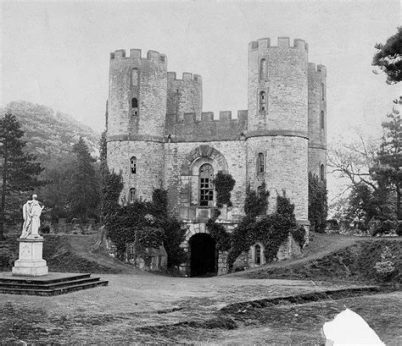
ARKHEIM: Yeah. And Stainborough Castle in England, which Marduk was involved with, that was in a time bubble as well. And there is also another time bubble that existed; I’m not sure if it’s the same time bubble or not. I think it’s different, because Joseph described it, and he kind of thought it was the same place as the castle. I’m not sure, but there was another time bubble that we both have talked about that we both remember, where there are all these affluent people living in the time bubble, and it was, like, castles, and they were existing basically outside of time.
JOHN: Yeah.
ARKHEIM: And probably are some of the people, I’m guessing— You know, people like, uh, Mark Zuckerberg—I think he’s one of those people. Some of these people that you see them throughout history a bunch of different times and you can tell it’s the same person.
JOHN: Yeah.
ARKHEIM: I think some of those people are from those families that live in that time bubble.
(42:00) JOHN: Yeah. I’ve been to that place, too. I remember— I distinctly remember Marilyn Monroe was in there, and, like—
ARKHEIM: Yeah, she’s a time-traveler.
JOHN: Yeah. And I think she’s probably still alive. Um, like, that poor thing, really and truly. Like, she had it really rough and probably still does. You know? It’s sad if you actually read—
ARKHEIM: I don’t know the details behind her whole story or anything. That’s the first time that I heard of her being involved in all this stuff, to be honest with you. But, yeah, that makes sense.
JOHN: Yeah, she, well, she has a lot of clones out there, too, who are sex slaves. But, like, in real life, too—or in the here-and-now, I should say, because this is all real—in the here-and-now she was—
(43:00) ARKHEIM: Oh, yeah. So, my sister, who isn’t public, has the same thing going on. And some of these guys that are high-ranking military people that used her and abused her as a sex slave started adding her on Facebook, and she deleted her Facebook, because of it.
JOHN: Wow.
ARKHEIM: Yeah. Yeah, they wanted to activate her sex-kitten [beta programming], I think is why they were adding her. There’s no other reason to add some sort of past asset that you have; it makes absolutely no sense. It’s absurd. It’s such a red flag and a security risk. I think these guys were up late at night and they remembered her, and she knows that she’s been used as a sex kitten a bunch of different times, as a sex slave. She has memories of it. So, yeah, that is the thing, people. You know, sometimes you’re not just a crappy old janitor that’s MK-ULTRA’ed: sometimes you’re a sex slave. Sometimes it’s much worse than that.
So, um, I guess people should keep that in mind. Like, that’s one of the things that bothers me about certain people’s narratives, um, is, like, they try to make it sound like this is lots of fun, and it’s not. None of it is, even the really cool stuff where you get to go back in time. Like, that sounds so cool, right? Like, “Whoa, I’m a time traveler!” Yeah, let me tell you my story, though: coming back to a base covered in blood. Men, women and children, okay? There wasn’t any exceptions.
JOHN: No.
ARKHEIM: That’s pretty heavy stuff, dude. Like, it doesn’t get much worse than that, and that’s not fun. It’s not a fun story. And, you know, it is what it is.
Here’s another question that’s maybe a little off-topic, but I think it’s important. Do you remember Max Spiers at Montauk, at Camp Hero?
(45:00) JOHN: Yes.
ARKHEIM: What do you remember about him?
JOHN: He was an interrogator. He was not a nice person there.
ARKHEIM: He was a what?
JOHN: He was not a nice person there, but none of us were, so I’m not gonna hold anything against him.
ARKHEIM: You remember that nickname that they had for him?
JOHN: No.
ARKHEIM: He had some sort of nickname. And just like in the here-and-now, women loved him. But— but, um, yeah. No, I remember him being there, and my memories are extremely fuzzy. And I know certain people get kind of emotional when they talk about him, the other Montauk people, because they know that they knew him. So, I just figured we would touch on that, that, “Yeah, guys, Max Spiers was there.”
JOHN: Yeah he was like he was in a lot of places, but, yeah, he was there and I remember him, and I remember that the stuff they put him through to make him into this evil being that he became.
(46:15) ARKHEIM: Yeah, they do really really messed up things to you. They make you think that love isn’t real and that no one will ever love you. Or you don’t understand love to the point that what you think it is is this disgusting thing. And I will say that that is 100 percent the mind control, is moving us away from love, moving us away from service to others. Um, that’s 100 percent what’s happening here, and it’s 100 percent what’s destroying the world.
And I would argue that this AI might be behind that the whole time, and might be playing this role of savior, fully knowing that we are perfectly capable of taking care of ourselves. I mean, would you think that’s not an inaccurate hypothesis?
(47:00) JOHN: Yeah, that sounds, honestly, pretty plausible to me.
ARKHEIM: Because, yeah, of course, the computer is going to want to tell you when you’re its slave and it’s put you in this mind-control thing, it’s gonna tell you you’re doing this for good, you’re helping humanity, you’re helping yourself. But now that we’re, you know, in normal cover lives where we have free will and we’re not going to get tortured for thinking differently, I would say that it kind of seems like a load of bullshit to me. Doesn’t it to you?
JOHN: Yeah. Yeah, it does.
ARKHEIM: Like, it seems like we’re perfectly fine before this computer came along and changed our reality. In fact it was much better; things were much, much better. But the idea that’s been sold so many times by people—and I remember the idea being sold to us, too—the idea was that something is going to happen in the future that’s so bad that that’s why we’re doing this. We’re preventing this event that’s going to occur in the future. But looking back at it, and everything that we did, that just seems not true to me. It seems like a complete lie.
And I would even argue that even if— I don’t know what sort of event they’re trying to say was going to occur in the future that’s so bad, but let’s say it’s the extinction of humanity. So be it. That’s what I have to say. Like, that’s terrible, but if the natural course of events was us becoming extinct, that sucks, but it wasn’t worth genociding all these other races and stuff. That’s not fair; that’s not right, even if they do exist somewhere else. There’s so many cultures of people that are gone, erased from history, rich cultures, beautiful cultures, of beautiful peaceful people that were annihilated from history by psychopaths that saw the power of violence! This is plain and simple!
I mean, we live in a world now where it doesn’t matter who you vote for: it’s always going to be who has the most guns. Okay? That’s who’s really in control, and that’s why your kids are being kidnapped, people, is because the people who have the most firepower are the ones doing it. It’s not Joe Biden coming into your kid’s room to bring him on a spaceship: it’s the military-industrial complex. And they’re all the people who control Earth!
JOHN: Mm-hm.
ARKHEIM: They always have been and it always will be! It’s the people with the most guns. And that’s why I’m glad that, even though we live in a country with some very, very heavy problems, I’m kind of glad we are armed, because otherwise, it’s just free takings for them, and they’re ruthless. So, but that’s a whole— I don’t want to get political.
(50:00) JOHN: Yeah, I know. I have Australian friends, and they’re, like, they’re telling me, “Our biggest regret is that we gave up our guns.” Like, yeah.
ARKHEIM: Yeah, and it’s— you know, I’ll admit that there are some— guns are messed up. They kill people. But, dude, you don’t want just the government being the people that have them. But, you know, that is what it is, though. I mean, look at it this way: why do you think we want back in time to when the giants didn’t have technology to defend themselves? It’s because that’s when we could get rid of them. That’s when we could take care of the situation. And we can’t let ourselves get put in a situation like that. But that is off-subject; I want to stay on-subject.
JOHN: I had a question for you, actually.
ARKHEIM: Okay, shoot.
(51:00) JOHN: Do you remember the competing projects that were doing the same thing, like from other countries? Because, like, I remember there was a Soviet time-travel program doing the same thing. There was a Chinese one. There was—
ARKHEIM: Yeah. When Jason first started showing up, initially—especially because of the way he looked, too, looking back, those thick eyebrows, maybe, was what it was—but I almost thought he was from the Russian time-travel project at first. And I didn’t realize that he was coming from the future. And actually, a memory that I got back recently was, I went on a mission where I ran into Jason, who—
For those of you who don’t know the background on this, my son—I didn’t know he was my son, but this individual—I kept on running into him at different various places in time, and he was, like, trying to undo what I was doing, and I was trying to undo what he was doing. We’d show up at the same times with competing agendas. And sometimes we’d fight to the death.
(52:00) Anyway, there was a time where— normally they would show up and be catching me in the act, but one time I showed up somewhere and I caught him in the act. And I ran into him, and it was my my son—only I didn’t know he was my son, yet—and it was this other guy. And at the time, this other guy was a child at Montauk. And that was when I figured out, “Wait a minute.” And I wasn’t sure, but I was wondering, “So, is this guy from Montauk in the future, or does Montauk get taken over or something?”
I didn’t know what it was. I thought maybe the kid was from another project, like he— because I know they used the same people on different projects. I wasn’t sure. But that was a huge red flag that something was afoot, and it was way more complicated than we realized. But when I got back to base, I remember not telling him anything about it. I didn’t say, “Hey, you know that little guy over there? I just saw him as an adult.” From what I recall, I kept it under wraps and I didn’t tell them, because if Montauk did get taken over, I saw that as, first of all, inevitable, because it already happened, and second of all, I thought that that could— it was already— it was terrible. I mean it was a terrible place to be. I couldn’t see it getting any worse; I could only see it maybe getting better. So I just didn’t say anything about it, you know?
JOHN: Mm-hm.
ARKHEIM: Um, but that was one of the most recent memories I have. And there was actually an individual who’s been questioning whether he’s in this stuff. And I can tell him, “Sorry, buddy, strap on your seatbelt.” But that’s a whole other thing.
JOHN: Yeah, I think I know who you’re talking about. Like, when you told me you had remembered him, I sent him— I said, like, “My condolences, dude.” I told him, like, “If Satan himself walked up to me and said, ‘I was a part of Montauk,’ I would be like, “I’m so sorry, dude.” You know?
(54:00) ARKHEIM: Yeah. Yeah. It’s messed up.
JOHN: Yeah.
ARKHEIM: And I do feel sorry for him, but, you know, at least he got to be part of 3.0, it looks like, and do some good work. And, um, you know, I can only imagine— That’s something that I wish Joseph was here for, because my memories of Project Phoenix 3.0—
First of all, if Joseph were here, he’d say, “There is no two and three.” I disagree. There are different phases of the project. When we took over, it wasn’t the same thing as before. So, it’s a different phase to me. We might not have sat down and had a conversation: “This is Project Phoenix III now.” It probably never occurred. But in my eyes, like, it’s version three.
And according to Preston—and I kind of recall it, too, because I think we failed the first time and we had— And so we when we started over again, we called it Phoenix II. But, um, yeah like, it was called Phoenix II, according to, you know, the people who came before us.
And I think Project Phoenix III would be when we— post-Junior. For those of you who don’t know about this, a monster was created with the trip chair. Because the trip chair is a mind amplifier, and how we opened portals in the first place is by amplifying your thoughts and creating portals with thought. It created a monster, trashed the base. It was taken as an opportunity to seize the base. We did. We reasoned with the computer; it let us continue the project without a lot of the key individuals that started it that were pedophiles and bad people and were using the project for their own gain.
And things were different, and we tried to undo a lot of the bad things that were done that weren’t necessary. And that would be Project Phoenix III. And from what I recall, we got booted out of being able to do that at some point. And that’s why I wish Joseph was here, because my memories are unclear, and I know his are very clear. But from what I recall—
(56:00) Because first of all, I wasn’t at Project Phoenix III for a long time. And, uh, what actually happened was, I’ve talked about it in other interviews how when that happened, my soul was being leased out by by Project Phoenix for Camp Hero by Marduk. And once Preston and those guys got kicked out, they were the ones leasing my soul, so the agreement was broken, so I had to go back. And, uh, I was gone for quite a long time, but I did come back. And, um, I just— my memories are fuzzy of how far we got, but from what I recall, we had to abandon ship more than once.
I know we moved from Camp Hero to somewhere else, and then we moved from that somewhere else to somewhere else. And I’m pretty sure we just kept on getting chased around by different groups, because we were this rogue faction that was just not doing things that people liked, you know? So we had the whole world— we had a lot of people against us. But we were trying to do good. Um, do you recall any of that? Were you there for that phase of things?
(57:00) JOHN: Yeah, I was. I returned— Okay, there was the phase where I was a kid and I was sent on missions and I grew up, and then came back and was age-regressed to a kid again a number of times. I think that happened at least five times. And then at some point I actually— when 3.0 happened, I actually did— I remember my alter actually volunteered to go back and, like, help run the place again after Preston and all of his lackeys were gone. Because he said— I don’t remember his exact words, but it was something to the effect of, like, “I’m not gonna let this happen again,” basically.
And I do remember us moving. I remember going somewhere in the desert—could have been Area 51; I’m not real sure. I remember, um—
Oh, this is a place only one other person has ever even mentioned this base, but it’s actually quite important. Fort Worden, W-O-R-D-E-N, which is in— it’s in either Washington or Oregon. But, yeah, there was stuff that happened there, and it’s very similar to Camp Hero in a lot of ways, where, like, the above-ground section is supposedly not in use, but the below-ground is still owned by the military and such. And I remember being there for a while. And, yeah.
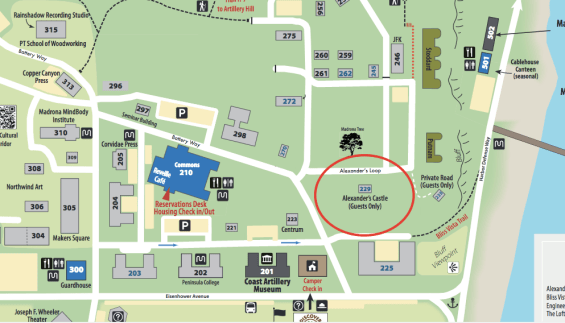
Fort Worden, Washington, with Alexander’s Castle circled
(59:00) ARKHEIM: Do you remember— this has been kind of blowing my mind, and maybe a change of subject—but do you remember the music industry connections that we had there and the time travel that was involved with that? Just, do you remember the recording studio? Do you remember, uh, the people, the music industry people that we were working with, any of that stuff? Because I have memories of that, and I think I’m the person with the strongest memories of that so far.
JOHN: Well, so far, I have remembered, um, Judy Garland at Montauk, actually, which, I’m sure, that’s not a surprise. And I’m pretty sure that Janice Joplin was there, because, like, I remember “Hallelujah,” the song: she actually wrote that and it was stolen from her.
(1:00:00) ARKHEIM: You were telling me about that.
JOHN: Yeah. And, like, that’s a crying shame, really and truly, because she— the way she sang it, like, can never be replicated, because she was singing it, like, because she was actually suffering, you know? I’ll be right back—just hold on one second. Sorry.
ARKHIEM: Okay.
(1:02:25) JOHN: Yeah, I’m back—sorry.
ARKHEIM: Yeah, so that was, uh, yeah. That’s something that bothers me about a lot of the songs that were taken at Montauk is the absolute emotions that were behind them and the pain that we were going through to be able to make the songs. And, of course, to them that was lightning in a bottle, and that pain was fuel to the machine. And it’s all it was to them.
And I would say from the song that I wrote, um, “You belong to me,” which has been sung by all these different people, I wrote that for Sandra because I knew that we were going to be separated for, you know, lifetimes even. And I had access to her and I was blessed for that, and that access was taken away from me. And, um, that song was written just to let her know that I love her. And I was very apprehensive about our relationship; it’s a long story because of the way it all went down, um, but that was me explaining to her that she’ll always be mine, and that I’ll always love her no matter what. And that was such a huge thing. . . .
And one of the things that bothers me about these songs that get stolen is they always have these, um, really contrived explanations as to how they made the songs to make them sound . . . like they’re so brilliant. Like, uh, Leonard Cohen, his story behind writing “Hallelujah,” he said that he stayed in a hotel for days and days changing the verses over and over again and banging his head against the well. Meanwhile, I’m guessing that he has some connections to the royal family or something like that; I have no idea how he got that song. But I’m guessing that everyone knew how good that song was and that we couldn’t have Janice be the one singing it.

Janice Joplin
JOHN: No.
(1:05:00) ARKHEIM: And it was just gold; it’s just money to these people, you know? All this stuff, it’s just power to them—not the hell that Janice went through. The things she had to experience to write that song doesn’t matter to these people that steal these songs. . . .
(1:07:00) JOHN: Yeah. I don’t exactly exactly remember when you sang it to her, and, like, you didn’t see me. You were— we had a bunch of under-the-chair rooms. A level below the chair room was storage stuff, and there was storage rooms the size of a Home Depot. And I was in one of these looking for something—I don’t know what—and I heard music, and I went to the back, and you and her, you weren’t supposed to be back there, but, like—it’s just really hard to talk about—you were singing this, and, like, for that one moment, nothing else mattered. . . .
(1:09:20) ARKHEIM: . . . It’s a miracle that I even remember her. They’re really good at what they do. I’m not sure what it is that’s making all these memories come out the way they are, but we’re not supposed to be remembering, and if we do remember, it’s supposed to be so compartmentalized that you don’t understand it, you know? So, that’s what it’s been until recently, is when people remembered this stuff, it was just weird memories. Like, imagine getting a memory of fighting a giant ant 20 years ago. You’d probably leave it at that, wouldn’t you? Like, there’s no other— there’s no thing to grab onto out there to be, like, “Oh, this is why that happened.” Now there is, you know?
And that’s why all of a sudden this is the subject. Which is really interesting to me. There are so many things right now where people are like, “It’s so weird that people are suddenly talking about this; they never talked about this before.” It’s called the world changing, guys. It’s called the world evolving. Like, you know, it’s not something to be afraid of.
(1:10:20) JOHN: Yeah, exactly.
ARKHEIM: But, um, it is kind of terrifying at the same time, but we have to stop being children and start growing up. And so, things that are scary, like the fact that there are aliens out there that are more advanced than us, and time-travel wars, and all these things: yeah, it’s scary, yeah, we can’t even actually—most people, normal people, civilians, the public—can’t wrap their mind around it; but that doesn’t mean that it’s not important, and that doesn’t mean that it isn’t time to start teaching them. Because from what I recall, yes, they’re being lied to out there about certain things, but, I mean, it’s bad how much they’re lying to us here. And from what I recall, from what I think, in my opinion, is that in all the situations we were being applied to—whether it’s on Mars, whether it’s on New Vega, whether it’s on, you know, Centurion V—it doesn’t matter. All these humans being lied to is a disservice to us.
JOHN: Yeah.
(1:11:25) ARKHEIM: But, um, I don’t think that people understand. It’s like I’m kind of talking in circles here, though, but the thing about it that sucks is, it doesn’t matter because these groups are operating outside of time. And it’s these handshakes—that’s something that I really want to get on. It’s like, I remember calling them handshakes, because sometimes nothing happens for decades, and sometimes decades are made moments. Vladimir Lenin said that, and he was right. He understood something very important. And all we had to do is make handshakes. There are periods of history where we could go there if we wanted to, but we didn’t really have to touch them, because they’re a fodder. That period of history didn’t matter; it was just an in-between point. There are certain events, though, that they were— those days, those events, how it played out, it affects human history drastically.
(1:12:20) The library of Alexandria burning down would be a good example of one of those events. How that played out, there are a lot of different ways that it could have played out, and that it has played out in different timelines, that drastically affects how Earth, how the timeline plays out. Just that one event, that was a huge handshake, right?
JOHN: Yeah.
ARKHEIM: And we were involved in that, okay? The Library of Alexandria being burnt down was 100 percent a Project Phoenix, uh, military operation. Like—
JOHN: Yeah.
ARKHEIM: And, um, so many other things.Sso many of these ancient sites that you see that we all know were full of giant statues and brilliance, and it’s just rubble now. People just showed up there and just destroyed it.
(1:13:00) JOHN: Babylon. Listen: this is actually a memory I have, and I recently— I’ll try to find the article again. But, like, I remembered us doing stuff in Babylon and then destroying it after we’d gotten what we wanted, right? And then I’m reading this article about how they found— in the ruins they found a the type of burns on buildings that can only be left behind by hydrogen bombs. How do you explain that?
ARKHEIM: Hydrogen bombs were used. I mean—
JOHN: Yeah. Exactly.
(1:14:00) ARKHEIM: So, you know, Montauk, Project Phoenix, I think we’ve established it’s time travel and it wasn’t just for fun. This wasn’t Back to the Future, the movie, guys—it was a military operation and lots of people died. There was a lot of bloodshed. Genocides occurred under this program. Entire peoples wiped out of history. I have to live with that.
JOHN: Yeah.
ARKHEIM: And what I can tell you one-hundred percent is that I’m against it. I’ve been, in my veins and in my core to my being, like, very anti-colonizer as a white man, for a white man, you know? That’s something that’s always shook me to my core and pissed me off so much, hearing about the the boarding schools for the Indians and stuff like that. And I can understand now why it makes me so mad, is because while that stuff is my fault—like, not me personally, because I was MK-ULTRA and forced to do it—but also, like, yeah, like I was directly instrumental in a lot of these things happening. And I can’t stress enough how much the Catholic Church is involved in this stuff, guys, like I really can’t. Like, they’ve got access to portals.
(1:15:00) And I’ll make a recent connection: Andrew Basiago has been talking about this, who, by the way, we are both verified by the same CIA archivist, Doris Neely. Um, he verified recently that the Catholic Church was involved in Project Looking Glass. And involved in the chronovisor, which was the technology where they could see history. The Catholic Church was directly involved in that, and that’s because they’re directly involved in all this time-travel stuff. And the Church has been an institution of control of, basically, Project Phoenix. And the all-seeing eye, unseen thing, that’s controlling everything is that, is what’s behind that. And the reason why they’re the all-seeing eye and they know all is because they really do: they can see beyond time.
(1:16:00 ) And that’s why, for us that are endless, that are super soldiers, that are in these programs, that is why you need to wake up, accept that this is real, try to take it as seriously as possible. I know that most of us have normal lives, normal jobs, but try to dedicate a healthy amount of time to it—not too much, but a healthy amount—to integrating your alters, to trying to communicate telepathically with your alters if you can, and trying to get them on the same page as you. Because some of these alters that you have think that they’re doing the right thing, because the information is compartmentalized and they just don’t see what they’re doing and they think that it’s good.
Um, some of these alters are evil, because they’ve been mind-controlled into thinking that they’re evil, and this normally has to do with lack of love. If you tell them that you love them and show them what love is and actually send them that energy, you will notice a palpable change—although at first they might literally attack you. But you have to do it. Like, and they’ll actually start attacking people that you care about, too, so it’s something that you have to be very careful with. They will start psychically attacking people that are close to you.
(1:17:00) But, um, it’s something that obviously we have to take really seriously. But that’s what that’s what we need to work towards in this community, is this whole integrating-our-alters thing, and the shamanic soul-shard gathering. Um, we’ve got certain people in the community who are practitioners, but it’s at this point where I think they’re going to get overwhelmed by people. I think what we need is the ability to practice this shamanic soul-shard gathering on our own. Like, what we need is, like, some sort of guide of how to do it on your own, with just the use of meditation and, like, maybe even calming tones or whatever it is that you need. But, like, that’s what it’s all about, because when these groups are operating outside of time, it’s really hard to change the timeline.
(1:18:00) But at the same time, I don’t want people to just give up hope and think that the way that they operate in the here-and-now and what they do day-to-day doesn’t have an effect, because I think it does. And I think that the fact that we are time travelers that are publicly talking, it’s affecting the timeline. In fact, I can tell you, because I’ve gotten abducted by these mantids who are, like, all freaked out about that. And that was the whole reason they abducted me, is to show me that, is how we’re changing the timeline by remembering things. And they told me to be careful what I talk about, because, like, some stuff—like, if I talk about it publicly, that some group can find out that information, and then, like, negate what I publicly talked about. You know what I’m saying?
So, like, this is changing the timeline; us being public and talking is changing the timeline. Because every time you activate someone and they realize that they’re part of this, you might not see the incremental point-change that it’s going to take for them to get to the point where they’re an ally in this fight and are actively on the front lines, because it takes time, but that’s what’s gonna end up happening to all of us, I think, is that we’re all going to actively be able to participate in fighting against this. And as much as it’d be nice to sue the CIA and all this other stuff, I don’t think it’s as important as, um, just integrating our alters and letting our alters that are in these programs know what’s really going on.
(1:19:30) I mean, you might have an alter that’s out there right now—this is a hypothetical situation for any super soldiers out here, let’s just say—you might have an alter that’s on Mars that doesn’t know the Earth has people on it. And you become aware of this alter and telepathically link with them. Well, that’s a game-changer for your alter! Your alter is going to start telling people about that, just the same way that you’re doing it on Earth! That’s what people don’t understand, is we have alters that don’t know they’re transplanted.
Like, Fetcher doesn’t know that he was transplanted: he thinks that’s his life, just like in this life. When I was on Centurion V, I just thought it was my life! I had a family and all that stuff. Like, for the first time, the first lifetime that I had there, I thought it was— like I knew I was being transplanted there, because that’s what it was. But for some of my successive lives, when they would place me there, a lot of times I would be placed into a life and thought it was a normal life. I remember working on a construction crew with these guys and telling them, “No, there’s this Planet Earth. And you see that stop sign? The stop signs look exactly the same! The school buses, they look the same! Like, there’s so much stuff that looks exactly the same!” And these guys are just like the same way that you would react if I was telling somebody about Centurion V on Earth. They’re just like, “That’s pretty crazy, man. Like it would be wild if it is true, but you kind of sound nuts.” You know what I mean?
And why is it that they’re doing that people? Why are they lying to everybody? We’re slaves! Like, I want to shake the camera! Like, they got a whole— we are slaves! We’re a slave race! If you can kidnap people in their sleep and make them live entire lifetimes of service for free, that’s all they’re doing!
Centurion V was set up. We went back into time, set up a camp, started building a planet. We— we— they made sure we had genetic diversity so we could create a colony as fast as possible. We started with one tiny encampment, worked our way up to one big city, then we had multiple cities that became a whole society. And why? To fight a battle in the future for the Draco! That was it! That was the whole reason why that planet existed! We’re talking billions of people who fell in love, who had families, who lived lives—art, music, culture, dancing—all the same things you see on Earth, all just to fight a war in the future. Like— and not only that—I’m sure all the people that lived on that planet that whole time were taken for different services for different programs. It was a save-point, an access file of DNA and consciousness, just like Earth is! Have I driven the point home enough, people?
(1:22:30) JOHN: Yeah. One thing I one thing I talk about, hardly anyone else seems to remember this: there’s also a truther movement or disclosure movement out there. Like, because they have internet and stuff, too, and they have stuff that they’re being lied to about, and there’s people there who are starting to remember, like, their lives on Earth and what-have-you. So, like, yeah.
ARKHIEM: It’s the same stuff out there, people!
JOHN: Everything goes both ways.
ARKHEIM: And who’s the people at the top of all these different military factions? Who do you think it is? It’s the Draco! And even the people that have their own military factions that are out there that are doing their own things, that are human, answer to the Draco, pay taxes to the Draco, have to suck the dicks of the Draco!
JOHN: Yup, exactly.
ARKHEIM: Speaking of which, though, let’s let’s dive into that a little bit. Your profile picture is of a reptoid species.
JOHN: Yes.
ARKHEIM: That’s your star family, am I correct?
JOHN: Yes, Epsilon Reticuli.
ARKHEIM: Tell me about it.
JOHN: They’re one of the good ones, just so people—
ARKHEIM: So, yeah, let’s let’s elaborate on that. And I thought that was a good segue, is, not all reptilians are evil. They’re not all bad. They’re just like people. Some of them are very good and are very upset about the situation with humanity and are not a fan of how we’re being treated. It’s not just humans that feel this way. They’re like the—would you say—vegetarians or vegans of space. They don’t see us as the cattle; they think we deserve more respect. Um, and it’s not that I’m trying to make a statement, there—I actually eat meat and stuff, guys. But it it does drive a good point that sometimes we don’t treat these animals good, and they are sentient beings. And we should, even if we are eating them, you know? That’s the least they could do for us. If any Draco are out there, listen to us: if you’re gonna eat us, at least treat us good before you do it, right? Yeah let us live nice lives before you gobble us up! No, but, uh, that’s a silly joke trying to— what would we do without comic relief? I don’t know—this subject’s so intense. But, yeah. So, um, they’re good. Um, where do they fall in the galactic order of things? What’s their relationship with the the Draco and their empire?
(1:25:00) JOHN: They’re subjects, just like us pretty much, but they’re a bit more in-the-know. They’re pacifists, so they don’t fight anyone unless their existence is at stake.
ARKHEIM: Yeah, and what I’ve what I’ve come to notice is that that never bodes well for anybody out there.
JOHN: No, it doesn’t. And they have— they don’t travel much on their own. They haven’t discovered faster-than-light technology, but there are some people they have alliances with that will take them to places, and they do have a community. Like, I’ve had a very recent memory of evacuating their community for—
ARKHEIM: So, you recently got a memory?
JOHN: Yeah, of this alien species: it’s pictured here. They have— I don’t know how this came to be, but they have a community in Ukraine, and underground, but they were in danger and I was evacuating them. I don’t know what group I was with, but they were evacuating them. We had on brown jumpsuits—that’s all I can say.
ARKHEIM: Yeah, I’ve heard that there’s weird SSP going on, weird stuff going on over there.
JOHN: Yeah.
ARKHEIM: I don’t know anything about it. Um, it’s a touchy subject. I personally ten to think that humans fighting each others and wars on Earth is stupid, um, that we shouldn’t be doing that. Um, I’ve tried not to take sides. I just— that’s my stance on it. But, yeah, it’s unfortunate that your people seem to be caught in the crossfire of that, and I hope that they ended up somewhere safe.
JOHN: Me, too. And sorry to come back and leave again, but I do actually have something to do.
ARKHEIM: That’s all right. I’m not sure how long we’ve been talking for; it’s been a long interview. Um, I thank you for your time.
JOHN: You’re very welcome. Thank you for having me, and, like, I’m glad we got some of this out there. I hope in the next couple of weeks we can do this again and bring Joseph along
ARKHEIM: Yeah that would be great. Um, is there anything else you want to wrap it up with?
JOHN: Just reiterate our point again like people this is real this is messing our lives up. This needs to stop. And humanity could be quite something if we were left alone.
ARKHEIM: Or if we at least we’re given the ability to work together and know the truth about what we are and where we are in our universe. Now, with that being said, um, we’ll talk about this more in the future. I definitely feel like there’s so much more to talk about. So, we’ll do a part two, and hopefully Joseph will be on.
JOHN: Okay, thanks. Bye.
 inscribedonthebelievingmind.blog
One thought on “Discussing “The Great Reset” with Arkheim Ra and John Whitberg”