
The Diamond Sutra is part of the Mahaprajnaparamita Sastra, written by Nagarjuna in around the second century.
It was upon hearing a man reciting this sutra that Hui-neng experienced an awakening. When the fifth patriarch read it to him several months later, Hui-neng attained complete enlightenment. Thus he fulfilled the Buddha’s prophecy: “For even at that time, Subhuti, there will be bodhisattvas who are endowed with good conduct, endowed with virtuous qualities, endowed with wisdom, and who, when these words of the sutra are being taught, will understand their truth.”
Vajra is the hardest substance imaginable; it is also luminous and transparent. The Vajracchedika Sutra is said to cut through illusions just as a diamond cuts through inferior substances.
Vajracchedika Prajnaparamita Sutra
Based on translations from the Sanskrit by Paul Harrison and Edward Conze
Homage to Śakyamuni, Tathagata, Arhat, Completely Enlightened One!
Homage to the Prajnaparamita, the Lovely, the Holy!
1. The Setting of the Sermon
Thus have I heard at one time. The Lord (Bhagavat) (1) was staying at Sravasti, in the Jeta Grove, in the garden of Anathapindika, together with a large gathering of monks, consisting of 1,250 monks, among them many bodhisattvas, great beings.(2) In the morning the Lord put on his cloak, took his bowl, and entered the great city of Sravasti to collect alms. When he had returned from going house to house and had eaten, the Lord put away his bowl and cloak, washed his feet, and sat down on his seat, his legs crossed, his body upright, his attention fixed mindfully in front of him. Then a great many monks approached the Lord, and after approaching him they prostrated themselves at the Lord’s feet, walked around the Lord three times, and sat down on one side.
2. Subhuti, Foremost of the Disciples
Furthermore, on that occasion the Venerable Subhuti had joined that assembly and was seated with it. Then the venerable Subhuti rose from his seat, arranged his upper robe over one shoulder, knelt on his right knee, made obeisance to the Lord with his palms pressed together, and said to the Lord: It is wonderful O Lord, it is exceedingly wonderful, O Well-Gone, how much the bodhisattvas, the great beings, have been helped with the greatest help by the Tathagata, the Arhat, the Fully Enlightened One. It is wonderful, O Lord, how much the bodhisattvas, the great beings, have been favoured with the highest favour by the Tathagata, the Arhat, the Fully Enlightened One. How then, O Lord, should a son or daughter of good family who has set out in the path of the bodhisattva stand, how should he advance, how should he pacify his mind?(3)
After these words the Lord said to the venerable Subhuti: Well said, well said, Subhuti! So it is, Subhuti, so it is, as you say! Subhuti, the Tathagata has helped the bodhisattvas, the great beings, with the greatest help, and he has favoured them with the highest favour. Therefore, Subhuti, listen well and attentively! I will teach you how those who have set out in the bodhisattva path should stand, how they should advance, how they should pacify their mind.
So be it, O Lord, replied the venerable Subhuti, and listened.
3 The vow to save all living beings
The Lord said: Here, Subhuti, someone who has set out in the path of a bodhisattva should form the following thought: However many beings there are in the universe of beings, whether born of an egg or a womb, born from moisture or born miraculously, having form or without form, having discrimination or without discrimination:(4) as many kinds of beings as can be conceived, all these I must lead to nirvana, into that realm of nirvana in which nothing remains.(5) And yet, although innumerable beings have thus been led to nirvana, not one being has been led to nirvana.
And why? If in a bodhisattva there should arise knowledge of a being, he could not be called a bodhisattva. And why? He is not to be called a bodhisattva in whom arises knowledge of a self, nor in whom arises knowledge of a being, or knowledge of a living soul, or knowledge of a man.(6)
atman, sattva, jiva, pudgala: Na sa Subhute bodhisattvo vaktavyo yasya-atma-samjna pravarteta, sattva-samjna va jiva-samjna va pudgala-samjna va pravarteta
God is one in all ways and according to every reasoning, so that in him no plurality is to be found, within the mind or without. For he who sees any distinction clearly does not see God. – Meister Eckhart
4 The Perfection of Giving (Dana Paramita)
Moreover, Subhuti, a bodhisattva who gives of himself is not to dwell in anything, nor is he to dwell anywhere. When he gives of himself, he is not to dwell in that which is seen, nor in that which is heard or smelled or tasted or felt or thought. For, Subhuti, the bodhisattva, the great being, is to give of himself in such a way that he does not dwell in the slightest difference between things. And why? Because the accumulation of merit of that bodhisattva who gives of himself without dwelling anywhere is incalculable.
5 What do you think, Subhuti? Is it easy to take the measure of space in the east?
Subhuti said: Indeed not, Lord.
Likewise, is it easy to take the measure of space in the south, west, north, below, above—in all of the ten directions?
Subhuti said: Indeed not, Lord.
The Lord said: In the same way, it is difficult to measure the accumulation of merit of that Bodhisattva who gives of himself without dwelling. That is why those who have set out in the bodhisattva path are to give of themselves without dwelling in any knowledge of a difference.
6 Subhuti asked: Lord, in the future, in the last time, in the last epoch, in the last five hundred years, at the time of the collapse of the good doctrine, will there be any beings who, when these words of the sutra are being taught, will understand their truth?
The Lord replied: Do not speak thus, Subhuti! Yes, even then there will be such beings. For even at that time, Subhuti, there will be bodhisattvas who are endowed with good conduct, endowed with virtuous qualities, endowed with wisdom, and who, when these words of the sutra are being taught, will understand their truth.
And those bodhisattvas, Subhuti, will not be such as have honoured only one buddha, nor such as have planted their roots of merit under one buddha only. On the contrary, Subhuti, those bodhisattvas who, upon hearing these words of the sutra, experience even a single thought of serene faith, will be those who have honoured many hundreds of thousands of buddhas, those who have planted their roots of merit under many hundreds of thousands of buddhas. The Tathagata knows of them by his buddha-knowledge; the Tathagata sees them with his buddha-eye; the Tathagata penetrates their souls. They will all accumulate for themselves an immeasurable quantity of merit.
And why? Because, Subhuti, in those bodhisattvas there arises no knowledge of a self, or knowledge of a being, or knowledge of a soul, or knowledge of a man. Nor will knowledge of a thing or a concept arise in those boddhisattvas. No knowledge or non-knowledge (asamjna) will arise in them. And why? If, Subhuti, knowledge of a thing or a concept should arise in those bodhisattvas, they would thereby seize upon a self, a being, a soul, or a man. And why? Because a bodhisattva ought not to seize upon either a thing or a concept. Thus the meaning of the Tathagata’s words: Those who understand the discourse about the doctrine being like a raft should forsake things; even more so, concepts.(7)
7 Furthermore, the Lord said to the Venerable Subhuti: What do you think, Subhuti? Is there any Dharma (8) that the Tathagata has known as utmost, perfect enlightenment, or is there any doctrine that the Tathagata has demonstrated?
Subhuti said: No, not as I understand what the Lord has said. And why? This Dharma which the Tathagata has fully known and demonstrated cannot be grasped; it cannot be talked about; it is neither thing nor concept. And why? Because all sages, though they are different from one another, belong to non-doing (asamskara or asamskrta). (Suzuki, 1935)
9a Subhuti, what do you think? Does a stream-enterer ever have the thought: I have attained the stage of stream-enterer?
Subhuti said: No indeed, Lord. And why? Because, Lord, he does not enter any thing: that is why he is called a stream-enterer. He does not enter that which is seen, nor does he enter that which is heard, smelled, tasted, felt, or thought. Thus he is called a stream-enterer. O Lord, if the stream-enterer were to have the thought: I have attained the stage of stream-enterer, then he would be seizing upon a self, seizing upon a being, seizing upon a soul, seizing upon a man.
9b The Lord said: What do you think, Subhuti? Does a once-returner ever have the thought: I have attained the stage of once-returner?
Subhuti said: No indeed, Lord. A once-returner does not have the thought: I have attained the stage of once-returner. And why? Because there is no thing whatsoever that enters the stage of once-returner; thus is the once-returner spoken of.
9c Subhuti, what do you think? Does a non-returner ever have the thought: I have attained the stage of non-returner?
Subhuti said: No indeed, Lord. A non-returner never has the thought that he has attained the stage of non-returner. Why? There is no thing whatsoever which observes that it is a non-returner; thus is the non-returner spoken of.
9d The Lord said: What do you think, Subhuti? Does an arhat ever have the thought: I have attained arhatship?
Subhuti said: No indeed, Lord. And why? Because there is no thing whatsoever, Lord, which is called an arhat. If an arhat were to have the thought: I have attained arhatship, then he would indeed be seizing upon a self, seizing upon a living being, seizing upon a soul, seizing upon a man.
9e I am the one, Lord, whom the Tathagata, the Arhat, the Fully Enlightened One has called Foremost Among Those Who Dwell in Peace. I am, Lord, an arhat, free of passion. But the thought does not occur to me, Lord, that I am an arhat. If, O Lord, the thought should occur to me that I had attained arhatship, then the Tathagata would not have called me Subhuti, Son of a Good Family, Foremost Among Those Who Dwell in Peace. But a dweller in peace does not dwell anyplace: thus is a dweller in peace spoken of.
14a Thereupon the impact of the doctrine moved the Venerable Subhuti to tears. Having wiped away his tears he said to the Lord: It is wonderful, O Lord, it is exceedingly wonderful, O Well-Gone, how well the Tathagata has taught this discourse on the Dharma. Ever since cognition was produced in me, Lord, I have not heard such a discourse on the Dharma. Most wonderfully blessed will be those who, when this sutra is being taught, have true knowledge. And true knowledge, that is verily nonexistent knowledge (abhuta-samjna); thus the Tathagata speaks of true knowledge.
It is not difficult for me to accept and believe this discourse on the doctrine when it is being taught. However those beings who will be in the future, in the last time, in the last epoch, in the last 500 years, at the time of the collapse of the good doctrine, and who, O Lord, take up this Sutra, memorize it, recite it, study it, and illuminate it in full for others, those will be most wonderfully blessed. However, no knowledge of a self will arise in them, nor of a being or a soul or a man. And why? That, O Lord, which is true knowledge of self, that is non-knowledge (asamjna). That which is true knowledge of a being or a soul or a man, that is non-knowledge. And why? Because the buddhas, the lords, have left all knowledge behind.
14d The Lord said: So it is, Subhuti. Most wonderfully blessed will be those beings who, upon hearing this sutra, do not tremble or become frightened or terrified. And why? The Tathagata has taught that this is the highest perfection (parama-paramita). And what the Tathagata teaches to be the highest perfection, that also do the innumerable blessed buddhas teach. Thus do I speak of the highest perfection.
14e The Perfection of Forbearance (Ksanti Paramita)
Furthermore, Subhuti, the Tathagata’s perfection of forbearance is really non-perfection. And why? Because, Subhuti, while my body was being dismembered by the King of Kalinga (9) I had no knowledge of a self, a being, a soul, or a man. And why? If, Subhuti, I had had knowledge of a self, ill-will would have arisen in me; and likewise if I had had knowledge of a being or a soul or a man. With my supernormal power I remember that I was the Rishi (10) of Forbearance for five hundred lifetimes. During that time, moreover, no knowledge of a self or a being or a soul or a man arose in me.
Sickness or poverty, hunger or thirst—whatever God sends you or does not send you, what He grants you or withholds, that is best for you. Even should you lack fervour and inwardness—whatever you have or lack, be minded to honour God in all things, and then whatever He sends you will be the best. Be assured, if it were not God’s will it would not be. You have neither sickness nor anything else unless God wills it. And so, knowing it is God’s will, you should rejoice in it and be so content that pain would be no pain to you. – Meister Eckhart (Sermon Forty)
Therefore, Subhuti, bodhisattvas, great beings, are to detach themselves from all appearances in order to cultivate the mind of utmost, perfect enlightenment. They are to cultivate a mind which does not dwell in that which is seen; they are to cultivate a mind which does not dwell in that which is heard, smelled, tasted, felt or thought. They are to cultivate a mind which does not dwell in things or concepts. They are to cultivate a mind which does not dwell in anything. And why? Correct dwelling is non-dwelling. For this reason the Tathagata teaches that giving is to be practiced without dwelling in forms.
You are among things, but they are not in you, for those who are careful are unhindered in their activity. They are unhindered who organize all their works guided by the eternal light. Such people are among things and not [dwelling] in them. They are very close [to the world], and yet have no less than if they were up yonder on the circle of eternity. Very close, I say, for all creations are means [to get to God]. There are two kinds of means. One means, without which I cannot get to God, is work or activity in time, which does not interfere with eternal salvation. Works are performed outwardly, but activity is when one performs with care and understanding inwardly. The other means is to be free of all that. For we are set down in time so that our sensible worldly activity may make us closer and more like to God. (Meister Eckhart, Sermon Nine)
14f Subhuti, when bodhisattvas give in this manner it benefits all sentient beings. The Tathagata teaches that all attributes are non-attributes, and all sentient beings are non-beings. And why? Because the Tathagata speaks in accordance with the Dharma, speaks the truth, speaks of what is, not otherwise. A Tathagata does not speak falsely. Nevertheless, Subhuti, with regard to that Dharma which the Tathagata has fully known and demonstrated, there is neither truth nor falsehood.
14g Subhuti, in the darkness one sees nothing; just so should one regard a bodhisattva who has fallen among things and who gives of himself while abiding in things. When the night sky lightens and the sun rises, a man endowed with sight sees myriad forms; just so, Subhuti, should one regard a bodhisattva who gives of himself without abiding in things.
16 Subhuti, those sons and daughters of good family who take up these sutras and memorize them, recite and study them, they will be humbled, well humbled they will be! And why? Whatever wrongful deeds (karma) leading to evil paths that these beings have done in their former lives, in this very life they will, by that humiliation, free themselves of those wrongful deeds of former lives, and they will attain the enlightenment of a buddha.
17a Subhuti asked: How, O Lord, should one who has set out in the bodhisattva path stand, how should he advance, how should he still his thoughts?
The Lord replied: Here, Subhuti, someone who has set out in the bodhisattva path should form the following thought: All beings I must lead to nirvana, into that realm of nirvana which nothing remains; and yet, after beings have thus been led to nirvana, no being at all has been led to nirvana. And why? If knowledge of a being should arise in a bodhisattva, he could not be called a bodhisattva, and likewise if knowledge of a soul or a man should arise in him. And why? Because he who has set out in the bodhisattva path is not one of the [worldly] things.
17b What do you think Subhuti? When I was with the Tathagata Dipankara, is there any doctrine by which I came to fully know utmost, perfect enlightenment?
Subhuti replied: There is no doctrine by which the Tathagata, when he was with the Tathagata Dipankara, fully came to know utmost, perfect enlightenment.
The Lord said: So it is, Subhuti, so it is: there is no doctrine by which the Tathagata, when he was in the presence of Dipankara, the Tathagata, Arhat, Fully Enlightened One, came to fully know utmost, perfect enlightenment. Moreover, Subhuti, if I had fully known some doctrine, the Tathagata Dipankara would not have predicted of me: You, young Brahmin, will in a future time be Tathagata, Arhat, Fully Enlightened One, by the name of Shakyamuni! And why? The title, Tathagata, signifies suchness.
17d Should anyone say, Subhuti, that the Tathagata has fully known utmost, perfect enlightenment, he would be speaking falsely. And why? There is not any doctrine by which the Tathagata has fully known the utmost, right and perfect enlightenment. And that Dharma which the Tathagata has fully known and demonstrated, with regard to that there is neither true nor false. Therefore the Tathagata preaches: All things are buddha-things. And why? Subhuti, the Tathagata has demonstrated that all things are non-things: thus all things are said to be buddha-things.
17f The Lord said: Subhuti, the bodhisattva who would say: I will lead beings to nirvana is not to be called a bodhisattva. And why? Is there, Subhuti, any thing called a bodhisattva?
Subhuti replied: No, O Lord, there is no thing called a bodhisattva.
The Lord said: Therefore the Tathagata teaches: Devoid of self are all things: devoid of a being, devoid of a soul, devoid of a man—all things are thus. (Niratmanah sarvadharma, nihsattvah nirjiva nispudgalah sarva-dharma iti.) However, Subhuti, the bodhisattva who remains focused on Devoid of a self are all things, him the Tathagata, the Arhat, the Fully Enlightened One has declared to be a bodhisattva, a great being.
18b The Lord said: What do you think, Subhuti? Has the Tathagata used the phrase, As many grains of sand as there are in the great river Ganges?
Subhuti replied: So it is, O Lord, so it is, O Well-Gone! The Tathagata has done so.
The Lord asked: What do you think, Subhuti? If there were as many Ganges rivers as there are grains of sand in the great river Ganges, and if there were as many world-systems as there are grains of sand in them, would those world-systems be many?
Subhuti replied: So it is, O Lord, so it is, O Well-Gone. Those world-systems would be many.
The Lord said: However many beings are in those world-systems, I know, in my wisdom, their manifold patterns of thought (anusaya). And why? Subhuti, the Tathagata has shown patterns of thought to be non-patterns of thought; thus do I speak of patterns of thought. And why? Past thought is unattainable, future thought is unattainable, present thought is unattainable.
21 The Lord asked: What do you think, Subhuti? Does the Tathagata have the thought: I have taught the doctrine? Subhuti, whosoever were to say that the Tathagata has taught the doctrine would speak falsely; he would misrepresent me by seizing upon what is not. And why? The teaching of the doctrine, Subhuti, is that there is no such thing as a teaching of the doctrine that could be grasped
Subhuti asked: Are there, O Lord, any beings in the future, in the last time, in the last epoch, in the last 500 years, at the time of the collapse of the good doctrine who, upon hearing such teachings, will truly believe?
The Lord replied: Subhuti, there are no beings or non-beings. And why? All beings, Subhuti, have been shown by the Tathagata to be non-beings; thus do I speak of all beings.
bhagavān āha | na te subhūte satvā nāsatvās tat kasya hetoḥsarvasatvā iti subhūte asatvās te tathāgatena bhāṣitās tenocyante sarvasatvā iti
22 What do you think, Subhuti? Is there any thing which the Tathagata has fully known utmost, perfect enlightenment?
Subhuti replied: No indeed, O Lord, there is no thing which the Tathagata has fully known utmost perfect enlightenment.
The Lord said: So it is, Subhuti, so it is. Not even the least (anu) thing is to be found or grasped there: thus do I speak of utmost (anuttara), perfect enlightenment.
23 Furthermore, Subhuti, that Dharma is of a sameness (samata), and nothing is therein at variance (vishama). Thus do I speak of utmost, perfect enlightenment. Being of a sameness due to the absence of a self, a being, a soul, or a man, utmost, perfect enlightenment is fully known as the totality of all wholesome things. Furthermore, Subhuti, the Tathagata has shown wholesome things to be non-things; thus do I speak of wholesome things.
25 What do you think, Subhuti, in the Tathagata does the thought arise: There are beings who have been liberated by me? You should not see it thus, Subhuti! And why? There is not a single being who has been liberated by the Tathagata. Furthermore, if there had been any being liberated by the Tathagata, then surely the Tathagata would be seizing upon a self, a being, a soul, a man. Subhuti, the Tathagata has taught that seizing upon a self is non-seizing, yet the foolish ordinary men seize upon it. Furthermore, Subhuti, the Tathagata has taught that foolish ordinary men are non-men; thus do I speak of foolish ordinary men.
26 What do you think, Subhuti? Is the Tathagata recognized by the signs of a buddha? (11)
Subhuti replied: No indeed, O Lord.
The Lord said: If, Subhuti, the Tathagata could be recognized by the signs of a buddha, then a wheel-turning sage-king would also be a Tathagata.10 Therefore, the Tathagata is not recognized by the signs of a Buddha.
Further, the Lord spoke on that occasion the following verse:
Those who by my form did know me
And those who followed me by my voice
Engaged in wrong efforts
Those people will not see me
By their teaching does one recognize the buddhas
From their Dharma-body comes their guidance
Yet the Dharma’s true nature cannot be discerned
And no one can be conscious of it as an object
27 Subhuti, No one should say to you: Those who have set out in the bodhisattva path have conceived the destruction of a thing, nor its annihilation. Not so should you see it, Subhuti! For those who have set out in the bodhisattva path have not conceived the destruction of a thing or its annihilation.
28 Subhuti, suppose a bodhisattva, in the practice of giving, filled as many world-systems with the seven precious treasures as there are grains of sand in the Ganges River. If there is a man with the awareness that all things are void of self, and if he accomplishes their complete extinction, then this is superior, and the merit accumulated by this bodhisattva surpasses that of the former. Subhuti, this is because bodhisattvas accumulate no merit.
Now listen to a true saying! If a man gave a thousand marks of gold for building churches and convents, that would be a great thing. Yet that man would give far more who could regard a thousand marks as nothing; he would have done far more than the other. – Meister Eckhart (Sermon Forty)
Subhuti asked the Buddha: Lord, why do you say that bodhisattvas do not accumulate merit?
Subhuti, in order for bodhisattvas to accumulate merit they should not covet merit; therefore it is said that they do not accumulate merit.
29 Whosoever says that the Tathagata goes or comes, stands, sits or lies down does not understand the meaning of my teaching. And why? Tathagata is the title given one who has not gone any place, nor come from any place; therefore is he called Tathagata, Arhat, Fully Enlightened One.
31 What do you think? Subhuti, if someone said that the Tathagata had taught a view (drishti) of a self, a view of a being, a view of a living soul, a view of a man, would he be speaking rightly?
Subhuti replied: No indeed, O Lord, no indeed, O Well-Gone, he would not be speaking rightly. And why? The Tathagata has taught that [the proper] view of a self is no view: thus has he spoken of a view of a self.
The Lord said, Subhuti, regarding all things, one who is developing the mind of utmost, perfect enlightenment should thus know, thus see, and thus believe, not allowing knowledge of things (samjna) to arise. Subhuti, the true attributes of things are non-attributes: thus do I speak of the attributes of things.
32 And finally, Subhuti, if a bodhisattva, a great being, had filled world-systems immeasurable and incalculable with the seven precious things, and gave them as a gift to the tathagatas, the arhats, the fully enlightened ones, and if, on the other hand, a son or daughter of good family had taken from this Prajnaparamita Sutra but one stanza of four lines, and were to memorize, teach, recite and study it, and illuminate it in full for others, on the strength of that this latter would accumulate a greater quantity of merit, immeasurable and incalculable. How should he illuminate it? By not illuminating it. This is what I mean when I say he should illuminate it.
As a shooting star, spots before the eyes, a lamp
A mirage, dew drops, a bubble
A dream, a lightning flash, a cloud
So should one view what is conditioned
Thus spoke the Lord. Enraptured, the venerable Subhuti, the monks and nuns, the pious laymen and laywomen, and the bodhisattvas, and the whole world with its gods, men, asuras (12) and gandharvas rejoiced in the Lord’s teaching.
This completes the Diamond-hard Cutter of Perfect Wisdom.
Footnotes:
1. The title of Lord: see Why is the Buddha called Bhagavat
2. The Bodhisattvas are called Mahasattvas, great beings, because they take the great vow, because they want to do the great work, and because they want to arrive at the great place. – The Mahaprajnaparamita Sastra
3. Mind – thoughts (cittam).
4. Samjna: knowledge of differences; discrimination between good and bad attributes.
5. Nothing remains: there is no mind left.
6. With respect to the doctrine of ‘no-self’, Edward Conze (1975) states,
It is noteworthy that the ontology of the Prajnaparamita is represented here and elsewhere as a continuation or extension of the traditional Buddhist doctrine of “not-self ” (anatta). It is supposed to be well known and agreed upon that the self, and other expressions which imply a self, such as ‘being’, ‘living soul’, ‘person’, ‘individual’, ‘sentient being’, or ‘thinking subject’, etc., are mere words to which nothing at all corresponds in ultimate reality. What is true of the self is now said to be true also of all other supposed entities which, in their differentiation, are data which somehow imply a separate self, and therefore will be unreal on the level of accomplished self-extinction, upon which alone the truth becomes discernible. (p. 3)
7. Adharma is the negation of the word dharma. Literally a non-thing, it refers to things that exist only in the mind, such as ‘the Buddha’ and ‘the Dharma’ (doctrine). As the Lankavatara Sutra explains, these thought-objects are just as impossible to grasp as physical phenomena. The simile of the raft is that just as one abandons a raft as soon as one has crossed a river, one abandons doctrine as soon as one has had a realization of the truth.
We climb a ladder, and each time we get up to another rung we forget about the rungs below. Then, when we get to the top, we kick the ladder away. – Lester Levenson
8. Dharma: The Law; ultimate reality. Where the word refers to the teaching of the Law, I have used ‘doctrine’. Where the word refers to things that are discriminated by the mind, I have used ‘phenomena’.
9. Kaliraja, or King Kalinga: In a previous existence, when the Buddha was a bodhisattva, he dwelt in a certain mountain. The king went on a hunting trip to this mountain, bringing along his concubines. While the king was off hunting, the women found the Buddha and stayed to listen to him teach. The king came upon the scene and accused the Buddha of harboring passions. When the Buddha denied knowledge (samjna) of any passions the king cut off first his ear, then his nose, then his limbs in order to test him. Every part of his body grew back, which proved that the Buddha had not experienced any passions. The tale illustrates that the Buddha had let go of desire (attachments), anger (aversions), and delusion — the three hindrances.
10. Rishi: A sage, saint, ascetic, anchorite. (https://www.wisdomlib.org/definition/rishi)
11. The thirty-two features and eighty auspicious signs are various unusual physical marks possessed by a buddha. They derive from earlier Indian thought, where they were said to distinguish a wheel-turning king [Chakravarti Raja] or ideal ruler. (Burton Watson: Lin-chi)
12. Asuras: Fierce beings who possess certain powers but lack love and compassion.
References:
Conze, Edward (1958). Buddhist Wisdom Books: Containing the Diamond Sutra and the Heart Sutra. Translated and Explained by Edward Conze. London: Allen & Unwin. (Diamond-Sutra-Conze)
Conze, Edward (1975). The Large Sutra on Perfect Wisdom. University of California Press.
Paul Harrison, from two oldest surviving Sanskrit manuscript copies:
1. MS 2385, Schøyen Collection, edited by Harrison & Watanabe, is presumed to have come from Afghanistan, possibly the Bamiyan area, and is dated on paleographical grounds to the 6th–7th centuries.
2. The Gilgit Vajracchedikā, discovered in Northern Pakistan in 1931, and subsequently
edited by Chakravarti (1956), Dutt (1959), and Schopen (1989), and is dated 6th-7th centuries. (VajracchedikaSutraHarrison)
Also available, translated from the Chinese:
Hsuan Hua (2001). A General Explanation of the Vajra Prajna Paramita Sutra. San Francisco: Sino-American Buddhist Association, Inc. (Diamond-Sutra-BTTS)
Suzuki, D. T. (1935). Manual of Zen Buddhism (p. 30).
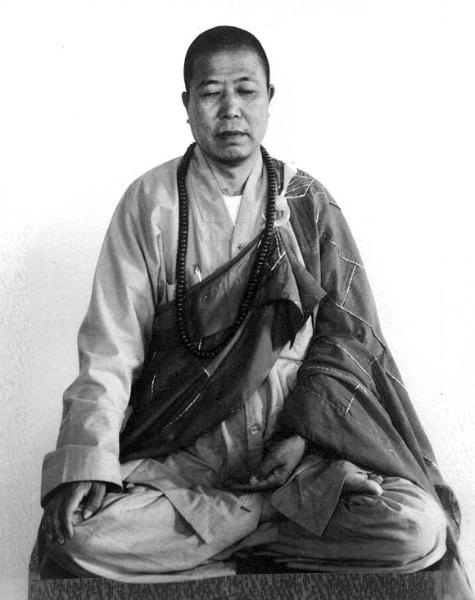
Dhyana Master Hsuan Hua
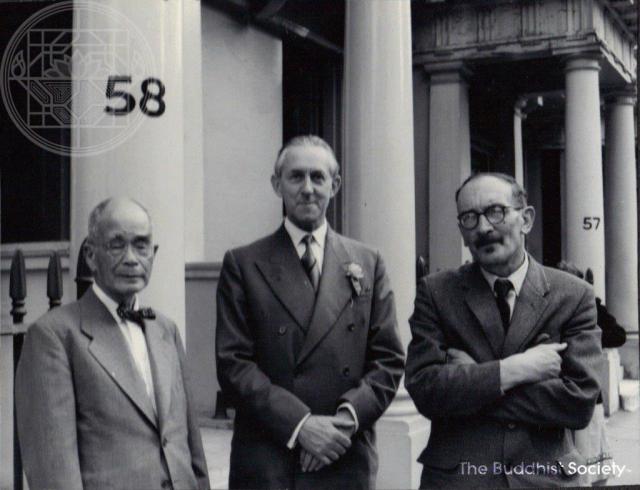
D. T. Suzuki, Christian Humphreys, Edward Conze
 inscribedonthebelievingmind.blog