
The Doctrine of “Mind-only” (Cittamatra)

From D. T. Suzuki, Studies in the Lankavatara Sutra, pp. 241-263. Suzuki cites passages from his translation of the Lankavatara Sutra with their appropriate page numbers.

I am the Infinite Consciousness, whose kinetic state alone appears as the whole universe.


THE DOCTRINE OF “MIND-ONLY” (Cittamatra)

One of the Principal Theories in the Sutra

Something about the doctrine of “Mind-only” has already been stated, but more will have to be written about it if the Lankavatara is to be treated as an independent Mahayana sutra, not necessarily in connection with the teaching of Zen Buddhism. There is no doubt that the purpose of compiling the sutra was, on the part of the author or editor, to emphasise the all-importance of the self-realisation of the truth (pratyatmadharma) in its practical bearing on the life of the Bodhisattva. But when self-realisation is to be given its content so that the experience becomes communicable, that is, when it is made the subject of a philosophical discourse, something more has to be said. The mere statement of the fact that the truth realised in the inmost consciousness constitutes the reason of the Buddhist life, is altogether too inadequate to convince other people: the Lankavatara has to be more than an utterance of the inner experience. To be consistent with the general philosophical tradition of Mahayana Buddhism, it has to advocate the doctrine of “Mind-only.” We may, therefore, say that the teaching of Zen Buddhism, philosophically stated, is a pure idealism. This chapter will now be devoted to an elucidation of the Lankavatara doctrine of “Mind-only”–Cittamatra.

What is then meant by the “Mind-only”? Let me quote some gathas (verses) relative to the subject:

“When things are regarded as not depending on other things for their existence, there is decidedly nothing but Mind, I say, nothing but Mind.” (25)

“Mind is the measure [of all things], it is the source of their self-nature. It has nothing to do with causation and the world; it is perfect in its nature, absolutely pure. This is the measure indeed, I say.” (26)

“The worldly way of thinking views the mind as the individual self (atman), but there is no substantial reality to it. Likewise with the substance of the skandhas: worldly thinking views it as real; in reality it has no existence.” (27)

“There are four kinds of sameness (samata) for those who discipline themselves in religious life: appearance, causation, coming into being, and the fourth is egolessness.” (28)

“Mind is beyond all philosophical views, is removed from discrimination, is not capable of being grasped, is unborn. I say, there is nothing but Mind.” (29)

“It is not an existence, nor is it a non-existence; it is indeed beyond both existence and non-existence. It is Suchness, it is even liberated from Mind. I say, there is nothing but Mind.” (30)

“Suchness, emptiness, the [Absolute], Nirvana, the Dharma-Realm, the variety of will-bodies—these are nothing but Mind, I say.” (31)

“Out of Mind spring innumerable things, conditioned by discrimination and habit-energy; these things people accept as an external world. I say, there is nothing but Mind.” (32)

“What appears to be external does not in reality exist; it is indeed Mind which is seen as multiplicity. Body, property and abode—all these, I say, are nothing but Mind.” (33)

In the “Sagathakam” we have the following stanzas:

“When the ‘Mind-only is understood, external objects are cast out, discrimination ceases, and we have the Middle Way.” (358)

“There is the ‘Mind-only’; there are no objects to be seen. When there are no objects to see, the mind is unborn; this is what I and others mean by the Middle Way.” (359)

“Unborn they are seen as born; not dead they are seen as dead. They are simultaneously visible in myriads of worlds, even as the moon is reflected in many waters.” (366)

“One is seen as many [beings]; they make it rain, they ignite fires as is willed by their minds. Thus it is said that there is the ‘Mind-only’.” (367)

“To say the ‘Mind-only’ is of the mind is also born of the mind. Particular forms and figures in all possible varieties, when thoroughly understood, are no more than Mind itself.” (368)

“Of Buddhas, Sravaka-forms, Pratyekabuddha-forms and other various forms, it is declared by them that they are nothing but Mind.” (369)

“Their forms, although formless, are seen as forms by all beings from the formless realm down to the hells; they are nothing but the operations of Mind itself.” (370)

From these quotations some of which are more shrouded in obscurity than others, the reader may gain a general idea as to what the doctrine of “Mind-only” means. The sutra sometimes makes summary statements like these:

  1. The world is nothing but Mind.
  2. Nothing is to be seen outside of the Mind.
  3. The triple world is Mind itself.
  4. The triple world emanates from Mind.
  5. The triple existence is nothing but Mind.
  6. All is Mind.
  7. When Mind evolves, all forms are manifested.

Speaking in the modern way, the theory of “Mind-only” is a form of pure idealism. All that we habitually consider having an objective value, such as our own body (deha), property (bhoga), and the place where we live (pratishthana), are no more than our own mind projected and recognised as externally extending and real. Even Nirvana, the truth of suchness, emptiness, reality—all these are but our mental creations, having no validity so long as they are forms of discrimination. We ordinary mortals see the Buddha in his multifarious manifestations, which, however, are the reflections of our ideas formulated in the mind by virtue of inherited memory (vasana) mysteriously working from time immemorial.

Passages Quoted Relative to the Doctrine

The doctrine of “Mind-only” runs through the Lankavatara as if it were warp and weft of the sutra. To understand it is to realise the ultimate truth, and not to understand it is to transmigrate through many a birth and death. The sutra lays much emphasis on the importance of the doctrine, so much, indeed, that it makes everything hinge on this one point, the salvation of the world, to say nothing of the individual.

1. The “Mind-only” leads to the realisation of the ultimate truth (paramartha). “Language, O Mahamati, is not the ultimate truth; what is attainable by language is not the ultimate truth. Why? Because the ultimate truth is what is enjoyed by the wise; by means of speech one can enter into the truth, but words themselves are not the truth. It is the self-realisation inwardly experienced by the wise through their supreme wisdom, and does not belong to the domain of words, discrimination, or intelligence; and, therefore, (245) discrimination does not reveal the ultimate truth itself. Moreover, O Mahamati, language is subject to birth and destruction, is unsteady, mutually conditioning, and produced according to the law of causation. What is mutually conditioning and produced according to the law of causation is not the ultimate truth, nor does it come out of such conditions, for it is above aspects of relativity. Words are incapable of producing it. Further, as the ultimate truth is in conformity with the view that the visible world is no more than our own mind, and as there are no such external objects appearing in their multifarious aspects of individuation, the ultimate truth is not subject to discrimination.”

“O Mahamati, when a man sees into the abode of reality where all things are, he enters upon the truth that what appears to him is no other than Mind itself.”

2. The “Mind-only” is grasped by pure thought. “Prajna [transcendental wisdom] does not belong to the two Vehicles; it has, indeed, nothing to do with particular objects. The Sravakas are attached to the notion of being; prajna, pure in essence, belongs to the Tathagata who has entered upon the “Mind-only.”

3. Bodhisattvas do not enter into Nirvana because of their understanding of the truth of the “Mind-only.” “All the various doings in the triple world such as the grading of stages in the discipline of the Bodhisattva and his steady advancement are nothing but the manifestations of Mind. This is not understood by the ignorant; therefore all these things are taught by the Buddhas. And again, the Sravakas and the Pratyekabuddhas, when they reach the eighth stage, become so intoxicated with the bliss of mental tranquillity (nirodha-samapatti) that they fail to realise that the visible is nothing but Mind. They are still in the realm of individuation, their insight into reality is not yet pure (vivikta). The Bodhisattvas, on the other hand, are alive to their original vows flowing out of their all-embracing loving hearts; they do not enter into Nirvana. They know that the visible world is nothing but the manifestation of Mind itself. They are free from such ideas as mind (citta), will (manas), consciousness (manovijnana), external world, self-substance, and distinguishing marks.”

4. The “Mind-only” and the dualistic conception of being and non-being, which is the outcome of wrong discrimination (vikalpa), stand opposed to each other, and are irreconcilable until the latter is absorbed into the former. Its teaching, intellectually speaking, is to show the fallacy of a world-conception based on discrimination, or rather upon wrong discrimination, in order to get us back into the right way of comprehending reality as it is. “As the ignorant and unenlightened do not comprehend the teaching of the ‘Mind-only,’ they are attached to a variety of external objects. They go from one form of discrimination to another, such as the duality of being and non-being, oneness and otherness, bothness and not-bothness, permanence and impermanence, self-substance, habit-energy, causation, etc. After discriminating these notions, they go on clinging to them as objectively real and unchangeable, like those . . . who, driven by thirst in the summer-time, chase after imaginary springs.”

“To think that primary elements really exist is due to wrong discrimination and nothing else. When the truth of the ‘Mind-only’ is understood, there are no external objects to be seen; they are all due to the discrimination of what one sees in one’s own mind.”

5. Not to understand the “Mind-only” leads one to eternal transmigrations. “As the philosophers fail to go beyond dualism, they harm not only themselves but the ignorant. Going around continually from one path of existence to another, not understanding that what is seen is no more than their own mind, and attached to the notion that things external are endowed with self-substance, they are unable to free themselves from wrong discrimination.”

6. As to the relation between the “Mind-only” theory and the conception of the Alayavijnana, mention will be made later; here let it only be remarked that the rising of the Alaya is due to our taking the manifestations of the mind for a world of objective realities. “The Alayavijnana is its own subject (=cause) and object (=support), and it clings to a world of its own mental presentations, a system of mentality that evolves mutually conditioning. It is like the waves of the ocean, stirred by the wind; that is, a world made visible by Mind itself where the mental waves come and go.” This ocean-and-waves simile is a favourite one with Mahayana Buddhists.

7. Thus we see that there is nothing in the world that is not of the mind, hence the “Mind-only” doctrine. And this applies with especial emphasis to all logical controversies, which, according to the Lankavatara, are mere subjective fabrications. ”The body, property, and abode—these are no more than the shadows of Mind (citta). The ignorant do not understand it: they make assertions or refutations, and this elaboration is due to Mind-only, apart from which nothing is obtainable.” The author of the Lankavatara does not stop here; he goes further on and declares that even the spiritual stages of Bodhisattvahood are merely the reflections of Mind. “The Buddha-lands and the Buddha-stages are of Mind only, in which there are no shadows; that is what is taught by the Buddhas past, present, and future.”

8. Lastly, when all forms of individuation are negated, there takes place a [turning-about] (paravritti) in our minds, and we see that the truth that there is nothing but Mind from the very beginning and thereby we are emancipated from the fetters of wrong discrimination.

The Citta and its Evolution

Now the question naturally suggesting itself is: what is really meant by cittamatram, or “Mind-only”? It is often phrased svacittadrisyamatram, meaning “own-mind-seen-only.” What is the Citta that is here rendered as “Mind”?

Let us see first what the Lankavatara means by Citta. Citta as noticed elsewhere is used in two ways, general and specific Where it is used in a general way, it is the name given to the sum of all mental activities, including both the mind proper and its various functions. But where the mind is divided into Citta, Manas, Manovijnana, and the five sense-vijnanas, (eye, ear, nose, tongue, and body), the Citta gains a specific signification. It is the principle of unification by which all the activities are understood as issuing from one centre. The Manas is a discriminating agency by which the homogeneous, undifferentiated Citta is divided into two parts: the one as the seer and the other as the seen; the one as the grasping ego and the other as an object grasped. The Manas is not only an intellective but also a conative principle. The Vijnana, that is, the Manovijnana is separated from the Manas, only retaining the latter’s intellective function, and may be translated as the intellect, in which case the Manas may be regarded as corresponding to the will and the affection. The five Vijnanas are thus the five senses which discriminate a world of individual forms, each within its own sense-field.

When the Citta is thus considered in its specific sense, it may seem to be an abstract principle devoid of content. But, according to the Lankavatara, this is not the case: for the Citta is rich in content, and just because of this inner richness, it is able to evolve out of itself a world of infinite multitudinousness. It is, indeed, an inexhaustible reservoir (249) of seeds that have been accumulated therein since the beginningless past. So the definition of Citta is as follows: Cittena ciyate karma. That karma is accumulated by Citta means that the latter takes in all that goes on in the mind and also all that is done by the body. Technically stated, every deed (karma), mental and physical, leaves its seeds behind which are deposited in the Citta, and the Citta has been hoarding them since time immemorial. It is the rich repository of all the thoughts, feelings, desires, instincts, etc., no matter how they have come to act, that is, whether merely stirred up in the inmost recesses of one’s consciousness, or carried out by the body into deed, or checked in the incipient stages of their activity. Psychologically, the Citta may thus be regarded as corresponding to the Subconscious.

This repository-Citta, so long as it remains contented in and with itself, is absolutely quiet and no waves are seen stirring on its cittam avyakritam nityam (citta eternally quiescent). It is in its nature non-discriminative; it does not pretend to divide and analyse itself. It may dance like the dancer, but if there is nobody to keep company with her and no audience to applaud her, what is the use of her dancing? A solitary dance is the same as no dance whatever, the dancing is the same as no dancing; but it gains significance as soon as there appears someone beside the dancer.

This somebody is at hand who keeps company with the Citta; not only that, it calls up an audience and creates the stage on a grand scale. The panoramic world of particular objects now comes up into view, the manager’s name is Manas.

“Citta dances like the dancer,
Manas resembles the jester,
The Manovijnana, in company with the five senses,
Imagines the the stage.”

The Manas is not, however, an independent agent acting on the Citta from the outside, it is indeed the creation of the Citta itself. “Depending upon the Alaya [=Citta], the Manas arises; allied with the Citta and Manas, the Vijnana arises.” Again, “[with the Citta] as its cause and supporting it, the Manas walks along depending on the Citta. The Citta is caused to move by the Vijnana, and there is an interdependence among them.” From this it is evident that the Manas depends on the Citta for its existence, and at the same time Citta takes Manas for the object of its activity. Without Manas there will be no mentation, and without mentation Citta’s own existence will not be known. The one, thus, gives support to the other, and at the same time is supported by the other.

The business of Manas is thus twofold: (1) to reflect on the Citta, and (2) to make Citta visualise itself as object. This is called “arranging” or “putting in order” or “reflecting” (manyati), which is the function of the Manas. It is again described as “walking in two ways,” which means the dualistic character of the Manas, as against the absolute unity of the Citta. One Citta has now been differentiated into Citta and Manas, and this latter particularised Citta is no more neutral, non-discriminative, and non-functioning; for all the karma-seeds hitherto lying dormant in the absolute Citta have now begun to sprout out in full vigour. These germinating seeds are now distinguished or discriminated by the Vijnana known as Manovijnana, by the aid of the five senses, wherewith creating a world of individuals. The latter is called “the seen,” or “what is presented” (drisya), which is now imagined (kalpeti) as real and substantial, and from this arise all kinds of spiritual tribulations.

The distinction between Manas and Manovijnana is that Manas is conative (will) and Manovijnana is intellective (vijanati, or manyate). While intellection is not lacking in Manas, what predominates is the will, especially since the intellective function has more or less effectively been surrendered to the Vijnana, i.e., Manovijnana. In fact, however, all these function together and simultaneously, as we have seen in the simile of the theatre. Further quotations from the “Sagathakam” will be helpful:

“Depending, upon the Alaya there evolves the Manas; and depending upon Citta and Manas there evolves the Vijnana (869).

“There are the maturing and development of Manas and Vijnanas, that is, Manas is born of the Alaya and the Vijnanas of the Manas (870).

“From the Alaya are stirred up all the mental activities like waves; with habit-energy as cause they are born in accordance with [the law of ] origination (871).

“Grasping mind as their objects and bound by a chain of successive moments, the Manovijnana, eye-vijnana, etc. are evolved to create forms, characteristics (nimitta), and shapes (872).

“Bound by bad habit-energy of the beginningless past, something resembling an external world is produced, and the mind is seen in the aspect of multiplicity. This is what blocks the understanding of the philosophers (873).

“With that [vasana] as cause and depending on it, other things [i.e. vijnanas] are evolved, and thus there take place various views of existence and a revolving cycle of birth and death (873).”

To be exact, the Citta is more than the mind as the psychologist understands it: it has more of a metaphysical connotation; it is not merely an empirical mind. The Citta when it is understood in its absolute aspect is transcendental; it denotes something at the back of the mind that the psychologist, who, depending on his scientific methods, may fail to reach. It implies more than the sum-total of the Citta, Manas, Manovijnana, and the Vijnanas. When the Lankavatara speaks of the “Mind-only,” therefore, its foundation lies much deeper than the ordinary form of idealism. Otherwise intuition into the truth of Cittamatra cannot result in the spiritual emancipation which is the object of Mahayana discipline.

. . .

[T]he Citta is considered to be pure and immaculate in its essential nature in the Lankavatara, i.e., it is good and free from evil flowings (kusala-anasrava).

“The Citta is not separated from habit-energy (vasana), nor is the Citta together with habit-energy though it is enwrapped with the latter; there are no marks in it of differentiation. Habit-energy being with the Manovijnana is soiled, and the Citta, which is like a robe that is perfectly white does not shine out on account of habit-energy. As it is declared by me that the sky is neither a reality nor a non-reality, so is the Alaya in the body not limited by [the dualism] of being and non-being. When a [turning-about] (paravritti) takes place, the Citta is disengaged from turbidity; as it understands all existence, I state that the Citta is the Buddha.”

Being pure or good does not always mean morally pure and good, it means rather logically pure, that is, absolutely free from the dualistic way of reasoning. Therefore, the sutra never tires of repeating that in order to realise the fact of the “Mind-only” the realm of dualities which is the product of false discrimination (vikalpa) must be transcended. False discrimination is the principle of turbidity, which hides the truth from being clearly perceived. Buddhahood consists in removing this turbidity of discrimination, for the removing is emancipation and the restoring of the Citta to its original purity. This is known in the Lankavatara as inner realisation (pratyatmadhigama).

The Citta and the Alayavijnana and the Atman

Along with the conception of Citta there was that of the Vijnana system, and also the deepening of the ego-idea. Early Buddhists denied the reality of an ego-substance, which was in accordance with their psychology, but the idea of ego was not necessarily the same as the assertion of self-will or egotism; even when self-will was destroyed, the idea remained. What was destroyed was the lower self and not the higher self, the smaller self and not the larger self; for the annihilation of the lower and smaller self was only possible through the assertion of the higher and larger one. Buddhists never thought of putting an end to whatever might go under the name of self. The idea of ego-substance (atman) was inimical to the development of the higher centre of the individual, nor was it in harmony with the experience of their religious life. How is the question of the higher life to be solved, then? Where is it to be placed in the system of the Vijnanas? With this question an absolute Citta came to be separated from the empirical ego, and this absolute Citta to be identified with the Alaya, which was now made the foundation of the whole Vijnana group. So we have “cittam-alayavijnanam,” and this then furnishes the reason of the inner realisation as taking place in the Tathagata-garbha. The philosophers take the Tathagatagarbha, or the Alayavijnana, for the ego, that is, the lower, narrower, empirical ego, which is, however, far from the teaching of the Buddha. The real immaculate ego, suddhisatyatman, going beyond the grasp of relative knowledge, cannot so easily be understood and so readily be asserted as is done by the ignorant. We thus read (pp. 757-771):

“Born or unborn, the Mind always remains pure: those who reason about the existence of an ego-substance—why do they not prove it by illustrations? (744).

“Those who vainly reason without understanding the truth are lost in the jungle of the Vijnanas, running about here and there and trying to justify their view of ego-substance (745).

“The self realised in your inmost consciousness appears in its purity, this is the Tathagata-garbha which is not the realm of those given up to mere reasoning (746).

“When the Skandhas are analysed, there is that which apprehends and that which is apprehended; by understanding this aspect of relativity, true knowledge is born (747).

“The philosophers think that the Alaya or where the Garbha is oriented, is the seat of thought and one with the self: but such are not the teachings declared [by the Buddhas] (748).

“When these are well discriminated, there is emancipation and seeing into the truth; by moral cultivation and intellectual training the evil passions are abandoned and made pure (749).

“The Citta, pure in its original nature and free from the category of finite and infinite is the undefiled Tathagatagarbha, which is wrongly apprehended by sentient beings (750).

“As the beautiful colour of gold and the brilliancy of a [precious] stone are revealed by purification, so is the Alaya, which is hidden in the Skandhas, revealed to sentient beings (751).

“The Buddha is neither an individual soul nor the Skandhas, he is the wisdom of non-outflowings (jnana-anasravam), and knowing that he is eternal quietude I take refuge in him (752).

“The Citta, pure in its original nature, is united with the minor impurities, Manas, and others, and with the ego—this is what is taught by the best of preachers (753).

(256) “The Citta is in its original nature pure, but the Manas and others are not, and by them various karmas are accumulated, and as the result there are two sorts of impurities [or defilements] (754).

‘”On account of external defilements from the beginningless past the pure self is contaminated; it is like a soiled garment which can be cleansed (755).

“When the garment is unsoiled, or when gold is freed of its defects, they are restored and will not be destroyed; so it is with the self when remedied of its defects (756).

“As an unintelligent man seeks for the abode of sweet sound in the body of the lute, conch-shell, or kettle-drum, so does he look for a soul within the Skandhas (757).

“Like the gems in the treasure-house or like water under the ground, which are invisible though known to be there, so is the soul in the Skandhas (758).

“While the whole system of the Citta-activity with its proper functions is in union with the Skandhas, the unintelligent fail to comprehend it, so it is also with the soul in the Skandhas (759).

“Like the contents of the womb whose existence is known but invisible, so is with the soul in the Skandhas which is likewise not perceivable to the dull-minded (760).

“As the essence of medicinal herbs, as fire hidden in fuel, so the soul in the Skandhas is not perceived by the dull-minded.” (761)

“As the unwise fail to see that in all things existent there is the nature of eternity and emptiness, so they do not see the soul in the Skandhas.” (762)

“If no real self exists, there will be no stages [of Bodhisattvahood], no self-mastery, no psychic power, no anointment of the highest order, no excellent Samadhi.” (763)

“If the nihilist come and ask, ‘If there be the self, show it to me,’ the sage’s answer will be ‘Show me your own discrimination’.” (764)

“Those who deny the self are the opponents of the Buddhist teaching, their views are one-sided advocating either ‘It is,’ or ‘It is not’; they are to be rejected by a general session of the Bhikshus.” (765)

“The doctrine of the self is illuminating, it releases one from the faults of the philosophers, it burns up the forest of selflessness like the fire arising at the end of the world.” (766)

“In sugar, sugar-cane, candy, honey, curd, or tila-oil, there is its own taste; but one who has not tasted it does not comprehend it.” (767)

“In five different ways the ignorant may search for the self by lifting up the Skandhas, but they fail to see it, while the wise one sees it and is thereby released.” (768)

“Even by means of knowledge, illustrations, and other things, one is unable to gain an insight just into the Citta; how can one then gain an insight into the signification accumulated in it?” (769)

“Not understanding that individuation is due to one mind (citta), the reasoning ones cling to the view that there is no cause, there is no evolving.” (770)

“The Yogin sees into the mind (citta) and the mind is not seen in the mind, the seeing is born of what is seen, and of what cause is the seen born?” (771)

These passages are to be carefully weighed, for if otherwise they dangerously verge on the doctrine of an individual ego-substance which is persistently denied by Buddhists,

Mahayana as well as Hinayana. The main idea is that there is a principle of consciousness from which the whole Vijnana system evolves and is set in operation, but which is not to be regarded as something individual residing in the five Skandhas. Ordinarily, this principle—unknown, invisible, and beyond the grasp of the sense-vijnanas—is taken for an ego, and unenlightened people try to locate it in the body just as they try to take hold of the pleasant notes that issue from the lute, or of the effective, curative agency that is hidden in a medicinal herb. Apart from the lute, the sound is non-existent; so with the curative quality, it does not exist (258) outside of the herb itself. The presence of the principle is to be realised inwardly by intuition and not by a process of analysis. This intuition, in other words, the “wisdom of non-outflowings” (jnanam-anasravam), constitutes the original nature of the mind which is described in the above quotations as “originally pure” (prakriti-prabhasvaram). If this is considered something concrete and individual, something separable from and capable of being picked out among objects of particularisation, saying, “Here it is!” this will be resorting to dualistic discrimination which is condemned so much in the Lankavatara. At all events it is evident that there was historically a close connection between the ego idea and the evolution of Alayavijnana.

The following noted stanza quoted whenever there is an allusion to the philosophy of the Yogacara is taken from the Chinese Sandhi-nirmocana-sutra:

“The Alayavijnana is deep and subtle,
Where all the seeds are evolved like a stream;
I do not elucidate this for the ignorant,
For they are apt to imagine it an ego-substance.”

When Citta among early Buddhist scholars came to denote accumulation, vijnana, discrimination, or representation, and Manas [to denote] deliberation or reflection, it was natural for the later psychologists to designate Citta as Alaya or Alayavijnana as belonging to the general body of various vijnanas. Alaya means storehouse or treasure house, where all the results, called seeds (bija), of one’s mental and physical activities are hoarded, i.e., accumulated, and it does not stand outside the vijnana system: it is one of them though in the most fundamental sense of the expression. And for this reason the Alaya is liable to be regarded as the ego-substance—the very idea against which Buddhism has been fighting ever since its inception. The Lankavatara is thus quite anxious to dispel this confusion.

In what follows the Buddha answers the question of Mahamati as regards the identity of Atman and Tathagata-garbha which, as was mentioned before, is the same as Alayavijnana. There is no doubt that this idea of Alayavijnana or Adanavijnana or Tathagata-garbha or Citta caused confusion in the minds of some Mahayana Buddhists who have been brought up in the teaching of Anatman (non-ego). Hence the following question proposed by the Bodhisattva Mahamati:

“The Tathagata-garbha is mentioned in the text of a sutra and described as thoroughly pure and undefiled in its essential nature, as endowed with the thirty-two marks, entering into the physical body of a sentient being, and enveloped within such matter as the Skandhas, Dhatus, and Ayatanas, and soiled with the dirt of greed, anger, folly, and discrimination, [but really] described by the Buddha as eternal, permanent, auspicious, and unchanged. If so, is not this Tathagata-garbha something of the same order as the Atman in the teaching of the philosophers? They teach the Atman as eternal, creator, devoid of attributes, mighty, and imperishable.”

To this question raised by Mahamati and also held by most Bodhisattvas and scholars, the Buddha gives the following answer:

“O Mahamati, the doctrine of Atman by the philosophers is not the same as my teaching of the Tathagata-garbha. For what the Tathagatas teach is emptiness (sunyata), limit of reality (bhutakoti), Nirvana, no-birth, no-appearance, no-desire (apranihita), and such other conceptions with which the Tathagata-garbha is characterised, and by which the ignorant are saved from a feeling of fear about the Buddhist teaching of non-ego, and they are thus finally led by the Tathagatas to the realm of no-discrimination and no-imagery, that is, (260) to the entrance of the Tathagata-garbha. O Mahamati, Bodhisattvas-Mahasattvas of the present and the future are warned not to entertain any idea of ego-substance here . . . .”

This explains how the Buddha came to talk about the Tathagata-garbha and how it differs from the ordinary notion of the ego. With the philosophers the ego does not rise above the level of empiricism. The existence of the transcendental ego as maintained by Buddhists, which apparently contradicts their traditional view of non-ego, is hard to understand for the ignorant as well as for those of the two Vehicles; for the latter especially are used to interpret existence in terms of transitoriness or momentariness.

This leads to the question how the Alaya or Tathagata-garbha is to be conceived in relation to the doctrine of universal transitoriness. Is not the Tathagata-garbha, however skilfully it may be expounded, after all a sort of ego-substance? It now becomes necessary for the Lankavatara to discuss the problem of momentariness in relation to the hypothesis of Tathagata-garbha. This has partially been touched elsewhere, and let it suffice here to quote the following stanzas (which are by the way wrongly placed after the paragraph on the six Paramitas instead of before it in all the texts of the Lankavatara):

“Existence (samskrita) is discriminated by the ignorant as empty, transient, and momentary, and the nature of momentariness as they discriminate is illustrated by a stream, lamp-light, and seed.” (9)

“[But really] nothing is seen working at any moment, all is solitary, there is no destruction, nothing is ever born—this is the Buddha’s view of momentariness.” (10)

“Birth and death follow each other without interruption—this teaching of the Buddha is not for the ignorant; [that birth and death] are uninterruptedly successive in all things is due to discrimination moving on in all the paths of existence.” (11)

“With ignorance as cause there is the evolving of all mental activities; [but] where do they get their anchoring while there is no birth of form (rupa)?” (12)

“An uninterrupted continuity breaks and there evolves another mind; while form has not yet been set up, depending on what will it [mind] be evolved?” (13)

“As long as the mind is evolved depending on it, the cause is not the true one; not being sufficient in itself [as a cause] how can one know of anything that suffers destruction momentarily?” (14)

“The attainment of the Yogins, gold, the Buddha’s relics and the mansions in Abhasvara Heaven—these are indestructible by any worldly cause.” (15)

“Permanent are the truths attained and the knowledge realised by the Buddhas; [permanent is] the Bhikshu-nature [monk] and his attainment; how is momentariness seen here?” (16)

“Forms (rupa) are like the Gandharva’s castle, maya, and other [suchlike non-entities], and no momentariness is here: the elements are not realities, and how can we speak of their power to create?” (17)

I have said that the Alaya and the. Tathagata-garbha are one and the same thing, and that the one is more of psychological significance than the other, but the Lankavatara sometimes seems to distinguish one from the other, that is, to consider the Alayavijnana as presenting the impurity-phase of the Tathagata-garbha. Read the following, which also sheds a side-light on the question of the ego:

“Mahamati asks: Tell me, O Blessed One, concerning (262) the evolution and disappearance of the Skandhas, Dhatus, and Ayatanas. If there is no Atman, what is it that is evolved and disappears? The ignorant who, stationing themselves on things that are evolved and disappear, do not think of extinguishing pain, may not seek after Nirvana. [They must therefore be enlightened on the subject.] Whereupon the Buddha answers:

“The Tathagata-garbha contains in itself causes both good and not-good, and from which are generated all the paths of existence.

“When there takes place a revulsion [in the Alayavijnana] by gradually ascending the steps of Bodhisattvahood, a man will no more be led astray by the methods and views of other philosophers. Then stationing himself on the stage of Bodhisattvahood known as the Immovable, he gains the passage leading to the bliss that accrues from the ten kinds of Samadhi. Supported by the Buddhas in Samadhi and reviewing [repeatedly bringing up in the mind] the wonderful truths taught by the Buddhas as well as his own vows, he does not abide in the absolute (bhutakoti) absorbed in the bliss of Samadhi; he has realised the supreme state in his own consciousness; and by the methods of discipline that are not those of Sravakas and Pratyekabuddhas and philosophers, he gains the path belonging to the holy family of Bodhisattvas at the tenth stage, and also the will-body of knowledge which is above all striving after a Samadhi. For this reason let the Tathagata-garbha known under the name of Alayavijnana be purified by those Bodhisattvas who are seeking after something distinctive.

“O Mahamati, if there is no Tathagata-garbha known under the name of Alayavijnana, no evolution, no disappearance will ever take place. But there is, both among the ignorant and the wise, evolution and disappearance. While abiding in the bliss that accrues from the enjoyment of the actual life and supreme state realised in their consciousness, the Yogins do not abandon their discipline and (263) hard labouring. O Mahamati, this realm of Tathagatagarbha-Alayavijnana is pure in its original nature indeed, but appears devoid of purity because of the false views and reasonings entertained by all Sravakas, Pratyekabuddhas and philosophers, which defile the light by their external defilements. This is not the case with the Tathagatas. As to them, they see it as if it were an amalaka fruit in their own palm.

“O Mahamati, I inspired Queen Srimala and also other Bodhisattvas who are endowed with a fine, subtle, pure intelligence to expound in a text of discourse the meaning of the Tathagata-garbha known under the name of Alayavijnana, so that the Sravakas, who are attached to its evolution with the seven Vijnanas, might see into the egolessness of things (dharmanairatmya). The realm of Tathagatahood which was elucidated by Queen Srimala under the inspiration of the Buddha is not the domain of reasoning which belongs to Sravakas, Pratyekabuddhas and philosophers. The realm of Tathagatahood indeed belongs to another realm where [the teaching that] the Tathagata-garbha is the Alayavijnana is understood, and this is meant for the Bodhisattvas-Mahasattvas who, like yourself, being endowed with a fine, subtle, penetrating intellect and understanding, know how to conform themselves to the meaning, and not for those other philosophers, Sravakas and Pratyekabuddhas who are attached to spoken and written teachings. Therefore, O Mahamati, may you and other Bodhisattvas-Mahasattvas have a thorough understanding regarding the realm of all Tathagatahood and that the Tathagata-garbha is the Alayavijnana, so that they may discipline themselves in this and not remain contented with mere listening.”
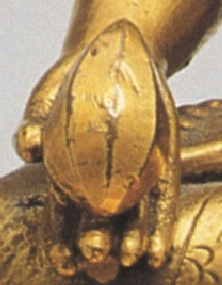
amalaka fruit

Suzuki, D. T. (1998). Studies in the Lankavatara Sutra. New Delhi: Munshiram Manoharlal Publishers (originally published in 1929).
The Paramitas

Dana   Sila   Ksanti   Virya   Dhyana   Prajna

When the Lord saw that the whole universe with the world of the gods, the world of Mara and the world of Brahma with its sramanas and brahmanas had assembled, and also the Bodhisattvas who would one day reach the state of a Buddha, he said to the Ven. Sariputra: A Bodhisattva, a great being, who wants to fully know all dharmas in all their aspects should be diligent in the perfection of wisdom (prajna paramita).

Sariputra – How then should he be diligent in the perfection of wisdom?

The Lord – Here, Sariputra, a Bodhisattva, a great being, having stood in the perfection of wisdom by not standing in it,* should perfect the perfection of giving by seeing that no giving has taken place, since gift, giver, and recipient cannot be seized. He should perfect himself in the perfection of morality by not falling into either transgression or [pride because of his] non-transgression. He should perfect the perfection of patience and remain imperturbable. He should perfect the perfection of vigour and remain indefatigable in his physical and mental vigour. He should perfect the perfection of meditation and derive no enjoyment from it. He should perfect the perfection of wisdom, neither grasping for wisdom nor ignorance.** Maha Prajnaparamita Sutra (Conze, p. 45)

*Not standing in the prajna paramita: in reality there is no self that can stand anywhere.
**I.e. Do not become attached to the idea of a self who attains wisdom; at the same time, ignorance is not real because beings are not real. – Editor

Be you therefore perfect, even as your Father who is in heaven is perfect.

Dana Paramita: Ideal Charity

Bodhidharma

The practice of being in accord with the Dharma is this: the Way, which we [Hindus] call the Dharma, in its essence is pure, and this Dharma is the principle of emptiness in all that is manifested. In it there are no defilements and attachments, no self or not-self. Says the Sutra: In the Dharma there are no sentient beings because it is free from the impurity of being; in the Dharma there is no self because it is free from the impurity of selfhood. When the wise understand this truth and believe in it, their lives will be in accord with the Dharma.

As there is in the essence of the Dharma no desire to possess, the wise are ever ready to practise charity with their body, life, and property, without begrudging or regret. As they understand perfectly the emptiness of the threefold blessing (giver, gift, recipient), they have no partiality or attachment. Only because of their will to cleanse all beings of their impurities do they come among them as of them, but they are not attached to form. Thus through their own practice they benefit others and glorify the truth of enlightenment. As with the perfection of charity, so with the other five perfections. The wise practise the six perfections in order to rid themselves of confused thoughts, and yet there is no consciousness on their part that they are engaged in any meritorious deeds. This is what is meant by being in accord with the Dharma. (The Twofold Entrance)

Maha Prajnaparamita Sutra

Subhuti: How should a Bodhisattva, a great being, behave if he wants to go forth to the supreme enlightenment?

The Lord: Here the Bodhisattva who wants to know full enlightenment should behave towards beings with an even mind. Towards all beings he should produce an even mind, and he should not produce an uneven mind. He should regard all beings with an even, and not an uneven mind. Towards all beings he should produce the great friendliness and the great compassion. He should treat all beings with a friendly thought, with the thought of great compassion. He should towards all beings produce a thought which has slain pride and he should be honest towards all of them.

He should produce towards all beings a thought of benefit and not of non-benefit; he should regard them with a thought of benefit and not of non-benefit. Towards all beings he should produce a thought free from aversion, and he should regard them with a thought free from aversion. Towards all beings he should produce a thought of non-harming, and he should regard them with a thought of non-harming.

He should treat all beings as if they were his mother, father, brother, sister, son, or daughter, his friends, relatives, or kinsmen. It is thus that a Bodhisattva should behave if he wants to go forth to the supreme enlightenment. – Maha Prajnaparamita Sutra (Conze p. 385)

The Diamond Sutra

“Moreover, Subhuti, a Bodhisattva who gives of himself is not to dwell on anything, nor is he to dwell anywhere. When he gives of himself he is not to dwell on that which is seen, nor on that which is heard, smelled, tasted, felt, or thought. For, Subhuti, the Bodhisattva, the great being, is to give of himself in such a way that he does not dwell on the slightest difference between things. And why? Because the accumulation of merit of that Bodhisattva who gives of himself without dwelling anywhere is difficult to measure.”

“What do you think, Subhuti, is it easy to take the measure of space in the east?”
Subhuti said: “Indeed not, Lord.”
The Lord said: “Likewise, is it easy to take the measure of space in the south, west, north, below, above—in all of the ten directions?”
Subhuti said: “Indeed not, Lord.”
The Lord said: “In the same way it is difficult to measure the accumulation of merit of that Bodhisattva who gives of himself without dwelling on anything. That is why those who have set out in the Bodhisattva path are to give of themselves without dwelling on any knowledge of a characteristic.” (Diamond Sutra)

Comment of Dhyana Master Hsuan Hua (1974)

To have no dwelling is to have no attachment. No attachment is liberation. Therefore, not dwelling, one is liberated, independent, and not blocked or obstructed by anything. Moreover, a Bodhisattva should not dwell anywhere when he practices giving. In other words he should not be attached when he gives. If he is able to free himself from attachment, he has understood that the essence of the threefold blessing (cakka), composed of one who gives, one who receives and that which is given, is empty. If your act of giving carries with it the thought, “I practice giving and have done many meritorious and virtuous deeds,” or if you are aware of the recipient or of the goods given, then you have not abandoned the characteristic of giving. You should give and be as if you had not given.

Yeshua

Take heed that you do not do your charitable deeds before men, to be seen by them. Otherwise you have no reward from your Father in heaven. Therefore, when you do a charitable deed, do not sound a trumpet before you as the hypocrites do in the synagogues and in the streets, that they may have glory from men. Assuredly, I say to you, they have their reward. But when you do a charitable deed, do not let your left hand know what your right hand is doing, that your charitable deed may be in secret; and your Father who sees in secret will Himself reward you freely. (Matthew 6: 1-3 NKJV)

Sila Paramita: Ideal Conduct

Confucius: (From Wing-Tsit Chan)

1:2. Yu Tzu said, “Few of those who are filial sons and respectful brothers will show disrespect to superiors, and there has never been a man who is unfailingly respectful to superiors and yet creates disorder. A superior man is devoted to the fundamentals (the root). When the root is firmly established, the moral law (Tao) will grow. Filial piety and brotherly respect are the root of humanity (jen).”

1:3. Confucius said, “A man with clever words and an ingratiating appearance is seldom a man of humanity.”

1:4. Tseng-Tzu said, “Every day I examine myself on three points: whether in counseling others I have not been loyal; whether in intercourse with my friends I have not been faithful; and whether I have not repeated again and again and practiced the instructions of my teacher.”

1:6. Young men should be filial when at home and respectful to their elders when away from home. They should be earnest and faithful. They should love all to the utmost and be intimate with men of humanity. When they have any energy to spare after the performance of moral duties, they should use it to study literature and the arts (wen).

1:8. Confucius said, “If the superior man is not grave, he will not inspire awe, and his learning will not be on a firm foundation. Hold loyalty and faithfulness to be fundamental. Have no friends who are not as good as yourself. When you yourself have made mistakes, don’t be afraid to correct them.”

1:12. Yu Tzu said, “Among the functions of propriety (li) the most valuable is that it establishes harmony. The excellence of the ways of  ancient kings consists of this. It is the guiding principle of all things great and small. If things go amiss, and you, understanding harmony, try to achieve it without regulating it by the rules of propriety, they will still go amiss.”

1:14. Confucius said, “The superior man does not seek fulfillment of  his appetite nor comfort in his lodging. He is diligent in his duties andcareful in his speech. He associates with men of moral principles andthereby realizes himself. Such a person may be said to love learning.”

1:15. Tzu-kung said, “What do you think of a man who is poor and yet does not flatter, and the rich man who is not proud?”

Confucius replied, “They will do. But they are not as good as the poor man who is happy and the rich man who loves the rules of propriety (li).”

Tzu-kung said, “The Book of Odes says: As a thing is cut and filed, As a thing is carved and polished. . . . Does that not mean what you have just said?”

Confucius said, “Ah, Tz’u! Now I can begin to talk about the odes with you. When I have told you the beginnning, you know what is to follow.”

1:16. Confucius said, “[A good man] does not worry about not being known by others but rather worries about not knowing them.” [Editor’s comment: to know others means to clearly perceive both the “robe” that they are wearing, whether it be good or evil, and their original nature, which is always pure. It is a mistake to expect inferior people to behave as if they are superior.]

Maha Prajnaparamita Sutra 

The Bodhisattva should become one who abstains from taking life, and also he should encourage others to abstain from taking life; he should speak in praise of not taking life, and he should praise also those other people who abstain from taking life as obedient ones. It is thus that a Bodhisattva should stand if he wants to go forth to the supreme enlightenment. And what is said of abstaining from taking life applies also to taking what is not given to you, to sexual misconduct, to false speech, harsh speech, malicious speech, senseless prattling, covetousness, ill will and wrong views. (Conze, p. 386)

Kshanti Paramita: Ideal Patience (Kṣānti)

  1. patience towards beings (sattvakṣanti)
  2. patience towards events (dharmakṣanti)

Awakening of Faith Sutra (Goddard, 1932)

If disciples meet with the ills of life they should not shun them. If they suffer painful experiences, they should not feel afflicted or treated unjustly, but should always rejoice in remembering and contemplating the deep significance of the Dharma.

Jacob, brother and foremost disciple of Yeshua:

My brethren, count it all joy when you fall into various trials, knowing that the testing of your faith produces patience. But let patience have its perfect work, that you may be perfect and complete, lacking nothing. (James 1:2, New King James)

The Mahaprajnaparamita Sutra

EQUIPPING ONESELF WITH THE PERFECTION OF PATIENCE
Furthermore, a Bodhisattva stands firm in the perfection of patience. He instigates, exhorts, introduces beings to patience, in the following way: Upon taking the vow of enlightenment he puts on the armour thus: “If all beings were to hit me with sticks, clods, fists, or swords, not even one single thought of anger should arise in me; and also should I introduce all beings to such patience!”

It is as if a clever magician or magician’s apprentice had conjured up a great crowd of people: if they all hit him with sticks, clods, fists, or swords, he would bear towards them not even a single thought of anger; and if he were to introduce these magically created beings to such patience, no being at all would have been introduced to it, however many he had introduced to it. The same is true of the Bodhisattva. And why? For such is the true nature of things that in fact they are illusory. (Conze, 1975, p. 139)

Bodhidharma

The sage has patience with things and is impatient with himself, and with him there is no grasping and rejecting, disliking or liking. The stupid one has patience with himself and is impatient with things, and with him there is grasping and rejecting, disliking and liking. If you can empty your mind, be unhurried and free and completely forget the world, this is having patience with things and going along with events, which is easy. Opposing, resisting and changing things is difficult. If something wills to come, let it come and do not resist it; if it wills to depart, let it go and do not chase after it. Whatever you have done is past and not to be regretted. That which has not yet happened, let go of it and do not think of it. This is to be a practitioner of the Way. Having patience, one leaves the world to its own devices, and gain and loss do not arise from the self. If you have patience and do not oppose what comes, if you let go and do not resist what departs, where and when will you not roam in the beyond? (Bodhidharma’s Method for Quieting the Mind)

Meister Eckhart

Sickness or poverty, hunger or thirst—whatever God sends you or does not send you, what He grants you or withholds, that is best for you. Even should you lack spiritual fervour and inwardness—whatever you have or lack, be minded to honour God in all things, and then whatever He sends you will be the best. Be assured, if it were not God’s will it would not be. You have neither sickness nor anything else unless God wills it. And so, knowing it is God’s will, you should rejoice in it and be so content that pain would be no pain to you.  (Sermon Forty)

Yeshua

You have heard that it has been said: An eye for an eye, and a tooth for a tooth;
But I say unto you, resist not evil, but whosoever shall smite you on your right cheek, turn to him the other also.
And if any man will sue you at the law and take away your coat, let him have your cloak also.
And whosoever shall compel you to go a mile, go with him two.
Give to him that asks you, and from him that would borrow of you turn not away. (Matthew 5: 38)

Dhyana Paramita: Ideal Meditation

The Lord Buddha said:

Not by means of visible form,
Not by audible sound,
Is Buddha to be perceived;
Only in the solitude and purity of Dhyana
Is one to realise the blessedness of Buddha.

Bodhidharma

Even though thoughts have entered delusion, do not counter them with thoughts of non-delusion. Instead, when a thought arises, rely on the doctrine to gaze at the place from which it arises. If the mind discriminates (judges), rely on the doctrine to gaze at the place from which discrimination arises. Whether it is greed, anger or delusion that arises, rely on the doctrine to gaze at the place from which it arises. To see that there is no place from which they can arise is to cultivate the Way. If there is arising of the mind, then investigate it, and relying on the doctrine, resolve it! (Bodhidharma’s Method for Quieting the Mind)

Analayo

When practicing with the satipatthana, it is important to remember that our task is just to contemplate these things. In mindfulness practice we observe; attachment and aversion will go away if we bring them up into awareness. We observe our judgments of good and bad, right and wrong and let go of them. Judgment only leads to suffering. The objective is to observe with equanimity and detachment. (The Four Foundations of Mindfulness)

IDDHIVIDHA – THE POWER OF TRANSFORMATION

The Buddha said, “If a monk should form a wish as follows: “Let me exercise the various magical powers; let me being one become multiform, let me being multiform become one; let me become visible and become invisible; let me pass unhindered through walls, ramparts or mountains as if through air; let me rise and sink in the ground as if in the water; let me walk on the water as if on unyielding ground; let me travel cross-legged through the air like a winged bird; let me touch and caress with my hand the moon and the sun, mighty and powerful though they are; and let me go without my body even up to the Brahma-world”—then he must he be perfect in the precepts (Sila), bring his thoughts to a state of quiescence (Samadhi), practice diligently the trances (Dhyana), attain to insight (Prajna), and be one who frequents lonely places.” (China Buddhism Encyclopedia)

Analayo (2004). Satipatthana: The Direct Path to Realization. Cambridge, UK: Windhorse Publications.

The Buddhist Text Translation Society (1974). The Diamond Sutra: A General Explanation of the Vajra Prajna Paramita Sutra. San Francisco: Sino-American Buddhist Association, Inc. (Diamond-Sutra-BTTS)

China Buddhism Encyclopedia: http://chinabuddhismencyclopedia.com/en/index.php/The_Six_Supernatural_Powers_of_Buddha

Conze, Edward. (1975). Buddhist Wisdom Books : Containing the Diamond Sutra and the Heart Sutra. 2nd Ed. London : George Allen & Unwin. First Ed. 1957. (Diamond-Sutra-Conze)

Conze, Edward (1975). The Large Sutra on Perfect Wisdom. University of California Press. (download)

Goddard, Dwight (1932). A Buddhist Bible (First Edition). (http://www.sacred-texts.com/bud/bb/index.htm)

Suzuki, D. T. (1949). Essays in Zen Buddhism (First Series). New York: Grove Press.

Wing-Tsit Chan (1963). A Source Book in Chinese Philosophy. Princeton, New Jersey: Princeton University Press.
https://www.academia.edu/10087772/A_source_book_in_chinese_philosophy_wing_tsit_chan

Lankavatara Sutra: Introduction

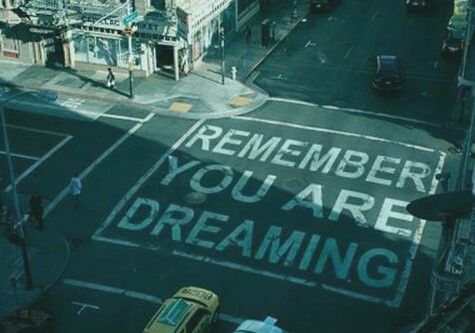
remember you are dreaming

From ifarus.com

The Lankavatara Sutra, according to tradition, contains the actual words of the Buddha spoken in Sri Lanka (Ceylon). Nothing is known about its author, the time of its composition, or its original form. Scholars have tended to date the original compilation to early in the first century, and the written work to the fourth century C.E. The sutra was foundational in establishing the central tenets of Mahayana Buddhism, and especially Zen. This sutra formed the basis of the teaching of Meditation Master Bodhidharma, the first patriarch of Ch’an.

The Lankavatara was virtually unknown in the West until D.T. Suzuki’s Studies in the Lankavatara Sutra was published in 1929. Suzuki’s subsequent translation and publication of The Lankavatara Sutra in 1932 earned him the respect and gratitude of scholars and Buddhists worldwide. Professor Suzuki felt that an editing of the Lankavatara, for the sake of easier reading, would make the sutra more widely accessible. He encouraged the editor Dwight Goddard to take on the challenge, and the publication of the ‘epitomised’ version appeared in print also in 1932, under the title, Self-Realization of Noble Wisdom: The Lankavatara Sutra.

“The Lankavatara Sutra, which is praised by the Buddhas of the past, reveals the inmost state of consciousness realised by them, which does not depend on any system of doctrine.”


Lord of Lanka, beings are appearances; they are like figures painted on a wall that is unchanged by them.

Lord of Lanka, all that is in the world is devoid of effort and action because all things have no reality. The teaching is also thus: there is nothing heard, no one hearing. Lord of Lanka, all that is in the world is like an image magically transformed. This is not understood by the philosophers and the ignorant. Lord of Lanka, he who thus sees things is one who sees truly. Those who see things otherwise walk in discrimination; and as they depend on discrimination, they cling to dualism. It is like seeing one’s own image reflected in a mirror, or the reflection of the moon in water, or seeing one’s shadow in a house, or hearing an echo in a valley. People grasping their own shadows of discrimination uphold the discrimination of dharma and adharma (things and concepts), and, failing to abandon dualism, they go on discriminating and never attain tranquillity. By tranquillity is meant oneness (ekagra), and oneness gives birth to the highest samadhi, which is gained by entering into the Tathagata-womb, the realm of noble wisdom realised in one’s inmost self. (Suzuki, 1932, p. 20)

* * *

THEN MAHAMATI the Bodhisattva, the great being, said to the Blessed One: Pray tell me, Blessed One, about the attainment of self-realisation by noble wisdom by which I and other Bodhisattvas, great beings, may quickly attain supreme enlightenment and show all beings the way to achieve the perfection of all of the virtues. (p. 89)

The Blessed One said this to him: Mahamati, the ignorant and the simple-minded, not knowing that the world that they see is only of the mind itself, cling to the multitudinous things, cling to the concepts of being and nonbeing, self-ness and otherness, duality and nonduality, existence and nonexistence, eternity and non-eternity, and (the concept of) self-nature—all of which rises from discrimination based on habit-energy (vasana). Thus they cling to figments of the imagination (parikalpita). (p. 90)

Mahamati, it is like a mirage, in which the springs are seen as if they were real. They are imagined so by those who, thirsting from the heat, would chase after them. Not knowing that the springs are their own mental imaginings, they do not realise that there are no such springs. In the same way, Mahamati, the ignorant and simple-minded, their minds imprinted with various erroneous ideas and discriminations since beginningless time, their minds burning with the fire of greed, anger and ignorance, entranced by a world of multitudinous forms, their thoughts consumed with the ideas of birth, abiding and destruction, not understanding the truth of existent and non-existent, of inner and outer; in the same way the ignorant and simple-minded fall into the way of grasping at self-ness and otherness, being and nonbeing.

Mahamati, it is like the city of the Gandharvas, which the unwitting take for a real city though it is not so in fact. The appearance of this city is arises from their attachment to the memory of a city preserved as seeds 1 from beginningless time. This city is therefore neither existent nor nonexistent. In the same way, Mahamati, clinging to the memory of erroneous ideas and doctrines since beginningless time, they hold fast to ideas such as self-ness and otherness, being and nonbeing, and their thoughts are not at all clear about (the truth that) what is seen is of Mind-only (Cittamatra). (p. 91)

The least change in our point of view gives the whole world a pictorial air. A man who seldom rides needs only to get into a coach and traverse his own town to turn the street into a puppet-show. The men, the women—talking, running, bartering, fighting—the earnest mechanic, the lounger, the beggar, the boys, the dogs, are unrealized at once, or, at least, wholly detached from all relation to the observer, and seen as apparent, not substantial beings. – Ralph Waldo Emerson (“Idealism”)

It is like a sleeping man dreaming of a country that seems to be filled with all sorts of men, women, elephants, horses, vehicles, pedestrians, villages, towns, hamlets, cows, buffaloes, mansions, woods, mountains, rivers and lakes, and who moves about in that city until he is awakened. As he lies half-awake, he recalls the city of his dreams and reviews his experiences there. What do you think, Mahamati? Is this person to be regarded as wise, who is recollecting the various unrealities he has seen in his dream?

Said Mahamati: Indeed not, Blessed One.

Also, when you wake up you’ll discover that you never ever were apart from your real Self, which is whole, perfect, complete, unlimited; that all these experiences were images in your mind, just like a night dream. You imagine everything that’s going on. But while you’re in a night dream, it’s real to you. If someone is trying to kill you in a night dream, it’s real; you’re struggling for your life. But when you wake up from that dream, what do you say? “It was just a dream; it was my imagination.” This waking state is exactly as real as a night dream. We’re all dreaming we are physical bodies; we’re dreaming the whole thing. (Lester Levenson: Realization through dropping the unconscious)

The Blessed One continued: In the same way the ignorant and simpleminded do not recognise that things they see, which are only of the mind itself, are like a dream, and thus they are bound by the notions of self-ness and otherness, of being and nonbeing. Mahamati, it is like a painter’s canvas on which there is no valley or hill as imagined by the ignorant. (p. 92)

The paint on the wall is maintained by the wall; thus all creatures are maintained in existence by love, which is God. If you took the paint from the wall, it would lose its existence: so all things would lose their existence if deprived of love, which is God.- Meister Eckhart (Sermon Five)

Mahamati, it is like the dim-sighted ones who, seeing a halo, would exclaim to one another, saying: “It is wonderful! it is wonderful! Look, O honourable sirs!” And the halo has never come into existence: it is in fact neither an entity nor a non-entity, because it is seen and not seen. In the same manner, Mahamati, those whose minds are attached to the erroneous views of the philosophers, who are given up to the ideas of being and nonbeing, self-ness and otherness, duality and nonduality, will contradict the good Dharma, ending in the destruction of themselves and others. Mahamati, it is like a spinning firebrand, which is no real wheel but which is imagined to be such by the ignorant, but not by the wise. In the same manner, Mahamati, those whose minds have fallen into the erroneous views of the philosophers will falsely imagine in the rising of all beings self-ness and otherness, duality and nonduality, being and nonbeing . . .

Mahamati, it is like the trees reflected in water: they are reflections and yet not reflections; the trees are forms and yet not forms. In the same way, Mahamati, those who are imprinted with the memories of the philosophical views carry on their discrimination regarding self-ness and otherness, duality and nonduality, being and nonbeing, for their minds are not enlightened to the truth that what is seen is of Mind-only (Cittamatra).

Mahamati, it is like a mirror reflecting all colours and images according to conditions and without discrimination: they are neither images nor non-images, because they are seen as images and also as non-images. Furthermore, Mahamati, discriminated forms, which are of the mind itself, are revealed to the ignorant as images; in the same way, Mahamati, self-ness and otherness are also reflected images of the mind even though they seem to be real.

Mahamati, it is like an echo that has the sound of a human voice, of a river, or of the wind: it is neither existent nor nonexistent because it is heard as a voice and yet as not a voice. In the same way, Mahamati, the notions of being and nonbeing, of self-ness and otherness, are the discriminations of the mind and memory. (p. 94)

Mahamati, it is like a mirage, which, because of the heat of the sun, appears in heat waves on the earth where there is no grass, shrubs, vines, and trees. It neither exists nor does it not exist, depending on whether one thirsts for it or not. In the same way, Mahamati, the discriminating vijnana (sense-awareness) of the ignorant, imprinted with the memory of false imaginations and speculations from beginningless time, are stirred like a mirage, even in the midst of reality revealed by means of noble wisdom, by the waves of birth, abiding and destruction, of self-ness and otherness, duality and nonduality, being and nonbeing.

Mahamati, it is like Pisaca (pishacha – a flesh-eating demon), who by means of his magic makes a corpse or a wooden man dance with life though it has no power of its own: the ignorant cling to the non-existent, imagining it to have the power of movement. In the same way, Mahamati, the ignorant and simple-minded, following the erroneous philosophical views, are thoroughly attached to the ideas of self-ness and otherness, but their views are unfounded. For this reason, Mahamati, in order to attain the noble reality attainable within yourself, you should cast off the discriminations leading to the notions of birth, abiding, and destruction, of self-ness and otherness, duality and nonduality, being and nonbeing. (p. 95)

Therefore, it is said: (From the Sagathakam–see footnote 2)

149. The skandhas, of which the vijnana (consciousness) is the fifth, are like the reflections of the trees in water. They are to be regarded as Maya and a dream; they are only thought-constructions (vijnapti or prajnapti–see footnote 3). Make no discriminations!
150. This triple world is like a halo, or water in a shimmering mirage; it is like a dream, Maya, and by regarding it thus, one is emancipated.
151. The triple world being like a mirage, the mind is bewildered. Travelers imagine water but there is no reality to it.
152. Thus the vijnana-seeds (bija) are evolved and the world comes into view. The ignorant imagine it is born, just as the dim-sighted perceive things in the dark.
153. Throughout beginningless time the ignorant have been transmigrating along the paths, enveloped in their attachment to existence. As one wedge is supported by another wedge, they are led to the abandonment of that which binds them.
154. By regarding the world always as a magically-moving corpse or wooden figure (of a man), or like a dream or lightning or a cloud,  the triple continuation4 is torn asunder and one is emancipated. (p. 96)
155. There is nothing here of thought-constructions, which are like a castle in the air; when they understand everything thus, there is nothing to know.
156. There is nothing here but thought-constructions and names; in vain you seek individual traits. The skandhas are like a nonexistent thing in which discrimination goes on.
157. A world of multiplicities is a halo, a vision, a dream, and the city of the Gandharvas; it is a wheel made by a firebrand, a mirage; it is a nonentity, only an appearance to people.
158. Eternity and non-eternity, oneness, too: these are discriminated by the ignorant who are confused in mind and fettered by errors from beginningless time.
159. In a mirror, in water, in an eye, in a shiny dish and on a gem, images can be seen, but within them there is nowhere any thing to take hold of.
160. Like a hallucination, so the variety of things is mere appearance; they are seen in a diversity of forms, but are like a child in a barren woman’s dream.

* * *

(Suzuki, p. 225) THEN SAID MAHAMATI to the Blessed One: “Why is it that the ignorant are given up to discrimination and the wise are not?”

Said the Blessed One: Mahamati, the ignorant cling to names, ideas and characteristics; their minds move along [these channels]. As thus they move along, they feed on multiplicities of objects, fall into the notion of self and its possessions (atmatmiya), and cling to desirable appearances. As thus they cling, they fall into ignorance and become tainted: karma born of greed, anger, and ignorance is accumulated. As karma is accumulated again and again, their minds, like the silk-worm, become enveloped in the cocoon of discrimination; and transmigrating in the ocean of birth-and-death, they are unable to move forward. And because of ignorance they do not understand that all things are like Maya, a mirage, the moon in water, and have no self-nature to be imagined as a self and its possessions; that things rise from their own false discrimination; that things are not conditioned and do not condition; that they have nothing to do with the course of birth, abiding and destruction; that they are born of the discrimination of what is seen, which is only of the mind itself. And thus they assert that they are born of Isvara (God, also called Brahman), time, atoms, or a supreme spirit, for they follow names and appearances. Mahamati, the ignorant are borne along by appearances.

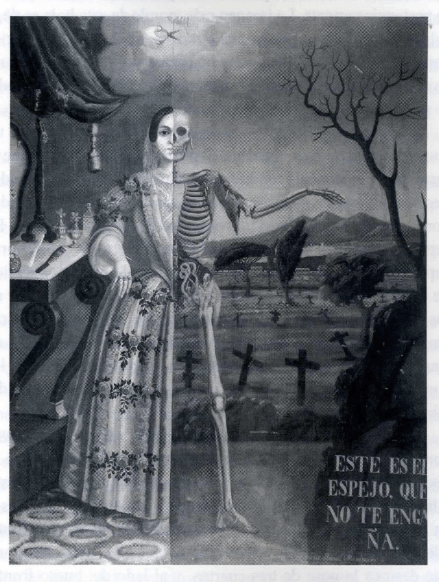
The Mirror That Doesn't Deceive

“This Is The Mirror That Does Not Deceive You” by Jose Guadalupe Posada

Footnotes:

1. Seeds:

When the Citta is thus considered in its specific sense, it may seem to be an abstract principle devoid of content. But, according to the Lankavatara, this is not the case: for the Citta is rich in content, and just because of this inner richness, it is able to evolve out of itself a world of infinite multitudinousness. It is, indeed, an inexhaustible reservoir of seeds (bija) which have been accumulated therein since the beginningless past. So the definition of Citta is as follows: Cittena ciyate karma. That karma is accumulated by Citta means that the latter takes in all that goes on in the mind and also all that is done by the body. Technically stated, every deed (karma), mental and physical, leaves its seeds behind which are deposited in the Citta, and the Citta has been hoarding them since time immemorial. It is the rich repository of all the thoughts, feelings, desires, instincts, etc., no matter how they have come to act, that is, whether merely stirred up in the inmost recesses of one’s consciousness, or carried out by the body into deed, or checked in the incipient stages of their activity. (Studies in the Lankavatara, p. 249)

2. Sagathakam: 884 verses appended to The Lankavatara Sutra (pp. 264-306); possibly a collection of sayings of the Buddha, much like the Gospel of Thomas. Tony Page writes:

It should be noted in this connection that contrary to the claims of some persons, the final section of the Lankavatara Sutra, known as the Sagathakam (which speaks of the pure Self as of a garment that has been cleansed of its extraneous dirt) is likely to be the oldest portion of the sutra. Buddhist scholar Stephen Hodge has expressed this view in personal conversation with me. The fact that the numerous verses of the Sagathakam are not yet embedded in a narrative framework or structure strongly suggests that this is ancient material that has not yet been editorially worked upon; it is like some precious gold ore that has been extracted from the earth, but not yet shaped into something different. It is generally accepted that verse forms in Dharma texts tend to be older material–and that is most likely the case here too. So the claim that the positive utterances on the Self in the Lankavatara Sutra are a late concoction has very little to substantiate it.  (https://www.nirvanasutra.net/)

2. Vijnapti or Prajnapti:

Vijnapti or Prajnapti means “construction” or “elaboration”. Where the triple world (tribhavam) is said to be nothing but vijnapti or prajnapti, it means that the world is mere subjective construction, having no reality or self-substance (svabhdva). (Suzuki, Studies in the Lankavatara, p. 181)

Thought-constructions:

(p. 96)
155. Here, there is nothing of thought-constructions; it is like a vision in the air. When they understand everything thus, there is nothing to know.
156. Here, there is nothing but thought-construction and name; you seek in vain for individual signs. The skandhas are like a halo [a nonexistent thing] wherein discrimination goes on.
157. A world of multiplicity is a halo, a vision, a dream, and the city of the Gandharvas; it is a [whirling] firebrand, a mirage; it is a non-entity, only an appearance to people.

(p. 153)
26. The Dharma is the abode of self-nature, which has nothing to do with a world of causation. Of this Dharma, which is perfect being and the highest Brahma, I speak.
27. An ego-soul is a truth belonging to thought-constructions, in which there is no reality. The self-nature of the skandhas is also a thought-construction, as there is no reality to it.

(p. 168)
52. The triple world is no more than thought-constructions: in reality it is devoid of self-nature.
53. Individual form, reality, thought-constructions–these are but the stirrings of the mind. Transcending all this, my children will walk where there is no discrimination.
54. Like a mirage in the air, they crave the thought of water where there is no water; thus the ignorant see things differently than the wise.
55. The insight of the wise, who move about in the realm of imagelessness, is pure, is born of the triple emancipation, is released from birth and destruction.
56. Where all things are wiped away, even a state of imagelessness ceases to exist for the Yogins. In the sameness of existence and non-existence, the fruit [of wisdom] is born to the wise.

LXXI
(p. 169) It is said by the Blessed One moreover that any knowledge (samjna–worldly knowledge) that is acquired is independent of any [real] object supporting it, and whatever statements one makes about it are no more than thought-constructions. As these thought-constructions are not real and cannot be grasped, one ceases trying to grasp them. When there is thus no more grasping, the knowledge which is known as discrimination evolves no more.

4. Triple continuation: possibly birth, abiding and destruction; or past, present and future.

Goddard, Dwight (1932). A Buddhist Bible (First Edition). (http://www.sacred-texts.com/bud/bb/index.htm) (http://zen-ua.org/wp-content/uploads/lankavatara_sutra_english.pdf)

Suzuki, D. T. (1998) Studies in the Lankavatara Sutra. New Delhi: Munshiram Manoharlal Publishers. (originally published in 1929).

Suzuki, D. T. (1932). The Lankavatara Sutra: A Mahayana Text. Translated for the first time from the original Sanskrit. (http://lirs.ru/do/lanka_eng/lanka-nondiacritical.htm)

The enlightenment of Gaofeng Yung

I have created a separate post for this enlightenment story, translated by Jeffrey Broughton in his Ch’an Whip Anthology, because my first post, Enlightenment experiences of Zen masters, was already too long, and because this one includes goal-setting and successful koan practice.

Gaofeng arrived at his monastery resolved in his mind that he would die to the world within three years. Making a vow to awaken within a specific period of time is very effective, and in fact he had an awakening at the end of the three years. He then made a new vow to throw away any hope of attaining status or recognition, even if it meant becoming a “stupid Han” (man), in order to attain the ultimate clarity.

After his first awakening, Gaofeng’s master gave him a different case to work on, which was to remain focused on effortlessness and stillness—two characteristics of the highest state. (See Lester Levenson: Identify with what you really are for other characteristics.)

Broughton uses the expression “the man in charge” to translate a metaphysical concept of the Self that Lin-chi called the “true man of no rank” (Gaofeng was of Lin-chi’s lineage). Elsewhere in this blog I have changed Broughton’s phrase “man in charge” to “superior man” or “higher self.” This is the Self that you really are. It is not a larger version of your ego-self, but Atman (Hindu) or Mind (Chinese), which encompasses all that there is. There is only one “I”–-viviktadharma—and you are it.

Chan Master Gaofeng Yuan of Mount Tianmu (1238-1295)

I left home at fifteen, and at twenty put on Ch’an robes, entering Jingci Monastery (in Hangzhou). Vowing to die within three years, I trained in Ch’an. At first I investigated with Preceptor Duanqiao, who made me investigate the cue, “At birth where do you come from and at death where do you go?” I made an effort but my thought was divided into two paths, and my mind did not become established in oneness. Later I met Preceptor Xueyan, who taught me to focus at all times on (Chao-chou’s) Wu. Also, he ordered me to walk around the embankment of willow trees each day. He said, “You should be like a person on the road—every day he must see to the schedule of tasks.” I saw that there was a clue in what he had to say. Later he would not ask me about the investigation I was doing. One time, when I entered his room he immediately asked, “Who comes carrying this corpse of yours? Before his voice had even died down, he gave me a whack. After this I returned to the Hall of Jingshan. In a dream, I suddenly remembered Duanqiao’s “The ten-thousand things return to the One; to what does this One return?” After this the sensation of indecision and apprehension suddenly arose; I could not distinguish east from west or south from north. On the sixth day I was in the hall chanting sutras with the sangha, and raising my head I suddenly caught sight of the inscription on a portrait of Wuzu Fayan. The last two lines read, “A hundred years–thirty-six thousand days–pass by; always this Han.” Suddenly I smashed the cue I had heard from Xueyan of “who is carrying this corpse around.” The culmination was that I was frightened out of my senses, but after the cutting off I was restored to life. It went beyond laying down a pole with a 120-pound load. At this time I was just twenty-four; my vow of an awakening within three-years had been fulfilled.

After that Preceptor Xueyan asked me, “Every day in your numerous activities, are you able to maintain the superior man?” I answered, “I am able to do so.” He also asked, “While asleep and dreaming are you able to maintain the superior man? I answered, “I am able to do so.” He also asked, “At the point of dreamless sleep, where is the superior man?” At that point I had no words with which to answer, no logic that I could express. Preceptor Xueyan enjoined me, “From now on it is not necessary for you to study the teaching and to investigate to the limit the ancient and modern cases; it’s just a matter of eating when hungry and sleeping when tired. The moment you’ve awakened from sleep, rouse your energies, then remain focused on, “While I am asleep, in the end just what is the place where my superior man attains ease (effortlessness) and becomes still?”

I made a new vow: “I will cast my life away and become a stupid Han; I will be sure to see this one great matter through to clarity.” Five years passed, and one day as I awoke from sleep I was right in the midst of a great ball of doubt about this matter. A fellow monk pushed a wooden head-rest off the platform, and it made a noise as it hit the floor. Suddenly I smashed the ball of doubt—it was just like leaping out of a net. All of the intricate and confusing cases of the buddhas and patriarchs and all of the stories of ancient times and the present—every one of them was crystal-clear. From then on, “the provinces were pacified and the country stabilized, and there was a great peace throughout the realm.” In a single instant of no-thought, everything in the ten directions was severed.

“A Million Miles Away” by the Plimsouls

Broughton, Jeffrey L. (2015). The Chan Whip Anthology. New York: Oxford University Press (pp. 93-96).

Enlightenment experiences of Zen masters

D. T. Suzuki’s experience of kensho, as told to his friend, Nishida Kitaro in 1902:

What this brings to mind is when I formerly was in Kamakura, one night at the end of a scheduled zazen, I left the zendo. Returning to my residence at the Kigen’in, in the moonlight I passed amid the trees. When, near the main temple gate, I started to descend, suddenly it was as if I forgot myself or, rather, I was not totally forgotten. However, the appearance of the different length shadows of the trees in the moonlight was just like a picture. I was a person in the picture and there was no separation between me and the trees. The trees were me. I had the clear thought that this was my original face. Even after finally returning to the hermitage I suddenly realized I was not the least bit hindered and somehow was suffused with a feeling of joy. Now it is difficult for me to describe in words my state of mind at that time. (Suzuki, 2014)

Sokei-an Sasaki (1882-1945):

“One day I wiped out all the notions from my mind. I gave up all desire. I discarded all the words with which I thought and stayed in quietude. I felt a little queer—as if I were being carried into something, or as if I were touching some power unknown to me . . . and Ztt! I entered. I lost the boundary of my physical body. I had my skin, of course, but I felt I was standing in the center of the cosmos. I spoke, but my words had lost their meaning. I saw people coming towards me, but all were the same man. All were myself! I had never known this world. I had believed that I was created, but now I must change my opinion: I was never created; I was the cosmos; no individual Mr. Sasaki existed.
“The Transcendental World,” Zen Notes, vol. 1, no. 5. First Zen Institute of America. New York, 1954 (from Watts, p. 121)

Hakuin (January 19, 1686 – January 18, 1769): (Orategama)

First satori:

“When I was twenty-four years old, I stayed at the Eigan Monastery, of Echigo. [‘Joshu’s Mu’ being my koan at the time] I assiduously applied myself to it. I did not sleep days and nights, forgot both eating and lying down, when quite abruptly a great mental fixation took place. I felt as if frozen in an ice field extending thousands of miles, and within myself there was a sense of utmost transparency. There was no going forward, no slipping backward; I was like an idiot, like an imbecile, and there was nothing but “Joshu’s Mu.” Though I attended the lectures by the master, they sounded like a discussion going on somewhere in a distant hall, far away. Sometimes I had the sensation of flying in the air.

Several days passed in this state, when one evening a temple-bell struck, which upset the whole thing. It was like smashing a block of ice or pulling down a house made of jade. When I suddenly awoke again, I found that I myself was the old master Ganto,* and that all through past, present and future he had lost nothing. . Whatever doubts and indecision I had before were completely dissolved like a piece of melted ice. I called out loudly, “How wondrous! how wondrous! There is no birth-and-death from which one has to escape, nor is there any supreme knowledge (bodhi) after which one has to strive! All the koans past and present, numbering one thousand seven hundred, are not even worth the trouble of reciting!”   (Suzuki, 2014, p. 156) *Yantou, whose murder at the hands of bandits had distressed Hakuin.

Hakuin’s final enlightenment: (told by Norman Waddell)

At fifteen he entered religious life at the neighborhood Zen temple, Shoin-ji. The head priest, Tan-rei, who performed the head-shaving, was a family friend. He gave the young novice the religious name Ekaku, which he would use until his thirties when, upon being established as abbot of Shoin-ji himself, he adopted the additional name Hakuin. Four years later his teacher permitted him to set out on a pilgrimage to study with other Zen teachers around the country. His wanderings lasted [twelve years], taking him through most areas of the main island of Honshu and across to the island of Shikoku, to masters of all three Zen sects.

After the years of travel, seeking advice and instruction from many Zen teachers but mostly practicing on his own, at the age of thirty-one he sequestered himself in a remote hermitage in the mountains of Mino province, determined to make an all-out effort to attain a final breakthrough. While he was there, news reached him that his father had fallen critically ill and wanted him to return and reside in Shoin-ji, which was now vacant and in need of a priest. Hakuin, somewhat reluctant, agreed. His years of pilgrimage were now at an end.

Shoin-ji remained Hakuin’s home and the center of his teaching activity until his death fifty years later. A passage in Torei’s biography describes Hakuin’s life during the first ten years of his residency:

“He applied himself single-mindedly to his practice. He endured great privation without ever deviating from his spare, simple way of life. He didn’t adhere to any fixed schedule for sutra-chanting or other temple rituals. When darkness fell he would climb inside a derelict old palanquin and seat himself on a cushion he placed on the floorboard. One of the young boys studying at the temple would come, wrap the master’s body in a futon, and cinch him up tightly into this position with ropes. There he would remain motionless, like a painting of Bodhidharma, until the following day when the boy would come to untie him so that he could relieve himself and take some food. The same routine was repeated nightly.”

Hakuin had achieved his initial entrance into enlightenment at twenty-four, during his pilgrimage. In the years that followed, he had other satori experiences, “large ones and small ones, in numbers beyond count.” They had deepened and broadened his original enlightenment, but he still did not feel free. He was unable to integrate his realization into his ordinary life, and felt restricted when he attempted to express his understanding to others. The final decisive enlightenment that brought his long religious quest to an end occurred on a spring night in 1727, his forty-first year.

He was reading The Lotus Sutra at the time. It was the chapter on parables, where the Buddha cautions his disciple Shariputra against savoring the joys of personal enlightenment, and reveals to him the truth of the Bodhisattva’s mission, which is to continue practice beyond enlightenment, teaching and helping others until all beings have attained salvation. Hakuin narrates the crucial moment in his autobiography, Wild Ivy:

“A cricket made a series of churrs at the foundation stones of the temple. The instant they reached the master’s ears, he was one with enlightenment. Doubts and uncertainties that had burdened him from the beginning of his religious quest suddenly dissolved and ceased to exist. From that moment on he lived in a state of great emancipation. The enlightening activities of the buddhas and patriarchs, the Dharma eye to grasp the sutras—they were now his, without any doubt, without any lack whatever.” (Waddell, 1994)

Yuan-chon Hsueh-Yen Tsu-ch’in (d. 1287) (disciple of Wu-chou Shih-fan)

I left my home when I was five years old, and while under my master, by listening to his talks to visitors, I began to know that there was such a thing as Zen, and gradually came to believe in it, and finally made up my mind to study it. At sixteen I was ordained as a regular monk and at eighteen started on a Zen pilgrimage. While staying under Yuan of Shuang-shan, I was kept busy attending to the affairs of the monastery from morning to evening and was never out of the monastery grounds. Even when I was in the general dormitory or engaged in my own affairs I kept my hands folded over my chest and my eyes fixed on the ground without looking beyond three feet.

My first koan was ‘Wu‘. Whenever a thought was stirred in my mind, I lost no time in keeping it down, and my consciousness was like a block of solid ice, pure and smooth, serene and undisturbed. A day passed as rapidly as the snapping of the fingers. No sound of the bell or the drum every reached me.

At nineteen I was staying at the monastery of Ling-yin when I made the acquaintance of the recorder Lai of Ch’u-chou. He gave me this advice: “Your method has no life in it and will achieve nothing. There is a dualism in it; you keep movement and quietude as two separate poles of thought. To exercise yourself properly in Zen you ought to cherish a spirit of inquiry; for the strength of your inquiring spirit will determine the depth of your enlightenment.” Thus advised, I had my koan changed to ‘the stick wtih dried shit‘ I began to inquire into its meaning in every possible manner and from every possible point of view. But being now annoyed by dullness and now by restlessness, I could not get even a moment of serene contemplation.

I moved to Ching-tzu monastery, where I joined a company of seven, all earnest students of Zen. Sealing up our bedding we determined not to lie down on the floor. There was a monk called Hsiu who did not join us, but who kept sitting on his cushion like a solid bar of iron; I wanted to have a talk with him, but he was forbidding.

As the practice of not lying down was kept up for two years, I became thoroughly exhausted both in mind and body. At last I gave myself up to the ordinary way of taking rest; in two months my health was restored and y spirit reinvigorated once more by thus yielding to nature. In fact, the study of Zen is not necessarily to be accomplished by merely going without sleep. It is far better to have short hours of a sound sleep in the middle of the night, when the mind will gather up fresh energy.

One day I happened to meet Hsiu in the corridor, and for the first time I could have a talk with him. I asked, “Why was it that you avoided me so much last year when I wished to talk with you?” He said, “An earnest student of Zen begrudges even the time it takes to trim his nails; how much more the time wasted in conversation with others!” I said, “I am troubled in two ways, by dullness and restlessness. How can I get over them?” He replied, “It is owing to your not being fully resolute in your exercise. Have the cushion high enough under you, and keeping your spinal column upright, throw all the spiritual energy you possess into the koan itself. What is the use of talking about dullness and restlessness?”

This advice gave me a new turn to my exercise, for in three days and nights I came to realize a state in which the dualism of body and mind ceased to exist. I felt so transparent and lively that my eyelids were kept open all the time. On the third day I was walking by the gate still feeling as I did when sitting cross-legged on the cushion. I happened to meet Hsiu, who asked, “What are you doing here?” I answered, “Trying to realize the Tao.” “What do you mean by the Tao?” he asked. I could not give him a reply, which only increased my mental annoyance.

Wishing to return to to the meditation hall I directed my steps towards it, when I encountered the head monk. He said, “Keep your eyes wide open and see what it all means.” This encouraged me. I came back into the hall and was about to go to my seat when the whole outlook changed. A broad expanse opened, and the ground appeared as if all caved in. The experience was beyond description and altogether incommunicable, for there was nothing in the world to which it could be compared.

Coming down from the seat I sought Hsiu. He was greatly pleased, and kept repeating, “How glad I am! How glad I am!” We held hands and walked along the willow embankment outside the gate. As I looked around and up and down, the whole universe with its multitudinous sense-objects now appeared quite different. What was loathsome before, together with ignorance and passions, was now seen to be nothing more than the outflow of my own innermost nature, which in itself remained bright, true, and transparent. This state of consciousness lasted for more than half a month.

Unfortunately, as I did not happen to interview a great master of deeper spiritual insight at the time, I was left at this stage  of enlightenment for some time. It was still an imperfect stage which, if adhered to as final, would have obstructed the growth of a truly penetrating insight; the sleeping and waking hours did not yet coalesce into unity. Koans that admitted some way of reasoning were intelligible enough but those that altogether defied it, like a wall of iron blocks, were still quite beyond my reach. I passed many years under the master Wu-chun, listening to his sermons and asking his advice, but there was no word which gave a final solution to my inner disquietude, nor was there anything in the sutras or the sayings of the masters, as far as I read, that could cure me of this heartache.

Ten years thus passed without my being able to to remove this hard inner obstruction. One day I was walking in the Buddha Hall at T’ien-mu when my eyes happened to fall on an old cypress tree outside the Hall. Just seeing this old tree opened a new spiritual vista and the solid mass of obstruction suddenly dissolved. It was as if I had come into the bright sunshine after having been shut up in the darkness. After this I entertained no further doubt regarding life, death, the Buddha, or the Patriarchs. I now realized for the first time what constituted the inner life of my master Wu-chun, who indeed deserved thirty hard blows. (Suzuki, 1953, pp. 119-122)

T’ien-shan Ch’iung (disciple of Te-i of Mengshan)

When I was thirteen years old I came to know something about Buddhism; at eighteen I left home and at twenty-two was ordained a monk. I first went to Shih-chuang, where I learned that the monk Hsiang used to look at the tip of his nose all the time and that this kept his mind transparent. Later, a monk brought from Hsueh-yen his Advice Regarding the Practice of Meditation (zazen). By this I found that my practice was on the wrong track, so I went to Hsueh-yen, and following his instructions exercised myself exclusively on ‘Wu‘. On the fourth night I found myself perspiring, but my mind was clear and lucid. While in the Hall I never conversed with others, wholly devoting myself to zazen.

Later on I went to the master Miao of Kao-feng, who said this to me: “Let there be no break in your exercise during the twelve periods of the day. Get up in the small hours of the morning and seek out your koan at once so that it will be held all the time before you. When you feel tired and sleepy, rise from your seat and walk the floor, but even while walking do not let your koan slip away from your mind. Whether you are eating, or working, or engaged in monastery affairs, never fail to keep your koan before you. When this is done day and night, a state of oneness will prevail, and later your mind will surely open to enlightenment.” I then kept up my exercise according to this advice, and sure enough I finally achieved a state of oneness.

On the twentieth of March Master Yen gave a sermon to this effect:

“Brethren, when you feel too drowsy after a long sitting on the cushions, come down on the floor, have a run around the hall, rinse your mouth, and splash your face and eyes with cold water; after that resume your sitting on the cushions. Keeping your spinal column straight up like pillar, throw all your mental energy onto the koan. If you go on like this for seven days, I can assure you of your coming enlightenment, for this is what happened to me forty years ago.”

I followed this advice and found my exercise gaining more light and strength than usual. On the second day I could not close my eyes even if I wanted to; on the third day I felt as if I were walking in the air, and on the fourth day all worldly affairs ceased to bother me. That night I was leaning against the railing for awhile, and when I examined myself I found that the field of consciousness seemed to be all empty, except for the presence of the koan itself. I turned around and sat on the cushion again, when all of a sudden I felt as if my whole body from head to toe were split like a skull; I felt as if I were taken out of an abysmal depth and thrown up into the air. My joy knew no bounds!

My experience was presented to Yen, but it did not meet his full approval. He advised me to go on with my exercise as before. When I asked for further instruction, among other things he gave me this: “If you really wish to attain the highest truth of Buddhism, there is still something lacking in your understanding; there ought to be a really final stroke. Say to yourself, ‘Where do I lack this finality?’ ” I could not believe his words, and yet there was a shadow of doubt lurking in my mind. So I went on stolidly with my zazen every day as before for about six months more.

Later on, after Yen had passed away, I went to Meng-Shan, and Shan asked, “Where in the study of Zen do you think that one has reached its consummation?” I didn’t know what to say. Shan then told me to exercise myself in tranquillization so that all the dust of worldliness might be thoroughly removed. But whenever I entered his room and tried to say a word he at once remarked, ‘Something lacking.’ One day I began my zazen at four in the afternoon and continued until four in the morning, and through sheer power of concentration I reached an exquisite state of ecstasy. Coming out of it I saw the master and told him about it. He then asked, “What is your original self?” I was about to speak when he shut the door in my face.

After this I exerted myself more and more in zazen and was able to experience many exquisite states of mind. Though I had to see my former master [Hsueh-Yen] pass away before I had penetrated into the details of Zen, fortunately, through the guidance of the present master I have been led into deeper realizations. In truth, when one is earnest and resolute enough, realizations will come frequently and there will be a stripping-away at each step forward.

One day I was looking at the “Inscriptions on the Believing Mind” by the Third Patriarch, in which I read, “Return to the source and gain what you seek; pursue enlightenment and you lose it”; then there was another stripping-away. Master Shan said: “The study of Zen is like the polishing of a gem, and when it becomes thus brighter, let it still be polished. When its outer coatings have been stripped away to the utmost, this life of yours will become more precious than a gem.”

But whenever I attempted to utter a word, the master at once declared, “Something lacking.” One day when deeply absorbed in meditation, I came across this “something lacking.” All the bonds that had hitherto bound my mind and body were dissolved at once, together with every piece of my bones and their marrow. It was like seeing the sun suddenly bursting through the snow-laden clouds and shining brightly. As I could not contain myself, I jumped down at once from the seat, and running to the master took hold of him, exclaiming, “Now, what am I lacking?” He gave me three slaps and I bowed to him deeply. Said the master, “O T’ien-shan, for many years you have exerted yourself for this very thing. Today, at last, you have it.” (Suzuki, 1953, pp. 119-122)

Fo-kuang (1226-1286)

When I was fourteen, I went up to Kinzan. When seventeen I made up my mind to study Buddhism and began to unravel the mysteries of Chao-chou’s ‘Wu‘ (Joshu’s Mu in Japanese). I expected to finish the matter within one year, but I did not come to any understanding of it after all. Another year passed without much avail, and three more years, also finding myself with no progress. In the fifth or sixth year, while no special change came over me, the “Wu” became so inseparably attached to me that I could not get away from it even while asleep. This whole universe seemed to be nothing but the ‘Wu’ itself. In the meantime I was told by an old monk to set it aside for awhile and see how things would go with me. According to this advice, I dropped the matter altogether and sat quietly. But owing to the fact that the ‘Wu’ had been with me so long, I could in no way shake it off however much I tried. When I was sitting, I forgot that I was sitting, nor was I conscious of my own body. Nothing but a sense of utter blankness prevailed. Half a year thus passed. Like a bird escaped from its cage, my mind, my consciousness moved about unhindered, sometimes eastward, sometimes westward, sometimes northward or southward. Sitting through two days in succession, or through one day and night, I did not feel any fatigue.

At the time there were about nine hundred monks residing in the monastery, among whom there were many devoted students of Zen. One day while sitting, I felt as if my mind and my body were separated from each other and had lost the chance of getting back together. All the monks about me thought that I was quite dead, but an old monk among them said that I was frozen to a state of immobility while absorbed in deep meditation, and that if I were covered up with warm clothing I should come to my senses by myself. This proved true, for I finally awoke from it and when I asked the monks near my seat how long I had been in that condition, they told me it was one day and night.

After this, I still kept up my practice of sitting. I could now sleep a little. When I closed my eyes a broad expanse of emptiness presented itself before them, which then assumed the form of a farmyard. Through this piece of land I walked and walked until I got thoroughly familiar with the ground. But as soon as my eyes were opened the vision altogether disappeared. One night, sitting far into the night, I kept my eyes open and was aware of my sitting up in my seat. All of a sudden, the sound of striking the board in front of the head monk’s room reached my ear, which at once revealed to me the “original man” in full. There was then no more of that vision which appeared when I closed my eyes. Hastily I came down from the seat and ran out into the moonlit night and went up to the garden house called Ganki, where looking up to the sky I laughed loudly, “Oh, how great is the Dharmakaya! Oh, how great and immense for evermore!”

Thence my joy knew no bounds. I could not quietly sit in the Meditation Hall; I went about with no special purpose in the mountains, walking this way and that. I reflected, “This place must be two billion miles away from where the sun rises; and how is it that as soon as the sun comes up its rays lose no time in striking my face?” I reflected again, “The rays of my own eye must travel just as instantaneously as those of the sun as they reach the latter; my eyes, my mind, are they not the Dharmakaya itself?” Thinking thus, I felt all the bonds  that had been binding me for so many ages snapped and broken to pieces. How may numberless years had I been sitting in the ant hole! Today even in every pore of my skin there lie all the Buddha-lands in the ten quarters! I thought within myself, “Even if I have no greater satori, I am now all-sufficient unto myself!” (Suzuki, 1949, p. 255)

Tao-ch’ien:

Under Tai-hui (1089-1163), the great Zen teacher of the Sung dynasty, there was a monk named Tao-ch’ien who had spent many years in the study of Zen, but who had not yet delved into its secrets. He was discouraged when he was sent on an errand to a distant city. A trip requiring half a year to finish would surely be a hindrance rather than a help to his study. One of his fellow monks took pity on him and said: “I will accompany you on this trip and do all that I can for you. There is no reason why you cannot go on with your meditation even while traveling” They started out together.

One evening Tao-ch’ien despairingly implored his friend to assist him in the solution of the mystery of life. The friend said: “I am willing to help you in every way, but there are five things in which I cannot be of any help to you. These you must look after yourself.” Tao-ch’ien expressed the desire to know what they were. “For instance,” said the friend, “when you are hungry or thirsty, my eating food or drinking does not fill your stomach. You must drink and eat for yourself. When you want to respond to the calls of nature, you must take care of them yourself, for I cannot be of any use to you. And finally, it will be nobody else but yourself that will carry this corpse of yours along this highway.” This remark at once opened the mind of the truth-seeking monk, who, transported with his discovery, did not know how to express his joy. His brother monk now told him that his work was done and that his companionship was no longer needed. So they parted company and Tao-ch’ien was left alone to continue the trip.

When Tao-ch’ien finally returned to the monastery, Tai-hui happened to meet him on his way down the mountain, and made the following remark, “This time he knows it all.” (Suzuki, 1949, pp. 241-242)

Pai-chang Huai-hai (724-814):

Pai-chang Huai-hai one day went out attending his master Ma-tsu. A flock of wild geese was seen flying and Ma-tsu asked:

‘What are they?’

‘They are wild geese, sir.’

‘Whither are they flying?’

‘They have flown away, sir.’

Ma-tsu, abruptly taking hold of Pai-chang’s nose, gave it a twist. Overcome with pain, Pai-chang cried aloud: ‘Oh! Oh!’

‘You say they have flown away,’ Ma-tsu said, ‘but all the same they have been here from the very beginning!’

This made Pai-chang’s back wet with cold perspiration. He had satori. (Suzuki, 1949, p. 240)

* * *

Suzuki, Daisetz Teitaro (1949). Essays in Zen Buddhism (First Series). New York: Grove Press.

Suzuki, Daisetz Teitaro (1953). Essays in Zen Buddhism (Second Series). London: Rider and Company (pp. 119-122).

Suzuki, D. T. (Richard M. Jaffee, editor) (2014). Selected Works of D. T. Suzuki, Volume I. Oakland, California: University of California Press.

Waddell, Norman (1994). The Essential Teachings of Zen Master Hakuin. Boston & London: Shambhala. (download)

Waddell, Norman (1999). Wild Ivy: The Spiritual Autobiography of Zen Master Hakuin. Boston & London: Shambhala Publications. (download)

Watts, Alan (1957). The Way of Zen. New York: Vintage Books. (https://terebess.hu/english/AlanWatts-The%20Way%20of%20Zen.pdf)

The koan

When the importance of the koan is understood, we may say that more than the half of Zen is understood. (Suzuki, 1953, p. 18)

“This time try three more days, and if after three days you have still not solved the koan, then you must die.” (Suzuki, 1965)
 
 
The term koan is the Japanese rendering of the Chinese word gong’an, which is a legal case. Koans are statements, questions or short exchanges (mondo) given by the ancient masters. These statements express some truth of the Dharma, but their meaning cannot be grasped through conventional reasoning. Students are formally assigned a koan and told to apply themselves to it day and night until they have come to a realization of understanding.

Students are told to focus not on the entire koan but on a word or short phrase known as the cue (huatou), such as Chao-chou’s “Wu!” The continuous focus on one thing shuts out all other thoughts, and the fact that the thing itself doesn’t yield to logic brings all thinking to a standstill. The student’s mind eventually reaches a point at which everything, including the student himself, has disappeared, and the only thing left in the universe is the cue. According to Dahui, lifting the cue to full awareness leads to the sudden exhaustion of all of one’s “tricky mental maneuvers,” and then awakening.

Self-realisation comes when the logical mind reaches its limit. If things are to be experienced in their true and essential nature, its thinking processes, which are based on abstract concepts, discriminating and judging, must be transcended by an appeal to a higher faculty of cognition. This faculty is the intuitive mind, which as we have seen is the link between the logical mind and Universal Mind. While it is not an individual organ like the logical mind, it has that which is much better: direct communication with Universal Mind. While intuition does not give information that can be analysed and categorized, it gives that which is far superior: self-realisation through identification with the infinite. – Lankavatara Sutra, “The Attainment of Self-Realisation(Goddard and Suzuki, 1932)

Some well-known koans are “The sound of one hand clapping,” “What does the One return to,” “The cypress tree in the courtyard,” “Who is it who carries around this corpse of yours,” “What was your face before your father and mother conceived you,” “To look at the Big Dipper in the north, face south,” Yun-men’s (Ummon) likening of the Buddha to a stick used in the latrine, and “To be or not to be, the wisteria leaning on the tree.”
 
 
D. T. Suzuki:

We cannot, however, ‘abandon’ ourselves just because we wish to to do so. It may seem an easy thing to do, but after all it is the last thing any being can do, for it is done only when we are most thoroughly convinced that there is no other way to meet the situation. We are always conscious of a tie, slender enough to be sure, but how strong when we try to cut it off! It is always holding us back . . .  Before being able to do this there must be a great deal of ‘searching’ or ‘contriving’ or ‘pondering’.  It is only when this process is brought to maturity that this ‘abandoning’ can take place. We can say that this ‘contriving’ is a form of purgation.

When all the traces of egotism are purged away, when the will to live is effectively put down, when the intellect gives up its hold on the discrimination between subject and object, then all the contrivances cease, the purgation is achieved, and the ‘abandonment’ is ready to take place.

All Zen masters are, therefore, quite emphatic about completing the whole process of ‘contriving and searching’. For an abandonment to be thoroughgoing, it is necessary for the preliminary process to be also thoroughgoing. The masters all teach the necessity of going on with this ‘searching’ as if one were fighting against a deadly enemy, or as if a poisonous arrow were piercing a vital part of the body or as if one were surrounded on all sides by raging flames . . .

Sholchi Kokushi, the founder of Tofukuji monastery, advises one to “imagine yourself to be down an old deep well; the only thought you then have will be to get out of it and you will be desperately engaged in finding a way of escape; from morning to evening this one thought will occupy the entire field of your consciousness.”

When one’s mind is so fully occupied with one single thought, strangely or miraculously there takes place a sudden awakening within oneself. All the ‘searching and contriving’ ceases, and with it comes the feeling that what was wanted is here, that all is well with the world and with oneself, and that the problem is now, for the first time, successfully and satisfactorily solved. The Chinese have the saying, “When you are in an impasse, there is an opening.”

The main thing to do when you find yourself in this mental extremity is to exhaust all your powers of ‘searching and contriving’, which means to concentrate all your energy on one single point and see how far you can go in this frontal attack. Whether you are pondering a knotty problem of philosophy or mathematics, or contriving a means of escape from oppressive conditions, or seeking a passage of liberation from an apparently hopeless situation, your empirical mind, psychologically speaking, is taxed to its limit of energy. But when the limit is transcended, a new source of energy in one form or another is tapped. (1953, pp. 70-72)

Gaofeng Yuanmiao (1238-1295):

With fury produce a fresh burst of determination and lift the cue (huatou) to full awareness. With respect to the cue, you must make the sensation of searching lasting—deep and intense. Either silently probe it with your mouth closed or look into it while saying it out loud. It should be as if you have lost an item important to you—you must find it yourself personally, and you must get it back yourself personally. In the midst of your daily activities, at all times and in all places, have no other thought. (Broughton, p. 7)

Wuzu Fayan (d. 1104):

You must fiercely apply energy, keep on raising this cue (huatou) to full awareness, probe day and night, locking it into position. (Broughton, p. 4)

Dahui Zonggao (1089-1163):

Over and over again keep lifting the cue to full awareness, over and over again keep your eye on it. When you notice it has no logic and no flavor and that your mind is squirming, it’s the locus wherein you, the higher man, relinquish your life. (Broughton, p. 34)

Lester Levenson:

The prime purpose of meditation is to quiet the mind. When we hold one thought with interest, as we hold it other thoughts keep dropping away. Thoughts of the day, what he did to me, what she did, what I should have done, etc., all these thoughts are active on a subconscious level. As we hold to one thought, these subconscious thoughts quiet; they become still. They drop into the background, and that quiets the mind.

Now, the most important thing in quieting the mind is interest. When you are very interested in something, you’ll override all other thoughts. Likewise, if, with intense interest, you want to know: What am I? What is this world? What is my relationship to it? If there’s a real burning desire to get the answer, then all other thoughts drop away and the mind becomes extremely concentrated. Then the answer shows itself. It comes from within. The answer is there all the time! The quieting of the thoughts allows us to see it, to see the answer that was there all the time, there in the realm of knowingness, the Self.

The starting point should be a strong desire for the answer. When that desire is strong we get the answer. That’s why man’s extremity is God’s opportunity: extreme adversity causes in us a desire to get out of it with such intensity that we concentrate our mind and discover the answer.

My wish to get the answer was so strong that in spite of my mind being one of the noisiest of minds, the answers began to come. I automatically fell into things (I knew no words for them) like samadhi. I would concentrate on a question with such intensity that I would lose awareness of this body, and then I would be aware of just a pure thought; the thought itself would be the only thing existing in this universe. That’s absorption, when the thinker and the thought become one—one loses consciousness of everything but that one thought. That’s a very concentrated state of mind and the answer is always discovered right there.

When I started my quest I thought that thinking would give me the answers. I had a mind that was as active as any mind could be. But I was at the end of the line. I had had a second heart attack and they told me I was finished, that I had only a short time to live and so I had to have the answers. And even though my mind was far more active than the great majority of minds, the intensity of the desire for the answers caused me to hold to one question at a time, obliterating all else. This concentration did it! (July 22, 1970 Session 11: “Meditation with a Quest”)

D. T. Suzuki:

An interpersonal relationship is sometimes spoken of in connection with the koan exercise when the master asks a question and the pupil takes it up in his interview with the master. Especially when the master stands rigidly and irrevocably against the pupil’s intellectual approach, the pupil, failing to know what to make of the situation, feels as if he were utterly depending on the master’s helping hand to pick him up. In Zen this kind of relationship between master and pupil is rejected as not conducive to the enlightenment experience on the part of the pupil. For it is the koan “Wu!” symbolizing the ultimate reality itself, and not the master, that will rise out of the pupil’s unconscious. It is the koan “Wu!” that makes the master knock down the pupil, who, when awakened, in turn slaps the master’s face. There is no self in its limited finite phase in this wrestling match. It is most important that this be unmistakably understood in the study of Zen. (1960, Zen Buddhism and Psychoanalysis, p. 58)

Kao-feng (1238-1285)

In olden days when I was at Shuang-ching, and before one month was over after my return to the Meditation Hall there, one night while deep in sleep I suddenly found myself fixing my attention on the question “All things return to the One, but where does this One return?” My attention was so rigidly fixed on this that I neglected sleeping, forgot to eat, and did not distinguish east from west, nor morning from night. While spreading the napkin, producing the bowls, or attending to my natural wants, whether I moved or rested, whether I talked or kept silent, my whole existence was wrapped up with the question “Where does this One return?” No other thoughts ever disturbed my consciousness; no, even if I wanted to stir up the least bit of thought irrelevant to the central one, I could not do so. It was like being screwed up or glued; however much I tried to shake myself off, it refused to move. Though I was in the midst of a crowd or congregation, I felt as if I were all by myself. From morning till evening, from evening till morning, so transparent, so tranquil, so majestically above all things were my feelings. Absolutely pure and not a particle of dust! My one thought covered eternity; so calm was the outside world, so oblivious of the existence of other people I was. Like an idiot, like an imbecile, six days and nights thus elapsed when I entered the Shrine with the rest, reciting the Sutras, and happened to raise my head and looked at the verse by Goso (“One hundred years–thirty-six thousand morns, This same old fellow moveth on forever”).

This made me all of a sudden awaken from the spell, and the meaning of “Who carries this lifeless corpse of yours?” burst upon me—the question once given by my old master. I felt as if this boundless space itself were broken up into pieces and the great Earth were altogether leveled away. I forgot myself, I forgot the world, it was like one mirror reflecting another. I tried several koan in my mind and found them so transparently clear! I was no more deceived as to the wonderful working of prajna.

Hakuin: Shoji Rojin

When [Koku and I] arrived at the Shoju-an hermitage, I received permission to be admitted as a student, then hung up my traveling staff to stay.

Once, after I had set forth my understanding to the master during interview, he said to me, “Commitment to the study of Zen must be genuine. How do you understand the koan about the dog and Buddha-nature?” “No way to lay a hand or foot on that,” I replied.

He abruptly reached out and caught my nose. Giving it a sharp push with his hand, he said, “Got a pretty good hand on it there!” I couldn’t make a single move, either forward or backward. I was unable to spit out a single syllable. That encounter put me into a very troubled state. I was totally frustrated and demoralized. I sat red-eyed and miserable, my cheeks burning from the constant tears.

The master took pity on me and assigned me some koans to work on: Su-shan’s Memorial Tower, The Water Buffalo Comes through the Window, Nan-ch’uan’s Death, Nan-ch’uan’s Flowering Shrub, The Hemp Robe of Ching-chou, Yun-men’s stick full of dried shit. “Anyone who gets past one of these fully deserves to be called a descendant of the Buddha and patriarchs, he said.”  (Wild Ivy, p. 30-32)

Richard de Martino: 

Accepted as a genuine Zen student, Hui-k’o then inquired after the truth. Bodhidharma declared it was not to be found outside of oneself. Hui-k’o, nevertheless, bared his plaint. His heart-mind was not at peace, and he implored the master to pacify it.

Here is further confirmation that Hui-k’o’s impelling vexation stemmed from his inner contradiction. The Chinese term, hsin, rendered as heart-mind, can mean heart or mind, but is more than either alone. The Greek psyche or the German Geist probably approach it more closely. In the terminology of this presentation, it may be taken to be the ego as subject. The ego as subject, in its situation of conditioned subjectivity, plagued by disquietude and unrest, pleads for pacification.

Bodhidharma, in anticipation, had already begun his guidance and instruction in declaring that a resolution could not be gained from the outside. Not yet comprehending, and, perhaps, out of a feeling of helplessness, or even desperation, Hui-k’o persisted and presented his plight, requesting Bodhidharma to alleviate it.

What was Bodhidharma’s response? Did he delve into Hui-k’o’s past—his personal history, parents, early childhood, when he first began to sense the disturbance, the cause, symptoms, and attending circumstances? Did he explore Hui-k’o’s present—his occupation, marital status, dreams, likes, and interests? Bodhidharma’s reply was: “Bring forth your heart-mind and I shall pacify it for you!”

Eschewing all the particularities of Hui-k’o’s life, past or present, Bodhidharma plunged immediately and directly into the living core of the human predicament itself. The ego, caught in the clutches of its own intrinsic contradiction and split, which it can neither resolve nor endure, is challenged to produce not anything it may feel to be its problem, but itself as apparent sufferer of the problem. Bring forth the ego-subject that is troubled! Bodhidharma, and Zen Buddhism after him, realizes that, finally and fundamentally, it is not that the ego has a problem, but that the ego is the problem. Show me who it is who is disturbed and you shall be pacified. (Zen Buddhism and Psychoanalysis, pp. 153-154)

* * *

Chao-chou’s washing of the bowl:

A monk asked Chao-chou (778-897) to be instructed in Zen. Said the master, “Have you had your breakfast or not?” “Yes, master, I have,” answered the monk. “If so, wash your bowl,” was the immediate response, which at once opened the monk’s mind to the truth of Zen. (Suzuki, “Satori,” 1949, p. 238)

Chao-chou’s Wu:

When Chao-chou was asked by a monk whether there was Buddha-nature in the dog, the master barked, “Wu!”

A monk asked Chao-chou, “I read in the Sutra that all things return to the One, but to what does this One return?” Answered the master, “When I was in the province of Tsing I had a robe made which weighed seven chin.”

D. T. Suzuki’s comment on “Wu!”

The dog is a dog all the time, and is not aware of his being a dog, of his harbouring the Divine in himself; therefore he cannot transcend himself. He finds bones and jumps at the and eats them; he is thirsty and drinks water; periodically he chases females and fights with his rivals. When his life comes to an end, he just expires; he does not lament his fate, he has no regrets, no hopes, no aspirations. Why is all this so? Simply because he is not conscious of his Buddha-nature; he has not been awakened to the truth He lives Zen just the same, but he does not live by Zen. (1950, p. 12)

Hui-neng: “Not the wind, not the pennant”

One day I thought, “The time has come to spread the Dharma. I cannot stay in hiding forever.” Accordingly, I went to Dharma Essence Monastery in Guang Province, where Master Yinzong was lecturing on The Nirvana Sutra. At that time there was a pennant waving in the breeze. One monk there said, “The wind is moving.” Another monk said, “The pennant is moving.” They argued over this incessantly. I stepped forward and said, “It is your minds that are moving, kind sirs.”

Fu-ta-shih:

Empty-handed I go and yet the spade is in my hands;
I walk on foot, and yet on the back of an ox I am riding.
When I pass over the bridge,
Lo, the water floweth not, but the bridge doth flow.  (Suzuki, 1949, p. 272)


Broughton, Jeffrey L. (2015). The Chan Whip Anthology. New York: Oxford University Press.

Erich Fromm, D. T. Suzuki, Richard de Martino (1960). Zen Buddhism and Psychoanalysis. New York: Harper Colophon Books.

Goddard, Dwight and Suzuki, D. T. (1932). A Buddhist Bible (First Edition). (http://www.sacred-texts.com/bud/bb/index.htm)

Levenson, Lester (1993). Keys to the Ultimate Freedom: Thoughts and Talks on Personal Transformation. Phoenix, Arizona: Sedona Institute. (http://www.freespiritualebooks.com/keys-to-the-ultimate-freedom.html)

Koans from The Gateless Gate: http://www.sacred-texts.com/bud/glg/index.htm

Suzuki, Daisetz Teitaro (1949). Essays in Zen Buddhism (First Series). New York: Grove Press.

Suzuki, D. T. (1950). Living By Zen. New York: Samuel Weiser, Inc.

Suzuki, Daisetz Teitaro (1953). Essays in Zen Buddhism (Second Series). London: Rider and Company.

Suzuki, D. T. (1965). The Training of the Zen Buddhist Monk. New York: University Books.

Suzuki, Daisetz Teitaro (Richard M. Jaffee, editor) (2014). Selected Works of D. T. Suzuki, Volume I. Oakland: University of California Press. (https://www.scribd.com/read/295627123/Selected-Works-of-D-T-Suzuki-Volume-I-Zen#)

Waddell, Norman (2001). Wild Ivy: The Spiritual Autobiography of Zen Master Hakuin. Shambhala Publications.

The Platform Sutra

SELECTIONS FROM THE PLATFORM SCRIPTURE

Translation by Wing-Tsit Chan

Sections according to D. T. Suzuki

3. Priest Hung-jen asked me (Hui-neng), “Whence have you come to this mountain to pay reverence to me? What do you wish from me?”

I answered, “Your disciple is a native of Ling-nan, a citizen of Hsin-chou. I have purposely come a great distance to pay you reverence. I seek nothing other than to attain the Buddha-Dharma.”

The Great Master reproved me, saying, “You are from Ling-nan, and, furthermore, you are a barbarian. How can you become a buddha?”

I answered, “Although people are distinguished as northerners and southerners, there is neither north nor south in the Buddha-nature. The physical body of the barbarian and the monk are different, but what difference is there in their Buddha-nature?” The Great Master intended to argue with me further, but seeing people around, said nothing more. He ordered me to attend to duties among the rest. Then a lay attendant ordered me to the rice-pounding area to pound rice. This I did for more than eight months.

4. One day the Fifth Patriarch (Hung-jen) suddenly called all his pupils to come to him. When they had assembled, he said, “Let me say this to you: Life and death are serious matters. You disciples are engaged all day in making offerings, going after fields of blessings only (priesthood), and you make no effort to achieve freedom from the bitter sea of life and death. If you are deluded in your own nature, how can blessings (being a priest) save you? Go to your rooms, all of you, and think for yourselves. Those who possess wisdom (sages) use the wisdom (prajña) inherent in their own nature. Each of you must write a verse and present it to me. After I see the verses, I will give the robe and the Law to the one who understands the fundamental idea and will appoint him to be the Sixth Patriarch. Hurry, hurry!”

6. . . . At midnight Head Monk Shen-hsiu, holding a candle, wrote a verse on the wall of the south corridor without anyone knowing about it, which said:

The body is the tree of perfect wisdom (bodhi)
The mind is the stand of a bright mirror
At all times diligently wipe it
Do not allow it to become dusty

7. . . . The Fifth Patriarch said, “The verse you wrote shows some but not complete understanding. You have arrived at the gate but you have not yet passed through it. Ordinary people who practice in accordance with your verse will not go wrong; but it is futile to seek the supreme perfect wisdom while holding to such a view. One must pass through the gate and see his own nature. Go away and come back after thinking a day or two. Write another verse and present it to me. If then you have passed through the gate and have seen your own nature, I will give you the robe and the Law.” Head Monk Shen-hsiu went away and for several days could not produce another verse.

I also composed a verse. My verse says:

Fundamentally perfect wisdom has no tree
Nor has the bright mirror any stand
Buddha-nature is forever clear and pure
Where is there any dust?

Another verse, which says:

The mind is the tree of perfect wisdom
The body is the stand of a bright mirror
The bright mirror is from the beginning clear and pure
Where has it been defiled by any dust?

Monks in the hall were all surprised at these verses; I, however, went back to the rice-pounding area. The Fifth Patriarch then realized that I alone had the good knowledge and understanding of the fundamental idea, but he was afraid lest the rest learn of it. He therefore told them, “He does not understand perfectly after all.”

9. The Fifth Patriarch waited till midnight, called me to come to the hall, and expounded the Diamond Scripture. As soon as I heard this, I understood. That night the Law was imparted to me without anyone’s knowing it, and thus the method of sudden enlightenment (Dharma) and the robe were passed on to me. “You are now the Sixth Patriarch. This robe is the testimony of transmission from generation to generation. As to the Law, it is to be transmitted from mind to mind. Let people achieve enlightenment through their own effort.”

The Fifth Patriarch said, “Hui-neng, from the very beginning, in the transmission of the Law one’s life is as delicate as if hanging by a thread. If you remain here, someone might harm you. You must leave quickly.”

12. Then I came and stayed in this place (the Canton region) and associated with government officials, disciples who have renounced their families, and lay folk. Clearly this was due to causes operating over many long periods of time. The doctrine has been handed down from past sages; it is not my own wisdom. Those who wish to hear the teachings of past sages must purify their hearts. Having heard them, they must vow to rid themselves of delusions and thereby to become enlightened as the former sages. (This is the method described below.)

Great Master Hui-neng declared, “Good and learned friends, perfect wisdom is inherent in all people. It is only because they are deluded in their minds that they cannot attain enlightenment by themselves. They must seek the help of good and learned friends of high standing to show them the way to see [their own] nature. Good and learned friends, as soon as one is enlightened, he attains wisdom.”

13. “Good and learned friends, inwardness (samadhi) and wisdom (prajña) are the foundations of my method. First of all, do not be deceived into thinking that the two are different. They are one substance and not two. Inwardness is the substance of wisdom and wisdom is the function of inwardness.* Whenever wisdom is at work, inwardness is within it. Whenever inwardness is at work, wisdom is within it. Good and learned friends, the point here is that [inwardness and] wisdom are identified with one another. Seekers of the Way, arouse your minds. Do not say that wisdom follows inwardness or vice versa, or that the two are different. To hold such a view [would imply that] the things possess two different characteristics. In the case of those whose words are good but whose hearts are not good, wisdom and inwardness are not identified with one another. But in the case of those whose hearts and words are both good and in whom the internal and the external are one, inwardness and wisdom are identified with one another. Self-enlightenment and practice do not consist of discussions. If one is concerned about which comes first, he is a [deluded] person. If he is not freed from the idea of winning or losing, he will produce the things as real entities and cannot be free from the Four States.” [coming into existence, remaining in the same state, change, and going out of existence]

*Substance is that from which something is formed; function is ee Adi Shankara: “The substance of everything is the undifferentiated, subtle and unchanging That, just as clay is the substance of the jar, fibers are the substance of cloth, gold is the substance of an earring, water is the substance of waves, wood is the substance of a house, and iron is the substance of a sword. This is the way of that enquiry

6. “Good and learned friends, in method there is no distinction between sudden enlightenment and gradual enlightenment. Among men, however, some are intelligent and others are stupid. Those who are deluded understand gradually, while the enlightened achieve understanding suddenly. But when they know their own minds, then they see their own nature, and there is no difference in their enlightenment. Without enlightenment, they remain forever bound in transmigration.”

7. “Good and learned friends, in this method of mine, from the very beginning, whether in the sudden-enlightenment or gradual-enlightenment tradition, no-thought has been instituted as the main doctrine, no-things (dharmas) as the substance, and non-attachment as the foundation. What is meant by no-things? No-things means to be free from things while in the midst of them. No-thought means not to be carried away by thought in the process of thought. Non-attachment is man’s original nature.

Thought after thought goes on without remaining. Past, present, and future thoughts continue without end. But if we cut off and terminate thought one instant, the Dharma-body (spiritual body) is freed from the physical body. At no time should thought be attached to any thing, even for a single instant. If thought is attached to anything for a single instant, then every thought will be attached. That is bondage. But if in regard to things no thought is attached to anything, that is freedom. [This is] the meaning of having non-attachment as the foundation.

“Good and learned friends, to be free from all things is what is meant by no-things. Only if we can be free from things will the substance of our nature be pure. That is the meaning of taking no-things as the substance.

“No-thought means not to be defiled by external objects. It is to free our thoughts from external objects and not to have thoughts arise over things. But do not stop thinking about everything and eliminate all thought. As soon as thought stops, one dies and is reborn elsewhere. [This is an admonishment against the practice of quietism.] Take heed of this, followers of the Way. If one does not think over the meaning of the Law and himself becomes mistaken, that is excusable. How much worse is it to encourage others to be so! Deluded, he does not realize that he is mistaken, and he even blasphemes the scripture and the Law! That is the reason why no-thought is instituted as the doctrine. Because people who are deluded have thoughts about the realms of things (the sense-realms), perverse views arise in them and all sorts of afflictions resulting from passions and erroneous thoughts are produced.

“However, this school has instituted no-thought as the doctrine. When people of the world are free from erroneous views, no thoughts will arise. If there are no thoughts, there will not even be a no-thought. No means no what? Thought means thought of what? No-thought means freedom from the concept of duality and from all afflictions resulting from passions. Thought means thought of the true nature of True Thusness. True Thusness is the substance of thought and thought is the function of True Thusness. It is self-nature that gives rise to thought. Therefore in spite of the functioning of seeing, hearing, sensing, and knowing, self-nature is not defiled by the many realms of things (sense-realms) and always remains free and at ease. As the Wei-mo-chieh [so-shuo] Ching (Vimalakirti Sutra) says, “Externally he skillfully differentiates the various dharma-characteristics while internally he abides immovably in the First Principle.”

18. “Good and learned friends, according to this method, sitting in meditation is fundamentally neither looking at the mind nor looking at purity. Suppose we say to look at the mind. The mind is fundamentally false. Since being false is the same as being an illusion, there is nothing to look at. Suppose we say to look at purity. Man’s nature is pure from the beginning. It is by false thoughts that True Thusness is obscured. Our original nature is pure as long as it is free from false thoughts. If one does not realize that his own nature is pure from the beginning and decides to look at purity, he is creating a false purity. Such purity has no objective existence. Hence, we know that what he is looking at is false. Purity has neither physical form nor characteristics, but some people set up characteristics of purity and say that this is the object of our task. People who take this view hinder their own original nature and become bound by purity.

“Nor do we say that there should be imperturbability. If those who cultivate imperturbability would ignore people’s mistakes and defects, they would not be perturbed by them. However, some deluded people are not themselves perturbed, but the moment they criticize others they violate the Way. Thus, looking at the mind or at purity causes a hindrance to the Way.”

19. “Now, this being the case, in this method, what is meant by sitting in meditation? In this method, to sit means to be free from all obstacles, and externally not to allow thoughts to rise from the mind regarding any sphere of objects (sense-realms). To meditate means to realize the imperturbability of one’s original nature. What is meant by meditation and inwardness? Meditation means to be free from all characters externally; inwardness means to be unperturbed internally. If there are things without and the inner mind is not disturbed, one’s original nature is naturally pure and calm. It is only because of the spheres of objects that there is contact, and contact leads to perturbation. There is inwardness when one is free from things and is not perturbed. There is meditation when one is externally free from things, and there is inwardness when one is internally undisturbed. Meditation and inwardness mean that external meditation is attained and internal inwardness is achieved. The Wei-mo-chieh [so-shuo] Ching says, ‘Immediately we become completely clear and recover our original mind.’ The P’u-sa chieh Ching (Scripture of Disciplines for Bodhisattvahood) says, ‘We are from the beginning pure in our self-nature.’ Good and learned friends, realize that your self-nature is naturally pure. Cultivate and achieve for yourselves the Dharma-body of your self-nature. Follow the Way of the Buddha yourselves. Act and achieve buddhahood for yourselves.”

20. “Good and learned friends, you must all go through the experience yourselves and receive the discipline that frees you from attachment to differentiated things. Follow me at the same time and repeat my slogans. They will enable you, good and learned friends, to see that the three bodies of the Buddha are within you:

‘We take refuge in the pure Dharma-body of the Buddha with our own physical bodies.
We take refuge in the Myriad Transformation-body with our own physical bodies.
We take refuge in the Perfect Reward-body with our own physical bodies.’
(The above is to be chanted three times.)

The physical body is like an inn and cannot be spoken of as a refuge. It has always been the case that the three bodies lie in one’s own nature. Everyone has them, yet because they are deluded they do not see, and they seek the three [bodies] of the Tathagata (living buddha) externally, without realizing that the three bodies are inherent in one’s own physical body. Good and learned friends, listen to your good friend. If you, good and learned friends, now see in your own physical bodies the self-nature that involves the three bodies of the Buddha, these three bodies will arise from your own nature.

“What is meant by the Pure Dharma-body of the Buddha? Good and learned friends, our nature is pure from the beginning. All dharmas lie within this self-nature. If we think of various kinds of evil deeds, we will practice evil. If we think of various kinds of good deeds, we will do good. Thus we know that all dharmas lie within one’s self-nature. Self-nature is always pure, just as the sun and moon are always shining. It is only when they are obscured by clouds that there is brightness above but darkness below and the sun, the moon, and the stars cannot be seen. But when suddenly a gentle wind blows and scatters all clouds and fog, all phenomena are abundantly spread out before us, all appearing together. The purity of people’s nature is comparable to the clear sky, their wisdom comparable to the sun, and sagacity comparable to the moon. Their sagacity and wisdom are always shining. It is only because externally people are attached to spheres of objects that erroneous thoughts, like floating clouds, cover the self-nature so that it is not clear. Therefore when they meet a good and learned friend who reveals to them the true method and scatters delusions and falsehood, then they are thoroughly illumined both internally and externally, and all dharmas reveal the free and easy character in their own nature. This is called the Pure Dharma-body (dharmakaya). By ‘taking refuge’ is meant to remove evil deeds. This is called taking refuge.

“What is meant by the Myriad Transformation-body (nirmanakaya)? When there is no thought, one’s nature is empty of differentiated characters and is tranquil, but when there is thought, that is self-transformation. When one thinks of evil dharmas, the transformation becomes hell, but when one thinks of good dharmas, the transformation becomes Paradise. What is poisonous and harmful is transformed into beasts. What is compassionate is transformed into bodhisattvas. What is sagacious and wise is transformed into the higher realm. What is ignorant and deluded is transformed into the lower region. The transformations of self-nature are many, but deluded people do not know this. If one has a single good thought, sagacity and wisdom arise.

“What is meant by the Perfect Reward-body (sambhogakaya)? One light can illuminate the darkness of a thousand years, and one bit of wisdom can destroy the ignorance of ten thousand years. Never mind looking back to the past; always consider the future, and always make future thoughts good. This is called the Reward-body. The reward of one evil thought will remove the good of a thousand years, and the reward of one good thought will destroy the evil of a thousand years. At all times make the next thought a good one. This is called the Reward-body.

What is the Perfect Sambhogakaya? Let us take the illustration of a lamp. Even as the light of a lamp can dispel darkness which has been there for a thousand years, so a spark of wisdom can do away with ignorance which has lasted for ten thousand years. We need not bother about the past, for the past is gone and irrecoverable. What demands our attention is the future; so let our thoughts from moment to moment be clear and round, and let use see face-to-face our Essence of Mind. (Price and Wong)

Thinking on the basis of the Dharma-body is the same as the Transformation-body, and making every thought good is the same as the Reward-body. Achieving enlightenment and practicing [the Law] is called taking refuge. Skin and flesh constitute the physical body. It is an inn and cannot be spoken of as a refuge. If a person understands the three bodies, he will recognize my basic idea.

“All scriptures and writings, both Mahayana and Hinayana, and the twelve sections of the canon are provided for [men]. It is because man possesses the nature of wisdom that these were instituted. If there were no men in the world, there would naturally not be any teachings. We know, therefore, that teachings exist because of man and that there are all these scriptures because there are people to preach them.

“The reason is that among men some are wise and others are stupid. The stupid are inferior, whereas the wise are superior. The deluded consult the wise and the wise explain the Law to the stupid and enable them to understand and to open up their minds. When deluded people understand and open up their minds, they are no longer different from the superior and the wise. Hence we know that without enlightenment, a buddha is no different from other living beings. With enlightenment, even in a single instant of thought, all living beings become the same as a buddha. Hence we know that all dharmas are immanent in one’s mind and person. Why not seek in one’s own mind the sudden realization ofthe original nature of True Thusness? The P’u-sa chieh Ching says, ‘We are from the beginning pure in our self-nature. If we understand our minds and see our nature, we shall achieve Buddhahood ourselves.’ [And the Wei-mo-chieh (so-shuo) Ching says] ‘Immediately we become completely clear and recover our original mind.'”

31. “Good and learned friends, when I was at Priest Hung-jen’s place, I understood immediately as soon as I heard him, and suddenly realized the original nature of True Thusness. For this reason I propagate this doctrine so that it will prevail among later generations and seekers of the Way will be able to achieve perfect wisdom through sudden enlightenment, each to see his own mind, and to become suddenly enlightened through his own original nature. If they are not able to enlighten themselves, they should seek good and learned friends of high standing to show them the way to see their nature.

“What is meant by a good and learned friend of high standing? A good and learned friend of high standing is one who can explain to people the very best method and can directly show them the correct way. That is a good and learned friend of high standing. That is a great cause. That is to [say], he will teach and direct people so they can see their own nature, for all good dharmas arise because of him. [The wisdom] of the past, present, and future buddhas as well as the twelve sections of the scripture are all immanent in human nature, which possesses them completely from the very beginning. Those who cannot enlighten themselves should have good and learned friends to show them the way to see their nature. Those who can enlighten themselves, however, need not depend on good and learned friends. If they seek outside for good and learned friends and hope for emancipation, they will get nowhere. Understanding coming from the good and learned friend inside a person’s own mind, however, will lead him to emancipation. But if one’s own mind is perverse and deluded, [full of] erroneous thoughts and perversions, even if good and learned friends from the outside offer instructions, no salvation can be attained. If you have not been able to enlighten yourselves, you should arouse your wisdom illuminatingly to examine [facts and principles]. Then in an instant all erroneous thoughts will vanish. This is your true and really good and learned friend, who as soon as he is enlightened immediately realizes buddhahood.”

First translation: Sutra Spoken by the Sixth Patriarch, Wei Lang, on the High Seat of the Gem of Law, translated by Mr. Wong Mou-lam of Shanghai and published by the Yu Ching Press.

Wing-Tsit Chan (1963). A Source Book in Chinese Philosophy. Princeton, New Jersey: Princeton University Press.
https://www.academia.edu/10087772/A_source_book_in_chinese_philosophy_wing_tsit_chan

Hui-neng: Final Sermons

In these sermons Hui-neng instructs future masters in all of the skillful means of training monks and helping laymen to liberation.

THE PLATFORM SUTRA OF THE SIXTH PATRIARCH

PHILIP B. YAMPOLSKY

45. The Master then called his disciples Fa-hai, Chih-ch’eng, Fa-ta, Chih-ch’ang, Chih-t’ung, Chih-ch’e, Chih-tao, Fa-chen, Fa-ju, and Shen-hui, and said: “You ten disciples, come close. You stand out from the others; after I die each of you will become a teacher somewhere. I am explaining the Dharma to you so that the fundamental teaching will not be lost.

“I shall give you the teaching of the three categories and the thirty-six opposing ideas. As things rise and pass away, you must separate yourselves from dualism. When you explain all things, do not stand apart from nature and form. Should someone ask you about the Dharma, what you say should be symmetrical and you must draw parallels for everything. Since opposites have the same origin, if they are finally all cast aside there will be no place for them to exist.

The teaching of the three categories is that of the aggregates (skandhas), the realms of sense-perception (dhatus), and the sense-gates (ayatanas). There are five aggregates, eighteen realms of sense-perception, and twelve sense-gates. What are the five aggregates? They are form (rupa), feeling or sensation (vedana), knowledge of characteristics (samjna), expectations (samskara), and consciousness (vijnana). What are the eighteen sense-realms? They are the six dusts, the six gates and the six types of consciousness (vijnana). What are the twelve sense-domains? Externally they are the six dusts; internally they are the six gates. What are the six dusts? They are sights, sounds, scents, flavors, sensations and thoughts. What are the six gates? They are seeing, hearing, smelling, tasting, feeling and thinking. One’s Dharma-nature gives rise to the six types of consciousness—of sights, of sounds, of scents, of flavors, of sensations, of thoughts—as well as the six gates and the six dusts. The myriad things are all within your own nature: this is known as the Alayavijnana. Thinking, the Alaya is stirred, the six types of consciousness are produced, and the six dusts are seen entering through the six gates. The three sixes make eighteen. From the errors of your self-nature the eighteen false things arise. If your self-nature is true, then the eighteen true things arise. If your self-nature engages in false activities, you are a sentient being; if it engages in true activities, you are a Buddha. From what do activities arise? They arise from the opposites with which your self-nature comes into contact.

46. The opposing natural phenomena of the external world are five: heaven and earth, the sun and the moon, darkness and light, Yin and Yang, and water and fire. There are twelve pairs of opposites to describe the characteristics of things: active-material and actionless-immaterial, with characteristics and without characteristics, within birth-and-death and without birth-and-death, matter and emptiness, motion and stillness, purity and impurity, profane and sacred, monk and layman, old and young, large and small, long and short, and high and low. In the activities which your self-nature produces there are nineteen opposites: wrong and right, ignorance and wisdom, stupidity and knowledge, confusion and samadhi, following the precepts and not following them, straight and crooked, real and unreal, difficult and easy, passions and enlightenment, compassion and doing harm, joy and anger, giving and begrudging, progressing and retrogressing, birth and destruction, permanence and impermanence, the Dharmakaya and the physical body, the nirmanakaya and the sambhogakaya, substance and function, true nature and characteristics, and sentience and insentience.

Thus, when talking about the characteristics of things there are twelve pairs of opposites, when describing the external world there are five opposing natural phenomena, and when talking about the functions which your self-nature produces there are nineteen opposites, making altogether thirty-six opposites. Employing the teaching of the thirty-six opposites these can be applied to all the sutras, and, coming and going, you will stand apart from dualism. (see footnote 1)

47. The Master said: You ten disciples, when in the future you transmit the Dharma, hand down the Dharma of the one roll of the Platform Sutra: then you will not lose the fundamental teaching. Those who do not receive the Platform Sutra do not have the essentials of my teaching. As of now you have received them; hand them down and spread them among later generations. If others encounter the Platform Sutra, it will be as if they received the Dharma personally from me.

48. The Master passed away on the third day of the eighth month of the second year of Hsien-t’ien (August 28, 713). On the eighth day of the seventh month he called his disciples together and bade them farewell. In the first year of Hsien-t’ien the Master had constructed a pagoda at the Kuo-en Temple in Hsin-chou, and now in the seventh month of the second year of Hsien-t’ien he was taking his leave.

The Master said: Come close. In the eighth month I intend to leave this world. If any of you have doubts, ask about them quickly, and I shall resolve them for you. I must bring your delusions to an end and make it possible for you to gain tranquillity. After I have gone there will be no one to teach you.

Fa-hai and the other monks heard him to the end and wept tears of sorrow. Only Shen-hui was not moved, nor did he weep. The Sixth Patriarch said: Shen-hui, you are a young monk, yet you have attained that in which good and not good are identical, and you are not moved by judgments of praise and blame. You others have not yet understood: what have you been practicing at this temple these many years? You’re crying now, but who is there who’s really concerned that I don’t know where I’m going?  If I didn’t know where I was going I wouldn’t be leaving you. You’re crying because you don’t know where I’m going. If you knew where I was going you wouldn’t be crying. The self-nature is without birth and without destruction, without going and without coming. All of you sit down. I shall give you a verse: “Verse of the True-False Moving-Quiet.” All of you recite it, and if you understand its meaning, you will be the same as me. If you practice with it, you will not lose the essence of the teaching.

175

The assembly of monks bowed down and begged: Master, leave us your verse; we shall receive and retain it with reverent hearts. The verse went:

Nowhere is there anything true;
Don’t try to see the true in any way.
If you try to see the true,
Your seeing will be in no way true.

If you yourself would gain the true,
Separate from the false; there the mind is true.
If the mind itself does not separate from the false,
There is no true. Where else can it be?

Sentient beings can move,
Insentient things have no motion.
If you undertake the practices of non-motion [quietude],
You will be identical to the non-motion of the insentient.

If the true non-motion is observed,
It is non-motion resting on motion.
Non-motion is no more than the absence of motion;
In insentient things there is no Buddha seed.

Distinguishing well the forms,
Abide steadfastly within the First Principle.262
If you awaken and come to this view,
This is the operation of the Way.

I say to you students of the Way
That you must exert your utmost efforts.
Do not, in your teaching of the Mahayana,
Cling to your knowledge of the realm of birth and death.

If you ever encounter one you are destined to meet 263
Then together discuss the words of the Buddha.
If you find he is not such a person,
With palms pressed together, wish him well in his striving.

From the outset this teaching has never engaged in disputation;
Disputation is contrary to the Way.
If you cling to delusions and argue about the Doctrine,
You yourselves will enter into birth and death.

262 A paraphrase of the passage from the Vimalakirti Sutra.
263 Hsiang-ying. A technical term, indicating a predestined encounter with someone who is fully responsive to the teaching.

49. Once the assembled monks heard this verse they understood the Master’s meaning. They did not dare to argue and they knew that they must practice according to the Dharma. As one they all bowed deeply, knowing that the Master would not stay in the world forever.

The head monk Fa-hai came forward and said: Master, after you leave, who will inherit your robe and Dharma?

The Master said: The Dharma has already been entrusted; that you may not ask. Some twenty years 265 after I have died evil teachings will run rampant and becloud the essentials of my teaching. Then someone will come forward and, at the risk of his life, rectify the true and false in Buddhism 266 and raise up the essentials of the teaching. This will be my true Dharma. The robe may not be handed down.

265 This prediction refers to Shen-hui’s attack on the Northern School of Ch’an in 732 at Hua-t’ai in Honan. The Shen-hui yu-lu (Suzuki text, p. 62),in the biography of Hui-neng, sets the prediction at forty years. It is found as twenty in the Koshoji edition, p. 65, but later editions of the Platform Sutra have dropped the prediction altogether.
266 The wording of this passage brings to mind the work of Shen-hui. Together with the prediction above, it forms strong evidence to support Hu Shih’s contention that the Platform Sutra was written by a disciple or a later member of Shen-hui’s school.

179

51. And now on the third day of the eighth month, after the meal the Master said: All of you take your positions and be seated. I am going to leave you now.

Fa-hai asked: From the very beginning up to now, how many generations have there been in the transmission of the doctrine of the Sudden Enlightenment teaching?

The Master said: The first transmission was from the Seven Buddhas [of the past], and Sakyamuni was the seventh. Eighth was Kasyapa, ninth Ananda, tenth Madhyantika, eleventh Sanavasa, twelfth Upagupta, thirteenth Dhrtaka, fourteenth Buddhanandi, fifteenth Buddhamitra, sixteenth Parsva, seventeenth Punyayasas, eighteenth Asvaghosa, nineteenth Kapimala, twentieth Nagarjuna, twenty-first Kanadeva, twenty-second Rahulata, twenty-third Sanghanandi, twenty-fourth Gayasata, twenty-fifth Kumarata, twenty-sixth Jayata, twenty-seventh Vasubandhu, twenty-eighth Manorhita, twenty-ninth Haklenayasas, thirtieth Simha bhiksu, thirty-first Sanavasa, thirty-second Upagupta, thirty-third Sangharaksa,277 thirty-fourth Subhamitra, thirty-fifth Bodhidharma, prince from southern India, thirty-sixth, the Chinese priest Hui-k’o, thirty-seventh Seng-ts’an, thirty-eighth Tao-hsin, thirty-ninth Hung-jen, and as of now I am the fortieth to have received the Dharma.

The Master said: Henceforth transmit the teaching among yourselves, but be sure that you have the sanction, and do not let the essentials of the teaching become lost.

52. Fa-hai spoke again, asking: Master, you are going now. What Dharma are you leaving behind, and how will you make it possible for those who come later to see the Buddha?

The Sixth Patriarch replied: Listen! If only they know sentient beings, deluded people of later generations will be able to see the Buddha. If they do not know sentient beings, even though they seek the Buddha they will not be able to see him in ten thousand kalpas. I shall now allow you to see the sentient being in your own mind and the Buddha nature in your own mind.279 Also, I shall leave you a verse: “Seeing the True Buddha and Gaining Emancipation.” If you are deluded you will not see the Buddha; if you are awakened you will see him. Fa-hai, please listen. Hand the teaching down to successive generations, and do not allow it to be cut off.

180

The Sixth Patriarch said: Hear me as I explain to you. If men in later generations wish to seek the Buddha, they have only to know that the Buddha-mind is within sentient beings; then they will be able to know the Buddha. Because sentient beings possess the Buddha-mind, apart from sentient beings there is no Buddha-mind.

Seeing the True Buddha and Gaining Emancipation

Deluded, a Buddha is a sentient being;
Awakened, a sentient being is a Buddha.
Ignorant, a Buddha is a sentient being;
With wisdom, a sentient being is a Buddha.
If the mind is crooked, a Buddha is a sentient being;
If the mind is true, a sentient being is a Buddha.
Once a crooked mind is produced,
Buddha is concealed within the sentient being.
If for one instant of thought we become true,
Then sentient beings are themselves Buddha.
In our mind itself a Buddha exists;
Our own Buddha is the true Buddha.
If we do not have in ourselves the Buddha mind,
Then where are we to seek Buddha?

53. The Master said: My disciples, farewell. I am going to leave you a verse entitled “Self-Nature True Buddha Emancipation.” Should deluded men in later generations grasp the meaning of this verse, they will see the true Buddha of their own minds and of their own self-natures. With this verse I shall depart from you. The verse goes:

The Dharma and a pure nature—this is the true Buddha;
Evil views and the three poisons—verily this is the False One.
If a person has false views, the False One is in his home;
If a person has true views, the Buddha will enter his home.
If from the false views within one’s nature the three poisons are produced,
This means that the False One has come to reside in the home.
If true views themselves cast aside the mind of the three [poisons]
The False One turns into a Buddha: one that is true, not false.

The Nirmanakaya, the Sambhogakaya, the Dharmakaya,
These three bodies are from the outset one body.
If within your own nature you seek to see for yourself,
This then will lead to you becoming Buddha and gaining enlightenment (bodhi).
Since from the outset the nirmanakaya produces the pure nature,
This pure nature is always contained within the nirmanakaya.
If your nature activates the nirmanakaya to practice the correct way,
In the future perfection is achieved, a perfection true and unlimited.

Unwholesome nature [klesha] is itself the cause of purity,
Outside of unwholesomeness there is no pure nature.
If within your self-nature you separate yourself from the five desires, (footnote 2)
The instant you see into your own nature—this is the True One.

If in this life you awaken to the teaching of the Sudden Doctrine,
Awakening, you will see the World-Honored One before your eyes.
If you wish to practice and say you seek the Buddha,
Who knows where you will find the True One?
If within your own body you yourself have the True One,
Where the True One is, there is the means of becoming Buddha.
If you do not seek the True One within and seek the Buddha outside,
All your seeking will be that of a highly ignorant man.

The teaching of the Sudden Doctrine has come from the West;
To save people of the world you must practice it yourself.
Now I say to all Ch’an students in this world,
If you do not rely on this Dharma you are leading empty lives.

The Master, having finished his verse, then said to his disciples: Good-by, all of you. I shall depart from you now. After I am gone, do not weep worldly tears, nor accept condolences, money, and silks from people, nor wear mourning garments. If you did so it would not accord with the sacred Dharma, nor would you be true disciples of mine. Be the same as you would be if I were here, and sit all together in meditation. If you are only peacefully calm and quiet, without motion, without stillness, without birth, without destruction, without coming, without going, without judgments of right and wrong, without staying and without going—this then is the Great Way. After I have gone, just practice according to the Dharma in the same way that you did on the days that I was with you. Even if I remained in this world, if you went against the teachings, there would be no use in my having been here.

182

After finishing speaking these words, the Master, at midnight, quietly passed away. He was seventy-six years of age.

54. On the day the Master died a strange fragrance, which did not fade for several days, filled the temple. Mountains crumbled, the earth trembled, and the forest trees turned white. The sun and moon ceased to shine and the wind and clouds lost their colors.

He died on the third day of the eighth month, and in the eleventh month his sacred coffin was received and interred on Mount Ts’ao-ch’i. From within his resting place a bright light appeared and rose straight toward the heavens, and two days passed before it finally dispersed.

The prefect of Shao-chou, Wei Ch’u, erected a memorial stone, and to this day offerings have been made before it.

* * *

Yampolsky, Philip B. (1967). The Platform Sutra of the Sixth Patriarch. (The text of the Tun-Huang manuscript with translation, introduction and notes by Philip B. Yampolsky.) New York: Columbia University Press. (Platform Sutra Yampolsky)

Footnotes:

1. Koshoji, pp. 61-62, renders the following section in much greater detail than the Tun-huang version:

The Master continued: Once you say, “do not set up words,” the very words “do not set up” are themselves words. Hearing them [the sutras] recited by man, you say that words slander: this [criticism of reciting the sutras] is clinging to words. It is bad enough to be deluded oneself, let alone to slander the sutras [by criticizing recitation]. Do not blaspheme against the sutras, or else you will commit numberless crimes and create obstructions. Those who on the outside cling to form and seek the truth by creating dharmas, or build large places for practice, and speak of the presence or absence of errors, will for numberless kalpas be unable to see into their own natures. Rather than encouraging [others to] practice according to the Dharma, merely listen to it [their sermons] and practice [the correct way] yourself. Do not think of the hundred things and impede the nature of the Way. If you hear [the Dharma] and do not practice, you will do harm to others and cause erroneous thoughts to be born. Simply practicing according to the Dharma is the almsgiving of the Dharma of the form of non-abiding. If you awaken, preach by this, base your activities upon this, practice with this, work according to this, and then the essentials of the teachings will not be lost. Should someone ask you its meaning, if they ask of existence, answer with non-existence; if someone asks of non-existence, answer with existence. If someone asks you of the profane, answer with the sacred; if someone asks you of the sacred, answer with the profane. From the correlation of the opposites produce the true essential. To one question give one answer; as for other questions, treat them in the same way, and you will not lose the principle. If someone should ask you “What is darkness?” say in answer: “Light is a primary cause; darkness a secondary cause. When light disappears we have darkness, darkness is manifested by light, and with darkness light appears. They originate each from the other.” Produce the essential meaning! Other questions are all like this!

2. Five desires: The desires that arise from the contact of the five sense organs with their respective sense-objects; the desire for wealth, sexual love, food and drink, fame, and sleep.

Hui-neng’s “Seeing the Nature”

Good and Wise Friends, I have a free-form verse which you should all recite and take to heart. Whether you are a monastic or a layperson, just cultivate in accord with it. It will be of no benefit at all, however, if you yourself do not cultivate but only memorize my words. Here’s the verse for you:

Seeing the Nature

Thoroughly understanding in both speech and mind,
Like the sun shining in the cloudless sky,
Just spread this teaching, “Seeing the Nature.”
Manifest it in this world, destroy false teachings.

The Dharma is neither sudden nor gradual;
Only ignorance and awakening are quick or slow.

Deluded ones cannot grasp
This “Seeing the Nature” teaching.
Although explained in myriad ways,
If it accords with truth, they are ultimately one.

In the dark house of the passions (fan-nao)
Keep the sun of wisdom ever shining brightly.

When the false comes, the passions come;
When the true comes, the passions depart.
False and true both put to rest
Is purity supreme, purity without remainder.1

Bodhi is our original, inherent nature;
Stir up the mind and all goes wrong.

The pure mind is right within the false;
Abiding in the true, the three hindrances vanish.2

If people of the world cultivate the Way
Nothing can hinder them.

Always recognize your own faults
And you will be in accord with the Way.
Each form has its own path;
They do not hinder or trouble one another.

If you abandon the Way to seek a by-way,
To the end of your days you’ll never see the Way.
A frantic passage through life
Will end in bitter regret.

If you wish to discover the true Way,
Right practice is the Way.

If you do not have a mind for the Way,
You are stumbling in the dark, blind to the Way.

If you truly walk the Way,
You are blind to the faults of the world.
If you find fault in others,
Your fault-finding itself is a fault.

Others’ faults I do not judge;
For my faults I judge only myself.
Simply cast out the fault-finding mind;
Once cast out, troubles are gone.

When hate and love no longer block the mind,
Stretch out your legs and lie down.

If you hope to teach and transform others,
You yourself must have the skillful means.
Do not raise doubts in others;
Their essential nature will reveal itself on its own.

The Buddha-Dharma is right here in the world;
There is no awakening apart from this world.
To search for bodhi somewhere beyond this world
Is like looking for a rabbit with horns.

Seeing truly is world-transcending,
Seeing falsely is the worldly.
False and true both set aside,
Bodhi-nature naturally appears.

This verse is the Direct Teaching (dun jiao)
It is also called the “Great Vehicle of the Dharma.”
Deluded you listen for ages;
Enlightened, you grasp it in an instant.

1. Without remainder: enlightenment without any trace of the ego-self.
2. Three hindrances: attachment, aversion, ignorance (three poisonous roots)

Buddhist Text Translation Society (BTTS) (2001). The Sixth Patriarch’s Diamond Jewel Platform Sutra. Burlingame, California. (Platform Sutra BTTS)

Verhoeven, Martin J. The Sixth Patriarch’s Diamond Jewel Platform Sutra (3rd Edition) (2014). Buddhist Text Translation Society: Burlingame, California (p. 109).

Hui-neng instructs Fa Ta

Although Fa Ta seems like a poor student in this account, he ended up being among Hui-neng’s ten foremost disciples. – The Editor

Brother Fa Ta, a native of Hung Chou, who joined the order at the early age of seven, used to recite the Saddharma Pundarika (Lotus of the Good Law) Sutra. When he came to pay homage to the Patriarch, he failed to lower his head to the ground. For his abbreviated courtesy the Patriarch reproved him, saying, “If you object to lowering your head to the ground, would it not be better do away with obeisance altogether? There must be something in your mind that makes you so proud. Tell me what you do in your daily exercise.” “Recite the Saddharma Pundarika Sutra,” replied Fa Ta. “I have recited the whole text three thousand times.” “Had you grasped the meaning of the Sutra,” remarked the Patriarch, “you would not have assumed such a lofty bearing, even if you had recited it ten thousand times. Had you grasped it, you would be treading the same Path as I. What you have accomplished has already made you conceited, and moreover, you do not seem to realize that this is wrong. Listen to my stanza:

“Since the object of ceremony is to curb arrogance
Why did you fail to lower your head to the ground?
To believe in a self is the source of sin,
But to treat all attainment as empty attains merit incomparable!”

The Patriarch then asked for his name, and upon being told that it was Fa Ta (Understanding the Law), he remarked, “Your name is Fa Ta, but you have not yet understood the Law.” He concluded by uttering another stanza:

“Your name is Fa Ta.
Diligently and steadfastly you recite the Sutra.
Mere recitation is placing one’s hope in the pronunciation of words,
But he whose mind is enlightened by grasping the meaning is a Bodhisattva indeed!
On account of conditions going back to our past lives I will tell you the following:
If you will only believe that a buddha speaks no words,
Then the Lotus will blossom in your mouth.”

Having heard this stanza, Fa Ta became remorseful and apologized to the Patriarch. He added, “Hereafter, I will be humble and polite on all occasions. As I do not quite understand the meaning of the Sutra I recite, I am doubtful as to its proper interpretation. With your profound knowledge and high wisdom, will you kindly give me a short explanation?”

The Patriarch replied, “Fa Ta, the teaching is quite clear; it is only your mind that is not clear. The Sutra is free from doubtful passages; it is only your mind that makes them doubtful. In reciting the Sutra, do you know its principal object?”

“How can I know, Sir,” replied Fa Ta, “since I am so dull and stupid? All I know is how to recite it word-by-word.” The Patriarch then said, “Please recite the Sutra, as I cannot read it myself; I will then explain its meaning to you.”

Fa Ta recited the Sutra, but when he came to the chapter entitled “Parables” the Patriarch stopped him, saying, “The theme of this Sutra is to set forth the aim and object of a buddha’s incarnation in this world. Though parables and illustrations are numerous in this text, none of them goes beyond this pivotal point. Now, what is that object? What is that aim? The Sutra says, ‘It is for a sole object, a sole aim, verily a lofty object and a lofty aim that the Buddha appears in this world.’ Now that sole object, that sole aim, that lofty object, that lofty aim referred to is the seeing of bodhi (enlightenment).

“Common people attach themselves to objects without; and within, they fall into the wrong idea of emptiness. When they are able to free themselves from attachment to objects while being in contact with objects, and to free themselves from the false views of annihilation and the doctrine of emptiness, they will be free from delusions within and without. He who understands this and whose mind is thus enlightened in an instant is said to have opened his eyes for the seeing of bodhi. The word ‘Buddha’ is equivalent to bodhi, which is dealt with under four heads:
To open one’s eyes for the seeing of bodhi;
To see bodhi;
To awaken to the seeing of bodhi;
To be firmly established in bodhi.

“If we are able, upon being taught, to grasp and understand thoroughly the teaching of bodhi, then our inherent quality or true nature, bodhi, will be able to manifest itself. You should not misinterpret the text and come to the conclusion that bodhi is something special to the Buddha and not common to us all, just because you happen to find this passage in the Sutra: ‘To open one’s eyes for the seeing of bodhi, to see bodhi, etc.’ Such a misinterpretation would amount to slandering the Buddha and blaspheming the Sutra. Since one is [already] a buddha, one is already in possession of bodhi and there is no need to open one’s eyes for it. You should therefore accept the interpretation that bodhi is the bodhi of your own mind and not that of any other buddha.

“Being captivated by sense-objects, and thereby shutting themselves off from their own light, all sentient beings, tormented by external circumstances and inner vexations, act as willing slaves to their own desires. Seeing this, our Lord Buddha had to rise from his samadhi in order to exhort them with earnest teachings of various kinds to renounce their desires and to refrain from seeking happiness without, that they might become the same as him. For this reason the sutra says, ‘To open the eyes for the seeing of bodhi, etc.’

“I advise people constantly to open their eyes for the bodhi within their own mind. But in their perversity they commit sins under delusion and ignorance; they are kind in words, but wicked in mind; they are greedy, malignant, jealous, crooked, flattering, egotistic, offensive to men and destructive to inanimate objects. Thus, they open their eyes for the knowledge of common people. Were they to rectify their hearts so that wisdom arose perpetually, their minds would be under introspection, and evil-doing replaced by the practice of good; then they would initiate themselves into bodhi.

“You should therefore, moment by moment, open your eyes, not for the knowledge of common people but for bodhi, which is supramundane, while the former is worldly. On the other hand, if you stick to the belief that the mere practice of daily recitation is good enough, then you are like the yak that is captivated by its own tail.”

Fa Ta then said, “If that is so, we have only to know the meaning of the Sutra and there would be no need for us to recite it. Is that right, Sir?”

Replied the Patriarch, “There is nothing wrong in the Sutra that you should refrain from reciting it. Whether reciting the Sutra will enlighten you or not, or benefit you or not, depends entirely on yourself. He who recites the Sutra with the tongue and puts its teaching into practice with his mind ‘revolves’ the Sutra. He who recites it without putting it into practice is ‘revolved’ by the Sutra. Listen to my stanza:

When our mind is under delusion, the Saddharma Pundarika Sutra revolves us.
With an enlightened mind it is we who revolve the sutra.
To recite the sutra for a long time without knowing its principal object indicates that you are a stranger to its meaning.
The correct way to recite the sutra is without holding any arbitrary belief;
Otherwise, it is wrong.
He who is above affirming and negating
Rides steadfastly in the White Bullock Cart.”

Having heard this stanza, Fa Ta was enlightened and moved to tears. “It is quite true,” he exclaimed. “Heretofore I was unable to revolve the sutra. It was rather the sutra that revolved me.”

He then raised another point: “The sutra says, ‘From Sravakas up to Bodhisattvas, even if they were to speculate with combined efforts they would be unable to comprehend bodhi.’ But you, Sir, give me to understand that if an ordinary man realizes his own mind, he is said to have attained bodhi. I am afraid, Sir, that with the exception of those gifted with superior abilities, some may doubt your remark. Furthermore, three carts are mentioned in the sutra: namely, the cart yoked with goats (i.e., the vehicle of the Sravakas), the cart yoked with deer (the vehicle of hermit-buddhas), and the cart yoked with bullock (the vehicle of  the Bodhisattvas). How are these to be distinguished from the White Bullock Cart?”

The Patriarch replied, “The sutra is quite plain on this point; it is you who misunderstand it. The reason why Sravakas, hermit-buddhas and Bodhisattvas cannot comprehend bodhi is because they speculate upon it. They may combine their efforts to speculate, but the more they speculate, the farther they are from the truth. It was to ordinary men, not to other buddhas, that Buddha Gautama preached this sutra. As for those who cannot accept the doctrine he expounded, he allowed them to leave the assembly. You do not seem to know that since we are already riding in the White Bullock Vehicle, there is no need for us to go looking for the other three vehicles. Moreover, the sutra tells you plainly that there is only the Buddha-vehicle, and that there are no other vehicles. It is for the sake of this sole vehicle that the Buddha had to preach to us with innumerable skillful devices, using various reasons and arguments, parables and illustrations, etc. Why can you not understand that the other three vehicles are makeshifts, for the past only, while the sole vehicle, the Buddha-vehicle, is the ultimate, meant for the present?

“The sutra teaches you to dispense with the makeshifts and to turn to the ultimate. Having turned to the ultimate, you will find that even the word, ultimate, disappears. You should appreciate that you are the sole owner of these treasures and they are completely at your disposal. When you are free from the arbitrary belief that they belong to the father (the patriarch), or the son (the heir), or that they are at the disposal of so-and-so, you may be said to have learned the right way to recite the sutra. In that case, throughout the ages the sutra will be in your hand, and from morning to night you will be reciting the sutra at all times.”

Being thus awakened, Fa Ta praised the Patriarch, in a transport of great joy, with the following stanza:

The delusion that I have attained great merit by reciting the sutra three thousand times
Is all dispelled by an utterance of the Master of Ts’ao Ch’i (Hui-neng).
He who has not understood the object of a Buddha’s incarnation in this world
Is unable to subdue the wild passions accumulated in many lives.
The three vehicles yoked by goat, deer and bullock are makeshifts only,
While the three stages, preliminary, intermediate, and final, in which the orthodox Dharma is expounded, are well set out, indeed.
How few are those who appreciate that within the burning house itself the King of the Dharma is to be found!”

The Patriarch then told Fa Ta that henceforth he might call himself Sutra-Reciting Monk. After that interview, Fa Ta was able to grasp the profound meaning of Buddhism, yet he continued to recite the sutra as before.

Price, A. F. and Wong Mou-Lam (2004). Sutra Spoken by the Sixth Patriarch on the High Seat of “The Treasure of the Law”. Kessinger Publishing Company. (https://terebess.hu/zen/PlatformPrice.pdf)