
Karma: The Eastern doctrine of sin

Our acts our angels are, or good or ill,
Our fatal shadows that walk by us still.
– Epilogue to Beaumont and Fletcher’s Honest Man’s Fortune.

The sense-organs are to be known as maya, the sense-domains resemble a dream;
Actor, act and acting, they have not the least existence. – Lankavatara Sutra

Where is karma? It’s in the world of illusion. – Lester Levenson

For the past twelve years, though I’ve looked for this thing called karma, I’ve never found so much as a particle the size of a mustard seed. – Lin-chi

The greatest sin of all sins, the downfall, is the ego sense: “I am an individual separate from the all.” That’s the real fall into mankind. – Lester Levenson

The Upanishads

Even though the Upanishads do not offer a single comprehensive system of thought, they do develop some basic general principles. Some of these principles are samsara, karma, dharma and moksha. These principles form a metaphysical scheme which was shared . . . by most Indian religions and philosophers. Karma literally means action, the idea that all actions have consequences, good or bad. Karma determines the conditions of the next life just as our present life is conditioned by our previous karma. There is no judgment or forgiveness, simply an impersonal, natural and eternal law operating in the universe. Ancient History Encyclopedia

Candrakirti’s Prasannapada: (A commentary on Nagarjuna’s Mulamadhyamakakarika)

Because of attachment to a self and possessions, beings do not overcome birth and death. And why? It is because one views self and not-self that one sows karmic seeds (karma-abhisamskara). Not knowing that all things are utterly empty, the foolish untaught common people seize upon self and not-self; having seized it, they abide in it. Self and not-self are the cause of craving, anger and ignorance. Craving, anger and ignorance are the cause of the threefold karma (thought, speech, action). Discriminating by means of their own minds what does not exist, they say: I have craving, I have anger, I am ignorant. (Conze, p. 14)

Origen (183-253):

“Those who maintain that everything in the world is under the rule of the divine foresight, as is also our own belief, can give no other reply . . . to show that no shadow of injustice can rest upon the divine government of the world than to hold that there were certain exact causes of prior existence, by consequence of which all souls before their birth in the present body contracted a certain amount of guilt in their reasoning nature, or perhaps by their actions, on account of which they have been condemned by the divine providence to be placed in their present life . . . ” (Origen, de Principiis, Bk. III, ch. iii, sec. 5)

“Every one, therefore, of the souls descending to the Earth, is strictly following his merits; or, according to the position which he formerly occupied, is destined to be returned to this world in a different country or among a different nation, or in a different sphere of existence on Earth, or afflicted with infirmities of another kind, or mayhap to be the children of religious parents or of parents who are not religious. So it may sometimes happen that a Hebrew will be born among the Syrians, or an unfortunate Egyptian may be born in Judea.” (Origen, de Principiis, Bk. IV, ch. i, sec. 23)

Bodhidharma:

The stupid one also says: I commit a sin. The sage says: What sort of thing is your sin? All of this is conditioned arising, lacking an essence. When it arises, you already know there is no ego, so who commits the sin and who suffers punishment?

A sutra says: Ordinary men insist on discriminating: I crave, I am angry. Such ignorant ones fall into the three evil rebirths. When beings fall into a hell, from the mind they create an ego. They remember and discriminate, saying: I commit evil deeds and I recieve punishments; I do good deeds and I receive rewards. These thoughts are the evil karma. From the very beginning no such things have existed, yet perversely they remember and discriminate, saying that they exist. This is the evil karma. (Bodhidharma’s Method for Quieting the Mind)

D. T. Suzuki: (written in 1953)

The cleansing of sin is, therefore, intellectually seeing into the truth that there is something more in what is taken for the self, and conatively in willing and doing the will of that something which transcends the self and yet which works through the self.

This is where lies the difficulty of the Mahayanist position—to be encased in what we relative-minded beings consider the self, and yet to go beyond it and to know and will what apparently does not belong to the self. This is almost trying to achieve an impossibility, and yet if we do not achieve this there will be no peace of mind, no quietude of soul. We have to do it somehow when we once stumble over the question in the course of our religious experience. How is this to be accomplished?

That we are sinful does not mean in Buddhism that we have so many evil impulses, desires, or proclivities, which, when released, are apt to cause the ruination of oneself as well as others. The idea goes deeper and is rooted in our being itself, for it is sin to imagine and act as if individuality were a final fact. As long as we are what we are, we have no way to escape from sin, and this is at the root of all our spiritual tribulations. This is what the followers of Shin Buddhism mean when they say that all works, even when they are generally considered morally good, are contaminated, as long as they are the efforts of self-power, and hence will not lift us from the bondage of karma. The power of Buddhata (Buddha-nature) must be added over to the self or must replace it altogether if we desire emancipation. Buddhata, if it is immanent—and we cannot think it otherwise—must be awakened so that it will do its work for us who are so oppressed under the limitations of individualism. (Passivity in the Buddhist Life)

Jeanne Guyon (1648-1717):

I saw at this time, or rather experienced, the basis on which God rejects sinners from His bosom.  All the cause of God’s rejection is in the will of the sinner.  If that will submits, howsoever horrible he be, God purifies him in his love and receives him into his grace; but while that will rebels the rejection continues.  For lack of opportunity he may not commit the sin he is inclined to commit, yet he can never be admitted into grace until the cause ceases, which is this wrong will, rebellious against divine law.  If that will once submits, God then completely removes the effects of sin that stain the soul by washing away the defilements which he has contracted. (Autobiography)

“Saadi” Benzamar (one of Yeshua’s Essene masters):

Rebirth?  All know of it, for verily it is true.  Only the ignorant and uninformed can fear the thought of rebirth.  There are those who say that when the body goes into the ground, that all that that being was has been lost and moulders with the worms.  This is not true.  If a person is dead or is no longer inhabiting a body, he must then go over what he has done.  He must decide which lessons he wishes to deal with and proceed to erase the debts that he has incurred.  Then he goes to school.  Sometimes beings decide to come back very soon.  This is not always good, because if you come back too soon—perhaps if it was not a very virtuous life—you have not had time to understand what you have done wrong and to give yourself time to correct.  Therefore it is not good to jump right back into existence, as I know and others know. (Cannon, p. 119)

Karma, causation and existence

The doctrine of karma is part of the overall ontology and soteriology (science of being and salvation) of Hinduism and Buddhism.  These systems assign names to various laws of existence in order to describe them.  However, existence, as they teach us, is devoid of a self-nature, which means that the various laws of existence are also devoid of self-nature. Therefore, although karma appears to operate independently of human beings, it is no more than a word used to describe our own mental processes.

Karma is used in a general way to mean that one’s actions are causes which produce corresponding effects.  But in order to understand causation one must understand will.  The universe does not have a self-nature, which means that it does not arise or continually evolve of itself; rather, its arising and evolution is dependent on something which is its own cause.  This principal or origin or source is beyond all human conceptualization and has no name.  Furthermore, the instrument by which the universe arises and evolves is also dependent on the source: this instrument is the mind.  The mind, mostly unconsciously, wills everything into being.  By mere thought it transforms pure, undifferentiated awareness into energy and matter, much as a celluloid film transforms light into images on a movie screen.

Because the universe is dependent upon our minds, Buddhism needed only an ontology of the mind to explain the origin of the universe.  This ontology is the Twelve-fold Chain of Dependent Origination.

The Blessed One said this:

“And what, monks, is dependent origination?  With ignorance as condition, expectations come to be; with expectations as condition, consciousness; with consciousness as condition, name-and-form; with name-and-form as condition, the six sense-domains; with the six sense-domains as condition, contact; with contact as condition, feeling; with feeling as condition, craving; with craving as condition, grasping; with grasping as condition, existence; with existence as condition, birth; with birth as condition, aging and death, sorrow, lamentation, pain, suffering, and despair come to be.  Such is the origin of this whole mass of suffering.  This, monks, is called dependent origination.” (Samyutta Nikaya 12.1)

The Buddha defined the self as consisting of five functions, or skandhas.  The first function is form, rupa: this is an image projected by the mind.  The second function is vedana, sensations, which are experienced in the mind as pleasurable, or painful.  The third function is samjna, literally knowledge of characteristics, or discrimination.  The fourth function is samskara, expectations.  The fifth function is vijnana, which is awareness of things through the senses, including awareness of thoughts.  Altogether the five skandhas are all there is to the self.  They function continuously to create everything we perceive as self and not-self—the phenomenal world.

Creation is preceded by expectations, samskara.  Expectations are themselves conditioned by past events, not only in this life but in previous lives.  Expectation and event can be instantaneous, or the expectation can lie latent in the mind for years—even an entire lifetime—until the right moment comes.  When we have an expectation, we think, “Things have been thus, and therefore they will be thus.”  For example, “I observe that people grow old; therefore I will grow old.” Myriad expectations are the sole cause of the continuous evolution of the universe.

The world is only an illusion that we created mentally.  It is not external but in reality within us, within our mind.  The method of creating is by first creating what we call a mind.  We create our mind, which is nothing but a composite of all our thoughts, conscious and subconscious, and the thoughts create the material world.  Every little thing that happens to each and every one of us is created in our thinking.  We mentally set up a thing called time which makes it even more difficult to see things because we think now and things happen years later.  But the only creator there is, is the mind–your mind. – Lester Levenson (1993, Session 1).

Karma and self-will

The word, karma, signifies action.  Whenever we decide to perform an action, we exercise self-will.  Self-will is motivated by craving, or as Lester says, the attempt to satisfy desire:1

Desire initiates the whole cycle. Way back in the beginning, it started with a thought of lack. Then there was a desire to fulfill the lack. The desire caused thought, the thought caused action. Since the action does not fulfill the desire, the desire and action are increased, keeping it going until we are spinning in an endless cycle. All our present thinking is initiated by something from the past.  Our total feelings now are all from the thoughts and actions of the past.  So, all thinking is now motivated by something that has already happened.  Action and reaction go on and on that way and we are caught. – Lester Levenson (Keys, Session 28: “Karma”)

There is a popular belief that karma punishes or rewards, but in reality, punishment and reward come from our own expectations.  The reason that we punish ourselves is this: behavior based on selfish desires brings with it a bad feeling called domanassa.  The bad feeling engenders a feeling of aversion (patigha) towards oneself, experienced as shame.  When one feels ashamed, one expects ill fortune, and expectation being volition, one has in effect willed ill fortune upon himself.  In the same way, selfless behavior brings a good feeling called somanassa.  It is experienced as well-being and peace of mind, and by the same operation, one has willed good fortune for himself.

That expectations are the cause of events is demonstrated by people who, in defiance of laws of probability, win the lottery multiple times.  The following story about Wayne Lyle’s lottery wins appeared in The Globe and Mail (Nov. 23, 2001):

Defying odds of one in 2.5 billion, a 48-year-old bachelor in British Columbia has won a lottery prize worth $2.2-million two years after winning a $1-million jackpot. Wayne Lyle said yesterday he expected to win something when he bought a ticket for the B.C. Cancer Foundation lifestyle lottery. He always wins something, he said. But he never dreamed he would win the big prize again. (italics added)

Mike Lindell’s improbable life, told in his autobiography, What Are The Odds?, is more evidence that far more is going on behind the scenes than what human understanding can explain.

Karma and rebirth

Birth seems like a lottery: some beings are born into wealth and some are born into poverty; some have loving parents and some have selfish parents.  However, we choose the conditions of our birth, and we choose the ones that will provide us with the optimum environment for growth.

Dolores Cannon was a hypnotherapist who induced thousands of people to return to past lives.  In her book Jesus and the Essenes (1992) she tells how over many months she took one subject back through a score of lives, until the subject was experiencing the life of an Essene, born in Qumran in the first century B.C.  This person, “Saadi” Benzamar, turned out to be one of the masters of Yeshua and his cousin, Yohanan (John the Baptist).  Benzamar instructed them in religious law from the time they were eight until they were fourteen, and again when they were seventeen.  When Cannon asked him about scriptures that said that people could go to “frightening places” when they died, he said,

“Then [if this were to happen] this is something that this person has died expecting to see.  For there is nothing there but what you create yourself.  And in so believing, so it shall be, for thoughts and beliefs are very strong.” (p. 117)

Cannon again asked about hell during another session, at a time when Yeshua was very young and had been taken out of Judea.  Before leaving, Joseph and Mary had first gone to Qumran, and so the Essenes knew everything about him at that time.

S: It is said that he shall spread the word and he shall take the suffering of the world upon his shoulders. And through his suffering we shall be saved.
D: We shall be saved from what?
S. From ourselves. With the way that it is now, the way that it stands, one must always, through un-striving gain the step up the ladder, as it were; whereas with divine intercession and asking for assistance or blessing, you may take the steps up the ladder more easily.
D: Does this have to do with rebirth?
S: With rebirth, yes. With reaching the perfection of the soul, yes. For it says that a man must again be born. This is in some of the prophecies.
D: In order to attain perfection?
S: To attain heaven.
D: Some people say that when you’re saved, it means you are saved from your sins and you will not go to hell.
S: (Interrupting) There is no hell other than that which you create yourself. It is the image that you project, that you foresee. This has always been known, that the suffering that occurs, for the most part, is here. So when you die, what you suffer is through your own need or desire to suffer.
D: They say that God will send you to hell to punish you.
S: No one punishes you but yourself! You are your own judge. Does it not say, “Judge not others, lest ye yourself be judged”? It says, Judge not others; it does not say, Judge not yourself. You are your own judge. (pp. 209-210)

Thus it is clear that Yeshua and all of his disciples knew the truth of reincarnation, and this being the case, the first founders of the Catholic Church also knew.  Origen wasn’t the only one.2

Buddhism teaches that the cause of rebirth is the ego-soul’s attachment to existence: “Throughout beginningless time the ignorant have been transmigrating along the paths, enveloped in their attachment to existence” (Lankavatara Sutra, Sagathakam).  Furthermore, according to a sixth-century master, there is no such thing as a karmic error in the matter of rebirth:

The sutra says: “Though there is neither the self nor the person, good and evil deeds are not thrown out.” It is said: “Those who maintain the five precepts obtain a human body. Those who maintain the ten virtues are assured of rebirth in a heaven. Those who uphold the 250 precepts, examine emptiness, and cultivate the path will attain the fruit of the arhat.” If one commits a great many wrongs, commits errors and the deadly sins and is covetous, hostile and indulgent, he will obtain only the three evil rebirths. This will be his destiny. Thus, the principles are free of any discrepancies, just as a sound and its echo are in agreement, or the real thing and its reflection are as they should be. – Dhyana Master Chih (Broughton, p. 50)

But how exactly does karma accumulated in one life condition the next?  When he said the following words in 1965, Lester Levenson could have been quoting from Between Life and Death–a book Dolores Cannon would write twenty-eight years in the future:

What we go through is determined by what we have gone through.  This is the law of compensation, or karma.  In-between physical bodies, we choose a certain part of what we have been through to go through the next time around; we set up similar situations, hoping that this next time we will transcend them.  You always get another opportunity–ad infinitum. (Session 28: “Karma”)

But although it may seem that we are condemned to keep repeating our mistakes forever, we can put a stop to it simply by choosing to let go of desire:

You can mentally undo karma by mentally undoing desire.  Karma is caused by desires that remain in the subconscious mind.  Dropping desire drops all thoughts of it. If you take desire out of the subconscious mind, the seeds of karma are no more there.  This is the fastest, the very best way of undoing karma.  If you let go of things mentally, you let go of them forever.  Then you don’t have to experience them.

When you are fully realized, you’ll look at the world and you’ll see only a singular oneness in everything and everyone.  And you’ll see that it is all nothing but your very own Self.  And the Self is only the Self.  So, what happens to the world is that you see it as it really is; you look at it as the rope instead of seeing it as the snake.  Then you are out of karma and there is no more karma. (1993, Session 28: “Karma”)

Bodhidharma taught the same lesson in the sixth century:

The Royal Pardon of Quiescence

Because the Dharma can give me fearlessness, it is a source of great security. It is like someone who commits a capital crime and is to be beheaded, but then his king grants him a pardon and instantly he has nothing to fear. It is the same way with beings. They commit the ten evils and the five deadly sins and must fall into a hell, but the Dharma-king issues the royal pardon of quiescence, and so they are freed of all of their sins. If one is a good friend of a king, and he ventures off to another country and there kills men and women, and he is seized there, and they want to avenge their grievances, that man is trembling for fear because he has none to help him. Suddenly he sees his great king and is instantly released. If someone breaks the precepts, commits murder, sexual transgressions and theft, and he fears he will fall into a hell, when he sees his own Dharma-king he will obtain release. (Bodhidharma’s Method for Quieting the Mind)

Karma as sin

The Judeo-Christian equivalent of karma is sinful thoughts or deeds. When samskara, expectations, are conditioned by karma, they form what is called karma-abhisamskara–events you have willed to happen to you in the future. These are considered to be defilements. Catholic mystic Jeanne Guyon used this very word when she wrote, “God then completely removes the effects of sin that stain the soul by washing away the defilements . . .” In Buddhism one must transcend the defilements in order to enter nirvana, just as in Christianity the soul must be cleansed of the defilements of sin in order to enter the kingdom of heaven.

If we understand karma-abhisamskara as expectations formed by patterns of thought established over many lifetimes, the way to transcend them becomes clear. We transcend expectations by recognizing that thoughts are no more than habits acquired by long use.3

The ego doesn’t like to hear that it doesn’t have free will; but the ego itself is a product of karma. – Lester Levenson

Buddhists transcend the self through renunciation and detachment from the self and from the world. This is accomplished by seeing that both are illusions. When the final awakening comes, one attains identity with the Supreme Self, and all karmic defilements adhering to the self are seen as never having existed. In the same way, when Christians attain sanctification, or union with God, all of the defilements of sin adhering to the soul vanish.

Perhaps now the wisdom of the Buddha’s teaching can be better understood, so I will again list the Twelvefold Chain of Dependent Origination:

Ignorance
Expectations
Consciousness
Name and Form
The Six Sense-domains
Contact
Feelings
Craving
Grasping
Existence
Birth
Aging, Death and Suffering

Original sin and the legacy of shame

In Judaism the original sin was when Adam disobeyed God and ate the fruit of the tree of knowledge of good and evil. The arising of self-will is at the root of mankind’s suffering and mortality. However no one seems to understand why God warned Adam not to commit that particular act: “The day that you eat of the tree of the knowledge of good and evil you will die.” Most people assume that “good and evil” refers to right and wrong, but the Hebrew words actually mean good and ill; that is, the knowledge that some things are beneficial and other things are harmful. But we only desire and fear things if we “know” ourselves as separate and mortal beings, and “know” things to exist outside of ourselves. Therefore, it was Adam’s knowledge of separation which condemned him to mortality. (I won’t go into the meaning of having a dual mind or a double mind, but it may help to think of your true self as “I” and the mind that you have set up as “me” or “poor me.”)

As I mentioned above, the Buddhist term samjna means the knowledge of differences. Samjna is the mind attaching itself to ideas of good or ill for my self—from the beneficial and harmful in nature to social approval and rejection. This knowledge, and the fact that we spend all of our waking hours pursuing good things, is the poisonous fruit that traps us in a mortal body.

Edward Conze (1975) talks about the sin of self-will, writing: “Yes and no are not reflections of actual fact, but of the attitudes of self-willed individuals.” In a discussion of signs (laksana or lakshana–also called marks or characteristics), Conze says that bad actions follow the recognition of things as distinct from ourselves and different from each other:

Further, all signs should be avoided. We have to do with a sign (nimitta) wherever the impression of a stimulus is either taken as an indication that there is something there — as in perception — or as a reason for doing something about something. The taking up of a sign is regarded as the salient feature of perception. Innocuous as it may seem, perception as such is an obstacle to salvation in that it is both erroneous and misleading. It is erroneous because the world as perceived is largely a fabrication of our desire for adaptation to it [or our desire for it to adapt to us], and covers up the vision of what is really there, i.e. Nirvana, or the succession of ceaselessly changing momentary phenomena. It is misleading because, as the commentators put it, we first recognize a set of data as a man or a woman, and then base bad actions on that recognition. The sign is defilement, and the Absolute is called the signless (animitta). It is, indeed, unrecognizable when met. (p. 11)

Adam and Eve felt ashamed the moment they became aware of themselves as human. They covered their private parts in shame in the realization that they were little better than animals, which must eat, reproduce and die. The reproductive organs are symbolic of the shame of want, which has the double meaning of to lack and to desire.

And the eyes of them both were opened, and they knew that they were naked; and they sewed fig leaves together, and made themselves aprons.

And the LORD God called unto Adam, and said unto him, Where art thou? And he said, I heard thy voice in the garden, and I was afraid because I was naked, and I hid myself. And God said, Who told thee that thou wast naked? (Genesis 3, King James)

As Meister Eckhart says:

Observe the nature of want. It comes from no thing. So, what comes of nothing must be expunged from the soul: for so long as there is such want in you, you are not God’s son. Man laments and is sorrowful, solely on account of want. (Walshe, Sermon Seven)

Sin and salvation

“When you release you are just freeing yourself of more karma from the mind. It’s just energy stored up from the past, all very ancient. We had to have done everything to get this low, so who cares what is there?” – Lester Levenson (Seretan, p. 50)

Liberation is only a matter of identifying with what we really are. Jacob (“James”), brother of Yeshua, wrote that men who were “double-minded” were not to be trusted. This is the belief that one possesses a separate ego-soul which must be cared for. Paul, Yeshua’s self-appointed spokesman, didn’t understand that the duality is only imagined. He wanted an intermediary who would cleanse him of his state of sinfulness, and so he made Yeshua a deity. The followers of the Pure Land school of Buddhism also created an intermediary and named him Amida Buddha.

Faith in an intermediary can free us of our defilements, but only if we are willing to surrender our ego-self. This is why some saints have said that all sins are forgiven the moment we submit our will to God: they know that sin lies not in the deed but in clinging to the idea of a self.

Once in this very place I said God likes forgiving big sins more than small ones; the bigger they are, the more gladly and quickly He forgives them. – Eckhart (Sermon Forty).

Yohanan the Baptist, Yeshua’s cousin, was said to have preached that confession of sins was half of the battle toward liberation. Meister Eckhart encouraged people to both go to confession and to believe that they were forgiven (Walshe, Volume III, p. 44). Eckhart also said that because everything that happens is God’s will, we must therefore not wish that we had never sinned. He begins Sermon Fifty Seven thus: “Whoever hears me is not ashamed–if he is ashamed of anything, he is ashamed of being ashamed.” Shame can be good if it is humility, bad if it is wounded pride.

For at the first (Wisdom) will walk with him by crooked ways, and bring fear and dread upon him, and torment him with her discipline, until she may trust his soul, and try him by her laws.
Then will she return the straight way unto him, and comfort him, and shew him her secrets.
But if he go wrong, she will forsake him, and give him over to his own ruin.
Observe the opportunity, and beware of evil; and be not ashamed when it concerneth thy soul.
For there is a shame that bringeth sin; and there is a shame which is glory and grace.
– Ecclesiasticus, Chapter 4

As Lester Levenson said, the wise let go of the past and move on.

Lester: When we don’t judge ourselves we move much faster.
Question: When we don’t judge ourselves?
Lester: Right. When we don’t judge ourselves. Whatever comes up, [say] “So what?” To get this far in your limitations, you have run the gamut [range] of everything bad. It’ll come up, but it’s from past experiencing. Also, when you wake up you’ll discover that you never, ever were apart from your real Self, which is whole, perfect, complete, unlimited; that all these experiences were images in your mind, just like a night dream–you imagine everything that’s going on. But while you’re in a night dream, it’s real to you. (Realization through dropping the unconscious)

The Indian Buddhist Padmasambhava taught the following:

Accepting with equal indifference whatever comes: riches or poverty, praise or contempt; giving up discrimination between virtue and vice, honourable and shameful, good and evil. Feeling neither grief nor shame for whatever one may have done, and feeling neither elation nor pride on account of what one has accomplished. (Stages of the mystic path).

This is a restatement of the Mahanidessa:

The eightfold conceit is pride engendered by gains, shame engendered by losses, pride engendered by fame, shame engendered by ill repute, pride engendered by praise, shame engendered by blame, pride engendered by pleasure, and shame engendered by pain. (Nidd. i. 80)

Once again, it is not one’s actions that one should be concerned about, but holding on to self-pride. Liberation lies in transcending the very idea of a self, and this is accomplished by seeing that the self and its deeds never really were.

The Bodhisattva Field of Merit said, “To speak of meritorious deeds, wrongful deeds, and non-karmaic deeds is dualistic. The true nature of all three kinds of deeds is empty. And if it is empty, then there are no meritorious deeds, no wrongful deeds, and no non-karmaic deeds. One who allows no thought of distinction to arise with regard to these three types of deeds may thereby enter the gate of nondualism.”  (Wisdom Library).

Spiritual advancement through successive lives

The Lankavatara Sutra says is that one’s attainment is never lost. This raises a difficult question about three of Dolores Cannon’s subjects. These remembered having known Yeshua during his lifetime, and they were spiritually advanced when they knew him. Yet in their current incarnations they were in ignorance; instead of advancing they seemed to have regressed. There are also a few problems with the memories of Benzamar, Yeshua’s Essene master; these were not with things he knew personally but with historical events, which sometimes seemed to have been pulled from the New Testament.

These two questions are resolved in a later book, Between Death and Life (1996). As it turns out, Cannon’s hypnosis sessions were directed by some otherworldly intelligence from the start. Whether that intelligence was, as it claimed, a collective of beings in another realm, or whether it was the intelligence of Cannon and her subjects, filtered through their own conditioning, we will never know. But whatever the source, the information given can’t be ignored.

In one session her subject tells her, “It is indeed possible to cross-reference others’ [life memories] simultaneously and receive impressions of the experiences lived by another individual. This is not as uncommon as it may seem.” She then asks, “In other words, when we are exploring what appears to be a past life experience, we could be investigating somebody else’s?” The subject responds, “Or perhaps your own.”

Cannon learned that it is common for souls to be imprinted with the memories of lives lived by others if they needed those memories to accomplish certain tasks. This imprinting happens before the soul enters the body, but it can also happen during one’s life. Of course, one remains unconscious of these additional life-memories, just as one is unconscious of one’s own past lives. Cannon comments:

Many people believe that all this is conditioned by the environment; that a baby’s mind is totally fresh and all information is learned and absorbed as it grows and lives its life. Apparently we rely more on our subconscious memories than we realize. It seems to be like a computer bank from which we constantly draw comparisons in our daily lives.

Another aspect of imprinting, which would explain Benzamar’s New Testament memories, is that the lives are filtered by the person who borrows them to fit with that person’s existing beliefs. A subject tells Cannon:

We would say that human experience is like a filter and colors these perceptions which pass through it. So if an experience in the Cleopatra incarnation was found objectionable to the [mind] of the person it would either be deleted or changed . . . (1996, p. 208).

Because the subject Cannon regressed was a member of an evangelical sect, it seems the subject occasionally filled in gaps in Benzamare’s knowledge with events taken from the New Testament. These may include the star of Bethlehem, the three wise men, Herod’s census and the figure of Judas Iscariot. If Iscariot really existed and planned a betrayal, Yeshua could have saved him by handing himself over to the authorities.

Cannon also learned of cases where souls voluntarily exchanged places in a body in the middle of a lifetime: one soul left and the other entered. This is called a walk-in. Because the second soul is imprinted with the memories from that life she is not aware that she has just entered the body, but believes she has been that person from birth.

It is a fact that people acquire false memories—whether it is from learning about an event, or from someone purposely causing them to believe something. (Consider the woman who was allegedly programmed by the FBI to believe Justice Brett Kavanaugh had raped her.) If we can’t be sure whether the experiences we remember are really ours, who are we? Whose sins are we paying for?

The unreliability of memories, even without the existence of walk-ins, demonstrates the unreality of the defilements that Buddhism calls karma-abhisamskara. Of the five components of the self—form, feelings, discrimination, expectations and consciousness—it is karmic expectations that keep us in the cycle of death and rebirth. But given that our past deeds could have been performed by anyone or no one, there is no point in feeling guilty about them. Lester Levenson (1993) said, “Karma and reincarnation are part of the illusion and have no part in the Reality. Past lives should not be gone into as it is playing with the unreality, making it seem more real.”  (Session 28: “Karma”)

The key to liberation: unlearning everything we think we know about the world

Genesis teaches that the beginning of bondage is the knowledge of ourselves as separate ego-souls and our attachment to the good or bad characteristics of things. This lesson, given at the beginning of the Hebrew scriptures, is also given at the beginning of “Inscribed on the Believing Mind”:

The Perfect Way is not difficult
Save that it excludes picking and choosing.
Once you are freed from hating and loving,
That which is hidden will become clear and bright

As a young seeker of the truth, Robert Pirsig was studying Hinduism in India. When a professor said that everything was illusion, Pirsig challenged him by asking if the dropping of atomic bombs on Hiroshima and Nagasaki was also an illusion. The professor told him that yes, that was an illusion, and Pirsig immediately quit his studies and went home. He later had an experience of enlightenment, but since he was not yet ready to let go of his ego he contrived to have his memory erased.

Lester Levenson was ready, and he let go of all opinions before attaining enlightenment in 1952–he even forgave Hitler! But this was not because Lester turned his eyes away from evil; as a government engineer during WWII, Lester read all about Nazi atrocities against European Jews. Rather, his compassion for Hitler came from his determination to let go of everything that limited him.

The End of the Wise Man and the Fool

Then I turned myself to consider wisdom and madness and folly;
For what can the man do who succeeds the king—
Only what he has already done.
Then I saw that wisdom is superior to folly
As light is superior to darkness.
The wise man’s eyes are in his head,
While the fool walks in darkness.
Yet I myself perceived
That the same fate awaits them all.

Then I said in my heart,
As happens to the fool also happens to me:
What makes me any wiser?
Then I said in my heart,
This also is vanity.
For there is no more remembrance of the wise than of the fool in eternity;
Since all that is now will be forgotten in the days to come.
And how does the wise man die?
The same way as the fool. (Eccl. 2:12)

Buddhism and Hinduism don’t just teach us not to view things as good and bad, but to stop viewing people and things as distinct from one another, to stop believing that people and things have a self-nature. This is not nihilism, because we are in reality one Self, which turns out to be the true nature of everything.

On all sides That has hands and feet;
On all sides eyes, heads and faces;
On all sides in the world it hears;
All things it embraces.  (Watts, p. 34)

From the point of view of the one Self, everything is perfect. Beings appear to suffer, but when suffering is too great to bear the soul separates from the body. Then, when the appropriate moment arrives, it enters another body. This continues, lifetime after lifetime, until one forms the decision to put an end to it.

Suffering alone exists, none who suffer;
The deed there is, but no doer thereof;
Nirvana is, but no one seeking it;
The Path there is, but none who travel it. (Watts, p. 56)

* * *

1. From craving arise unwholesome states of mind. These states are called klesha (spelled klesa), translated as passions or afflictions. In Chinese afflictions are called fan nao because they vex (fan) and torment (nao) the mind. (Wisdom Library)

2. The first Catholic theologian, Origen, lived in Alexandria, which for generations had been visited by Buddhist missionaries from India.  The Jewish wisdom tradition was influential in Alexandria; nearby there was a commune of Therapeutics, who, like their Essene brethren, believed in reincarnation. (See https://www.near-death.com/reincarnation/history/church-history.html#a06)

3. There are seven to ten types of thought-patterns, called anusaya, which means tendencies, although they have also been referred to as fetters or hindrances.  To examine them is to let go of them, and that brings about liberation from the mind.

* * *

Blakney, Raymond B. (1941). Meister Eckhart: A Modern Translation. New York: Harper & Row.

Cannon, Dolores (1992). Jesus and the Essenes: Fresh insights into Christ’s Ministry and the Dead Sea Scrolls. Bath: Gateway Books

Cannon, Dolores (1994). They Walked With Jesus. Huntsville, Arkansas: Ozark Mountain Publishing.

Cannon, Dolores (1996). Between Death and Life: Conversations with a Spirit. Bath: Gateway Books.

Conze, Edward (1975). The Large Sutra on Perfect Wisdom. University of California Press.

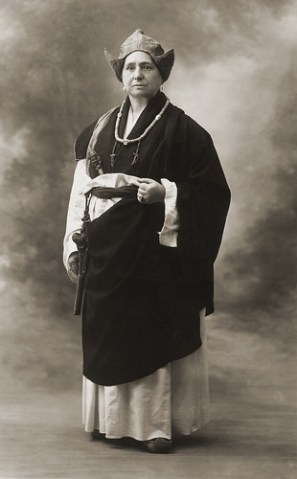
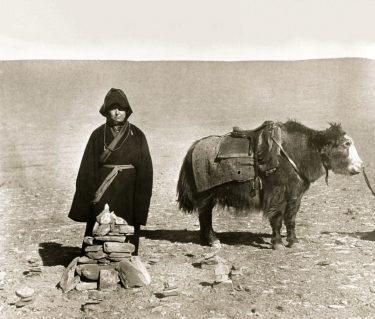
David-Neel, Alexandra (1931). Magic and Mystery in Tibet, Penguin Books Ltd.

Erich Fromm, D. T. Suzuki, et al (1960). Zen Buddhism and Psychoanalysis. New York: Harper Colophon Books.

Guyon, J. M. B. de la Mot (1875). A Short Method of Prayer. London: Sampson Low, Marston, Low & Searle. https://faculty.gordon.edu/hu/bi/ted_hildebrandt/spiritualformation/texts/guyon_shortmethodofprayer.pdf

Jeanne Marie Bouvier de La Motte Guyon. The Autobiography of Madame Guyon.
Chicago: Moody Press. https://archive.org/stream/theautobiography22269gut/pg22269.txt

Levenson, Lester (1993). Keys to the Ultimate Freedom: Thoughts and Talks on Personal Transformation. Phoenix, Arizona: Sedona Institute. ISBN 0-915721-03-1

Levenson, Lester (2003). No Attachments, No Aversions: The Autobiography of a Master. Sherman Oaks, California: Lawrence Crane Enterprises, Inc.

Seretan, Stephen (2008). Lester and Me. (Self-published)

Suzuki, Daisetz Teitaro (1953). Essays in Zen Buddhism (Second Series). London: Rider and Company.

Suzuki, D. T. (1957) Mysticism: Christian and Buddhist. London and New York: Routledge Classics. https://terebess.hu/zen/mesterek/d-t-suzuki-mysticism-christian-and-buddhist.pdf

M. O’C. Walshe (1987). Meister Eckhart: Sermons & Treatises Volume II. UK: Element Books Limited.

M. O’C Walshe (2009). The Complete Mystical Works of Meister Eckhart: Translated and Edited by Maurice O’C Walshe. New York: The Crossroad Publishing Company. 

Watts, Alan (1957). The Way of Zen. New York: Vintage Books. (https://terebess.hu/english/AlanWatts-The%20Way%20of%20Zen.pdf)

Meister Eckhart:

And among all creatures, He does not love one more than another: for as each is wide enough to receive in the same measure He pours Himself into it. If my soul were as capacious and as roomy as the angel of the Seraphim, who has nothing in him, God would pour Himself out into me as perfectly as into the angel of the Seraphim. It is just as if you were to make a sphere, with the perimeter covered with dots, and with a point in the centre: from this point all the dots would be equally near or far. Then for one dot to get nearer to it, it would have to be displaced, for the middle point remains constantly at the centre. So it is with divine being: it is not questing around but abiding altogether in itself. In order to receive from it, a creature must of necessity be moved out of itself.  (Walshe, Vol. II, p. 280)

Saichi:

My birthplace? I am born of figoku (hell).
I am a stray dog
Carrying its tail between its legs.
I pass through this world of woes,
Saying ‘Namu-amida-butsu’.

I am not to go to figoku;
figoku is right here.
We are living right in figoku;
figoku is no other place than this.
– Saichi (Suzuki, 1957, pp. 151-181)

If there were no wretchedness,
My life would be wickedness itself.
How fortunate I am that I was given wretchedness:
‘Namu-amida-butsu, Namu-amida-butsu!’

They understand who have had sorrows,
But those who had them not can never understand.
There is nothing so excruciating as sighs,
The sighs that refuse to be cast out.
But they are removed by Amida,
And all I can say now is ‘Namu-amida-butsu, Namu-amidabutsu!’

That such a sinful man as Saichi,
whose sinfulness knows no bounds,
has been transformed into a Buddha!
How grateful for the grace, and how happy!
‘Namu-amida-butsu, Namu-amida-butsu!’
– Saichi (Suzuki, 1957, pp. 151-181)

Nagarjuna:

All sentient beings are born according to their karma: good people are born in the heavens, the wicked in the hells, and those who practise the paths of righteousness realize nirvana. By disciplining himself in the six virtues of perfection (paramitas), a man is able to benefit his fellow-beings in various ways, and this is sure in turn to bring blessings upon him, not only in this but also in the next life.

Karma may be of two sorts: inner or mental, which is called cetana, and physical, expressing itself in speech and bodily movement. This is known as karma after having intended.

Karma may also be regarded as with or without intimation. An act with intimation is one in which the purpose is perceptible by others, while an act without intimation is not expressed in physical movements. It follows that when a strong act with intimation is performed, it awakens the tendency in the mind of the actor to repeat the deed, be it good, bad or indifferent.

It is like a seed from which a young plant shoots out and bears fruit by the principle of continuity. Without the seed, there is no continuity. And because of this continuity, there is fruition. The seed comes first and then the fruit. However, between them there is neither discontinuity nor continuity. Rather, from the awakening of a first intention, there follows an uninterrupted stream of thoughts, and the fruition is from these thoughts. Without the first stirring of the mind, there will be no stream of thoughts expressing themselves in action. Thus is the continuity of karma and its fruit. Therefore, when the ten deeds of goodness and purity are performed, the doer is sure to enjoy happiness in this life, and after death will be born among celestial beings.

There is something in karma that is never lost even after its performance; this something, called avipranasa, is like a deed of contract, and karma, an act, is comparable to debt. A man may use up what he has borrowed, but owing to the document he has some day to pay the debt back to the creditor. This “unlosable” is always left behind even after karma and is not destroyed by philosophical intuition. If it were thus destructible, karma would never come to fruition. The only power that counteracts this “unlosable” is moral discipline. Every karma once committed continues to work out its consequence by means of the “unlosable” until its course is thwarted by the attainment of Arhatship or by death, or when it has finally borne its fruit. This law of karma applies equally to good and bad deeds. Mulamadhyamakakarikas, Chapter XVII (Suzuki, 1953, Passivity in the Buddhist Life)
Lester Levenson: Karma

“Karma is just action and reaction; the reaction part is in the unconscious. Karma is everything remaining in your subconscious mind. It’s just energy stored up from the past, all very ancient. When you release, you are freeing yourself of more karma from the mind.” (Seretan, 2008, p. 50).

“We had to have done everything to get this low, so who cares what is there?” (ibid.)

SESSION 28: KARMA

For those who are here for the first time, our method is one of question-and-answer. The reason why I use question-and-answer is that I find it to be one of the very best methods of discovering truth. The most effective teaching is individual teaching rather than group- or mass-teaching.

The knowledge or truth we’re after cannot be picked up intellectually; it cannot be gotten from books. Were it possible to get it from books, we would all have it, for we certainly have books. Instead, I find that the only really effective teaching is accomplished when the teacher gets the pupil to really experience the answer. Only when one experiences the answer can one understand. This experience is also called realizing. So, do you have a question?

Q: I’d like to know a little more about how karma works and why it works. I’d like to know what puts it into effect, what starts the wheel. In your book you mention that it’s the thought.

Lester: The word “karma” is a Sanskrit word meaning action. Its general use means action and the reaction to the action. Other explanations are cause and effect; what you sow you reap; what you give out comes back to you.

Karma is initiated in thought. . . . When we [have] a desire, we want something. The desire initiates the thought of wanting something. Wanting something causes us to act to get that something. That something does not satisfy us, and therefore the desire increases. That goes on and on and on, and we become bound by desire, never able to satisfy it. If our desires [could be] satisfied, we would have no desires, right?

Q: Would you say that again?

Lester: If our desires [could be] satiated or satisfied, we would soon lose all our desires. They would soon be satisfied and we would have no more.

Q: Which is the state which we should attain?

Lester: Yes: we should attain the state of no desire, no longing. Then we are happy always.

Q: I understood you to say that karma is a law of action and reaction and could be [not only] a punishment for a wrong deed, [but] a reward for a good one.

Lester: Creating things we don’t like we call punishment. Creating things we do like we call reward. Creation is initiated in the mind. The mind doesn’t know good or bad—it just creates. When we create things that are distasteful to us and we don’t take responsibility for the creation, we say we’re being punished.

Let me get back to the question of what karma is. To every action there’s an equal and opposite reaction. It’s called the law of compensation.1 It is initiated in the mind. Every thought we have creates a vacuum, and nature immediately moves to fill that vacuum. The pace at which nature fulfills it is also determined by our thought, and every thought is initiated by a desire. Since a desire is not real. but is an assumed lack, an assumed agony of need, it can never be satisfied, and it actually becomes stronger the more we try to satisfy it. The only way we can be happy is to let go of all desire; then we become perfectly contented.

Q: So it takes the two [to create karma]? The thought alone without desire won’t do it?

Lester: Without a desire, would you have a thought?

Q: Never.

Lester: Correct. You wouldn’t have any thoughts without desire.

Q: Well, there are intellectual desires, aren’t there?

Lester: Yes, but they are desires. Otherwise, there would be no thought. You desire to be heard; you desire to communicate with people. It might not be a desire for ice cream, food, for things that the body needs, but it might be a desire for approval. So, desire initiates the whole cycle.

Way back in the beginning, it started with a thought of lack. Then there was a desire to fill the lack. The desire caused thought, the thought caused action. Since the action does not fulfill the desire, we increase the desire and action, keeping it going until we are spinning in an endless cycle, with satisfaction impossible. All our present thinking is initiated by something from the past. Our total feelings now are all from the thoughts and actions of the past. So, all thinking now is motivated by something that has already happened. Action and reaction go on and on that way and we are caught. It’s almost impossible to have an original thought anymore, every thought being based on past thoughts.

Q: So it all started way back when?

Lester: It’s beginningless and it’s endless. I’ll take you a step higher. Let us look at the example of the rope being mistaken for a snake. You’re walking along the road. There’s a rope on the ground and you think it’s a snake. Karma is in the realm of the illusory snake. When did that snake begin and when will that snake end? So long as you think it’s a snake. It’s beginningless and it’s endless, because in reality it never was: it was always a rope. If you are in karma, it is a forever thing. If you are not in it, it never was. Does that make sense? Karma is beginningless and endless. Hence it’s impossible to work out karma. Some schools of metaphysics teach that you must work out your karma. While you’re trying to work it out, you are creating new karma for the future, so it’s impossible to work it out. Well, what can we do? Awake from the illusion and see the truth! See the rope as a rope! Once [you see it’s a rope], the snake is no more. When we see the truth of our being, all this action and reaction turns out to be a dream illusion. And because it is an illusion, it cannot touch us any more.

Q: Didn’t you say we become the observer? I understood that the cycle still must be performed, regardless of enlightenment. Is that correct?

Lester: No. Once your understanding is full, from that moment on, there’s no more karma. When I say, “Be the witness,” that is still in the realm of duality, witnessing the duality, but it’s a giant step forward. It’s a method of letting go of the ego-sense of being the doer. It’s a mode of behavior that’s very conducive to growth. However, when you are fully realized, you’ll look at the world and you’ll see only a singular oneness in everything and everyone. And you’ll see that it is all nothing but your very own Self. And the Self is only the Self. So, what happens to the world is that you see it as it really is. You see it as the rope instead of seeing it as the snake. Then you are out of karma and there is no more karma. Now, what is a little confusing to you is statements that have been made at different levels of approach. Things at one level seem to contradict things at another level. However, when the truth is seen, all contradictions vanish. So, from the highest point of view, when you see who and what you are, there is no karma. When you see your real Self, there’s only beingness. Action and reaction are only apparently going on.

Q: One of the big things with any human, and I know I’m no different, are thoughts of sex. This is quite a strong force. How does one deal with this?

Lester: It’s one of the most difficult things to transcend. However, it’s possible and it’s relatively easy to do it once you recognize that all that joy you are seeking through sex you can have all the time, but much more, once you’re out of the trap of desire. That’s why I say, “Get to the higher place where, in order to have sex, you give up joy.” Then it’s an easy thing to let go of. Meanwhile, moderation is the best guide.

Happiness is only your very own Self; happiness is your basic nature. You don’t need anything external to have it. But you think you do because you’ve covered over this happiness with layers and layers of limitation—I must have this to be happy; I must have that to be happy. And this has been going on for a long time. But the more that you see who and what you are, the less desires will have a hold on you.

Q: You have shown the way or method for me, by which I have realized that there is something greater than sex. I have now realized that sex is actually a giving-up of something, a giving-up of a higher feeling for a lesser feeling. It’s much easier to understand in that light.

Lester: Sex will keep you earth-bound; it’s necessary to get above it. Having sex will not prevent you from moving toward realization, but while you are enmeshed in it you are a slave to it and can never get full realization. You are making the physical thing the joy, and it isn’t. The real thing is that you are that joy, only a million times more so! As high as the feeling is that you get from sex, you can go way, way beyond that feeling in joy and have it twenty-four hours a day. And it is this unlimited joy that you are really seeking, but you sacrifice it for sex.

Q: When we realize that we shouldn’t have done something, can we correct it by doing the opposite?

Lester: Well, if you’re doing the opposite, you’re involved in action again, creating [another reaction] for the future.

Q: You just have to be desireless?

Lester: Yes, that’s it. Being desireless, you will see who and what you are. You’ll see that you’re above all this illusion of karma and then it can touch you no more. You can mentally undo karma by mentally undoing desire. Karma is caused by desires that remain in the subconscious mind; dropping desire drops all thoughts of it. If you take desire out of the subconscious mind, the seeds of karma are no longer there. This is the fastest, the very best way of undoing karma. If you want to undo karma, do it mentally. Why experience it again and again and suffer it? If you let go of things mentally, you let go of them forever; then you don’t have to experience them. As Jesus said, “Whosoever looketh on a woman to lust after her hath committed adultery with her already.” The act originates in the mind. Every negative thought, every bad thought we have creates karma that we don’t like, and we call it bad karma. If people only knew this! It doesn’t matter whether we carry out the act or not, the seed is sown in the thought.

This Session was recorded in Los Angeles on September 16, 1965.

1. From Ralph Waldo Emerson’s essay, “Compensation.”

What we go through is determined by what we have gone through. This is the law of compensation or karma. In-between physical bodies we choose a certain part of what we have been through to go through the next time around. We set up similar situations, hoping that this next time we will transcend them. You always get another opportunity—ad infinitum. – Lester Levenson


“Before anyone comes into a life, he observes the balance of karma, and he observes how it is, and he sees what aspects of his karma would be worked out best in this particular situation and this particular balance of karma. His spiritual masters might give some suggestions to help him figure out what he wants to accomplish in this life, but no one is ever made to go into a situation he absolutely abhors. It’s generally done by a consensus of opinion between the person and his spiritual masters. He won’t like many aspects of the life in particular, but the majority of the life will be something he can handle, and these extra things he’s not too fond of are looked upon as spiritual challenges, something for him to accomplish and to work for. How well he handles these things that he doesn’t care for is one of the things that helps him work off some of his karma.” (Cannon, 1996, p. 56)

The following quotes were gathered from various sessions.

When bad karma makes us so miserable with negativity that we change our bad karma to good karma, that turns out to be a golden chain instead of an iron chain. But freedom is above karma.
* *
Whenever we move up, something happens to test us. What actually happens is that we subconsciously feed ourselves more karmaic reactions [events that we hate] because we have become stronger and can face it. [The law of karma is that we attract whatever we hate and we repel whatever we want. – Editor]
* *
Karma is nothing but the accumulated past habits of thought that are going on subconsciously.
* *
Karma is the conglomeration of all the subconscious thoughts running you. Get rid of these thoughts, quiet the mind totally, and there is no karma.
* *
Where is karma? It’s in the world of illusion.
* *
Karma and reincarnation are part of the illusion and have no part in the reality. Past lives should not be gone into as it is playing with the unreality, making it seem more real.
* *
You can’t change what the body will go through; that was determined by you by prior action. However, you can choose not to be that body, but to be your Self.
* *
Get to accept karma. The idea that you can fight it is contrary to accepting it. If you accept it, your fears, frustrations, tensions, miseries, etc., are alleviated and you are no more holding on to things by attempting to avoid them. Since there is nothing you can do about it, you just let it be. Everything this body is going to go through, it will go through. Understand this and remain as you really are—free.
* *
Examine karma and you will discover that karma and destiny are one and the same.
* *
The ego doesn’t like to hear that it doesn’t have free will, but the ego itself is a product of karma.
* *
If action is being done without attachments and aversions, there is no karma being created.
* *
Acts performed with no interest in the fruits thereof produce no karma.
* *
Once you reach the state of non-attachment, you can enjoy the world without creating any karma.
* *
How can an infinite Being be subject to karma, karma being an extreme limitation?
* *
It is when we rise above karma, good and bad, that we move into being our real Self.
* *
The fastest way out of karma is to grow.
* *
Karma comes to an end when I recognize that it is all in my mind and I am not my mind.
* *
All actions that the body will perform you have already concluded before it came into existence. The only freedom you have is whether or not to identify yourself with the body and its action. If an actor plays the part of a king or a beggar, he is unaffected by it because he knows he is not that character. In exactly the same way we should carry out our part in the world, and whether we are king or beggar, we should be unaffected by it, knowing that we are not that character but are a grand and glorious being, our very own infinite Self.

Cannon, Dolores (1996). Between Death and Life: Conversations with a Spirit. Bath: Gateway Books.

Emerson, Ralph Waldo (1841). “Compensation.” download

Levenson, Lester (1993). Keys to the Ultimate Freedom: Thoughts and Talks on Personal Transformation. Phoenix, Arizona: Sedona Institute. ISBN 0-915721-03-1

Seretan, Stephen (2008). Lester and Me. download

Enlightenment attained only from this world

If the soul were able to know God wholly as the angels do, she would never have entered the body. If she could know God without the world, the world would not have been made for her sake. The world was created on her account for training . . . Meister Eckhart (Walshe, Sermon Fifty-Two)

If we lose our sense of egoity in the state we are in now, we save ourselves millions of years of growing on the higher planes. To be in a higher astral realm, or a causal realm, or the highest of realms, we still need a sense of separation, a sense of egoity. We need a sense of a higher body. And one of the greatest, most wonderful things about the state we are in now is that it allows us to go all the way back home, right to the very top. Even the gods, the angels, cannot do what we can do. We can go all the way by completely losing the sense of being an ego. – Lester Levenson

And then you die, and then you have a vacation on the other side, where you’re far better able to think and immediately have things happen. And then you come back into a physical body, and you keep working through this physical body until you’re able to free yourself from the physical body while you’re in the physical body. You can never get free of it anywhere else but from within it. – Lester Levenson (The Ultimate Freedom)

It is a rare privilege to be born
as a human being,
as we happen to be.
If we do not achieve
enlightenment in this life,
when do we expect to achieve it?
— Nanyang Huizhong

The Vimalakirti Sutra:

Vimalakirti then asked Manjushri: What may act as the seeds of the Tathagata?

Manjushri said: The body is the seed, ignorance and discrimination are the seeds, greed, anger, and stupidity are the seeds. The four inverted views are the seeds, the five obscurations are the seeds, the six sense-objects are the seeds, the seven types of consciousness (vijnana) are the seeds, the eight errors are the seeds, the nine sources of anxiety are the seeds, the ten evil actions are the seeds. To sum it up, the sixty-two erroneous views and all the different kinds of earthly desires are all the seeds of the Buddha.

Vimalakirti said: Please explain.

Manjushri replied: A person who has perceived the uncreated nature of reality and entered into true understanding cannot again set his mind on attaining anuttara-samyak-sambodhi. The lotus does not grow on high ground; the lotus grows in the mud and mire of a damp low-lying place. In the same way, the Buddhadharma can never grow in a person who has perceived the uncreated nature of reality and entered into true understanding. It is only when living beings are in the midst of the mire of earthly desires that they turn to the Buddhadharma.

If you plant seeds in the sky, they will never grow. Only when you plant them in well-manured soil can they sprout and flourish. In the same way, the Buddhadharma will never grow in a person who has perceived the uncreated nature of reality and entered into true understanding. But one who entertains egotistic views as huge as Mount Sumeru can still set his mind on the attainment of anuttara-samyak-sambodhi. From this you should understand that all the various earthly desires are the seeds of the Tathagata. If you do not descend into the vast ocean, you can never acquire a priceless pearl. In the same way, if you do not enter the great sea of earthly desires, you can never acquire the treasure of perfect wisdom.

At that time Mahakashyapa sighed and said: Excellent, excellent, Manjushri! These words are aptly spoken. It is indeed just as you say. Those who are troubled by the passions are the seeds of the Tathagata.

Hakuin: Orategama

If you suddenly awaken to the wisdom of the true reality of all things of the One Vehicle alone, the very objects of the senses will be Zen meditation and the five desires (20) themselves will be the One Vehicle. Thus words and silence, motion and tranquility are all present in the midst of Zen meditation.29 When this state is reached, it will be as different from that attained by a person who quietly practices in forests or mountains as heaven is from earth. When Yung-chia speaks of the lotus facing the flames, he is not here praising the rare man in this world who is practicing Buddhism. Yung-chia penetrated to the hidden meaning of the Tendai teaching that “the truths themselves are one.” He polished the practice of shikan in infinite detail, and in his biography the four dignities (30) are praised as always containing within them the dhyana contemplation. (31) His comment is very brief, but it is by no means to be taken lightly. When he says that dhyana contemplation is always contained within the four dignities, he is speaking of the state of understanding in which the two are merged. The four dignities are none other than dhyana contemplation and dhyana contemplation is none other than the four dignities. When [Vimalakirti] says that the bodhisattva, without establishing a place for meditation, practices amidst the activities of daily life, he is speaking about the same thing.

Because the lotus that blooms in the water withers when it comes near to fire, fire is the dread enemy of the lotus. Yet the lotus that blooms from the midst of flames becomes all the more beautiful and fragrant the nearer the fire rages.

A man who carries on his practice by shunning the objects of the five senses, no matter how proficient he may be in the doctrine of the emptiness of self and things and no matter how much insight he may have into the Way, when he leaves quietude and enters into the midst of activity he is like a fish out of water or a monkey with no tree to climb. Most of his vitality is lost and he is just like the lotus that withers at once when it is near fire. But if you dauntlessly persevere in the midst of the ordinary objects of the senses, devote yourself to pure undistracted meditation and make no error whatsoever, you will be like the man who successfully delivered the several hundred ryo of gold despite the turmoil that surrounded him. Dauntlessly and courageously setting forth and proceeding without a moment’s interruption, you will experience a great joy, as if suddenly you had made clear the basis of your own mind and had trampled and crushed the root of birth and death. It will be as if the empty sky had vanished and the iron mountain had crumbled. You will be like the lotus blooming amidst the flames, whose color and fragrance become more intense the nearer the fire approaches. Why should this be so? It is because the fire is the lotus and the lotus is the fire. (translation by Philip B. Yampolsky)

20 – Wealth, sex, food, fame, sleep.
29 – Zenjo. Zen is dhyana; jo is samadhi.
30 – Four dignities: motion, standing, sitting, and lying down.
31 – Zenkan. To contemplate the true principle while seated in meditation. The term is not commonly used in Zen writing.

* * *

Lester: And then you die, and then you have a vacation on the other side, where you’re far better able to think and immediately have things happen. And then you come back into a physical body, and you keep working through this physical body until you’re able to free yourself from the physical body while you’re in the physical body. You can never get free of it anywhere else but from within it.

Question: How did you arrive at the fact that we have to gain realization in the body? Why can’t we just die and be realized?

Lester: Because as long as you are a body, you have very strong convictions that you are a body, and you’re holding it in your mind. And you’ll always be a body again and again and again until you let go of the desire to be a body. So, it’s while you are in the physical body that you have to let go of all desire to be a physical body.

Now, that word “desire” is a very powerful word. The only reason why we have bodies is because we desire them. The only reason why we are limited in any way is because we desire limitations. Become desireless and you are unlimited.

Question: Is it all that we can conceive? Do we conceive we have to have a body because we always had one, and so it goes on and on?

Lester: It’s a matter of choice. Whether you face it or not, you’ve chosen to be a body. If you will dig within you, you will discover this.

The real culprit is the thing called the unconscious mind. The unconscious mind is a storage closet of thoughts. We create thoughts, we put them back in the subconscious, and then we act as though they are not there. Every subconscious thought is just as active as any conscious thought is. But we have created this mechanism of subconscious thinking. And the subconscious thoughts are only the conscious thoughts that we’re not looking at at this moment. And right now there are millions of thoughts going on in your mind. You bring to consciousness a few of them at a time, but all those millions back there are active. And this is the greatest difficulty. It was a very handy mechanism in the beginning—it was an automatic pilot. When we became more and more involved with thoughts, we put them on automatic an stopped looking at them. And we are now running on automatic, called the subconscious mind. And this is your greatest difficulty. If you could make the subconscious conscious right now, you would be Self-realized, because you would see all this limitation that you set in motion in the past that is now continuing, invisible to you all. And by making it visible, naturally you’re going to drop all the limitation.

Keep your attention focused on you. If you would do only this for weeks or months, you would get full Self-realization. It would be very quick. (“Letting go of ego”)

Levenson, Lester (1993). Keys to the Ultimate Freedom: Thoughts and Talks on Personal Transformation. Phoenix, Arizona: Sedona Institute. ISBN 0-915721-03-1

Watson, Burton (2000). The Vimalakirti Sutra. New York: Columbia University Press.(https://www.wisdomlib.org/buddhism/book/vimalakirti-sutra/d/doc116206.html)

Yampolsky, Philip B. (1971). The Zen Master Hakuin: Selected Writings. New York: Columbia University Press. https://terebess.hu/zen/Orategama.pdf

The question of will

Goso asks: A water buffalo walks out of its enclosure. The head, the horns, and the four legs go through, but why doesn’t the tail, too?

If the buffalo goes through, it will fall into the abyss,
If it retreats into the enclosure, it will be butchered.
This little bit of a tail, that is a strange thing indeed! – The Gateless Gate

Nothing can make a true man but the giving up of the will. Indeed, except by giving up our will in all things we cannot achieve anything with God. But if it should come to the point that we gave up all of our will, daring to abandon all things for God’s sake, then we should have done all things, and not before. – Meister Eckhart (Walshe 2009, The Talks of Instruction, p.498)

It seems a paradox that one must be strong-willed in order to advance along the spiritual path, yet at the same time one must abaondon self-will. But this is the truth. The use one makes of the mind to seek liberation is self-deception. The thinking mind is quite happy to go along with all of the learning, the meditation, the various practices and disciplines, because it clings to the conceit that it will gain something. However the mind is the very prison that one seeks to be liberated from.

Erich Fromm (1960) described the quest for liberation from the point of view of the self:

To have faith means to dare, to think the unthinkable, yet to act within the limits of the realistically possible; it is the paradoxical hope to expect the Messiah every day, yet not to lose heart when he has not come at the appointed hour. This hope is not passive and it is not patient; on the contrary, it is impatient and active, looking for every possibility of action within the realm of real possibilities. Least of all it is passive as far as the growth and liberation of one’s own person are concerned.

Of course, the Messiah will never come to save you, nor will you ever become a buddha, because the “you” who hopes for salvation or liberation never really existed. The problem is one of identity: either I am a separate being which wants liberation, or I am all there is and I want nothing.

First Zeal (Viraya), then Passivity (Ksanti)

Meister Eckhart explains how the mind is active in the beginning of the spiritual journey, and how it must then become passive and allow God to act:

Man has an active intellect, a passive intellect and a potential intellect. The active intellect is ever ready to act, whether it be in God or in creatures, for [in God] it exerts itself rationally in creatures in the way of ordering creatures and bringing them back to their source, or [in a creature] in raising itself to the honour and glory of God. All of that is in its power and its domain, and hence its name active. But when God undertakes the work, the mind must remain passive. . . . In the one case there is activity, where the mind does the work itself; in the other case there is passivity, when God undertakes the work, and then the mind should, nay must, remain still and let God act. . . . But when the mind strives with all its might and with real sincerity, then God takes charge of the mind and its work, and then the mind sees and experiences God. (Walshe, Vol. I, pp. 25-26)

D. T. Suzuki (1929) made the same point in Studies in the Lankavatara Sutra:

Up to the seventh stage (called Duramgama) of Buddhist life, the Bodhisattva has not been free from the sense of making effort for the attainment of a certain definite object; he has so far always been conscious of strain and effort; he has been making a definite attempt at accomplishing something, at bringing forth some tangible result as the outcome of his labour. But he has now completed this part of his work, he has now graduated, so to speak, from an effortful life (prayogikacarya), he is now on the way to a life of Anabhogacarya, where no efforts are made, no consciousness of strain is left.

What will is

The Sanskrit term for will is the word samskara, which are expectations of future events. Will is the opposite of desire. When one desires, one has doubts, and that doubt is an expectation that produces the opposite of what one wants. In will there is no doubt. It is the absolute conviction that something is going to happen, good or bad.

Suzuki (1957) defined will in a lecture to a gathering of psychologists organized by Erich Fromm, in Mexico:

The will in its primary sense is more basic than the intellect because it is the principle that lies at the root of all existences and unites them all in the oneness of being. The rocks are where they are—this is their will. The rivers flow—this is their will. The plants grow—this is their will. The birds fly—this is their will. Human beings talk—this is their will. The seasons change, heaven sends down rain or snow, the Earth occasionally shakes, the waves roll, the stars shine—each of them follows its own will. To be is to will and so is to become. There is absolutely nothing in this world that has not its will. The one great will from which all these wills, infinitely varied, flow is what I call the “Cosmic Unconscious,” which is the zero-reservoir of infinite possibilities. . . .

The wisdom which reveals itself when the bottom of the unconscious, that is, of the Alayavijnana, is broken through is no other than prajna. The primary will out of which all beings come is not blind and unconscious; it seems so because of our ignorance, which obscures the mirror, making us oblivious even of the fact of its existence. The blindness is on our side and not on the side of the will, which is primarily and fundamentally noetic (thinking) as much as conative (purposeful). The will is prajna plus karuna—wisdom plus love. On the relative, limited, finite plane, the will is seen as revealed fragmentally; that is to say, we are apt to take it as something separated from our mind-activities. But when it reveals itself in the mirror of adarsanajnana, it is “God as he is.” In him prajna is not differentiated from karuna. When one is mentioned, the other inevitably comes along. . . . (Fromm, Suzuki, et al., 1960, p. 43)

As Suzuki explains, there is in truth only one will; everything that happens, happens according to it. Meister Eckhart attempted to capture the glorious expression of this will in the following passage:

In God all things are equal and are God himself. . . . In this likeness or identity God takes such delight that he pours his whole nature and being into it. His pleasure is as great, to take a simile, as that of a horse, let loose to run over a green heath where the ground is level and smooth, to gallop as a horse will, as fast as he can over the greensward—for this is a horse’s pleasure and expresses his nature. It is so with God. It is his pleasure and rapture to discover identity, because he can always put his whole nature into it—for he is this identity itself. (Blakney, pp. 203 et seq.)

Passivity as surrender of the will

In his essay “Passivity in the Buddhist Life” Suzuki explored the highest state of consciousness, that of no effort (anabhisamskara) and no thought (anabhoga). He found a philosophical similarity between Pure Land Buddhism and Christianity as regards passivity, which is that both religions place complete faith in a greater power or “other-power” that helps the devotee and purifies him of his sins. Suzuki also devoted part of his essay, “The Koan Exercise,” to the Pure Land school and the practice of reciting the Nembutsu.

Pure Land Buddhism is looked down on by followers of Zen, which emphasizes self-reliance, as is seen in this statement by Hui-neng:

“Good friends, each of you must observe well for himself. Do not mistakenly use your minds! The sutras say to take refuge in the Buddha within yourselves; they do not say to rely on other Buddhas. If you do not rely upon your own natures, there is nothing else on which to rely.” (Yampolsky, The Platform Sutra)

Nevertheless, Suzuki, following Hakuin, tries to show the positive aspects of Pure Land (his family’s sect), and calls the recitation of the Nembutsu “the magic sesame that carries you to the other side of birth and death.”

Surrender of the will to God is of the utmost importance in Christianity, which moreover demands obedience to religious authority in matters of doctrine. Zen takes the opposite approach: it does not provide students with any doctrine, nor are students given answers to metaphysical questions. They are forced to discover the truth for themselves. Zen aims to bring about self-abandonment, not through obedience, but through intense concentration and questioning, leading to a crisis in which the self is exposed in its non-existence. As Suzuki explains,

Zen starts with skepticism, or more appropriately, with quite an unpreoccupied, unprepossessed and thoroughly blank mind. There is in it no postulate of an Absolute or Infinite. Whether there is God, all-creating, all-governing, and all-comprehensive, Zen neither asserts nor denies, for assertion and denial are foreign to Zen, at least in its start. When the monk Ming understood the meaning of the question, “What was your original face you had before you were born of your parents?” set forth by the Sixth Patriarch, Hui-neng, Ming asked the Patriarch if there was any other secret to be explored. The answer was, “If there is any, it will be on your own side.”

In the early years, masters tried to create a “questioning mind” (tai-i) in students by requiring them to pose questions to the master. The responses given were always calculated to puzzle and perplex, to make the student doubt his view of reality.  Masters commonly struck students and verbally humilliated them in order to make them angry, to make them unhappy, to expose the self and the painful prison that it is. Deshan (790-865) used to say, “If you say yes you get thirty blows from my stick; if you say no you get thirty blows just the same.” These blows were referred to as “grandmotherly love.” It wasn’t uncommon for a monk, at the moment of his enlightenment, to return his master’s love by striking him, in the realization that he and the master were the same Self.

This method of mandatory questioning was formalized in the twelfth century by the assigning of koans, or cases, none of which has an answer that can be expressed verbally. The aim of the koan is to provide a subject for single-minded concentration that excludes all else. This prolonged concentration creates a crisis, in which the non-reality of the self is exposed, thus bringing about an awareness of Self. (See Richard De Martino’s essay, The Human Situation and Zen Buddhism.)

In spite of their opposite approaches, however, both Christianity and Buddhism can lead to enlightenment so long as there is a complete surrender or abandonment of the self. Conversely, neither will lead to enlightenment so long as followers refuse to either surrender or abandon the self. Leaving aside the sin-expiating aspect, the main philosophical difference between them is that Christianity teaches people to surrender an eternal self, the soul, to a personalized God who is like a father, while in Buddhism there is a realization that one is God and that the soul never really existed. But no matter which path one has chosen, one always begins with effort, zeal (viraya), and one always ends with acceptance (ksanti) and the renunciation of self-will, because the will is the water buffalo’s tail.

Individuality

As unsettling as abandoning the self seems to most people, the abandonment isn’t absolute and it isn’t irreversible. The Buddha said that there was no annihilation in complete enlightenment, and Lester Levenson explained what this means: “The word ‘I’ as you use it to mean your individuality will never, ever leave you. It expands.” When Moses asked God by what name He would be called, God replied, “I am what I am.” I think this sums it up: you are still ‘I,’ but ‘I’ has expanded to include everyone and everything there is. The word ‘individual’ now reverts to its original meaning, which was ‘indivisible’. Lester (2006) described this experience:

Someday you’ll look around and you’ll just see yourself everywhere you look. You’ll have a feeling, you are me, without a question. Without a doubt, you are me.

When you get to top state, you have a consciousness. There’s a constant I, I, I that goes on, on the top state. That’s all you see, hear, feel, think, know, just I, I, I, which is your beingness. A beingness that never changes. Beingness always is. (p. 113)

Most beings don’t remain in the highest state: they return to humanity in varying degrees. Hinduism, Buddhism and Catholicism expect those formed within their institutions to serve others. And we see in many examples that those who are outside of these institutions are at risk of a lack of proper conduct and of regression into egoity. (There is plenty of corruption within these institutions as well, and they are at risk of becoming irrelevant.) Meister Eckhart in his third sermon discusses the complexities involved in returning from the highest state without losing one’s attainment altogether. As Suzuki points out, the buddhas still have a self-will and are not completely passive, and this means that one can remain detached from the mind and body or re-enter it.

The help of the Buddhas

One of the central doctrines of Buddhism is that the bodhisattva, or enlightened being, chooses not to enter nirvana so that he may lead all beings to liberation. Some choose physical rebirth, and there is something the Maha-Prajnaparamita Sutra calls apparitional rebirth. A bodhisattva can create a form and can also help us without a form.  In his autobiography (2003) Lester said,

I knew there were men before me who had discovered what I discovered, like Jesus, and they are still around. They do exist in a body, one made of finer substance than the physical body. They are still with the world, helping those of us who want help. Being in the higher realm, they are far more helpful because they can be anywhere at any moment. They are conscious of the fact that separateness is a dream. they are conscious of their commitment to help those in the dream wake up out of the dream—and know that they, too, are the infinite One.

There is never a time when these great ones are not offering their hands. It’s called grace. To the degree that we open ourselves to it, to that degree we receive it.” (p. 137).

Lester said that he, too, would continue to help us: “Usually those of us who want to come back to help others to that point will come back, just to help others” (https://youtu.be/ggQknGLq-8I).

Whatever the reality is, enlightenment may come more readily to those who believe in other-power, that is, the willingness of departed buddhas to help us. Madame Guyon emphasizes that her attainment of union with God was by His grace and not by her own efforts, that her efforts hindered her because they came from self-will.

I would like to finish this post with a story, which illustrates how ceasing one’s own efforts—giving up—is equivalent to surrendering one’s self-will. It is about Ananda, one of the Buddha’s most esteemed disciples, famous for being able to recite any of the Master’s teachings by heart.

With all his memory and learning, Ananda could not sound the bottom of the Buddha’s wisdom while the latter was still alive. According to tradition, Ananda’s attainment to Arhatship took place at the time of the First Convocation, in which he was not allowed to take part in spite of his twenty-five years’ attendance upon the Buddha. Grieving over the fact, he spent the whole night perambulating in an open square, and when he was about to lay himself down on a couch all exhausted, he all of a sudden came to realize the truth of Buddhism, which with all his knowledge and understanding had escaped him all those years. (Suzuki, 1953, p. 67)

* * *

Suzuki: Self-discipline and the Buddha’s Power (1932)

As long as Paravritti is an experience and not mere understanding, it is evident that self-discipline plays an important role in the Buddhist life. This is insisted upon in the Lanka as is illustrated in the use of such phrases as “Do not rely on others,” “Exert yourselves,” etc. But at the same time we must not forget the fact that the Lanka also emphasizes the necessity of the Buddha’s power being added to the Bodhisattvas in their upward course of spiritual development and in the accomplishment of their great task of world-salvation. . . .

Rinzai (Lin-chi, died 867):

The truly religious man has nothing to do but go on with his life as he finds it in the various circumstances of this worldly existence. He rises quietly in the morning, gets dressed and goes out to his work. When he wants to walk, he walks; when he wants to sit, he sits. He has no hankering after Buddhahood, or the remotest thought of it. How is this possible? A sage of old says, “If you strive after Buddhahood by any conscious contrivances, your Buddha is indeed the source of eternal transmigration.” (“Passivity in the Buddhist Life“)

Meister Eckhart: “The Talks of Instruction” (1990)

(p. 13) People say: ‘Alas, sir, I wish I stood as well with God or had as much devotion and were as much at peace with God as others are, I wish I were like them, or that I were so poor’, or: ‘I can never manage it unless I am there or there, or do this or that; I must get away from it all, or go and live in a cell or a cloister.’

In fact, the reason lies entirely with yourself and with nothing else. It is self-will, though you may not know it or believe it: restlessness never arises in you except from self-will. Though we may think a man should flee these things or seek those things—places or people or methods, or company or deeds—this is not the reason why methods or things hold you back: it is you yourself in the things that prevents you, for you have a wrong attitude toward things.

Therefore start first with yourself, and [renounce] yourself. In truth, unless you flee first from yourself, then wherever you flee to, you will find obstacles and restlessness no matter where it is. If people seek peace in outward things, whether in places or in methods or in people or in deeds or in . . . poverty or in humiliation, however great or of whatever kind all this may be, this is all in vain and brings them no peace. Those who seek thus seek wrongly; the further they go the less they find what they are seeking. They are like a man who has taken a wrong turn: the further he goes, the more he goes astray. But what should he do? He should [renounce] himself to begin with, and then he has abandoned all things. In truth, if a man gave up a kingdom or the whole world and did not give up self, he would have given up nothing. But if a man gives up himself, then whatever he keeps, wealth, honour or whatever it may be, still he has given up everything.

He who [renounces] himself and his own will has left all things as truly as if they were his free possession and completely at his disposal. For that which you don’t want to desire, you have handed over and renounced for God’s sake. That is why our Lord said: “Blessed are the poor in spirit”, that is, in will. And none should doubt this, for if there were any better way, our Lord would have declared it, just as he said: “If any one would follow me, he must first deny himself’. It all depends on that. Observe yourself, and wherever you find yourself, leave yourself: that is the very best way.

(p. 14) You must know that no man ever left himself so much in this life, but he could find more to leave. There are few who are truly aware of this and who are steadfast in it. It is really an equal exchange and barter: just as much as you go out of all things, just so much, neither more nor less, does God enter in with all that is His—if indeed you go right out of all that is yours. Start with that, and let it cost you all you can afford. And in that you will find true peace, and nowhere else.

(p. 26) God’s intent in all things is that we should give up our will. . . . Nothing can make a true man but the giving up of the will. Indeed, except by giving up our will in all things we cannot achieve anything with God. But if it should come to the point that we gave up all of our will, daring to abandon all things for God’s sake, then we should have done all things, and not before.

Madame Guyon (1648-1717)

The following, from “A Short and Easy Method of Prayer” (1875) landed Mme. Guyon in prison for nine years, even though it was lauded, printed and widely disseminated by Catholic clergymen.

CHAPTER V.

ABANDONMENT TO GOD–ITS FRUIT AND ITS IRREVOCABILITY–IN WHAT IT CONSISTS–GOD EXHORTS US TO IT.

Abandonment is the casting off of all care of ourselves, to leave ourselves to be guided entirely by God.

All Christians are exhorted to abandonment, for it is said to all, “Take no thought for the morrow; for your Heavenly Father knows that you have need of all these things” (Matt. vi. 32, 34). . . . Abandonment, then, ought to be an utter leaving of ourselves, both outwardly and inwardly, in the hands of God, forgetting ourselves, and thinking only of God. By this means the heart is kept always free and contented.

Practically it should be a continual loss of our own will in the will of God, a renunciation of all natural inclinations, however good they may appear, in order that we may be left free to choose only as God chooses: we should be indifferent to all things, whether temporal or spiritual, for the body or the soul; leaving the past in forgetfulness, the future to providence, and giving the present to God.

D. T. Suzuki: (1929)

When thus the Bodhisattva, discarding all effortful works, attains to the effortless state of consciousness, he enters upon the eighth stage known as Acala, the Immovable. But we must remember that effortlessness is the outcome of intense effort, and that when the former is not preceded by the latter, it can never be realised. Says the Dasabhumika: “It is like a man who in a dream finds himself drowning in a river; he musters all his courage and is determined at all costs to get out of it. And because of these very efforts and desperate contrivances he is awakened from the dream and when thus awakened he at once perceives that no further doings are needed now. So with the Bodhisattva: because of the great determination and the constant strivings that he has put forward in order to save all beings from drowning in the river of ignorance and confusion, he has at last reached, the eighth stage, and once here all his conscious efforts are set aside, his perception is not obstructed by dualistic views, nor by appearances.” (pp. 224-225)

Meister Eckhart

If then, I were asked what is a poor man who wants nothing, I should reply as follows. As long as a man is so disposed that it is his will with which he would do the most beloved will of God, that man has not the poverty we are speaking about: for that man has a will to serve God’s will—and that is not true poverty! For a man to possess true poverty he must be as free of his created will as he was when he was not. For I declare by the eternal truth, as long as you have the will to do the will of God, and longing for eternity and God, you are not poor: for a poor man is one who wills nothing and desires nothing. (Sermon Eighty Seven)

Conze, Edward (1975). The Large Sutra on Perfect Wisdom. University of California Press.

Erich Fromm, D. T. Suzuki, Richard de Martino (1960). Zen Buddhism and Psychoanalysis, N.Y., Harper Colophon Books.

Goddard, Dwight (1932). A Buddhist Bible (First Edition). (http://www.sacred-texts.com/bud/bb/index.htm)

Guyon, J. M. B. de La Mot (1875). A Short Method of Prayer. London: Sampson Low, Marston, Low & Searle. https://faculty.gordon.edu/hu/bi/ted_hildebrandt/spiritualformation/texts/guyon_shortmethodofprayer.pdf

Levenson, Lester (2003). No Attachments, No Aversions: The Autobiography of a Master. Sherman Oaks, CA, Lawrence Crane Enterprises, Inc.

Levenson, Lester (2006). The Power of Love: Learn How to Be in the Now. Sherman Oaks, California: Lawrence Crane Enterprises, Inc. ISBN No. 0-9778726-090000

Meister Eckhart (Raymond B. Blakney, translator) (1941). Meister Eckhart. New York: Harper & Brothers. https://www.amazon.com/Meister-Eckhart/dp/B001X3WDGC/

Suzuki, Daisetz Teitaro (1953). Essays in Zen Buddhism (Second Series). London, Rider and Company.

Suzuki, D. T. (1932). The-Lankavatara-Sutra: A Mahayana Text. Translated for the first time from the original Sanskrit. (http://lirs.ru/do/lanka_eng/lanka-nondiacritical.htm)

Suzuki, D. T. (1998). Studies in the Lankavatara Sutra. New Delhi: Munshiram Manoharlal Publishers (originally published in 1929).

Suzuki, D. T. (1957). Mysticism: Christian and Buddhist. London and New York, Routledge Classics. https://terebess.hu/zen/mesterek/d-t-suzuki-mysticism-christian-and-buddhist.pdf

Walshe, M. O’C. (1987). Meister Eckhart: Sermons & Treatises Volume I. Element Books Limited, UK.

Walshe, M. O’C. (1987). Meister Eckhart: Sermons & Treatises Volume II. Element Books Limited, UK.

Walshe, M.O’C. (1990). Meister Eckhart: Sermons & Treatises Volume III. Element Books Limited, UK.

Paramhansa Yogananda (1946). Autobiography of a Yogi. New York: The Philosophical Library.

Hakuin Ekaku (1686 – 1769)

Orategama

Don’t waste this birth as a human being, so difficult to obtain

How truly sad! Man is endowed with the wisdom and form of the Buddha. There is nothing that he lacks. Each person possesses this precious jewel that is the Buddha-nature, and for all eternity it radiates a great pure luminescence. But while dwelling in that true land of the pure dharma-nature of Vairocana Buddha, where this very world is the light of Nirvana, men, their eye of wisdom closed, mistake this realm for the ordinary evil world; they wrongly believe that it is peopled by sentient beings. In this one birth as a human being, one so difficult to obtain, they spend their time wandering about like horses and oxen. Lacking any judgment they extinguish the light and wander through the realms of the three painful evil existences and suffer the sorrow of the six forms of rebirth.1 They grasp at the true land of Vairocana Buddha’s unchanging eternal calm, and in their fear and delusion they cry out in pain, believing they are in eternal hell. They pride themselves on their ordinary, pointless, insignificant views, reveling in the small prejudiced learning that they have heard. They do not believe in Buddhism, have not listened to the true dharma, end their days prating nonsense, and have failed to attain, even for a moment, the mind that is master of true meditation. More pitiful still, they circle for endless ages in the coils of their evil karma; more frightening yet, they reap only the bitter fruit of the long nights of birth and death.

The Zen warrior

In my later years I have come to the conclusion that it is the warrior class that holds the advantage in accomplishing true meditation. A warrior must, from the beginning to the end, be physically strong. In the performance of his duties and in his relationships with others the most rigid punctiliousness and propriety are required. His hair must be properly arranged, his garments in the strictest of order, and his swords must be fastened at his side. With this exact and proper deportment, the true meditation stands forth with an overflowing splendor. Mounted on a sturdy horse, the warrior can ride forth to face a vast horde of enemies as though he were riding into a place empty of people. The valiant, undaunted expression on his face reflects his practice of the peerless, true, uninterrupted meditation sitting. Meditating in this way the warrior can accomplish in one month what it takes the monk a year to do. In three days he can open up for himself benefits that would take the monk a hundred days.

They say that beneath a strong general there are no weak soldiers. Thus, soldiers as valiant as Kilyapa, Ananda, Sariputra, and Piiqa, beginning with Tamura and Nomura, will flock to his banner. Then, no matter what event should occur in the world, the general and his troops, motivated by the one great true vitality, though but a hundred men facing ten thousand, will be unaware of any birth up to now. How then can there be such a thing as death! They will press forward as though breaking through the hardest stone. Their quiet will be as that of a lofty mountain, their speed that of a roaring typhoon. Everything they face will fall before them; everything they touch will collapse into pieces. Even in the midst of the raging turmoils of the Hogen and Heiji wars, it would be as though they were standing in a vast, empty plain. This we call the vital spirit and purpose of the truly great man.

The superiority of meditation in the midst of activity

Frequently you may feel that you are getting nowhere with practice in the midst of activity, whereas the quietistic approach brings unexpected results. Yet rest assured that those who use the quietistic approach can never hope to enter into meditation in the midst of activity. Should by chance a person who uses this approach enter into the dusts2 and confusions of the world of activity, even the power of ordinary understanding that he had seemingly attained will be entirely lost. Drained of all vitality, he will be inferior to any mediocre, talentless person. The most trivial matters will upset him, an inordinate cowardice will afflict his mind, and he will frequently behave in a mean and base manner. What can you call accomplished about a man like this?

The Zen Master Ta-hui has said that meditation in the midst of activity is immeasurably superior to the quietistic approach. Po-shan has said that if one does not attain to this meditation within activity, one’s practice is like trying to cross a mountain ridge as narrow as a sheep’s skull with a hundred-and-twenty pound load on one’s back (the body). I am not trying to tell you to discard completely quietistic meditation and to seek specifically for a place of activity in which to carry out your practice. What is most worthy of respect is a pure koan meditation that neither knows nor is conscious of the two aspects, the quiet and the active. This is why it has been said that the true practicing monk walks but does not know he is walking, sits but does not know he is sitting.

For penetrating to the depths of one’s own true self-nature, and for attaining a vitality valid on all occasions, nothing can surpass meditation in the midst of activity. Supposing that you owned several hundred ryo of gold and you wanted to hire someone to guard it. One candidate shuts up the room, seals the door, and just sits there. True, he does not allow the money to be stolen, but the method he adopts does not show him to be a man with much vitality. His practice may best be compared with that of the Hinayana follower, who is intent only on his own personal enlightenment.

Now suppose that there is another candidate. He is ordered to take this money and to deliver it to such-and-such a place, although the road he must take is infested with thieves and evil men who swarm like bees and ants. Courageously he ties a large sword to his waist, tucks up the hem of his robes, and fastening the gold to the end of a staff; sets out at once and delivers the money to the appointed place, without once having trouble with the thieves. Indeed, such a man must be praised as a noble figure who, without the slightest sign of fear, acts with forthrightness and courage. His attitude may be compared to that of the perfect bodhisattva who, while striving for his own enlightenment, helps to guide all sentient beings.

The several hundred ryo of gold spoken of here stand for the great resolve to carry out the true, steadfast, unretrogressing meditation practice. The thieves and evil men, swarming like bees and ants, represent the delusions of the five hindrances,3 the ten fetters,4 the five desires,5 and the eight wrongs. The man himself symbolizes the superior man, who has practiced true Zen and has gained perfect attainment. “Such-and-such a place” refers to the treasure place of the great peaceful Nirvana, endowed with the four virtues of permanence, peace, Self and purity.6 For these reasons it is said that the monk who is truly practicing Zen must carry on his activity in the midst of the phenomenal world.

1. There are six possible rebirths. Three of them–being born a beast, a hungry spirit, or a dweller of the hells–are painful.
2. Dusts: rajas in Sanskrit, meaning impurities. The six sense-phenomena are sights, sounds, sensations, odors, tastes and thoughts.
3. The five hindrances to meditation practice are sensory desire, ill will, sloth and torpor, restlessness and worry, and doubt
4. The ten fetters of Buddhaghosa (see samyojana)
5. Wealth, sex, food, fame and sleep.
6. From the Nirvana Sutra, also translated as changelessness, bliss, Self and purity.

Yampolsky, Philip B. (1971). The Zen Master Hakuin: Selected Writings. New York: Columbia University Press.

Huang-Po’s Sermon (d. 850)

Huang-Po’s honorary title was “Hsi-yiin of Mount Huang-po.” He was called by the name of his monastery, Huang-po, after the custom of the day. Hsi-yiin was a Dharma heir of Po-chang Huai-hai (720-814), who himself was a Dharma heir of the famous Ma-tsu (709-788). Huang-po was also the first master of Lin-chi (d. 866).

“The Master is within; meditation is meant to remove the ignorant idea that he is only outside. If he were a stranger whom you were awaiting he would be bound to disappear also. What would be the use of a transient being like that? But as long as you think that you are separate or are the body, so long is the outer Master also necessary and he will appear as if with a body. When the wrong identification of oneself with the body ceases the Master is found to be none other than the Self.” – Ramana Maharshi

Sermon of Huang-Po

(Hsi-yiin of Mount Huang-po, died c. 850)

From “Treatise on the Essentials of the Transmission of the Mind”

The Master said to Pai-hsiu:

Buddhas and sentient beings both come out of the One Mind (Cittamatra), and there is no other reality than this Mind. It has been in existence since the beginningless past; it knows neither birth nor death; it is neither blue nor yellow; it has neither shape nor form; it is beyond the categories of being and non-being; it is not to be measured by age, old or new; it is neither long nor short; it is neither large nor small. It transcends all limits, words, characteristics, and opposites. It must be taken just as it is in itself. When we attempt to grasp it in our thoughts, it eludes us. It is like space, the boundaries of which are altogether beyond measurement. No concepts are applicable here.

This One Mind Only is the Buddha, who is not to be differentiated from sentient beings. But because we seek him outwardly in a world of form, the more we seek him the farther away he moves from us. For the Buddha to seek after himself, or the mind to take hold of itself—this is an impossibility until the end of time. We do not realize that as soon as our thoughts cease and we abandon all attempts at forming ideas, the Buddha reveals himself before us.

Mind is no other than Buddha, and Buddha is no other than a sentient being. When Mind assumes the form of a sentient being, it has suffered no decrease; when it becomes Buddha, it has not added anything to itself. Even when we speak of the six virtues of perfection (paramitas) and myriad other meritorious deeds as numerous as the sands of the Ganges, they are all in the being of Mind itself; they are not something that can be added to it by means of discipline. When conditions are at work, the mind is set up; when conditions cease to operate, it is quiescent. Those who have no definite faith in this, that Mind is the Buddha, and attempt to achieve something by means of a discipline attached to form, are giving themselves up to wrong ideas. They deviate from the right path.

This Mind is no other than Buddha. There is no Buddha outside of Mind, nor is there Mind outside of Buddha. This Mind is pure, and like space it has no specific forms. As soon as you raise a thought and begin to form an idea of it, you ruin the reality itself because you then attach yourself to form. Since the beginningless past there is no buddha who has ever had an attachment to form. If you seek buddhahood by practising the six virtues of perfection and other myriad deeds of merit, this is gradation; but since the beginningless past there is no buddha whose attainment was thus graded. When you get an insight into the One Mind you find that there is no one particular reality. This unattainability is no other than the true buddha itself.

Buddhas and sentient beings emanate from the One Mind and there are no differences between them. It is like space, which is undivided, not subject to destruction. It is like the great sun, which illuminates the four worlds: when it rises, its light pervades the whole world, but no illumination is added to space. When the sun sets, darkness reigns everywhere, but space itself does not affected by darkness. Light and darkness drive each other out by turns, but space itself is vast emptiness and suffers no vicissitudes.

The same may be said of Mind, which constitutes the essence of a buddha as much as that of sentient beings. When you take the Buddha to be a form of purity, light and emancipation, and take sentient beings to be a form of defilement, darkness and transmigration, however long [your striving] you will never be able to attain enlightenment. For so long as you adhere to this way of understanding you are attached to form, and in this One Mind there is no form to grasp hold of.

That Mind is no other than the Buddha is not understood by present-day Buddhists; and because of their inability to see into Mind as it is, they imagine a mind beside Mind itself and seek the Buddha outwardly in a form. This way of cultivating is an error; it is not the way of enlightenment.

It is better to give alms to a spiritual man who is free from attachment to the mind than to make offerings to all of the buddhas in the ten directions. Why? Because to be free from attachment to the mind means to be free of all forms of imagination.

Suchness as it expresses itself inwardly may be likened to wood or stone (a wall upon which pictures are painted): it remains there unmoved, undisturbed. Outwardly suchness is like space—nothing is obstructed or limited. Suchness, as it is free from motion and stillness, is nowhere located, is formless, and neither increases nor decreases. Those who are running around dare not enter this path, for they are afraid of falling into an emptiness where there is no foothold to support them. They beat a retreat the moment they face it. They are, as a rule, seekers of learning and intellectual knowledge. Many indeed are such seekers, like the hairs on a beast, while those who see into the Dharma are as few as its horns.

Manjusri corresponds to li (principle) and Samantabhadra to hsing (life or action). Li is the principle of true emptiness and non-obstruction, hsing is life detached from form and inexhaustible. Avalokitesvara corresponds to perfect love and Sthamaprapta to perfect wisdom. Vimala-kirti means ‘undefiled name’: hence the name Vimala-kirti (‘pure-name’). All that is represented by each one of the great Bodhisattvas is present in each of us, for it is the contents of the One Mind. All will be well when we are awakened to the Dharma.

Buddhists of the present day look outward instead of inwardly into their own minds. They attach themselves to forms and to the world, which is the antithesis of the Dharma.

The Buddha refers to the sands of the Ganges thus: these sands are trodden and passed over by all of the buddhas, bodhisattvas, sakrendra and other devas, but the sands are not thereby gladdened. They are trodden by cattle, sheep, insects and ants, but they are not thereby angered. They may hide within themselves all kinds of treasures and fragrant substances, but they are not attached to them. They may be contaminated with all kinds of filth and foul-smelling substances but they are not averse to them. This is the mentality of one who has realized the state of no-mind (Japanese mushin, Chinese wu-hsien 無心).

When a mind is free from all form, it sees that there is no difference between buddhas and sentient beings. Once this state of no-mind is attained, Buddhist life is complete. If Buddhists are unable to see into the truth of no-mind, aeons of discipline will not enable them to attain enlightenment. They will forever be in bondage with the notions of discipline and merit held by followers of the Triple Vehicle and never achieve emancipation.

In the attainment of no-mind, some are quicker than others. There are some who attain to a state of no-mind all at once by just listening to a discourse on the Dharma, while there are others who attain to it only after going through all of the ten stages of bodhisattvaship. More or less time may be required for the attainment of no-mind, but once attained it puts an end to all discipline, to all realization; and yet there is really nothing attained. It is truth and not falsehood. Whether this no-mind is attained in one thought or after going through the ten stages, its practical working is the same and there is no question of one realization being deeper or shallower than the other. Only the being has passed through long ages of hard discipline.

Doing good or bad deeds—both arise from of attachment to form. When one does bad deeds because of one’s attachment to form, one must suffer transmigration; when one does good deeds because of one’s attachment to form, one has to endure a life of suffering. It is therefore better to see all at once into the essence of the Dharma as you listen to it being taught.

By the Dharma is meant Mind, for there is no Dharma apart from Mind. Mind is no other than the Dharma, for there is no Mind apart from the Dharma. This Mind in itself is no-mind, but there is no such thing as no-mind either. When no-mind is sought after by a mind, this is making it a particular object of thought. There is only the testimony of silence; it goes beyond thinking. Therefore it is said that the Dharma does not admit words and puts an end to all forms of thinking.

This Mind is the source, the Buddha absolutely pure in its nature, and is present in every one of us. All sentient beings, however mean and degraded, are no different from buddhas and bodhisattvas—they are all of one substance. Only because of their false imaginings (parikalpita) and false discriminations do sentient beings create their karma and reap its fruits, while their buddha-nature itself is not affected by it. The nature is empty and allows everything to pass through. It is quiet and at rest. It is illuminating. It is peaceful and productive of bliss.

When you have within yourself a deep insight into this you immediately realize that all that you need is there in perfection, in abundance, and nothing at all is wanting in you. You may have most earnestly and diligently disciplined yourself for aeons and passed through all the stages of bodhisattvahood, but when you come to have a realization in one thought it is no other than this: that you are from the start the Buddha himself and no other. The realization has not added anything to you beyond this truth. When you look back and survey all of the disciplinary practices you have carried out, you find that they were no more than so many idle doings in a dream. Therefore, it is said by the Tathagata that when he attained enlightenment he attained nothing, and that if he had attained anything, Buddha Dipankara would never have testified to it.

It is told again by the Tathagata that this Dharma is perfectly empty and unbroken. By Dharma is meant bodhi. That is, this pure Mind, source of all things, is the very same in all sentient beings. In all the Buddha-lands, and also in all other worlds together with their mountains, oceans, etc., form and formless, all is the same, and no marks distinguish one thing from another. This pure Mind, source of all things, is always perfect and illuminating and all-pervading. People are ignorant of this and take what they see or hear or think of or know for Mind itself; their insight is then veiled and unable to penetrate into the essence itself, which is clear and illuminating. When you realize no-mind without any interference, the essence itself is revealed to you. It is like the sun coming out: its illumination penetrates the ten quarters and nothing obstructs its passage.

For this reason, when followers of Zen fail to go beyond the world of their senses and thoughts, all their doings and activities are of no importance. When the senses and thoughts are shut out, all the passages to the Mind are blocked and no entrance then becomes possible. The original Mind is to be recognized along with the working of the senses and thoughts, only it does not belong to them, nor is it independent of them. Do not build up your views on your senses and thoughts, and do not carry on your understanding based on the senses and thoughts. At the same time, do not seek the Mind apart from your senses and thoughts, and do not pursue the Dharma by rejecting your senses and thoughts. When you are neither attached to nor detached from them, when you are neither abiding in nor clinging to them, then you enjoy your perfect unobstructed freedom; then you have your seat of enlightenment.

When people learn that what is transmitted from one buddha to another is Mind itself, they imagine that there is a particular object known as a mind that they attempt to grasp or to realize; but this is seeking something outside of Mind itself, or creating something that does not exist. In reality, Mind alone is. You cannot pursue it by setting up another mind. For as long you pursue it, through hundreds of thousands of eons, you will never reach the point at which you say that you have it. Only when you have an immediate awakening to the state of no-mind do you have Mind for yourself. It is like a strong man seeking his own gem hidden within his forehead: as long as he seeks it outside of himself  he will not come across it in the ten directions. But let the wise one point to it where it lies hidden, and the man instantly perceives his own gem as having been there from the start.

That followers of Zen fail to recognize the Buddha is due to their not rightly recognizing where their own mind is. They seek it outwardly, set up all kinds of exercises which they hope to master by degrees and work diligently through the ages, yet they fail to reach enlightenment. No works compare with an immediate awakening to the state of no-mind.

When you come to a clear understanding that all things in their nature are without possessions, without attainments, without dependence, without an abode, without mutual conditioning, you will become free from holding on to imagination, which is to realize bodhi. When bodhi is realized, your own mind, buddha, is realized. One then finds that all of the efforts of long ages were not true discipline. When the strong man discovered his own gem in his own forehead, the discovery had nothing to do with all of the efforts he wasted searching without. So says the Buddha: “I have not attained anything in my attainment of enlightenment.” Concerned that we may not believe this, he refers to the five eyes and the five statements; but it is truth, not falsehood, for it is the first of his declarations of truth.

D. T. Suzuki (1935). Manual_of_Zen_Buddhism (pp. 78-82).

Watson, Burton (1999). The Zen Teachings of Master Lin-chi. New York: Columbia University Press. https://cup.columbia.edu/book/the-zen-teachings-of-master-lin-chi/9780231114851

Tibetan practices: Alexandra David-Neel

(The following is an excerpt from Chapter VII, “Mystic Theories and Spiritual Training,” of Magic and Mystery in Tibet, by Alexandra David-Neel.)

The trilogy: Examination, Meditation, Understanding, takes a peculiar importance among the followers of the “Short Path” and the intellectual activity of the disciple is exclusively directed towards these results. Sometimes the means that are used seem extravagant, yet when closely investigated one sees that the object aimed at is quite reasonable. It is also clear that inventors of these curious methods perfectly understand the mind of their brethren in religion and have devised them accordingly.

Padmasambhava (see footnote) is said to have described the stages of the mystic path in the following way:

  1. To read a large number of books on the various religions and philosophies. To listen to many learned doctors professing different doctrines. To experiment oneself with a number of methods.
  2. To choose a doctrine among the many one has studied and discard the other ones, as the eagle carries off only one sheep from the flock.
  3. To remain in a lowly condition, humble in one’s demeanour, not seeking to be conspicuous or important in the eyes of the world, but behind apparent insignificance, to let one’s mind soar high above all worldly power and glory.
  4. To be indifferent to all. Behaving like the dog or the pig that eat what chance brings them. Not making any choice among the things which one meets. Abstaining from any effort to acquire or avoid anything. Accepting with equal indifference whatever comes: riches or poverty, praise or contempt; giving up discrimination between virtue and vice, honourable and shameful, good and evil. Feeling neither grief nor shame for whatever one may have done, feeling neither elation nor pride on account of what one has accomplished.
  5. To consider with perfect equanimity and detachment the conflicting opinions and the various manifestations of the activity of beings. To understand that such is the nature of things, the inevitable mode of action of each entity and to remain always serene. To look at the world as a man standing on the highest mountain of the country looks at the valleys and the lesser summits spread out below him.
  6. It is said that the sixth stage cannot be described in words. It corresponds to the realization of the “Void,” which in Lamaist terminology means the Inexpressible Reality.

(footnote) Padmasambhava was an 8th-century member of the heterodox sect of tantric Buddhism who brought the sect to Tibet.

(p. 165)

In spite of these programmes, it is impossible to establish a regular gradation of the multifarious training exercises devised by Tibetan mystic anchorites. In practice, these various exercises are combined. Moreover each lama adopts a peculiar method, and it is even rare to see two disciples of the same master following exactly the same path.

We must make up our minds to accept an apparent chaos, which is a natural result of the different individual tendencies and aptitudes which the gurus, adepts of the “Short Path,” refuse to crush. “Liberty” is the motto on the heights of the “Land of Snows,” but strangely enough, the disciple starts on that road of utter freedom by the strictest obedience to his spiritual guide. However, the required submission is confined to the spiritual and psychic exercises and the way of living prescribed by the master. No dogmas are ever imposed. The disciple may believe, deny or doubt anything according to his own feelings.

I have heard a lama say that the part of a master, adept of the “Short Path,” is to superintend a “clearing.” He must incite the novice to rid himself of the beliefs, ideas, acquired habits and innate tendencies that make up his present mind, habits of thought which have developed over the course of successive lives whose origin is lost in the night of time. On the other hand, the master must warn his disciple to be on his guard against accepting new beliefs, ideas and habits as groundless and irrational as those that he shakes off.

The discipline on the “Short Path” is to avoid imagining things. When imagination is prescribed in contemplative meditation it is to demonstrate, by the conscious creation of perceptions or sensations, the illusory nature of those same perceptions and sensations which we accept as real though they, too, rest on imagination, the only difference being that in their case the creation is unconsciously effected.

The Tibetan reformer, Tsong Khapa, defines meditation as “the means of enabling oneself to reject all imaginative thoughts together with their seed.” It is this uprooting of “imaginative thoughts” and the burning of their “seed” which constitutes the “clearing” which I have just mentioned.

Two exercises are especially prescribed by the adepts of the mystic path. The first consists in observing with great attention the workings of the mind without attempting to stop it. (p. 166) Seated in a quiet place, the disciple refrains as much as he can from consciously pointing his thoughts in a definite direction. He marks the spontaneous arising of ideas, memories, desires, etc., and considers how, superseded by new ones, they sink into the dark recesses of the mind.

He watches also the subjective image, which, apparently unconnected with any thoughts or sensations, appears while his eyes are closed: men, animals, landscapes, moving crowds, etc. During that exercise, he avoids making reflections about the spectacle that he beholds, looking passively at the continual, swift, flowing stream of thoughts and mental images that whirl, jostle, fight and pass away.

It is said that the disciple is about to gather the fruit of this practice when he loosens the firm footing he had kept till then in his quality of spectator. He too—so he must understand—is an actor on the tumultuous stage. His present introspection, all his acts and thoughts, and the very sum of them all which he calls his self, are but ephemeral bubbles in a whirlpool made of an infinite quantity of bubbles, which congregate for a moment, separate, burst, and form again, following a giddy rhythm.

The second exercise is intended to stop the roaming of the mind in order that one may concentrate it on one single object. Training which tends to develop a perfect concentration of mind is generally deemed necessary for all students without distinction. As to observing the mind’s activity, that is only recommended to the most intellectual disciples.

Training the mind to “one-pointedness” is practiced in all Buddhist sects. In Southern Buddhist countries—Ceylon, Siam, Burma—devices called kasinas are used. These may be clay discs variously coloured, a round surface covered by water, or a fire at which one gazes through a screen in which a round hole is pierced. Any of these circles is stared at until it is seen as clearly when the eyes are shut as when they are open looking at it. The process does not aim at producing an hypnotic state, as some Western scholars have said, but it accustoms one to concentrating the mind. When the subjective image has become as vivid as the objective, this indicates—according to those who use that method—that “one-pointedness” has been reached. Tibetans consider the object chosen to train oneself to be of no importance. Whatever most easily attracts and retains the disciple’s attention should be preferred.

There is a story well known in the Tibetan religious world that illustrates a successful result of this practice. A young man begs the spiritual guidance of a mystic anchorite. The latter wishes him to begin by exercising himself in the concentration of mind. “What kind of work do you usually do?” he inquires of his new disciple. “I keep the yaks on the hills,” answered the man. (p. 167) All right,” says the gomchen. “Meditate on a yak.” The novice repairs to a cave roughly fitted up to serve as a habitation—a few such shelters can always be found in the regions inhabited by herdsmen—and settles down there. After some time, the master goes to the place and calls to his pupil to come out of the cave. The latter hears the gomchen’s voice, gets up and trys to walk out through the entrance of his primitive dwelling, but his meditation has achieved its purpose. The young man answers his guru: “I cannot get out, my horns prevent me.”

One variety of exercises in concentration consists in choosing some kind of a landscape, a garden for instance, as a subject of meditation. First, the student examines the garden, observing every detail. The flowers, their different species, the way in which they are grouped, the trees, their respective height, the shape of their branches, their different leaves and so on, noting all particulars that he can detect.

When he has formed a subjective image of the garden, that is to say when he sees it as distinctly when shutting his eyes as when looking at it, the disciple begins to eliminate one by one the various details, which together constitute the garden. Gradually, the flowers lose their colours and their forms, they crumble into tiny pieces which fall to dust and finally vanish. The trees, also, lose their leaves, the branches shorten, and seem to be withdrawn into the trunk. The latter grows thin, becomes a mere line, more and more flimsy till it ceases to be visible. Now, the bare ground alone remains and from it the novice must subtract the stones and the earth. The ground in its turn vanishes. (. . .) It is said that by the means of such exercises one succeeds in expelling from the mind all idea of form and matter and thus gradually reaches the various states of consciousness such as that of the “pure, boundless space” and that of the “boundless consciousness.” Finally one attains to the “realm of void,” and then to the realm where “neither consciousness nor unconsciousness” is present.

These four contemplative meditations are often mentioned in early Buddhist Scriptures and are recognized by all sects as part of the spiritual training: they are called “formless contemplations.” Many methods have been devised which lead to these peculiar states of mind. Sometimes the later states are produced by a contemplation absolutely devoid of cogitations, while in other cases they follow a series of minute introspections or are the result of prolonged investigations and reflections regarding the external world. Lastly, it is said that there are people who suddenly reach one or another of these four states of mind without any preparation in any place or during any kind of practice.

The following exercise has already been briefly described in the story of the man who felt himself to be a yak. (. . .) For instance, the disciple has chosen a tree as an object of meditation, and has identified himself with it; that is to say that he has lost the consciousness of his own personality and experiences the peculiar sensations that one may ascribe to a tree. He feels himself to be a stiff trunk with branches; he perceives the sensation of the wind moving the leaves. He notes the activity of the roots feeding him underground, (p. 168) the rising of the sap which spreads all over the tree, and so on. Then, having mentally become a tree, which has now become the subject, he must look at the man seated in front of him, who has now become the object, and must examine this man in detail. This done, the disciple again places his consciousness in the man and contemplates the tree as before. Then, transferring his consciousness once more into the tree, he contemplates the man. This alternating transposition of subject and object is done a number of times. This exercise is often practiced indoors with a stick called gom shing, or meditation wood.

Preparation for meditation is called niampar jagpa. The term niampar jagpa means “to make equal,” “to level”—meaning to calm all causes of agitation that roll their “waves” through the mind. It consists in bringing the mind into perfect stillness, an impression of deliverance and serenity. When sitting down for their appointed time of meditation, people who habitually practice methodical contemplation often experience the sensation of putting down a load or taking off a heavy garment and entering a silent, delightfully calm region.

A burning incense stick may be used in a completely darkened room to dispose the mind to meditation; but I must again lay stress upon the fact that it is not intended to produce an hypnotic state. Rather, the contemplation of the tiny dot of fire at the top of the stick is to produce a state of calm.

Another exercise, which seems to be seldom practiced, consists in “displacing one’s consciousness in one’s own body.” It is explained as follows:

We feel our consciousness in our “heart.” Our arms seem to us to be “annexes” to our body, and our feet seem to be a distant part of our person. In fact, arms feet and other parts of the body are looked at as if they were objects that belonged to someone dwelling elsewhere. Now the student will endeavour to make the “consciousness” leave its habitual abode and transfer it, for instance, to his hand. Then he must feel himself to have the shape of five fingers and a palm, situated at the extremity of a long attachment, which joins on to a big moving structure, the body. That is to say, he must experience the sensation that we might have if, instead of having the eyes and the brain in the head, we had them in the hand, and the hand was able to examine the head and the body, reversing the normal process, which is to look downwards in order to see the hands or the body.

What can be the aim of such strange exercises? (p. 169) Some lamas have told me that the aim of these practices can hardly be explained, because those who have not felt their effects could not understand the explanations. One attains, by the means of these strange drills, psychic states entirely different from those habitual to us. They cause us to pass beyond the fictitious limits which we assign to the self, the result being that we grow to realize that the self is compound, impermanent, and that the self, as self, does not exist.

One of these lamas seized upon a remark I had made as an argument in support of his theory. When he spoke of the heart as the seat of thought and mind, I had said that Westerners would rather place thoughts and mind in the brain. “You see,” immediately replied my interlocutor, “that one may feel and recognize the mind in different places. Since these foreigners experience the sensation of thinking in their head, and I experience it in my heart, one may believe that it is quite possible to feel it in the foot. But all these are only deceitful sensations, with no shadow of reality. The mind is neither in the heart nor in the head, nor somewhere outside of the body, apart, separated, alien to it. It is to help one realize this fact that these apparently strange practices have been devised.”

Here again we meet with the “clearing” process. All these exercises aim at destroying habitual notions accepted by routine and without personal investigation. The object is to make one understand that other ideas can be put in their place. It is hoped that the disciple will conclude that there cannot be any absolute truth in ideas derived from sensations that can be discarded while others, even those contradictory to them, take their place.

Kindred theories are professed by the followers of the Chinese Ch’an sect. They express them in enigmatic sentences such as: “Lo, a cloud of dust is rising from the ocean and the roaring of the waves is heard over the land.” “I walk on foot, and yet on the back of an ox I am riding.” “When I pass over the bridge, Lo! the water floweth not, but the bridge floweth.” “Empty handed I go, and behold! the spade’s handle is in my hand.” And so on.

The doctrine of the Ch’an sect has been defined by one of its followers as “the art of perceiving the North star in the Southern hemisphere.” This paradoxical saying resembles that of the lama who said to me: “One must discover the white in the black and the black in the white.” I shall cite a question, current in Tibet, which masters put to their pupils. “A flag moves. What is that which moves—is it the flag or the wind?” The answer is that neither the flag nor the wind moves—it is the mind that moves. (p. 170)


David-Neel, Alexandra (1937). Magic and Mystery in Tibet. London, Penguin Books. https://www.theosophy.world/sites/default/files/ebooks/magic-and-mystery-in-tibet1931.pdf   (download)

Lester Levenson: The Ultimate Goal

Session 1: The Basic Goal and Ways to Attainment

September 28, 1964

The thing that every one of us is looking for in this world is exactly the same thing. And what is it that we’re all looking for? Happiness with no sorrow. A continuous happiness with no taint whatsoever of sorrow. All right, this being the goal, why is this the goal? The reason why this is the goal is because unlimited happiness is our very basic nature. This is the real natural state before we encumber it with limitations.

Now why is it that most of us don’t have this continuous happiness with no sorrow? There’s only one reason: being this infinite being with infinite happiness, we do away with this joy, this happiness, by saying first, “I am an individual,” and then, “I have a mind.” Then with this mind, which is nothing but thoughts, we start accumulating thoughts of limitation: “I have a limited mind-body, with all sorts of trouble.” In this manner we take our unlimited beingness and we limit it to the extreme.

Now, the only real purpose of being here on Earth is to learn, or to remember our original natural state of no limitation. Once we are led to seeing that this is our natural state, then we proceed to let go of all the limitations. The prime number-one limitation is: “I am an individual separate from the all.” Eliminate that and you eliminate all trouble, all limitation, all sickness, all poverty. Saying that on the opposite side is saying: “Let go and let God.” “It is not I, but the Father who worketh through me.” We must let go of the ego-sense and just allow our natural Being just to be, and then everything falls perfectly into line.

“Then Jesus answered and said to them, “Verily I say to you, the son can do nothing of himself but what he sees the Father do; for whatever He does, the son also does in like manner.” John 5:19

Now, this is all very, very simple—if you want complexity you’ll never see simplicity. But this must first be accepted. Once this is accepted as the overall way, we do not find it easy to accomplish it. We don’t find it easy because of past habits that have been established over thousands and thousands of years. And for some silly reason we like these past habits of trouble, and so we continue them. We do it in a manner that we refuse to look at. We call it unconscious behavior—unconscious or subconscious. And we go on and on and on repeating all this behavior of limitation automatically, calling it unconscious. Now the unconscious mind is only that part of the mind that we refuse to look at. When our desire is strong enough we will dig up this unconscious habit and begin to let go of it.

There is no growing into the natural being that we are: that being is perfect here and now. There is only letting go of concepts to the contrary that we have troubles, we have limitations. Anyone who says, “I have trouble,” it’s just in their mind. That’s the only place where it is, because you can’t see anything anywhere else but in your mind. Whatever you look at, whatever you hear, whatever you sense is through your mind—that’s where everything is. Change your mind and everything out there changes. Change your thinking and you change the world for you.

So the way, the path, is simple. The method of undoing it is is not easy because of past habits. We need a very strong desire to begin to let go of these wrong habits from the past. Without the desire, there is no growth. This desire must be stronger than the desire to make this world real, rather than . . . it’s a fiction of our imagination. It really is a fiction when you see the truth. It turns out to be a dream that never was.

There once was a poor scholar named Kantan who, while traveling to take the official examinations, dreamed that he passed them with flying colors and, after an illustrious government career, attained the post of prime minister. Then he woke up, realized that life is an empty dream, and went back home.

But first you’ll see it as a dream, then you’ll see that this dream never was. Exactly as happens in a night dream. While we’re in the night dream we have a body, there are other bodies, there’s action, interaction, there’s good and there’s bad. And so long as we remain in that night dream, everything there is real to us. When we awaken from the night dream we say, “My gosh it was just a dream; it never happened.” And exactly the same way, we awaken from this dream called the waking state, we see that it was only a fiction of our imagination, it was only a dream, and we let go of it, lock, stock and barrel. Then we call ourselves fully realized. Actually, we are fully realized all the time. We are fully realized beings saying that we are not. So all we do is let go of “we are not,” and what’s left over is the fully realized being that we are. Are there any questions about what I’ve said so far? Everyone understands it, at least intellectually.

All right, if you understand it intellectually and you are not able to use it, it’s because you’re not looking at your self honestly, truthfully, with deep desire to see your self. You have set up as the unconscious mind all the things you don’t want to look at. However, it’s not necessary to dig into this unconscious mind.* In fact it’s much better to try to quiet the mind. When we’re able to get the mind totally quiet, what’s left over is the infinite Self. Every thought is a thing of limitation. Therefore, when we quiet the mind, this infinite being that we are becomes self-obvious to us. We see it. We recognize that we never were that mind, that body, and from that moment on, the mind and body have no influence on us; it just goes its way. It just keeps floating through life in sort of a hazy dream that has no effect upon us.

[*Editor’s note: I would disregard the advice in this paragraph: it is indeed necessary to dig into the unconscious mind. This is what Lester did during his four years in psychotherapy, and what he did during the three months before his enlightenment. If digging into the unconscious mind was necessary for Lester, it is necessary for everyone.]

So, the very best method of all methods is to quiet the mind, to seek the being that you are, to pose the question: “Who am I?” And if other thoughts come in, ask, “Who is listening to these thoughts?” And the answer is, “I am.” “Well, who am I?” and you’re back on the track. “Who am I?” is the final question that everyone answers, so why not begin with the final question? All methods get to be the same as we move toward the top. We simply quiet the mind, eliminate thoughts, get the mind quieter, until the mind gets totally quiet. What’s left over is our glorious, infinite Self.

If you can, all good, all wonderful. But there are very few of us who are capable of using this method of just holding onto “Who am I?” and rejecting all other thoughts that come in. We have gotten ourselves so involved with thoughts that we cannot let go of them and therefore we need other methods, other aids. . . . So if we cannot use the self-inquiry, “Who am I?” we use the one that suits us best. The path that we like now is the very path that we have been on formerly in prior lives. The path that is best for you is the one that you like best. Now each path includes all the other paths—the only difference is the emphasis. Each path leads to the quieting of the mind so that we may see the infinite being that we are.

There are two ways of growing. One is eliminating the negative. Going into the mind, seeing the cause of the problem, which originates in a thought some time in the past, or many thoughts, and when we see this thought, when we bring it up into the consciousness, we naturally let go of it. We see how silly it is to hold it, and we correct that behavior. However, the better way is to quiet the mind and to see who and what you are:  “I am what I am.” “I am He.”

All right, now I’ll go back one step and talk about this so-called apparency called the world. The world is only an illusion that we created. Some day you’ll discover that you created this entire universe. The method of creating is by first creating what we call a mind. We create our mind, which is nothing but a composite of all our thoughts, and thoughts create the material world. Every little thing that happens to each and every one of us is created in our thinking. We set up a thing called time, which makes it even more difficult to see things, because we think now, and things might happen years later. But the only creator there is, is the mind—your mind. Is God a creator? Yes, because you are. Thou art That. You set up a mind, and a mind creates.

It is good to discover that everything happening is caused by our thinking; everything that happens to us is created in our own thought. It’s a stepping-stone toward realizing that we are the creators. First you discover that you created your trouble. Then you discover that you can create good things. Then you discover that you can create anything you desire.

After you’ve discovered that there’s nothing that you cannot create, you’re still unhappy, the reason being that you have separated yourself from the One. So then you try to control the mind. You have already gained control over matter. You control the mind in ways such as, if you have pain you don’t feel it. If it’s cold outside you feel warm. If it’s hot you feel comfortable. This can be done mentally. This is in the line of getting mental control. When the mind is really controlled, then you’ll eliminate the mind. When the mind is eliminated there’s nothing left over but the infinite Self that you are.

So we start by becoming masters over matter, then we become masters over mind, and then we become masters.

So if there are any problems that remain, they only remain because you are holding onto them. The moment you let go of them they are gone! If you tell me that isn’t so for you, that isn’t true. The truth is you’re still holding on to the problem, telling me that it doesn’t work. Now, trying to get rid of a problem is holding on to it. Anything we try to get rid of we are holding in mind and therefore sustaining that problem. So the only way to correct a problem is to let go of it. See not the problem—see only what you want. If you would only from this moment on see what you want, that is all that you would get—what you want. But you hold in mind the things you do not want, very strongly. You struggle to eliminate the things you don’t want, thereby sustaining them.

You should have only one desire: a desire for complete liberation, complete realization. Any other desire will keep you in trouble. We should try to let go of all desires; we should not try to fulfill any desires. Every time we fulfill a desire, we strengthen that desire rather than weaken it, which I believe is obvious to all of us—that we never satiate desires. the more we try to satisfy them, the more we want of them. So it’s better to not satisfy desires, and by doing so the mind gets quieter. When the mind is quieter, we have a better chance to see the truth. When we see the truth, we scorch the desire. And this is the better way, actually the only really effectual way of getting rid of desire. When you see the truth, desires are scorched. Because a desire is trying to be your own real Self through some indirect means—through some person, through some thing. When you see this, you let go of these silly desires, because why struggle through indirect means to be that which you are? The indirect means cannot make you what you are, so it’s fruitless, and extremely frustrating. Therefore we have this frustrated world. They’re all trying to satisfy desires and it’s absolutely impossible to do it, and they go on and on, lifetime in, lifetime out, until we recognize that desires are our enemy.

Desire is an admission of lack. If I am the infinite One, I desire nothing—I am the All. We must get back to that state by behaving as one would in that state. The greatest behavior that we can perform is living as a fully realized being would live. Try to attain the state of desirelessness. Try to attain the state of dispassion—no attachments, no aversions. Try to attain the state of equanimity, the feeling of equal-mindedness toward everything, everyone. Acting this way will push us toward being that way; by eliminating the effects out there we help to eliminate the thought (i.e., the cause).

At this he turned around and, looking at his disciples, rebuked Peter and said, “Get behind me, Satan. You are thinking not as God does, but as human beings do.” Mark 8:33 (USCCB)

This subject cannot be learned intellectually, it cannot be learned through the mind because it’s perceived just behind the mind. We can use the mind to gradually undo the limitations enough so that we can get behind the mind by getting it quieter. If it were possible to get this subject through the mind intellectually, all we would need to do is to read the books on it and we would have it. But it doesn’t work that way. We have to very concentratedly dwell upon our Self that is just behind the mind. Turn the mind back upon the mind to discover what the mind is, and then go beyond the mind to the Self. So to get this subject, each one must experience it, realize it, make it real by going to the place just behind the mind and perceiving it there.

Now the very highest state is simply Beingness, and if we could only be, just be, we could see our Infinity. We would see that there are no limitations. We would see that we are the All. We would be in a perfectly satiated, permanent, changeless state. And it is not a nothingness, it is not a boredom, it is an all-ness, an everything-ness, a total satiation that is eternal. You will never, never lose your individuality. The word “I” as you use it to mean your individuality will never ever leave you—it expands. What happens as you re-remember what you are is that you’ll begin to see that others are you, that you are me, that you are now and always have been gloriously Infinite.

Look at your mind. That in itself is a good practice. It puts you apart from it. You are looking at it. Watch your thoughts. It’s a wonderful practice. If you examine thoroughly the mind, you will discover that it isn’t: it’s an illusion. Let it go it’s way, just watch the mind. The ultimate witness is the Self. It’s a tremendous thing to watch the mind. Not only does it quiet it, it makes the mind not you. If you trace the source of the mind, you find it is nothingness. This whole world is a dream, illusion, which means that it isn’t.
***
This Session was recorded in New York City on September 28, 1964.

Lin-chi (Rinzai) (d. 866)

He is lively as a fish in the water, with neither root nor stem
Try to catch him, he cannot be seized; try to push him away, you can’t shake him off
The harder you strive after him the farther away he is
When you stop striving after him, he is right in front of you – Lin-chi

“Ne te quaesiveris extra.” – Persius, Satire 1, line 7

3

From the High Seat, the master said: “Here in this lump of red flesh there is a true man of no rank who ceaselessly goes in and out through the gates of your face. Those who have not yet recognized him, look! Look!”

A monk came forward and asked: “What is he, this true man of no rank?”

The master descended from the meditation cushion, grabbed him and said: “Speak, speak!”

The monk hesitated. The master released him and said: “What a shit-stick, this true man of no rank!” Then he withdrew to his quarters.

Lump of red flesh: the heart. Psychology Press (2004). A Dictionary of Chinese Buddhist Terms (first published in 1937).
True man (Chen-jen) is a Taoist term deriving from Chuang Tzu and signifying an enlightened person; it was often used in Buddhist writings as a translation for the word buddha. (Watson, 1993, p. 13)
Gates: your sense organs
Shit-stick: a stick used in the latrine. Zen masters used to liken the Buddha to a shit-stick.

8

From the High Seat the master said: One is on the road for eons without ever leaving the householder’s life; one leaves the householder’s life without ever taking to the road. Which one is worthy to receive the offerings of men and gods?

On the road: traveling from one monastery to another. Householder’s life: fearing death and seeking comfort in the phenomenal world.

9

The master said: Behold the puppets prancing on the stage; see the man behind the scenes who pulls the strings.

11

The Master instructed the group, saying: Today’s students of the Buddha-Dharma need to attain genuine insight. If you have genuine insight, birth and death will not affect you and you will come and go freely. Nor do you need to strive for good things—they will come of themselves.1

Followers of the Way, the masters of old had ways of bringing out the true man. Do not let yourselves be deluded by anyone; this is all that I teach. If you want to make use of it, then use it right now, without delay or doubt.

Students nowadays do not succeed because they suffer from lack of self-reliance. Because of this lack you run busily here and there, are driven around by circumstance and kept whirling by the ten thousand things. You cannot find deliverance thus. If you can only stop this mind that ceaselessly pursues things, you will be no different from the Buddha and the patriarchs. Do you want to know the Buddha? He is none other than the one who is here among us right now, listening to the Dharma. It is only because you lack self-reliance that you turn outward and run about seeking. Even if you were to find something out there, it would be only words and letters, never the living spirit of the patriarchs. Do not be deceived.

Make no mistake, Ch’an students: if you do not meet him in this life you will go around in the triple world for a thousand births, for ten thousand eons. And pursuing agreeable circumstances, you will be reborn in the wombs of asses and cows.

Followers of the Way, as I see things we’re no different from Shakyamuni. Today in your manifold activities, what is it that you lack? The wonderful light of the six powers 2 has never for a moment ceased. Who can see it like that is, for the rest of his life, one who has nothing to do.3

Followers of the Way, there is no safety in the triple world; it is like a burning house.4 This is no place for you to linger for long! The murderous demon of impermanence strikes in an instant, without preference for high or low, old or young.

If you want to be no different from the patriarchs and the Buddha, do not seek anything outside of yourselves. The clean pure light in a moment of your mind—that is the Dharma-body (dharmakaya) of the Buddha dwelling in you. The undifferentiated light in a moment of your mind—that is the reward-body (sambhogakaya) of the Buddha dwelling in you. The undiscriminating light in a moment of your mind—that is the transformation-body (nirmanakaya) of the Buddha dwelling in you. The three bodies (trikaya) are you, the person who stands before me now listening to this lecture on the Dharma!5 Just do not rush around seeking anything outside of yourselves, and you will command these wondrous faculties.

The expounders of the sutras and treatises take the triple body as absolute, but in my view that is not so. This triple body is nothing but mere names, robes. A master of old said: “The [triple] body is postulated to explain the Dharma; the [Buddha] lands are postulated to explain the Dharma.”6 Understood clearly this Dharma-body and these Buddha-lands are no more than light-shadow.7

Followers of the Way, get to know the one who plays with this light-shadow. He is the original source of all the Buddhas. Knowing him, wherever you are is home. Your physical body, formed of the four elements, cannot understand the Dharma you are listening to; nor can your spleen, stomach, liver or gall, nor your body cavities. Who, then, can understand the Dharma, who can listen to it? The one here before your very eyes, brilliantly clear and shining without any form—there is he who can understand the Dharma you are listening to. If you can really grasp this, you are no different from the Buddhas and patriarchs.

He is right here, a constant presence. However, “When passions arise, wisdom is disrupted; when thoughts wander, the Dharma departs.”8 This is the cause of transmigration in the triple world with its suffering. But as I see it, there is not one of you who is incapable of profound realization, not one of you who is incapable of emancipation.

Followers of the Way, this thing called mind has no fixed form; it penetrates all the ten directions. In the eye we call it sight, in the ear we call it hearing; in the nose it detects odors; in the mouth it speaks words; in the hand it grasps; in the feet it runs along. Basically it is a single bright essence, but it divides itself into these six functions. And because this single mind has no fixed form, it is everywhere in a state of emancipation. Why do I tell you this? Because you followers of the Way seem to be incapable of stopping this mind that goes rushing around everywhere looking for something. Thus you get entangled in the (teaching) devices of the old masters.

In my view we should cut off the heads of the Sambogakaya Buddha and the Nirmanakaya Buddha. Those who have fulfilled the ten stages of bodhisattva practice are no better than serfs; those who have attained the enlightenment of the fifty-first and fifty-second stages are fellows in cangue and chains;9 arhats and pratyekabuddhas 10 are filthy latrines; bodhi and nirvana are hitching posts for asses. Why do I speak of them thus? Because you followers of the Way fail to realize that this journey to enlightenment that takes an immeasurably long time to accomplish is pointless; these things become obstacles in your way. If you were truly proper men of the Way you would never let that happen.

Just get to the state in which you can go along with circumstances and get rid of your old karma. At the proper time, put on your robe. If you want to walk, walk. If you want to sit, sit. But never for a moment set your mind on seeking buddhahood. And why? A man of old said, “If you try to generate good karma in order to become a buddha, truly this buddha will be one that will keep you in the realm of birth and death.”

Fellow believers, time is precious! You rush off frantically on side roads, studying Ch’an, studying the Way, clinging to words, clinging to phrases, seeking the Buddha, seeking the patriarchs, seeking a good friend (shan-chih-shih—a teacher), scheming, planning. But make no mistake. Followers of the Way, you already have one set of parents—how many more do you seek? You need to stop and take a good look within. A man of old tells us that Yajnadatta thought he had lost his head and went looking for it, but once he had put a stop to his seeking mind he found he was perfectly all right. (Watson, pp. 23-27)

Notes:
1. “Therefore I say to you, do not worry about your life, what you will eat or what you will drink; nor about your body, what you will wear. Is not life more than food and the body more than clothing? Look at the birds of the air, for they neither sow nor reap nor gather into barns; yet your heavenly Father feeds them. Are you not worth more than they? Which of you by worrying can add one hour to his lifespan?” (Matt. 6 : 25 NKJ)
2. Our  five senses plus our thoughts are the six faculties (for meaning, see the editor’s note below).
3. Nothing to do: The Pao-tsung lun, attributed to Seng-chao (384-414) states, “With regard to the Way, the worthy man in every age is he who has nothing to do. With regard to the Way, when one is mindless, all things proceed effortlessly.” (Watson, 1993 p. 30)
4. Bodhidharma, The Long Scroll, “Bodhidharma’s Method for Quieting the Mind.”
5. The concept of the threefold body of the Buddha is a fundamental doctrine in Mahayana Buddhism. The Dharmakaya, or Essence-body, is the Buddha as pure Dharma or suchness, transcending personality. The Sambhogakaya, or Bliss-body, is the Buddha endowed with infinite attributes of bliss or reward gained through his practices as a bodhisattva. The Nirmanakaya, or Transformation-body, is the Buddha taking different forms as appropriate for the various beings to whom he appears. (Watson, 1993, p. 27)
6. I.e., these are merely given for illustrative purposes. Lin-chi is apparently referring to a saying attributed to Tz’uen K’uei·chi (632-682). (Watson)
7. I.e., the body and world are only what is seen of Mind.
8. A quotation from the Hsin Hua-yen-ching tu, chapter 1, by Li T’ung-hsuan (639-734). (Watson)
9. Cangue: A large wooden collar worn by petty criminals as a punishment.
10. Arhat: (“Worthy One”) an enlightened sage of Theravada Buddhism; Pratyekabuddha: a hermit-buddha.

12

The Master instructed the group, saying: Followers of the Way, what is important is to approach things with a true and proper understanding. Walk wherever you please in the world but don’t let yourselves be muddled or misled by that bunch of goblin spirits. The worthy man is the one who has nothing to do.1 Don’t try to do something special—just be ordinary. You look outside of yourselves, going off on side roads searching for something, trying to get your hands on something. That’s a mistake. You keep trying to look for the Buddha, but Buddha is just a name, a word.

Do you know what it is that everyone is running around looking for? All the buddhas and patriarchs of the past, present, and future and in all the ten directions make their appearance in this world just so they can seek the Dharma. And you followers of the Way who have come to study, you are here now just so you can seek the Dharma. Once you get the Dharma, that will settle things; but until you do, you will go on as before, being reborn again and again in the five paths.2

What is this thing called Dharma? Dharma is the Dharma of the mind. The Dharma of the mind has no fixed form; it penetrates all the ten directions. It is in operation right before our eyes. But because people don’t have enough faith they cling to words, cling to phrases. They try to find the Dharma of the buddhas by looking in written words, but they’re as far away from it as heaven is from earth. (Watson, pp. 29-30)

Followers of the Way, when I preach the Dharma, what Dharma do I preach? I preach the Dharma of the mind. This pervades everything: it is in the worldly and the sacred, in the pure and impure, the fine and the coarse. The most important thing is that you do not attach labels such as fine or coarse, worldly or sacred, and think that by naming things you now know them. The fine and the coarse, the worldly and the sacred, cannot be known to man simply by name. Followers of the Way, grasp this and make use of it (i.e., know the superior from the lowly), but do not attach labels to it, for naming obscures.

Notes
1. The Pao-tsung lun, attributed to Seng-chao (384-414) states, “With regard to the Way, the worthy man in every age is he who has nothing to do. With regard to the Way, when one is mindless, all things proceed effortlessly.” (Watson, 1993 p. 30)
2. The realms of hell, hungry ghosts, animals, humans, and heavenly beings.

13

Followers of the Way, the Buddha-Dharma needs no skilled application. Just be your ordinary selves with no more seeking. Move your bowels, piss, put on your robe, eat your rice, and if you become tired, lie down. Fools laugh at me, but the wise understand.

A master of old said: “Turning to outward things and making an effort is a stubborn fool’s errand.” If, wherever you are, you take the role of host, then whatever place you stand in will be the right one. Then whatever comes, you can never be pushed about. Even if you’re faced with bad karma left over from the past or the five crimes that bring on the hell of incessant suffering, these will themselves become the great sea of emancipation.

A man who has left the household life should know how to see clearly and calmly, should know Buddha from Mara (the Evil One), the true from the false, ordinary men from sages. If he has gotten this knowledge, he can truly be called one who has left the household life. If he does not know Buddha from Mara, then he has left one household only to enter another, and is what is called a karma-producing living being. He cannot truly be called one who has left the household life.

Followers of the Way, cast aside Buddha and Mara. For as long  you love sages and despise ordinary men, you will continue to rise and sink in the sea of birth and death.

14

A monk asked: “What are Buddha and Mara?”

The Master said: A moment of doubt in your heart is Mara. But if you can grasp that the ten thousand things are unborn and that the self is like a phantom, then no thing, even of the size of a speck of dust, exists—everywhere is purity. This is Buddha. Buddha and Mara just refer to two states, one impure, one pure. Buddha and Mara merely represent the pure and the impure state.

As I see things, there’s no Buddha, no living beings, no past, no present. If you want to get it, you’ve already got it—it isn’t something that requires time. There’s no practice, no enlightenment, no gain, no loss. At no time is there any other Dharma than this. If anyone claims there is a Dharma superior to this, I say it must be a dream, a vision. All I have to say to you is simply this.

Followers of the Way, the one who at this moment stands alone, listening, clear and vibrant right before the eyes, this one is not limited to any place. Unhindered he penetrates everywhere and moves about freely in the triple world. Entering all kinds of circumstances, he is never affected by them. In an instant he descends to the lowest realms. Meeting the Buddha, he talks with the Buddha; meeting patriarchs, he talks with patriarchs; meeting arhats, he talks with arhats; meeting hungry ghosts, he talks with hungry ghosts. He goes everywhere, roaming through the realms and talking with living beings, yet never strays for a single thought from his shining purity. Penetrating the ten directions, to him the ten thousand things are of one suchness.

And after six days, Jesus takes with Him Peter, and James, and John his brother, and brings them up into a high mountain by themselves. And he was transfigured before them, and his face shone like the sun, and his clothes became white as the light. And behold, Moses and Elijah appeared to them, talking with him. (Matt. 17, Berean Literal Bible)

Followers of the Way, the superior one knows right now that from the first there’s never been anything that needed to be done. It’s because you don’t have enough faith that you rush around moment by moment looking for something. You throw away your head and then hunt for a head: you can’t seem to stop yourselves.

Such are the bodhisattvas of the Sudden School . . . who turn to the Pure Land School, hating the worldly and loving the sacred. They have not forgotten discrimination: their minds still grasp purity and impurity. The Ch’an School doesn’t see things thus: true insight is right now, not some time in the future.

Everything I am saying to you is for the moment only, medicine to cure the disease; ultimately it has no true reality. If you can see things in this way, you will be true men who have left the household life, free to spend ten thousand in gold each day.1

If one is a true learner of the Way, one does not search for the faults of the world, but speedily applies oneself to attain genuine insight. If only one can see with perfect clarity, then all is completed.

1. That is, worthy of the alms you receive. (Schloegl)

15

Someone asked: What do you mean by a true and proper understanding?
The Master said: You enter all sorts of states of the common mortal or the sage, of the defiled or the pure. You enter the lands of the various buddhas, you enter the halls of Maitreya, you enter the Dharma-realm of Vairochana,1 and everywhere all these lands are manifest, coming into being, existing, declining, and passing into emptiness. The Buddha appears in the world, turns the wheel of the great Law,2 and then enters nirvana, but you cannot see any trace of his coming and going. If you look for his birth and death, in the end you can never find it. You enter the Dharma-realm of no-birth.3 Wandering everywhere through various lands, you enter the Realm of the Lotus Treasury,4 and you fully see that all phenomena are empty of characteristics, that not one has any true reality.

You, listening to the Dharma, if you are men of the Way who depend on nothing then you are the mother of the buddhas. This is because the buddhas are born from the realm that depends on nothing. If you can awaken to this depending on nothing, then there will be no Buddha to get hold of. If you can see things in this way, this is a true and proper understanding.

But students don’t push through to the end. Because they seize upon words and phrases and let words like ‘common mortal’ or ‘sage’ hinder them, their eyes are blinded to the Way and they cannot perceive it clearly. Things like the Twelve Divisions of the Canon 5—all speak of superficial or external matters. But students don’t realize this and immediately form their understanding on the basis of such superficial and external words and phrases. All this is just depending on something, and whoever does that falls into the realm of cause and effect and hasn’t yet escaped the triple world of birth and death.

If you want to be free to be born or die, to go or stay just as one would put on or take off a robe, then you must understand right now that the person here listening to the Dharma has no form, no characteristics, no root, no beginning, no dwelling place—yet he is vibrantly alive. All the ten thousand kinds of conditioned events operate in a place that is in fact no place. Therefore the more you search the farther away you go; the harder you seek the farther astray you go. This is what I call the mystery of the matter.

Followers of the Way, do not trust yourselves to a companion who is only a phantom and a dream (the body): sooner or later it will return to impermanence. What means of deliverance can you find in this world? Eat a handful of rice to keep going and pass the time, but it behooves you to see a good teacher. Do not procrastinate and chase after pleasures. Time is precious, and the moments are fleeting. On the material plane you are limited by earth, water, fire and air. On the mental plane you are limited by the four conditions of all compounded forms: birth, subsistence, deterioration, and death. Followers of the Way, right now realize that the four elements are devoid of characteristics and escape from being driven by circumstance.

Notes
1. Maitreya is a bodhisattva who at some far distant time in the future is destined to appear on Earth as the next buddha. Vairochana, The Radiating One, is a buddha described in the Avatamsaka Sutra; he is an integration of the Dhyani buddhas or is the original buddha.
2. To turn the Dharma wheel is to liberate beings by teaching the Dharma.
3. The realm of nondualism where all distinctions such as birth and death are transcended.
4. The world created through the vows and practices of Vairochana Buddha, where cause and effect exist simultaneously like the flower and seed of the lotus.
5. The twelve sections into which the Buddhist scriptures are divided.

16

Someone asked: What do you mean by four elements that are without characteristics?
The Master said: A moment of doubt in your heart is your being fettered by earth; a moment of desire in your heart is your drowning in water; a moment of anger in your heart is your burning in fire; a moment of joy in your heart is your being carried off by the wind. If you can realize this, you will no longer be at the mercy of the elements but will command the elements wherever you are—rise in the east and set in the west, vanish in the north and appear in the south,  vanish on the horizon and appear in the center, vanish in the center and appear on the horizon. Then you walk on water as if it were land and on land as if it were water. Why is this so? Because you have come to understand that the four elements are like a dream or a vision.

Followers of the Way, he who is now listening to the Dharma, he is not the four elements; he is the one who can command the four elements. If you can see it thus, then you will be liberated from coming and going.1 As I see things, there is not one thing to be hated. But if you love the sacred, the sacred, too, becomes a mere word and a fetter.

1. Coming and going: rebirth and death.

17

Followers of the Way, if you want to be constantly in accord with the Dharma, you’ll have to begin by learning to be first-rate fellows. If you are weak-kneed and wishy-washy and you’ll never get there. No vessel with cracks in it is fit to hold ghee. If you want to be a truly great vessel, you must never be led astray by others. Wherever you are, play the host and then any place you stand will be the right one.

Whatever confronts you, don’t let it get the better of you. If you entertain even a moment of doubt, the devil will enter your mind. Even a bodhisattva, when he starts doubting, is prey to the devil of birth and death. Learn to put a stop to thoughts and never look for something outside of yourselves. Whenever an object appears, shine your light on it. Just have faith in this thing that is operating within you right now: outside of it, nothing else exists.

Your mind, in one instant of thought, creates the triple world. Because of your conditioning you experience its multifarious environments, and it divides itself to become the six dusts.1 Knowing that right now you respond and command it,2 what do you lack? Awakened, in the space of an instant you will enter purity or enter defilement, enter the halls of Maitreya or enter the lands of the Three Eyes. You will wander everywhere with ease, for you will see that these are all empty names.

1. Six dusts (from the Sanskrit, rajas – impurities): Sights, sounds, sensations, odors, tastes and thoughts.
2. Command the triple world.

18

Followers of the Way. the really good friend is someone who dares to speak ill of the Buddha, speak ill of the patriarchs, pass judgment on anyone in the world, throw away the Tripitaka, revile those little children, and in the midst of opposition and agreement search out the true person. So for the past twelve years, though I’ve looked for this thing called karma, I’ve never found so much as a particle the size of a mustard seed.

These Ch’an masters who are as timid as a new bride are afraid they might be expelled from the monastery or deprived of their meal of rice, worrying and fretting. But from times past the real teachers, wherever they went, were never listened to and were always driven out—that’s how you know they were men of worth. If everybody approves of you wherever you go, of what use can you be? Hence the saying, “Let the lion give one roar and the brains of the little foxes will split open.”

Followers of the Way, here and there you hear it said that there is a Way to be practiced, a Dharma to become enlightened to. Will you tell me then just what Dharma there is to become enlightened to, what Way there is to practice? In your present activities, what is it you lack, what is it that practice must mend? But those little greenhorn monks don’t understand this and immediately put faith in that bunch of wild fox spirits, letting them spout their ideas and tie people in knots, saying, “When principle and practice are in accord with one another and proper care is taken with regard to the three types of karma of body, mouth, and mind, only then can one attain buddhahood.” Men who go on like that are as plentiful as spring showers.

A man of old said, “If along the road you meet a man of the Way, whatever you do, don’t talk to him about the Way.” Thus it is said:

If one tries to attain the Way
One cannot walk the Way
Ten thousand wild notions arise
Chasing each other in the head
When [Manjusri’s] sword of wisdom  flashes
There is nothing at all
Before the bright signs manifest themselves
The dark signs will have become bright

Therefore an ancient master (Ma-tsu) said, “The ordinary mind: that is the Way.”

Fellow believers, what is it that you seek? This man of the Way who depends on nothing, here before my eyes now listening to the Dharma, his light shines clearly; he has never lacked anything. If you want to be no different from the patriarchs and buddhas, learn to see it this way and never give in to doubt or uncertainty. If your mind moment by moment never differentiates, you may be called the living patriarch. If your mind differentiates, your true nature and the world are set apart. But so long as it does not differentiate, your true nature and the world are not separated. (Watson, pp. 44-45)

19

Someone asked: What do you mean by the mind that moment by moment does not differentiate?
The Master said: The moment you ask such a question differentiation has already taken place: your true nature and the world have been set apart.

Followers of the Way, make no mistake! The myriad things in this and other worlds are all devoid of true nature, of a nature that can cause things to be manifested.1 They are empty names, and the characters with which they are written [the scriptures or ching] are likewise empty. If you take these empty names as real, you make a serious mistake. For even if they exist, they change depending on circumstances, like robes that are shifted. There is the robe of bodhi, the robe of Nirvana, the robe of emancipation, the robe of the threefold body, the robe of things, the robe of the bodhisattva, the robe of the Buddha.

Things like the Three Vehicles 2 and the twelve divisions of the cannon—they’re all so much old paper for wiping shit. The Buddha is a phantom body, the patriarchs are nothing but old monks. You were born of women, weren’t you?3 If you seek the Buddha, you’ll be seized by the buddha-devil. If you seek the patriarchs, you’ll be fettered by the patriarch-devil. As long as you seek anything it will only lead to suffering. Better to do nothing.

There are a lot of shorn-heads who tell students of the Way that the Buddha represents the ultimate goal; that one must spend myriad eons performing and perfecting all the religious practices before one can gain complete understanding of the Way.* Followers of the Way, if you say that the Buddha represents the highest achievement, then why, after living just eighty years, did the Buddha lie down in the grove of trees in Kushinagara and die?4> Where is the Buddha now? From this we know clearly that in the realm of birth and death he was no different from us.

(*I.e., that one should aspire to be like the earthly Shakyamuni Buddha, who, according to mythology, practiced the disciplines for ages before attaining enlightenment.)

You say that someone with the thirty-two major marks and the eighty minor marks is a buddha; but then the wheel-turning sage king is also a Tathagata.5 So we know clearly that the Buddha is a phantom. A man of old said,

The three bodies of the Tathagata
Were postulated for those with worldly perception
Lest they fall into nihilism
Empty names are expedient means

Thirty-two major marks and eighty minor marks are spoken of
These are empty sounds
The physical body is not the body of bodhi
No-form is the true form 6

You say the Buddha has the six transcendental powers and that these are marvelous,7 but all heavenly beings, immortals, asuras, and powerful demons also have transcendental powers.8 Does this mean they are buddhas? Followers of the Way, make no mistake: when the asuras fight against the god Indra and are defeated in battle, they lead their host of eighty-four thousand followers and all take refuge in the hollow stem of a lotus. Is this not miraculous?9

As I see things, all those supernormal powers are karmic and dependent. They are not the six supernormal powers the Buddha possessed: entering the realm of seeing without being deluded by forms; the realm of hearing without being deluded by sounds; the realm of smelling without being deluded by scents; the realm of taste without being deluded by tastes; the realm of feeling without being deluded by sensations; the realm of thinking without being deluded by thoughts. Therefore the six sense-fields of form, sound, scent, taste, sensation and thoughts are all empty; they cannot bind the man who depends on nothing. Though the five skandha are leaky* by nature, when mastered they become your supernormal powers here on earth.

(*Desires, cravings and ignorance (asrava) flow out from the mind (skandha) towards the objective world—these evil outflows are likened to a leak. – Editor)

Followers of the Way, the true Buddha is devoid of form; the true Dharma is devoid of characteristics. You are striking poses and donning robes all because of a mere phantom.

A true student of the Way never attaches himself to the Buddha, never attaches himself to the bodhisattva or the arhat, never attaches himself to the finest things of the threefold world.10 Utterly independent, alone and free, he is never entangled in things. Heaven and earth could turn upside-down and he would not be perturbed. All the buddhas of the ten directions could appear before him and he would experience not a moment of joy; the three realms of hell could suddenly open before him and he would experience not a moment of alarm.11 And why? Because he sees all things as devoid of characteristics. If there is stirring, there is existence. If there is no stirring, there is nothing. The threefold world is nothing but mind; the ten thousand things are nothing but discrimination. “Dreams, illusions, flowers in the air—why try to to grasp them?”

Cast out all grief so that perpetual joy reigns in your heart. Thus the child is born. And then, if the child is born in me, the sight of my father and all my friends slain before my eyes would leave my heart untouched.” Meister Eckhart, Sermon Seven

Followers of the Way, the one right here before your eyes listening to the Dharma is he who enters fire without being burned, enters water without drowning, enters the three realms of hell as though strolling in a garden, enters the realms of the hungry ghosts and the animals without evil karma being attached to him.14 How can he do all this? Because he has no aversions to anything.

To love sages and despise ordinary mortals
Rising and sinking in the sea of birth and death
Worldly passions exist because of the mind
Without the mind, to what can worldly passions attach themselves?
Don’t labor to discriminate, to grasp characteristics
Without effort you’ll gain the Way in a moment 15

If you rush off frantically on side roads, studying in hopes of gaining something, then for myriad ages you will remain in the realm of birth and death. Better to do nothing, just sit on your seat here in the monastery with your legs crossed.

Followers of the Way, those who have left household life need to study the Way. In my case, years ago I turned my attention to the Vinaya,19 and I also delved into the sutras and treatises. But later I realized that these are just medicines to cure the sickness of the world, expositions of surface matters. So finally I tossed them aside and sought the Way through Ch’an practice. Later I encountered an excellent friend and teacher, and then my Dharma eye at last became keen and bright and for the first time I could judge the old priests of the world and tell who was crooked and who was straight. But I wasn’t born with this understanding—I had to probe and polish and undergo experiences until one morning I could see clearly for myself.

Followers of the Way, if you wish to gain an orthodox understanding, do not be deceived by others. Inwardly or outwardly, if you encounter any obstacles, lay them low right away. If you encounter the Buddha, slay him; if you encounter the patriarch, slay him; if you encounter the arhat or the parent or the relative, slay them all without hesitation, for this is the only way to deliverance. Do not get yourselves entangled with any object, but stand above, pass on, and be free. As I view those so-called followers of the Way from all over the country, there are none who come to me free and independent of objects. In dealing with them, I strike them down any way they come. If they rely on the strength of their arms, I chop them right off; if they rely on their eloquence, I shut them up; if they rely on the sharpness of their eyes, I strike them blind. There are indeed so far none who have presented themselves before me all alone, all free, all unique. They are invariably found caught by the idle tricks of the old masters. I have really nothing to give you; all that I can do is to cure you of the diseases and deliver you from bondage. (Suzuki, 1949, p. 347)

“I did not come upon earth to bring peace but a sword, to cut away all things, to part you from sister, brother, mother, child and friend that in truth are your foes.” – Eckhart (in Walshe, Vol. I, p. 20)

“If any come to me and not renounce (μισέω) his father and mother and wife and children and brethren and sisters, yea, and his own soul also, he cannot be my disciple.” (Luke 14:26)

“And everyone that has forsaken houses, or brothers, or sisters, or father, or mother, or wife, or children, or lands shall receive a hundredfold, and shall inherit everlasting life.” (Matt. 19:29)

O you followers of the Way, show yourselves here independent of all objects; I want to weigh the matter with you. For five or ten years I have waited in vain for such, and there are no such yet. They are all ghostly things, haunting the woods or bamboo-groves, wild fox spirits, frantically biting into every piece of shit they happen on. Blind fools, shamelessly accepting alms from all the ten directions, declaring, “I’ve left home!” Thus is their understanding.

I tell you, there’s no Buddha, no Dharma, no practice, no enlightenment; yet you go off like this on side roads, trying to find something. Blind fools! Will you put another head on top of the one you have? What do you yourselves lack?

Followers of the Way, what you are making use of at this very moment is none other than what makes a patriarch or a buddha. But you don’t believe it and go searching for something outside of yourself. Make no mistake: there’s no Dharma outside of you, and even what is on the inside can’t be grasped. You hang onto every word that comes out of my mouth, but it would be better if you stopped everything and did nothing. Things already underway, don’t continue with them. Things not yet underway, don’t begin them. That’s better for you than ten years traveling around on pilgrimages.

The way I see it, there’s no call for anything special. Just be ordinary, put on your robes, eat your rice, pass the time doing nothing. You who come from here and there, you all have a mind to do something. You search for Buddha, search for the Dharma, search for emancipation, search for a way to get out of the threefold world. Fools, trying to get out of the threefold world! Where will you go?

Buddha, patriarchs—these are just words of piety and entanglement. Do you want to know what the threefold world is? It is nothing other than the mind-ground on which you, listening at this moment to the Dharma, are standing. When you have a moment of greed in your mind, that is the world of desire.24 When you have a moment of anger in your mind, that is the world of form. When you have a moment of ignorance in your mind, that is the world of formlessness. These are the furnishings in your own house.

The threefold world did not name itself. Followers of the Way, it is the one clearly manifested and vibrant in front of my eyes who illuminates the ten thousand things and sizes up the threefold world; he it is who assigns names to them.

Fellow believers, this body, made up of the four major elements, has no permanence. Things like spleen and stomach, liver and gall, hair, nails and teeth, are simply evidence that all phenomenal things are devoid of fixed characteristics. When your mind has learned to cease its momentary seeking, this is called the state of the bodhi tree; but while your mind is incapable of ceasing, this is called the tree of ignorance. Ignorance has no fixed abode; ignorance has no beginning or end. As long as your mind is unable to cease its moment-by-moment activity, then you are up in the tree of ignorance. You enter among the six realms of existence and of the four types of birth 25 wearing fur and with horns on your head. But if you can learn to cease, then you’ll be in the world of the clean pure body. If not one thought arises, you’ll be up in the bodhi tree, using your transcendental powers to take different forms in the threefold world, assuming any bodily shape you please, feasting on Dharma bliss and meditation delight,26 illuminating things for yourself with the light from your own body. Think of clothes and you’ll be swathed in a thousand layers of fine silk, think of food and you’ll be provided with a hundred delicacies, and you will live to a ripe old age. Bodhi has no fixed abode: that’s why it cannot be taken hold of.

Followers of the Way, the true man—what doubts does he have? He who functions right before my eyes, who is he? Seize it and use it, but do not attach a name to it. It is called the hidden meaning. When you can see it thus you will have no aversion to anything. An old master said:

The hsin turns with the ten thousand things
Its turning is truly mysterious
Following the flow, perceiving its nature
There is neither joy nor sorrow 28

Followers of the Way, truly difficult it is. The Buddha-Dharma is a deep mystery, but when it is understood, how easy it is!

Finding the Self is the easiest thing in the universe when you do it. When you don’t do it, when you continuously keep looking away from it, you can never see it. And then it is the most difficult thing in the universe. – Lester Levenson

Day after day I tell people what it is, but students do not grasp my meaning. They take a thousand, ten thousand steps, enveloped in utter darkness. It has no shape or form, yet how brightly it shines in its solitariness! But students lack faith, so they cling to words and phrases and try to find the meaning of these words. Year after year—up to half a century—they run here and there carrying their sacks of shit, their staffs and bundles. One day Yamaraja will surely exact a price for all the sandals they have worn out!

Fellow believers, when I say that there is no Dharma to be found outside of yourselves, students misunderstand and immediately begin to search within. They sit by a wall, tongue pressed to the upper palate, and so remain motionless. They think this is the way taught by the patriarchs—a great mistake! If you take the state of motionless purity for the Tao, you have made ignorance your master. Says an ancient master, “Bottomless, inky black is the abyss—truly a place to make one shudder.” This is what he meant. If you take motion to be the Tao, all of the plants and trees know how to move, and so they should possess the Tao. When they move, it is the element of air; when they are motionless, it is the element of earth. Neither their motion nor their stillness comes from a self-nature.

If you try to grasp it in motion, it will stand in stillness, and if you try to grasp it in stillness, it will stand in motion. It is like a fish hidden in a lake, revealed by the movement of the water on the surface.36

Fellow believers, motion and stillness are simply two kinds of environment. It is the man of the Way who depends on nothing who commands motion and stillness.

When students come from here and there, I classify them into three categories according to their basic ability.37 In such cases, if a student of inferior ability comes to me, I snatch away the scriptures (ching) but leave concepts (Chinese fa; Sanskrit dharma). If a student of better-than-average ability comes to me, I snatch away both scriptures and concepts. If a student of truly superior ability comes to me, I do not snatch away anything–neither scriptures nor concepts nor person (jen). If a student appears whose understanding surpasses all these categories, then I reveal my whole body and take no account of his basic ability.

Fellow believers, if a student has reached this stage, if he is so firm and strong that there are no outflowings (asrava), suddenly a spark flies from flint, a lightning flash. If he blinks his eyes, all is lost. The moment the mind is applied, it disappears; the moment a thought arises it turns away. One who understands keeps it always before him.

The Great Way surpasses all that is;
It can go West or East.
Spark does not fly from flint so fast,
lightning does not flash as far. – Lin-chi (Section 66)

Fellow believers, you carry your bowl and your sack of shit (body) and rush about looking for the Buddha and the Dharma. Do you know him who thus runs about seeking? He is lively as a fish in the water, has neither root nor stem. Try to catch him, he cannot be held on to; try to push him away, you cannot shake him off. The harder you strive after him the farther away he is. When you stop striving after him, he is right in front of you. His supersensuous voice fills your ear. Those without faith labor for a hundred years to no purpose.

Followers of the Way, it is he who enters in an instant of thought into the realm of the Lotus-womb, into the Land of Vairochana, into the Land of Emancipation, into the Land of Supernatural Powers, into the Land of Purity, into the Dharma-realm. It is he who enters into the worlds of defilement and purity, into the worlds of ordinary men and of the sages. It is he who enters into the realm of animals and of hungry ghosts. Wherever he may enter, we cannot discover any trace of his birth and death, however hard we try to locate him. What we have is no more than empty names. “Dreams, illusions, flowers in the air—why try to grasp them? Gain and loss, right and wrong—cast them out at once!” (Suzuki, 1960, p. 41)

Fellow believers, the karma of sounds and words finds outward expression; the objects of the mind are manifested within. Because of mental processes, thoughts are formed, but all of these are just robes. If you take the robe that a person is wearing to be the person’s true identity, then though endless eons may pass, you will become proficient only in robes and will remain forever circling round in the threefold world, transmigrating in the realm of birth and death. Better to do nothing. An old master states:

I meet him yet know him not
I converse with him yet I know not his name

Fellow believers, you rush around frantically from one place to another—what are you looking for, tramping till your arches have fallen? There is no Buddha to be sought, no Way to be carried out, no Dharma to be gained. Seeking outside for some Buddha possessing form–this hardly becomes you! If you wish to know your original mind, don’t try to join with it, don’t try to depart from it.47

Followers of the Way, the true Buddha is without form, the true Way is without a single entity, the true Dharma is without distinctions. These three things mingle and blend, resolving in one place. But because you fail to perceive this, you let yourselves be called creatures muddled by karma-created consciousness. (Watson, pp. 47-62)

Notes (Burton Watson)
1. All things in the phenomenal world arise from and are dependent on various causes and conditions; thus they lack an inherent nature capable of manifesting the phenomenon.
2. Three vehicles to enlightenment: that of the sravaka, or disciple of a living buddha; that of the pratyeka, who practices on his or her own, and that of the bodhisattva.
3. Being born of a woman is an example of the kind of conditioned and dependent state that Lin-chi is talking about here.
4. The death of Shakyamuni Buddha as described in the scriptures. Kushinagara was in northeastern India near the Nepal border.
5. The thirty-two features and eighty auspicious characteristics are various unusual physical marks possessed by a buddha. They derive from earlier Indian thought, where they were said to distinguish a wheel-turning king (Chakravarti Raja) or ideal ruler.
6. From the “Hymn on the Diamond Sutra” by Fu Ta-shih (497-569).
7. The power of transformation, celestial hearing, knowing the mind of others, knowing previous existences, celestial vision, supramundane teaching abilities. (http://chinabuddhismencyclopedia.com/en/index.php/The_Six_Supernatural_Powers_of_Buddha)
8. The asuras are angry demons of lndian mythology who continually fight with the god Indra.
9. Accounts of such legendary battles between Indra and the asuras are found in Avatamsaka Sutra and other Buddhist works.
10. The five aggregates, which come together temporarily to form a human being, are matter, sense-perception, conception (cognition or knowledge of good and evil), volition, and consciousness.
11. The hells of fire, of blood, and of knives.

14. Hell, the realm of hungry ghosts, and the realm of animals constitute the lowest of the six realms of existence.
15. This section is quoted from Pao-chih’s “Hymns of the Mahayana” already quoted in section 11.
19. The section of the Tripitaka dealing with precepts and monastic discipline. The other two sections contain the sutras and treatises respectively.
24. The threefold world is made up of the world of desire, the world of form, and the world of formlessness, and is equivalent to the six realms of existence in which unenlightened beings transmigrate. Beings in the world of desire are dominated by desires for sensual things. Beings in the world of form have material form but no desires. Beings in the world of formlessness are free from the restrictions of form but are still within the realm of the unenlightened.
25. The six realms, as noted earlier, are those of hell, hungry ghosts, animals, asuras, human beings, and heavenly beings. The four types of birth are birth from the womb, birth from an egg, birth from dampness and birth by a process of transformation. Insects were believed to be born from dampness and heavenly beings and hell-dwellers to be born through a process of transformation.
26. Dharma bliss and meditation delight are two of the five kinds of supermundane or nonmaterial foods by which enlightened beings are nourished.
28. From the hymn by the Twenty-second Indian Patriarch Manorhita, as recorded in Pao-lin chuan.
36. The simile is taken from the Chinese translation of Vasubandhu: “By the transformations of external motions, one is shown the intentions in the hearts of living beings, as one discerns a fish living hidden in a lake through the transformations of the waves.”
37. This section, like section 10, deals with four procedures that Lin-chi uses with different types of students. In that section he spoke in terms of ching (scriptures) and jen (person). Here he adds a third term, fa, which is Chinese for dharma. A dharma can be a physical thing or a thought-thing.
47. Quoted from a hymn by the Eighth Indian Patriarch Buddhanandi recorded in Pao-lin chuan. Since the original mind is identical with the Buddha-nature inherent in everyone, there is no need to make any special effort to join with it, nor of course to separate from it.

21

Those who go off to live all alone on a solitary mountain, eating only one meal a day at dawn, sitting in meditation without lying down through the six periods—such persons are only producers of karma. Then there are those who renounce their head and eyes, marrow and brains, their domains and cities, wives and children, elephants, horses, the seven precious things–giving them all away. People who think thus are all inflicting pain on their body and mind, and in consequence will invite a painful retribution. Better to do nothing, to be simple, no more. Then even the Bodhisattvas who have completed the ten stages will be seeking the traces1 of you, Followers of the Way, and will not find them. All the devas rejoice, the spirits of the earth support your feet, and all of the Buddhas of the ten directions do not withhold their praise. And why? Because this man of the Way who is now listening to the Dharma acts in a manner which leaves no traces.”

1. Traces: karma.

23

“Followers of the Way, even if you can understand a hundred sutras and treatises, you’re not as good as one simple monk who does nothing.”

When you get hungry, eat your rice;
when you get sleepy, close your eyes.
Fools may laugh at me,
but wise men will know what I mean.6

6. From the poem by Ming-tsan, or Lan-tsan, of Mount Nan-yueh, already quoted in section 13.

Sources:

1. Watson, Burton (1999). The Zen Teachings of Master Lin-chi. New York: Columbia University Press. (https://cup.columbia.edu/book/the-zen-teachings-of-master-lin-chi/9780231114851)(download)

2. Schloegl, Irmgard (1975). The Zen Teaching of Rinzai: Translated from the Chinese by Irmgard Schloegl. Berkeley, California: Shambhala Publications. (Rinzai Schloegl)

3. Erich Fromm, D. T. Suzuki, Richard de Martino (1960). Zen Buddhism and Psychoanalysis. New York: Harper Colophon Books.

4. Suzuki, D. T. (1949). Essays in Zen Buddhism (First Series). New York: Grove Press.

Note by the editor:

This is a liberal combination of the work of three eminent translators. The extremely laconic nature of classical Chinese lends itself to multiple renditions into English, and often to different meanings; however the Master had only one meaning in mind. Two mistaken notions can mar some translations from Chinese and Sanskrit. The first is the belief that one can whimsically insert one’s assumptions about reality; the second is the idea that some passages were intended to be obscure to serve as subjects for meditation. Regarding the second, the task of a master is to make the truth clear, not to obscure it. There is usually a straightforward translation that will make a seemingly obscure passage clear, so it is the translator who needs to increase his insight.

In the matter of interpretation I always prefer Suzuki, but, as far as I know he only translated parts of the Record. I like the translations of Watson and Schloegl equally well because they are scholarly, literal (as opposed to liberal), and use appropriate English renderings. Schloegl is more laconic,  allowing for more interpretation by the reader, while Watson is more verbose and commits himself to specific meanings. Both translations contain a few interpretive errors, but happily either one or the other provides a good translation in most cases.

Burton Watson has a prejudice against the supernormal powers of a Buddha. In Chapter 19, when Lin-chi states that an enlightened sage may have all that he or she wishes in the way of fine food and clothing, Watson explains, “Lin-chi is not suggesting that monks should take up luxurious ways, but is referring to conventional descriptions of the delights of the Buddhist Pure Land or paradise.” But that is not what Lin-chi means at all: a tathagata is the master of matter and energy.

On his part, Irmgard Schloegl has a prejudice against the state of non-doing of the sage. In Chapter 14, Watson translates a line thus: “the superior man knows now that from the first there’s never been anything that needed to be done.” Schloegl translates this as “if you know that fundamentally there is nothing to seek, you have settled your affairs.” Again, in Chapter 11, when the master says, “Who can see it like that is, for all his life, a man who has nothing further to do,” Schloegl renders it, “a man who has nothing further to seek.” He explains in his footnote that “‘Nothing further to do’ has a connotation of inactivity”; however, the the enlightened state is indeed characterized by inactivity.

Be that as it may, both translators take pains to document ambiguities in their footnotes, and it is only because they have done such a superb job that the reader has the luxury of considering different meanings.

Lin-chi says something interesting in Chapter 11:

“Followers of the Way, as I look at it we’re no different from Shakyamuni. Today in your manifold activities, what is it that you lack? The wonderful light of the six faculties has never for a moment ceased to shine” (Watson).

Both translators take the six faculties to be the six senses, but the master explains what he means in Chapter 19:

As I see things, all those supernormal powers are karmic and dependent. They are not the six supernormal powers the Buddha possessed: entering the realm of seeing without being deluded by forms; the realm of hearing without being deluded by sounds; the realm of smelling without being deluded by scents; the realm of taste without being deluded by tastes; the realm of feeling without being deluded by sensations; the realm of thinking without being deluded by thoughts. Therefore the six sense-fields of form, sound, scent, taste, sensation and thoughts are all [empty]; they cannot bind the man [who depends on nothing]. Though the five skandha are leaky by nature, when mastered they become your supernormal powers here on earth. (Chapter 19)

Of course, the six powers of a buddha are wonderful–they are free of karma and not dependent. But here Lin-chi tells us to forget about them and directs us instead to our six senses to show us that we already possess magical powers. We are born creating reality with every thought (expectation), and Lin-chi is saying that when we have mastered our minds, there is no limit to the ways in which we can manipulate reality.
– The Editor

Lankavatara: Existence and nonexistence

Sagathakam, “One with Verses”

The Sagathakam is a collection of 884 sayings of the Buddha in verse, which predate the writing of the Lankavatara Sutra. The Lanka, therefore, appears to be a presentation and elucidation of these sayings in the form of a discourse, with each section followed by the relevant verses.

D. T. Suzuki (1932) writes:

There are many verses in the Sagathakam which are too obscure to be intelligently interpreted without their corresponding prose passages. The verses are generally meant for memorising the principal doctrines, and they give sometimes no sense when they are separately considered, for some watch-words only are rhythmically arranged to facilitate memorization.

In the Sanskrit text, the Sagathakam begins with this stanza:

“Listen to the wonderful Mahayana doctrine
Declared in this Lankavatara Sutra
Composed in verse-gems
And destroying the net of the philosophical views”


* * *

251. The world is born of causation; when it is regarded as removed from discrimination and as resembling Maya, a dream, one is emancipated. (p. 298)

547. Things born of causation are non-existent: this is the realm of the wise; a thing imagined has no reality. (p. 333)

343. The Yogin should regard the world as removed from birth and death, as not alternating between being and non-being, though it is seen in the aspect of conditioned and conditioning. (p. 309)

344. When birth [and death] is not discriminated, the Yogin will soon attain samadhi, the powers, the psychic faculties, and self-mastery.

345. The Yogin should not hold the belief that the world exists by such causes as atoms, time or a supreme being, nor that it is born of causes and conditions.

346. From self-discrimination the world is imagined, arising from different types of habit-energy (vasana); let the Yogin always perceive existence as being like Maya and a dream.

347. Insight is always removed from assertions and negations. Let there be no discrimination of the triple world which appears as body, possessions and abode.

348. Not thinking about how to obtain food and drink but holding his body upright, let him pay homage over and over again to the Buddhas and Bodhisattvas.

349. Gathering truth from the Vinaya, from the teachings in the sutras, let the Yogin have a clear insight into the five dharmas,2 the mind, and egolessness.

350. The Yogin should have an understanding of the undefiled truth of self-realisation and as to what the stages [leading up to] the Buddha-stage are, and be anointed on the great lotus [seat].

351. Wandering through all the paths [of existence] he becomes averse to existence, and directing his steps toward some quiet cemetery he will begin various practices.

357. The philosophers do not abandon their attachment to existence out of fear of annihilation, and they try to teach the Middle Path by means of assertion and negation.

358. When Mind-only (Cittamatra) is understood, external things are let go of and discrimination no longer takes place: here the Middle Path is achieved.

359. There is Mind-only, there is no world seen; as there is no world seen, it is not risen.1 This is what is taught by myself and others to be the Middle Path.

1 After T’ang. Wei has: “Apart from Mind there is no rising.” No rising of a visible world?

360. Birth and no-birth, being and non-being—these are all empty. All things are without a self-nature; duality is not to be held on to.

361. Where there is no possibility of discrimination rising [i.e. while practicing nirodha],3 the ignorant imagine there is emancipation; but not understanding the rising of a mind, how can they destroy their attachment to duality!

362. When it is understood that there is nothing but what is seen of Mind, the
attachment to duality is destroyed. Knowledge, indeed, is the letting go of the discriminated, not its annihilation [in nirodha].

363. As it becomes thoroughly known that there is nothing but what is seen of Mind, discrimination ceases; as discrimination ceases, essence is freed from the mind (citta).

364. If a man, seeing the rising [of all things] and nevertheless perceives Nirvana, he sees it not as the philosophers hold it to be but as the sage holds it to be, which is not annihilation.

365. This realisation is said by myself and the Buddhas to be Buddhahood. If there is any other discrimination, one is following the philosophers’ views.

366. Nothing is born, yet things are being born; nothing dies and yet things are passing away. Across millions of worlds what is seen simultaneously is like the reflection of the moon in water.

367. Unity being transformed into multiplicity, rain falls and fire burns. As one mind becomes [many] thoughts, Buddhas take on many forms to teach that there is Mind-only.

368. The mind is Mind-only; no-mind is also Mind-only. When this is understood, all varieties of forms and appearances are [seen to be] of Mind-only.

369. By assuming the forms of Buddhas, Sravakas, Pratyekabuddhas and varieties of other forms, they teach [the doctrine of] Mind-only.

370. For the sake of beings they show their forms, from the formless realm and form realm down to the hells where the hell-dwellers are; all of this originates from Mind-only.

371. When they experience the turning-about they will attain the samadhi called Maya-like (samadhi mayopama), the will-body (manomakaya), the ten stages, and self-mastery.

372. On account of self-discrimination, which causes delusion and sets false imagination (parikalpita) in motion, the ignorant are bound up by delusion in everything they see, hear, think, or understand.


2. Nirodha is the practice of blocking out thoughts and sensations. With the mind made an utter blank there is no possibility of discrimination, and the yogin imagines that this is emancipation. However the moment he stops meditating in this manner the mind is again beset by feelings (vedana) and the perception of differences (samjna). Therefore, emancipation is not attained by pushing away thoughts and feelings but by observing or investigating them with an understanding of the true nature of reality.  (Parinishpanna-svabhava).

3. The five dharmas are name (nama), appearances or characteristics (nimitta), discrimination (vikalpa), Right Knowledge (samyagjnana), and Suchness (tathata). Those who are desirous of attaining to the spirituality of the Tathagata are urged to know what these five categories are; ordinary minds do not have this knowledge, and not having this knowledge they judge erroneously and become attached to appearances. (Suzuki, Studies, p. 156)


Suzuki, D. T. (1998). Studies in the Lankavatara Sutra. New Delhi: Munshiram Manoharlal Publishers. (originally published in 1929)

Suzuki, D. T. (1932). The-Lankavatara-Sutra: A Mahayana Text. Translated for the first time from the original Sanskrit. (http://lirs.ru/do/lanka_eng/lanka-nondiacritical.htm)